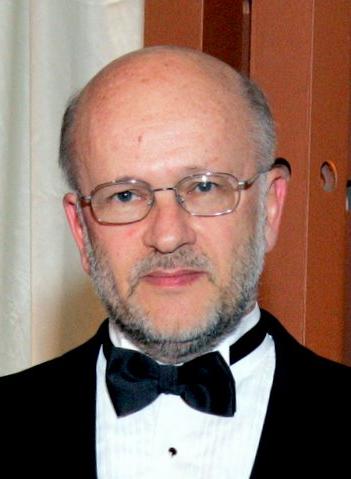
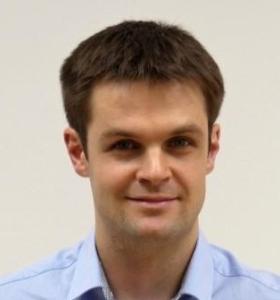
Professor David Stupples is a Professor of Electronic & Radio Engineering at City St George's, University of London , where he has served as Course Director for the MSc in Space Systems since 2021. He is also a Scientific Advisor to the UK Government (2012–present) and holds fellowships with the Royal Aeronautical Society, Institute of Measurement & Control, and other professional organizations. His research focuses on resilient position, navigation, and timing (PNT) systems for military and civilian applications, including the development of a solo micro-satellite to geolocate electromagnetic interference sources. He applies systems modeling and cyber warfare analysis to enhance decision-making and security in complex engineering environments. Key publications include: " Semantic Approach to Web-Based Discovery of Unknowns " (2013) – addressing intelligence gathering via natural language processing and grounded theory. " Probability Analysis of Cyber Attack Paths " (2013) – exploring risk in enterprise systems. " J-value: a universal scale for health and safety spending " (2006) – introducing a risk-assessment framework. Scientific awards include Fellow, Chartered Engineer, Institute of Electronic and Radio Engineers (1981–present) Fellow, Chartered Engineer, Royal Aeronautical Society (2016–present)
James W. Stigler is a Distinguished Professor of Psychology at the University of California, Los Angeles (UCLA), specializing in Cognitive and Developmental Psychology within the Department of Psychology. His work bridges educational research with cognitive science, focusing on cross-cultural teaching methodologies and technology-enhanced learning environments across K-12 and higher education. Education: Brown University (A.B.) University of Michigan (Ph.D. in Developmental Psychology) Research Focus: Stigler investigates teaching and learning processes in mathematics, statistics, and science education through cross-cultural lenses (particularly U.S., China, and Japan). His work integrates embodied cognition principles, examining how gestures, visualizations, and physical interactions enhance conceptual understanding. Current emphases include equity-centered curriculum design, AI applications in education, and the development of practical frameworks for improving instructional practices through rapid-cycle R&D. Publication Trends: Recent work (2023-2025) reveals intensive exploration of embodied learning techniques, equity-focused statistics pedagogy, and AI-human collaboration in educational contexts. His research consistently applies cognitive theory to solve practical classroom challenges, with growing emphasis on leveraging real-time student interaction data for continuous improvement of learning materials through platforms like CourseKata. Leadership Initiatives: As founder of UCLA's Teaching and Learning Lab (TALL) and nonprofit CourseKata.org, Stigler develops evidence-based educational technologies. His legacy includes directing the TIMSS video studies and co-founding educational startups LessonLab and Zaption, demonstrating sustained commitment to transforming educational research into scalable classroom solutions through practitioner-researcher partnerships.
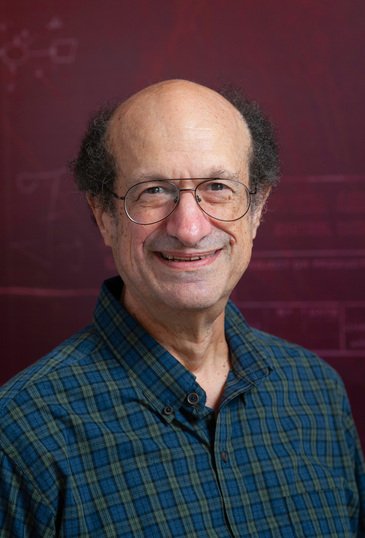
Alexander Shapiro is the A. Russell Chandler III Chair and Professor at the H. Milton Stewart School of Industrial and Systems Engineering , Georgia Institute of Technology. His work bridges optimization and statistics, focusing on stochastic programming, risk analysis, and simulation-based optimization. He has received numerous accolades, including the Khachiyan Prize (2013) , Dantzig Prize (2018) , and John von Neumann Theory Prize (2021) . Education: Ph.D. in Applied Mathematics-Statistics (Ben-Gurion University, 1981), M.Sc. in Mathematics (Moscow University, 1971) His research explores stochastic programming , risk-averse optimization , and multivariate statistical analysis , with recent work on distributionally robust control, Bayesian stochastic methods, and convex multistage optimization. Publications highlight theoretical advancements and computational frameworks for uncertainty modeling. Recent articles focus on asymptotics (2025), duality in MDPs (2023-2024), and statistical inference (2014-2024). These span stochastic control , robustness , and time consistency , reflecting his expertise in bridging probability theory with large-scale optimization. Scientific awards : Khachiyan Prize of INFORMS (2013) Dantzig Prize (2018) John von Neumann Theory Prize (2021) Election to National Academy of Engineering (2020) Dr. Shapiro has served as Area Editor (Optimization) for the Operations Research Journal and Editor-in-Chief of Mathematical Programming, Series A , demonstrating sustained leadership in his field.
Zongchen Chen is an Assistant Professor in the School of Computer Science at the Georgia Institute of Technology . He holds a PhD in Algorithms, Combinatorics and Optimization from Georgia Tech (2021) and a BS in Mathematics & Applied Mathematics from Shanghai Jiao Tong University (2016). Previously, he was an Assistant Professor at University at Buffalo and a postdoctoral instructor at MIT. His research spans randomized algorithms , discrete probability , and machine learning , with current focus on: Markov chain Monte Carlo (MCMC) methods Approximate counting and sampling algorithms Learning/testing of high-dimensional distributions Phase transitions in combinatorial structures His publication profile shows strong emphasis on: Mixing time analysis of Markov chains (13/15 papers) Combinatorial problems including k-SAT, graph colorings, and spin systems Theoretical computer science venues (STOC/FOCS/SODA/RANDOM) Awards & Honors 2021 Outstanding Doctoral Dissertation Award, College of Computing, Georgia Tech Teaching Spring 2025: CS 3510 Design and Analysis of Algorithms Fall 2024: CS 8803 Counting and Sampling Spring 2024: CSE 632 Analysis of Algorithms II (University at Buffalo) Office: KACB 2134 | Email: chenzongchen@gatech.edu
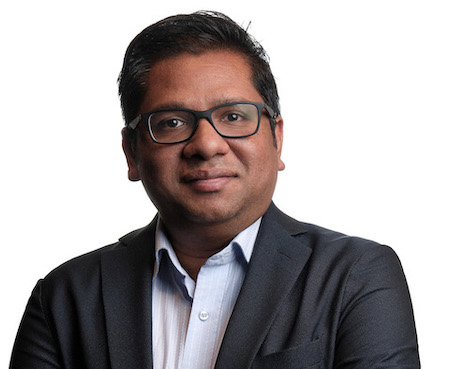
Abhishek Halder is an Associate Professor in the Department of Aerospace Engineering at Iowa State University and an Associate Adjunct Professor in the Department of Applied Mathematics at the University of California, Santa Cruz. He is also a member of the Translational AI Center at Iowa State University. His academic journey includes joining Iowa State University as an Assistant Professor in July 2023 and previously serving as faculty at UC Santa Cruz starting from October 2017. Dr. Halder's educational background includes studies at IIT Kharagpur and Texas A&M University, where he developed expertise in systems and control theory with applications to matrix analysis, probability, and optimization. His research has been recognized with prestigious awards including the O. Hugo Schuck Best Application Paper Award from the American Automatic Control Council, Applied Mathematics Research Award from UC Santa Cruz, Outstanding Doctoral Student Award from Texas A&M, and Best Dual Degree Thesis Award from IIT Kharagpur. His research focuses on stochastic systems, control and optimization with applications to large scale cyber-physical systems. Dr. Halder has made significant contributions to the fields of optimal transport, Schrödinger Bridge theory, distributional control, and uncertainty propagation in dynamical systems. His work bridges theoretical developments with practical applications in power systems, aerospace engineering, and machine learning. He has secured multiple research grants from NSF, including a CPS Frontier project on Computation-Aware Algorithmic Design for Cyber-Physical Systems. Dr. Halder has demonstrated leadership in the control systems community through editorial roles including Associate Editor for IEEE Transactions on Automatic Control (2025-present), ASME Journal of Dynamic Systems, Measurement, and Control (2025-present), Systems & Control Letters (2022-present), and previously for IEEE Control Systems Society Conference Editorial Board (2019-2025) and IEEE Transactions on Aerospace and Electronic Systems (2019-2022). He is a Senior Member of IEEE and a member of IFAC, SIAM and ASME. His research group has produced numerous publications in top-tier journals and conferences, with recent work focusing on connections between optimal transport theory, stochastic control, and machine learning. The publication trends show increasing integration of Schrödinger Bridge formulations with machine learning techniques for distributional control problems across various domains including power systems, aerospace applications, and resource allocation. O. Hugo Schuck Best Application Paper Award (2024) Applied Mathematics Research Award from UC Santa Cruz (2022) IEEE Senior Member (2021) Outstanding Doctoral Student Award from Texas A&M Best Dual Degree Thesis Award from IIT Kharagpur Dr. Halder has mentored numerous PhD students including Alexis, Georgiy, Iman, Shadi, and Kenneth, many of whom have received prestigious fellowships. His research group maintains strong collaborations with national laboratories including Lawrence Livermore National Lab and Los Alamos National Lab, as well as industry partners. Dr. Halder is also committed to education and outreach, having created and taught the 'Feedback Control' course for high school students in the California State Summer School for Mathematics and Science (COSMOS), introducing complex control theory concepts without calculus or linear algebra.
Pierre Nyquist is an Associate Professor and docent in the Department of Mathematical Sciences at Chalmers University of Technology and Gothenburg University. His research is sponsored by the Swedish Research Council, the Swedish e-science Research Center (SeRC), and the Wallenberg Artificial Intelligence, Autonomous Systems and Software Program (WASP). He is also an elected member of the Young Academy of Sweden for the period 2024-2029 and has served as a scientific ambassador for EURANDOM since November 2021. Dr. Nyquist's research interests lie at the intersection of probability theory, mathematical statistics, and applied mathematics. His main expertise is in probability theory, with a focus on large deviations theory and stochastic numerical methods. He has a general interest in all aspects of probability theory and much of what is categorized as applied mathematics, particularly questions related to partial differential equations, optimization, and stochastic optimal control. Recently, he has become increasingly interested in the mathematical foundations of complex data analysis and modeling, and the interplay with ideas from physics. His current research interests include large deviations, gradient flows and their generalizations, stochastic numerical methods, statistical learning theory, stochastic processes, and random dynamical systems. Pierre Nyquist has received research funding from several prestigious sources including the Swedish Research Council, the Swedish e-science Research Center (SeRC), and the Wallenberg Artificial Intelligence, Autonomous Systems and Software Program (WASP). His publications demonstrate a consistent focus on theoretical aspects of probability with applications to computational methods and data analysis, showing increasing integration with machine learning techniques in recent years. elected member of the Young Academy of Sweden (2024-2029) scientific ambassador for EURANDOM (since November 2021) Dr. Nyquist is actively involved in mentoring the next generation of researchers. He currently supervises several PhD students including Cinja Arndt (starting Aug. 2025), Niki Wilhemlson (started Aug. 2024), and Viktor Nilsson (started Aug. 2020). He has previously supervised successful PhD students such as Federica Milinanni (Aug. 2020-May 2025) and Carl Ringqvist (Aug 2015-June 2021). He regularly teaches graduate-level courses including "Modern methods of statistical learning" and has supervised numerous MSc theses on topics ranging from deep learning for time-series radar signals to neural network embedding in insurance pricing. His research group is active in both theoretical developments and practical applications, with current projects spanning from mathematical foundations of probability to applications in machine learning and data science. Dr. Nyquist maintains strong international collaborations, as evidenced by his frequent travel for conferences and research visits to institutions such as Brown University and TU Delft.
Daniel Boley is a Professor and Distinguished University Teaching Professor at the University of Minnesota, within the College of Science and Engineering, Department of Computer Science and Engineering. He serves as the Director of Graduate Studies for the Graduate Program in Data Science, which offers a Master's of Science and a Post-Baccalaureate Certificate. His office is located in Kenneth H. Keller Hall at 4-225C. Professor Boley's research spans computational methods in linear algebra, scalable data mining algorithms, and applications in systems biology and bioinformatics. His work focuses on scalable algorithms for convex optimization in machine learning, analysis of networks and graphs from metabolic biochemical networks, and wireless device networks. He has made significant contributions to numerical linear algebra methods for control problems, parallel algorithms, and iterative methods for matrix eigenproblems. His research interests also include algebraic models in systems and evolutionary biology, and biochemical metabolic networks. His recent publications demonstrate a strong focus on applying graph theory and network analysis to diverse domains including robot swarms, medical imaging (particularly for glioblastoma and COVID-19 diagnosis), and metabolic network analysis. His work bridges theoretical computer science with practical applications in biology and medicine, with a consistent emphasis on developing scalable computational methods. The trend shows increasing interdisciplinary collaboration, particularly with medical researchers. Distinguished Member by the ACM Top university award for post baccalaureate, graduate and professional education Distinguished University Teaching Professor title Professor Boley has advised numerous PhD students including Tatiana Lenskaia (2021), Shaozhe Tao (2018), Ham Ching Lam (2014), and others dating back to 1994. His research has been supported by various grants enabling work on scalable computation of elementary pathways through metabolic networks, Markov models of viral evolution, and scalable data mining algorithms for text analysis. He has developed software tools for clustering, dot plot visualization, and educational graphics. Professor Boley directs the Graduate Program in Data Science and has been involved in projects such as the Principal Direction Divisive Partitioning (PDDP) Project. His research group develops practical implementations of theoretical advances, including the PDDP clustering algorithm, Dot.py genome viewer, and various educational graphics tools for introductory programming courses. He maintains active collaborations across disciplines, particularly in bioinformatics and medical imaging applications.
Laurent Pfeiffer is a researcher at the Signals and Systems Laboratory , focusing on Optimization and Control Theory . His work bridges theoretical advancements in mean field games, stochastic optimization, and numerical methods with practical applications in energy systems and fluid dynamics. Research Interests: Optimal Control, Mean Field Games, Stochastic Optimization, Nonlinear Programming Recent Publications: Explore mean field games, nonconvex optimization, and control theory applications in nuclear energy, gas portfolios, and fluid dynamics. Labs: Signals and Systems Laboratory, specializing in control systems and mathematical modeling.
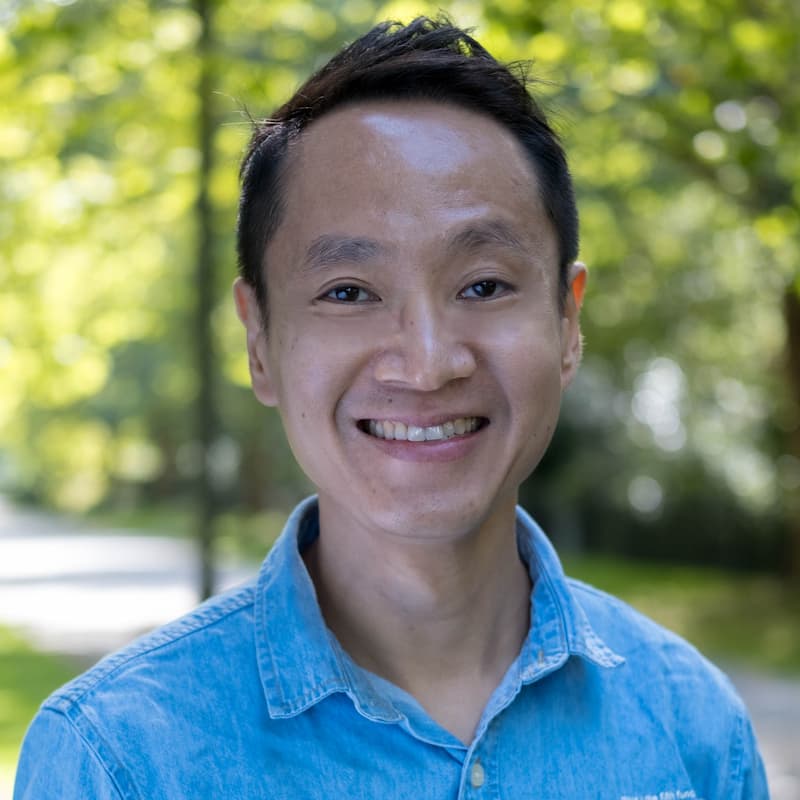
Dr. Tzeng Yih Lam serves as an Assistant Professor in the Department of Forest Resources Management at the University of British Columbia's Faculty of Forestry. His expertise lies in forest measurements, sampling methodologies, and quantitative silviculture, contributing to sustainable forest management practices through innovative biometric approaches. His educational background includes: PhD in Forest Science (2010) from Oregon State University MSc in Statistics (2009) from Oregon State University MSc in Tropical and International Forestry (2006) from Georg-August-Universität Göttingen BSc in Forestry (2001) from the University of New Brunswick Dr. Lam's research focuses on developing close-range photogrammetry tools for hard-to-measure tree attributes, designing cost-effective probability-based forest inventory systems using auxiliary information, and applying Bayesian filtering for forest growth projection. His work bridges field data collection with advanced statistical modeling to enhance timber production estimation and ecosystem service assessment. Analysis of his 15 most recent publications reveals dominant themes in innovative sampling design (particularly Critical Height Sampling and cluster/nested plots), integration of machine learning with rapid assessment techniques, and sophisticated height-diameter modeling across diverse species. His work consistently emphasizes spatial distribution mapping, LiDAR integration, and error reduction in field measurements. As an active contributor to the UBC Forest Measurements and Biometrics research group, Dr. Lam develops teaching materials for courses including Advanced Regression Analysis and Forest Measurements, advancing methodological training in forest biometrics through R workshops and practical field applications.
Torsten Lindström is a faculty member at Linnaeus University, affiliated with the Faculty of Technology and the Department of Mathematics . His research focuses on qualitative analysis of dynamical systems with applications to ecology and epidemiology , encompassing differential equations , discrete-time models , and stochastic processes . He is actively involved in the International Center for Mathematical Modeling (ICMM) and the Stochastic Analysis and Stochastic Processes research group. His research spans ecological modeling, predator-prey dynamics, and mathematical education. He has authored a textbook on Linear Algebra and contributes to Ordinary Differential Equations Dynamical Systems Teacher education in Geometry courses. Notably, he is the editor of a special volume on mathematical models in biology. His recent publications analyze stochastic disease spread , limit cycles , and stability theory , reflecting interdisciplinary work between mathematics, ecology, and education. Collaborations with institutions like the University of Oslo and SpringerLink highlight his international engagement. Teaching materials, including recorded lectures on Linear Algebra and Dynamical Systems, are publicly accessible.
Gernot Akemann is a Professor at the Faculty of Physics, University of Bielefeld, with a focus on Random Matrix Theory and its applications in high energy physics and statistical mechanics . His work spans topics such as QCD Dirac spectra, effective field theory, orthogonal polynomials, asymptotic analysis, and universality. He has held leadership roles in projects like SFB 1283 and IGK 2235, emphasizing singular and random systems. 2025 : Subproject manager in SFB 1283 2024 : Leverhulme Trust Visiting Professorship at University of Bristol 2019 : Visiting Professor at KTH Stockholm His research includes random matrix theory for applications in quantum chromodynamics, statistical mechanics, and mathematical physics. Recent articles explore complex eigenvalue statistics, Ginibre ensembles, and their connections to Coulomb gases and territorial behavior in ecology. He has contributed to understanding universality in spectral statistics and non-Hermitian systems. Notable scientific awards include the Leverhulme Trust Visiting Professorship , Knut and Alice Wallenberg Foundation support, and DFG Research Grants . His work has been funded through projects like SFB 1283 and RTG 2235.
Thomas Nagler is a Professor at the Department of Statistics, Faculty of Mathematics, Computer Science and Statistics at Ludwig Maximilian University of Munich (LMU Munich). He also serves as a principal investigator at the Munich Center for Machine Learning (MCML), where he leads research at the intersection of mathematical statistics and machine learning. Nagler received his academic training at Technical University of Munich (TU Munich), earning a BSc in Mathematics (2009-2012), followed by an MSc in Mathematical Finance (2012-2014), and ultimately a PhD in Mathematical Statistics (2014-2018). Prior to his current position at LMU Munich, he held assistant professor positions at TU Delft (2021-2022) and Leiden University (2019-2021). Professor Nagler's research focuses on developing novel statistical methods with theoretical guarantees and scalable algorithms. His work spans high-dimensional dependence modeling, particularly using vine copulas, statistical machine learning, time series and functional data analysis, and statistical computing. He emphasizes creating methods that can be practically implemented and applied to solve real-world problems across diverse domains. An analysis of Nagler's recent publications reveals a strong emphasis on vine copula methodology, uncertainty quantification in machine learning, and applications to climate science and epidemiology. His work bridges theoretical statistics with practical implementation, often resulting in open-source software tools that make advanced statistical methods accessible to practitioners. The interdisciplinary nature of his research is evident in collaborations spanning climate modeling, healthcare, and finance. While specific awards are not detailed in the available information, Nagler's research impact is evident through his significant contributions to statistical methodology and his active engagement with the research community through open-source software development. As a principal investigator at MCML and Professor at LMU Munich, Nagler leads a research group focused on advancing statistical methodology for complex data analysis. His GitHub profile indicates active collaboration with students and researchers, with several followers from LMU Munich and other institutions. His research program appears to be well-funded through the MCML and university resources, supporting both methodological development and application-focused projects. Nagler maintains strong ties with the computational statistics community through his leadership of the VineCopula and pyvinecopulib projects, which provide essential tools for dependence modeling. His work with the Munich Center for Machine Learning positions him at the forefront of interdisciplinary research combining statistical theory with practical machine learning applications.
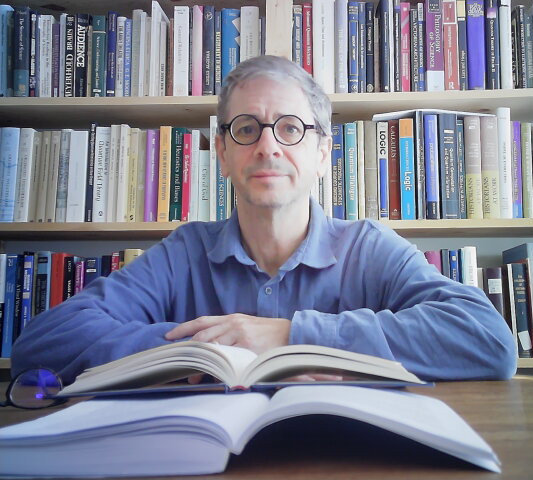
Michael Dickson is Professor of Philosophy at the University of South Carolina’s McCausland College of Arts and Sciences. His research has migrated from foundations of quantum physics to philosophy of music and psychiatry, reflecting a career that blends rigorous physics scholarship with humanistic and aesthetic inquiry. Education: PhD, University of Notre Dame, 1995 BA/BS, University of South Carolina, 1990 Research Interests: Dickson’s early work concentrated on interpretations of quantum mechanics, probability in physics, and the philosophy of science. Over the past decade he has turned to philosophy of music , investigating musical notation as instruction and the ontology of musical works, drawing on his own background as a classical pianist and French-horn player. He is also developing projects in philosophy of psychiatry , focusing on hallucination and self-understanding in schizophrenia. Publication Trends: His 40-plus articles range from technical analyses of quantum modal interpretations and probability to recent essays on musical ontology and psychiatric symptoms. The 2018–2015 output shows a pivot toward aesthetics and value theory, while earlier works remain staples in quantum-foundations literature. Presentations & Engagement: “Musical Notation and Musical Instructions” – American Society for Aesthetics, Philadelphia “Intellectual Humility” – Madpeople’s Coping Mechanisms, Oxford “Living with the ‘Paradox of Delusion’” – Too Mad to be True III, Ghent “Hallucination as a Memory of the Present” – Southern Society for Psychology and Psychiatry Teaching & Additional Interests: He periodically teaches medieval philosophy and game-theoretic models of signaling, rounding out a portfolio that bridges formal, historical, and applied philosophy.
Professor Andreas Kyprianou is a leading probabilist at the University of Warwick's Department of Statistics, specializing in pure and applied probability. His research spans Branching Markov processes , Superprocesses , Lévy processes , and stochastic radiation transport . He directs the Centre for Mathematical and Computing Sciences (CAMaCS) and leads the £7.3M EPSRC MaThRad programme grant, focusing on nuclear technology applications. Academic Affiliations : University of Warwick (2023-present), University of Bath (2006-2023), Utrecht University (2001-2006), Heriot-Watt University, London School of Economics, University of Edinburgh Research Themes : Stochastic Modelling, Self-Similar Processes, Fragmentation-Coalescence, Neutron Transport, Monte-Carlo Simulation His recent work includes α-stable Lévy processes , jump SDEs in proton therapy , and non-local branching process stability . Scientific awards include the Royal Society Wolfson Merit Award and the Dutch Mathematics in Focus fellowship. He has supervised over 20 PhD students and co-led international research platforms like Prob-L@B and CIMAT-UNAM-Warwick-Bath . Grants section highlights major EPSRC and Royal Society funding for his interdisciplinary projects.
Kevin John Painter is a Full Professor (L.240) at the Interuniversity Department of Territorial Sciences, Planning and Policies (DIST) of Politecnico di Torino. His research focuses on mathematical and computational modeling of spatial-temporal dynamics in natural systems, spanning embryonic development, cancer progression, animal migration, and environmental landscape structuring. Position: Full Professor Institution: Politecnico di Torino Department: DIST (Interuniversity Department of Territorial Sciences, Planning and Policies) Key research interests include agent-based modeling, mathematical biology, differential equations, and pattern formation. His work addresses cancer invasion dynamics, turtle navigation to Ascension Island, whale migration under noise pollution, and environmental change modeling. Recent publications emphasize nonlocal interaction models, phenotypic switching in biological systems, and coupled Turing reaction-diffusion-chemotaxis frameworks. Since 2020, he has taught Calculus, Probability and Statistics, and Linear Algebra at the Architecture and Automotive Engineering programs. He supervises doctoral research in the Urban and Regional Development PhD program. Scientific contributions are reflected in editorial board memberships across six journals, including Mathematical Models and Methods in Applied Sciences and the Royal Society Open Science. Awards: Editorial board member of leading journals. His modeling strategies bridge individual and population-level dynamics, with applications spanning from neural crest cell chemotaxis to glioma tumor invasion. Skills align with ERC sectors PE1_20 (Mathematical Applications) and LS3_9 (Developmental Biology), supporting UN SDGs 3 (Health), 13 (Climate Action), and 14 (Life Below Water).