Prof. Martin Haenggi is the Frank M. Freimann Professor of Electrical Engineering and Concurrent Professor in the Department of Applied and Computational Mathematics and Statistics at the University of Notre Dame. He holds a Dr.sc.techn. (Ph.D.) from ETH Zurich and has been at Notre Dame since 2000. His research focuses on stochastic geometry and wireless networks, including cellular, heterogeneous, vehicular, and millimeter-wave systems. He has held sabbaticals at UCSD (2007–2008), EPFL (2014–2015), and ETH Zurich (2021–2022). Education: Dipl.-Ing. (M.Sc.), ETH Zurich, 1995 Dr.sc.techn. (Ph.D.), ETH Zurich, 1999 Research interests emphasize stochastic geometry for analyzing network performance, including coverage, interference, and reliability in wireless systems. Key areas include meta distributions, spatial-temporal analysis, and network optimization. His work has been recognized with IEEE Fellow status, Clarivate Highly Cited Researcher distinction, and NSF CAREER Award (2005). Grants and Awards: NSF Award (Deep Stochastic Geometry: 2020–2023) NSF Award (Toward a Stochastic Geometry for Cellular Systems: 2015–2019) Rice Prize (2017), Best Survey Paper Award (2017), and Best Tutorial Paper Award (2010) from IEEE Communications Society Teaching includes advanced courses on stochastic geometry, wireless networks, and signal processing. His lab focuses on theoretical and applied aspects of network modeling, with collaborations in industry and academia.
Song Mei is an Assistant Professor in the Department of Statistics and Department of Electrical Engineering and Computer Sciences at the University of California, Berkeley. She received her Ph.D. from Stanford University in 2020 under Andrea Montanari and maintains active research collaborations with institutions including Amazon (as a 2023 Amazon Research Award recipient) and OpenAI (where she is currently on leave). Her research spans the intersection of statistics, machine learning, information theory, and computer science, with particular emphasis on foundational theories for modern AI systems. Key interests include language models, diffusion models, quantum algorithms, and high-dimensional statistics, often leveraging insights from statistical physics literature. Analysis of her recent publications reveals a strong focus on theoretical underpinnings of generative AI, with significant contributions to understanding contrastive pre-training (CLIP), attention mechanisms in LLMs, and mathematical foundations of diffusion models. Her work demonstrates consistent interdisciplinary connections between statistical theory and practical AI development. Sloan Research Fellowship (2025) Noether Early Career Scholar Award (2025) Google Research Scholar Award (2024) Amazon Research Award (2024) She actively advises graduate students through MA programs and has secured significant research grants including Amazon Research Awards. Her work with AGI Labs at Amazon demonstrates applied impact of theoretical research. Current projects focus on mechanistic interpretability of large language models and mathematical frameworks for generative AI. Professor Mei leads research on the statistical principles behind frontier AI models, with particular focus on developing rigorous theoretical frameworks for understanding emergent behaviors in large-scale systems.
Professor Ben Goldys is a distinguished academic at The University of Sydney's School of Mathematics and Statistics, where he conducts research at the intersection of pure mathematics and applied sciences. His work spans multiple disciplines including stochastic analysis, partial differential equations, and financial mathematics, with significant contributions to both theoretical frameworks and practical applications in science and finance. Goldys' research interests center on stochastic (ordinary and partial) differential equations and their applications. His specific focus areas include stochastic partial differential equations, stochastic geometric PDEs, stochastic boundary value problems, stochastic fluid dynamics, ergodic theory of infinite-dimensional diffusions, and applications in financial mathematics such as interest rate derivatives, credit risk, and stochastic volatility. His work bridges pure mathematical theory (Functional Analysis, PDEs, Ergodic Theory) with complex real-world problems across multiple domains. His research aligns with the University of Sydney Faculty of Science Research Strengths including Understanding the Universe, Fundamental Laws of Nature, Complex Systems, and Next Generation Materials. Professor Goldys has secured multiple significant research grants from the Australian Research Council, including recent projects such as 'Mathematics for future magnetic devices' (2024), 'Mathematics for breaking limits of speed and density in magnetic memories' (2019), and 'Novel Approaches for Problems with Uncertainties' (2015). His current research projects focus on geometric stochastic partial differential equations and applications in micromagnetism, mean field games in finance, stochastic boundary value problems, and stochastic Navier-Stokes equations on the rotating sphere. He maintains extensive international collaborations with institutions in Germany (University of Tuebingen), Italy (LUISS University), Poland (Institute of Mathematics Polish Academy of Sciences), and the United Kingdom (University of York), working on projects involving optimal control, stochastic systems with memory, and geometric stochastic PDEs. Goldys is an active member of the Applied Mathematics Research Group and The University of Sydney Nano Institute, contributing to interdisciplinary research initiatives that connect mathematical theory with cutting-edge technological applications.
Jonathan A. Kelner is a Professor of Applied Mathematics in the Department of Mathematics at the Massachusetts Institute of Technology (MIT) and a member of the MIT Computer Science and Artificial Intelligence Laboratory (CSAIL). His research focuses on applying techniques from pure mathematics to solve fundamental problems in algorithms and complexity theory, with the goal of developing practical algorithms for real-world questions. Dr. Kelner received his undergraduate degree from Harvard University and his Ph.D. in Computer Science from MIT in 2006. Before joining the MIT faculty, he spent a year as a member of the Institute for Advanced Study. His educational background has provided a strong foundation for his interdisciplinary research spanning mathematics and computer science. His research interests include combinatorial optimization, mathematical programming, spectral graph theory, distributed computing, machine learning, computational geometry and topology, computational biology, signal processing, and random matrix theory. Kelner's work demonstrates how deep theoretical insights can lead to practical algorithmic improvements, particularly in graph algorithms and optimization problems. His approach often involves connecting seemingly disparate areas of mathematics to create novel algorithmic techniques. Analysis of his recent publications reveals a strong focus on spectral graph theory, optimization algorithms, and the Sum-of-Squares method. His work frequently addresses fundamental questions in theoretical computer science with practical implications for algorithm design. A notable trend in his research is the development of nearly-linear-time algorithms for various graph problems, which represents significant improvements over previous approaches. NSF CAREER Award Alfred P. Sloan Research Fellowship NEC Award for Research in Computers and Communication Sprowls Doctoral Dissertation Award Best Student Paper Award at STOC 2004 Best Paper Award at STOC 2011 Kokusai Denshin Denwa Junior Faculty Chair 2008 Harold E. Edgerton Faculty Achievement Award 2011 School of Science Award for Excellence in Undergraduate Education 2012 Professor Kelner has been actively involved in mentoring students and has received recognition for his teaching excellence, including the School of Science Award for Excellence in Undergraduate Education in 2012. His research has been supported by prestigious grants including the NSF CAREER Award. He has collaborated extensively with researchers across multiple institutions, often working with other leading figures in theoretical computer science to produce groundbreaking results in algorithm design. At MIT, Kelner is part of both the Mathematics Department and CSAIL, positioning him at the intersection of theoretical mathematics and practical computer science. This dual affiliation reflects the interdisciplinary nature of his work, which bridges pure mathematical theory with concrete algorithmic applications.
Zach Shahn is an Assistant Professor in the Department of Epidemiology and Biostatistics at the CUNY School of Public Health. He holds a PhD in Statistics from Columbia University and a BA in Mathematics from Stanford University. His research focuses on causal inference methods applied to healthcare data, particularly time-varying treatment effects and critical care applications. He has conducted postdoctoral work at Harvard School of Public Health and previously worked at IBM Research in Healthcare and Life Sciences. Education: PhD in Statistics and Probability, Columbia University BA in Mathematics, Stanford University Research interests include developing causal inference frameworks for evaluating treatment efficacy in dynamic healthcare settings, with a focus on critical care outcomes and methodological innovations. Recent work explores applications of causal diagrams, instrumental variables, and machine learning in healthcare decision-making. His studies often involve large-scale healthcare datasets to assess interventions' real-world impacts. Key trends in his articles include advancements in causal effect estimation under complex treatment regimes, bias analysis in observational studies, and methodological contributions to difference-in-differences and N-of-1 trial designs. His work bridges statistical theory with practical healthcare challenges, emphasizing reproducibility and policy relevance. No scientific awards are listed, though his contributions to causal inference methodologies are notable in academic circles. He has advised on healthcare data projects and published extensively without explicitly listed grants. His professional network includes collaborations with institutions like Harvard and IBM. He is affiliated with CUNY's public health programs and actively engages in academic discourse via Twitter and LinkedIn. His lab or team details are not explicitly mentioned in available materials.
Huiyan Sang is a Professor and Director of the Undergraduate Program in the Department of Statistics at Texas A&M University (College of Arts & Sciences). She earned her Ph.D. in Statistics from Duke University and a B.Sc. in Mathematics and Applied Mathematics from Peking University. Her research focuses on spatial statistics, Bayesian nonparametric methods, machine learning, computational statistics, and applications in environmental sciences, geosciences, urban planning, and biomedical research. Her interdisciplinary work integrates statistical methodologies with real-world challenges, such as analyzing extreme environmental events, optimizing urban infrastructure, and modeling complex systems like human mobility during pandemics. She has contributed to advancing spatio-temporal modeling, Gaussian processes, and Bayesian hierarchical frameworks for large datasets. Recent publications highlight innovations in nonparametric regression, spatial functional data analysis, and stochastic frontier analysis, often leveraging computational efficiency and scalability. Her work addresses critical societal issues, including the impact of community design on public health and environmental monitoring through remote-sensing data. No scientific awards are explicitly listed in the provided texts. She advises no students or grants in the current dataset but collaborates widely on interdisciplinary projects. Her research lab focuses on developing cutting-edge statistical tools with applications in engineering, public health, and environmental science.
Jon Keating is a Professor at the University of Oxford affiliated with the Mathematical Institute . His research spans Mathematical Physics , Number Theory , and Stochastic Analysis , with a focus on Random Matrix Theory and its applications to quantum systems and number theory. Research Trends: His recent work explores connections between random matrices and number-theoretic functions, with contributions to understanding moments of L-functions, characteristic polynomials, and quantum chaos. Key themes include asymptotic analysis, recursive structures, and interdisciplinary applications in nonlinear systems. Publications: Highlights include studies on CUE characteristic polynomials, the Ratios Conjecture, and collaborations in Nonlinearity , International Mathematics Research Notices , and Transactions of the American Mathematical Society .
Vladimir Spokoiny is a Professor at the Departments of Mathematics and Economics of the Humboldt University of Berlin and Head of the Research Group "Stochastic Algorithms and Nonparametric Statistics" at the Weierstrass Institute for Applied Analysis and Stochastics (WIAS) in Berlin, Germany. His research spans multiple areas of statistics, machine learning, and financial mathematics, with significant contributions to nonparametric statistics, high-dimensional data analysis, and statistical methods in finance. Spokoiny received his M.Sc. in applied mathematics from the Moscow Institute of Railway Engineering in 1981 and his Ph.D. in mathematics from Lomonosov Moscow State University in 1988. He completed his Habilitation at Humboldt University in 1996. His academic career includes positions at the All-Union Institute of Railway Transport in Moscow, the Institute for Information Transmission Problems in Moscow, and the Institute for Applied Analysis and Statistics in Berlin before joining the Weierstrass Institute and Humboldt University where he has been a professor since 2002. Spokoiny's research focuses on adaptive nonparametric smoothing and hypothesis testing, high dimensional data analysis, statistical methods in finance, image analysis with applications to medicine, classification, and nonlinear time series. His work often addresses the challenges of nonstationarity in time series data and develops innovative methods for volatility estimation and risk management. He has made significant contributions to the development of adaptive weights smoothing procedures, which have applications in image processing, community detection, and manifold learning. His recent work has expanded into high-dimensional statistics, Bayesian inference, and optimization methods for machine learning, with publications demonstrating novel approaches to Gaussian approximation, Laplace methods, and statistical inference in non-Euclidean spaces. Spokoiny has supervised numerous PhD students including Oliver Reiss, Danilo Mercurio, Ying Chen, Elmar Diederichs, and Mstislav Elagin, whose research has focused on mathematical finance, time series analysis, and statistical methods. He serves as an Associate Editor for The Annals of Statistics (since 2004) and Statistics and Decisions (since 2002), and has previously served on the editorial board of the Journal of Statistical Planning and Inference. His professional activities include reviewing for major statistical journals including Annals of Statistics, Bernoulli, Econometrica, and Journal of American Statistical Association, as well as reviewing grant proposals for the National Science Foundation (USA), German Research Foundation, and Netherlands Organisation for Scientific Research. Spokoiny is a member of several professional societies including the International Statistical Institute, American Statistical Association, Institute of Mathematical Statistics, and Bernoulli Society. He is fluent in Russian (mother tongue), English, and German, and has good knowledge of French. His research group at WIAS focuses on developing novel statistical methodologies with applications across various scientific domains, particularly emphasizing adaptivity and robustness in complex data environments. The group's work has significant implications for financial risk management, medical imaging, and machine learning applications, with recent publications addressing fundamental questions in high-dimensional statistics and nonparametric inference.
Scientia Professor Gary Froyland is a Professor at the University of New South Wales (UNSW), affiliated with the School of Mathematics & Statistics. He leads the ARC Laureate Centre for Dynamical Systems and Data and holds an Einstein Visiting Fellowship from the Einstein Foundation Berlin. His academic credentials include a BSc (Hons 1, Medal) in Pure and Applied Mathematics from the University of Queensland and a PhD in Mathematics from the University of Western Australia. Professor Froyland's research spans two primary domains: dynamical systems and optimization. In dynamical systems, he investigates the interplay of probability and geometry in nonlinear and chaotic systems, employing tools from ergodic theory, functional analysis, and differential geometry. His work extends to applications in oceanography, atmospheric science, and granular flows. In optimization, he focuses on decision-making in complex systems with uncertain information, developing novel approaches in mathematical programming that have been applied to mining, logistics, and medical treatment planning. His recent publications demonstrate a strong focus on coherent structures in dynamical systems, linear response theory, and applications to geophysical phenomena. The research shows increasing interdisciplinary collaboration, particularly with climate scientists and data analysts, reflecting a trend toward applying advanced mathematical techniques to real-world problems in environmental science and engineering. J.D. Crawford Prize (2025) Elected Member of the Academy of Europe / Academia Europaea (2024) ARC Laureate Fellow (2024-2029) Fellow of the Society for Industrial and Applied Mathematics (SIAM) (2021) Fellow of the Australian Academy of Science (2020) Vice-Chancellor's Award for Teaching Excellence - Postgraduate Research Supervision (2015) Professor Froyland actively supervises PhD and honors students, with current advisees including Kevin Felipe Kühl Oliveira, Nicholas Peters, and Kathrin Völkner. His research is supported by multiple grants, including an ARC Laureate Fellowship (2024-2029) for "Breakthrough mathematics for dynamical systems and data," an Einstein Visiting Fellowship (2022-2026), and several ARC Discovery Projects. His work has practical applications in climate science, mining optimization, and medical treatment planning, particularly in radiotherapy. He leads the ARC Laureate Centre for Dynamical Systems and Data, which brings together researchers to develop new mathematical approaches for analyzing complex dynamical systems. The center focuses on creating methods to identify coherent structures in spatiotemporal data, with applications spanning environmental science, social science, health science, and engineering.
Shang-Tse Chen is an Associate Professor at the Department of Computer Science and Information Engineering and Graduate Institute of Networking and Multimedia , National Taiwan University . He leads the NTU AI Security Lab , focusing on applied and theoretical machine learning with emphasis on cybersecurity, adversarial ML, and ML privacy/fairness. Education: PhD in Computer Science (Georgia Tech, 2019), BSc in CSIE (NTU, 2010) Awards: K. T. Li Young Researcher Award (2025), IBM PhD Fellowship (2018), KDD Best Student Paper Runner-Up (2016), NSF SaTC Grant (2017-2021) His research spans adversarial ML, certified defenses, model inversion attacks, and intersection with differential privacy/fairness. Recent work includes physical adversarial attacks on object detectors and practical defenses using JPEG compression. He teaches courses like Security and Privacy of Machine Learning and Introduction to Medical Informatics . Key publication trends show focus on adversarial robustness (ICML/NeurIPS/ICLR), cybersecurity applications (ACSAC), and ML fairness (ACL/EMNLP). Collaborations include industry partnerships with Intel Labs and Symantec. Scientific Awards: K. T. Li Young Researcher Award (2025) ACM TiiS Best Paper Honorable Mention (2020) IBM PhD Fellowship (2018) KDD Audience Appreciation Award Runner-Up (2018) Symantec Fellowship Runner-Up (2016) KDD Best Student Paper Runner-Up (2016) NSF Grant (2017) He advises 13 current students (PhD/MS/Undergrad) and has mentored alumni now at CMU/UC Berkeley. The lab actively recruits postdocs and students across levels.
Xiaozhe Wang is an Associate Professor in the Department of Electrical and Computer Engineering at McGill University, holding the Canada Research Chair (Tier II) in Resilient and Stable Zero-Emission Electric Power Grids and the Rubin & So Foundation Faculty Scholar. He joined McGill in 2016 after a postdoctoral fellowship at MIT under Prof. Konstantin Turitsyn. He earned his Ph.D. from Cornell University (2015), with a minor in Applied Mathematics, and holds degrees from Zhejiang University (B.S., 2010) and Cornell (M.Eng., 2011). His research focuses on resilient power grids, data-driven methodologies, and cybersecurity in energy systems. Key areas include electric vehicle integration, stability assessment, and control strategies for renewable energy systems. He develops advanced techniques for uncertainty quantification, wide-area monitoring, and adversarial attack detection. Notable achievements include pioneering work on polynomial chaos expansion for probabilistic assessment and sparse identification for nonlinear dynamics. His articles explore topics like microgrid control, false data injection attacks, and decentralized energy trading. Awards: Canada Research Chair (Tier II), Rubin & So Foundation Scholar Grants/Projects: Focus on resilience, cybersecurity, and renewable integration funded via NSERC, Mitacs, and industry partnerships. He advises students through fellowships like Mitacs Elevate and Banting Postdoctoral Fellowships. His lab emphasizes interdisciplinary approaches to modern grid challenges, including lab experiments and field trials.
Carlos Cinelli is an Assistant Professor in the Department of Statistics at the University of Washington, where he conducts research at the intersection of causal inference, statistical methodology, machine learning, and artificial intelligence. He is also a data science fellow at the eScience Institute and affiliate faculty of the Center for Statistics and the Social Sciences, demonstrating his interdisciplinary approach to causal methodology. Dr. Cinelli received his Ph.D. in Statistics from the University of California, Los Angeles, advised by Chad Hazlett and Judea Pearl, two prominent figures in causal inference. His research focuses on developing new causal and statistical methods for transparent and robust causal claims in empirical sciences, with particular attention to challenges faced by social and health scientists. His work spans theoretical developments in causal identification, sensitivity analysis frameworks, and practical software implementations that enable researchers to assess the robustness of their causal conclusions. Cinelli's research program addresses fundamental questions about how unobserved confounding affects causal estimates and develops tools to quantify how sensitive findings are to potential violations of causal assumptions. His work on omitted variable bias frameworks has been particularly influential across multiple disciplines. Through his publications, Cinelli has established himself as a leading researcher in causal inference methodology, with papers appearing in top journals across statistics, machine learning, epidemiology, and social sciences. His work demonstrates both theoretical rigor and practical relevance, often accompanied by open-source software implementations that make his methods accessible to applied researchers. Best paper award at SBE 2024 in Econometrics Royalty Research Fund (RRF) Award recipient NSF/MMS research support As an advisor, Cinelli has successfully guided PhD students like Nick Irons to dissertation completion. He actively seeks new students with strong interests in causal inference. His research is supported by multiple funding sources including the National Science Foundation and the University of Washington's Royalty Research Fund. Cinelli contributes to the academic community through editorial work for the Journal of Causal Inference and by developing widely used software packages like sensemakr for sensitivity analysis.
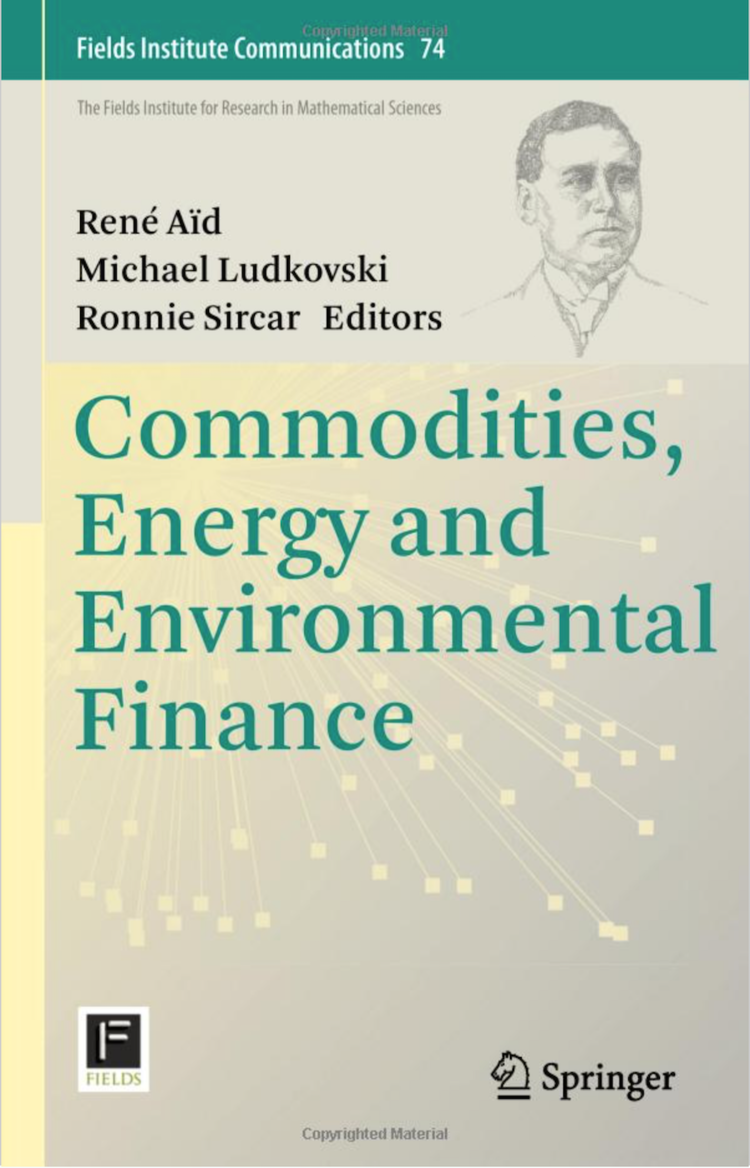
Ronnie Sircar is the Eugene Higgins Professor of Operations Research and Financial Engineering at Princeton University , where he contributes to the Department of Operations Research and Financial Engineering (ORFE). His work spans financial mathematics, stochastic modeling, and applied probability, with a focus on market volatility, optimal investment strategies, and dynamic game theory. Email: sircar@princeton.edu Office: Sherrerd Hall, Room 208, Princeton, NJ 08544 His research interests include: Stochastic Volatility: Asymptotic analysis, calibration, and impact on option pricing and portfolio optimization. Mean Field Games: Applications to cryptocurrency mining, energy markets, and interbank network formation. Portfolio Theory: Forward performance processes, drawdown constraints, and risk-averse strategies. Credit Risk: Multi-name credit derivatives, CDO valuation, and risk measures. Energy Systems: Renewable reliability, unit commitment, and electricity market design. Recent publications emphasize mean field games in energy and blockchain, stochastic volatility in portfolio optimization, and machine learning applications for financial engineering. He has advised graduate students such as Giulia Crippa, Nicolas Garcia, and Burak Aydin, often collaborating with researchers including M. Soner, P. Chan, and A.M. Reppen.
Frederick Eberhardt is a Professor of Philosophy at the California Institute of Technology (Caltech) since 2013. He holds a B.S. from the London School of Economics (2002), an M.S. from Carnegie Mellon University (2005), and a Ph.D. from Carnegie Mellon (2007). His research focuses on the intersection of philosophy of science, machine learning, and cognitive science, emphasizing causal discovery from data, experimental methods in causality, and foundational issues in probability and causality. He also explores computational models in psychology and historical work on Hans Reichenbach's philosophy. Recent publications span topics like causal emergence, Reichenbachian probability coordination, and causal mapping in neuroscience. His work bridges formal philosophy with empirical applications in cognitive science and computational methods. Education: B.S., London School of Economics, 2002 M.S., Carnegie Mellon University, 2005 Ph.D., Carnegie Mellon University, 2007 Research interests include formal philosophy of science, causal inference techniques, machine learning applications to causal discovery, and the philosophical underpinnings of probability. His work on causal abstraction and computational models in cognitive science highlights interdisciplinary approaches to understanding causal mechanisms. Recent publications emphasize integrating experimental and observational data for causal discovery, with applications in neuroscience and psychology. Publications reflect a focus on advancing causal reasoning methods, from theoretical frameworks to empirical validation. No scientific awards are explicitly listed in the provided text. Advising and grants details are not available here. Eberhardt is affiliated with Caltech’s Philosophy Department and contributes to theoretical and applied research in causality and its implications across disciplines.
David Steinsaltz is an Associate Professor of Statistics at the University of Oxford, affiliated with Worcester College. His research focuses on stochastic processes, biodemography, survival analysis, and Bayesian methods, with applications to aging, mortality, and population dynamics. He holds a PhD in probability theory from Harvard University, followed by postdoctoral work at UC Berkeley. His work bridges theoretical probability and applied statistics, addressing questions in demography, ecology, and epidemiology. Education: PhD in Mathematics (Probability Theory), Harvard University (1996); Postdoctoral Research, UC Berkeley (Departments of Demography and Statistics). Research interests include stochastic flows, Markov processes, and statistical methods for longitudinal data. He contributes to interdisciplinary projects, such as earthquake impact modeling and vaccine efficacy analysis. His collaborations span fields like biostatistics, ecology, and machine learning. He advises students on topics including survival analysis and demographic modeling.