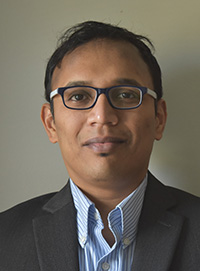
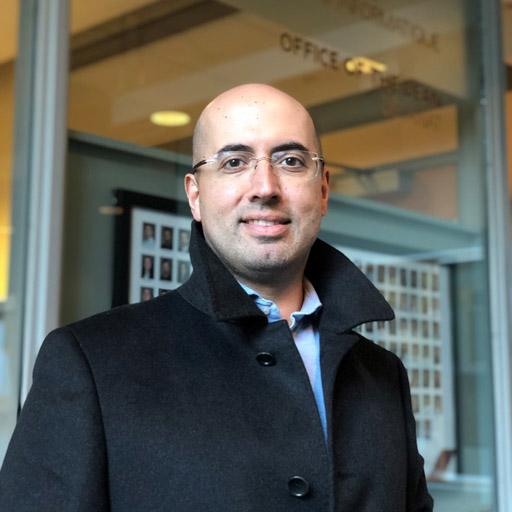
Terence Lee Robinson is a Professor at Cornell AgriTech , affiliated with the School of Integrative Plant Science and Horticulture Section . His work focuses on applied fruit crop physiology to enhance global fruit production. Education : PhD in Horticulture (1984) and MS in Horticulture (1982) from Washington State University; BS in Plant Science (1978) from Brigham Young University. Research Interests center on solving practical fruit production challenges through orchard systems analysis , rootstock evaluation , and crop load management . His field-oriented studies integrate biological and economic assessments of orchard performance. Recent Publications highlight his expertise in apple rootstock testing , chemical thinning , and nutrient management , with global implications for improving fruit quality and orchard productivity under diverse conditions. Scientific Honors : Elected Fellow, American Society for Horticultural Science (2021) Wilder Medal, American Pomological Society (2021) International Fruit Tree Association Hall of Fame (2015) Extension Leadership includes fostering collaborations between Cornell, Michigan State University, and Ontario Canada extension teams, while editing the NY Fruit Quarterly to disseminate research findings.
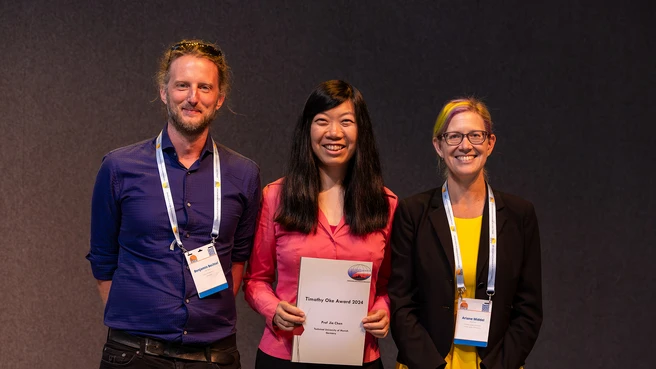
Professor Jia Chen is a Professor of Environmental Sensing and Modeling at the Technical University of Munich (TUM), holding positions in both the TUM School of Computation, Information and Technology (CIT) and the Department of Electrical and Computer Engineering, as well as the Department of Civil, Geo and Environmental Engineering. She also maintains an affiliation as an Associate at Harvard University. Her pioneering work focuses on developing novel optical sensors and atmospheric models to monitor and quantify greenhouse gas emissions in urban environments. Professor Chen's most significant contribution is the development of the differential column measurement method and the establishment of MUCCnet, the world's first permanent urban column sensor network. This groundbreaking work enables continuous, city-wide monitoring of greenhouse gases. Her research team has made notable discoveries, including quantifying methane emissions from events like the Munich Oktoberfest and identifying previously underestimated urban emission sources. Her research spans atmospheric science, environmental engineering, and climate change mitigation, with particular emphasis on: Urban greenhouse gas monitoring systems Advanced atmospheric modeling techniques Sensor network development for environmental monitoring Integration of machine learning with emission quantification Urban air quality assessment methodologies Professor Chen has received numerous prestigious awards including: Timothy Oke Award (2024) for original research in urban climatology ERC Consolidator Grant (2022) Arnold Sommerfeld-Award (2021) Germany's "Top 40 under 40" recognition by Capital Magazine (2020) Membership in the Global Young Academy (2021) She leads an extensive research group with numerous PhD students and postdoctoral researchers, and her work is supported by major funding from ERC, EU Horizon 2020, United Nations Environment Programme, NASA, ESA, German Federal Ministry of Education and Research, and German Research Foundation. Professor Chen has authored over 180 publications and 12 patents, with an h-index of 35.
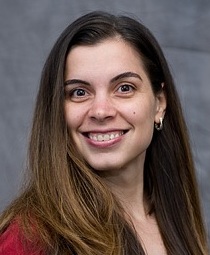
Elyse Rosenbaum is the Melvin and Anne Louise Hassebrock Professor in Electrical and Computer Engineering at the University of Illinois at Urbana-Champaign. She also serves as the Acting Associate Dean for Research at the Grainger College of Engineering. She is the director of the NSF-supported Center for Advanced Electronics through Machine Learning (CAEML), a collaboration between the University of Illinois, North Carolina State University, and Penn State University. Education: Ph.D. in Electrical Engineering, University of California, Berkeley, 1992 M.S. in Electrical Engineering, Stanford University B.S. in Electrical Engineering, Cornell University (with distinction) Research Interests: Her research focuses on machine learning applications in electronics, ESD-robust high-speed I/O circuit design, compact modeling, behavioral modeling of circuits, and CDM-ESD protection for advanced packaging technologies. Scientific Awards: IEEE Fellow for contributions to electrostatic discharge reliability of integrated circuits Best Student Paper Award, IEDM Outstanding and Best Paper Awards, EOS/ESD Symposium Technical Excellence Award, SRC NSF CAREER Award IBM Faculty Award ESD Association’s Industry Pioneer Recognition Award Advising and Grants: She supervises graduate and undergraduate researchers, primarily focusing on those with strong academic records and relevant experience. Her work is supported by NSF and other prominent organizations. Labs and Teams: She leads the CAEML center, which aims to apply machine learning to optimize microelectronic circuits and systems, enhancing design automation and reliability.
David Lindlbauer is an Assistant Professor at the Human-Computer Interaction Institute (HCII) within Carnegie Mellon University's School of Computer Science. He leads the Augmented Perception Lab and co-directs the CMU Extended Reality Technology Center (XRTC) . His research bridges Human-Computer Interaction, Computer Graphics, and Computer Vision to create adaptive interfaces that enhance human-digital interaction. Education : PhD (summa cum laude) from Technische Universität Berlin , MSc and BSc from University of Applied Sciences Upper Austria Previous Affiliation : Postdoctoral Researcher at ETH Zurich (2018-2020) David's research focuses on understanding human perception of digital information and developing computational approaches to optimize AR/VR interface usability. Key areas include: Context-aware adaptive interfaces Visual saliency and attention modeling Spatial audio-haptic systems Optimal placement algorithms Object manipulation in Remixed Reality Diminished/ambient MR interfaces His 15 most recent publications (2024-2025) span topics in adaptive XR interfaces, multimodal notifications, haptic systems, and spatial cognition. These works appear at venues like ACM CHI, ACM UIST, IEEE VR, and Frontiers in VR. Common themes include: Machine learning for interface adaptation Human factors in XR design Real-time environment analysis Privacy-aware display systems Collaborative MR interfaces Accessibility enhancements Scientific Recognition : Best Paper Honorable Mention Award (ACM CHI 2024) Best Paper Award (ACM ISS 2023) ETH Zurich Postdoctoral Fellowship Multiple best paper recognitions at CHI, UIST, and IEEE VR Teaching & Leadership : Course developer for CMU's "Interactive Extended Reality" Mentor for NASA SUITS Challenge team Co-chair roles at CHI and UIST Overseeing PhD students and research interns
Abhijit Sarkar is a Professor in the Department of Civil and Environmental Engineering at Carleton University, Ottawa. His work centers on computational dynamics and probabilistic modeling, with office MC 3076 in the Minto Centre for Advanced Studies in Engineering and contact details including phone (613) 520-2600 x6320 and email abhijit_sarkar@carleton.ca . Education: D.Phil. from University of Oxford M.Sc. from Indian Institute of Science (IISc) B.E. from Calcutta University Professional Engineer (P.Eng.) designation His research drives innovation in uncertainty quantification for complex engineering systems. Core interests include dynamics of nonlinear structures, probabilistic mechanics for stochastic finite element methods, and Bayesian inference frameworks for parameter estimation. He pioneers scalable high-performance computing solvers for large-scale systems and sparse learning algorithms to address overfitting in statistical modeling. Recent publications (2022-2024) reveal three dominant trends: (1) Bayesian model calibration for stochastic compartmental systems applied to epidemiology and aerospace, (2) domain decomposition techniques for scalable uncertainty quantification in stochastic PDEs, and (3) sparse learning methods for nonlinear aerodynamic encoding. Key applications span wind turbine vibration analysis, flutter margin prediction, MEMS resonator optimization, and geospatial pandemic modeling. Scientific awards: No awards, fellowships, or medals listed in the source material Graduate supervision includes 6 current students (Ajay Kumar, John Clarabut, Nastaran Dabiran, Sakhi Mittal, Michael Pantano, Brandon Robinson) and 18 graduated students across 17 years (2006-2023). His research leverages high-performance computing for projects in structural dynamics, aeroelasticity, and computational epidemiology, frequently co-supervised with Dominique Poirel and Chris Pettit. Notable grants focus on wind tunnel validation for nonlinear systems and pandemic spread modeling. Based in the Minto Centre for Advanced Studies in Engineering, his computational mechanics group develops algorithms for stochastic dynamics using Carleton University's high-performance computing infrastructure. Collaborations span aerospace engineering (flutter analysis), civil infrastructure (seismic wave propagation), and public health (Covid-19 modeling).
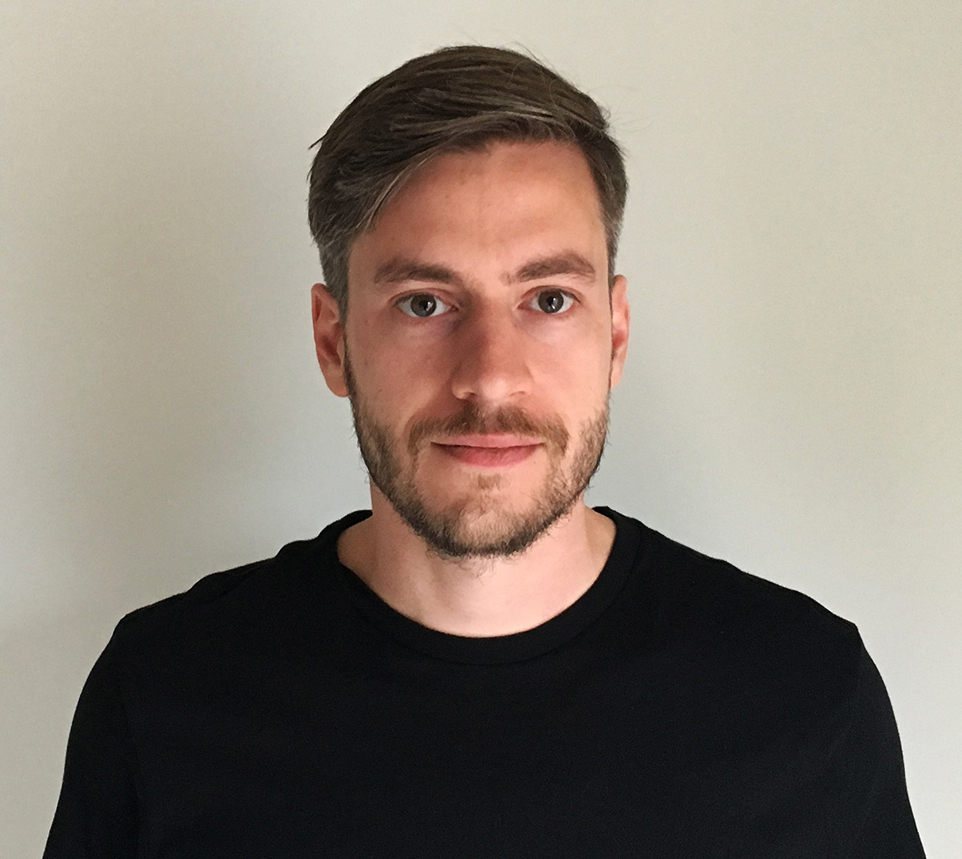
Christopher Ferrie is an Associate Professor at the University of Technology Sydney (UTS), where he is affiliated with the Faculty of Engineering and Information Technology and the Centre for Quantum Software and Information (QSI). His academic career spans quantum information science, machine learning, and scientific education, with a strong emphasis on both theoretical research and public engagement through science communication. Full-time faculty member at UTS Active researcher in quantum information science Director of the Centre for Quantum Software and Information Author of numerous scientific publications and popular science books Dr. Ferrie earned his PhD in Applied Mathematics from the Institute for Quantum Computing and University of Waterloo in Canada in 2012. His doctoral work focused on quantum information and laid the foundation for his subsequent research career in quantum computing and related fields. Dr. Ferrie's research interests span several interconnected domains within quantum information science. His primary focus is on quantum estimation and control, with particular emphasis on applying machine learning techniques to solve statistical problems in quantum information science. He investigates how quantum systems can be characterized, controlled, and optimized for practical applications. His work bridges theoretical quantum physics with practical implementations, exploring how quantum phenomena can be harnessed for computational advantage. Recent research directions include quantum machine learning, quantum neural networks, and quantum optimization algorithms, with applications ranging from quantum state tomography to solving combinatorial optimization problems. Analysis of Dr. Ferrie's recent publications reveals a strong focus on practical quantum computing challenges. His work consistently addresses the intersection of quantum information theory and machine learning, with particular emphasis on making quantum algorithms more efficient, interpretable, and robust against noise. A significant portion of his recent research explores variational quantum algorithms and their optimization, reflecting the current priorities in near-term quantum computing. His publications also demonstrate growing interest in quantum machine learning applications and the development of techniques for quantum error mitigation and characterization. Dr. Ferrie has secured multiple research grants supporting his work in quantum computing and related fields. His funded projects span quantum control, quantum probability, quantum machine learning, and statistical decision theory, reflecting the breadth of his research program. While specific major awards aren't detailed in the available information, his sustained funding and publication record indicate significant recognition within the quantum information science community. Dr. Ferrie is actively involved in research supervision and teaching, with current funding supporting multiple PhD students and postdoctoral researchers. His teaching responsibilities include courses on quantum computing, where he introduces students to the fundamentals of quantum information processing. His research group at the Centre for Quantum Software and Information focuses on developing novel quantum algorithms and exploring the practical implementation challenges of quantum computing. The Centre for Quantum Software and Information at UTS serves as the primary research environment for Dr. Ferrie's work. This center brings together researchers working on various aspects of quantum computing, from hardware development to algorithm design and applications. Dr. Ferrie's team within the center focuses specifically on quantum software development, quantum algorithm design, and the application of machine learning techniques to quantum information problems. The collaborative environment enables interdisciplinary research that bridges theoretical quantum physics with practical computing applications.
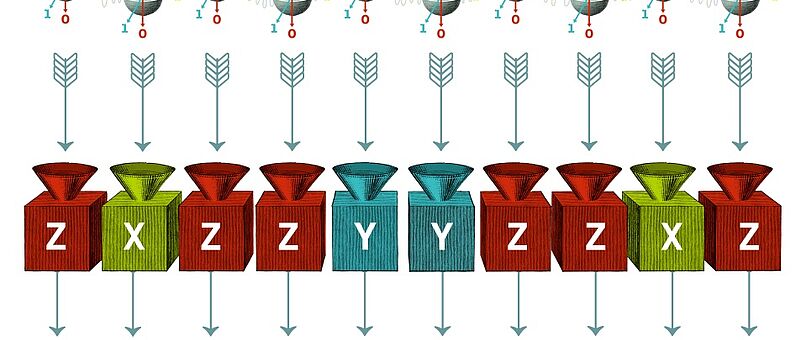
Dr. Borivoje Dakic is an Associate Professor at the University of Vienna , affiliated with the Faculty of Physics and the Quantum Optics, Quantum Nanophysics and Quantum Information department. His research spans foundational and applied aspects of quantum theory. Operational reconstruction of quantum formalism Quantum interference as a resource for communication Tomography of large-scale quantum systems Macroscopic quantum phenomena His work includes scalable verification techniques for quantum devices and collaborations with experimental teams like Philip Walther’s and Markus Aspelmeyer’s groups. He received the Marko Jarić Prize (2025) for his contributions. Recent projects focus on diagnostics of quantum devices (FWF BeyondC SFB), information-theoretic foundations of quantum interference (FWF P36994), and local operations in quantum field theory (Cluster of Excellence QuantA). His research on quantum coherence in networks and macroscopic entanglement challenges traditional assumptions about quantum-classical boundaries. Publications emphasize resource-efficient tomography, device-independent verification, and foundational frameworks for quantum statistics and field theory. Teaching: Quantum Information (2025W), Theory in Quantum Optics (2025S), VCQ Summerschool Labs: Dakić Group at University of Vienna
Nina Balcan is the Cadence Design Systems Professor of Computer Science at Carnegie Mellon University's School of Computer Science, with affiliations in both the Machine Learning Department (MLD) and Computer Science Department (CSD). She maintains her office in Gates Hillman Center (GHC) 8205 and is a prominent figure in theoretical machine learning and algorithmic game theory. Her research spans multiple critical areas in computer science, with a strong focus on the theoretical foundations of machine learning, algorithm design and analysis, and computational approaches to game theory and economics. Balcan has made significant contributions to developing principled algorithms for deep learning, learning with limited supervision, representation learning, and life-long learning. Her work uniquely bridges theoretical computer science with practical applications, particularly in the analysis of complex objects and processes, including algorithmic learning and multi-agent systems. Analysis of her recent publications reveals a strong trend toward data-driven algorithm design, with particular emphasis on learning to optimize combinatorial algorithms, revenue-maximizing mechanisms, and robust learning frameworks. Her work consistently demonstrates how theoretical guarantees can inform practical algorithm development across diverse domains from optimization to economics. Major Awards and Honors: ACM Fellow AAAI Fellow Simons Investigator 2019 ACM Grace Murray Hopper Award (awarded to the outstanding young computer professional of the year) Winner of Outstanding Student Paper Award at UAI 2024 Winner of Exemplary Artificial Intelligence Track Paper Award at ACM EC 2019 Runner Up Best Paper Award at COLT 2012 Professor Balcan has served as Program Committee Co-chair for major conferences including NeurIPS 2020, ICML 2016, and COLT 2014, demonstrating her leadership in the machine learning community. Her teaching portfolio at CMU includes foundational courses such as 10-701 Machine Learning, 10-315 Machine Learning, and 10-715 Advanced Introduction to Machine Learning, where she has mentored numerous students in both theoretical and applied aspects of the field. Her research group focuses on developing theoretically sound yet practically applicable machine learning algorithms, with particular attention to algorithm configuration, data-driven optimization, and learning in strategic environments. Current projects involve learning to improve combinatorial algorithms, designing revenue-maximizing mechanisms, and developing robust learning frameworks that can operate effectively in challenging environments.
Mustafa Akan is an Associate Professor of Operations Management at the Tepper School of Business, Carnegie Mellon University . He holds a Ph.D. in Managerial Economics and Strategy from Northwestern University (2008) and a B.Sc. in Industrial Engineering from Carnegie Mellon University (2004). Research Interests : His work focuses on healthcare operations management , queueing theory , and dynamic pricing strategies . He investigates efficient resource allocation in service systems, equity in organ transplantation, and optimization of remanufacturing processes under uncertainty. His research bridges applied mathematics , computation theory , and business strategy . Article Trends : Recent publications address liver allocation equity (2025), two-sided market pricing (2025), and task allocation in tandem queueing systems (2024). Earlier works explore transplant health disparities (2024), remanufacturing procurement (2023), and fashion product pricing (2021). Common themes include service science , healthcare operations , and policy-driven optimization . Scientific Awards : Best Dissertation Award (INFORMS Aviation Applications Section, 2008) Xerox Faculty Chair (2009) INFORMS Best Paper in Service Science (2009) POMS Healthcare Best Paper Award (2012) Lave-Weil Prize (2013) Gerald L. Thompson Teaching Award (2014) NSF CAREER Award (2014) Mehrotra Research Excellence Award (2024) DEIJ Best Paper Award (2023) Teaching & Grants : He teaches courses like Healthcare Operations , Risk Analytics , and Demand Management & Price Optimization . His NSF CAREER Award (2014) supports research in operational systems. He has served on committees for INFORMS , POMS , and Naval Research Logistics .
Dr. Kalyan R. Piratla is a Professor in the Department of Civil Engineering at Clemson University's College of Engineering, Computing and Applied Sciences. His research focuses on underground construction, infrastructure resilience, and sustainable water systems. He leads the Center for Research in Underground Infrastructure Systems Engineering (CRUISE), which develops decision-making models to enhance the sustainability and resilience of underground infrastructure systems. Ph.D. in Construction Management, Arizona State University (2012) Masters in Civil Engineering, Indian Institute of Technology Madras (2008) Bachelors in Civil Engineering, Indian Institute of Technology Madras (2007) Dr. Piratla's research integrates interdisciplinary approaches across water supply systems , power systems engineering , wireless sensing technologies , and graph theory . His work emphasizes: Seismic resilience metrics for pipeline systems Decentralized water reuse planning Vibration-based infrastructure monitoring Interdependencies among lifeline infrastructures Transportation project delivery optimization Research trends include: Application of machine learning to pipeline leakage detection Advanced seismic vulnerability assessment Life cycle cost analysis of water reuse systems Integration of geotechnical and structural monitoring Scientific Awards S.E. Liles, Jr. Distinguished Professor Dr. Piratla actively supervises graduate research and offers assistantships for PhD students. His work benefits water utilities, construction contractors, and emergency response agencies through innovative monitoring techniques and resilience enhancement frameworks . His CRUISE research group explores: Interdependencies among critical infrastructure systems Transportation project delivery efficiency Collaborations spanning power systems and wireless sensing
Panagiota (Nota) Klentrou is a Distinguished Professor and Dean of the Faculty of Applied Health Sciences at Brock University, specializing in Kinesiology. Her research focuses on exercise physiology , bone development , and the health implications of sport training in youth , particularly examining cellular mechanisms linking exercise, diet, and lifelong bone health. Supported by NSERC, CIHR, Osteoporosis Canada, and the International Gymnastics Federation Education: PhD, FCSEP (Fellow of the Canadian Society of Exercise Physiology) Her work spans bone physiology , inflammatory responses to exercise , and sclerostin-mediated tissue cross-talk , with recent studies exploring the impact of obesogenic diets , acute exercise , and nutritional interventions on skeletal growth and adaptation. Key findings include the role of sprint interval training in modulating adipose tissue Wnt signaling and the effects of dairy consumption on bone turnover markers. Scientific Awards & Distinctions Fellow, Canadian Society for Exercise Physiology (CSEP), 2020 Marilyn Rose Graduate Leadership Award, 2017 TVO's Best Lecturer nominee, 2010 Chancellor’s Chair for Research Excellence, Brock University, 2009 Award for Distinguished Research & Creative Activity, Brock University, 2006 Dr. Klentrou actively supervises graduate and undergraduate students in projects related to bone physiology , inflammation , and exercise adaptation , and collaborates with organizations like Osteoporosis Canada and the International Gymnastics Federation.
D. Eric Holt is an Associate Professor of Spanish and Linguistics at the University of South Carolina, affiliated with the Department of Languages, Literatures, and Cultures and the College of Arts and Sciences. He has held academic appointments since 1994, including visiting roles at Georgetown University and lecturing positions in Ecuador and Spain. His expertise spans Hispanic linguistics, historical linguistics, second language acquisition, and phonological theory, with a focus on Optimality Theory and its applications to Spanish and Portuguese. Educated at Occidental College (BA), Georgetown University (MS, PhD), and with extensive summer programs in linguistics, Holt's research explores sound change, dialectology, and L2 pronunciation acquisition. He has supervised numerous graduate theses and dissertations, including notable works on connected speech perception and language contact phenomena. His teaching portfolio includes advanced courses on Spanish linguistics, phonetics, and historical language evolution. Holt has led international study programs in Spain, Costa Rica, and Ecuador, and contributes to academic service as an associate editor of Studies in Hispanic and Lusophone Linguistics and through professional organizations like Phi Beta Kappa. Holt's grants include funding for research on L2 speech perception and技术创新 in pronunciation teaching. He has presented globally at conferences such as NWAV and LSA, and his work appears in top journals like Probus and Georgetown University Round Table . His current projects include books on Optimality Theory in Spanish linguistics and debunking language myths.
Jeanna Matthews is a Full Professor of Computer Science at Clarkson University and an affiliate at Data and Society. She holds a PhD from UC Berkeley (1999) and teaches courses ranging from operating systems to cybersecurity. Her research focuses on algorithmic transparency, AI ethics, and societal impacts of automated systems. Matthews is a prominent ACM leader, serving on multiple committees including the Technology Policy Subcommittee on AI Accountability. She has pioneered work on forensic software analysis in criminal justice systems and delivered DEF CON presentations on virtualization security and adversarial testing. Awards include ACM Distinguished Speaker and Fulbright Specialist roles. Her work emphasizes open-source tools and critical thinking in education, extending to global service learning programs in the Dominican Republic and Brazil. Education: PhD in Computer Science (UC Berkeley, 1999), B.S. in Math/Computer Science (Ohio State, 1994), B.A. in Spanish (SUNY Potsdam, 2016). Research Interests: Cybersecurity vulnerabilities, algorithmic accountability frameworks, automated decision systems in justice contexts, and ethical AI design. Recent projects include investigating bias in DNA forensic software through a Brown Institute grant and analyzing political polarization on social platforms. Awards & Recognition: ACM Distinguished Speaker (2018-present) Fulbright Specialist (2018-present) 2018-2019 Brown Institute Magic Grant ACM SIGOPS Chair (2011-2015) ACM Special Interest Group Governing Board Chair (2016-2018) Teaching & Outreach: Designed courses integrating open-source tools and critical inquiry, including abroad programs in Mexico, Brazil, and the Dominican Republic. Advocates for lifelong learning strategies and questioning underlying assumptions in computing systems. Key Projects: Forensic Software Accountability: Examining discrepancies in DNA analysis tools Algorithmic Transparency: Frameworks for auditing automated systems Cybersecurity Education: Adversarial testing methodologies for justice software
Minyi Huang is a Professor in the School of Mathematics and Statistics at Carleton University. His research focuses on Mean Field Stochastic Control, Stochastic Algorithms in Multi-Agent Systems, and Wireless Networks. He holds a Ph.D. from McGill University (2003) and has held postdoctoral positions at the University of Melbourne and the Australian National University. Dr. Huang is a Fellow of IEEE and a Member of SIAM. Education: Ph.D. in Electrical and Computer Engineering, McGill University (2003) M.Sc. in Systems and Control, Chinese Academy of Sciences (Beijing) B.Sc. in Mathematics, Shandong University (Jinan, China) Research Interests: Huang's work centers on stochastic control, mean field games, and multi-agent systems. His contributions include theoretical advancements in mean field social optimization, graphon-based control frameworks, and applications in wireless networks and economic models. He has organized workshops on Mathematical Cybernetics and Stochastic Processes, fostering interdisciplinary collaboration. Scientific Awards: Fellow of the IEEE Advising & Grants: Huang has advised numerous graduate students on topics in stochastic control and mean field theory. His grants include funding for international PhD students through Carleton's initiatives. He collaborates on projects involving mean field models for production output and social dynamics. Labs/Teams: Associated with the Ottawa-Carleton Institute for Mathematics and Statistics (OCIMS), contributing to collaborative research in control theory and applied mathematics.
Mahdi S. Hosseini is an Assistant Professor in the Department of Computer Science and Software Engineering at Concordia University and a faculty member of the Applied AI Institute. He holds a PhD from the University of Toronto (2016) and completed a postdoctoral fellowship at UofT, supported by MITACS-Elevate and NSERC fellowships. His research focuses on advancing deep learning and computer vision for computational pathology and healthcare technologies, aiming to develop AI tools for clinical diagnosis. He currently supervises graduate students and has published over 30 papers and two patents. Education: PhD in Electrical and Computer Engineering from the University of Toronto (2016), postdoctoral training at UofT collaborating with Huron Digital Pathology Inc. (Waterloo, Ontario). Research interests include deep learning, computer vision, computational pathology, medical imaging, and AI ethics (P4AI project). His work emphasizes developing explainable AI systems for clinical pathology, biomarker discovery, and efficient learning algorithms. Professional service includes serving as Area Chair for NeurIPS 2023, CVPR 2023-2024, and ECCV 2024. He reviews grants for CIHR, NSERC, and serves on program committees for key conferences (ICCV, CVPR, NeurIPS). Teaching includes courses on applied AI, machine learning, and deep learning for computational pathology at both graduate and undergraduate levels. Awards: MITACS-Elevate Fellowship (postdoc), NSERC Research Funding (2016-2017). His work has led to patents in diagnostic systems and has collaborated with hospitals and pathologists to advance clinical applications. Labs/Teams: Active collaborations with the Applied AI Institute at Concordia, Huron Digital Pathology, and healthcare institutions. Research emphasizes interdisciplinary approaches between computer science and clinical medicine.