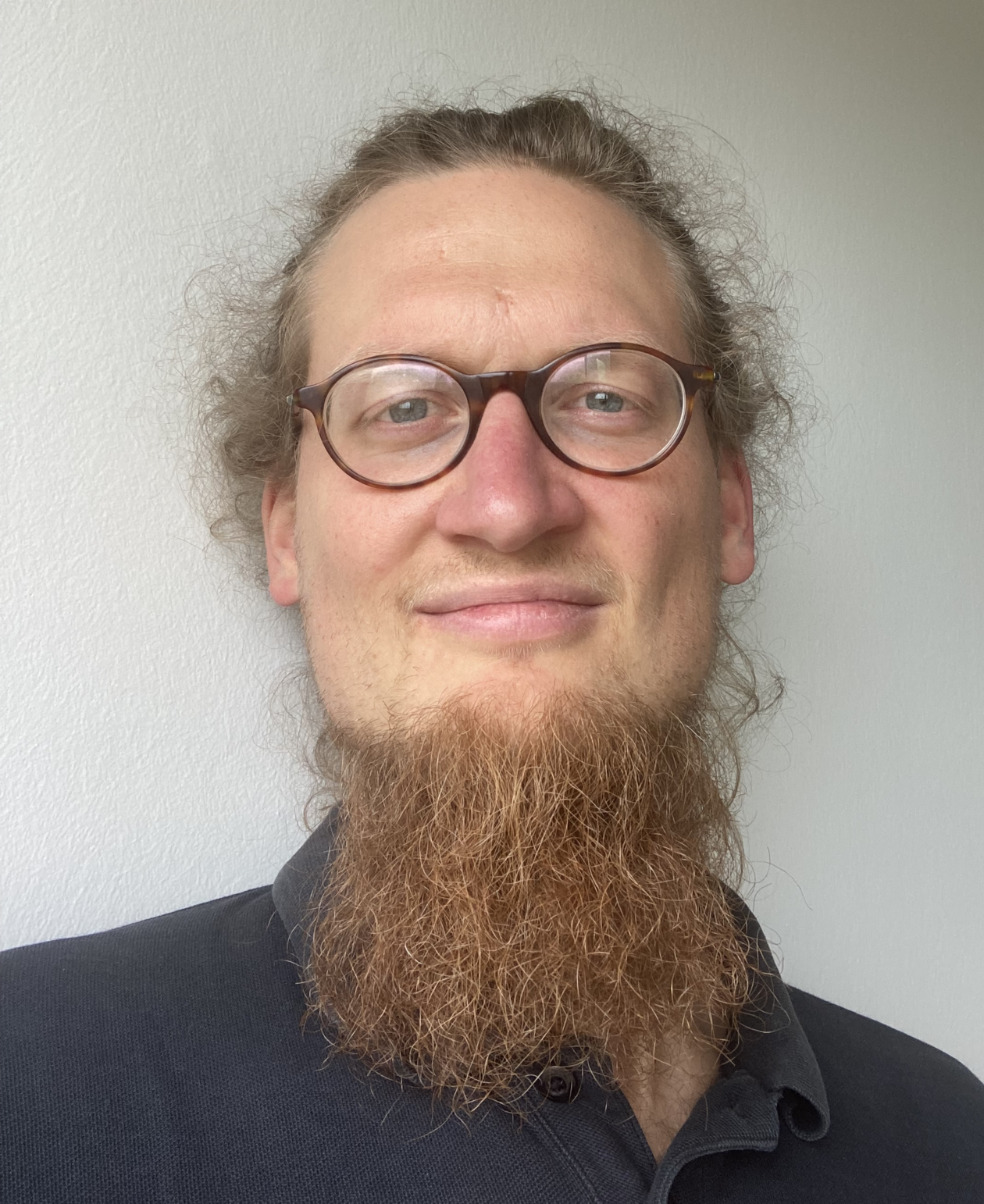
Matthias Karlbauer is a Postdoctoral Researcher in the Cognitive Modeling group at the Wilhelm Schickard Institute for Computer Science, University of Tübingen. He is currently working in the Land-Atmosphere Feedback Initiative (LAFI), focusing on physics-aware machine learning for climate and environmental modeling. His work bridges cognitive science, artificial intelligence, and geophysical systems. PhD in Cognitive Modeling, University of Tübingen (2019–2024) Master of Cognitive Science, University of Tübingen (2015–2018) Bachelor of Cognitive Science, University of Tübingen (2012–2015) Scholar, International Max Planck Research School for Intelligent Systems (IMPRS-IS) His research centers on physics-aware neural networks , spatiotemporal data prediction , and deep learning for environmental systems . He develops models like DISTANA and finite volume neural networks to integrate physical laws into neural architectures, enabling robust forecasting of temperature, geopotential, and fluid dynamics. His interests also extend to generative models, recurrent networks, and graph neural networks applied to climate and sustainability challenges. The recent publications show a strong trend toward integrating partial differential equations with neural networks, denoising spatiotemporal signals , and modeling physical processes using hybrid AI. His work emphasizes interpretability, physical consistency, and real-world applicability in climate science and cognitive modeling. Matthias has actively supervised multiple Bachelor’s and Master’s students on projects related to neural network applications in physics and climate data. He has contributed to teaching as a tutor and lecturer in courses such as Generative and Recurrent Neural Networks , Advanced Artificial Neural Networks , and Graph Neural Networks . While no formal grants are mentioned, his IMPRS-IS affiliation suggests institutional funding support. He is part of the Cognitive Modeling research group at the University of Tübingen, collaborating on projects involving neural modeling of cognitive and physical processes, with a focus on sustainability and climate protection.