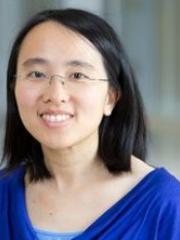
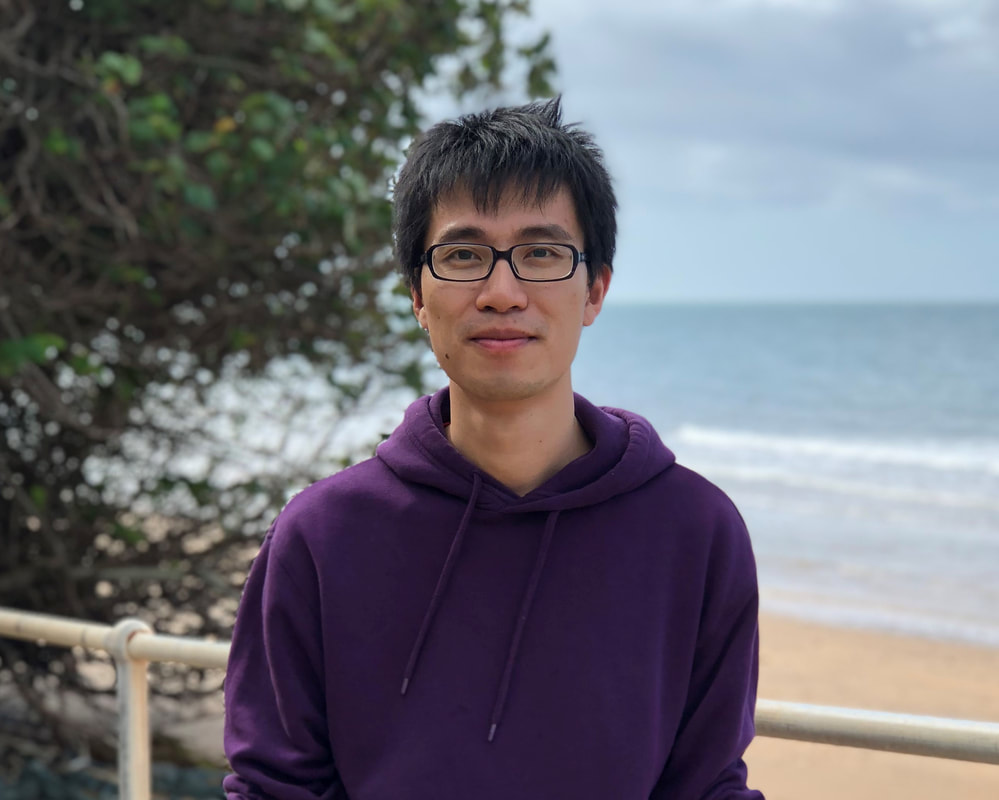
Dr. Priscilla Man is a Senior Lecturer at the School of Economics, University of Queensland (UQ), and an Affiliate of the Centre for Behavioural and Economic Science. She holds a PhD from the University of Chicago. Her research focuses on Economic Theory, Game Theory, Political Economy, Voting Systems, Econometrics, and Applied Economics. Key areas include voting systems, coordination games, and theoretical models in social choice and welfare analysis. Dr. Man has contributed to projects such as Strategic Interaction with Limited Memory: A Theoretical Approach (2018–2022) and Forward Induction Equilibrium (2010–2011). Her work bridges experimental and theoretical approaches, addressing issues like electoral systems, mandate theories, and stochastic stability in game-theoretic frameworks. She is available for supervision and actively engages in interdisciplinary research through affiliations with UQ’s Behavioral and Economic Science initiatives. Publications highlight her expertise in welfare economics, coordination dynamics, and political economy, with contributions to journals like Economic Theory , Games and Economic Behavior , and Experimental Economics . Her research underscores rigorous methodological innovation and real-world policy relevance.
Dr. Maria Yanotti is a Senior Lecturer in Economics at the Tasmanian School of Business and Economics (TSBE) , University of Tasmania. She holds a PhD from the same institution and a Licenciatura in Economics from Universidad Nacional de Tucuman, Argentina. Her academic work centers on housing markets, housing finance, and macroeconomic policy, with strong interdisciplinary engagement in environmental and social economics. Position: Senior Lecturer in Economics Institution: University of Tasmania School: Tasmanian School of Business and Economics Department: Economics Email: Maria.Yanotti@utas.edu.au Languages: English, Spanish (Latin American) Maria’s research expertise lies in empirical economics, particularly in housing market dynamics, household financial wellbeing, and regional development. She applies advanced econometric methods to large datasets, including proprietary loan-level data (e.g., DOMINO), to analyze mortgage behavior, investment patterns, and policy impacts. Her interdisciplinary work extends to valuing environmental assets, energy efficiency in housing, microplastics, and the economic impact of creative industries. Her research aligns with several UN Sustainable Development Goals, including Reduced Inequalities (SDG 10), Sustainable Cities (SDG 11), and Gender Equality (SDG 5). Her recent publications explore topics such as home bias in property investment, the risks of 'liar loans', and the economic implications of federal budget allocations. These works reflect a consistent trend toward policy-relevant economic analysis, often engaging with national institutions like the RBA, ATO, and Housing Australia. The articles demonstrate expertise in behavioral economics, financial regulation, and regional economic disparities. Maria is actively involved in professional service: she is the Tasmanian chair of the Women in Economics Network (WEN) and a member of the Economic Society of Australia (Tasmanian branch). She has received research funding from AHURI (Australian Housing and Urban Research Institute) and has advised the National Housing Finance and Investment Corporation. She supervises and teaches in areas such as microeconomics, statistics, quantitative methods, finance for managers, and data analysis. Her teaching supports both undergraduate and postgraduate programs at TSBE. She is also a sought-after expert for media commentary, public speaking, consulting, and research collaboration. Maria leads and participates in multidisciplinary research teams focused on regional development, environmental management, and social policy. Her work often bridges economics with environmental science, public policy, and urban planning, contributing to a holistic understanding of economic wellbeing in regional contexts like Tasmania.
Professor Andreas Chai is a faculty member in the Department of Accounting, Finance and Economics at Griffith University, where he holds the rank of Professor. He serves as Director of the Academy of Financial Crime Investigation and Compliance and is affiliated with the Griffith Asia Institute and the Centre for Work, Organisation and Wellbeing. His research focuses on applied microeconomics, particularly household behavior, the shadow economy, and global financial transaction modeling. He has contributed to projects for organizations like APEC, the United Nations, and the Queensland government. His work spans topics such as environmental economics, development economics, and the impact of technology on financial inclusion. Prof. Chai has extensive experience in economic policy, having previously worked at the Commonwealth Treasury and the Productivity Commission. His funded research includes consultancy projects with institutions like the Commonwealth Bank of Australia and Hong Kong University of Science and Technology. He is currently supervising doctoral students exploring anti-money laundering regulations, financial sector reforms in Pakistan, and environmental financial crime in banking. His research interests also include consumer behavior evolution, poverty measurement using novel methodologies, and the application of big data in economics. He has published in prestigious journals such as the Journal of Economic Perspectives and Journal of Economic Behavior & Organization .
Ishita Chatterjee is a Senior Lecturer in the Economics Program at the UWA Business School, University of Western Australia (UWA), since 2010. She holds a PhD from Monash University and has expertise in applied microeconomics, focusing on industrial organization, development economics, and gender issues. She serves on key committees including the UWA Coursework Scholarships Committee (2023–2025), and previously on the UWA Business School Research Committee (2014–2018). Her research addresses topics like human capital development, corruption, public school policies, and wellbeing of women and children. She has supervised numerous PhD, Honours, and Masters students and has received grants including the UWA Futures Fund and UWA Research Collaboration Award. Education: PhD, Competition, Commercial Piracy and Innovation, Monash University (2010) MPhil, Indira Gandhi Institute of Development Research (2006) MA, Jawaharlal Nehru University (2002) BSc, Presidency University, Kolkata (2000) Research Interests: Her work spans applied microeconomics, industrial organization, development economics, and gender-focused issues. Current projects include studies on crime/corruption, public school investments in India, and the impact of air pollution on altruistic behavior in China/India. She collaborates internationally with institutions like Saint Mary’s University (Canada) and the Central University of Finance and Economics (China). Recent Research Trends: Her publications analyze policy impacts on education, gender dynamics in family decision-making, and environmental influences on social behavior. Recent work highlights the role of institutions in addressing corruption and the effects of public policy on educational access and outcomes. Awards: UWA Business School & BHP Billiton Distinguished Research Awards (2017) Ahern Early Career Researcher Application Incentive Award (2015) Multiple UWA Research Development Awards (2014, 2011) Supervision & Grants: Supervised 5 PhD completions and numerous Honours/Masters students. Secured grants including UWA Futures Fund Small Grants (2022, 2021) and the UWA Research Collaboration Award (2022). Her work contributes to UN SDGs related to quality education and gender equality. Labs/Teams: Collaborates with the Australia-India Institute as an Honorary Fellow and co-leads projects with global partners on corruption, education, and demographic economics.
Vladimir Smirnov is an Associate Professor in the School of Economics at the University of Sydney , affiliated with the Faculty of Arts and Social Sciences. His research spans game theory , industrial organization , and microeconomic modeling , focusing on strategic timing, market entry, collusion, and team dynamics. Education: PhD from Australian National University (2002). Smirnov’s research explores timing games with applications to market competition, tournaments, and investment strategies. He investigates collusion mechanisms in markets with price dispersion and fringe competition, and applies machine learning to energy economics in forecasting electricity imbalance prices. His recent work addresses team diversity , work intensification , and organizational communication . His publications appear in journals like Economic Theory , Games and Economic Behavior , and Energy Economics , with 15 articles since 2020 highlighting trends in strategic equilibrium , deep learning , and market dynamics . Collaborators include Alexander Matros, Andrew Wait, and Nicolas de Roos. Smirnov’s contributions to economic theory emphasize sequential investment , hold-up problems , and information asymmetry in organizational decision-making. His work informs policy on market regulation, innovation incentives, and team productivity.
Dr. Haishan Yuan is a Senior Lecturer in the School of Economics at the University of Queensland (UQ). He holds a Ph.D. in Economics from the University of Maryland, College Park (2014). His research focuses on political economy, development economics, applied microeconometrics, and public economics. He is affiliated with the Centre for Behavioural and Economic Science and the Tax and Transfer Policy Institute at the Australian National University. His work spans topics such as voting behavior, disaster policy, capital controls, and educational peer effects. Notable projects include analyzing daylight saving time’s energy impact and examining how parents respond to sugary drink regulations in childcare settings. He is actively involved in supervising doctoral candidates across diverse microeconomic topics. Recent publications include studies on early voting laws’ partisan effects and the economic implications of EU tariff waivers for disaster-stricken Pakistan. Dr. Yuan’s research emphasizes empirical strategies to address real-world policy questions, with an emphasis on cross-sectional and panel data methodologies.
Ellen Stuart is a Lecturer at the School of Economics, University of Sydney, and an affiliate of the MIT Economics Department and Policy Impacts. Her research focuses on applied microeconomics with specialization in public economics and behavioral responses to taxation policies. Her primary research areas include: Public Economics Taxation Household Finance Tax Enforcement Stuart employs administrative data to analyze individual behavioral responses to tax systems, particularly examining how tax audits affect different income groups and how enforcement mechanisms influence compliance. Her work bridges theoretical economic models with real-world policy implications, using quasi-experimental methods to evaluate IRS procedures and retirement savings regulations. Current projects include welfare analysis of tax audits across the income distribution. Ellen Stuart received her PhD in Economics from the University of Michigan in 2021 following a postdoctoral fellowship at Harvard University and Policy Impacts. She maintains active research collaborations with leading institutions including MIT and Harvard.
Denzil Fiebig is Professor in the School of Economics at UNSW Business School since 2001, with prior appointments including chair positions in econometrics at the University of Sydney. His international engagements include visiting roles at the University of Florida, University of Southern California, Tilburg University, Victoria University of Wellington, University of York, and Erasmus University. His research focuses on econometric methodology and applied health economics, particularly healthcare utilization and policy analysis. Recent publications demonstrate methodological innovation in analyzing healthcare systems, insurance markets, and economic behavior during health shocks. His work employs advanced econometric techniques including panel data models and discrete choice experiments to study physician behavior, health financing, and socioeconomic disparities in healthcare access.
Dr. Preety Pratima Srivastava is a Senior Lecturer in the School of Economics, Finance and Marketing at RMIT University, Melbourne. She holds a PhD in Econometrics from Monash University and previously served as a Senior Research Fellow at Monash University (2011–2012) and Research Fellow at the Central Bank of Mauritius (1995–2002). Her research focuses on applied microeconomics, health economics, and econometrics, particularly addressing topics like recreational drug consumption, labor market dynamics, and educational policy. She has secured two ARC/NHMRC grants and publishes in journals such as Journal of Health Economics and Health Economics . Currently, she serves as an Associate Editor for the Bulletin of Economic Research . Her work has been featured in media outlets like The Conversation, discussing topics such as alcohol taxation and the impact of parental smoking on children's health. Education: PhD in Econometrics (Monash University). Research Interests: Health Economics, Labour Economics, Economics of Education, Recreational Drug Consumption, Econometric Modeling. Grants & Awards: Two ARC/NHMRC grants. Media Contributions: Recent articles on tobacco-cannabis consumption dynamics and alcohol tax policies. Teaching: Extensive experience in statistics and econometrics courses at undergraduate and postgraduate levels. Service: Committee roles in workload allocation and research initiatives at RMIT School of Economics, Finance & Marketing.
Vai-Lam Mui is an Adjunct Associate Professor in the Department of Economics at Monash University. He holds a Ph.D. from the University of California, Berkeley (1992). His research focuses on applied microeconomic theory, behavioral and experimental economics, political economy, and the economics of organizations and institutions. He has been recognized with Monash University's Vice Chancellor's Citation for Outstanding Contribution to Student Learning (2020). His research examines human cooperation and conflict, with a focus on experimental methods. Key contributions include studies on repeated game strategies, inter-group cooperation, and institutional design. He has served as a Primary Chief Investigator on an Australian Research Council (ARC) project (2006–2008) analyzing sovereign transgression and group dynamics. Currently, he serves on the editorial board of the Journal of Behavioral and Experimental Economics . Publications span journals such as Games and Economic Behavior , Journal of Economic Behavior and Organization , and Journal of Conflict Resolution . His work addresses topics like prisoner's dilemma dynamics, coordinated resistance, and strategic succession planning.
Kristen Sobeck is a Research Fellow at the Tax & Transfer Policy Institute (TTPI) within the Australian National University's Crawford School of Public Policy. She is also an Affiliate with the Australian Research Council's Centre of Excellence for the Elimination of Violence Against Women. Her work focuses on public policy analysis, particularly in employment, tax, and transfer policies with a gender lens. She holds a PhD in Economics from ANU (2023), an MA from the University of Geneva (2011), and a BA from Smith College (2006). She has extensive experience with the International Labour Organization (ILO), including roles in Geneva and Argentina, where she addressed wage policies and informal economy challenges. Education: BA in Economics & French (Smith College, 2006); MA in Economics (University of Geneva, 2011); PhD in Economics (ANU, 2023). Research focuses on gender analysis in policy, domestic violence's economic impact, and tax reform. Notable projects include collaborations on domestic violence's effects on women’s employment and evaluations of welfare reforms using administrative data. She has published extensively on global wage trends, minimum wage policies, and labor market inequality. Grants include funding from the Paul Ramsay Foundation for domestic violence research and Commonwealth Treasury projects on tax policy. Her work has been featured in outlets like The Conversation and Sydney Morning Herald . Languages: English (native), French and Spanish (fluent). She chairs workshops like the Australian Gender Economics Workshop and contributes to international labor policy guides.
Dr. Kentaro Tomoeda is a Senior Lecturer at the University of Technology Sydney (UTS) within the Economics Discipline Group of the UTS Business School. He holds a PhD in Economics from Harvard University (2016), an MA (2010), and a BA (2008) in Economics from the University of Tokyo. His research focuses on microeconomic theory, market design, and education economics, particularly addressing equity in education markets and long-term impacts of market mechanisms. He is affiliated with the University of Tokyo Market Design Center and the Australian Education Markets Network. His publications span topics like stable matchings, mechanism robustness, and policy optimization. He teaches undergraduate courses in microeconomics and game theory at the PhD level. No awards are explicitly listed, but his work reflects significant contributions to market design theory. He supervises research students in economics and maintains active collaborations in applied mechanism design. Dr. Tomoeda’s funded research areas include mechanism design, market stability analysis, and educational policy evaluation. His current projects explore applications of game theory to real-world market systems and equitable resource allocation strategies.
Dr Christiern Rose is a Senior Lecturer in the School of Economics at The University of Queensland (UQ), within the Faculty of Business, Economics and Law. He holds a PhD in Economics from the University of Bristol (2016) and completed a post-doctoral fellowship at Toulouse School of Economics. His research focuses on applied microeconometrics with emphasis on peer effects, high-dimensional econometrics, health economics, and illicit drug markets. He is affiliated with the Centre for Efficiency and Productivity Analysis. Education: PhD in Economics, University of Bristol (2016) Post-doctoral Research, Toulouse School of Economics (2016–2018) Joined UQ in 2017 Research Interests: Dr Rose investigates peer effects in social networks, health economics (including mental health, healthcare utilization, and aging populations), and the economics of illicit drugs. He develops econometric methods for high-dimensional data and network analysis, with applications to policy evaluation and social spillovers. Research Trends: His work bridges theoretical econometrics and empirical policy analysis, often using advanced statistical techniques to address causal questions. Recent studies explore housing insecurity’s mental health impacts, physician networks’ influence on innovation adoption, and the role of social peers in addiction recovery. Grants & Supervision: Leading the ARC Discovery Project Understanding macroeconomic fluctuations with unobserved networks (2022–2025) Available for PhD supervision in health economics, network econometrics, and applied microeconometrics Labs/Teams: Affiliate of the Centre for Efficiency and Productivity Analysis, collaborating on productivity measurement and efficiency analysis methods.
Professor Lisa Farrell is a faculty member in the Department of Economics Finance & Marketing at RMIT University, affiliated with the College of Business and Law. Her research focuses on applied microeconomics, particularly the consumption of risky products like gambling, smoking, and alcohol, with an emphasis on societal wellbeing and policy implications. She has published in leading journals such as the American Economic Review and Social Science & Medicine. Her teaching spans programs like the Bachelor of Business (Honours) and Masters in Professional Accounting. She actively supervises PhD and Honours students, with notable advisees including Katie Belle (winner of the Meredith Edwards Award) and Claire Finn (Endeavor Award recipient). Current student research addresses topics like pollution and health outcomes, energy economics, and refugee integration. Professor Farrell’s work bridges academic rigor and policy impact, contributing to initiatives like VicHealth’s FOR15 Impact Case Study for ERA 2018. Her research emphasizes welfare-focused policy recommendations and spans interdisciplinary areas such as health economics, economic psychology, and social inclusion.
Christopher Parsons is an Associate Professor in the Department of Economics at the UWA Business School, The University of Western Australia. His research focuses on development economics with a specialization in migration and development. He holds a PhD from the University of Nottingham and has held research positions at the University of Oxford and the University of Sussex. Education: PhD in Economics, University of Nottingham MSc in Economics His research interests include international migration, high-skilled migration, forced migration, diaspora externalities, and migration policy. His work contributes to the UN Sustainable Development Goals related to reduced inequalities, decent work, and economic growth. His recent publications explore the impact of migration on electoral behavior, climate change adaptation, foreign direct investment, and trade. His research employs rigorous empirical methods and contributes to policy debates on migration and development. Scientific Awards and Honors: William Golding Junior Fellowship, Brasenose College (2013) Royal Economic Society Junior Fellowship (2011) Graduate Teaching Excellence Award (2011, 2010, 2009) BHP Billiton Distinguished Research Award (2016) Ahern Family Early Career Researcher Portfolio Prize (2016) UWA Business School Research Development Award (2015) He has received research funding from UWA, the University of Oxford (John Fell Fund, Oppenheimer Fund), and the ESRC. He serves as a peer reviewer for journals including the Journal of Development Economics, Economic Letters, and European Journal of Population. He has also conducted visiting research at the University of Bath and delivered training courses for IZA/DFID on policy evaluation. He supervises research projects on migration and development, including a recent project on degree recognition and migrants’ quality of life.