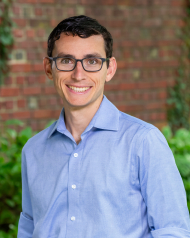
Zhongying Deng is a Research Fellow in the Department of Applied Mathematics and Theoretical Physics (DAMTP) at the University of Cambridge, affiliated with the Cambridge Image Analysis research group. His work focuses on advancing medical imaging technologies and computer vision through deep learning and domain adaptation techniques. Key contributions include developing benchmark datasets like TrafficCAM and TrafficMOT for traffic analysis, A-Eval for abdominal organ segmentation, and foundational models for medical AI such as GMAI-VL. His research bridges theoretical advancements in neural networks and practical applications in healthcare and transportation. His research interests span image segmentation, domain adaptation, neural network architectures, and multimodal data integration. Notable projects include FCN+ for enhanced convolutional networks and Brain Foundation Models for neurodegenerative disease analysis. Deng collaborates extensively on interdisciplinary projects, combining mathematical modeling with computational tools to address real-world challenges in medical diagnosis and autonomous systems. Publications emphasize scalable medical image analysis frameworks (e.g., STU-Net, Sa-med2d-20m) and robust domain adaptation methods for cross-dataset performance. His datasets and models are widely recognized for enabling reproducible research and advancing state-of-the-art performance in critical areas like MRI reconstruction and multi-organ segmentation.
Haipeng Shen is a Professor of Innovation and Information Management at HKU Business School, The University of Hong Kong, serving as Associate Dean (EMBA and IMBA) and holding the Patrick S C Poon Professorship in Analytics and Innovation. He chairs the Business Analytics and Innovation program and joined HKU in 2015 after previously holding a professorship at the University of North Carolina at Chapel Hill. His academic credentials include: PhD in Statistics, The Wharton School of Business, University of Pennsylvania, 2003 MA in Statistics, The Wharton School of Business, University of Pennsylvania, 2000 BS in Mathematics, School of Mathematical Sciences, Peking University, 1998 Professor Shen's research focuses on data-driven decision making under uncertainty, with expertise spanning big data analytics, business analytics, healthcare analytics, and service engineering. He develops advanced statistical and machine learning methodologies to solve complex operational problems in call centers, optimize stroke care protocols, and enhance financial risk modeling, emphasizing real-time applications in high-stakes environments. Analysis of his recent publications reveals a consistent interdisciplinary approach bridging operations research, statistics, and domain-specific knowledge. His work demonstrates strong methodological innovation in time-series forecasting for service systems, risk assessment frameworks for medical complications, and covariance structure analysis for financial markets, with direct translational impact on business operations and clinical outcomes. His scientific contributions have been recognized with prestigious awards including: Most Influential Publication Award from China Stroke Association (2018) Fellow of the American Statistical Association (2015) Best Advisor of the Year Award from Academy of Asian Business (2018) Elected Member of International Statistical Institute (2015) Cluster Chair for Big Data Analytics at INFORMS International (2015) As an academic leader, Professor Shen has secured significant research funding from organizations including The Xerox Foundation and National Institute on Drug Abuse. He serves as Associate Editor for Management Science, Journal of the American Statistical Association, and Technometrics, while mentoring graduate students in statistical methodology and applied analytics. His current initiatives position HKU Business School at the forefront of healthcare innovation through big data analytics, driving collaborations with medical institutions to transform stroke care and hospital operations in Asia.
Gabriel A. Silva is a Professor in the Shu Chien-Gene Lay Department of Bioengineering at UC San Diego’s Jacobs School of Engineering, with a joint appointment as Assistant Professor in Ophthalmology. His research bridges neuroscience, theoretical physics, and applied mathematics to explore how the brain encodes and processes information, leveraging quantum logic and algorithms for advanced neural modeling. University: University of California, San Diego School: Jacobs School of Engineering Department: Shu Chien-Gene Lay Department of Bioengineering Academic Rank: Professor Joint Appointment: Assistant Professor in Ophthalmology Research Interests: Silva focuses on neural computation at cellular and network scales, aiming to abstract biological mechanisms into mathematical models that emulate brain-like processing. His work has implications for understanding neurological disorders, developing neural engineering nanotechnologies, and advancing AI systems through emergent complexity. Recent Article Trends: His publications span quantum-enhanced neural modeling, EEG-based disease detection, nonlinear dynamics in brain networks, and interdisciplinary applications of graph theory. Emerging themes include the integration of category theory for network analysis and AI optimization via emergence-promoting schemes. Labs & Teams: Affiliated with UC San Diego’s Institute of Engineering in Medicine, Silva leads research at the intersection of bioengineering, ophthalmology, and neural systems, fostering collaborations with neuroscience and quantum computing domains.
Cecilia R. Aragon is a Professor in the Department of Human Centered Design & Engineering at the University of Washington, where she also serves as an Adjunct Professor in Computer Science & Engineering, Electrical and Computer Engineering, and the Information School. She is additionally a Senior Data Science Fellow at the eScience Institute. Aragon directs the Human-Centered Data Science Lab and has made significant contributions at the intersection of human-computer interaction and data science. Her research interests focus on human-centered data science, human-centered artificial intelligence, human-centered machine learning, human-computer interaction (HCI), computer-supported cooperative work (CSCW), visual analytics, aviation and astronautics sociotechnical systems, and emotion in informal text communication. Aragon's work bridges technical and social aspects of data science, particularly examining how humans interact with and gain insight from large datasets through both quantitative and qualitative methods. Aragon's recent publications demonstrate a strong focus on understanding online communities, sentiment analysis, distributed mentoring systems, and the ethical implications of AI. Her work spans multiple disciplines including social computing, data visualization, and astrophysics data analysis, showing her interdisciplinary approach to human-centered data science. Presidential Early Career Award for Scientists and Engineers (PECASE) 2008 Fulbright Fellowship 2017-18 HCDE Faculty Innovator in Research Award, University of Washington, 2015 Distinguished Alumni Award, Computer Science, University of California, Berkeley, 2013 Top 25 Women of the Year, Hispanic Business Magazine, 2009 Aragon has secured over $28 million in research funding from organizations including the National Science Foundation, National Institute of Standards and Technology, Department of Energy, Gordon and Betty Moore Foundation, Alfred P. Sloan Foundation, Washington Research Foundation, and industry partners like Microsoft and Intel. Her educational background includes a Ph.D. in Computer Science from UC Berkeley (2004), an M.S. in Computer Science from UC Berkeley, and a B.S. with Honors in Mathematics from Caltech. She leads the Human-Centered Data Science Lab and is affiliated with the eScience Institute, the Nearby Supernova Factory, and various research groups focused on data-intensive scientific collaborations. Her work on collaborative visual analytics systems like Sunfall has had significant impact in both academic and applied settings.
Christopher Honey is an Associate Professor in the Department of Psychological & Brain Sciences at Johns Hopkins University, affiliated with the Krieger School of Arts & Sciences. His research focuses on computational cognitive neuroscience, exploring how the brain processes sequential information such as language and memory. He holds a PhD from Indiana University and has held positions at Princeton University and the University of Toronto before joining JHU in 2016. Education: PhD in Psychological and Brain Sciences, Indiana University Postdoctoral Fellowship at Princeton University with Uri Hasson Bachelor’s in Applied Mathematics and English Literature, University of Cape Town Research Interests: Neural dynamics of memory and perception Temporal processing in the brain Cognitive modeling using computational methods Neuroimaging data standards (e.g., BIDS) Publications highlight his work on brain state fluctuations, neuroimaging data structures, and memory enhancement. His lab develops tools for analyzing fMRI and EEG data, emphasizing real-world applications like smartphone-based cognitive interventions. Lab and Collaborations: Active projects on narrative processing and hippocampal replay Development of open-source neuroscience tools like iELVis Focus on translational research for aging populations
Carlisle-Martin is an Associate Department Head and Professor of Practice in the Department of Computer Science & Engineering at Texas A&M University. They also serve as Director of the United States Air Force Academy Center for Cyberspace Research. Their research focuses on computer security, programming languages, and innovative computer science education techniques. Education: Ph.D., Computer Science, Princeton University (1996) B.S., Mathematics and Computer Science, University of Delaware (1991) Research Interests: Malware analysis and detection Cybersecurity frameworks for DNS and network protocols Visual programming tools like RAPTOR for education Ada language modernization and integration Cybersecurity education through CTF competitions Awards: 2016: Meritorious Civilian Service Award (USAF) 2014: SANS Institute Security Award 2009: ACM Distinguished Educator 2008: Colorado Professor of the Year 2007: Arthur S. Flemming Award Advising & Grants: Known for mentoring through cybersecurity initiatives and leading the USAF Academy's cyberspace research programs. No specific grant details listed, but their work aligns with defense and education funding priorities. Labs/Teams: Directs the USAF Academy's Center for Cyberspace Research, focusing on applied cybersecurity solutions and educational outreach.
Prabir Burman is a Professor in the Department of Statistics at the University of California, Davis, with a career spanning over three decades. His research focuses on nonparametric function estimation, model fitting/selection, image analysis, time series, and discrete data. Education: Ph.D. (1982) and Master of Statistics (1977) from University of California, Berkeley; Bachelor of Statistics (1976) from Indian Statistical Institute, Calcutta. His work bridges theoretical statistics and applied problems, including ecological studies (e.g., coyote parasites, mountain lion tracking), biomedical research (e.g., metabolic syndrome in bipolar patients), and time series forecasting. He has secured multiple NSF and NSA grants for projects on multivariate analysis, shape modeling, and covariance estimation. Recent publications highlight his expertise in predictive model fitting, stock return analysis, and stroke survivor studies. While not explicitly listing awards, his editorial roles (e.g., Journal of Multivariate Analysis) and collaborative grants underscore his academic leadership.
Jennifer Dy is a Distinguished Professor at Northeastern University with joint appointments in Electrical and Computer Engineering and Khoury College of Computer Sciences. As Director of AI Faculty at the Institute for Experiential AI, she leads research in machine learning, computer vision, and explainable AI. Her work spans biomedical applications (COPD phenotyping, neuroimaging) and fundamental algorithms (active learning, continual learning). She holds a PhD from Purdue University and is an AAAI Fellow. Research Focus: Dy develops methodologies for robust and interpretable machine learning, including techniques for model stability in continual learning, dependency-aware active learning, and axiomatic explanation frameworks. Her applied research advances diagnostic tools using Raman spectroscopy, CT imaging, and multi-omics biomarker discovery. Awards: Recognized with the NSF CAREER Award, Faculty Research Team Award, and AAAI Fellowship for contributions to unsupervised learning and medical AI. Publication Trends: Recent articles demonstrate strong cross-disciplinary integration, combining theoretical advances in explainability/robustness with applications in healthcare, wireless systems, and particle physics. Methodological themes include optimal transport theory, probabilistic modeling, and transformer architectures.
Charless Fowlkes is a Professor in the Department of Computer Science at the University of California, Irvine (UCI). His research focuses on computational vision, spanning human visual system understanding, machine vision systems, and applications in biomedical informatics and forensic science. He holds a Ph.D. from UC Berkeley (2005). His work integrates techniques from computer vision, AI, and applied mathematics to address challenges in automated biological data analysis, morphology, and spatial gene expression. Key research areas include forensic science (e.g., shoeprint matching via 3D reconstruction), biomedical applications (e.g., heart function mapping and pollen classification), and AI-driven systems for scene understanding. Recent projects include a $20M forensic science center funded by the National Institute of Justice. His publications emphasize geometric reasoning, 3D reconstruction, and adaptive learning algorithms. Notable contributions include developing algorithms for 3D human pose estimation with scene constraints, automated pollen identification via CNNs, and frameworks for cross-domain forensic analysis. His work bridges theoretical computer vision with real-world applications in forensics, healthcare, and environmental science.
Jon McCormack is a Professor jointly appointed in Monash University's Faculty of Art, Design & Architecture (MADA) and Faculty of Information Technology. He founded and directs SensiLab, a research facility focusing on computational creativity, human-machine interfaces, and generative systems. His work spans electronic media art, evolutionary music, and artificial life. McCormack holds a PhD in Computer Science from Monash University, along with degrees in Computer Science, Applied Mathematics, and Film/Television. Research interests include computational creativity, tangible interfaces, and cybernetic systems. Notable projects include 'Explainable Artificial Creativity' (ARC-funded) and 'Building 4.0 CRC,' addressing architectural innovation through AI. He has been recognized with awards for collaborative projects like the Blundstone Intelligent Footwear for Healthcare. McCormack's recent articles explore AI-driven art, generative systems, and interdisciplinary design. His work bridges artistic practice with technical innovation, emphasizing ethical and creative dimensions of human-AI collaboration. SensiLab serves as a hub for practice-based research in digital media and interactive systems. Education: PhD in Computer Science, Monash University (2004) Bachelor of Science (Honours), Computer Science/Applied Mathematics, Monash University (1987) Graduate Diploma in Film/TV, Swinburne University (1986) Bachelor of Science, Computer Science/Applied Mathematics, Monash University (1985) Key Projects: Lead investigator on 'Explainable Artificial Creativity' (2022–2026) Co-investigator in 'Building 4.0 CRC' (2020–2027), exploring AI-driven architectural design Awards: 2022 Designers Australia Award for Blundstone Footwear 2020 'On the Machine Condition' Prize McCormack's lab, SensiLab, fosters collaborations across disciplines, producing exhibitions, software, and theoretical frameworks for computational creativity. He actively supervises PhD students in practice-based research, emphasizing the intersection of art and technology.
Jun Li is a Full Professor in the Department of Applied and Computational Mathematics and Statistics at the University of Notre Dame's College of Science. He specializes in developing statistical and computational methods for big data, with a focus on interdisciplinary applications in bioinformatics, machine learning, and data mining. His career includes tenure as an Assistant Professor (2012–2017) and promotion to Associate Professor (2017) before becoming Full Professor (2020). Dr. Li holds a Ph.D. in Statistics from Stanford University (2012), supervised by Robert Tibshirani, and earlier degrees from Tsinghua University: a B.E. in Automation (2004) and an M.S. in Pattern Recognition and Intelligent Systems (2007). Research Interests : Dr. Li’s work centers on advancing computational frameworks for handling large-scale datasets, integrating statistical rigor with algorithmic innovation. Recent themes include AI-driven code improvement, ethical LLM applications in HCI, and GUI automation. His methodologies emphasize human-AI collaboration and transparency in algorithmic systems. Publications : His 2025 work explores LLM vulnerabilities in GUI agents, AI-assisted education tools like GLITTER, and ethical challenges in HCI research. Earlier studies (2024–2023) address topics such as natural language database queries, privacy-preserving app promotion analysis, and multimodal task learning. Lab/Teams : Affiliated with Notre Dame’s computational statistics research groups, focusing on interdisciplinary projects bridging statistics, computer science, and applied mathematics. His work often involves collaborations with industry and academic partners to translate theoretical advancements into practical applications.
Dr. Tim Conrad is a researcher at the Zuse Institute Berlin in the Visual and data-centric computing department under the Mathematics of Complex Systems division. He leads projects at the intersection of computational biology, AI, and medical data analysis. Projects: Geometric Learning for Single-Cell RNA Velocity Modeling, MODAL MedLab, Sparse Compressed Sensing in -Omics Data, BIFOLD (Big Data and Machine Learning) Research Networks: Affiliated with MATH+ and MODAL Research Campus His research focuses on applying machine learning , network optimization , and sparse data analysis to biological and medical challenges including disease modeling, microbiome dynamics, and ECG classification. Recent work explores hybrid PDE-ODE epidemic models and federated learning in healthcare. 2023-2025 publications highlight trends in AI for biological networks , temporal community detection , and medical signal processing . He co-authored studies on SARS-CoV-2 simulations, proteomics feature selection, and multi-label ECG analysis. His 2004 doctoral thesis at Monash University laid foundations for later work in metabolic pathway analysis. Awarded as a Zuse Fellow , he contributes to open science initiatives like FAIR data sharing . Collaborations span institutions including Freie Universität Berlin and Charité in medical informatics and clinical applications.
Benjamin Eysenbach is an Assistant Professor in the Department of Computer Science at Princeton University's School of Engineering and Applied Science since 2023. His research focuses on developing principled reinforcement learning (RL) algorithms that improve simplicity, scalability, and robustness in state-of-the-art systems, particularly through probabilistic inference techniques. Ph.D., Machine Learning, Carnegie Mellon University (2023) B.S., Mathematics, Massachusetts Institute of Technology Research interests center on reinforcement learning with emphasis on long-horizon reasoning, exploration strategies, and robustness. He explores intersections with probabilistic inference and self-supervised learning to enhance RL capabilities. Recent publications highlight trends in contrastive learning for goal-conditioned RL, temporal distance modeling , and hierarchical control . Key themes include reward-free learning, scalable architectures, and uncertainty quantification in decision-making systems. 2025: Junior Faculty Award for Excellence in Research and Teaching, Princeton School of Engineering and Applied Science Eysenbach's work bridges theoretical foundations with practical implementations in AI training frameworks, emphasizing performance optimization and safety mechanisms.
Dr. Todd D. Murphey is a Professor of Mechanical Engineering at Northwestern University's Robert R. McCormick School of Engineering and Applied Science. He serves as Director of Transformative Research and Director of the Master of Science in Robotics Program at Northwestern, leading initiatives in computational dynamics, control systems, and robotics. His work bridges engineering, neuroscience, and biomedical applications, with a focus on developing systems that interact effectively with humans and their environments. Dr. Murphey received his Ph.D. in Control and Dynamical Systems from the California Institute of Technology in 2002, with a thesis titled "Control of Multiple Model Systems." Prior to that, he earned a B.S. in Mathematics, summa cum laude, from the University of Arizona in 1997. Dr. Murphey's research centers on computational methods in dynamics and control, with applications spanning neuroscience, health science, robotics, and automation. His work in the Interactive & Emergent Autonomy Lab focuses on computational models of embedded control, biomechanical simulation, dynamic exploration, and hybrid control. The group develops mathematical approaches that lead to orders of magnitude improvement in computational efficiency for real-time implementation. Key application areas include assistive exoskeleton control, stabilization of energy networks, bio-inspired active sensing, entertainment robots, robotic exploration, and software-enabled stroke rehabilitation. Analysis of Dr. Murphey's recent publications reveals a strong emphasis on human-swarm interaction, algorithmic matter, and control of cyber-physical systems in uncertain environments. His work increasingly integrates information theory with physical systems, exploring how both autonomous and biological systems interact with environments to learn and improve behaviors. Recent trends show growing applications in rehabilitation technology, with particular focus on human-machine interaction in biomedical devices and embodied intelligence. Dr. Murphey has received numerous honors and awards for his contributions to robotics and engineering: Named Director of Transformative Research at Northwestern University (2025) Appointed IEEE Robotics and Automation Society Vice President of Publication Activities (2022) Co-recipient of Best Paper Award for IEEE Transactions on Robotics (2020) Appointed to Air Force Scientific Advisory Board (2019) Recipient of ABB Best Student Paper Award for CPL-SLAM research (2019) Cole-Higgins Award from Northwestern Engineering (2015) Dr. Murphey has supervised numerous graduate students including Taosha Fan, Giorgos Mamakoukas, and Ian Abraham, with research spanning robotic exploration using electrosense and mechanical contact, human-in-the-loop control, and shared control for rehabilitation devices. His lab has secured significant funding from the National Science Foundation, DARPA, and industry partners including Siemens and Ekso Bionics, supporting research in algorithmic matter, emergent behavior, and human-swarm collaboration. The Interactive & Emergent Autonomy Lab, led by Dr. Murphey, investigates how both autonomous systems and biological systems interact with their environments to learn and improve behaviors. Current projects include active learning and data-driven control, active perception in human-swarm collaboration, algorithmic matter and emergent computation, control for nonlinear and hybrid systems, cyber physical systems in uncertain environments, harmonious navigation in human crowds, information maximizing clinical diagnostics, reactive learning in underwater exploration, robot-assisted rehabilitation, and software-enabled biomedical devices. The lab collaborates with researchers across Northwestern and institutions including Georgia Tech, MIT, and industry partners.
Tim Colonius is the Frank and Ora Lee Marble Professor of Mechanical Engineering and Medical Engineering and holds the Cecil and Sally Drinkward Leadership Chair at the California Institute of Technology. He has been affiliated with Caltech since 1994 and currently serves as Executive Officer for Mechanical and Civil Engineering . Colonius earned his B.S. from the University of Michigan (Ann Arbor), and both his M.S. and Ph.D. from Stanford University. Research Interests: His work focuses on fluid dynamics (global instabilities, cavitation, aerodynamic sound), flow control (closed-loop control, reduced-order modeling), and biomedical applications (shock waves, lithotripsy, ultrasound). He also develops advanced numerical methods for interface capturing, immersed-boundary techniques, and high-order accuracy. Scientific Contributions: Recent publications highlight his research in multiphase flows, vortex ring collisions, turbulent jet analysis, GPU-accelerated simulations, and biomedical applications. His group uses computational and data-driven approaches to study turbulence, instabilities, and flow optimization. Scientific Awards: AIAA Aeroacoustics Award Fellow of the Acoustical Society of America Fellow of the American Physical Society (APS) NSF and DoD research grants