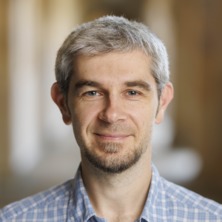
John Lau serves as an Associate Professor in the Department of Mathematics and Statistics at the School of Physics, Maths and Computing, The University of Western Australia. His research contributes to UN Sustainable Development Goals through advanced statistical methodology development. His core expertise spans: Bayesian nonparametric statistics and mixture modelling Statistical clustering and Markov chain Monte Carlo techniques Time-series analysis and density estimation Computational statistics with applications in image analysis Algorithmic bias mitigation in machine learning systems Recent publications demonstrate a clear trajectory toward solving real-world problems: developing causal frameworks for bias detection in classification systems (2024) and creating novel statistical models for engineering reliability prediction (2022). His work bridges theoretical statistics with practical implementations in AI fairness and industrial maintenance. No scientific awards are documented in current profiles. Academic contributions include: Supervision of at least one research student Investigator role in the 2014 cybersecurity project for smart grid assessment Collaborations across engineering and computer science disciplines
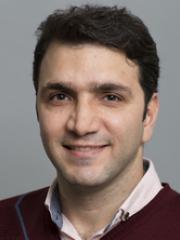
Imran Naseem serves as an Adjunct Associate Professor in the School of Engineering at The University of Western Australia, specifically within the Department of Electrical, Electronic and Computer Engineering. His academic profile shows significant research contributions with 1,533 citations and an h-index of 13 according to Scopus metrics. His research expertise spans several interconnected domains: Machine Learning algorithms, particularly least mean square variants (76% research focus) Deep learning architectures for computer vision and biometric security Neural networks and radial basis function applications (41% research focus) Fast convergence techniques in signal processing (39% research focus) Biomedical applications including anticancer peptides classification Dr. Naseem's recent publication trends demonstrate strong focus on developing robust AI systems for security applications, particularly in biometric authentication systems that can detect presentation attacks. His work bridges theoretical signal processing with practical applications in computer vision and healthcare diagnostics. The research fingerprint shows significant activity in Mean Square Mathematics (100%) and Least-Mean-Square Algorithm development. His collaborative network includes multiple international co-authors across different research institutions, with recent publications appearing in IEEE Access, Applied Intelligence, and Frontiers in Physiology. The University of Western Australia profile indicates he has supervised at least one research project as noted by the 'Supervised Work (1)' designation in his academic profile.
Quanling Deng is a Lecturer in the School of Computing at the Australian National University (ANU), where he focuses on applied mathematics, computational methods, and machine learning. Previously, he held positions as a Van Vleck Visiting Assistant Professor at the University of Wisconsin-Madison (2020–2022) and a Research Associate at Curtin University (2016–2020). He earned his Ph.D. in Mathematics from the University of Wyoming in 2016 and has conducted visiting research at institutions including INRIA (Paris), AGH University (Krakow), and École des Ponts ParisTech. Education: Ph.D. in Mathematics, University of Wyoming, 2016 Moved to the USA in 2011 to pursue studies in mathematics His research interests span Applied Mathematics (e.g., sea ice dynamics, ocean/atmosphere systems), Computational Mathematics (finite element methods, isogeometric analysis), and Machine Learning (feature interaction, deep neural networks). He also investigates Data Assimilation techniques, including stochastic models and Lagrangian-Eulerian frameworks. Research Trends: His recent work emphasizes multiscale modeling (e.g., sea ice floes), eigenvalue problem solutions using advanced finite element techniques, and explainable machine learning. He explores applications of physics-informed neural networks and parallel computing for high-performance simulations. Grants & Projects: Leading the project "Advancing Numerical Computation for Schrödinger Eigenvalue Problems" (2023) Affiliations: Previously affiliated with Curtin Institute for Computation and Curtin TIGeR. Collaborates internationally on computational mathematics and climate modeling.
Fedor Iskhakov is a Professor of Economics at the Australian National University (ANU), holding an ARC Future Fellowship since 2018. He is affiliated with the Research School of Economics, focusing on applied econometrics, microeconomic theory, and computational methods. His research emphasizes structural estimation of dynamic models for individual and strategic decisions, including labor economics, household finance, and industrial organization applications. Education: PhD in Economics (specific institution not stated in text). Research interests include dynamic models of strategic interaction, equilibrium analysis, tax policy impacts, and computational economics. His work bridges traditional econometric methods with machine learning innovations, as highlighted in his 2020 paper on their synergies. Key projects include a 2025-2027 study on electric car adoption in Australia and a long-term project on dynamic models of strategic interaction. Recent publications explore taxation effects on labor supply (Australia case), automobile market equilibria, and mortgage decision framing. His work appears in top journals like Journal of Econometrics , Review of Economic Studies , and Management Science . Scientific recognition includes ARC grants and fellowships. Advising contributions are not explicitly listed, but his research involves complex model development (e.g., endogenous grid methods). Collaborations with global scholars like Keane, Rust, and Gillingham underscore his network in computational economics and dynamic modeling.
Daniel Wedge is a Principal Research Fellow at the University of Western Australia's School of Earth Sciences, affiliated with the Centre for Data-driven Geoscience. He holds a Ph.D. in computer science and has industry experience in image/video processing algorithms. His research focuses on applying machine learning and computer vision to geophysical/geological datasets for automated analysis. Education: Ph.D. in Computer Science (details not specified). Research interests include computer vision, machine learning, data visualization, and their application to mineral exploration, iron ore analysis, and geophysical survey techniques. He contributes to UN Sustainable Development Goals related to industry and resources. Recent work highlights integration of neural networks with geophysical data (e.g., potential field analysis, FTIR spectroscopy), machine learning-enhanced magnetic grid resolution, and 3D geochemical modeling. His articles span 2021–2025, emphasizing interdisciplinary applications. Award: Vice Chancellor’s Award in Impact and Innovation (2015) Key grants include projects on data fusion for drillhole analysis (2018–2021), geological interpretation tools (2014–2017), and reducing 3D geological uncertainty (2014–2018). He collaborates with industry partners like Technological Resources Pty Ltd and the Geological Survey of Western Australia. His work is centered at the Centre for Data-driven Geoscience, advancing computational methods for geoscientific challenges.
Alex Zafiroglu is a Professor and ANU Futures Scheme Fellow at the School of Cybernetics within the College of Engineering, Computing and Cybernetics at the Australian National University. Previously, he spent 15 years as Principal Engineer in Social Sciences at Intel Corporation, contributing to R&D in advanced research, digital home, and IoT divisions while holding 11 patents. He serves on the Board of EPIC (Ethnographic Praxis in Industry Community) and is a member of the American Anthropological Association. Education: PhD in Anthropology, Brown University (2004) MA in Anthropology, Brown University (1996) BA in Anthropology and History, University of Delaware (1993) His research integrates ethnographic methods with cybernetics and artificial intelligence to examine temporality, real-time experiences, and complex socio-technical systems. He specializes in human-centered AI development, focusing on participatory design, ethical implications, and the social construction of technology. His work bridges anthropology, machine learning, and systems theory to address challenges in emerging technology domains. Recent publications (2021-2024) demonstrate a cohesive trajectory in applying cybernetic frameworks to AI systems, emphasizing transdisciplinary collaboration. Key themes include ethnographic approaches to machine learning development, reimagining institutional futures (particularly libraries), and analyzing gender dimensions in AI. His research consistently prioritizes human experiences within complex technological ecosystems. Scientific Awards: ANU Futures Scheme Fellowship Zafiroglu secured significant research funding as Principal Investigator for the ANU Futures Scheme project (2019-2023) and as Chief Investigator for the Report on AI and Library Services (2021). His grant portfolio reflects expertise in transdisciplinary cybernetics research, with emphasis on practical applications in institutional contexts. He actively supervises research students within the School of Cybernetics, focusing on complex systems analysis and human-AI interaction design. As a core faculty member of the School of Cybernetics, Zafiroglu contributes to Australia's premier hub for analyzing complex open systems and developing methods to nurture future states. His industry background at Intel enriches academic perspectives, fostering practical implementations of cybernetic theory in real-world technology development.
Dr. Jasmine Proud is a Research Fellow at Monash University Accident Research Centre (MUARC) since 2024 and an Adjunct Fellow at Victoria University (VU). She is a researcher, engineer, and data scientist specializing in road safety systems, heavy vehicle incident analysis, and autonomous vehicle safety frameworks. Education: PhD in Biomechatronic Engineering and Machine Learning Her research integrates data science and sensor technologies to advance road safety, with emphasis on heavy vehicle operations, autonomous fleet management, and real-time injury monitoring systems. Drawing from prior expertise in wearable assistive technologies for falls prevention, she applies rigorous experimental design and data analysis methodologies to transportation safety challenges. She actively mentors PhD candidates on autonomous vehicle path-planning and safety prioritization. Dr. Proud leads and contributes to four major road safety initiatives funded through the National Road Safety Partnership Program (NRSPP), including development of the National Truck Accident Research Centre (NTARC) incident reporting framework. Her work directly supports UN Sustainable Development Goals for sustainable cities and responsible innovation. As a core member of MUARC's NRSPP team, she collaborates with transport authorities and research institutions across Australia on real-time road trauma modeling, driver distraction roadmaps, and Safer Roads Program evaluation.
Professor Gianluca Demartini is a Professor in Data Science and an ARC Future Fellow at the School of Electrical Engineering and Computer Science, Faculty of Engineering, Architecture and Information Technology at the University of Queensland, Australia. He also serves as an affiliate of the Centre for Enterprise AI. His research focuses on human-in-the-loop artificial intelligence systems with applications for public good, bridging structured knowledge graphs and unstructured text analytics to address societal challenges. Dr. Demartini earned his Ph.D. in Computer Science from Leibniz University of Hannover in Germany in 2011, with a focus on Semantic Search. His academic journey includes positions as a Lecturer at the University of Sheffield (UK), post-doctoral researcher at the eXascale Infolab at the University of Fribourg (Switzerland), visiting researcher at UC Berkeley, junior researcher at the L3S Research Center (Germany), and intern at Yahoo! Research (Spain). His research interests span four major interconnected domains: Misinformation (studying human interaction with misinformation and AI-based mitigation strategies), Crowdsourcing and Human Computation (improving efficiency of human-in-the-loop systems), Big Data Analytics (designing scalable algorithms for large datasets), and AI for Public Good (applying AI for societal and environmental benefits). His work consistently addresses real-world challenges in information quality, human-AI collaboration, and ethical technology deployment. Analysis of Professor Demartini's recent publications reveals a clear trajectory toward addressing misinformation through sophisticated human-AI collaboration frameworks, with increasing emphasis on cognitive aspects of fact-checking, data bias management, and strategic application of large language models. His research bridges theoretical advances in information retrieval with practical applications for societal challenges, particularly in media literacy, online safety, democratic discourse, and environmental conservation. Professor Demartini has received numerous prestigious awards recognizing the quality and impact of his work: Best Paper Award at ACM SIGIR International Conference on the Theory of Information Retrieval (ICTIR) in 2023 Best Paper Award at AAAI Conference on Human Computation and Crowdsourcing (HCOMP) in 2018 Best Paper Awards at European Conference on Information Retrieval (ECIR) in 2016 and 2020 Best Demo award at International Semantic Web Conference (ISWC) in 2011 Honorable Mention Award at CSCW 2020 (Top 2% of submissions) As an active supervisor, Professor Demartini currently guides PhD students working on cutting-edge topics including Retrieval Augmented Generation, Human-in-the-Loop Decision Systems for Online Safety, Human-Centred Artificial Intelligence for Democracy, and Bias in Data Pipelines. His research program is generously funded through multiple major grants: ARC Future Fellowships (2025-2028): PBIAS - A Principled Approach to Data Bias Management Swiss National Science Foundation (2022-2025): Large-Scale Political Participation: Issue Identification, Deliberation, and Co-creation ARC Training Centre for Information Resilience (2021-2026) Previous funding from Wikimedia Foundation, Meta, Google, and Facebook for projects on misinformation detection and human-AI collaboration Professor Demartini's work sits at the critical intersection of human computation, information retrieval, and AI ethics. Through extensive collaborations with industry partners including Facebook, Google, Microsoft, Yahoo!, IBM, SAP, and The National Archives (UK), he has developed practical systems that address real-world challenges in misinformation detection, data quality, and human-AI collaboration. His research group actively explores how to make AI systems more transparent, accountable, and beneficial for society through principled human-in-the-loop approaches that leverage both machine intelligence and human expertise.
Associate Professor Brett Lidbury is a Senior Fellow at the National Centre for Epidemiology and Population Health (NCEPH) at the Australian National University (ANU), specializing in machine learning applications to biomedical research, virology, and chronic fatigue syndrome. His work focuses on developing animal-free alternatives for biomedical research and improving diagnostic pathology through computational methods. His educational background includes: B.Sc. (Hons) in Biological Sciences from the University of Newcastle (NSW) Ph.D. from the Australian National University (John Curtin School of Medical Research) FFSc (RCPA) - Science Fellowship with the Royal College of Pathologists of Australasia Dr. Lidbury's research has evolved from traditional laboratory-based virology to computational approaches. His primary interests include the application of machine learning to study viral infections (particularly HBV and post-viral syndromes), ME/CFS and Long COVID research, development of animal-free biomedical alternatives, and quality improvement in diagnostic pathology. He has extensive experience in diagnostic pathology and previously served as a senior toxicologist with the Therapeutic Goods Administration. His recent publications demonstrate a strong focus on applying machine learning to biomedical challenges, particularly in virology and chronic fatigue syndrome. A notable trend is his binational research (Australia-Nigeria collaborations) on viral hepatitis and his leadership in establishing Australia's first ME/CFS Biobank. His work consistently bridges computational methods with clinical applications to improve diagnostic accuracy and patient outcomes. Dr. Lidbury supervises students in medical science with backgrounds in statistics and data mining. His current research is supported by multiple grants including funding from the Judith Jane Mason Foundation, Alison Hunter Memorial Foundation, ME Research UK, the Mason Foundation for Australia's first ME/CFS Biobank, and the Quality Use of Pathology Programme (Commonwealth Department of Health). He collaborates extensively with multiple institutions including La Trobe University, Bio21 Institute (University of Melbourne), Macquarie University, and Emerge Australia for ME/CFS research. He also maintains international collaborations with Radboudumc in Nijmegen (The Netherlands) on machine learning supported systematic reviews, working closely with research participant volunteers and clinical collaborators.
Dr. Hamid Karimi-Rouzbahani is a Research Fellow and ARC DECRA Fellow at the Queensland Brain Institute, Faculty of Health, Medicine and Behavioural Sciences, The University of Queensland. He previously held a Newton Fellowship at the MRC Cognition and Brain Sciences Unit, University of Cambridge, highlighting his international research experience. His research lies at the intersection of Computational, Cognitive, and Clinical Neuroscience , integrating neural signal processing (EEG, MEG, fMRI), machine learning (deep neural networks), and mathematical modelling . He develops advanced methods for multidimensional connectivity and decoding analysis to understand information coding and transfer in the brain. His cognitive research focuses on visual perception, attention, and the multiple-demand system , while his clinical work aims to quantify and localize brain areas involved in epilepsy . The analysis of his recent publications reveals a strong trend in developing and applying computational models to both fundamental cognitive processes and clinical applications, particularly in epilepsy. His work consistently bridges methodological innovation with empirical neuroscience, using multimodal data to extract meaningful neural signatures. Scientific Awards: ARC DECRA Fellow (Discovery Early Career Researcher Award) Newton Fellowship, MRC Cognition and Brain Sciences Unit, University of Cambridge Dr. Karimi-Rouzbahani is actively involved in research supervision, currently serving as the Principal Advisor for a PhD project on developing novel information decoding and tracking methods. He is the lead investigator on an ARC-funded project (2023–2029) titled "Characterising brain networks of intelligence through information tracking," which demonstrates his success in securing competitive research grants. He is available for supervision and collaborates with researchers across various institutions. His work is conducted within the Queensland Brain Institute , a world-leading neuroscience research centre, where he contributes to collaborative projects like #EEGManyLabs, emphasizing reproducibility in EEG research.
Chris Mimra is a Postdoctoral Research Fellow at the Centre for Future Materials, University of Southern Queensland, focusing on composites manufacturing and digital twin processes. He graduated with a Master's degree in Aerospace Engineering from the University of Stuttgart (Germany) and pursued his PhD in a joint program between Swinburne University of Technology (Melbourne, Australia) and the University of Stuttgart. Education: Master's in Aerospace Engineering (University of Stuttgart), PhD in progress (joint program with Swinburne University of Technology and University of Stuttgart). Research Affiliation: Centre for Future Materials, University of Southern Queensland. Languages: German (non-accredited translator). His research integrates materials engineering, aerospace, and manufacturing technologies with digital innovations such as computer vision, neural networks, and machine learning. These methodologies are applied to develop inline quality monitoring systems for composite manufacturing processes. His work aligns with the following broad disciplines: Materials Engineering, Aerospace Engineering, Manufacturing Technologies, and Computer Science.
Dr Di He is a Senior Research Scientist at CSIRO Agriculture and Food in Canberra, Australia, with a strong research focus on agricultural systems modelling and climate resilience. She is co-leader of the AgMIP-Canola international modelling team and leads a CSIRO-CAS project on agri-climatic extremes. Her work integrates biophysical modelling with digital technologies to improve farm decision-making. Research Interests: Dr He specializes in genotype-by-environment-by-management (GxExM) interactions, climate change and extreme weather impacts on crops, and soil-plant systems modelling. She applies the APSIM platform to study water, carbon, and nutrient dynamics, and combines traditional modelling with machine learning, remote sensing, and phenotyping for digital agriculture solutions. Scientific Awards: John Philip Award for the Promotion of Excellence in Young Scientist (CSIRO, 2018) Best PhD Research and Presentation Award at MODSIM 2015 Advising and Grants: Dr He leads the CSIRO-CAS project (2023–2026) on new methods to detect and cope with extreme climate events in cropping systems. She has been co-leader of AgMIP-Canola since 2015, fostering international collaboration in canola model improvement. While no formal students are listed, she co-leads major research initiatives and contributes to scientific capacity building. Labs and Teams: She is part of CSIRO’s Digiscape and Agriculture and Food divisions, contributing to advanced digital agriculture research. Her work is embedded in collaborative international networks, particularly with the Chinese Academy of Sciences (CAS) and Stanford University, where she was a visiting scientist in 2019.
Christine Mulvihill is a Research Fellow in the Human Factors Team at the Monash University Accident Research Centre (MUARC), Faculty of Medicine, Nursing and Health Sciences, Monash University. Her work focuses on road safety, particularly driver and motorcycle rider behavior, training program development, and licensing system evaluation. Her research interests span road safety , human factors , driver behavior , motorcycle rider training , and behavioral adaptation to vehicle technologies . She has led and contributed to significant research initiatives in Victoria, Australia, addressing safety for motorcyclists, emergency vehicle operators, and rail level crossing users. The analysis of her recent publications shows a strong trend toward applied research in transportation safety, with emphasis on systems thinking , evidence-based guidelines , and human-machine interaction . Her work integrates behavioral science with engineering solutions to improve real-world safety outcomes. Scientific Contributions: Extensive research output including peer-reviewed articles, technical reports, and commissioned studies. Projects funded by Transport Accident Commission (TAC), Department of Health (Victoria), and Metro Trains Melbourne. Contributions to UN Sustainable Development Goals related to sustainable cities and road safety (SDG 3 and SDG 11). Advising and Grants: While no formal students are listed, Christine has served as a Chief Investigator on 18 research projects, managing grants from public and transport safety agencies. Her leadership in large-scale evaluations demonstrates significant responsibility in research management and implementation. Labs and Teams: She is an integral member of the Human Factors Team at MUARC, a leading research center in accident and injury prevention. The team conducts multidisciplinary research involving psychology, engineering, and public health to develop safer transport systems.
Phyu Mon Latt is a Research Fellow at Melbourne Sexual Health Centre affiliated with Monash University's School of Translational Medicine. She holds a Doctorate by Research from the same institution. Her work focuses on applying artificial intelligence and machine learning to improve diagnosis and management of sexually transmitted infections (STIs), particularly in dermatological manifestations and risk communication. She has collaborated extensively with researchers in infectious diseases, medical informatics, and public health. Education: Doctorate by Research - School of Translational Medicine, Monash University Research Interests: Development of AI tools for STI diagnosis Machine learning models for skin lesion differentiation Optimizing patient-centered digital health solutions Evaluating effectiveness of risk communication strategies in sexual health settings Key Projects: AI-assisted screening apps for anogenital lesions Bayesian network algorithms for symptom-based STI diagnosis Cross-sectional studies on HIV/STI risk communication efficacy Lab/Team Affiliation: Melbourne Sexual Health Centre research group
Mohammed Eunus Ali is a Senior Lecturer in the Department of Software Systems & Cybersecurity within the Faculty of Information Technology at Monash University, Australia. He holds a PhD in Computer Science and Software Engineering from the University of Melbourne and has previously served as a Professor at the Bangladesh University of Engineering and Technology (BUET), where he led a research group in Data Science and Engineering for over a decade. He has also held research positions at Monash University, Swinburne University, the University of Melbourne, and RMIT University. PhD : Computer Science and Software Engineering, University of Melbourne (2010) M.Sc. Engg. : Computer Science and Engineering, Bangladesh University of Engineering and Technology (2002) B.Sc. Engg. : Computer Science and Engineering, Bangladesh University of Engineering and Technology (1999) Dr. Ali’s research spans data management, analytics, and learning , with a strong focus on spatio-temporal data, geo-social networks, and multimodal high-dimensional data . His work enables applications in urban computing, intelligent transportation systems, and smart, sustainable cities . In recent years, he has expanded into Generative AI and large language models (LLMs) , exploring their role in enhancing geo-spatial query processing, SQL generation, and data engineering tasks. His publications appear in top-tier venues such as ACL, TKDE, VLDB, ICDE, SIGSPATIAL, and IEEE Access . His recent publications reflect a strong trend toward AI-driven solutions for real-world spatial and health problems , including blood glucose prediction for diabetics, seismic intensity forecasting, eco-friendly route planning, and LLM-based code generation. These works demonstrate a convergence of deep learning, spatio-temporal analytics, and real-world system design . Scientific Awards: Bangladesh University Grants Commission Award (2012) ADC Best Poster Award (2016) SSTD Best Demo Award (2017) ADC Best Paper Award (2022) Dr. Ali actively contributes to the research community as a Program Committee Member for premier conferences including SIGMOD, VLDB, ICDE, and SIGSPATIAL . He is a Senior Member of the ACM and currently supervises PhD students, focusing on cutting-edge topics in data science and AI. His collaborative research network spans institutions in Australia and Bangladesh, contributing to advancements in both academic and applied domains. His work aligns with the UN Sustainable Development Goals , particularly in the areas of sustainable cities, innovation, and quality education.