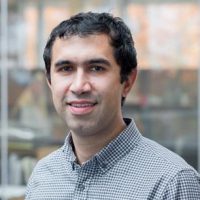
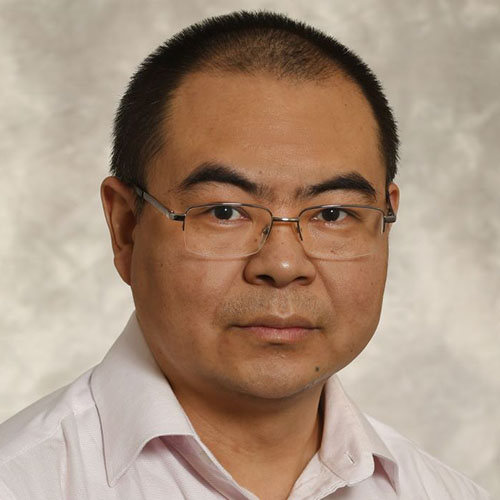
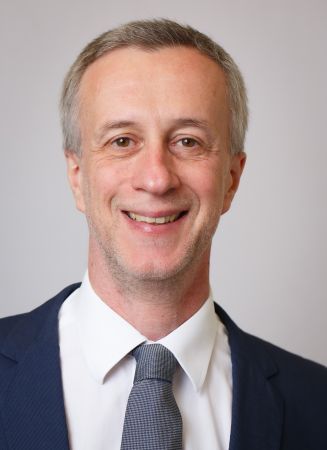
Markus Christen is a researcher and Managing Director of the Digital Society Initiative at the University of Zurich, where he leads the Digital Ethics Lab within the Institute of Biomedical Ethics and History of Medicine. His work bridges empirical ethics, neuroethics, and ICT ethics with a focus on data analysis methodologies. Affiliation: University of Zurich (Faculty of Medicine) Role: Managing Director of the Digital Society Initiative Lab: Digital Ethics Lab Christen’s research explores ethical challenges in AI, cybersecurity, and digital health. He investigates value conflicts in technology design, moral sensitivity training through serious games, and human-AI accountability frameworks . His recent publications address digital twins in medicine , AI accessibility for disabled students , and cross-cultural responsibility gaps in AI systems. Key trends in his work include: Empirical ethics applied to AI and cybersecurity Neuroethical dimensions of technology Responsible AI integration in education and healthcare Data privacy and fairness in insurance Cross-cultural ethical assessments Christen’s lab develops frameworks for value-sensitive design and human-AI collaboration , with projects like "Responsible AI in practice" and "DSI AI-WEEK."
Sudhir Kumar is a Professor and Principal Investigator at Temple University, leading a research laboratory focused on molecular evolution, phylomedicine, and functional genomics. His lab develops mathematical methods, computational algorithms, and software packages for analyzing genomic variation across populations, pathogens, tumors, and species. Key contributions include the widely used MEGA software (www.megasoftware.net) for molecular evolutionary analysis and the TimeTree knowledge-base (www.timetree.org) that synthesizes evolutionary knowledge on species divergence times. Dr. Kumar's research interests center on integrating mathematical and computational techniques into evolutionary biology and biomedicine. His lab pursues a holistic paradigm where evolutionary and genomic patterns are discovered through comparative analysis of big datasets, then used to reveal underlying biological processes and develop predictive models. His work spans phylomedicine of genetic diseases, molecular phylogenomics, and the timetree of life, with recent innovations including Bayesian methods, machine learning algorithms, and statistical approaches for inferring molecular phylogenies, divergence times, and pathogenic mutations. Analysis of his recent publications reveals a strong trend toward applying artificial intelligence and machine learning to evolutionary genetics, with multiple 2025 papers focused on sparse learning techniques, transformer-based models, and AI-assisted analytical protocols. His work increasingly bridges evolutionary biology with cancer genomics and precision medicine applications. His scientific achievements have been recognized with the prestigious 2025 George W. Beadle Award from the Genetics Society of America, which honors his "efforts to democratize evolutionary genetics." Dr. Kumar has mentored numerous doctoral candidates, postdoctoral researchers, and graduate students, many of whom have gone on to faculty positions at institutions including Oakland University and universities in Brazil. His lab includes current doctoral candidates working in bioinformatics and statistical molecular evolution, supported by technical staff including programmers, genome tech specialists, and informatics specialists. The Kumar Laboratory operates as an interdisciplinary research hub with multiple projects including MEGA (Molecular Evolutionary Genetics Analysis), TimeTree, myPEG (web-based evolutionary tools), and FlyExpress (a knowledge base for Drosophila melanogaster embryo images). The lab emphasizes green computing efforts aimed at democratizing scientific practice and making big data analytics more accessible.
Professor Pavel V. Tsvetkov is a faculty member at Texas A&M University , holding the rank of Professor of Nuclear Engineering and serving as the Director of the Graduate Program in Nuclear Engineering . He is also an Affiliated Faculty member of the Multidisciplinary Engineering program . His office is located in the AIEN M205B building, and he can be contacted at tsvetkov@tamu.edu . Educational Background: Ph.D. in Nuclear Engineering, Texas A&M University (2002) M.S. in Theoretical & Experimental Reactor Physics, Moscow State Engineering Physics Institute (1995) Research Interests: Professor Tsvetkov's research spans a wide range of advanced nuclear engineering topics. His primary focus includes system analysis and optimization methods , complex engineered systems , and symbiotic nuclear energy systems . He is deeply involved in waste minimization and sustainability , particularly through the development of high-temperature gas-cooled reactors (HTGRs) and molten salt reactors (MSRs) . His work also explores direct nuclear energy conversion systems and the integration of AI and deep learning into nuclear reactor control and monitoring systems. Research Trends in Publications: Over the past few years, Professor Tsvetkov has published extensively on the application of machine learning and deep learning in nuclear engineering. His recent works focus on autonomous reactor control , reactor dynamics simulation , and remote monitoring systems using satellite data and AI. He has also contributed to the design and analysis of microreactors for space applications and molten salt reactor dynamics . Scientific Awards: George Armistead, Jr ’23 Faculty Excellence Teaching Award Advising and Grants: As Director of the Graduate Program in Nuclear Engineering, Professor Tsvetkov plays a key role in mentoring and advising graduate students. While specific student names are not listed, his leadership in the program and extensive research output suggest active involvement in student research and training. Labs and Teams: Professor Tsvetkov is associated with the Nuclear Power Engineering group at Texas A&M University, contributing to both academic and applied research in nuclear systems design and safety.
Professor Javen Qinfeng Shi is a faculty member at the University of Adelaide, holding the position of Professor in the School of Computer and Mathematical Sciences under the Faculty of Sciences, Engineering and Technology. He serves as Founding Director of the Causal AI Group and as one of the directors at the Australian Institute for Machine Learning (AIML), based at the North Terrace campus location. His research centers on causation, artificial intelligence, mind and metaphysics, with Google Scholar rankings placing him 4th globally in causation and 7th in probabilistic graphical models. Shi develops causal AI methods to identify root causes, discover latent variables, eliminate spurious correlations, enhance cross-domain generalization, model intervention consequences, and solve counterfactual queries. His work focuses on optimizing intervention sequences for desired outcomes under resource constraints, applied to material discovery, agriculture, mining, sports, manufacturing, bushfire prediction, healthcare, and education. Professor Shi's industry impact includes the NOBURN bushfire prediction app (released 2023 with 50+ media coverages), energy material discovery via AI catalysts, and smart manufacturing logistics solutions. His work with the Responsible AI Think Tank (2022-2024) and current AI Industry Forum panellist role (2024 onward) demonstrates active contribution to national and state AI ecosystem development. His scientific awards include: 1st place at Open Catalyst Challenge (NeurIPS AI for Science 2023) Winner of AUS/NZ Bushfire Data Quest 2020 Citizen Science Grant 2021 Finalist in SA Department of Energy and Mining Gawler Challenge 2020 (2k+ participants from 100+ countries), recognized for "The most innovative modelling" 2nd place in Explorer Challenge 2019 (1k+ entries from 62 countries) 1st place at SAIC Volkswagen Logistics Innovation Day 2019 Shi is eligible to supervise Masters and PhD students and has secured research funding including the Citizen Science Grant 2021. His industry collaborations span energy, agriculture, mining, and emergency management, translating theoretical causal AI into practical tools like NOBURN. He leads the Causal AI Group at the University of Adelaide and directs research teams at AIML, focusing on causal inference frameworks for distribution shift resilience and intervention optimization. Current projects emphasize bushfire prediction, material science applications, and AI ethics implementation through the AI Industry Forum.
Charless C. Fowlkes is a Professor in the Department of Computer Science at the University of California, Irvine (UCI), and a member of the UCI Vision Group. His research focuses on computational vision, integrating visual recognition with 3D scene understanding and developing tools for biological image analysis. UCI Chancellor's Fellow (2019-2022) NSF CAREER Award recipient (2013) Helmholtz Prize winner (2015) Research Interests His work spans computational vision, image understanding, 3D scene reconstruction, and machine learning applications in biological and forensic domains. He develops methods for automated pollen classification, cardiac tissue analysis, and forensic shoeprint matching. Recent Publications His recent work includes 3D scene reconstruction with epipolar transformers, forensic shoeprint analysis, and image inpainting techniques. These show trends in integrating geometric understanding with deep learning. Scientific Awards Awarded the Marr Prize (2009), Helmholtz Prize (2015), and NSF CAREER Award (2013), he has received recognition for both theoretical and applied contributions to computer vision. Teaching & Advising He has taught graduate and undergraduate courses in computer vision since 2008 and advised numerous PhD, MS, and BS students who now work at institutions like Google, Apple, and CMU. Collaborations He collaborates with labs at UIUC (Punyasena Lab), Harvard (DePace Lab), and UCI (Cinquin Lab, Khine Lab) for biological applications of computer vision.
Dr. Chenhao Ma is an Assistant Professor at the School of Data Science , The Chinese University of Hong Kong, Shenzhen , where he works on large-scale data management and data mining. Previously, he was a Postdoctoral Fellow at the University of Hong Kong (2021–2022) and earned his PhD in Computer Science from the University of Hong Kong (2021) and B.Eng. from Shandong University (2017). Current research focuses on graph computing (dense subgraph discovery, motif analysis, graph learning), AI+DB (Text-to-SQL, vector search), and traffic data mining (trajectory analysis, outlier detection). He has published over 40 papers in top venues including SIGMOD, PVLDB, KDD and received the ACM SIGMOD Research Highlight Award 2021 and Best of SIGMOD 2020 (4/458). Scientific Awards : ACM SIGMOD Research Highlight Award 2021 Best of SIGMOD 2020 (4/458) Presidential Young Fellow at CUHK-Shenzhen (2023) Hong Kong and China Gas Scholarship (2019-2020) Reaching Out Award (2019) HKU Postgraduate Scholarship (2017-2021) ACM-ICPC Gold Medal (2015) National Scholarship (2014, 2015) Advising and Research Team : He leads a team including Postdoc Dr. Yuanyuan Zeng, PhD students Lujie Ban, Yuwei Xu, and MPhil students Yi Yang, Yuyang Liang. Former mentees like Yichen Xu (PhD at Berkeley) and Jiayang Pang (Master at UC San Diego) have achieved academic placements. Professional Service : He has served as PC member/reviewer for VLDB, KDD, ICDE, WWW, NeurIPS, TKDE , and guest editor for Applied Sciences and Frontiers in Big Data . He chairs sessions at ICDE and VLDB.
Daniel Fremont is an Associate Professor of Computer Science and Engineering at the University of California, Santa Cruz, where he conducts research at the intersection of formal methods and autonomous systems. His work focuses on developing mathematical techniques to improve the reliability of software, hardware, and cyber-physical systems through precise specification, formal verification, automatic synthesis, and principled testing approaches. Dr. Fremont's research interests center on applications of logic in computer science, particularly using automated reasoning to enhance system reliability. His work spans formal methods for cyber-physical systems (CPS), especially autonomous systems that incorporate machine learning. Key research areas include algorithmic improvisation for creating systems with controlled randomness, probabilistic programming through the Scenic language for environment modeling, and formal verification techniques applicable to safety-critical autonomous systems. His group has successfully applied these methods to autonomous vehicles, aircraft systems, and robotics, with significant contributions to both theoretical foundations and practical implementations. The publication record reveals a strong trajectory from theoretical foundations of control improvisation toward practical applications in autonomous systems verification. Early work established the theoretical framework of control improvisation, while recent publications focus on applying these techniques to real-world challenges in autonomous driving, aircraft systems, and AI-based autonomy. A consistent theme across his research is the integration of formal methods with machine learning to address the verification challenges posed by complex, learning-based systems operating in uncertain environments. Best Paper Award at IoTDI 2016 for 'Control Improvisation with Probabilistic Temporal Specifications' Dr. Fremont leads a research group focused on formal methods for autonomous systems, with significant contributions to the development of tools like Scenic (a probabilistic programming language for scenario specification) and VerifAI (a toolkit for formal design and analysis of AI-based systems). His work bridges theoretical computer science with practical engineering challenges in safety-critical autonomous systems, receiving funding from various sources supporting research at the intersection of formal methods and artificial intelligence. The group's approach combines theoretical algorithm development with practical implementation and testing, often collaborating with industry partners working on autonomous vehicle technology. The research group maintains active development of several open-source tools, including the Scenic language for scenario specification and VerifAI for formal analysis of AI systems. They have demonstrated applications across multiple domains including autonomous vehicles, aircraft systems, and robotics, with particular emphasis on simulation-based testing and verification approaches that can provide formal guarantees about system behavior.
Robert J. Brunner is a Professor at the University of Illinois with primary appointments in the Gies College of Business (Department of Accountancy) and the School of Information Sciences. He holds affiliate roles across multiple departments including Astronomy, Computer Science, and Statistics, as well as research centers like the Beckman Institute and NCSA. His research focuses on applying statistical/machine learning to solve complex problems in astronomy, finance, and large-scale data science. Education: Ph.D. in Astrophysics from Johns Hopkins University (advisor: Alex Szalay). Postdoctoral work at Caltech on the Digital Sky project. Research Interests: Machine learning applications, computational techniques, data management/visualization, and observational cosmology. His work bridges astrophysical data analysis with modern data science methodologies. Recent work includes developing spatio-temporal neural networks for forecasting, evaluating AI-driven financial analysis tools, and planning for the Vera C. Rubin Observatory. He collaborates internationally on large-scale surveys like the Dark Energy Survey and SDSS. Labs/Teams: Leads data science initiatives at the University of Illinois Research Park. Active in interdisciplinary teams at NCSA and Beckman Institute focusing on algorithm optimization and data-intensive research.
Domniki Asimaki is a Professor of Mechanical and Civil Engineering at the California Institute of Technology (Caltech), part of the Division of Engineering and Applied Science. Her research focuses on geotechnical engineering, computational mechanics, and structural dynamics, with an emphasis on understanding ground motion effects on natural and engineered systems such as dams, tunnels, and urban infrastructure. She holds a Dipl. from the National Technical University of Athens (1998), an M.S. (2000) and Ph.D. (2004) from MIT, joining Caltech in 2014. Key research interests include soil dynamics, wave propagation, regional ground deformation, and soil-foundation-structure interaction. She has pioneered data-driven approaches to integrate numerical simulations with field observations for resilient infrastructure design. Notable achievements include developing the open-source Seismo-VLAB software for seismic analysis and receiving prestigious awards like the Bodossaki Award of Scientific Excellence and the Geotechnical Earthquake Engineering Award. Her work addresses seismic hazards at urban and regional scales, with recent studies on the 2023 Türkiye earthquake, the 2019 Ridgecrest earthquake, and Kathmandu Basin dynamics. She leads initiatives to enhance ground motion prediction, landslide hazard assessment, and infrastructure resilience through advanced modeling and AI-driven methods. Education: Dipl., National Technical University of Athens, 1998 M.S., Massachusetts Institute of Technology, 2000 Ph.D., Massachusetts Institute of Technology, 2004 Awards: Bodossaki Award of Scientific Excellence Geotechnical Earthquake Engineering Award Labs/Teams: Leads research groups focusing on seismic hazard modeling, open-source software development, and geotechnical data assimilation techniques.
Pawel Ladosz is a Lecturer in Engineering Systems for Robotics at the Department of Mechanical and Aerospace Engineering, The University of Manchester. His research focuses on applying machine learning and computer vision to mobile robots, particularly in extreme environments such as total darkness or cluttered spaces. He is actively involved in developing autonomous navigation systems, wireless signal mapping, and high-level decision-making for robotic swarms. He teaches courses including Robotic Systems Design Project and Autonomous Mobile Robots. Education: PhD in Establishing and Optimising Unmanned Airborne Relay Networks (Loughborough University, 2014–2019) MEng in Aerospace Engineering (The University of Manchester, 2010–2014) Research Interests: Ladosz’s work emphasizes reinforcement learning for robotics, vision-based autonomous systems, and exploration in challenging environments. His projects often intersect with UN Sustainable Development Goals, contributing to innovations in robotic autonomy and sensor networks. Awards: He received the 2nd Autonomous Flying Technology Competition award in 2021, recognizing his contributions to autonomous flight systems. His research has also led to the establishment of the Centre for Robotic Autonomy in Demanding and Long-Lasting Environments (CRADLE), fostering cross-disciplinary collaborations. Grants & Projects: As Principal Investigator in the Aerospace Engineering initiative (2010–2035), he explores UAV communication networks and trajectory planning. His work addresses urban environment challenges, including relay positioning and signal prediction. Labs/Teams: Ladosz contributes to CRADLE, advancing robotic autonomy in extreme scenarios. His lab focuses on integrating AI and robotics for real-world applications.
Peyman Servati is a Professor in the Department of Electrical & Computer Engineering at the University of British Columbia (UBC), affiliated with the Faculty of Applied Science. He leads the Flexible Electronics and Energy Lab (FEEL) and the Centre for Flexible Electronics and Textiles (CFET), and is part of the Clean Energy Research Centre (CERC) and Microsystems and Nanotechnology (MiNa) Group. His research focuses on low-cost flexible solar cells, wearable technology, nanomaterials, and energy systems. Education: BASc (University of Tehran, 1998), MASc and PhD (University of Waterloo, 2000 and 2004). Pre-UBC roles included Research Associate at the University of Cambridge (2005–2011) and Senior Research Scientist at Ignis Innovation Inc. Research interests include smart textiles, flexible electronics, nanocomposites, and renewable energy applications. He has over 80 peer-reviewed publications, 4 patents, and 10 patent applications. Awards include the 2006 NSERC Canada-UK Millennium Award and 2005 NSERC Doctoral Prize. Advising highlights include supervising numerous PhD and MASc students in areas like wearable sensors, energy storage, and biomedical applications. Key labs include FEEL and CFET, focusing on textile-based electronics and sustainable energy solutions.
Shuangquan (Peter) Wang is an Assistant Professor of Computer Science at Salisbury University. He holds a PhD in Computer Science from the College of William & Mary (2020) and a PhD in Pattern Recognition and Intelligent Systems from Shanghai Jiao Tong University (2008), along with earlier degrees from Wuhan University of Technology and Wuhan Institute of Technology. His research focuses on mobile/wearable computing, activity recognition, smart health, and machine learning. He has over 10 years of experience in academia and industry, including roles at Philips Research East Asia and Nokia Research Center (Beijing). His work emphasizes wearable sensor-based health monitoring, such as fall detection, mastication analysis, and Parkinson’s disease monitoring. He leads the WISH Research Lab and serves as an Associate Editor for Elsevier's Smart Health Journal. Recent contributions include papers on salinity anomaly detection (2024), LLM-based user requirement analysis (2024), and socially acceptable food recognition (2022). His research trends emphasize interdisciplinary applications of machine learning in healthcare and sensor-driven human activity analysis. Professional service roles include coordinating Salisbury University’s Center for Applied Mathematics and Science (2021–2024) and chairing ACM/IEEE CHASE conferences. He has delivered invited talks on artificial intelligence and its societal impacts to diverse audiences, including the Institute of Retired Persons at Salisbury University. His lab, WISH Research Lab, explores innovative solutions in smart health and mobile computing, integrating wearable technologies with machine learning for real-world health applications.
William F. Speier is an Associate Professor in the Department of Radiological Sciences at the University of California, Los Angeles (UCLA) School of Medicine . His work spans Medical Informatics , Biomedical Engineering , and Neurology , focusing on applying Artificial Intelligence and Deep Learning to medical imaging and patient monitoring systems. Speier's research emphasizes improving diagnostics for Thyroid Cancer via multimodal ultrasound and molecular testing, advancing Brain-Computer Interfaces (BCIs) for ALS patients, and optimizing Heart Failure remote monitoring through biometric data analysis. He leads the NIH-funded project Predicting Clinically Significant Thyroid Cancer using Ultrasound (R21EB030691), integrating AI into clinical workflows. His recent publications highlight trends in High-Frequency Oscillations for epilepsy, Gleason Grading in prostate cancer, and Language Models for BCI communication. Collaborations with co-authors like Corey Arnold and Hiroki Nariai underscore his interdisciplinary approach. Speier's work also addresses Diagnostic Imaging , Neural Signal Processing , and Health Technology accessibility. Grants and clinical trial integrations further demonstrate his commitment to translating AI into practical healthcare solutions. His methodologies include 3D ConvNets , Federated Learning , and Active Learning frameworks for histopathology and radiology.
Prof. Vinod Namboodiri is the Forlenza Chair in Health Innovation and Technology at Lehigh University's Department of Computer Science & Engineering and College of Health. He leads the Accessibility and Assistive Technologies (ACCESS) Lab, focusing on computing technologies to address health disparities affecting people with disabilities. His NSF-funded research develops navigation solutions for individuals with disabilities, with emphasis on smart communities and built environment accessibility. He holds a Ph.D. from UMass Amherst and previously served as Full Professor/Associate Director at Wichita State University and Adjunct Senior Scientist at Envision Research Institute. His research spans assistive technologies, applied computer vision, and smart health systems. Notable work includes MABLESim (indoor accessibility simulation), NaVIP (visually impaired navigation), and economic analyses of accessibility investments. His publications explore both technical innovations and policy implications of assistive technologies. Prof. Namboodiri has received multiple awards for research, teaching, and innovation. His work bridges computer science with disability studies, emphasizing real-world impact through interdisciplinary collaboration. Current projects address indoor navigation systems, cost-benefit analysis of accessibility infrastructure, and human-agent interaction platforms for disability empowerment.
Luis Nunes Vicente is the Timothy J. Wilmott '80 Endowed Faculty Professor and Chair of Lehigh University's Department of Industrial and Systems Engineering since August 2018. He previously served as a faculty member at the University of Coimbra's Department of Mathematics. His research focuses on Continuous Optimization, Computational Science and Engineering, and Machine Learning/Data Science. Education: Ph.D. in Applied Mathematics (Rice University, 1996), M.A. in Applied Mathematics (Rice University, 1994), B.S. in Mathematics and Operations Research (University of Coimbra, 1990). Honors include the Lagrange Prize (2015), SIAM Fellowship (2024), and Fulbright Scholarship (1996). He co-authored the influential book Introduction to Derivative-Free Optimization (2009). Research Interests: Development of optimization algorithms for derivative-free and stochastic scenarios, multi-objective optimization, machine learning applications, and computational methods for engineering problems. Key contributions include trust-region methods, bilevel optimization frameworks, and fairness-aware machine learning models. Grants and Leadership: Secured over $1M from the Office of Naval Research (2024) and the Air Force Office of Scientific Research (2023). Served as Editor-in-Chief of Portugaliae Mathematica (2013–2018) and on editorial boards of top journals like SIAM Journal on Optimization . Elected President of the Operations Research Association of Chairs (2024). Visiting Positions: IBM T.J. Watson Research Center (2002/2003), Courant Institute/NYU (2009/2010), and CERFACS/Toulouse (2010–2015). Active in international conferences, delivering plenary lectures at 13th French-German Conference on Optimization, ICCOPT III, and ISMP 2018.