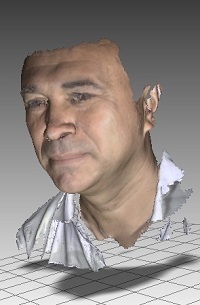
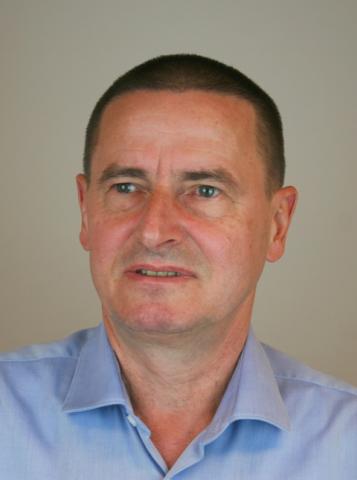
Toni Susin is an Associate Professor of Applied Mathematics at UPC-BarcelonaTech. He leads the Dynamic Simulation Lab, part of the ViRVIG research group in Barcelona. His research focuses on numerical methods, physically-based simulation, and applications in computer graphics and biomechanics. Key research areas include Physically-Based Animation Surgical Simulation Biomechanical Applications Image-Based Modeling Fluid Animation Techniques His recent work spans microbiome data analysis, sports performance tracking, and biomedical simulations. While no scientific awards are listed, his career includes founding three tech companies and mentoring numerous PhD/Master's students in computational methods and simulation technologies.
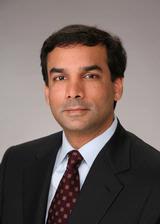
Angelo P Tanna, MD is Vice Chairman and Professor of Ophthalmology and Director of the Glaucoma Service at the Northwestern University Feinberg School of Medicine in Chicago, Illinois. He has served on the faculty since 1999, establishing himself as a leading expert in glaucoma diagnosis and treatment. Dr. Tanna holds multiple leadership positions including Chair of the American Academy of Ophthalmology's Basic and Clinical Science Course Glaucoma Committee. Dr. Tanna's research interests span several critical areas in ophthalmology, with a primary focus on glaucoma. His work encompasses the efficacy and safety of glaucoma medications, detection of glaucoma progression, and assessment of visual function in glaucoma patients. He has made significant contributions to understanding the impact of cataract on visual field testing in glaucoma and has developed new methods to detect visual field deterioration. His research also includes improving outcomes of incisional glaucoma surgery and innovative approaches using hydrogel polymers to prevent fibrosis after trabeculectomy. Analysis of Dr. Tanna's recent publications reveals a strong emphasis on applying advanced technologies to glaucoma management, including deep learning algorithms for visual field progression detection using OCT imaging. His work increasingly explores social determinants of health in glaucoma care, healthcare access disparities, and the relationship between systemic conditions and ocular health. The COAST clinical trial he leads represents a significant contribution to optimizing laser trabeculoplasty protocols for glaucoma treatment. Secretariat Award, American Academy of Ophthalmology (2019) Senior Achievement Award, American Academy of Ophthalmology (2017) Continuously listed in Best Doctors in America since 2005 Outstanding Teacher Award, Northwestern University Feinberg School of Medicine (2020) Multiple visiting professorships at leading institutions including Columbia University (2023) Dr. Tanna has served in various leadership roles in the American Glaucoma Society, including twice as a board member and as Chair (2010-2011). He currently chairs the American Academy of Ophthalmology's Basic and Clinical Science Course Glaucoma Committee and serves on editorial boards of prestigious journals including Ophthalmology and Survey of Ophthalmology. His COAST clinical trial investigates optimal selective laser trabeculoplasty protocols for treating glaucoma, potentially reshaping treatment guidelines. Dr. Tanna also leads research collaborations with biomedical engineers and geneticists, resulting in discoveries such as the association of ANGPT1 region SNPs with primary open-angle glaucoma.
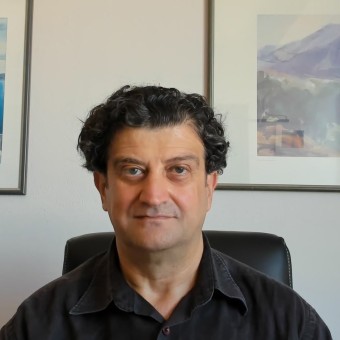
Puneet Sharma is an Associate Professor at the Department of Automation and Process Technology, UiT The Arctic University of Norway. His primary research areas include computer vision, image analysis, machine learning, and wearables technology, with active contributions to atmospheric science data processing and maritime navigation AI applications. Current role: Associate Professor (Automation) Teaching: Industrial data communication (bachelor), Machine Vision (master) Research: Machine Learning Group member, focus on visual attention models, deep learning for PMSE segmentation, and wearable training systems Recent publications highlight his work in applying machine learning to Polar Mesospheric Summer Echoes (PMSE) analysis, noctilucent cloud classification, and biosignal-based maritime navigation studies. He participated in the Horizon 2020 WEKIT project for wearable-based industrial training.
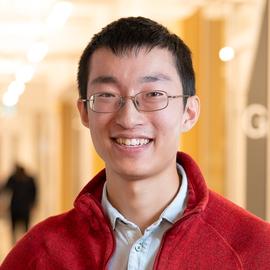
Heike Herper is a Researcher at the Department of Physics and Astronomy (Materials Theory) at Uppsala University . Her work focuses on computational studies of magnetic materials, particularly for permanent magnet applications and magnetocaloric systems, within the NOVAMAG EU project . Affiliation: Uppsala University, Materials Theory Email: heike.herper@physics.uu.se Research involves Density Functional Theory (DFT) calculations combined with Monte Carlo simulations to model finite temperature effects. Key projects include identifying non-hazardous permanent magnet alternatives, studying rare-earth materials, and developing electronic structure databases. Recent publications highlight her expertise in analyzing: Pressure-induced stacking faults in Gd (2024) Giant magnetocaloric effects in Mn,Fe NiSi (2024) Rare-earth-free magnets via high-throughput screening (2023) Magnetic phase diagrams of Heusler alloys (2022) Electronic structure of transition metal complexes (2020)
Dr. Masato Inoue is a Professor at the Faculty of Science and Engineering , School of Advanced Science and Engineering at Waseda University. He holds a Doctor of Medical Science from Kyoto University. Education: 2003 - Kyoto University Graduate School of Medicine 2003 - Kyoto University His research spans multiple disciplines at the intersection of Medical Informatics , Bioinformatics , and Statistical Mechanics . Key areas include: Medical Imaging : Developing Bayesian super-resolution algorithms and Prior Ensemble Learning for improved MRI reconstruction Voice Analysis : Creating innovative voice quality quantification systems for clinical diagnostics Genetic Analysis : Advancing haplotype inference methods and gene network modeling Signal Processing : Applying statistical mechanics to diverse problems from coding theory to neuroscience His recent publications (2021-2012) demonstrate consistent contributions to medical imaging algorithms , voice disorder classification , and genetic data analysis . Notable collaborations include work with Kyoto University researchers , Swedish medical institutions , and cross-disciplinary teams in bioengineering.
Martin Slepicka is a researcher at the Chair of Computing in Civil and Building Engineering at the Technical University of Munich. His work focuses on bridging Building Information Modeling (BIM) with additive manufacturing and digital twinning technologies. Department: Civil and Building Engineering Research Group: Digital Twinning, Construction Robotics Research Highlights: Slepicka specializes in: Integrating BIM with digital fabrication workflows Developing closed-loop systems for additive manufacturing Real-time data exchange in construction robotics Automated parameter calibration using machine learning Semantic enrichment of BIM through multi-sensor platforms Academic Contributions: Recent publications demonstrate expertise in: Extrusion-based additive manufacturing control Non-planar path planning for 3D-printed components Autonomous robot grasping solutions From fabrication models to simulation frameworks Laboratories: Active in: BIM-Lab Robotic Fabrication Lab Mobile Machinery development
Herwig Mayr is a Professor at the University of Applied Sciences Upper Austria, affiliated with the Research Center Hagenberg AIST (Applied Information Systems and Technology). His research bridges healthcare informatics, software engineering, and educational innovation, with a strong focus on practical applications in the Austrian healthcare sector. Research Focus: Healthcare IT systems interoperability (IHE standards, radiology data exchange) Telemedicine frameworks for clinical workflows Innovative pedagogical methods in software engineering education Sustainable ICT solutions and cross-platform accessible interfaces Recent Projects: KIMBO (2015-2016): Collaborative medical board systems for tumor diagnosis WIRE (2013-2014): Radiology image prefetching workflows for ELGA IHE-FIT (2011-2012): Intelligent feedback systems in telehealth Publication Trends: His recent works (2013-2018) demonstrate a consistent focus on healthcare data interoperability standards, telemedicine infrastructure in Austria, and experimental teaching methodologies using tools like LEGO® Serious Play™ for software engineering education.
Scotty D. Craig is an Associate Professor in Human Systems Engineering at The Polytechnic School, Arizona State University. He serves as Director of Strategic Initiatives at ASU's Learning Engineering Institute and co-directs the ASU Advanced Distributed Learning Lab in collaboration with the U.S. Department of Defense. His research spans cognitive science, educational technology, and immersive learning environments with applications in virtual humans, mixed reality training systems, and intelligent tutoring technologies. Ph.D. Experimental Psychology (Cognitive Learning), University of Memphis (2005) M.S. Psychology, University of Memphis (2001) B.A. Psychology with minors in Anthropology and History, University of Memphis (1998) Dr. Craig's research focuses on the intersection of human cognition, technology, and learning sciences. His work includes virtual humans for training, cognitive load optimization in medical websites, and mixed reality systems for medical education. He leads multiple DOD-funded projects totaling $8.5M, including the $5M Virtual Insomnia Patients system and $2M WaterSim America sustainability game. Recent publications emphasize immersive learning technologies, with 2025 work on collaborative AR learning companions and 2024 studies on voice quality impacts in pedagogical agents. His research has produced over 150 publications, including three edited books on educational technology. Scientific Honors: Pacific Southwest Best Paper Award (ASEE 2016) Best Poster Award (AIED 2017) Innovation in Scholarship Award (ASU 2017) Faculty Teaching Excellence Award (ASU 2018) Top 5% Teaching Recognition (Fulton Engineering 2024) Dr. Craig serves on editorial boards for International Journal of STEM Education and Computers & Education . He has organized five journal special issues and conducted extensive research evaluations for the U.S. DoD.
Nikolaos Samaras is a Full Professor at the Department of Applied Informatics, School of Information Sciences, University of Macedonia in Thessaloniki, Greece. He has been serving as director of the Computational Methodologies & Operations Research (CMOR) Laboratory since April 2016. His academic career includes positions as Assistant Professor (2007-2012) and Lecturer (2003-2007) at the same institution, and earlier as an adjacent Lecturer at the Technological Institute of Western Macedonia (1998-2000). Dr. Samaras earned his Diploma in Applied Informatics from the University of Macedonia in 1996 and his Ph.D. in Applied Informatics from the same university in 2001. His educational background forms the foundation for his extensive research in computational optimization and operations research. Professor Samaras's research focuses on the interface between computer science and operations research, with particular expertise in linear and nonlinear optimization, network optimization, integer optimization, and scientific computing including HPC and GPU programming. His work has resulted in the development of new algorithmic families for optimization problems, efficient GPU implementations of the revised simplex algorithm, and novel algorithms and software for operations research. His research spans theoretical algorithm development, practical implementation, and real-world applications across various engineering and scientific domains. His extensive publication record includes over 35 journal papers in prestigious venues such as Computers and Operations Research, European Journal of Operational Research, and Journal of Artificial Intelligence Research, more than 85 conference papers, and four textbooks (two in English and two in Greek). His work has been recognized through citations and the Thomson ISI/ASIS&T Citation Analysis Research Grant in 2005. ACM Senior Member (2016) Thomson ISI/ASIS&T Citation Analysis Research Grant (2005) Editorial board member of Operations Research: An International Journal Reviewer for numerous top journals including Mathematical Programming Computation and European Journal of Operational Research Professor Samaras has supervised four current Ph.D. students working on hybrid simplex algorithms, large-scale optimization using Apache Hadoop, algorithmic procedures in matrix theory, and smoothed complexity analysis. He has successfully guided five Ph.D. students to completion, including Nikolaos Ploskas who won the 2014 HELORS Doctoral Dissertation Award. Additionally, he has supervised 45 master's theses and 84 bachelor's theses. His research group has secured funding from diverse sources including the European Union, Greek Secretariat of Research and Technology, and industry partners like Veltio Greece LTD. The Computational Methodologies & Operations Research (CMOR) Laboratory, which he directs, focuses on developing and implementing optimization algorithms with applications in transportation, energy systems, and business process design. The lab has produced notable software tools including Euclides and Visual LinProg, which have educational applications in linear programming.
Alex Tong is an incoming Assistant Professor at Duke University (as of 2025) and will join Aithyra in Vienna as a Principal Investigator. Previously, he completed postdoctoral research at Mila under Yoshua Bengio and a visiting postdoc at Oxford with Michael Bronstein. Education : PhD (2021) and MPhil (2020) in Computer Science from Yale University; BS/MS (2017) from Tufts University Research Interests span generative modeling , deep learning , optimal transport , and graph signal processing applied to protein design and single-cell biology . His work bridges mathematical formalism (e.g., SE(3) flows, Wasserstein manifolds) with biological discovery. Publication Trends (2023-2025) focus on diffusion models for protein structure prediction , optimal transport in single-cell analysis , and geometric machine learning for molecular dynamics . Collaborations include labs like Mila, Oxford, and Yale. Awards : Best Paper (Gen Bio @ ICML 2025), Outstanding Paper (DELTA @ ICLR 2025), Best Student Paper (IEEE MLSP 2020)
Emran Ali is a Graduate Researcher (Ph.D. candidate) and Part-Time Lecturer at Deakin University's School of Information Technology within the Faculty of Science, Engineering and Built Environment. He holds concurrent faculty appointments at Hajee Mohammad Danesh Science & Technology University (HSTU) in Bangladesh where he teaches computer science courses while on study leave. His academic journey includes a Master of Science (Research) in Information Technology from Deakin University (2022) and a Bachelor of Science in Computer Science and Engineering from HSTU. Doctor of Philosophy (Ph.D.) in Information Technology, Deakin University (2023–present) Doctor of Philosophy (Ph.D.) in Machine Learning, Coventry University (Cotutelle program, 2023–present) Master of Science (Research) in Information Technology, Deakin University (2020–2022) Bachelor of Science in Computer Science and Engineering, HSTU Bangladesh (2007–2012) Ali's research focuses on algorithm development and applied machine learning in health informatics, specializing in biosignal processing for neurological and sleep disorder detection. His work integrates time-series data analysis with explainable AI techniques to develop clinical decision support systems. Current projects include ML/DL modeling of sleep-stage transitions in aging populations and causal relationship analysis in sleep disorders using EEG data. Analysis of his 10 recent publications reveals strong concentration in biomedical ML applications (60%), particularly EEG-based neurological disorder detection and mental health diagnostics. Secondary focus areas include environmental monitoring systems (20%) and foundational computer science (20%). His work consistently employs ensemble methods and feature optimization techniques across diverse datasets, with increasing emphasis on real-world clinical applicability in recent publications. Deakin University Post-graduate Research Scholarship (DUPRS) through Cotutelle program with Coventry University National Fellowship from Bangladesh Ministry of Science and Technology (2020) Best Presentation Award at Deakin School of IT Conference (2021) AWS AI/ML Scholarships (2023, 2024) Next Generation Tech Booster Scholarship (2024) Ali provides research supervision at HSTU while serving as a Graduate Research Teaching Fellow at Deakin University for Machine Learning and Data Analytics units. His industry collaborations include projects with Monash University, Alfred Health, and AETMOS Australia focused on health informatics applications. Current funding includes AWS-sponsored nanodegrees and Deakin University research scholarships supporting his sleep disorder research. His technical work integrates cloud-based AI/ML platforms (AWS, Azure) with biosignal processing pipelines, utilizing collaborations across Australian healthcare institutions to validate clinical applications. Recent projects emphasize explainability in deep learning models for medical diagnostics, particularly in resource-constrained environments relevant to Bangladesh healthcare contexts.
Professor Yuan Miao is a distinguished academic at Victoria University (VU), serving as Professor in the College of Arts, Business, Law, Education & IT and Head of the Information Technology Program. With a PhD from Tsinghua University's Automation Department, his academic journey spans prestigious institutions including the University of Melbourne and Nanyang Technological University in Singapore before settling at VU where he has been Professor since January 2010, following his Associate Professorship from August 2004 to December 2009. Education: BSc, Shandong University, China MEng, Tsinghua University, China PhD, Tsinghua University, Automation Department, China Professor Miao's research centers on Large Language Models (LLMs) and Generative AI, where he has identified critical barriers in practical applications including limited memory length in systems like ChatGPT and Gemini, contradictory explanations, lack of local knowledge integration, and significant errors in text-data hybrid reasoning (up to 38%). His innovative solutions involve cognitive map graphs and rational intelligence models to create customized AI systems. His work spans diverse application areas including human knowledge modeling, multimodal interaction, healthcare analytics (particularly dementia detection), cybersecurity, and robotics powered by rational intelligence. Analysis of Professor Miao's recent publications reveals a strong focus on integrating LLMs with specialized knowledge domains across healthcare, cybersecurity, and social media analysis. His research consistently addresses practical limitations of current AI systems while developing novel frameworks for more reliable and context-aware applications. The interdisciplinary nature of his work is evident in publications spanning medical informatics, cybersecurity analytics, and educational technology. Scientific Recognition: Two articles in fuzzy cognitive map modeling ranked among top 10 most cited works since 2000 (Google Scholar 2000-2016) Development of adversarial dataset based on SQuAD 2.0 that reduced BERT and ELECTRA accuracy from ~90% to ORCID identifier 0000-0002-6712-3465 with 138 peer-reviewed publications Professor Miao actively supervises PhD and Master's students across diverse research topics including access control systems, healthcare analytics, cybersecurity, and social behavior analysis. His research has secured substantial funding from both industry giants (Microsoft, Amazon, Oracle, Google) and government bodies (Australia Research Council, Data61, Singapore's NRF), with recent projects including Digital Transformation for Construction Industry ($1.258 million), Western Health SharePoint Development ($68,000), and Big Data Analysis for Domestic Violence Research (US$100,000). His current grant portfolio demonstrates strong industry-academia collaboration addressing real-world challenges. Professor Miao leads research teams focused on rational intelligence systems that overcome current LLM limitations, with particular emphasis on creating practical AI solutions for healthcare, cybersecurity, and smart city applications. His work with Maribyrnong City Council on the Smart City at Footscray Park project ($850,000) exemplifies his commitment to applying advanced AI research to community-level challenges.
Prof. Dr. Till Albert serves as Professor of Digitalization in the Department of Economics at the Faculty of Business, Flensburg University of Applied Sciences. He holds leadership roles including Professor FLAIR (Flensburg Artificial Intelligence Research), Spokesperson for Jackstädt-Zentrum Flensburg (JZF) HS Center, and Convention FB4 coordinator, driving initiatives in AI integration and entrepreneurship. Education: Industrial Engineering studies at Karlsruhe Doctor rerum politicarum (Dr. rer. pol.) His research spans the interdisciplinary landscape of digitalization, emphasizing Digital Transformation's impact across computer science, sociology, design, economics, business administration, and ethics. Albert focuses on developing digital business models, corporate information systems, and practical applications for small-to-medium enterprises through methods like future research and innovation management. His work bridges academic theory with industry needs, particularly in AI process integration and intrapreneurship frameworks. Albert teaches across Business Informatics, Business Administration, eHealth, and Business Management programs while leading the Workshop for Internal Entrepreneurship in Small and Medium-Sized Family Businesses. His international professional background includes futurology at Volkswagen, founding an IT consulting firm, and academic positions at University of Osnabrück (Lingen campus), with work experience in Berlin, Madrid, and Beijing. Fluent in Danish, he actively supports regional economic initiatives like the university's 2020 program aiding local shops.
Matthias Stürmer serves as a Professor at Bern University of Applied Sciences (BFH) within the School of Management and Head of the Institute for Public Sector Transformation (IPST). He concurrently holds a lecturer position at the University of Bern. His professional identity centers on Swiss digital governance initiatives, with active leadership roles in @Parldigi, @DigitalImpactCH, @CH_Open, and @OpendataCH advocating for open source, open data, and transparent public sector innovation. His research program bridges legal technology and digital governance, specializing in multilingual (German/French/Italian) processing of Swiss jurisprudence. Core focus areas include developing AI systems for judicial summarization and criticality prediction, advancing digital sovereignty frameworks, and analyzing sustainable public procurement practices. He investigates the tension between open justice principles and privacy preservation in court documentation, while pioneering methods for anonymizing legal texts against re-identification threats from large language models. Stürmer's publication trajectory reveals a strategic shift toward legal AI applications since 2020, with 12 of his 15 most recent works addressing multilingual legal processing challenges. His scholarship consistently targets Swiss institutional contexts, creating specialized datasets like Multilegalpile and Lextreme while examining practical implementation barriers for open source adoption in public administration. As director of IPST at BFH, he leads institutional efforts to transform public sector services through open standards and collaborative governance models. His team develops practical frameworks for digital sovereignty implementation and sustainable ICT procurement, directly influencing Swiss federal policies on open data and public sector technology adoption.
Eduard Gröller is a Full Professor of Visualization at the Vienna University of Technology (TU Wien), leading the Research Unit of Computer Graphics and the Visualization Group within the Institute of Visual Computing & Human-Centered Technology (VC&HCT). He holds adjunct professorships at the University of Bergen, Norway, and chairs several academic committees. His academic journey began with a PhD in 1993 from TU Wien, followed by extensive contributions to visualization research. His research focuses on visual computing, scientific visualization, and medical imaging, with applications in energy modeling, climate analysis, and molecular biology. Gröller has pioneered methods like BEMTrace for BIM-based energy models and HORA 3D for flood risk visualization. He co-authored over 300 publications, including foundational work in IEEE Transactions on Visualization and Computer Graphics and Computer Graphics Forum . Gröller's awards include the IEEE VGTC Technical Achievement Award (2019), Eurographics 2015 Outstanding Technical Contributions Award, and Fellow of the Eurographics Association (2009). He actively contributes to conferences like EuroVis and IEEE Visualization as program chair and reviewer. His educational efforts span courses in visual computing, graphics, and data analysis, with a focus on immersive tools like ImNDT for material data exploration. Current projects include Climate-Sensitive Adaptive Planning for Resilient Cities, Visual Analytics in Radiation Therapy, and scalable web-based visualization techniques. He leads teams in VRVis, a research center for applied visualization, and collaborates internationally on medical imaging and environmental data challenges.