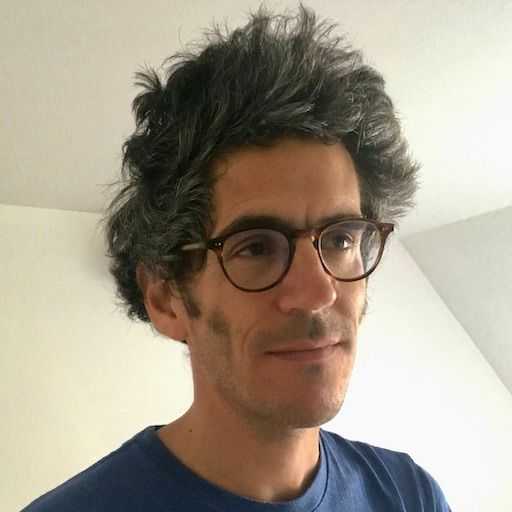
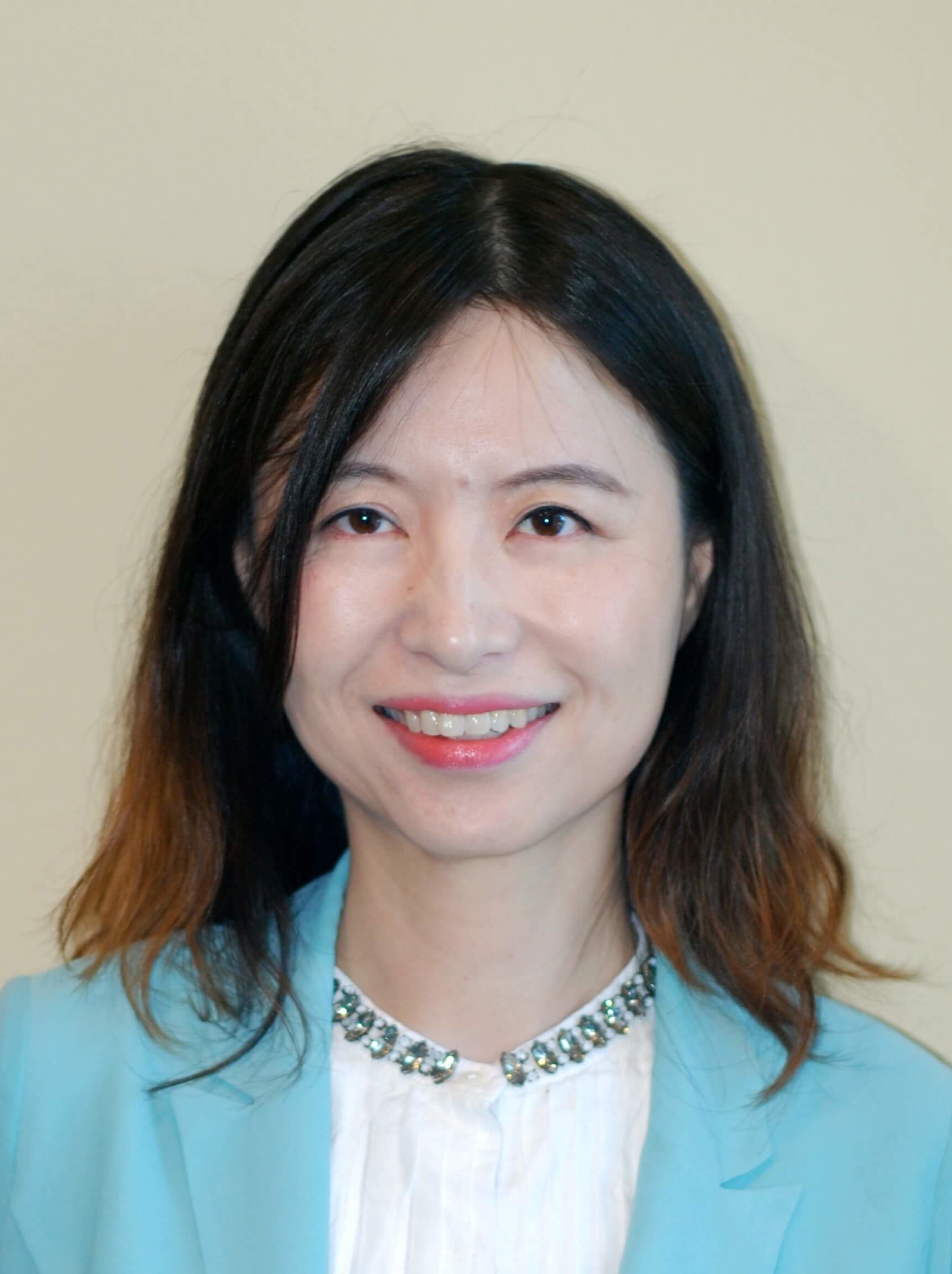
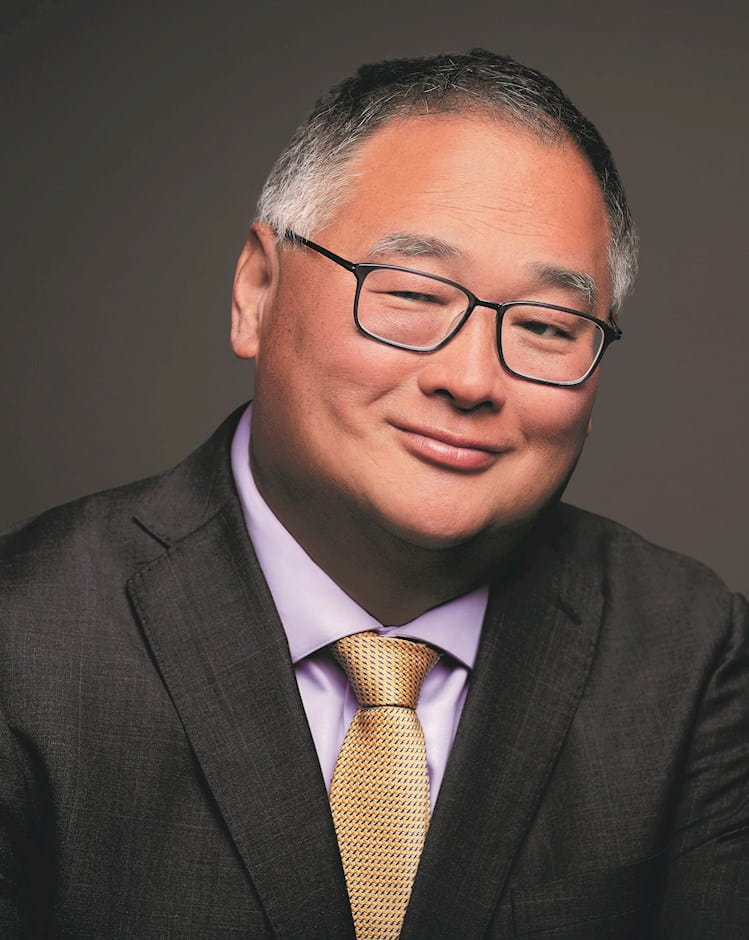
António Fidalgo serves as an Adjunct Professor at the Católica Lisbon School of Business & Economics, Catholic University of Portugal, where he concurrently holds the position of Academic Director for the Masters in Applied Management program. His prior academic appointments include teaching roles at University of Magdeburg (Germany), Fresenius University (Germany), and Boston University (USA). His educational qualifications comprise: M.A. in Economics from Universitat Pompeu Fabra, Spain Ph.D. in Economics from Lausanne University, Switzerland Fidalgo specializes in cliometrics—the quantitative analysis of economic history—with research concentrated on pre-Industrial Revolution to Industrial Revolution periods. His work examines: Long-term economic development trajectories Historical living standards and agricultural production systems Economic inequality dynamics across centuries Methodological innovations in quantitative economic instruments Reproducibility frameworks for empirical economic research As Academic Director of the Masters in Applied Management, he oversees program development and student mentorship. While specific research grants and advisee details remain undisclosed in available records, his leadership role demonstrates significant engagement in graduate education administration and curriculum design within quantitative economics.
Aimee van Wynsberghe is the Alexander von Humboldt Professor for Applied Ethics of Artificial Intelligence at the University of Bonn, where she also serves as Director of the Institute for Science and Ethics (IWE). Her work focuses on integrating ethical values into AI and robotics design, positioning Bonn as a leader in human-centered AI in Europe. She co-founded the Foundation for Responsible Robotics and advises international bodies such as the European Commission and the World Economic Forum. Van Wynsberghe holds a PhD in Applied Ethics from the University of Twente (2012), an MA in Bioethics (Erasmus Mundus, 2008), an MA in Applied Ethics from KU Leuven (2007), and a BSc in Cell Biology from Western Ontario (2006). Her research spans AI ethics, robotics ethics, care ethics, and sustainable technology, with a particular emphasis on value-sensitive design. Recent publications highlight her leadership in sustainable AI, ethical robotics, and multidisciplinary approaches to AI's hidden costs. She has secured significant funding, including the Humboldt Professorship (€3.5M) and Stiftung Mercator support (€3.8M), and leads the Bonn Sustainable AI Lab. Her awards include the L’Oréal UNESCO For Women In Science Award (2018) and the Humboldt Professorship (2021). Scientific Advisory Roles: Member, European Commission High-Level Expert Group on AI (2018–2020) Director, Artificial Intelligence Lab at TU Delft (2019–2021) Co-founder, ALLAI (2019–2021) Board Member, Konrad Zuse Schools of Excellence (2022–) Labs & Teams: She founded the Bonn Sustainable AI Lab and previously coordinated the 4TU Robotics Task Force. Current affiliations include the University of Bonn’s IWE, the German National Academy of Sciences (Leopoldina), and the German Academy of Science and Literature in Mainz.
Professor Tomo Suzuki (Waseda University, Faculty of Commerce) holds a D.Phil. from Oxford University and has held academic positions at Oxford, London School of Economics, and Meiji University. His research spans Institutional Mechanism Design , Sustainability Management , and Mature Socio-Economy across Japan, India, and China. Former Oxford Professor with top academic awards (2008-2012) Advisor to Japanese Cabinet (2020-2023) and LDP Policy Committee Developed "One Additional Line" $2B/year system in India Lead author on 9 Scopus publications with 212 citations Research Focus : • Applied Institutional Design for mature economies • Distribution Statement (DS) for fair value allocation • Critique of shareholder-first capitalism Scientific Awards : Cosmo Awards for Research Excellence (1996, 2015) UK Research Assessment Exercise Top Score (2008) Oxford Executive MBA Outstanding Professor
Thomas Chaney is a Professor of Economics at the University of Southern California (USC), holding the John Elliott Chair in Economics. He is affiliated with Sciences Po’s Department of Economics and leads the ERC Project HTMG. His research focuses on International Trade, Networks, and Finance, with notable contributions to historical trade dynamics and modern financial constraints. Chaney is a CEPR and CESifo Research Fellow, reflecting his academic standing. Research Interests: Chaney’s work bridges historical and contemporary economic phenomena, analyzing trade networks, collateral constraints in corporate finance, and the impact of migration on innovation and urban development. His research often employs innovative methodologies, such as combining archaeological data with economic models to study ancient trade systems. Articles Trends: Recent work examines Bronze Age trade networks, modern corporate investment dynamics, and the role of real estate collateral. His 2024 articles explore ancient trade’s end and contemporary empathy’s economic implications, showcasing interdisciplinary approaches. Earlier papers like Trade, Merchants, and the Lost Cities of the Bronze Age (2019) exemplify his historical focus. Grants & Awards: Chaney leads the ERC-funded HTMG project and holds prestigious fellowships. His work has been published in top journals and spans empirical trade analysis, financial economics, and historical methods. Labs/Teams: Active in USC’s Economics Department and collaborates with global institutions like Sciences Po and the Bank for International Settlements (BIS). His research group integrates economists, historians, and data scientists for interdisciplinary projects.
Joakim Westerlund is a Professor at the Department of Economics at Lund University, Sweden. His research focuses on econometrics, especially panel data econometrics, with expertise in estimation theory, unit root testing, and structural breaks. He teaches econometrics at all academic levels and has supervised numerous bachelor, master, and PhD theses. His work contributes to UN Sustainable Development Goals through methodological advancements in economic analysis. Westerlund has held a Wallenberg Academy Fellowship (2019–2028) and received the Journal of Applied Econometrics Distinguished Author Award in 2018. He collaborates internationally and actively contributes to academic conferences. His research spans theoretical econometrics, empirical applications, and econometric software development. Current PhD supervision includes students working on topics like robustness to structural breaks and human capital analysis. Key research interests include panel unit root tests, interactive effects models, and methodological innovations for handling cross-sectional dependence. His recent work addresses structural breaks in panel data and the New Keynesian Phillips Curve in European economies. He has published widely in top journals such as the Journal of Applied Econometrics and the Oxford Bulletin of Economics and Statistics.
Hannes Zacher is a Professor of Work and Organizational Psychology at Leipzig University's Wilhelm Wundt Institute of Psychology. He previously held academic positions at Queensland University of Technology (Australia) and the University of Groningen (Netherlands). His research focuses on occupational health, proactive employee behavior, aging in the workplace, and sustainable organizational practices. He has been awarded grants from institutions like the German Science Foundation (DFG) and the Volkswagen Foundation. Zacher earned his Ph.D. in Psychology from Justus-Liebig-University Gießen in 2009, following a Diploma (equivalent to B.Sc./M.Sc.) in Psychology from the Technical University of Braunschweig (2000–2006). His research interests include occupational health and well-being, proactive and adaptive employee behavior, aging at work and career development, and environmentally sustainable behavior in organizations. He employs methodologies such as longitudinal surveys, experience sampling, and experiments. Key themes in his work address the interplay between work environments and employee well-being, with a focus on fostering sustainable practices and mitigating age-related challenges in the workplace. Zacher leads projects such as the Centre for Digital Work and studies like 'The Role of Work in the Development of Civilization Diseases.' His publications span topics from green workplace behavior to leadership dynamics during crises. He has no listed scientific awards but has secured significant grant funding for his research. Advising and grant details reflect his commitment to impactful research, though specific student names are not provided. His lab and team efforts emphasize translating psychological insights into organizational practices for sustainability and employee well-being.
Vladimir Spokoiny is a Professor at the Departments of Mathematics and Economics of the Humboldt University of Berlin and Head of the Research Group "Stochastic Algorithms and Nonparametric Statistics" at the Weierstrass Institute for Applied Analysis and Stochastics (WIAS) in Berlin, Germany. His research spans multiple areas of statistics, machine learning, and financial mathematics, with significant contributions to nonparametric statistics, high-dimensional data analysis, and statistical methods in finance. Spokoiny received his M.Sc. in applied mathematics from the Moscow Institute of Railway Engineering in 1981 and his Ph.D. in mathematics from Lomonosov Moscow State University in 1988. He completed his Habilitation at Humboldt University in 1996. His academic career includes positions at the All-Union Institute of Railway Transport in Moscow, the Institute for Information Transmission Problems in Moscow, and the Institute for Applied Analysis and Statistics in Berlin before joining the Weierstrass Institute and Humboldt University where he has been a professor since 2002. Spokoiny's research focuses on adaptive nonparametric smoothing and hypothesis testing, high dimensional data analysis, statistical methods in finance, image analysis with applications to medicine, classification, and nonlinear time series. His work often addresses the challenges of nonstationarity in time series data and develops innovative methods for volatility estimation and risk management. He has made significant contributions to the development of adaptive weights smoothing procedures, which have applications in image processing, community detection, and manifold learning. His recent work has expanded into high-dimensional statistics, Bayesian inference, and optimization methods for machine learning, with publications demonstrating novel approaches to Gaussian approximation, Laplace methods, and statistical inference in non-Euclidean spaces. Spokoiny has supervised numerous PhD students including Oliver Reiss, Danilo Mercurio, Ying Chen, Elmar Diederichs, and Mstislav Elagin, whose research has focused on mathematical finance, time series analysis, and statistical methods. He serves as an Associate Editor for The Annals of Statistics (since 2004) and Statistics and Decisions (since 2002), and has previously served on the editorial board of the Journal of Statistical Planning and Inference. His professional activities include reviewing for major statistical journals including Annals of Statistics, Bernoulli, Econometrica, and Journal of American Statistical Association, as well as reviewing grant proposals for the National Science Foundation (USA), German Research Foundation, and Netherlands Organisation for Scientific Research. Spokoiny is a member of several professional societies including the International Statistical Institute, American Statistical Association, Institute of Mathematical Statistics, and Bernoulli Society. He is fluent in Russian (mother tongue), English, and German, and has good knowledge of French. His research group at WIAS focuses on developing novel statistical methodologies with applications across various scientific domains, particularly emphasizing adaptivity and robustness in complex data environments. The group's work has significant implications for financial risk management, medical imaging, and machine learning applications, with recent publications addressing fundamental questions in high-dimensional statistics and nonparametric inference.
Bruce Ackerman is Sterling Professor of Law and Political Science at Yale University, holding one of the most prestigious academic positions at Yale. He has made significant contributions to constitutional law, political philosophy, and public policy over his distinguished career. His educational background includes an LL.B. from Yale (1967) and a B.A. from Harvard (1964). Ackerman has received numerous honors including the Henry Phillips Prize for lifetime achievement in Jurisprudence (2002), an Honorary Doctorate from the University of Milan (2023), and recognition as a Commander of the French Order of Merit. Ackerman's research focuses on American Constitutionalism, Comparative Constitutionalism, and Theories of Justice. His groundbreaking work includes the three-volume series We the People , which explores great turning points in American constitutional history. His scholarship has had global impact, influencing constitutional reforms in France, Brazil, Britain, and other countries. His recent work examines the constitutional challenges posed by the internet revolution and digital age. His publications reveal consistent engagement with constitutional crises across different nations and time periods, with particular attention to emergency powers, presidential authority, and democratic resilience. Ackerman's work connects historical constitutional development with contemporary challenges to democratic institutions. Commander of the French Order of Merit Henry Phillips Prize for lifetime achievement in Jurisprudence (2002) Honorary Doctorate from University of Milan (2023) Member of the American Law Institute Member of the American Academy of Arts and Sciences Named Leading Global Thinker by Foreign Policy magazine Ackerman has advised numerous governments and constitutional bodies worldwide. His work Before the Next Attack served as basis for French constitutional reform on emergency powers, while The Stakeholder Society influenced wealth distribution reforms in Brazil and Britain. He continues to actively engage with current constitutional challenges through scholarly publications, media commentary, and direct consultation with constitutional institutions globally.
Ying Lu is an Associate Professor at the Department of Applied Statistics, Social Science, and Humanities within the Steinhardt School of Culture, Education, and Human Development at New York University. She holds dual PhDs in Public Policy and Demography from Princeton University (2005) and in Statistics from the University of North Carolina at Chapel Hill (2009). Before joining NYU, she was an Assistant Professor at the University of Colorado Boulder, affiliated with the Institute of Behavioral Science. Her research focuses on quantitative methodology in social and behavioral sciences, including applications in demography, health, and political behavior, as well as statistical methods like model selection and hypothesis testing for high-dimensional data. Her interdisciplinary work bridges statistical rigor with real-world societal challenges. Recent articles highlight her contributions to areas such as employee outcomes in HRM, gut microbiota-cardiometabolic disease links, and innovative clinical trial designs. She has also explored topics in food science, environmental catalysis, and sustainable development policy. Ying Lu’s academic journey reflects a commitment to advancing statistical methodologies while addressing pressing issues in health, policy, and environmental science. She has advised numerous projects but no specific students are listed in the provided texts.
Huiyan Sang is a Professor and Director of the Undergraduate Program in the Department of Statistics at Texas A&M University (College of Arts & Sciences). She earned her Ph.D. in Statistics from Duke University and a B.Sc. in Mathematics and Applied Mathematics from Peking University. Her research focuses on spatial statistics, Bayesian nonparametric methods, machine learning, computational statistics, and applications in environmental sciences, geosciences, urban planning, and biomedical research. Her interdisciplinary work integrates statistical methodologies with real-world challenges, such as analyzing extreme environmental events, optimizing urban infrastructure, and modeling complex systems like human mobility during pandemics. She has contributed to advancing spatio-temporal modeling, Gaussian processes, and Bayesian hierarchical frameworks for large datasets. Recent publications highlight innovations in nonparametric regression, spatial functional data analysis, and stochastic frontier analysis, often leveraging computational efficiency and scalability. Her work addresses critical societal issues, including the impact of community design on public health and environmental monitoring through remote-sensing data. No scientific awards are explicitly listed in the provided texts. She advises no students or grants in the current dataset but collaborates widely on interdisciplinary projects. Her research lab focuses on developing cutting-edge statistical tools with applications in engineering, public health, and environmental science.
Dr. Ulrike Kuhl is a Researcher at the University of Bielefeld, serving as Project Coordinator for the AI Academy OWL at the Research Institute for Cognition and Robotics and as Scientific Project Coordinator within the Faculty of Engineering's Machine Learning Group. Her office is located at CITEC 2-412, and she can be reached at +49 521 106-12125. Dr. Kuhl's research spans several interconnected domains at the forefront of human-centered AI development: Explainable Artificial Intelligence (XAI) frameworks and their psychological impact Cognitive learning enhanced through AI technologies Counterfactual explanation methodologies and user behavior Human-AI interaction design principles Applications of machine learning in environmental monitoring and sports analytics Analysis of Dr. Kuhl's publication trajectory reveals a consistent focus on bridging the gap between sophisticated AI systems and human understanding. Her work particularly examines how different explanation types affect user trust and decision-making, with recent publications exploring counterfactual explanations in contexts ranging from water distribution networks to educational technology. She has developed experimental frameworks like the 'Alien Zoo' methodology for systematically studying explanation usability. Dr. Kuhl actively contributes to the Center for Cognitive Interaction Technology (CITEC) at the University of Bielefeld, an interdisciplinary hub where computer scientists, engineers, and cognitive scientists collaborate on next-generation interactive technologies. Through her coordination of the AI Academy OWL initiative, she facilitates regional collaboration between academic researchers and industry partners to advance artificial intelligence applications in the Ostwestfalen-Lippe region.
Antoinette Schoar is the Stewart C. Myers-Horn Family Professor of Finance and Entrepreneurship at the MIT Sloan School of Management. She holds a PhD in Economics from the University of Chicago and an undergraduate degree from Germany. Her research focuses on entrepreneurial finance, fintech, consumer finance, and cryptocurrencies. She co-founded ideas42, a nonprofit applying behavioral economics to social issues, and co-directs MIT's Consumer Finance Initiative. Education: PhD in Economics, University of Chicago Undergraduate Degree, Germany Research Interests: Her work spans cryptocurrency markets, household finance, and financial intermediation. Recent projects include analyzing the Terra Luna crash, crypto retail trading behavior, and the impact of remote work on labor dynamics. She emphasizes policy-relevant insights, particularly in consumer protection and financial stability. Articles Overview: Her recent publications examine financial advice markets, mortgage market segmentation, and the effects of the pandemic on small businesses. These reflect a focus on real-world applications of financial theory, blending empirical analysis with policy implications. Awards: 2024 TIAA Paul A. Samuelson Award 2009 Kauffman Prize Medal Brattle Prize (Journal of Finance) Advising & Grants: She advises on fintech policy and has led NBER Corporate Finance research. Her executive education courses (e.g., Blockchain and Crypto Applications) bridge academic insights with industry practices. Labs/Initiatives: Co-directs MIT Sloan’s Consumer Finance Initiative, exploring technological impacts on consumer markets. Engaged with the NBER Corporate Finance group and serves as Executive Editor of the Journal of Finance.
John H. Shaw is the Harry C. Dudley Professor of Structural and Economic Geology and Professor of Environmental Science & Engineering at Harvard University's School of Engineering and Applied Sciences (SEAS). He specializes in structural geology, earthquake hazards, and geomechanics, with a focus on thrust fault systems, fault-related folding, and seismic risk assessment in regions like California and China. His research integrates field observations, 3D modeling, and geomechanical simulations to understand fault dynamics and their implications for societal safety. Shaw's work emphasizes quantitative analysis of fault geometry, slip rates, and rupture processes. Key projects include modeling ground deformation during earthquakes, assessing seismic hazards in fold-thrust belts, and investigating reservoir-induced seismicity. He leads the Structural Geology & Earth Resources Group and contributes to collaborative initiatives like the Southern California Earthquake Center (SCEC). His articles highlight advancements in fault system modeling, including 3D structural reconstructions, distinct element method applications, and coupling geomechanical models with fluid flow simulations. Recent studies focus on the Wilmington blind-thrust fault beneath Los Angeles, the Ventura fault system, and tectonic evolution of the Canadian Rockies and Qaidam Basin. Shaw's research also addresses interdisciplinary challenges such as stochastic velocity modeling for earthquake ground motion prediction and developing open-source tools like the SCEC Unified Community Velocity Model (UCVM). His work bridges fundamental structural geology with applied seismic hazard mitigation strategies.
Chang-Tai Hsieh is the Phyllis and Irwin Winkelried Distinguished Service Professor of Economics at the University of Chicago Booth School of Business. He is also a PCL Faculty Scholar with the university. His academic appointments include being a Research Associate for the National Bureau of Economic Research, a Senior Fellow at the Bureau for Research in Economic Analysis of Development, and a member of the Steering Group of the International Growth Center in London. His research interests focus on economic development, growth in Asia and Latin America, and applied economics, with particular expertise in macroeconomics. He has conducted extensive research on growth and development patterns across different regions, with special attention to China's economic transformation. His work examines resource allocation, innovation dynamics, trade policy impacts, and structural economic changes. Hsieh's recent publications reveal a strong focus on US-China economic relations, Chinese economic development, and the dynamics of innovation and growth. His research spans multiple subfields including trade policy, resource allocation, economic measurement, and the political economy of development. He has made significant contributions to understanding the economic transformation in East Asia, particularly regarding China's growth model and its implications for global trade. Alfred P. Sloan Foundation Research Fellowship Elected Member of Academia Sinica Two-time recipient of the Sun Ye-Fang Prize Fellow of the American Academy of Arts and Sciences Fellow of the Econometric Society Hsieh has been a visiting scholar at multiple Federal Reserve Banks (San Francisco, New York, and Minneapolis), the World Bank's Development Economics Group, and the Economic Planning Agency in Japan. He is also an active commentator on economic policy, with numerous opinion pieces published in Commonwealth Magazine, Project Syndicate, and other major outlets, particularly focusing on US-Taiwan-China economic relations and trade policy.
Dimitrios P. Tsomocos is a Professor of Financial Economics at Saïd Business School and a Fellow in Management at St Edmund Hall, University of Oxford. He holds a BA, MA, MPhil, and PhD from Yale University and previously worked at the Bank of England. He serves on editorial boards including Annals of Finance and Economic Theory, and is a Senior Research Associate at the Financial Markets Group at the London School of Economics. His educational background includes: University of Oxford: M.A. by resolution, 2002 Yale University: Ph.D. in economics, 1996 Yale University: M.Phil. in economics, 1992 Yale University: M.A. in economics, 1990 Yale University: B.A. in economics, 1989 Professor Tsomocos is a mathematical economist specializing in Central Banking, Banking and regulation, Incomplete asset markets, Systemic risk, Financial instability, and Issues of new financial architecture. His research focuses on contagion, financial fragility, interbank linkages, and the impact of the Basel Accord using General Equilibrium models with incomplete asset markets, money, and endogenous default. He is working toward designing a new paradigm of monetary policy, financial stability analysis, and macroprudential regulation. His recent publications show a consistent focus on financial stability, banking regulation, and the interaction between monetary policy and financial stability. The research spans theoretical modeling of bankruptcy and default in general equilibrium frameworks, practical applications to bank regulation, analysis of commodity cycles in emerging economies, and policy responses to crises like the COVID-19 pandemic. His work frequently employs quantitative methods and general equilibrium modeling to address pressing issues in financial economics. His scientific achievements include: 2004 Bank Sabatell prize for the best work on the economics of banking (for "Book vs. Fair Value Accounting in Banking and Intertemporal Smoothing") Co-development of the Goodhart-Tsomocos model of financial fragility (2003) Testimony to House of Lords for the Economic and Financial Affairs and International Trade Sub Committee's report (2011) Appointment to Research Advisory Board, Central Bank of Russian Federation (2018) Professor Tsomocos has advised numerous PhD students and collaborated extensively with central banks worldwide. He has served as an economic advisor to a major political party in Greece and regularly provides commentary on the Greek economy. His research has had substantial policy impact, with the Goodhart-Tsomocos model implemented by more than ten central banks including the Bank of Bulgaria, Bank of Colombia, Bank of England, and Bank of Korea. He continues to collaborate with researchers from the ECB, Central Bank of the Russian Federation, and Bank of Chile on updated versions of his financial fragility model. He co-developed the Goodhart-Tsomocos model of financial fragility while working at the Bank of England, which has been implemented at various central banks globally. His research group at Oxford continues to refine this model and apply it to contemporary financial stability challenges.