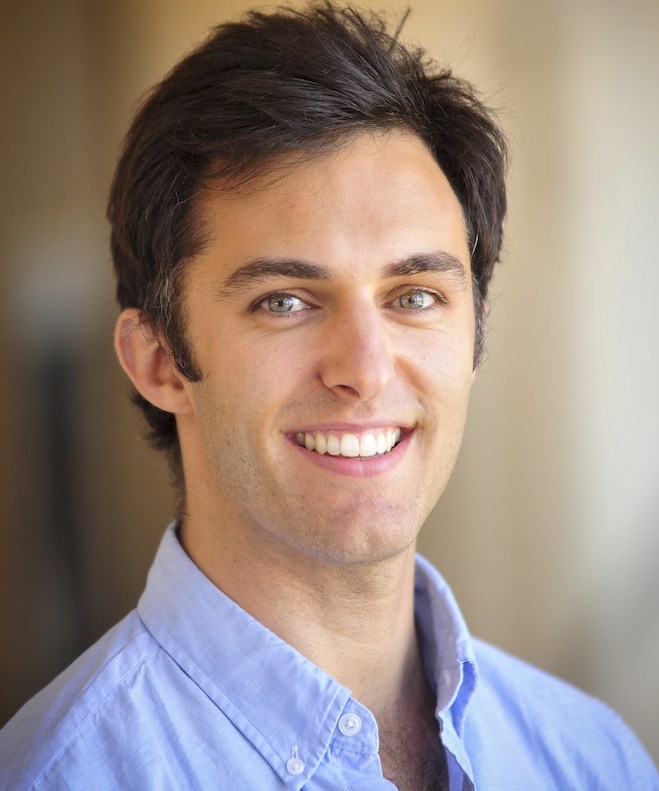
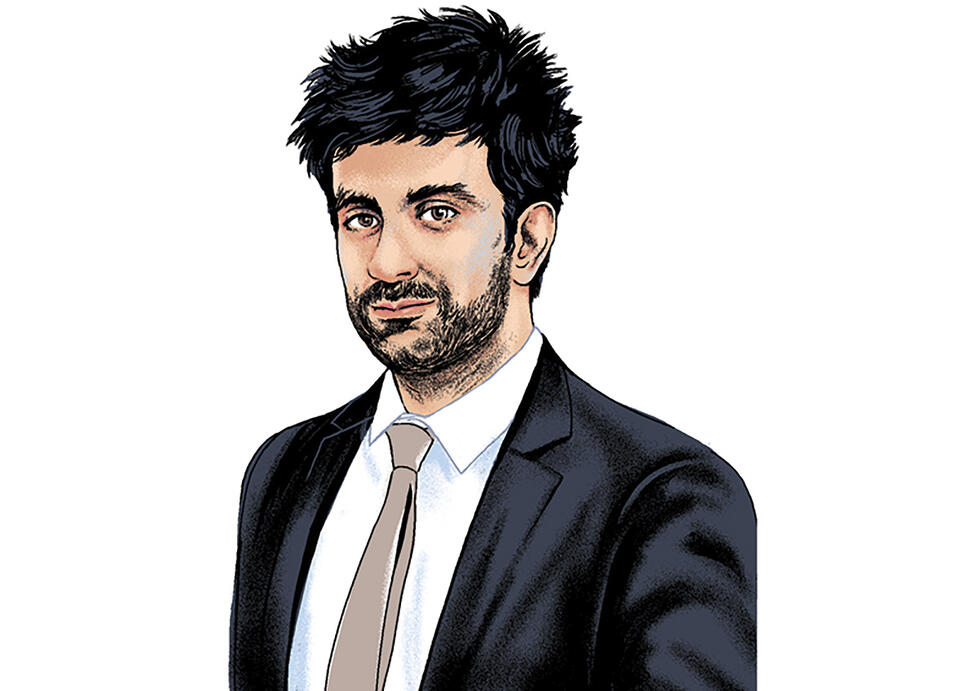
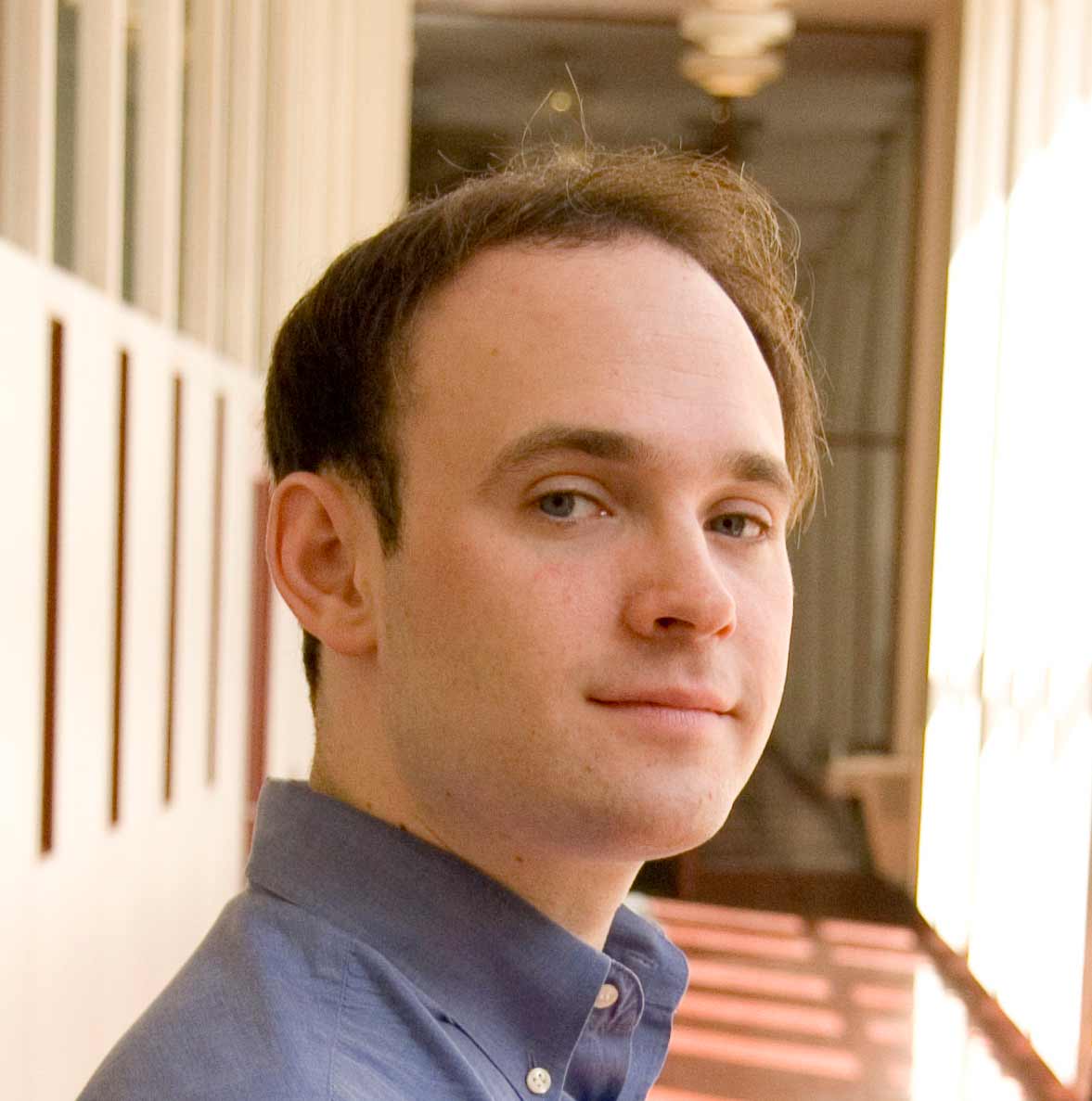
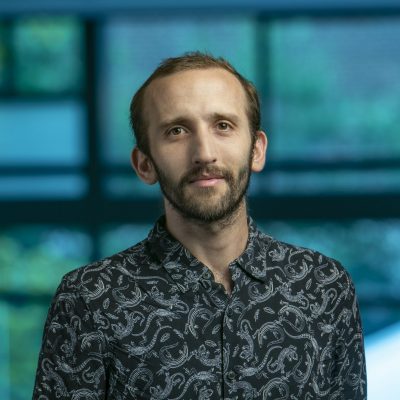
Daniel M. Roy is a Full Professor at the University of Toronto, with cross-appointments in the Department of Computer Science, Department of Statistical Sciences, and Department of Electrical and Computer Engineering. He serves as Research Director at the Vector Institute and holds the CIFAR Canada AI Chair. Research Focus: Foundational principles of prediction, inference, and decision-making under uncertainty across machine learning, statistics, mathematical logic, applied probability, and computer science. Scientific Contributions: Key work in learning theory, statistical network analysis, probabilistic programming, and information-theoretic frameworks for generalization. Awards: ICML 2024 Best Paper Award for "Information Complexity of Stochastic Convex Optimization" and promotion to Full Professor in 2024. Student Advising: Actively mentors Ph.D. candidates and postdoctoral researchers with strong quantitative backgrounds, particularly at the intersection of machine learning, statistics, and computer science. Email: daniel.roy@utoronto.ca
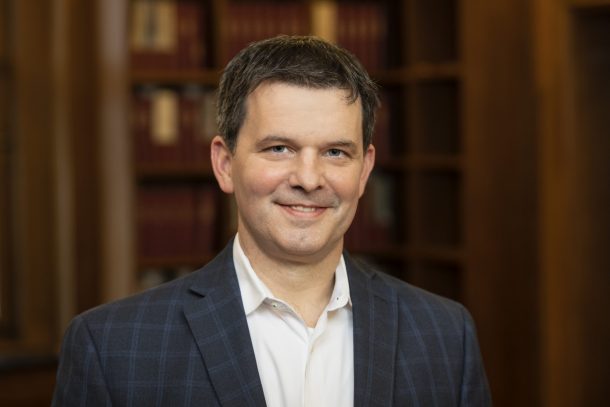
Jeffrey F. Brock is the Dean of the School of Engineering & Applied Science and the William S. Massey Professor of Mathematics at Yale University. He holds the Zhao and Ji Chair in Mathematics. His research focuses on low-dimensional geometry and topology, particularly hyperbolic geometry and its applications to data analysis. He completed his undergraduate studies at Yale and earned his Ph.D. from UC Berkeley. He held positions at Stanford, the University of Chicago, and Brown University, where he chaired the Mathematics Department from 2013 to 2017 and founded Brown’s Data Science Initiative in 2016. He joined Yale in 2018, serving as inaugural Dean of Science in the Faculty of Arts and Sciences until assuming his current role in 2022. He is a Guggenheim Fellow and Fellow of the American Mathematical Society. His research spans hyperbolic 3-manifolds, Teichmüller dynamics, and geometric methods in data science. Notable contributions include work on Thurston’s geometrization program, classification of hyperbolic manifolds, and applications of geometric topology to complex datasets. He co-authored foundational papers on ending laminations, Weil-Petersson geometry, and renormalized volume. His recent work bridges pure mathematics with applied challenges, such as algorithmic detection of medical imaging patterns. Awarded the Guggenheim Fellowship (2008) and AMS Fellow (2017), Brock has also led interdisciplinary initiatives at Brown and Yale. His administrative roles include overseeing engineering, natural sciences, and data science programs. Beyond academia, he co-founded the Vijay Iyer Trio, showcasing his passion for music performance and creativity.
Martin T. Wells is the Charles A. Alexander Professor of Statistical Sciences at Cornell University, with joint appointments in the Department of Statistical Science, Department of Biological Statistics and Computational Biology, Department of Social Statistics, and as Professor of Clinical Epidemiology and Health Services Research at Weill Medical School. He serves as Editor-in-Chief of the ASA-SIAM Book Series and Co-Editor of the Journal of Empirical Legal Studies. Cornell University, Ithaca, NY Weill Cornell Medical College Research Interests span applied and theoretical statistics, Bayesian methods, biostatistics, clinical epidemiology, and computational biology. His work bridges disciplines like finance, legal studies, and health services research. Article Trends highlight advancements in Bayesian modeling, quantum cognition machine learning, tensor analysis, and misclassification correction, with applications in genomics, finance, and public health. Fellow of the American Statistical Association Fellow of the Royal Statistical Society Contributions include developing statistical software (e.g., rTensor), methodological innovations in clinical trials, and empirical legal studies on civil rights and the death penalty.
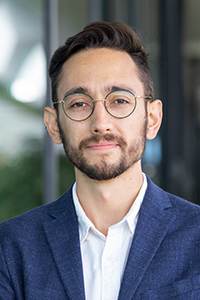
Angela Capel Cuevas is an Assistant Professor of Quantum Information Theory/Theoretical Quantum Computation at the University of Cambridge's Department of Applied Mathematics and Theoretical Physics (DAMTP). Previously, she held a Junior Professorship at Eberhard Karls Universität Tübingen (2021-2024) and was an MCQST Distinguished PostDoc at TU München (2020-2021). Her research focuses on the intersection of quantum information theory and quantum many-body systems, particularly studying thermalization dynamics via quantum functional inequalities. She is a recipient of the Simons Emmy Noether Fellowship and Forbes 30 Under 30 (Spain 2023). Education: PhD in Mathematics, Universidad Autónoma de Madrid/ICMAT (2015-2019) Master in Computational Engineering and Mathematics, URV/UOC (2016-2018) Bachelor in Mathematics, Universidad de Granada (2009-2014) Research: Angela's work applies analytic and geometric tools to quantum systems, emphasizing decay of correlations in Gibbs states and quantum dissipative evolutions. Key topics include entropy inequalities, modified logarithmic Sobolev inequalities, and thermalization rates in spin chains. Her recent work bridges quantum functional analysis with practical implications for quantum computing and thermalization phenomena. Grants & Roles: PI of CRC TRR 352 'Mathematics of Many-Body Quantum Systems' (7M€) Co-PI of QuantERA project TouQan (1.25M€) Organized workshops at BIRS and Tübingen (2023-2024) Awards: Simons Emmy Noether Fellowship (2023) Forbes 30 Under 30 (2023) Vicent Caselles RSME-FBBVA Award (2022) Labs/Teams: Leads a group studying quantum dissipative systems and thermalization at DAMTP. Collaborates with institutions globally on quantum functional inequalities and Gibbs state properties.
David Alvarez-Melis is an Assistant Professor of Computer Science at Harvard University's John A. Paulson School of Engineering and Applied Sciences (SEAS). He leads the Data-Centric Machine Learning (DCML) group and holds affiliations with the Kempner Institute, Harvard Data Science Initiative, and the Center for Research on Computation and Society. His research focuses on making machine learning more data-efficient and trustworthy, with applications in natural and medical sciences. He also serves as a researcher at Microsoft Research New England. Affiliations: SEAS, Kempner Institute, Harvard Data Science Initiative, CRCS Education: PhD in Computer Science (MIT), MS in Mathematics (NYU Courant), BSc in Applied Mathematics (ITAM) Research Interests: Optimal Transport, dataset distillation, interpretable AI, medical imaging, robustness, and large language models. His work bridges theory and applications, emphasizing geometric and probabilistic methods. Recent Trends in Publications: Focused on advancing optimal transport for data manipulation, distributional deep equilibrium models, and repurposing LLMs for specialized domains. Key themes include synthetic dataset generation, gradient flows in probability spaces, and robust interpretability frameworks. Awards: Aramont Fellowship, Dean’s Competitive Fund, Top Reviewer awards at major conferences (ICLR, NeurIPS, ICML). Grants: Supported by the Aramont Fund and Harvard’s Dean’s Fund. His lab advises students across Harvard and MIT, with notable contributions to medical imaging, NLP, and foundational ML theory. He actively mentors interns and fosters collaborations with industry and academia.
Amir Ali Ahmadi is a Professor at Princeton University's Department of Operations Research and Financial Engineering (ORFE), with affiliations across multiple disciplines including PACM, Computer Science, Mechanical & Aerospace Engineering, Electrical Engineering, and the Center for Statistics and Machine Learning. He serves as Director of Princeton's Optimization and Quantitative Decision Science Certificate Program and has taken temporary roles at Citadel GQS (2021-2022) and Google Brain (2020-2021). His research bridges optimization theory , dynamical systems , and control theory , focusing on scalable algorithms for complex problems in robotics, autonomous systems, and machine learning. He has pioneered DSOS/SDSOS relaxations as alternatives to traditional sum-of-squares methods, enabling faster solutions through linear/second-order cone programming. Recent publications explore: Higher-order Newton methods for socially responsible investment Data-efficient learning of dynamical systems Computational complexity of local minima Robust-to-dynamics optimization frameworks Award highlights include: 2024 Egon Balas Prize in Optimization 2024 Princeton Engineering Council Teaching Award 2023 Distinguished Teaching Award (Princeton SEAS) 2019 NSF CAREER Award 2017 DARPA Young Faculty Award 2017 Sloan Fellowship in Computer Science He advises prominent researchers like Georgina Hall (Tucker Prize finalist) and Bachir El Khadir (Goldstine Fellow), and leads the Princeton Optimization Seminar and MURI project on Control-Oriented Learning on the Fly.
Yimin D. Zhang is an Associate Professor in the Department of Electrical and Computer Engineering at Temple University's College of Engineering, where he leads the Advanced Signal Processing (ASP) Lab. His research spans statistical signal processing, array processing, radar, wireless communications, and convex optimization. Research Interests: Dr. Zhang's work focuses on cutting-edge signal processing techniques including compressive sensing, sparse arrays, time-frequency analysis, and robust beamforming. These are applied to radar systems, satellite navigation, assisted living, and wireless networks. His research addresses core challenges in target localization, direction-of-arrival estimation, and spectrum-efficient joint radar-communication systems. The recent publications highlight a strong trend in exploiting sparsity, virtual arrays, and deep learning to enhance resolution and robustness in radar and communication systems. Themes include multi-frequency processing, low-rank matrix recovery, and optimized OFDM waveforms for dual-function systems. Scientific Awards: 2016 IET Radar, Sonar and Navigation Premium Award 2017 IEEE Aerospace and Electronic Systems Society Harry Rowe Mimno Award 2018 IEEE Signal Processing Society Young Author Best Paper Award (coauthor) Advising and Grants: Dr. Zhang has served as Principal or Co-Principal Investigator on over $6 million in research funding from the NSF, AFRL, ONR, and DARPA. While student advisees are not listed, his leadership of the ASP Lab suggests active mentorship of graduate researchers. He contributes extensively to the academic community as an associate editor for IEEE Transactions on Signal Processing and editor for Signal Processing journal, and serves on key IEEE technical committees. Labs and Teams: He directs the Advanced Signal Processing (ASP) Lab at Temple University, which focuses on developing novel algorithms for real-world applications in radar, communications, and navigation. Previously, he led the Wireless Communications and Positioning Lab and the RFID Lab at Villanova University.
Raphael Hauser is an Associate Professor in Numerical Mathematics at the University of Oxford's Mathematical Institute, Director of Graduate Studies - Teaching, and Tanaka Fellow in Applied Mathematics at Pembroke College. His affiliations include membership in the Data Science, Numerical Analysis, and Mathematical and Computational Finance research groups, as well as a fellowship at the Alan Turing Institute. Education: PhD in Operations Research, Cornell University, Ithaca, USA Dipl. Math. ETH, Swiss Federal Institute of Technology (ETH Zurich), Switzerland Research interests span data science, numerical optimisation, medical imaging, distributed computing, and applied probability/statistics. His work integrates mathematical rigor with practical applications, particularly in optimization algorithms, machine learning theory, and medical imaging technology. Publications focus on optimization theory, stochastic processes, medical imaging systems, and computational finance, with recurring themes in non-convex optimization guarantees, PCA variants, and X-ray tomography innovations. Awards: Oxford University Teaching Award (2007) SIAM Optimization Prize (2005) SIAM Student Paper Prize (2000) Advising includes 15+ DPhil students and 40+ MSc students, with projects in optimization, finance, imaging, and machine learning. Current postdocs and students are affiliated with the Alan Turing Institute and industrial partners like Siemens and Macquarie Group. He leads teams in the Mathematical Institute's research groups and collaborates with the Alan Turing Institute on large-scale data science initiatives.
Jonathan A. Kelner is a Professor of Applied Mathematics in the Department of Mathematics at the Massachusetts Institute of Technology (MIT) and a member of the MIT Computer Science and Artificial Intelligence Laboratory (CSAIL). His research focuses on applying techniques from pure mathematics to solve fundamental problems in algorithms and complexity theory, with the goal of developing practical algorithms for real-world questions. Dr. Kelner received his undergraduate degree from Harvard University and his Ph.D. in Computer Science from MIT in 2006. Before joining the MIT faculty, he spent a year as a member of the Institute for Advanced Study. His educational background has provided a strong foundation for his interdisciplinary research spanning mathematics and computer science. His research interests include combinatorial optimization, mathematical programming, spectral graph theory, distributed computing, machine learning, computational geometry and topology, computational biology, signal processing, and random matrix theory. Kelner's work demonstrates how deep theoretical insights can lead to practical algorithmic improvements, particularly in graph algorithms and optimization problems. His approach often involves connecting seemingly disparate areas of mathematics to create novel algorithmic techniques. Analysis of his recent publications reveals a strong focus on spectral graph theory, optimization algorithms, and the Sum-of-Squares method. His work frequently addresses fundamental questions in theoretical computer science with practical implications for algorithm design. A notable trend in his research is the development of nearly-linear-time algorithms for various graph problems, which represents significant improvements over previous approaches. NSF CAREER Award Alfred P. Sloan Research Fellowship NEC Award for Research in Computers and Communication Sprowls Doctoral Dissertation Award Best Student Paper Award at STOC 2004 Best Paper Award at STOC 2011 Kokusai Denshin Denwa Junior Faculty Chair 2008 Harold E. Edgerton Faculty Achievement Award 2011 School of Science Award for Excellence in Undergraduate Education 2012 Professor Kelner has been actively involved in mentoring students and has received recognition for his teaching excellence, including the School of Science Award for Excellence in Undergraduate Education in 2012. His research has been supported by prestigious grants including the NSF CAREER Award. He has collaborated extensively with researchers across multiple institutions, often working with other leading figures in theoretical computer science to produce groundbreaking results in algorithm design. At MIT, Kelner is part of both the Mathematics Department and CSAIL, positioning him at the intersection of theoretical mathematics and practical computer science. This dual affiliation reflects the interdisciplinary nature of his work, which bridges pure mathematical theory with concrete algorithmic applications.
Vladimir Spokoiny is a Professor at the Departments of Mathematics and Economics of the Humboldt University of Berlin and Head of the Research Group "Stochastic Algorithms and Nonparametric Statistics" at the Weierstrass Institute for Applied Analysis and Stochastics (WIAS) in Berlin, Germany. His research spans multiple areas of statistics, machine learning, and financial mathematics, with significant contributions to nonparametric statistics, high-dimensional data analysis, and statistical methods in finance. Spokoiny received his M.Sc. in applied mathematics from the Moscow Institute of Railway Engineering in 1981 and his Ph.D. in mathematics from Lomonosov Moscow State University in 1988. He completed his Habilitation at Humboldt University in 1996. His academic career includes positions at the All-Union Institute of Railway Transport in Moscow, the Institute for Information Transmission Problems in Moscow, and the Institute for Applied Analysis and Statistics in Berlin before joining the Weierstrass Institute and Humboldt University where he has been a professor since 2002. Spokoiny's research focuses on adaptive nonparametric smoothing and hypothesis testing, high dimensional data analysis, statistical methods in finance, image analysis with applications to medicine, classification, and nonlinear time series. His work often addresses the challenges of nonstationarity in time series data and develops innovative methods for volatility estimation and risk management. He has made significant contributions to the development of adaptive weights smoothing procedures, which have applications in image processing, community detection, and manifold learning. His recent work has expanded into high-dimensional statistics, Bayesian inference, and optimization methods for machine learning, with publications demonstrating novel approaches to Gaussian approximation, Laplace methods, and statistical inference in non-Euclidean spaces. Spokoiny has supervised numerous PhD students including Oliver Reiss, Danilo Mercurio, Ying Chen, Elmar Diederichs, and Mstislav Elagin, whose research has focused on mathematical finance, time series analysis, and statistical methods. He serves as an Associate Editor for The Annals of Statistics (since 2004) and Statistics and Decisions (since 2002), and has previously served on the editorial board of the Journal of Statistical Planning and Inference. His professional activities include reviewing for major statistical journals including Annals of Statistics, Bernoulli, Econometrica, and Journal of American Statistical Association, as well as reviewing grant proposals for the National Science Foundation (USA), German Research Foundation, and Netherlands Organisation for Scientific Research. Spokoiny is a member of several professional societies including the International Statistical Institute, American Statistical Association, Institute of Mathematical Statistics, and Bernoulli Society. He is fluent in Russian (mother tongue), English, and German, and has good knowledge of French. His research group at WIAS focuses on developing novel statistical methodologies with applications across various scientific domains, particularly emphasizing adaptivity and robustness in complex data environments. The group's work has significant implications for financial risk management, medical imaging, and machine learning applications, with recent publications addressing fundamental questions in high-dimensional statistics and nonparametric inference.
Ivan Dokmanic is an Assistant Professor at the Coordinated Science Laboratory (CSL) within the University of Illinois . His research bridges signal processing , machine learning , and applied inverse problems , with a focus on acoustics, biomedical imaging, and distance geometry. Current Role : Assistant Professor, CSL Email : dokmanic@illinois.edu Research Interests : Dokmanic explores machine learning applications in inverse problems , particularly distance geometry for molecular imaging and acoustics . His work includes unlabeled sensing , where distances between points are known but their arrangement is not. This has implications for powder diffraction , indoor localization , and echo modeling . Article Trends : His recent publications emphasize distance geometry in machine learning , acoustic signal processing , and inverse problem theory . Key areas include molecular imaging , audio encryption , and sensor positioning . Collaborative work spans medical imaging , cyberphysical systems , and geometric invariants . 2016 Google Faculty Award NSF Grant (1 year, $157,079) Students and Grants : Dokmanic mentors PhD students like Puoya, Shuai, and Anadi. His research is funded by the National Science Foundation , Google , VISA , and nVidia .
Surya Ganguli is an Associate Professor in the Department of Applied Physics at Stanford University, with courtesy appointments in Neurobiology and Electrical Engineering. He serves as Senior Fellow at the Stanford Institute for Human-Centered AI and is affiliated with the Stanford Neuroscience Institute , Bio-X , and Wu Tsai Neurosciences Institute . His research spans theoretical neuroscience, machine learning, and statistical mechanics. Ph.D. , UC Berkeley, Theoretical Physics (2004) M.A. , UC Berkeley, Physics (2000) M.A. , UC Berkeley, Mathematics (2004) M.Eng. , MIT, Electrical Engineering and Computer Science (1998) B.S. , MIT, Physics (1998) B.S. , MIT, Mathematics (1998) B.S. , MIT, Electrical Engineering and Computer Science (1998) His lab explores how higher-level cognitive phenomena emerge from neural network dynamics, focusing on perception, memory, attention, and decision-making . Research themes include statistical mechanics of learning , neural representational geometry , and biologically plausible learning rules . Current work examines nonlinear interactions in neural networks through the Schmidt Science Polymath Award (2023). Key article trends reveal expertise in neural coding limits (2022 Nature), synaptic plasticity models (2022 Neural Computation), and deep learning theory (2022 NeurIPS publications). His 2019 Annual Review chapter on statistical mechanics of deep learning established foundational insights into network criticality. Scientific Awards : NSF Career Award (2019) Simons Foundation Investigator (2016) McKnight Scholar Award (2015) James S. McDonnell Foundation Scholar (2014) Sloan Research Fellow (2013) As advisor, he mentors 10+ doctoral students across Applied Physics, Neurosciences, and Computer Science, including Vamshi Balanaga and Mason Kamb. His lab collaborates with experimental teams at Stanford and beyond, supported by grants from NSF , Simons Foundation , and Swartz Foundation . The Neural Dynamics & Computation Lab unites physicists, mathematicians, and neuroscientists to decode cognition through interdisciplinary methods.
Jose Israel Rodriguez is an Associate Professor in the Department of Mathematics at the University of Wisconsin-Madison. His research bridges applied algebraic geometry and algebraic statistics, focusing on nonlinear algebra, maximum likelihood estimation, monodromy, and polynomial systems in engineering and science applications. Primary Affiliation: Department of Mathematics , UW-Madison Additional Affiliations: Department of Electrical & Computer Engineering , Institute for Foundations of Data Science Research Interests : Applied algebraic geometry for nonlinear eigenvalue problems and kinematics Algebraic statistics in nearest point problems and likelihood geometry Numerical methods for monodromy, Galois groups, and polynomial optimization Teaching and Mentorship : Co-organized the Collaborative Undergraduate Research Laboratory (CURL) for Spring 2020 Advises PhD students Julia Lindberg and Zinan Wang , with Bernd Sturmfels as his own PhD advisor Developed software tools like Multiregeneration and Decomposable Sparse Polynomial Systems Academic Contributions : Authored over 20 peer-reviewed publications in journals like SIAM Journal on Applied Algebra and Geometry, Foundations of Computational Mathematics, and Journal of Symbolic Computation Organized international conferences including Monodromy and Galois Groups in Enumerative Geometry and SIAM AG19 Active member of the SIAM community and developer of the Matroids Day seminar
Erik Waingarten is an assistant professor at the University of Pennsylvania in the Computer and Information Science department. His research focuses on algorithms for massive datasets, including similarity search, streaming/sketching, property testing, and distribution testing. Former postdoctoral researcher at Stanford's CS Department under Moses Charikar PhD from Columbia University advised by Xi Chen and Rocco Servedio Key research areas: High-dimensional geometry Streaming algorithms Property testing Sketching techniques Clustering and metric optimization Recent article trends show expertise in: 2025 publications on monotonicity testing and metric property analysis 2024 work on Earth Mover's Distance and kernel evaluations 2023 papers on clustering, optimal transport, and MST algorithms 2022-2020 foundations in sublinear algorithms and entropy estimation Scientific recognition: NSF CAREER Award (2023) CCC Best Paper Award (2017) Invited to Journal of the ACM (2017) Academic advising includes PhD students: Ashwin Padaki Tian Zhang Nicolas Menand Krish Singal Junkai Song
Christian Bargetz is a Professor of Functional Analysis at the University of Innsbruck, Austria, affiliated with the Faculty of Mathematics, Computer Science, and Physics (MIP). His primary research focuses on nonlinear functional analysis, Banach space theory, and distribution theory. He teaches advanced courses such as Optimization, Distribution Theory, and Functional Analysis, demonstrating his expertise in both theoretical and applied aspects of his field. Education: Completed his PhD in 2012 at the University of Innsbruck under the supervision of Norbert Ortner. His diploma thesis (2008) explored differential behaviors with Ulrich Oberst. Bargetz has held continuous academic positions since 2008, including roles as a lecturer and researcher. Research Interests: Specializes in iterative projection methods, generic properties of nonexpansive mappings, Fréchet spaces, and vector-valued distributions. His work bridges functional analysis with geometric measure theory and optimization, with applications in metric geometry and topological tensor products. Publications: Over 30 peer-reviewed articles in prestigious journals such as Canadian Journal of Mathematics , Journal of Mathematical Analysis and Applications , and Proceedings of the American Mathematical Society . Recent work includes studies on extremal nonexpansive mappings and Lipschitz function spaces. Grants & Projects: Principal investigator in FWF-funded projects on nonexpansive mappings and Banach spaces. Collaborates internationally, including with institutions in Israel, Poland, and Serbia. Teaching: Leads advanced courses in functional analysis, optimization, and distribution theory. Supervises bachelor's theses and master's projects on topics like extension operators for Lipschitz functions. Affiliations: Active member of the Functional Analysis working group and regularly participates in international conferences such as the Banach Afternoon, Winter School in Abstract Analysis, and DMV-ÖMG Annual Conferences.