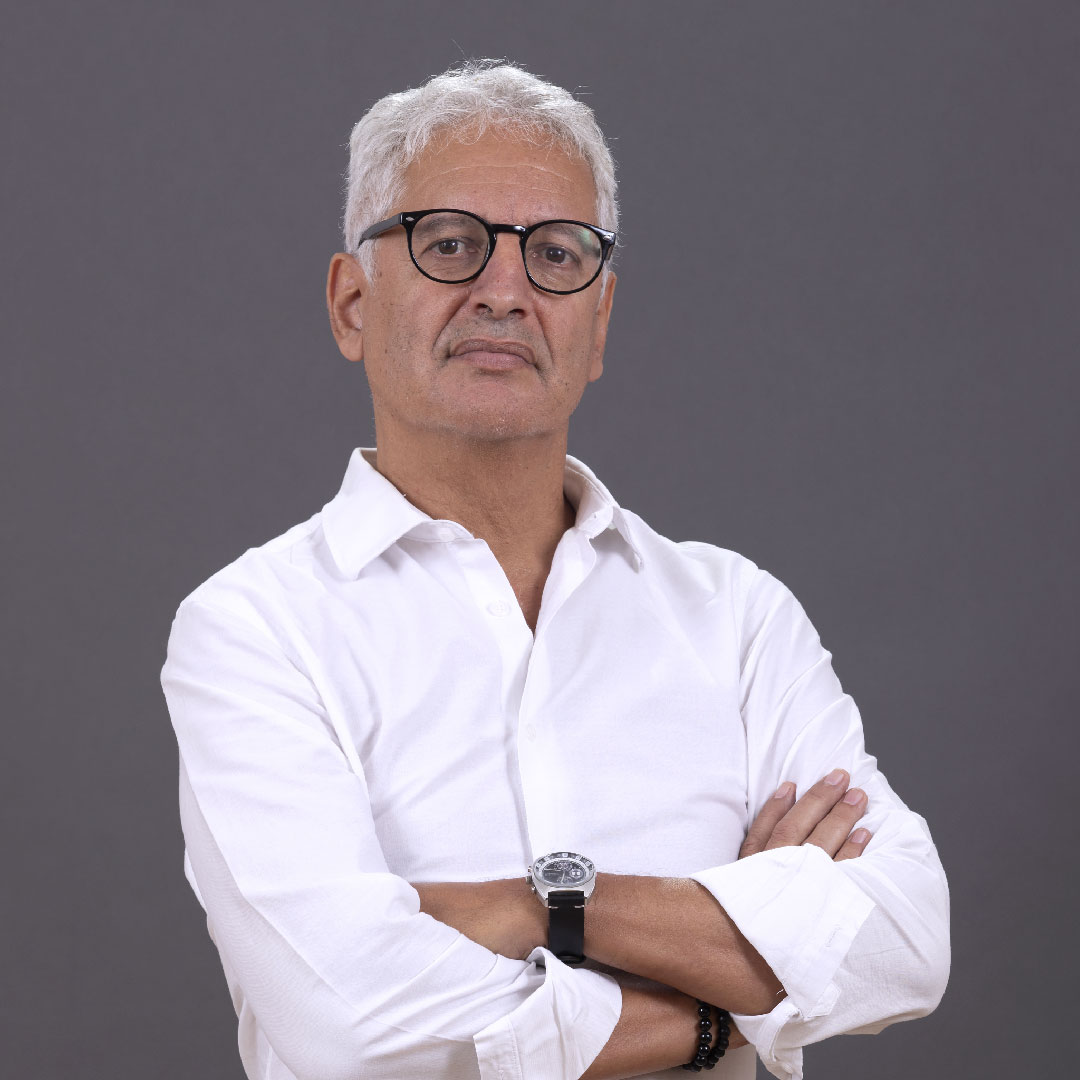
Associate Professor with Habilitation at the School of Engineering, University of Minho , where he also serves as a Senior Researcher at Centro ALGORITMI. Member of both the IEM R&D Group and LPSL R&D Lab. Education: Degree in Production Engineering (1989) - University of Minho MSc in Computer Integrated Manufacturing (1992) - Loughborough University Ph.D. in Scheduling and Process Planning Integration (1997) - University of Nottingham His research spans Lean Approaches across diverse environments including industry, healthcare, construction, offices, and education. Key focus areas include pull flow methods for complex production environments, stable continuous improvement systems , and the integration of Scrum methodology in educational settings. Recent publications show a clear trend toward applying lean principles in retail logistics, healthcare operations, and sustainability frameworks, with increasing emphasis on performance measurement systems and Science-Based Targets. He has authored the book "Continuous Improvement in Organizations" and published over 100 scientific articles with an h-index of 17 and 1131 citations. His current projects include "HOMLean - Hospital Operations Management" and a Smart Retail initiative with Sonae company funded by PRR program. He actively applies his expertise through project-based learning approaches in engineering education, having documented over ten years of experience with PBL at the University of Minho. His work bridges academic research with practical industry applications, particularly in lean manufacturing implementation across various sectors.
Teresa Cristina de Freitas Gonçalves is an Associate Professor at the Department of Informatics, School of Sciences and Technology, University of Évora, where she has been employed since 1999. She serves as an integrated researcher at the ALGORITMI research centre and is the Director of the VISTA Lab (Video, Image, Speech and text Analysis Lab), the unit of the ALGORITMI research centre at University of Évora. Her leadership roles include Director of the Master programme in Informatics Engineering and deputy Director of both the Master programme in Artificial Intelligence and Data Science and the Doctoral program in Computer Science. She earned her PhD in Computer Science from University of Évora and a MSc degree in Informatics Engineering from New University of Lisbon. Her academic journey at University of Évora has included significant leadership positions including Head of the Computer Science Department (2011-2015), Director of the Bachelor programme in Informatics Engineering (2016-2021), and Deputy Director roles for various undergraduate and graduate programs. Dr. Gonçalves' research focuses on intelligent systems, particularly Machine Learning approaches, with substantial contributions in evolutionary algorithms, information extraction and retrieval, and supervised learning across multiple data modalities including tabular data, text (in both Portuguese and English), and images (medical and satellite). Her work bridges theoretical advances with practical applications in healthcare, remote sensing, and natural language processing. She has successfully supervised 6 doctoral theses, 19 master theses, and 3 postdocs, and currently mentors 5 doctoral and 6 master students from diverse international backgrounds including Bangladesh, Cabo Verde, Nepal, Philippines, India, Sri Lanka, China, Mongolia, and Portugal. Her publication record includes over 100 scientific articles indexed by Scopus with 640 citations and an h-index of 12, demonstrating significant international impact with 56% of her work involving international collaboration. Her recent research shows a strong trend toward applying advanced machine learning techniques to healthcare applications, information retrieval systems, and remote sensing analysis, with particular emphasis on transformer networks, learning-to-rank methodologies, and multimodal data analysis. Dr. Gonçalves has made substantial contributions to the academic community through her service as a reviewer for over 50 articles in prestigious international journals and conferences, and as chair for major international conferences including IDEAL 2023, PROPOR 2020, SKIMA 2017 and 2018, and CLEF 2016. She serves on the board of APRP (Associação Portuguesa de reconhecimento de Padrões) and as a jury member for APRP prizes for best MSc and PhD theses. Her current research portfolio includes coordination of the Horizon Europe MSCA Staff Exchange HarmonicAI project and local coordination of WP6 in the NewSpace Portugal mobilising agenda. She is also actively involved in numerous other international research initiatives including Interreg VI-B Sudoe SenforFire, PRR CANTE, La Caixa INCOME, Erasmus+ KA220-HED REDINEST, Interreg POCTEP TID4AGRO, and ATTRACT DIH projects. Previously, she led the FCT AI in the Public Administration SNS24.Scout.IA project and coordinated the FEDER R&D NIIAA project. As Director of the VISTA Lab, Dr. Gonçalves leads a dynamic research team focused on video, image, speech, and text analysis. The lab serves as the Évora hub of the ALGORITMI research centre and has established strong international collaborations. Under her leadership, the VISTA Lab has developed innovative approaches in medical image analysis, natural language processing for Portuguese, and satellite image classification, with applications spanning healthcare, environmental monitoring, and public administration.
Sungsoo Ahn is an Assistant Professor at the Graduate School of AI, KAIST, where he leads the Structured and Probabilistic Machine Learning (SPML) Lab. His research focuses on developing machine learning algorithms for molecular science, particularly in drug discovery, material design, and generative modeling. He directs a team of 13 researchers (including 2 post-docs and 11 students) and maintains collaborations with institutions like Mila and industry partners. His core research integrates probabilistic machine learning , generative models , and AI for science , with applications spanning molecular dynamics simulation, language model reasoning, combinatorial optimization, and graph neural networks. Key methodologies include flow matching, diffusion models, GFlowNets, and equivariant neural networks applied to chemical and biological domains. Recent publications (2023–2025) demonstrate strong emphases on: (1) Molecular generation/optimization for drug design, (2) Enhancing reliability and reasoning in large language models, (3) Graph-based machine learning for scientific discovery, and (4) Efficient training paradigms for generative samplers. These appear predominantly in NeurIPS, ICML, ICLR, and ACL. He advises multiple PhD/master's students and post-doctoral researchers in the SPML Lab. Current research directions include torsion-aware molecular generation, causal AI safety, neural operators for quantum chemistry, and multi-agent systems for molecular optimization.
Nuno Ricardo Mateus Coelho is an Associate Professor at Universidade Lusófona and a Guest Adjunct Professor of Cybersecurity at Instituto Politécnico do Cavado e Ave. He serves as a Cyber Security Adviser for FORVIA and Nanium Grupo Amkor, CEO of NRMC.PT, Judicial Expert for the Ministry of Justice, and CISO & DPO for several national organizations. He holds a PhD in Informatics (Cybersecurity) from the University of Trás-os-Montes e Alto Douro and is a Senior Engineer accredited by the Ordem dos Engenheiros and the European Commission. His research focuses on cybersecurity, privacy, secure operating systems, blockchain, AI in security, and digital forensics . He leads the LAPI2S - Laboratory of Privacy and Information Systems Security and is the Editor-in-Chief of the ARIS2-Journal . He is the General Chair of the iSCSi International Conference and has authored numerous scientific publications, books, and book chapters. The recent publications highlight a strong trend in secure system design, threat resilience, AI applications, and privacy-preserving technologies . His work spans from paranoid operating systems and blockchain applications to social engineering defense and AI-driven risk assessment, reflecting a multidisciplinary and applied approach to cybersecurity challenges. Inncyber Innovation Award - Best European Research in Cybersecurity (2021) Inncyber Innovation Award - 2nd Place (2023) Editor-in-Chief of ARIS2-Journal General Chair of iSCSi International Conference Specialist Accredited by the European Commission in Information and Cybersecurity Projects Senior Engineer and Specialist at the Ordem dos Engenheiros Nuno Mateus-Coelho advises on national cybersecurity strategy and has been instrumental in innovation through projects like Vent2Life , which repaired hospital ventilators during the pandemic, saving hundreds of lives. He has received research recognition and industry grants through his cybersecurity advisory roles and academic leadership. His work bridges academia, government, and industry, with strong emphasis on practical impact. He leads the LAPI2S Laboratory and organizes the iSCSi Conference , fostering collaboration between researchers, industry experts, and policymakers in cybersecurity and information systems. His teams focus on developing secure, privacy-aware technologies for real-world deployment in healthcare, education, and critical infrastructure.
Manuel Duarte Mendes Monteiro Laranja is a Full Associate Professor with Agregação at ISEG (Lisbon School of Economics and Management), University of Lisbon, where he has been a longstanding faculty member since at least 2000. He earned his PhD in Economic Policy of Science, Technology, and Innovation from the University of Sussex in 1997. His academic roles include teaching in Master’s programs such as Industrial Management, Operations and Sustainability, and Innovation and Research for Sustainability, where he has also served as course coordinator. Education: PhD in Economic Policy of Science, Technology, and Innovation, University of Sussex (1997) Current Affiliation: ISEG - Lisbon School of Economics and Management, University of Lisbon Academic Rank: Associate Professor His research centers on science, technology, and innovation policy (STI), with a strong emphasis on smart specialization, entrepreneurial discovery, social innovation, and innovation ecosystems. He has published extensively in journals and contributed chapters to academic books on innovation policy evaluation, transformative innovation, and regional development. His work often explores governance structures, policy mixes, and the systemic challenges in implementing innovation strategies, particularly in Portuguese and Brazilian contexts. The most recent publications show a consistent trend toward transformative innovation policy, smart specialization, and the role of participatory processes in regional development. His articles span topics from industrial resilience to the digital transformation of cities, reflecting a broad interdisciplinary approach that combines economic policy, governance, and sustainability. He frequently investigates innovation modes (STI and DUI), entrepreneurial ecosystems, and the adaptation of European innovation frameworks to developing regions. Scientific Contributions and Leadership: Founder of LCreation - ISEG’s Center for Entrepreneurship and Innovation (2014–2018) Vice-Director of the Interdisciplinary Research Institute (3is), University of Lisbon (2013–2016) Member of the Management Board, KIC EIT Health, University of Lisbon (2014) Executive Innovation Manager, BTEN – Business Talent Enterprise Network (2012–2015) Advisor to the Portuguese Government (Prime Minister’s Office and Secretary of State of Innovation) on technology and innovation policy Manuel has supervised over 70 Master’s students at ISEG, covering diverse topics such as circular economy, Industry 4.0, innovation ecosystems, and sustainability transitions. His advising reflects a strong commitment to applied research and policy-relevant thesis work. He has not held formal grants listed in the text, but his leadership in policy advisory roles and research centers indicates significant involvement in funded initiatives. He has been involved in several research labs and innovation initiatives, including ULab ISEG and Policy Lab, and has contributed to EU-level innovation programs. His leadership in LCreation and 3is highlights his role in fostering interdisciplinary research and entrepreneurial culture within the university.
Alexandra Bugalho De Moura is an Associate Professor of Statistics and Actuarial Sciences at the Department of Mathematics, ISEG-University of Lisbon. She coordinates curricular units in Actuarial Sciences, Statistics, and Data Analysis, and leads the Master's in Actuarial Sciences program. Her academic journey includes a PhD in Mathematical Engineering from Politecnico di Milano (2007), a BSc in Applied Mathematics and Computing from IST, University of Lisbon (2001), and a Master’s in Actuarial Sciences from ISEG (2018). Her research focuses on actuarial sciences, particularly optimal reinsurance with dependencies, and climate risk analysis using climate and insurance loss data. Previously, she contributed to computational hemodynamics modeling cerebral aneurysms and blood flow dynamics. She has led an FCT-funded project on optimal reinsurance and supervised over 30 master’s theses in actuarial risk theory and data science applications. Professional experience includes roles as Post-Doctoral Fellow at CEMAT (2007–2014) and teaching positions since 2000. She has published extensively in top journals like European Actuarial Journal and Computer Methods in Biomechanics and Biomedical Engineering , with over 20 peer-reviewed articles and book chapters. Her work bridges mathematical rigor with practical applications in insurance risk modeling, climate-related financial risks, and biomedical engineering. Current research explores dependencies in reinsurance treaties and climate-driven insurance loss patterns.
Marlene Barros is a Full Professor at the Faculty of Dental Medicine (FMD), Portuguese Catholic University (UCP), where she also serves as Director since 2020. She is the Director of the Center for Interdisciplinary Research in Health (CIIS), recognized as 'Very Good' by FCT, and leads the SalivaTec laboratory focused on saliva-based diagnostics. She has a strong academic background in biochemistry and biology, with leadership roles in education and research. Her educational qualifications include: PhD in Biochemistry (specialty: Enzymology and Protein Chemistry), University of Coimbra (1995) Agregação in Biology, University of Aveiro (2007) Marlene Barros' research is centered on protein chemistry and molecular mechanisms of disease, with a focus on identifying biomarkers for diagnosis and therapeutic targeting. Her work spans proteomics, bioinformatics, oral biology, and microbiome analysis. She has coordinated academic programs such as the Master in Molecular Microbiology and the Degree in Biomedical Sciences. Her recent research articles reflect a strong trend in salivary proteomics, oral microbiome interactions, human-viral interactomics, and the development of bioinformatics databases (e.g., OralOme, OvisOme, CanisOme). These works emphasize translational applications in precision medicine, diagnostics, and functional food science. She has received the following scientific award: Prémio Melhor Poster SciComPT 2019 She has supervised numerous academic projects and is actively involved in national and international research collaborations. She has led or participated in significant funded projects such as SPRINT, OralTherm, RedSup4Health, and OeHMP, supported by Portugal2020 and Fundación 'la Caixa'. Her work contributes to UN Sustainable Development Goals, particularly in health and education. She is a key member of the SalivaTec laboratory and contributes to interdisciplinary teams in projects involving digital health, oral microbiome, and functional foods. Her leadership extends to pedagogical innovation and community-based learning in dental education.
Pedro Faria Lopes is an Associate Professor at the Department of Information Science and Technology (ISTA), School of Technologies and Architecture, ISCTE – Instituto Universitário de Lisboa. He is also an Associate Researcher at ISTAR-Iscte, contributing to the Digital Living Spaces research group. His academic roles involve teaching and supervising students in digital multimedia, human-computer interaction, and game design. His educational background includes: PhD in Electrical and Computer Engineering, Higher Technical Institute - UTL (1996) Master's degree in Electrical and Computer Engineering, Higher Technical Institute - UTL (1989) Bachelor's degree in Electrical Engineering, Higher Technical Institute - UTL (1985) Pedro Faria Lopes's research interests focus on digital multimedia, human-computer interaction, computer games, sound and video for multimedia, computer animation, and digital content creation for lifelong and e-learning contexts. His work bridges technology and education, emphasizing interactive and engaging digital experiences. He has contributed extensively to the development of serious games, multimedia applications, and educational technologies. His recent publications highlight trends in educational video games, procedural content generation, interactive storytelling, and digital inclusion through mobile applications. These works reflect a strong commitment to applying computing technologies in educational, social, and cultural domains, particularly through game-based learning and accessible design. He has supervised numerous graduate students, with 15 completed and 3 ongoing Master’s dissertations, as well as 1 completed and 1 ongoing doctoral theses, primarily at ISCTE. His teaching activities include courses such as: Human-Computer Interaction Digital Game Design and Production Sound, Video and Digital Content Authoring Visualization and Human-Computer Interaction Multimedia Management Although no specific scientific awards are listed in the provided text, his sustained research output and academic leadership suggest recognition within his fields. His work in digital living spaces and educational technologies indicates active engagement in interdisciplinary research projects.
Manuel Damásio is a Tenured Professor at the University of Minho and Director of the Department of Cinema and Media Arts at Lusófona University in Lisbon, Portugal. He serves as Coordinator of the European University for Film and Media Arts (FILMEU), Chair of the European Association of Film and Audiovisual Schools (GEECT), and Member of the Executive Committee of CILECT. His academic work spans film studies, media arts, and communication, with a particular focus on European film markets and audience research. Dr. Damásio earned his PhD in Communication from Universidade Nova de Lisboa. His academic journey has led him to prominent leadership roles in European film education initiatives, including coordinating the FilmEU project under the European Universities Initiative (EPP-EUR-UNIV-2020). His research interests center on film and media studies with emphasis on European film markets, audience engagement, cultural diversity in audiovisual content, and digital media. Dr. Damásio has extensively studied Portuguese television, particularly soap operas, examining their cultural significance and production practices. His work also intersects with health communication, exploring how media technologies can promote health behavior change, and digital literacy, especially among older populations. Analysis of his recent publications reveals a strong focus on European film markets, particularly examining how small European countries' films are represented on streaming platforms. His research increasingly incorporates AI-powered methods for audience research and explores the future of film education in Europe within the context of the European Universities Initiative. Dr. Damásio leads multiple significant research projects including WIRE FilmEU (2023-2028), FilmMemory (2023-2029), FilmEU Plus (2023-2027), REPLAY (2023-2029), and CresCine (2023-2026), all focused on advancing film and media arts education and research across European institutions. He is actively involved in numerous research collaborations through CICANT (Research Center for Applied Communication, Culture and New Technologies), ECATI (School of Communication, Architecture, Arts and Technologies), and COPELABS (Research Center for Human-Centered Computing and Cognition), where he contributes to interdisciplinary research at the intersection of media, technology, and society.
Nuno Manuel Branco Souto is an Associate Professor (with Habilitation) at the Department of Information Science and Technology, School of Technologies and Architecture, ISCTE - University Institute of Lisbon. He also holds leadership roles as Deputy Director of both the School of Technologies and Architecture and the Institute of Telecommunications - IUL, where he is an Integrated Researcher in the Radio Systems Group. Aggregation in Information Sciences and Technologies, ISCTE-University Institute of Lisbon, 2021 PhD in Electrical and Computer Engineering, Higher Technical Institute - UTL, 2006 Bachelor's degree in Aerospace Engineering, Higher Technical Institute - UTL, 2000 His research focuses on signal processing for communications , MIMO systems , channel estimation , reconfigurable intelligent surfaces (RIS) , and optimization in wireless communications . He explores advanced techniques in hybrid precoding , index modulation , and energy-efficient 5G/6G network design , contributing significantly to next-generation wireless technologies. His recent publications (2020–2024) reveal a strong trend toward reconfigurable intelligent surfaces (RIS) , millimeter-wave and THz communications , molecular communication with deep learning , and anti-UAV systems using SDR-based jamming and spoofing . These works appear in high-impact journals such as IEEE Transactions, Sensors, and Applied Sciences, reflecting his leadership in cutting-edge wireless communication research. Dr. Souto has no scientific awards explicitly listed in the provided text. He has been actively involved in teaching, research supervision, and academic leadership. His collaborations span multiple institutions and include prominent researchers such as Pavia, Velez, Correia, Sebastião, and Dinis. He contributes to both theoretical advancements and practical implementations in wireless systems, including software-defined radio (SDR) applications for UAV security and scalable video broadcasting in cellular networks. Dr. Souto is affiliated with the Radio Systems Group at the Institute of Telecommunications - IUL, where his team conducts research on next-generation wireless networks, signal processing algorithms, and communication system optimization.
Ana Mineiro is a Full Professor at the Faculty of Health Sciences and Nursing, Universidade Católica Portuguesa (UCP), where she also serves as Director. She is a principal investigator at the Center for Interdisciplinary Research in Health (CIIS) and leads the Translational Neuroscience Platform. Her academic work spans cognitive sciences, linguistics, and sign language research. PhD in Linguistics, University of Lisbon Master’s and Bachelor’s in Modern Languages and Literatures, University of Lisbon Post-doctorate in Neurolinguistics and Applied Linguistics to Sign Languages, UCP Habilitation in Language and Cognition Sciences, UCP Her research focuses on language evolution, sign language linguistics, deaf education, and cognitive development in hearing-impaired individuals. She has pioneered work in the emergence of new sign languages, particularly in São Tomé and Príncipe, and developed technological tools like the Portuguese Sign Language Reference Corpus and an AVATAR-based translation system. Her interdisciplinary approach integrates neuroscience, linguistics, and education. Her recent publications show a strong trend in understanding the cognitive and linguistic foundations of sign languages, the resilience of deaf children, and the evolution of language structure. She frequently publishes in high-impact journals such as PLoS ONE , Frontiers in Psychology , and the Journal of Language Evolution , often exploring the boundaries between gesture, pantomime, and formal sign systems. Awards and distinctions for scientific contributions Recognition for creating the Portuguese Sign Language Reference Corpus Honors for developing the first automatic AVATAR translation (Portuguese to LGP) Contributions to six UN Sustainable Development Goals Ana Mineiro has supervised over a dozen students and research projects, including doctoral theses and postgraduate work. She has led major funded research initiatives totaling 4.4 million euros through competitive grants. She actively participates in academic governance, serving as jury president for faculty recruitment and supervising research in palliative care, communication disorders, and cognitive development. She leads the Translational Neuroscience Platform at CIIS and is involved in multiple interdisciplinary research centers, including CIIS and CEFH. Her work bridges clinical, educational, and technological domains, fostering collaboration across health, humanities, and engineering disciplines.
Mário Caldeira is a faculty member at ISEG – Lisbon School of Economics and Management, University of Lisbon (ULisboa), where he teaches and conducts research in information systems, digital transformation, and cybersecurity. He also holds a professional role as Associate Partner at Deloitte Technology, Portugal, bridging academic insights with industry practice. Institution: University of Lisbon School: Lisbon School of Economics and Management Professional Affiliation: Deloitte Technology, Portugal His research focuses on the strategic use of information systems in organizations, with recent emphasis on quantum technologies and their implications for cybersecurity. Key areas include post-quantum cryptography, big data analytics, digital transformation, and enterprise IT governance. His work often employs case study methodology across sectors such as banking, telecommunications, and public administration. His recent publications (2024) highlight the urgency of preparing for quantum-enabled cyber threats. These works analyze how quantum computing may break classical encryption and advocate for organizational readiness through post-quantum cryptography and quantum key distribution. Earlier research explores benefits realization from IT implementations, CRM adoption, and robotic process automation, showing a consistent focus on deriving business value from technology investments. He has supervised over a dozen Master’s and PhD students on topics including RPA in banking, ERP systems, big data in healthcare, and quantum technology impacts. His teaching portfolio includes courses such as Digital Transformation and Sustainability, Management Information Systems, Enterprise Analytics, and Research & Development Seminars at both undergraduate and graduate levels. João Nuno Esteves Pina – Framework for ISO/IEC 27001 implementation Maria Paula Bastos da Silva Batista – Dual-use IP and export controls Flávio Alexandre Costa Romão – Big data business benefits Ana Isabel Manuel Duarte – Socioeconomic impact of quantum tech in Portugal His scientific contributions span journals such as the Journal of Information System Security , European Journal of Management Studies , and Industrial Management and Data Systems . Conferences include MCIS and UKAIS. His work reflects a strong applied orientation, combining theoretical rigor with practical relevance in technology management and information security.
Ligia Rodrigues is a researcher affiliated with the Universidade do Minho, focusing on synthetic biology, microbial biotechnology, and bioprospecting of biosurfactants. Her work spans applications in pharmaceuticals, food science, and environmental sustainability. Universidade do Minho - College of Biological Engineering Partex Oil and Gas Holdings Corp (2019-2024) Research Interests : • Biosurfactant production and medical applications • Synthetic biology for prebiotic and bioactive compound synthesis • Metagenomic analysis of saline/oily environments Recent Publications highlight her expertise in engineering microbial systems (E. coli, S. cerevisiae) for flavonoid and chondroitin production, alongside innovations in nanocarrier design for cancer therapy and aptamer-based diagnostics. Key Grants include: Bi3S - Biodiversity and Bioprospecting of Biosurfactants in Saline Environments (2021-2024) Laboratório Associado em Biotecnologia, Bioengenharia e Sistemas microELetromecânicos (2021-2025) Her work intersects metabolic engineering , nanotechnology , and microbial adhesion studies , with collaborations spanning Portugal, Poland, Brazil, and Spain.
Hugo Barbosa is an active faculty member in Informatics Engineering, affiliated with Lusófona University – Porto University Center and Porto Polytechnic (IPP). He teaches both theoretical and practical aspects of informatics and collaborates with the Social Innovation and Interactive Systems (SIIS) R&D unit at ISEP, focusing on applied research in interactive technologies for education and healthcare. Master’s in Informatics Engineering – Graphics and Multimedia Systems Bachelor’s in Informatics Engineering – Computers and Systems Professional Aptitude Certificate (CAP) PhD candidate in Informatics Engineering at FEUP (60 ECTS completed) Senior Member, Portuguese Engineers Association (OE) Hugo Barbosa's research lies at the intersection of technology and education, with a strong emphasis on serious games , virtual reality , and interactive simulation for training and rehabilitation. His work explores how adaptive digital environments can enhance learning, particularly in medical and engineering contexts, and investigates the integration of cybersecurity and network optimization in these systems. He focuses on user-centered design, aiming to create accessible and effective solutions for diverse populations, including the elderly and individuals with mobility or cognitive challenges. His publication record from 2009 to 2020 reveals a consistent trajectory in applied informatics, with a recent concentration on serious games for rehabilitation , cybersecurity in healthcare , and digital privacy . These works reflect a multidisciplinary approach, bridging computer science with health sciences and education. His research often addresses real-world challenges such as data protection in national health systems, adaptable therapeutic environments, and immersive training simulations. Hugo Barbosa has been recognized as a Senior Member of the Portuguese Engineers Association (OE), a professional distinction reflecting his contributions and expertise. While no additional awards are explicitly mentioned, his active participation in conferences and publications in research journals underscores his scholarly engagement. He is involved in research advising and project development through his work with SIIS at ISEP/IPP, though no named students are listed. His academic and professional activities suggest involvement in research grants and collaborative projects, particularly within R&D units focused on social innovation and interactive systems. His dual teaching role across institutions also indicates a broad educational impact. Hugo Barbosa is actively involved with the Social Innovation and Interactive Systems (SIIS) research unit at ISEP, Porto Polytechnic. This lab focuses on developing innovative interactive applications for social good, particularly in healthcare, education, and rehabilitation. His work there involves designing and evaluating multimedia and simulation-based tools that support learning and therapy, leveraging technologies like serious games and virtual environments.
Sandra Faustino is a Lecturer at the School of Economics and Management (ISEG) of the University of Lisbon. Her academic work bridges interdisciplinary themes including blockchain technology, fintech, cultural economy, and philosophy of technology. Coordinates the course Sociologia (Bologna Licenciatura in Applied Mathematics to Economics and Management, Management, General Studies, and Economics). Research Focus: Dr. Faustino explores the intersection of decentralized technologies, entrepreneurial narratives, and cultural discourse. Her work applies philosophical frameworks (e.g., Deleuze) to analyze blockchain ecosystems and their societal implications. Key themes: Cryptocurrency mythology, gamification in decentralized finance, and metaphorical analysis of blockchain systems. Publications Trends: Recent outputs examine Web3 entrepreneurship (2023), blockchain culture (2022), and ethnographic studies of decentralized systems (2019-2022).