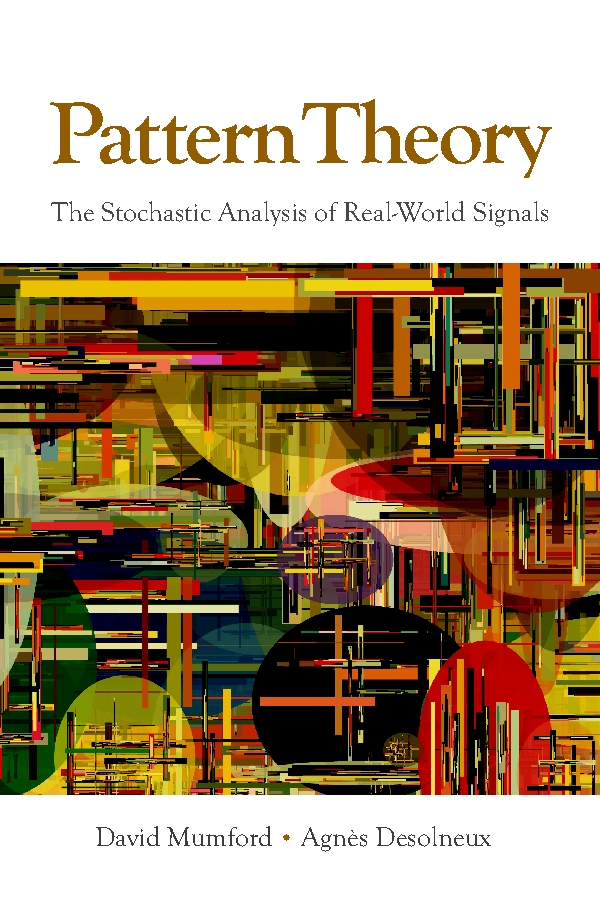
Agnes Desolneux is a CNRS Research Director at the Borelli Centre (formerly CMLA) and a Professor attached to the Mathematics Department at ENS Paris-Saclay. Education: PhD in Applied Mathematics (2000) from ENS Cachan Habilitation in Applied Mathematics (2010) from Université Paris Descartes Her research focuses on image analysis via statistical methods , particularly a contrario approaches, image restoration, texture synthesis, Determinantal Point Processes (DPP), optimal transport, Gaussian mixtures, geometry of random field excursions, shot-noise models, and mathematical modeling of visual perception through Gestalt theory. The articles extracted reflect her expertise in applied mathematics and computer vision , with recent works (2025-2020) on optimal transport algorithms, DPP applications, multiscale texture analysis, and stochastic modeling in medical imaging. Keywords span machine learning, probability theory, medical imaging, and computer vision . She has no listed scientific awards but has authored influential works including the book From Gestalt Theory to Image Analysis: A Probabilistic Approach (Springer, 2008) and Pattern Theory: the stochastic analysis of real-world signals (AK Peters, 2010).
Fabian Fritz holds an M.Sc. degree and works at the Technical University of Munich (TUM) within the Chair of Aerodynamics and Fluid Mechanics . His research focuses on computational fluid dynamics (CFD) and numerical simulation of multiphase flows, particularly using Smoothed Particle Hydrodynamics (SPH) . He collaborates on projects like PBF-LB/M (additive manufacturing) and contributes to Lagrangian fluid mechanics benchmarking frameworks. Research Trends: His publications emphasize numerical methods (SPH, level-set, finite-volume), multiphase flow modeling , heat transfer , and thermoacoustic stability . Recent work includes hardware-agnostic code optimization and adaptive mesh refinement techniques. Education: Completed a master’s thesis on Diffusive-Interface Modeling of Multiphase Flows with Surface-Tension Effects , supervised by P.D. Dr.-Ing. habil. Stefan Adami.
Prof. Dr.-Ing. Ahmad Osman is a Professor at the Saarland University of Applied Sciences (htw saar), specializing in Test Technologies and Test Methods within the Faculty of Engineering. He also holds an Adjunct Professor position at Laval University in Quebec, Canada, in the Department of Electrical Engineering and Computer Science. His research focuses on Artificial Intelligence applications in Signal and Image Processing for Non-destructive Testing (NDT) , with extensive work on Deep Learning , 3D Ultrasound Tomography , and Sensor Data Fusion in industrial contexts. Engineering Artificial Intelligence Signal Processing Image Processing Non-destructive Testing Quality Control Augmented Reality Osman leads the AutomaTiQ research group and serves as Head of the Algorithms/Signal and Data Processing Department at Fraunhofer IZFP . His recent publications (2017–2022) emphasize Deep Learning for defect detection in CFRP , Terahertz Imaging for artwork diagnostics, and Acoustic Sensors for agricultural quality control. He has organized international conferences on Structural Health Monitoring and contributed to Springer books on NDT technologies. His projects include ComforTex-AI (2024) and development of 3D positioners for ultrasound measurements. Collaborations span institutions in Germany, Canada, Italy, and Brazil, with advisory roles in the German Society for NDT and technical committees for conferences in Montreal and Egypt.
Henrik Wyschka is a doctoral researcher and scientific staff member at the University of Hamburg's Department of Mathematics, affiliated with the Faculty of Mathematics, Computer Science and Natural Sciences. His research focuses on shape optimization with fluid dynamic applications, algorithms for p-Laplace problems, and Lipschitz sequences. He is part of the DFG Research Training Group 2583, "Modeling, Simulation and Optimization with Fluid Dynamic Applications," under project O3. Education: M.Sc. (2021) and B.Sc. (2019) in Technomathematics from TU Hamburg and University of Hamburg. His work integrates theoretical analysis and numerical methods to advance computational techniques in shape optimization. Key contributions include presentations at major conferences (e.g., IFIP TC7, SIAM, GAMM) and publications on trust-region methods for p-harmonic optimization and high-order descent direction algorithms. His research emphasizes efficient numerical solutions for fluid dynamics-related challenges. Funding: Supported by the DFG through Graduiertenkolleg 2583. Office location: Geomatikum Building, Room 1517. ORCID: 0009-0000-2242-2464 .
Dr. Benjamin Scott Flavel is a Research Group Leader at the Institute of Nanotechnology, Karlsruhe Institute of Technology (KIT), Germany. His research focuses on carbon nanotubes and their applications in photovoltaics and sensing technologies. He leads a dynamic research team conducting cutting-edge work on the separation, purification, and application of single- and double-walled carbon nanotubes. Education: Doctor of Philosophy (Chemistry), Flinders University, Australia, 2010 Bachelor of Science in Nanotechnology (Honors), Flinders University, Australia, 2005 Habilitation in Materials Science, Technische Universität Darmstadt, 2018 His research interests lie at the intersection of nanotechnology and energy materials, particularly in carbon nanotube-based solar cells , chirality-specific separation techniques , and nano-sensing devices . His group has pioneered methods such as ATPE for enantiomer sorting and developed innovative solar cell architectures with industrial relevance. The research spans fundamental charge transport mechanisms to applied device engineering. The publication record shows a strong trend in advancing carbon nanotube photovoltaics, with key contributions in interface engineering, scalable fabrication, and high-efficiency CNT:Si solar cells. Work also extends to spectroscopic characterization, alignment techniques, and software tools for data analysis. Scientific Awards: Heisenberg Program, DFG (2018) Emmy Noether Program, DFG (2013) Alexander von Humboldt Research Fellowship (2011) Australian Government Endeavor Research Fellowship (2009) Bloom-Gutmann Prize, Royal Australian Chemical Institute (2008) Hope Meeting, Japanese Society for the Promotion of Science (2008) Research Fellowship, Flinders University (2007) Dr. Flavel has successfully advised multiple PhD students, including Dr. Moritz Pfohl, Dr. Katherine Moore, and Dr. Daniel Tune. His research has been supported by significant grants from the German Research Foundation (DFG), including funding for a double-walled carbon nanotube project and an organic evaporation system (~320,000 EUR). Collaborations span institutions such as NIST, Freie Universität Berlin, University of Antwerp, McMaster University, and University of Sydney. The research group operates within the Institute of Nanotechnology at KIT, utilizing advanced infrastructure for nanomaterials synthesis, characterization, and device fabrication. The team is recognized internationally, with work featured in Open Access Government , Research Features , and Europhotonics , and covered by Nanotechweb.
Dongwoo Kim is a researcher affiliated with Hanyang University, ERICA Campus (Department of Electronics and Communication Engineering) and has previously collaborated with institutions like POSTECH , Chungnam National University , and Microsoft . His work spans interdisciplinary domains in Computer Science and Engineering . Hanyang University, ERICA Campus - Department of Electronics and Communication Engineering POSTECH - Power Analog Electronics & Semiconductor Devices Lab Microsoft Chungnam National University Kim's research focuses on formal verification of automotive control software, deep learning applications in environmental monitoring, 3D modeling for indoor positioning, and machine learning for signal processing. His recent publications highlight advancements in graph neural networks (GNNs), including analyzing oversmoothing and gradient dynamics, as well as developing geometric vision-language models with domain-agnostic encoders. His 15 most recent articles (2023-2025) address topics like: Optimizing hybrid electric vehicle engine performance 3D modeling for indoor localization GNN training stability UAV-based environmental monitoring Algorithm difficulty prediction for programming problems Millimeter-wave antenna design Kim collaborates with researchers in software engineering , signal processing , and environmental science domains. His work intersects formal methods , applied machine learning , and embedded systems research.
Prof. Sebastian Rudolph is a Professor of Computational Logic at the Institute for Artificial Intelligence , Faculty of Computer Science , TU Dresden. Since 2021, he has been an Affiliate Member of the Faculty of Mathematics. His research spans theoretical and applied artificial intelligence, focusing on Knowledge Representation and Reasoning through formalisms like Description Logics, Existential Rules, and Formal Concept Analysis, with applications in Semantic Technologies. 2017 : ERC Consolidator Grant for decidability principles in logic-based knowledge representation 2006-2013 : Postdoctoral researcher, project leader, and Privatdozent at KIT's Institute AIFB 2011 : Habilitation at KIT Earlier : PhD in Algebra and teaching qualification in mathematics, physics, and computer science at TU Dresden His recent publications address decidability of logical reasoning, non-monotonic extensions in formal concept analysis, standpoint logics, and multiagent systems. He supervises the DeciGUT and KIMEDS projects, and is involved in the SECAI and ScaDS.AI centers. Teaching activities include courses on Theoretical Computer Science, Existential Rules, and Formal Concept Analysis.
Prof. Dr. Gerold Alsmeyer is a faculty member at the Institute of Mathematical Stochastics, Department of Mathematics and Computer Science, University of Münster. He is an active researcher with a focus on stochastic processes, particularly stochastic fixed-point equations and iterated function systems. His work is supported by his role as an Investigator in Mathematics Münster in the project EXC 2044 - C1: Evolution and asymptotics. His primary research interests include the theory of stochastic processes, branching processes, Markov random walks, renewal theory, and the asymptotic analysis of random structures such as random trees and polytopes. He has made significant contributions to the understanding of fluctuation theory, perpetuities, and the smoothing transform. His recent publications (2017–2023) reveal a sustained focus on theoretical probability, with recurring themes in random difference equations, iterated function systems, and limit theorems for stochastic processes. The work spans pure mathematical theory and applications in mathematical biology and combinatorics, indicating a broad yet deep research profile. Prof. Alsmeyer has supervised numerous doctoral and master’s students, including Viet Hung Hoang, Christopher Eick, Philipp Godland, and Fabian Buckmann, whose dissertations cover topics in branching processes, random walks, and stochastic fixed-point equations. He has no listed scientific awards in the provided texts. He teaches courses in probability theory, mathematical statistics, branching processes, and stochastic recursion equations, demonstrating a strong commitment to academic mentoring and education.
Thomas Grote is a Research Fellow at the University of Tübingen's Ethics and Philosophy Lab within the Cluster of Excellence 'Machine Learning: New Perspectives for Science'. His research focuses on philosophical and ethical dimensions of artificial intelligence, particularly interpretability, fairness, and reliability in medical and social contexts. He co-supervises the Carl-Zeiss-Stiftung-funded project 'Certification and Foundations of Safe Machine Learning Systems in Healthcare' and co-organizes the 'Philosophy of Science Meets Machine Learning' conference series. Research Focus Grote's interdisciplinary work bridges philosophy of science and applied AI ethics. Key areas include: Methodological foundations of AI ethics and epistemology Clinical reliability and safety of ML systems Fairness metrics in sociotechnical healthcare systems Interpretability requirements for medical AI Computational psychiatry and evolving mental health frameworks His recent publications demonstrate strong emphasis on healthcare applications, with critical analyses of reliability in foundation models, ethical paradigms for LLMs, and rethinking evaluation methodologies at the epistemology-ethics interface.
Oliver Hohlfeld is a Professor at the University of Kassel, where he leads the Distributed Systems group. He previously held academic positions at Brandenburg University of Technology and RWTH Aachen University, and was a visiting scholar at the University of Wisconsin–Madison. His research focuses on network security, Internet measurements, and Quality of Experience (QoE). He completed his Ph.D. in Computer Science at TU Berlin under Anja Feldmann and holds a B.Sc. and M.Sc. from Darmstadt University of Technology. He also worked at Fraunhofer IGD on telemedical network architectures. His research adopts a data-driven approach, combining large-scale Internet measurements, user studies, and machine learning to understand and improve Internet performance and security. Key areas include DDoS detection, QUIC, HTTP/2, TLS deployment, and BGP analysis. He investigates how protocols like QUIC and HTTP/2 impact user experience and network efficiency, often through empirical studies of real-world deployments. His recent publications highlight a strong trend in network security and protocol analysis, with significant work on DDoS attacks, traffic ingress detection, and web consolidation. He also explores social media dynamics and censorship circumvention through user reviews. 2022 IETF/IRTF Applied Networking Research Prize Best of CCR (2021) for TLS 1.3 deployment study ACM Senior Member (2020) IEEE QoMEX 2019 Best Reviewer Award ACM IMC Community Contribution Award (2018) He has advised numerous Master’s and Bachelor’s students, primarily at RWTH Aachen, and has been a principal investigator in major projects such as AIDOS (AI-based DDoS mitigation), DFG SFB MAKI, COMTEX, and the EU-funded SSICLOPS. He actively serves on the technical program committees of top-tier conferences including SIGCOMM, NSDI, IMC, and CoNEXT, and is a frequent reviewer for leading journals in networking and systems. He leads the Distributed Systems group at the University of Kassel, which conducts research on Internet observability, secure infrastructures, and scalable networking solutions.
Thomas Riechert is a Professor at the Leipzig University of Applied Sciences (HTWK Leipzig), specifically within the Faculty of Computer Science and Media. He serves as Dean of Media Informatics, Chairman of the Media Informatics Study Commission, and Academic Advisor for Media Informatics. Additionally, he is a Member of the Faculty Council, Faculty representative in the IT committee, and Library Commission. He also acts as Spokesperson of the Institute of Computer Science at the HTWK. Appointed in 2014 in the field of information systems and data management, Riechert holds a doctorate from the University of Leipzig (2012, magna cum laude) and graduated as a computer scientist from TU Dresden in 2000. Professor Riechert's research focuses on information systems, data management, Semantic Web technologies, knowledge engineering, and Linked Data. His work bridges computer science with digital humanities, particularly in creating knowledge graphs for historical research. He has made significant contributions to RDF vocabulary management, ontology editing tools, and academic history databases. His research demonstrates a strong emphasis on practical applications of semantic technologies in information management systems. Analysis of his recent publications reveals a consistent trajectory in semantic web technologies applied to knowledge representation and historical data. His work shows progression from foundational semantic technologies toward increasingly sophisticated applications in digital humanities, particularly in academic history research. The Heloise project appears to be a major focus, developing common research models for collaborative historical research using Linked Open Data. His publications span both technical aspects of semantic technologies and their application in humanities contexts. Professor Riechert actively contributes to academic community building through conference organization and student engagement. His leadership roles in the Faculty of Computer Science and Media demonstrate his commitment to shaping computer science education. His research integrates practical software development with theoretical advancements in knowledge representation. As Dean of Media Informatics, Riechert oversees academic programs and research initiatives in this field. His work with the Heloise network demonstrates leadership in interdisciplinary research connecting computer science with historical scholarship. His office hours are held on Mondays from 10:00 to 11:00 in room ZU 407 at HTWK Leipzig.
Dr. Moritz Ziegler is a geomechanics researcher affiliated with the Technical University of Munich (TUM) and the Assistant Professorship of Geothermal Technologies . He previously worked at GFZ Potsdam (2017–2023) and earned his PhD in Geophysics from the University of Potsdam (2014–2017). His research focuses on geomechanical numerical modeling , uncertainty quantification , and 3D stress field analysis , with applications to geothermal energy, seismic hazard, and rock mechanics. Education: Bachelor of Science in Geosciences (2008–2011), Freie Universität Berlin Master of Science in Geophysics (2011–2014), University of Potsdam PhD in Geophysics (2014–2017), University of Potsdam & GFZ Potsdam His work integrates advanced computational methods ( Altair Hypermesh , Dassault Systèmes Abaqus , Python , Matlab ) to address complex geomechanical problems. Recent publications analyze stress gradients in the North Alpine Foreland Basin, fault-stress interactions, and physics-based machine learning in geomechanics. He has contributed to software development (DOuGLAS v1.0) and calibration tools (FAST Calibration v2.4). Scientific awards or honors are not explicitly mentioned in the provided text. However, his research has been published in leading journals such as Geophysical Journal International , Solid Earth , and Pure and Applied Geophysics .
Nils Ole Tippenhauer is a faculty member at the CISPA Helmholtz Center for Information Security , leading the SCy-Phy research group . His academic journey includes an Assistant Professorship at the Singapore University of Technology and Design (SUTD) (2014–2018), a PhD in Computer Science from ETH Zurich (2012), and a Diploma in Computer Engineering from Hamburg University of Technology (2007). He also holds an exchange study year at the University of Waterloo (2004–2005) supported by a DAAD scholarship. Research Interests focus on practical systems security , particularly Security of Cyber-Physical Systems Industrial Control Systems (ICS) and Industrial IoT (IIoT) Physical-Layer Security and Wireless Security Privacy-Preserving Technologies (e.g., DP3T project) Embedded Systems Security Threat Detection & Defenses His work integrates both theoretical and applied approaches, addressing vulnerabilities in critical infrastructures like water systems and power grids. Recent Publications highlight trends in Anomaly detection evasion in industrial networks Microarchitectural side-channel defenses Localization techniques in cellular networks Security analysis of ICS protocols Data-driven vulnerability assessments for robotics Cyber-physical simulation for infrastructure security Scientific Awards include Best paper at DIMVA'23 Distinguished Paper at ACSAC 2022 Best paper at CPSIOTSEC 2022 Best paper at CPSS 2017 K-H Ditze Award for diploma thesis (2007) SG Mark Institution award (2016) Runner-Up at smart energy hackathon (2013) Advising and Grants feature PhD defenses of Daniele Antonioli and Hamid Reza Ghaeini (2022), co-organizing conferences like WiSec and CPSS , and leading projects such as the National Science Experiment (NSE) with 50,000 mobile sensors in Singapore. He also contributed to the DP3T project for privacy-preserving contact tracing. Labs and Teams include the SCy-Phy research group at CISPA and the development of testbeds like SWaT (Secure Water Treatment), WADI (Water Distribution), and EPIC (Electric Power and Industrial Control) at SUTD. These platforms enable hands-on security research in realistic industrial environments.
Prof. Torsten Wolfgang Kuhlen serves as a Universitätsprofessor at RWTH Aachen University, leading the Teaching and Research Area for Virtual Reality and Immersive Visualization within the Department of Computer Science. He is affiliated with Chair of Computer Science 12 (High Performance Computing), the Visual Computing Institute, and remains an integral part of the RWTH IT Center where his research group operates one of the world's largest Virtual Reality laboratories including the 30 sqm aixCAVE visualization chamber. The group maintains strong connections with Computational Science & Engineering Division, National High Performance Computing Center for Computational Engineering Science (NHR4CES), and VR in Science and Industry Network NRW e.V. Prof. Kuhlen's research spans virtual reality, immersive visualization, and multimodal 3D user interfaces with applications across simulation science, production technology, neuroscience, and medicine. His work combines basic research on advanced methods and algorithms with interdisciplinary collaborations involving RWTH Aachen institutes, Forschungszentrum Jülich, and industry partners. Recent publications demonstrate strong focus on audiovisual perception, immersive analytics, collaborative virtual environments, and practical VR applications in education and manufacturing. His research group has produced significant work on listening effort in virtual environments, immersive authoring techniques, and VR applications for scientific visualization. Notable projects include VRScenarioBuilder for automated vehicle testing and applications in monitoring additive manufacturing processes. The group actively participates in major conferences including IEEE VIS and EuroVis, with several award-winning contributions. Prof. Kuhlen has advised PhD students including Martin Bellgardt who recently completed his doctoral degree on "Increasing Immersion in Machine Learning Pipelines for Mechanical Engineering". The research group maintains state-of-the-art VR infrastructure including the aixCAVE facility which is open to all RWTH research groups.
Joachim Weickert is a Professor of Mathematics and Computer Science at Saarland University where he heads the Mathematical Image Analysis Group since 2001. He received his diploma and Ph.D. in mathematics from the University of Kaiserslautern (1991, 1996), and a habilitation degree in computer science from the University of Mannheim (2001). Prior to his current position, he worked as a research assistant at the University of Kaiserslautern, as a post-doctoral researcher at the universities of Utrecht and Copenhagen, and as an assistant professor at the University of Mannheim. His research focuses on image processing, computer vision, and scientific computing, with special emphasis on techniques based on partial differential equations, variational principles, wavelets, morphological and nonlocal methods, as well as neuroexplicit approaches. He has developed mathematical models and efficient numerical algorithms for image restoration, enhancement, segmentation, compression, optic flow computation, stereo reconstruction, shape from shading, and signal processing methods for tensor fields. These ideas have been successfully applied in industry, biomedical image analysis, and other fields. Analysis of his recent publications reveals a strong trend toward combining traditional PDE-based methods with modern deep learning approaches, particularly in the areas of image inpainting and compression. His work increasingly explores the connections between numerical algorithms for partial differential equations and neural network architectures, demonstrating how mathematical foundations can inform cutting-edge AI techniques while maintaining strong theoretical guarantees. Gottfried Wilhelm Leibniz Prize (2010), considered the most important research award in Germany ERC Advanced Grant (2017) for "Inpainting-based Compression of Visual Data" Elected member of Academia Europaea - The Academy of Europe Jan Koenderink Prize for Fundamental Contributions in Computer Vision (2014) Multiple DAGM Prizes and Best Paper Awards throughout his career AAIA Fellow (2021) and Highly Ranked Scholar (2024) distinctions Professor Weickert has supervised over 250 bachelor's and master's theses and initiated the Master Programme in Visual Computing at Saarland University, the first of its kind in Germany taught in English. He has established numerous interdisciplinary collaborations with colleagues from medicine, bioinformatics, pharmacy, physics, mechatronics, and mechanical engineering. As Principal Investigator for Visual Computing within the Multimodal Computing and Interaction Cluster of Excellence, and former dean of the Faculty of Mathematics and Computer Science (2008-2010), he has played a significant leadership role in advancing visual computing research and education. He heads the Mathematical Image Analysis Group, which has been at the forefront of developing mathematical methods for image analysis. The group maintains strong connections with both theoretical mathematics and practical applications, bridging the gap between fundamental research and real-world implementation across various domains including medical imaging, industrial inspection, and multimedia processing.

_rdax_230x341s.jpg)