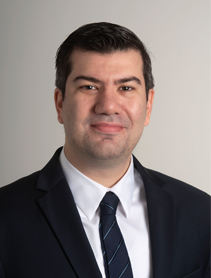
Tobias Ofner-Graff is a researcher at the Institute of Forest Growth within the Department of Ecosystem Management, Climate and Biodiversity at the University of Natural Resources and Life Sciences, Vienna (BOKU). Based at Peter-Jordan-Straße 82, 1190 Wien, his work focuses on advanced forest monitoring technologies. His research interests include: LiDAR and remote sensing applications in forestry Automated forest inventory systems Forest regeneration quantification Airborne Laser Scanning (ALS) data analysis Sustainable forest harvesting planning Recent project contributions include: Leading lidar-based forest monitoring systems development Developing spatial forest growth models Implementing digital inventory workflows His publications demonstrate expertise in: Quantifying forest resources through 3D point clouds Advanced timber stack measurement techniques ALS data integration for forest modeling Mobile laser scanning applications Forest climate adaptation strategies
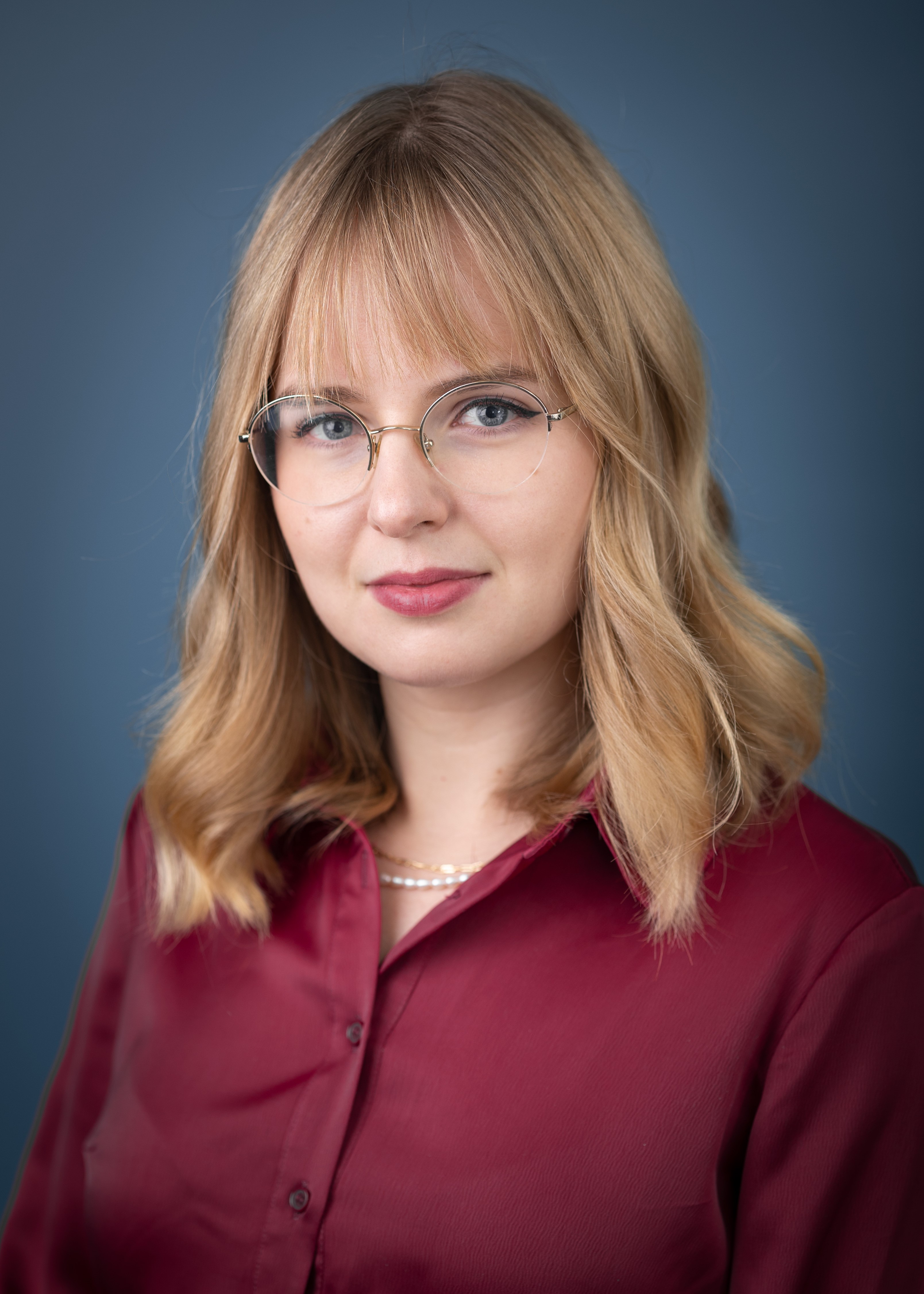
Maria Paz Linares Herreros is a Lecturer at the Universitat Politècnica de Catalunya (UPC), affiliated with the School of Mathematics and Statistics (FME) and the Department of Statistics and Operations Research. She is a member of the IMP (Information Modeling and Processing) research group and collaborates with inLab FIB on intelligent transportation systems. Research interests: Transportation systems, smart cities, traffic simulation, data-driven modeling, environmental impact assessment Specializes in applying machine learning and simulation to urban mobility challenges Her recent publications focus on: Parking availability prediction using deep learning Traffic emission modeling linked to urban policies Dynamic ride-sharing system optimization Integration of IoT data in transportation planning Scientific recognition: Recipient of the IV International Award on Transport Infrastructure Management Research (2018) Active contributor to projects like CitScale and Virtual Mobility Lab Collaborator in European initiatives like KIC Urban Mobility
Dr. Hakki Erhan Sevil is an Associate Professor in the Department of Intelligent Systems and Robotics at the University of West Florida, within the Hal Marcus College of Science and Engineering. He holds a Ph.D. in Mechanical Engineering from the University of Texas at Arlington and has extensive research experience in robotics, intelligent systems, and autonomous control. His work spans theoretical and applied domains, focusing on resilient and intelligent robotic systems. Ph.D., Mechanical Engineering, University of Texas at Arlington M.S., Mechanical Engineering, Izmir Institute of Technology B.S., Mechanical Engineering, Izmir Institute of Technology Dr. Sevil's research interests lie at the intersection of robotics, artificial intelligence, and control systems. He specializes in autonomous navigation, fault detection and isolation (FDI), multi-agent coordination, computer vision, and bio-inspired computational methods. His work emphasizes real-world implementation in unmanned and self-sustained systems, particularly in challenging environments. His recent publications and projects highlight a strong trend toward intelligent, resilient, and distributed robotic systems. Themes include entropy-based behavior modeling for UAV swarms, assistive robotics for household tasks, post-disaster damage assessment using aerial vision, and advanced guidance for GPS-denied navigation. These reflect a multidisciplinary approach combining machine learning, control theory, and robotics engineering. 2024 Faculty Excellence in Teaching Award, UWF 2024 Faculty Excellence in Undergraduate Research Mentoring Award, UWF DURIP Grant ($478,000) from ONR (with IHMC) USDA Grant ($728,000) with New Mexico State University US Air Force SBIR/STTR Grant ($110,000) with Catalano Aerospace AFWERX Funding for Distributed Behavior Research Dr. Sevil actively mentors Ph.D. and M.S. students and leads the Sevil Research Group, which has secured multiple internal and external grants from NSF, NASA, ARL, ONR, and USDA. He has served as PI and Co-PI on funded projects and advises student teams that have won national awards. His lab, the Intelligent Systems and Robotics Lab, is highlighted in university communications and national challenges. The group collaborates with IHMC, NMSU, and industry partners, fostering innovation in autonomous systems. The Sevil Research Group operates within the Intelligent Systems and Robotics Lab at UWF, conducting cutting-edge research in autonomous navigation, swarm intelligence, and resilient robotics. The lab collaborates with the Institute for Human and Machine Cognition (IHMC), New Mexico State University, and private aerospace firms. It supports student-led projects, participates in national robotics challenges, and maintains active GitHub repositories for open research dissemination.
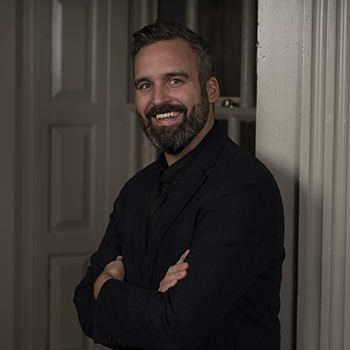
Dr. Maria Cristina Ramos is an Assistant Professor at Florida State University, specializing in Computational Social Science. She is affiliated with the Interdisciplinary Social Science program, where her teaching and research focus on applying network science and computational methods to address complex social issues such as health inequalities, reproducibility in science, and social-ecological systems. Ph.D. in Sociology, Duke University M.A. in Sociology, Duke University B.A. in Organizational Psychology, Pontificia Universidad Católica del Ecuador Her research integrates Social Network Analysis, Computational Social Science, and interdisciplinary approaches to study identity structures, sustainable fisheries, and organizational collaboration. She emphasizes reproducibility in social science research and uses data visualization to enhance understanding of societal challenges. Dr. Ramos' recent publications highlight trends in network science applications to moral psychology, environmental policy, and scientific methodology. Her work bridges quantitative and qualitative techniques, contributing to fields like Social Psychology and Marine Policy. Contact: mcr22c@fsu.edu | mc@mariacramos.com | Personal Website
Elena Tuzhilina is an Assistant Professor in the Department of Statistical Sciences at the University of Toronto, specializing in machine learning, applied statistics, and computational biology. Her research focuses on statistical tools for chromatin 3D spatial structure reconstruction and analyzing emotional disorders' impact on brain function. Ph.D. in Statistics from Stanford University Specialist's degree from Moscow State University Two-year Data Science program at Yandex School Her research spans high-dimensional data analysis , dimension reduction , and statistical modeling in biological contexts. She has developed novel algorithms for chromatin conformation reconstruction and pandemic trajectory modeling. Recent publications focus on canonical correlation analysis , low-rank matrix approximation , and 3D genome architecture , with applications in computational biology and neuroscience. Dorothy Shoichet Women Faculty in Science Award JSM Student Travel Award Outstanding Teaching Assistance at Stanford Stanford Teaching Assistant Award Elena supervises PhD students and postdoctoral fellows across disciplines including statistical sciences, biochemistry, and applied mathematics. She has secured multiple grants including a NSERC Discovery Grant and University of Toronto Accelerator Grant .
Dong Ngo Duy is an Associate Professor in the Department of Civil & Environmental Engineering at Monash University, where he serves as the Head of the Transport Section. He holds a PhD in Traffic Flow Theory and Simulation from Delft University of Technology and has held academic positions at the University of Leeds (UK), University of Canterbury (NZ), and now Monash University (Australia). PhD, Traffic Flow Theory, Technische Universiteit Delft (2006) MSc, Traffic Engineering, Linköpings Universitet (2002) His research focuses on Connected and Autonomous Vehicles (CAVs) , Traffic Flow Theory , Data Fusion , and Urban Network Optimization . He applies AI and machine learning to model, predict, and control multi-modal traffic systems, aiming to develop smart city platforms for sustainable transport in mega-cities. The recent trend in his publications (2022–2025) reflects a strong focus on intelligent transportation, including trajectory planning, risk-aware control, car-following modeling using neural symbolic regression, and intercity mobility analysis. His work bridges theoretical modeling with practical applications in emerging connected environments. Scientific Awards: UK Research Council (EPSRC) Advanced Fellow Award (2011–2016) in Connected and Autonomous Vehicles Dong Ngo Duy actively supervises PhD students and contributes to major research initiatives in intelligent transport systems. His work aligns with UN Sustainable Development Goals, particularly in sustainable cities and transport. He previously chaired the Connected Traffic Systems Lab at the University of Canterbury and continues to lead impactful research in transport innovation.
Dr. Hong Ming Tan is a Senior Lecturer at the Department of Analytics and Operations, NUS Business School, and a Research Fellow at the Institute of Operations Research and Analytics (IORA) at National University of Singapore. He holds a PhD in Operations Research and Analytics (2021), MSc in Mathematics (2017), and BSc (Hons) in Applied Mathematics and Economics (2013) from NUS. Doctor of Philosophy, Operations Research and Analytics (2021) Master of Science, Mathematics (2017) Bachelor of Science (Hons), Applied Mathematics and Economics (2013) His research spans Business Analytics , Machine Learning , Operations Research , and Pharmacogenetics . Recent work includes: EcoVal Framework for efficient data valuation in ML Personalized Mental Health through adaptive testing and clustering Antibiotic Resistance modeling using antiresistic strategies CYP2D6 Methylation prediction for precision medicine His publications demonstrate expertise in ML optimization , healthcare informatics , behavioral analytics , and decision science . Current projects include AI-led Smart Data Centre Management and SIA Corp Lab research. He serves as Chair of the Department Finance Committee and advisor to student clubs like Business Analytics Consulting Team. His work addresses real-world challenges in industrial operations, healthcare diagnostics, and educational innovation.
Professor Leone Leonida is a faculty member at King's College London's King's Business School, holding the title of Professor of Finance and Economics within the School of Economics and Finance. He holds an MSc in Economics and PhDs from the University of York (2005) and the University of Naples (2001). His research focuses on systemic banking crises, corporate investment strategies, and income distribution dynamics, employing advanced econometric and computational methods. Key themes include the role of banking sector concentration, securitization, and systemic contagion in crisis prediction, as well as the interplay between political competition, institutions, and economic outcomes. Affiliations: King's Business School, King's College London Education: PhD in Financial Economics (University of Naples, 2001); PhD in Economics (University of York, 2005); MSc Economics Research Interests: His work bridges financial economics and political economy, addressing topics such as: Banking system stability and regulation (Basel Accords impacts) Corporate finance decisions under capital constraints Political competition effects on economic growth and policy Income distribution dynamics using semiparametric techniques Publications: Over 30 peer-reviewed articles in top journals including Journal of Banking and Finance , Journal of Applied Econometrics , and Physics of Life Reviews . Recent work examines Brexit's labor market effects, Italian political dynamics, and liquidity risk in interbank networks. Grants/Advising: No specific grants listed, but extensive refereeing activity for 30+ economics/finance journals. No explicitly listed advisees. Labs/Teams: Engaged in quantitative finance and macroeconomic research collaborations, particularly in modeling human behavior and systemic risk.
Jonathan Grinham is an Assistant Professor of Architecture at Harvard University's Graduate School of Design (GSD). His research bridges material science, building science, and design to address climate change challenges, focusing on lifecycle carbon emissions, thermal health, and sustainable material systems. He is affiliated with the Harvard Center for Green Buildings and Cities, the Salata Institute for Climate and Sustainability, and the Aizenberg Lab at the Harvard John A. Paulson School of Engineering and Applied Sciences. Education: Architecture and Building Science, Virginia Tech Doctor of Design, Harvard GSD Grinham's work has produced novel technologies like the DryScreen vacuum membrane dehumidification system and the Vesma cooling solution, alongside publications, patents, and the start-up company Trellis Air Corporation. His research explores bioinspired microchannel designs, radiative sky cooling, and upcycling agricultural waste such as wool into building materials. Research Trends: His recent publications emphasize decoupling HVAC processes for energy efficiency, bioinspired material systems (e.g., duck feather hydrophobic coatings), and lifecycle carbon accounting for buildings. Projects like HouseZero and Origami Microfluidics highlight synergies between material geometry, thermal performance, and environmental impact reduction. Teaching and Collaboration: Grinham teaches courses on building simulation, materials, and thesis work. He collaborates with institutions like the Wyss Institute, Columbia University's Yu Lab, and industry partners including Faveker and American Woolen Company, mentoring students in hands-on climate-responsive design projects like the Sixteen Student Stools exhibition.
Matthias Bannert is a Lecturer at the Department of Management, Technology, and Economics at ETH Zürich, where he works at the KOF Swiss Economic Institute (Konjunkturforschungsstelle). His work focuses on the intersection of economics, software development, and data management, with particular expertise in time series analysis and official statistics. Bannert designs solutions for state-of-the-art data processing, management, and publishing of economic data and research. Bannert completed his doctoral thesis titled "Survey Based Research in Economics - Essays on Methodology, Economic Applications and Long Term Processing of Economic Survey Data" at ETH Zürich in 2016. His academic journey began when he joined KOF in late 2008, initially working as a researcher for the Business Tendency Survey group before transitioning to the institute's IT department. Dr. Bannert's research interests span several interconnected domains at the nexus of economics and data science. He specializes in developing software environments for official statistics, with particular focus on processing and managing economic time series data through open-source driven data pipelines. His technical expertise includes R programming and PostgreSQL database systems, which he applies to create robust solutions for economic data analysis. Bannert is particularly interested in survey methodology, nowcasting techniques, and the development of reproducible research workflows. His work bridges the gap between theoretical economics and practical software implementation, ensuring that economic research can leverage state-of-the-art data processing techniques. Analysis of Bannert's publication record reveals a consistent focus on the application of data science techniques to economic research problems, particularly in the domain of official statistics and survey-based economics. His work demonstrates a progression from theoretical survey methodology to practical software implementation, with increasing emphasis on real-time economic forecasting and data management systems. A distinctive feature of his research is the development of open-source R packages that make advanced economic data analysis more accessible to researchers and practitioners. As an active contributor to the R language for Statistical computing and the open source community, Bannert has developed several notable software packages including timeseriesdb, tstools, and kofdata, which are available on CRAN. These tools reflect his commitment to creating reproducible, transparent, and efficient workflows for economic data analysis. Bannert serves as a data science supervisor for multiple KOF research projects and is a co-Principal Investigator in an SNF-funded Digital Lives project in collaboration with KOF's labor market expert group. His teaching activities include "Hacking for Sciences - An Applied Guide to Programming with Data" and involvement in the Nowcasting Lab, which provides live out-of-sample forecasting and model testing capabilities for economic researchers. Dr. Bannert is affiliated with the KOF Swiss Economic Institute, where he contributes to several research groups including the KOF Macroeconomic Forecasting group and the KOF Data Science and Macroeconomic Methods group. His work at KOF bridges the institute's traditional economic research with modern data science approaches, helping to position the institute at the forefront of data-driven economic analysis.
Juan Antonio Añel Cabanelas is a Professor of Earth Physics at the University of Vigo , affiliated with the EPhysLab research group and the Specialized Group on Atmospheric and Ocean Physics of the Royal Spanish Society of Physics . He serves as an Executive Editor for Geoscientific Model Development and an Associate Editor for PLoS Climate . PhD in Physics (2007) from the University of Vigo, thesis: Climatic analysis of the tropopause using radiosonde data Taught courses in Meteorology, Atmospheric Physics, Computational Science, and Renewable Energy at the University of Vigo and international institutions His research focuses on climate change impacts , upper troposphere-lower stratosphere dynamics , renewable energy modeling , and computational reproducibility in climate research . He emphasizes instrumental data recovery and open science , with recent work addressing stratospheric contraction and mercury cycling . Key publications span extreme weather-energy sector interactions , Fortran code quality , and ozone data analysis . He mentors PhD students in Physics and Computer Science, and has collaborated with institutions in Mexico, Portugal, and the private sector. He advocates for free software and has organized workshops on climate intervention and citizen science . His work is funded by public grants from Spain's Government, Xunta de Galicia, and private entities like Naturgy and Acciona, with computing support from Google and Microsoft.
Manohar N. Murthi serves as an Associate Professor in the Department of Electrical & Computer Engineering at the University of Miami's College of Engineering. His academic profile shows active engagement across both technical engineering domains and social science research, with recent publications spanning quantum computing applications, neural network models for biomedical signal processing, and political conspiracy theories. Dr. Murthi's research interests bridge multiple disciplines, with primary focus areas including machine learning, quantum computing, signal processing, belief theory, and conspiracy theory research. His work demonstrates a unique interdisciplinary approach that connects electrical engineering methodologies with social science applications, particularly in analyzing belief systems and misinformation patterns. The breadth of his research is evident in publications ranging from technical algorithms for Dempster-Shafer belief theory to sociological studies on White Replacement theory and QAnon conspiracy beliefs. Analysis of his recent publications (2020-2024) reveals two distinct but complementary research trajectories: technical work in quantum tensor networks, graph neural networks, and belief theory frameworks; and social science applications examining conspiracy theories, political extremism, and misinformation. His technical papers often develop novel computational frameworks for uncertainty quantification and data analysis, while his social science work applies these methodologies to understand belief formation and political behavior. This dual focus creates a distinctive research profile that connects engineering rigor with social science insights. Dr. Murthi maintains active research collaborations, particularly with Kamal Premaratne, across multiple publications in both engineering and political science journals. His work has been published in venues including IEEE transactions, The Journal of Politics, and Politics, Groups and Identities, demonstrating successful cross-disciplinary scholarship. His research appears to be supported by collaborative grants, though specific funding sources aren't detailed in the available information. While specific laboratory information isn't provided in the source material, Dr. Murthi's research suggests involvement in computational laboratories focused on machine learning, signal processing, and data analysis. His work with sEMG signals for gesture recognition indicates potential connections to biomedical engineering labs, while his belief theory research suggests computational theory groups. His interdisciplinary approach likely involves collaboration across multiple research teams within and beyond the College of Engineering.
Kobus Barnard is a Professor in the Department of Computer Science at the University of Arizona, with his office located in GS 708. His research bridges computer vision, machine learning, and interdisciplinary scientific applications across diverse domains. Education: Ph.D. from Simon Fraser University (1999) His research interests focus on extracting meaningful insights from complex data through computer vision and probabilistic modeling. Key areas include machine learning for environmental monitoring (flood detection, plant disease analysis), social dynamics (interpersonal coordination, emotional coregulation), astronomy (transient classification), and multimodal learning (visual-linguistic integration). His work consistently applies deep learning to real-world problems requiring high-resolution data interpretation. Analysis of his 2022-2025 publications reveals three dominant trends: (1) Environmental applications using satellite imagery for flood mapping and agricultural monitoring, (2) Cognitive modeling of human teams and emotional dynamics through probabilistic frameworks, and (3) Astronomical data analysis leveraging host galaxy properties for transient classification. These threads demonstrate his commitment to solving practical scientific challenges through computational innovation. While scientific awards aren't documented in available sources, his leadership in projects like FloodPlanet and ToMCAT indicates significant contributions to data infrastructure. His advising and grant activities remain unreported in the source material, though his extensive interdisciplinary collaborations suggest substantial mentorship impact. Barnard's work operates at the intersection of multiple scientific communities, evidenced by applications spanning neuroscience, agriculture, astronomy, and social science. His current focus on high-resolution data fusion and multimodal modeling positions him at the forefront of real-world AI deployment.
Professor Scott Anthony Sisson is a leading academic at the University of New South Wales (UNSW) , holding the position of Professor of Statistics and Data Science in the School of Mathematics and Statistics . He serves as Director of the UNSW Data Science Hub (uDASH) and Deputy Director of the UNSW AI Institute (UNSW.ai) . Previously, he was Deputy Director of the Australian Centre of Excellence for Mathematical and Statistical Frontiers (ACEMS) and held leadership roles in the Australasian Society of Bayesian Analysis and Statistical Society of Australia . PhD in Statistics (Bristol University, 2002) MSc in Environmental Statistics and Systems (Lancaster University, 1997) BSc in Mathematics and Statistics (Lancaster University, 1996) His research focuses on computational statistics and Bayesian inference , with expertise in machine learning , extreme value theory , and high-dimensional data analysis . He develops simulation-based algorithms for complex statistical problems and applies these to diverse scientific challenges like seagrass decline, urban flood modeling, and drug delivery systems. His recent work spans quantum computing for statistics, graphon modeling, and synthetic likelihood methods. Scientific awards include: 2024 Fellow of the International Society of Bayesian Analysis 2023 Fellow of the Institute of Mathematical Statistics 2017 ARC Future Fellowship 2010 Queen Elizabeth II Research Fellowship 2006 John Yu Fellowship His advising team has mentored students in statistical modeling, Bayesian computation, and applied data science. Grants from the Australian Research Council and industry collaborations support his research in government and scientific applications. He contributes as Associate Editor for Journal of Computational and Graphical Statistics and Statistics and Computing .
Yan Cong is an Assistant Professor at Purdue University, focusing on Chinese linguistics and computational linguistics. Their work bridges natural language processing (NLP), semantics, and pragmatics, with applications in artificial intelligence (AI), language education, and healthcare. Research Focus: Developing text analysis models to quantify and improve language learning, assessing semantic/pragmatic competence in language models, and applying computational methods to speech and language fluency. Background: Former NLP researcher at the Feinstein Institutes, with a PhD in Linguistics from Michigan State University. Research Themes: Yan Cong integrates linguistic theory with AI to explore language understanding in humans and machines. Key areas include Computational modeling of semantics and pragmatics Application of NLP to second language acquisition Development of interpretable AI systems for education and healthcare Analysis of speech disturbances in clinical contexts (e.g., schizophrenia, aphasia) Awards: No specific honors mentioned in the provided text.