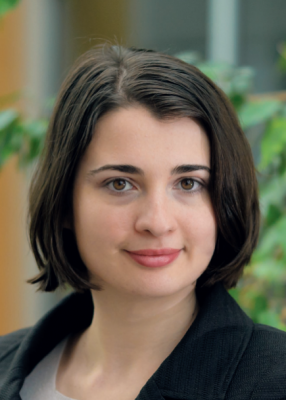
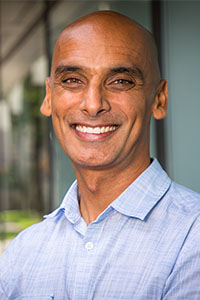
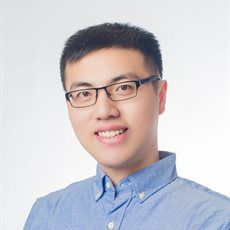
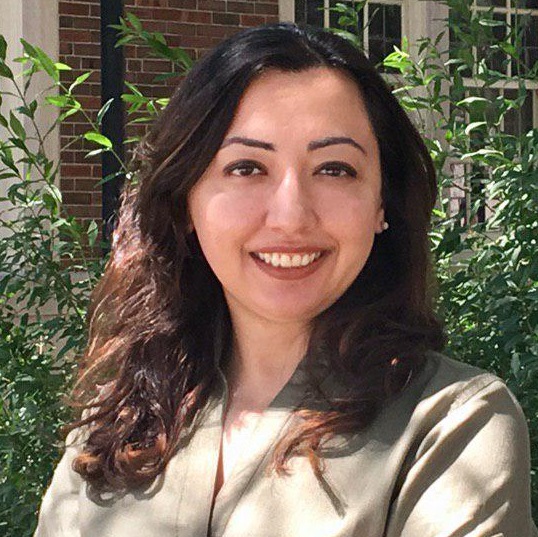
Roxana Geambasu is an Associate Professor at Columbia University's Department of Computer Science, with affiliations to the Software Systems Lab and the Cybersecurity Committee . She specializes in systems security, differential privacy, and resource management for modern computing environments. PhD: University of Washington (2011) Undergraduate: Polytechnic University of Bucharest, Romania Her research focuses on integrating differential privacy as a first-class computing resource in infrastructure systems, with key contributions in: Privacy Budget Management (PrivateKube, DPack, Turbo) Web & Mobile Privacy (Cookie Monster, Big Bird) Security Abstractions (POSIX, Vanish, XRay) Article trends show a strong emphasis on differential privacy (8/15), resource scheduling (5/15), and privacy-preserving advertising (3/15). Key subfields include budget optimization, browser APIs, and ML pipeline privacy. Scientific awards include: Alfred P. Sloan Fellowship NSF CAREER Award Google Ph.D. Fellowship in Cloud Computing Best Paper Awards at SOSP, EuroSys She advises M.S. and undergraduate students, teaching courses in Distributed Systems and Privacy Curriculum . Her lab develops tools like PixelDP and Sunlight for operationalizing privacy in real-world systems.
Natalie Enright Jerger is a Professor in the Department of Electrical and Computer Engineering at the University of Toronto's Faculty of Applied Science and Engineering. She holds the Canada Research Chair in Computer Architecture and serves as Director of the Division of Engineering Science (2023-2028). Previously, she was the Percy Edward Hart Professor (2016-2019). She received her B.S. in Computer Engineering from Purdue University (2002), and M.S./Ph.D. in Electrical Engineering from University of Wisconsin-Madison (2004/2008). Her research focuses on: Multi/many-core architectures and on-chip networks Cache coherence protocols and memory hierarchy optimization Approximate computing and sustainable systems Intermittent computing for energy-harvesting devices Hardware acceleration for machine learning Her publications demonstrate strong emphasis on networks-on-chip (NoC) innovations, including routing algorithms, deadlock handling, power-efficient designs, and topology optimizations. Recent work expands into approximate computing, mobile architectures, and ML-driven hardware design. Major Awards: Fellow of Engineering Institute of Canada (2023) McLean Senior Fellow (2019) IEEE Micro Top Picks (2016) ACM/IEEE Microarchitecture Hall of Fame (2015) Sloan Research Fellowship (2015) Canada Research Chair (current) Distinguished Scientist, ACM Fellow, IEEE She leads the NEJ research group and collaborates with industry partners including Intel, AMD, Qualcomm, and IBM. Her work is funded by NSERC, CFI, and industrial grants. She co-chaired ASPLOS 2023 and HPCA 2014, and actively promotes diversity through WICARCH and ACM initiatives.
Roger J.E. Jaspers is an Associate Professor at Eindhoven University of Technology (TU/e) and a part-time Professor at Ghent University in Belgium, affiliated with the Applied Physics and Science Education school and specializing in the Science and Technology of Nuclear Fusion. His research focuses on spectroscopic diagnostics of ion processes in fusion plasmas, particularly energetic alpha particles in fusion-born reactions. Collaborations include international fusion experiments like W7-X (Germany), JET (UK), and KSTAR (South Korea). He leads the scientific R&D for the ITER CXRS instrumentation system and has authored over 90 peer-reviewed papers. His work spans topics such as: Relativistic electrons Plasma energy transport Magneto-hydrodynamics (MHD) Fusion reactor instrumentation He contributes to educational initiatives like the TU/e Fusion Master program, FUSENET, and the Erasmus Mundus Programme FUSION-DC.
Zita Vale is a Full Professor at the Institute of Engineering (ISEP) of the Polytechnic of Porto (IPP), where she holds the first Full Professor position since 2017. She is a co-founder of GECAD (1999) and coordinates GECAD's Power and Energy (PES) activities. GECAD is recognized by FCT since 2004 and classified as Excellent. She has served as GECAD director (2010-2017), vice-director (1999-2009, 2017-present), and is a member of the administration board. She is also co-founder and member of the coordination board of the National Associated Laboratory on Intelligent Systems. Her educational background includes a PhD (1993) and Agregação/Habilitation (2003) in Electrical and Computer Engineering from the University of Porto. She began her academic career at the University of Porto as a Teaching Monitor (1985), Assistant (1985-1993), and Professor (1993-1998) before moving to ISEP in 1998. Zita Vale's research focuses on the design and development of artificial intelligence-based models for Power and Energy Systems. Her work spans knowledge-based systems, multiagent systems, machine learning, metaheuristics, and semantics, with applications in smart grids, energy management, electricity markets, and renewable energy integration. She has an extensive international network and has participated in 80 R&D projects, raising over 22 million Euros for GECAD. Her recent publications demonstrate a strong emphasis on optimization techniques, explainable AI, energy storage systems, and the integration of distributed energy resources in power systems. She serves as Editor-in-Chief of Applied Energy (Elsevier), a leading journal in the field with an Impact Factor of 11.2. Her citation metrics are impressive, with over 17,000 citations on Google Scholar and an H-index of 64. Editor-in-Chief of Applied Energy (Elsevier) Over 17,000 citations on Google Scholar H-index of 64 Zita Vale has supervised 29 PhD students (25 completed) and 72 MSc students (66 completed), demonstrating her strong commitment to academic mentorship. She has also been involved in numerous international and national evaluation processes, including project proposals, faculty positions, and PhD juries across 15+ countries. She has contributed to over 225 evaluation processes from 2018-2023, including 150+ project proposals/execution, 50+ Faculty/Researchers positions, 2 Habilitation juries, and 25+ PhD juries. She leads GECAD's involvement in several major research initiatives, including the National Associated Laboratory on Intelligent Systems and various European projects such as IoTalentum, TRADERES, DOMINOES, and EcoRural-IoT from Horizon 2020, as well as PRODUTECH EU DIH from Horizon Europe. Her leadership extends to international organizations where she serves as President of Intelligent Systems Applications in Power (ISAP) and Technical Committee Program Chair of IEEE PES Analytic Methods for Power Systems Committee.
Tariq Iqbal is an Assistant Professor at the University of Virginia , with joint appointments in the Department of Systems and Information Engineering and Department of Computer Science . He leads the Collaborative Robotics Lab (CRL) , specializing in human-robot teams and embodied AI . Previously, he was a Postdoctoral Associate at MIT's CSAIL , advised by Prof. Julie Shah , and earned his Ph.D. in Computer Science from University of California San Diego (UCSD) under Prof. Laurel Riek . Ph.D. in Computer Science, University of California San Diego (2017) M.S. in Computer Science, University of Texas at El Paso (2012) B.S. in Computer Science and Engineering, Bangladesh University of Engineering and Technology (2007) His research lies at the intersection of artificial intelligence and robotics , focusing on human-robot collaboration in dynamic environments. Key areas include motion prediction , multimodal fusion , trust modeling , and collaborative learning . His work integrates cognitive science and deep learning to enhance robotic fluency in naturalistic settings. Recent publications (2023–2025) highlight advancements in human-robot team dynamics , multimodal dataset creation , and motion prediction algorithms . Notable works include Energy-Based Transformers for scalable AI, PoseTron for motion prediction, and Accessible Navigation Mapping for assistive robotics. These contributions span trust modeling , cloud robotic infrastructure , and safety in close-proximity collaboration . National Science Foundation (NSF) CAREER Award Air Force Office of Scientific Research (AFOSR) Young Investigator Program (YIP) Award Commonwealth Center for Advanced Manufacturing (CCAM) Innovation Award As faculty, he has secured grants from NSF and AFOSR , mentored research students, and taught courses like Stochastic Modeling I (SYS 6005) and Robots and Humans (SYS 4582/6465, ECE 4502/6465, CS 6465) . His prior industry roles at IBM Watson Lab and Grameenphone Ltd. inform his applied research in telecom infrastructure and cognitive robotics . He leads the Collaborative Robotics Lab (CRL) at UVA, which develops multimodal datasets , real-time coordination algorithms , and adaptive pathfinding systems . Current projects explore human motion prediction , team synchrony , and embodied question-answering , reflecting his commitment to advancing human-robot fluency and contextual AI .
Dr. Moritz Ziegler is a geomechanics researcher affiliated with the Technical University of Munich (TUM) and the Assistant Professorship of Geothermal Technologies . He previously worked at GFZ Potsdam (2017–2023) and earned his PhD in Geophysics from the University of Potsdam (2014–2017). His research focuses on geomechanical numerical modeling , uncertainty quantification , and 3D stress field analysis , with applications to geothermal energy, seismic hazard, and rock mechanics. Education: Bachelor of Science in Geosciences (2008–2011), Freie Universität Berlin Master of Science in Geophysics (2011–2014), University of Potsdam PhD in Geophysics (2014–2017), University of Potsdam & GFZ Potsdam His work integrates advanced computational methods ( Altair Hypermesh , Dassault Systèmes Abaqus , Python , Matlab ) to address complex geomechanical problems. Recent publications analyze stress gradients in the North Alpine Foreland Basin, fault-stress interactions, and physics-based machine learning in geomechanics. He has contributed to software development (DOuGLAS v1.0) and calibration tools (FAST Calibration v2.4). Scientific awards or honors are not explicitly mentioned in the provided text. However, his research has been published in leading journals such as Geophysical Journal International , Solid Earth , and Pure and Applied Geophysics .
Nils Ole Tippenhauer is a faculty member at the CISPA Helmholtz Center for Information Security , leading the SCy-Phy research group . His academic journey includes an Assistant Professorship at the Singapore University of Technology and Design (SUTD) (2014–2018), a PhD in Computer Science from ETH Zurich (2012), and a Diploma in Computer Engineering from Hamburg University of Technology (2007). He also holds an exchange study year at the University of Waterloo (2004–2005) supported by a DAAD scholarship. Research Interests focus on practical systems security , particularly Security of Cyber-Physical Systems Industrial Control Systems (ICS) and Industrial IoT (IIoT) Physical-Layer Security and Wireless Security Privacy-Preserving Technologies (e.g., DP3T project) Embedded Systems Security Threat Detection & Defenses His work integrates both theoretical and applied approaches, addressing vulnerabilities in critical infrastructures like water systems and power grids. Recent Publications highlight trends in Anomaly detection evasion in industrial networks Microarchitectural side-channel defenses Localization techniques in cellular networks Security analysis of ICS protocols Data-driven vulnerability assessments for robotics Cyber-physical simulation for infrastructure security Scientific Awards include Best paper at DIMVA'23 Distinguished Paper at ACSAC 2022 Best paper at CPSIOTSEC 2022 Best paper at CPSS 2017 K-H Ditze Award for diploma thesis (2007) SG Mark Institution award (2016) Runner-Up at smart energy hackathon (2013) Advising and Grants feature PhD defenses of Daniele Antonioli and Hamid Reza Ghaeini (2022), co-organizing conferences like WiSec and CPSS , and leading projects such as the National Science Experiment (NSE) with 50,000 mobile sensors in Singapore. He also contributed to the DP3T project for privacy-preserving contact tracing. Labs and Teams include the SCy-Phy research group at CISPA and the development of testbeds like SWaT (Secure Water Treatment), WADI (Water Distribution), and EPIC (Electric Power and Industrial Control) at SUTD. These platforms enable hands-on security research in realistic industrial environments.
Salil P. Vadhan is the Vicky Joseph Professor of Computer Science and Applied Mathematics at Harvard University's John A. Paulson School of Engineering and Applied Sciences (SEAS). He leads the Privacy Tools Project and co-leads the OpenDP open-source differential privacy initiative. His research focuses on computational complexity, cryptography, randomness in computation, and data privacy. He has taught courses such as CS 1200: Introduction to Algorithms and Their Limitations, and CS 229cr: Spectral Graph Theory in Computer Science. Vadhan holds editorial roles including Editor-in-Chief of Foundations and Trends in Theoretical Computer Science , and serves on steering committees for the Symposium on the Foundations of Responsible Computing (FORC) and the Theory of Cryptography Conference (TCC). Awarded the 2018 ACM Fellowship for contributions to theoretical computer science, he was also elected to the American Academy of Arts & Sciences in 2025. His professional activities include roles with the Harvard Center for Research on Computation and Society and the Electronic Colloquium on Computational Complexity.
Professor Luke Harding is a faculty member at the Department of Linguistics and English Language , Lancaster University , within the School of Social Sciences . His work bridges applied linguistics, language assessment, and critical discourse studies, with a focus on the ethical and societal implications of testing. Research Interests : Language testing and assessment, World Englishes and English as a Lingua Franca (ELF), second language listening and pronunciation assessment, diagnostic approaches to language evaluation, and language assessment literacy. Recent projects integrate digital technology and corpus linguistics into testing frameworks. Publications : Published extensively in Language Testing , Applied Linguistics , and Language Assessment Quarterly . Co-edited the Routledge Handbook of Language Testing (Second Edition) (2022), a key reference work in the field. Teaching : Leads modules in Language Test Construction and Evaluation , Issues in Language Testing , and Statistical Analysis for Language Testing within the university's distance MA program. Leadership : Convened the Language Testing Research Group with colleagues Tineke Brunfaut and John Pill, advancing interdisciplinary approaches to assessment.
Xiaocheng Shang is an Associate Professor in Mathematical Optimisation and Data Science at the University of Birmingham's School of Mathematics. His research focuses on numerical methods for stochastic differential equations, with applications in computational mathematics, statistics, physics, and data science. He is affiliated with the Optimisation and Numerical Analysis Group, Statistics and Data Science Group, and the Institute for Data and AI. Shang holds a PhD in Applied and Computational Mathematics from the University of Edinburgh (2016) and completed postdocs at the University of Edinburgh, Brown University, and ETH Zurich before joining Birmingham in 2019. His academic achievements include fellowships from The Alan Turing Institute, the LMS Emmy Noether Fellowship, and the EUniWell Leadership Fellowship. He has secured funding from EPSRC, the Royal Society, and the Isaac Newton Institute. Shang is actively involved in supervising PhD students and co-organizing research initiatives such as the Data Science and Computational Statistics Seminar. Research interests include structure-preserving integrators, Bayesian sampling techniques, and machine learning applications in dynamical systems. His work bridges numerical analysis, probability theory, and multiscale modeling in materials science. Recent projects involve neural networks for complex dynamical systems and numerical algorithms for deterministic/stochastic systems.
Ye Zhisheng is the Dean’s Chair and Associate Professor in the Department of Industrial Systems Engineering & Management at the National University of Singapore (NUS). His research focuses on reliability engineering, inventory control, emergency response systems, and statistical modeling. He holds a PhD in Industrial and Systems Engineering from NUS, along with a BEng in Material Science and Engineering and a BEco in Economics from Tsinghua University. His work emphasizes practical applications in mission-critical systems, predictive maintenance, and data-driven decision-making. Current research initiatives include optimal maintenance policies for manufacturing systems, degradation analysis of bearings, and federated learning approaches for battery lifecycle prediction. He has pioneered methods for integrating physics-informed neural networks into prognostics and health management (PHM) systems. Key technical contributions span advanced statistical methodologies like sieve estimation for survival data, phase-type distributions modeling, and condition-based maintenance optimization. His interdisciplinary approach bridges operations research, mechanical engineering, and computer science to address complex reliability challenges. Recent projects include resilient consensus-based power grid management and contamination source identification frameworks. Notable collaborations involve developing intelligent cross-domain fault diagnosis systems using transformer networks and advancing the Internet of Federated Things (IoFT) for distributed data analytics. His work has been applied in aerospace, telecommunication infrastructure, and medical emergency response systems.
Mihaela van der Schaar is the John Humphrey Plummer Professor of Machine Learning, Artificial Intelligence, and Medicine at the University of Cambridge, leading the van der Schaar Lab. She holds dual affiliations with the Department of Applied Mathematics and Theoretical Physics (DAMTP) and the Centre for Mathematical Imaging in Healthcare. Her research focuses on healthcare AI, machine learning, and operations research. She has authored over 250 journal articles and 275 conference papers, with notable contributions to synthetic data for privacy, causal inference, and clinical decision-making. Her work has led to 35 U.S. patents, including foundational innovations in streaming video compression (MPEG-4 standards). Awards include the Oon Prize (2018), IEEE Fellow (2009), and recognition as the UK's most-cited female AI researcher (2019). Leadership roles include Director of the Cambridge Centre for AI in Medicine and Co-Director of the European Laboratory for Learning and Intelligent Systems. She has mentored global academic leaders and pioneered initiatives like the Inspiration Exchange for early-career researchers. Key projects include predictive models for hospital resource allocation during pandemics and AI tools for personalized medicine. Publications span machine learning theory, healthcare applications, and interdisciplinary fields like network science. Her lab's impact includes tools like AutoPrognosis (automated ML for clinical prediction) and SynthCity (synthetic healthcare data generation).
Laurens Lootens is a Researcher in the Department of Applied Mathematics and Theoretical Physics (DAMTP) at the University of Cambridge. His work focuses on theoretical physics, particularly in quantum lattice models, topological phases of matter, and mathematical structures underlying quantum systems. He is affiliated with the High Energy Physics research group within DAMTP. His research interests include dualities in quantum systems, matrix product operator symmetries, conformal field theories, and tensor network methods. Lootens explores topics such as entanglement in many-body systems, symmetry-protected topological phases, and the interplay between algebraic structures and physical phenomena. Publications highlight his contributions to understanding lattice representations of dualities, topological sectors in quantum models, and critical lattice models for conformal field theories. His work bridges theoretical frameworks with computational methods, advancing both fundamental physics and quantum information science.
Zohreh Sharafi is an Assistant Professor of Software Engineering in the Department of Computer and Software Engineering (GIGL) at Polytechnique Montréal. Previously, she served as a Senior Research Fellow in the Department of Electrical and Computer Engineering at the University of Michigan, Ann Arbor, where she worked with Dr. Westley Weimer and was awarded the prestigious NSERC Postdoctoral Fellowship. Prior to her academic career, she worked as a software engineer at Morgan Stanley, contributing to the firm's electronic trading platform and serving as principal architect of SURF, a market data simulator. Her educational background includes a Ph.D. in Computer Engineering from École polytechnique de Montréal under the supervision of Dr. Giuliano Antoniol and Dr. Yann-Gaël Guéhéneuc, a Master of Applied Science in Software Engineering from Concordia University, and a Bachelor of Computer Engineering from the University of Tehran. Dr. Sharafi leads the SENSE Lab, a multidisciplinary software engineering research laboratory focused on understanding problem-solving strategies developers use during software development, with particular attention to human factors such as gender and native language. Her research combines human-centric design with experimental methodologies, investigating cognitive processes involved in software development using biometric measures including eye tracking and neuroimaging. Current active projects include evaluating trustworthiness perceptions of software artifacts and studying the role of creativity in software engineering tasks. She has made significant contributions to understanding how gender influences program comprehension and code review processes. Her publication record demonstrates a strong focus on empirical methods in software engineering, particularly eye tracking and neuroimaging techniques to study developer cognition. Her work spans program comprehension, code review, requirements engineering, and the impact of human factors on software development processes. She has developed methodological frameworks for conducting eye tracking studies in software engineering and has made notable contributions to understanding how visualization techniques affect software development tasks. NSERC Postdoctoral Fellowship NSERC Discovery Grant Program and Launch Supplements (Sep 2024-Sep 2029) IVADO Startup & Operation Fund (Jan 2022-Jan 2023) Scholarship for Doctoral Studies from Fonds de Recherche du Quebec Distinguished Reviewer Awards from IEEE ICPC 2020 and ACM FSE 2024 Dr. Sharafi actively mentors students including Mahta Amini (PhD Candidate, IVADO Scientifique en résidence 2024 Laureate), Cameron Cherif (PhD Candidate), Sara Yabesi (Master's Student), and Anthonia Njoku (Graduate research intern). She serves on numerous conference organizing committees including as Local Arrangement Chair for SANER 2025, Program Co-chair for SEMLA 2024, and as a reviewer for top-tier journals including IEEE Transactions on Software Engineering and ACM Computing Surveys. Her research is supported by multiple grants focused on understanding human factors in software engineering through empirical methods. At Polytechnique Montréal, Dr. Sharafi directs the SENSE Lab which brings together computer scientists, cognitive scientists, and software engineering researchers to investigate the cognitive aspects of software development. The lab employs advanced methodologies including eye tracking, functional near-infrared spectroscopy (fNIRS), and functional magnetic resonance imaging (fMRI) to study how developers comprehend, navigate, and modify software systems. Current projects examine trustworthiness perceptions in code review, the role of creativity in software engineering tasks, and gender differences in software development processes.
Yuliya Martsynyuk is an Associate Professor in the Department of Statistics at the University of Manitoba, located within the Faculty of Science. She holds an office in 256 Parker and can be reached via email at Yuliya.Martsynyuk@umanitoba.ca. Her research interests align with core statistical disciplines, including theoretical and applied statistics, probability, and data analysis methodologies. Specific subfields are not explicitly detailed in the provided text, but her affiliation with the Statistics department suggests expertise in areas such as statistical modeling, computational statistics, and interdisciplinary applications of statistical methods. No awards, publications, grants, or student advising records are explicitly listed in the provided information. Further details on her academic contributions would require additional sources.