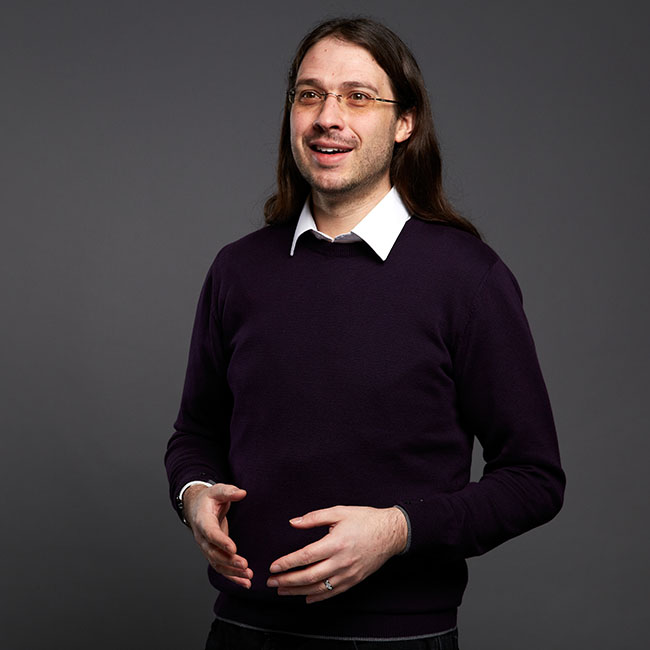
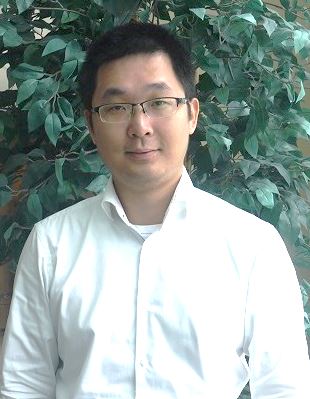
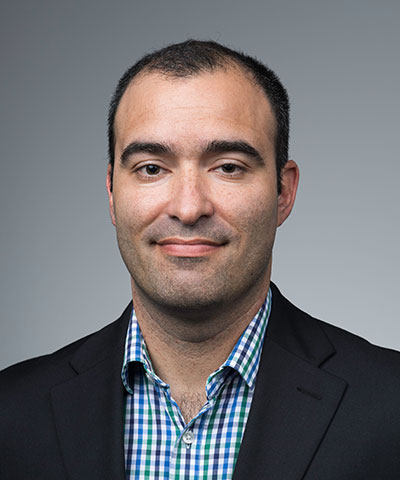
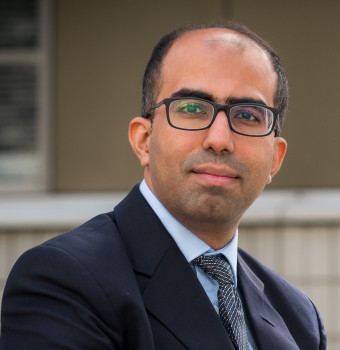
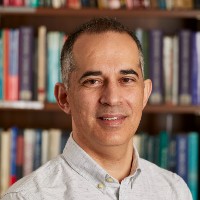
Dr Richard S Wilson is a Senior Lecturer at the School of Computing and Digital Technologies, Sheffield Hallam University, within the College of Business, Technology and Engineering. He leads the MSc in Big Data Analytics, BSc Business and Digital Technology, and BSc IT with Business Studies courses. Education: Master's in Business Intelligence (distinction), PhD research in SAS software applications. Research Interests His work focuses on Data Mining and Business Intelligence , with applications in Secure Data Systems , Ontology , and Applied Computing . He specializes in data integration for crime analytics and healthcare (NHS) systems. Publications Trends Recent articles analyze ontology-driven data enrichment , ballistic data interoperability , and student progression analytics . Themes include EU-funded research, secure data platforms, and SAS-based solutions. Scientific Awards FHEA (Fellow of the Higher Education Academy) MBCS (Member of the British Computer Society) Teaching Expertise Advanced SAS software training, modules on Data Warehousing , Applied Business Intelligence , and Data Integration . Also contributes to higher education research on student analytics.
Mark Mixer is an Associate Professor in Applied Mathematics. His work emphasizes bridging theoretical concepts with real-world applications, particularly in algorithm design, data science education, and discrete geometry. He focuses on developing practical solutions for scheduling problems, sports analytics, and geometric modeling. Research interests include algorithms for optimization, discrete geometry, machine learning applications, and curriculum development in data science. His recent work explores genetic algorithms for exam scheduling and polytope classification. Publications span from 2010 to 2025, covering topics like polytope theory, sports data analysis, and calculus curriculum reform. No scientific awards or grants are explicitly mentioned. No advising or team leadership roles are detailed in the provided text.
Zhong Sheng is a Senior Research Fellow at the Energy Studies Institute, National University of Singapore. He holds a PhD in Economics from Maastricht University and specializes in quantitative analysis of energy efficiency, innovation systems, and sustainable development. Research Focus His work applies econometric methods to study energy efficiency determinants, global value chains, decarbonization pathways, and policy impacts. Current projects examine ASEAN energy transitions, cross-border electricity trade, and embodied carbon in trade flows. Honors UNIDO Ph.D. Fellowship (2012) UN University Ph.D. Scholarship (2012) Erasmus Mundus Scholarship (2010) Methodological Expertise Publications feature advanced quantitative techniques including input-output analysis, optimization modeling, and microdata analytics to investigate energy systems and emission patterns across global and regional scales.
Francesca Abastante is an Associate Professor at the Polytechnic University of Turin (DIST Department) and member of the R3C Interdepartmental Centre. She holds a PhD in Regional and Urban Studies (2013) and specializes in Multicriteria Decision Analysis (MCDA) applied to urban and territorial projects. Her research focuses on integrating MCDA with financial analytics and visualization tools to support real-time decision-making in sustainable development. Key roles include scientific management of national projects (Chiomonte SMART, BIG/OPEN DATA) and participation in EU initiatives (SCORE, GLOSSA). She teaches courses in urban economics, real estate valuation, and project feasibility analysis at Politecnico di Torino. She serves on editorial boards for journals like *International Journal of Sustainable Development and Planning* and is an active member of professional societies (SIEV, MCDM). Her work emphasizes urban sustainability, climate action (SDGs 11 & 13), spatial analysis, and resilience planning. Projects involve evaluating low-carbon transitions, neighborhood regeneration, and SDG implementation frameworks using innovative methodologies like WebGIS platforms and participatory serious games.
Gonzalo Mateos is an Associate Professor in the Department of Electrical and Computer Engineering and holds a secondary appointment in the Department of Computer Science at the University of Rochester. He is also the Asaro Biggar Family Fellow in Data Science and a member of the Goergen Institute for Data Science and Artificial Intelligence. Additionally, he serves as an Associate Editor for IEEE Transactions on Signal Processing and IEEE Transactions on Signal and Information Processing over Networks , and is part of the IEEE SigPort Editorial Board. Dr. Mateos earned his B.Sc. in Electrical Engineering from Universidad de la Republica, Uruguay in 2005. He then pursued graduate studies at the University of Minnesota, Twin Cities, where he received his M.Sc. in 2009 and Ph.D. in 2011. Prior to joining the University of Rochester in 2014, he worked as a Systems Engineer at Asea Brown Boveri (ABB) in Uruguay from 2004 to 2006 and served as a visiting scholar at Carnegie Mellon University's Computer Science Department during the 2013 academic year. His research interests focus on statistical learning from Big Data , network science , decentralized optimization , and graph signal processing , with applications in dynamic network health monitoring , social networks , power grid analysis , and large-scale data analytics . His work emphasizes blind deconvolution, graph topology inference, fairness-aware methodologies, and explainable AI for medical and engineering systems. Dr. Mateos has been honored with the NSF CAREER Award (2018), the IEEE Young Author Best Paper Award (2017), and multiple conference best paper awards including ICASSP 2018, SSP Workshop 2016, and SPAWC 2012. His doctoral research was recognized with the University of Minnesota's Best Dissertation Award (2013, Honorable Mention) in Physical Sciences and Engineering. In advising, he mentors graduate students in his research areas, though specific names are not listed here. His grants include the NSF CAREER Award, and he collaborates on projects like fairness-aware graph filter design and dynamic network monitoring. His research teams and labs operate within the Goergen Institute, focusing on interdisciplinary data science and AI applications. He actively contributes to the Hajim School of Engineering and the broader University of Rochester community, fostering innovation at the intersection of electrical engineering and computer science. His industry experience and academic roles reflect a commitment to both theoretical and practical advancements in networked systems and machine learning.
Barry J. Bradford is a Professor and C. E. Meadows Endowed Chair in Dairy Management and Nutrition at Michigan State University’s Department of Animal Science, part of the College of Agriculture & Natural Resources. His research focuses on dairy cattle metabolic physiology, with particular emphasis on inflammation during the postpartum period, nutrient signaling, and evidence-based farm management. He collaborates closely with dairy producers through a 50% Extension appointment, applying data-driven approaches to improve decision-making and sustainability. Bradford’s work integrates nutritional science with physiological and environmental factors to enhance both animal health and economic outcomes. Key research areas include reducing inflammation-related productivity losses, optimizing feed strategies, and leveraging farm data for actionable insights. His team’s projects often involve interdisciplinary collaborations, such as analyzing the impact of sexed semen on lactation performance or exploring sustainable climate solutions with the auto industry. Research Priorities: Inflammation management, nutrient metabolism, and dairy farm analytics. Extension Contributions: Develops tools like the Evidence-Based Dairy Management Program to empower producers with data-informed practices. Recent Focus: Investigating rumen-protected niacin, choline supplementation, and HCAR2 antagonists to modulate immune responses. Global Impact: Supports Ukrainian dairy farmers through educational webinars and resource sharing. Bradford leads the Dairy Metabolism Group, a team dedicated to advancing knowledge in metabolic physiology and translating findings into practical solutions for dairy industries.
Dr George Stamatescu is a Research Fellow at the School of Economics and Public Policy, University of Adelaide. His research focuses on operations research, sequential decision making, and complex systems analysis. He is currently working on workforce planning for large-scale projects. Dr Stamatescu has experience in mathematical techniques for analytical system studies and has contributed to multi-camera tracking systems and neural network optimization research. Education details are not explicitly listed, but his professional roles include tutoring in Mathematics and Control Systems. He has supervised a Master's thesis titled 'Analysis of New Methods for Inference in Markov Decision Processes' (2021-2024). No scientific awards are mentioned in the provided texts. His work intersects with optimization theory and practical applications in health systems and project management. Dr Stamatescu's publications span operations research methodologies, machine learning, and surveillance technologies. His recent focus on workforce planning reflects his expertise in applying theoretical models to real-world logistical challenges.
Felix Holzmeister is a Professor at the University of Innsbruck’s Department of Economics , Austria, whose research agenda spans experimental and behavioral finance, meta-science, risk perception, and the reproducibility of empirical research. His work is characterised by large-scale collaborative projects—often involving dozens of co-authors—that combine laboratory experiments, field interventions, and meta-analytical methods to understand how individuals, particularly finance professionals, form expectations, perceive risk, and make decisions under uncertainty. Research Interests: Experimental and behavioural finance, with special attention to replicability of asset-market findings Risk preferences and risk perception among finance professionals and retail investors Meta-science topics such as non-standard errors, reviewer reliability, and computational reproducibility Policy-oriented behavioural interventions (nudging) in household finance and debt collection Across more than fifteen recent papers, Holzmeister’s research exhibits a clear focus on methodological rigour and transparency . His 2024 Journal of Finance article on non-standard errors—co-authored with over 150 colleagues—has already garnered thousands of downloads and citations, illustrating the broad interest in improving statistical inference in finance. A parallel strand of work uses preregistered experiments to test the robustness of classic asset-market findings, while additional studies explore how cognitive skills and personality traits shape fund-manager performance and how choice architecture influences portfolio allocation. Scientific Impact & Recognition: Top-3 000 SSRN author by total downloads (>24 000) Top-10 500 SSRN author by total citations (>100) Lead or co-author on large multi-institutional studies featured in top finance journals Collaboration & Funding: Holzmeister routinely leads interdisciplinary teams involving institutions such as the Stockholm School of Economics, VU Amsterdam, HEC Paris, the University of Gothenburg, and Copenhagen Business School. Funding acknowledgements in his papers imply support from national science foundations and European research councils, although specific grant numbers are not detailed in the present text. Laboratory & Research Environment: He conducts experiments within the University of Innsbruck’s experimental-economics laboratory infrastructure and is affiliated with cross-university consortia such as the “Non-Standard Errors Project” and the “Researcher Variation in Economics” consortium, which bring together dozens of scholars to tackle methodological challenges in economics and finance.
Dr. Muhammad Salman Haleem is a Lecturer in the School of Electronic Engineering and Computer Science at Queen Mary University of London (QMUL). He holds a PhD in Computing from Manchester Metropolitan University, supported by the EPSRC-DHPA scholarship, focusing on retinal feature extraction for glaucoma diagnosis. Previously, he served as an Assistant Professor at the University of Warwick and as a Research Associate in data science at Manchester Metropolitan University. His research interests center on AI, data science, and deep learning applied to healthcare, including chronic disease monitoring (diabetes, cardiovascular diseases), retinal/MRI analysis, and stress/activity tracking. He has authored/co-authored over 40 peer-reviewed publications and reviews for journals like IEEE Transactions on Biomedical Engineering and Biomedical Signal Processing and Control. Teaching includes modules on Advanced Network Programming and Artificial Intelligence fundamentals. Haleem is affiliated with the Centre for Multimodal AI at QMUL and collaborates with institutions like Beijing University of Posts and Telecommunications on joint programs. Education: PhD in Computing (Manchester Metropolitan University), MSc in Electronics Engineering (NED University), BSc in Electronics Engineering (NED University) Awards: First Prize (IFMBE 2023), Dorothy Hodgkin Postgraduate Award (EPSRC 2012) Labs/Teams: Centre for Multimodal AI, Intelligent eHealth Lab
Dr. Kalpani Ishara Duwalage is a Research Fellow at QUT's Centre for Data Science and School of Mathematical Sciences. She holds a PhD in Statistics from QUT (2018-2021) and a first-class honors degree in Statistics and Operations Research from the University of Peradeniya, Sri Lanka (2015). Her research focuses on forecasting, statistical modeling, machine learning, and big data applications in real-world contexts such as livestock supply chains and healthcare systems. Her doctoral thesis, 'Statistical Modelling of Public Hospital Emergency Department Presentations,' collaborated with four major hospitals in South-East Queensland, Australia. Current projects include enhancing real-time predictive capabilities in livestock supply chains. She has also published extensively on emergency department patient presentation analysis and agricultural data science. Education: PhD in Statistics, QUT (2018-2021) BSc (Hons) in Statistics & Operations Research, University of Peradeniya (2015) Her research interests span applied statistical modeling, machine learning for healthcare analytics, and predictive analytics in agriculture. She collaborates with industry partners like Black Box Co. to bridge academic research with practical solutions.
Sherry L. Fowler is a Professor of Practice in Information Technology and Business Analytics at North Carolina State University's Poole College of Management. She specializes in applying technology to solve business problems and strategic competitiveness. Her expertise spans IT, analytics, databases, software development, unstructured data, and social media analysis. Education: MS in Computer Information Systems, Georgia State University (1989) DBA in Information Systems, University of North Carolina at Charlotte (2020) Research Interests: Focuses on leveraging technology for business solutions, including unstructured data analysis (e.g., Twitter) and ethical implications of social media design. She emphasizes real-world applications through teaching and industry collaborations. Public Engagement: Featured in news discussions on social media accountability (Time Magazine, 2022) and urban violence prediction via analytics (2020). Collaborated with PNC on big data decision-making initiatives (2019). Labs/Initiatives: Affiliated with the Business Analytics and AI Initiative (BAI) and Supply Chain Resource Cooperative (SCRC) at Poole College.
Hamid Bekamiri is an Assistant Professor in Innovation and Industrial Dynamics at Aalborg University Business School. He holds a PhD in Information Technology Management and specializes in applied machine learning and digital transformation. His research bridges computer engineering with social sciences, focusing on technology mapping methodologies. His research interests center on developing computational tools for science and technology mapping, with expertise in NLP, deep learning, and big data analytics. Recent work explores semantic similarity models for patent analysis and knowledge landscape visualization. Publications demonstrate consistent focus on machine learning applications in technology management. Recent articles show progression from banking security algorithms to advanced patent classification systems using transformer architectures. Professional technical skills include: 7+ years in Python/R programming AWS and Slurm-based cloud computing NoSQL/SQL database management High-dimensional data processing
Marcos Ennes Barreto is an Assistant Professor (Education) in Data Science at the London School of Economics and Political Science (LSE), Department of Statistics. He teaches courses in Distributed Computing for Big Data, Artificial Intelligence, and Deep Learning, and coordinates capstone projects in the MSc Data Science programme. His research focuses on big data linkage and analytics, machine learning applications in healthcare and socioeconomic data, and generative AI in education. He is affiliated with the LSE Data Science Institute and an associate researcher at CIDACS (FIOCRUZ, Brazil), contributing to population-based cohort studies. Marcos holds a PhD in Computer Science (2010, UFRGS, Brazil) and a Postgraduate Certificate in Health Data Science (2018, UCL). He was a Newton International Fellow (2016-2018) and became a Fellow of the UK Higher Education Academy (FHEA) in 2020. Key roles include Programme Director for the Generative AI Practitioners Certificate, Department Lead for AI in Education, and Strategic Lead for Knowledge Exchange. He has led over 20 international projects funded by organizations like NVIDIA, Google, Gates Foundation, and The Royal Society. His work spans AI ethics, pandemic response analytics, and educational technology innovation. Notable tools developed include AtyImo (probabilistic record linkage), CIDACS-RL (record linkage system), and the IDS-COVID-19 social disparities index. Awards include British Academy Talent Development Awards (2024) and Eden Centre Fellowships (2023-2025). Research highlights include the 100 Million Brazilian Cohort, the IMAPI Early Childhood Index, and AI-driven malaria surveillance systems. He has published extensively in journals like the International Journal of Population Data Science and conferences on health informatics and AI education. His grants total over £10M, emphasizing interdisciplinary collaboration between academia, industry, and public health agencies.
Dr. Joel Scanlan is a Senior Lecturer in Health Information Management at the Tasmanian School of Business and Economics (TSBE) , University of Tasmania, Hobart. He also holds an adjunct Associate Professor position in maritime cybersecurity at Western Norway University of Applied Sciences (HVL). With a PhD in Network Security and Data Mining from the University of Tasmania, Dr. Scanlan has over two decades of experience in teaching and industry consulting in cybersecurity and privacy. His research is centered on the technical and social harms of the internet, with a strong emphasis on child exploitation prevention, cybersecurity, data privacy, and machine learning . He works in multidisciplinary teams involving psychology, law, and maritime security, contributing to high-impact projects on online safety, CSAM deterrence, and digital interventions. His work has informed policy discussions, including submissions on social media regulation and participation in coalitions like SaferAI for Children. Dr. Scanlan's recent publications highlight trends in AI-driven safety tools , such as chatbots for adolescent support, honeypot experiments for deterring online predators, and digital interventions to prevent child sexual abuse perpetration. His research bridges technical innovation with ethical and social considerations, particularly in balancing privacy and surveillance. Google Scholar : Access via Google Scholar ORCID : 0000-0003-2285-8932 LinkedIn : Professional Profile He has been involved in supervising research students and collaborative projects, particularly in the design and evaluation of online safety technologies. Dr. Scanlan is an active participant in national and international research networks, including the Child Sexual Abuse Reduction Research Network and Te Puna Haumaru Seminar Series in New Zealand. His public engagement includes speaking at conferences such as #AIC2025Conference, contributing to media discussions, and advocating for transparency and accountability in higher education and digital policy.
Daniele Fadda is a Research Fellow at the Istituto di Scienza e Tecnologie dell'Informazione (ISTI), part of the National Research Council of Italy (CNR). His work focuses on the intersection of data science, mobility analysis, and visualization techniques, with significant contributions to understanding human movement patterns during the COVID-19 pandemic. He earned his Master Degree in Communication Design from Politecnico di Milano in 2010 (achieving top honors: 110/110) and later completed a Master of Science in Big Data Analytics and Social Mining from the University of Pisa in 2015. Fadda's research centers on Mobility Data Analysis , Data Visualization for complex systems , and Visual Analytics methods for Big Data . His work applies advanced data mining techniques to urban mobility patterns and pandemic response strategies. Recent publications demonstrate his focus on explainable privacy assessment for location data and visualization of educational performance indicators. His research has practical applications in urban planning, public health policy, and educational assessment systems. Fadda is actively affiliated with the KDD Lab, a joint research facility between CNR and the University of Pisa, which has collaborated with major institutions including Windtre, the Italian National Institute of Health (ISS), and the Bruno Kessler Foundation on critical pandemic response research. His work often appears in prominent venues for data science and complex systems analysis, demonstrating consistent scholarly output from 2016 to the present.