Valentina Bertella is a Contract Professor at the Department of Naval, Electrical, Electronic, and Telecommunications Engineering (DITEN) at the University of Genoa, Italy. She teaches Mathematical Analysis and Algebra for degree programs in Nautical Product Design and Maritime Science and Technology. Her research focuses on geometry in normed spaces, particularly Banach spaces, and mathematical analysis. She has published works on geometric constants and innovative simulation algorithms. Email: valentina.bertella@edu.unige.it | valentina.bertella@gmail.com Recent research trends: Her publications from 2019-2025 show a strong emphasis on geometric properties in Banach spaces, triangle perimeters in normed geometry, and algorithmic improvements for simulation models.
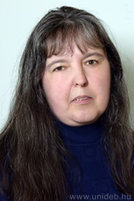
Dr. Henrietta Tomán serves as an Assistant Professor in the Department of Data Science and Visualization at the University of Debrecen's Faculty of Informatics, where she bridges advanced mathematical theory with practical medical imaging applications. Her work integrates abstract algebraic structures with cutting-edge AI systems to solve critical healthcare challenges. Her research portfolio spans three interconnected domains: Medical image processing (particularly ensemble-based segmentation and quality assessment for ophthalmic diagnostics) Geometric structures (quasigroups, loops, and differentiable manifolds) Stochastic optimization for resource-constrained AI systems Analysis of her publication trajectory reveals evolving expertise: early work (2010-2014) established foundations in geometric loop theory applied to image processing, while recent research (2020-2024) pioneers stochastic fusion techniques for medical image ensembles under computational constraints. Her most significant contributions involve translating mathematical abstractions into robust clinical decision-support tools, particularly in diabetic retinopathy detection and epidemic modeling. Current work demonstrates increasing focus on real-time AI systems that maintain accuracy under hardware limitations, reflecting urgent needs in telemedicine and mobile health applications. Dr. Tomán maintains active collaboration within the Doctoral School of Informatics and contributes to Hungary's national research initiatives in medical AI, with consistent publication output in top-tier venues spanning computer vision, medical imaging, and mathematical computing.
Dr. Rosario Rubio San Miguel is a faculty member at the Higher Polytechnic School of Universidad Nebrija , specializing in the Department of Applied Mathematics . She earned her Doctorate from Universidad de Cantabria in 2001 under the supervision of Dr. Jaime Gutiérrez Gutiérrez, with a thesis titled Cuerpos unirracionales. Resultados teóricos, algoritmos y aplicaciones (Unirational Fields: Theoretical Results, Algorithms, and Applications). Her research is affiliated with the MA Nebrija Research Group on Mathematics and its Applications , focusing on mathematical theory and its practical applications. While specific publications and awards are not listed in the provided text, her work bridges algebraic geometry and algorithmic development. For inquiries, she can be reached at mrubio@nebrija.es .
Stella Krell serves as a Lecturer at the Dieudonné Laboratory within Université Côte d'Azur, specializing in numerical methods for fluid dynamics and partial differential equations. Her academic career spans over a decade of teaching and research in computational mathematics. Her research focuses on Numerical Analysis and Computational Fluid Dynamics , particularly developing Finite Volume Methods for complex fluid systems. Key areas include Discrete Duality Finite Volume (DDFV) schemes , Domain Decomposition Methods , and Multifluid Flow Simulation . Her work addresses challenging problems in anisotropic diffusion, Navier-Stokes equations, and convection-diffusion systems with applications ranging from nuclear waste storage to porous media flow. Analysis of her 15 most recent publications reveals consistent focus on advancing DDFV methodologies, with increasing sophistication in handling boundary conditions, stability analysis, and multi-physics coupling. Her research trajectory shows progression from foundational discretization techniques to complex multiphysics applications, demonstrating both theoretical rigor and practical implementation skills. Krell actively participates in academic knowledge dissemination through extensive conference presentations at major international symposia including CANUM, FVCA, and Domain Decomposition conferences across Europe. Her teaching portfolio includes advanced courses in numerical analysis, geometry, and linear algebra for Master's programs with emphasis on teacher training.
Cornelius Pillen is a Professor in the Department of Math and Statistics at the University of South Alabama under the College of Arts and Sciences. His research focuses on Representation Theory and Algebraic Groups, particularly in the context of finite groups of Lie type and quantum groups. Recent publications highlight advancements in Donkin's Tilting Module Conjecture, cohomology of Frobenius kernels, and modular representation theory. His work spans both theoretical and applied mathematics, with contributions to group cohomology and Lie algebra structures. While no specific awards or students are listed here, Pillen remains active in collaborative research with colleagues such as C.P. Bendel, D.K. Nakano, and P. Sobaje. His office hours and contact details are available for student engagement.
Luis Carlos Contreras Gonzalez is a Full Professor of Didactics of Mathematics at the University of Huelva, Spain, affiliated with the Faculty of Education, Psychology and Sports Science and the Department of Integrated Didactics. His academic career spans decades of research on mathematics teacher knowledge and professional development, with significant contributions to teacher education frameworks. His educational background includes: Graduate in Mathematics, University of Seville (1982) Doctor in Psychopedagogy, University of Huelva (1998), with thesis on problem-solving and teachers' conceptions of classroom roles Professor Contreras' research centers on the specialized knowledge of mathematics teachers (MTSK model), examining how educators select and deploy examples in algebra and geometry instruction. His work explores the intersection of teacher cognition, classroom practice, and effective pedagogical design, with particular focus on quadratic equations, factorization, and radical decomposition. He investigates the 'dual perspective' required of mathematics teacher educators and develops frameworks for structuring professional development. Analysis of his 2024-2025 publications reveals dominant trends in applying the MTSK model to analyze teacher knowledge through classroom examples, with growing emphasis on teacher educator profiles and task design for professional development. His work consistently bridges theoretical frameworks with practical classroom applications across Spanish and international contexts. Professor Contreras has directed 7 doctoral theses in the last decade with 5 more in progress. His research is supported by major grants: Principal Investigator: EDU2013-44047-P Principal Investigator: RTI2018-096547-B-100 Principal Investigator: PID2021-122180OB-I00 Member of additional national and regional research projects He actively collaborates through international networks including the MTSK NETWORK OF THE AUIP and RED 8, and his work is recognized through four research sections accredited by Spain's National Commission for the Evaluation of Research Activity.
Joaquín Reyes Colume is a Professor in the Department of Integrated Sciences at the Higher Technical School of Engineering, University of Huelva. His email contact is reyes@dmat.uhu.es. His research interests focus on Nonassociative rings and algebras , particularly Lie algebras , with specialization in quasi-filiform and filiform structures of maximal length. His work falls under Mathematics Subject Classification 17-XX (Nonassociative rings and algebras) and 68-XX (Computer science). Dr. Reyes earned his doctorate from the University of Seville in 1998 with a thesis titled "Graded quasi-filiform lie algebras of maximal length," supervised by Dr. José Ramón Gómez Martín and Dr. Antonio Jiménez Merchán. His publications demonstrate a consistent focus on the classification and properties of specific types of Lie algebras, particularly examining their structural characteristics, dimensional properties, and algebraic invariants. The research shows a progression from foundational work on filiform structures to more complex quasi-filiform classifications. Dr. Reyes has collaborated extensively with José R. Gómez and Antonio Jiménez-Merchán, with whom he has published 6 joint papers. He has also worked with researchers including Luisa Maria Camacho, J. M. Gabezas, Emilia Pastor, and I. M. Ortiz Rodríguez. His work has been published in reputable journals including the Journal of Algebra, Linear Algebra and its Applications, Extracta Mathematicae, and Algebras, Groups and Geometries. His research has been cited 25 times across 16 documents by 24 different authors, demonstrating its impact in the field of nonassociative algebra.
Peter K. Friz is a Professor of Mathematics at the Technical University of Berlin and affiliated with the Weierstrass Institute for Applied Analysis and Stochastics . His research focuses on stochastic analysis , rough path theory , and quantitative finance , particularly volatility modeling . Key Affiliations: Institute of Mathematics, TU-Berlin Weierstrass Institute Major Grants: ERC Starting Grant (2010-2016) ERC Consolidator Grant (2016-2021) DFG Research Unit Coordination (2016-2019) Einstein Foundation Grant His work bridges rough path theory with stochastic differential equations and financial mathematics . Recent publications emphasize rough volatility models , nonlinear SPDEs , and pathwise analysis . He co-authored the book Multidimensional Stochastic Processes as Rough Paths with Nicolas Victoir. Scientific Awards: ERC Starting Grant ERC Consolidator Grant Einstein Professorship Friz has organized major conferences like 5ECM, SPA, and Newton Institute workshops. He has mentored PhD students in areas related to stochastic analysis and rough paths , though specific names are not listed here.
Angélica M. Osorno is the F.L. Griffin Professor of Mathematics in the Department of Mathematics and Statistics at Reed College. Her research focuses on algebraic topology , higher category theory , and their connections to higher K-theory . She received her PhD from MIT in 2010 under Mark Behrens and was a postdoc at the University of Chicago with Peter May. She co-organizes the Diagram Categories in Homotopy Theory group funded by the Pacific Institute for the Mathematical Sciences (PIMS) and serves as an editor for Orbita Mathematicae and Homology, Homotopy and Applications . Education: PhD in Mathematics, MIT (2010) Research Interests: Algebraic Topology Higher Category Theory Higher K-Theory Equivariant Homotopy Theory Publications: Over 15 recent articles in top journals like Advances in Mathematics , Algebraic & Geometric Topology , and J. Pure Appl. Algebra . Scientific Service: Co-organized the 4th Women in Topology Workshop (2023) and Homotopy Theory in the Ecliptic (2017). Teaching: Taught courses including Intro to Analysis , Discrete Structures , Linear Algebra , and Algebraic Topology . Advising: Advised graduate student Diego Manco .
Janet L. Beery is a Professor of Mathematics at the University of Redlands, where she has been teaching since 1989. She holds a Ph.D. in Mathematics from Dartmouth College (1989) and specializes in finite permutation group theory and the history of mathematics, with particular focus on Thomas Harriot's work. As editor of the MAA online journal Convergence , she has significantly contributed to the integration of historical perspectives in mathematics education. Her research interests span finite permutation group theory approached through representation and character theory, combinatorial methods, and the history of mathematics, particularly in developing innovative approaches to mathematics education. She has been instrumental in implementing computer use and interactive learning in calculus and linear algebra courses, and developed an activity-based elementary mathematics history course (MATH 115) that has proven popular with students. Beery's scholarly output demonstrates a strong trajectory toward historical mathematical analysis, particularly her extensive work on Thomas Harriot's contributions to mathematics. Her publications reveal expertise in both pure mathematics (permutation groups) and historical mathematical methods, with increasing focus on the educational applications of historical mathematical approaches. The majority of her recent work centers on historical mathematical texts and their pedagogical applications. MAA Meritorious Service Award (2010) University of Redlands Innovative Teaching Award (2008) AP Calculus Examination Development Committee, College Board (2002-2008) Newsletter Editor, MAA Southern California-Nevada Section (2003-present) Professor Beery has directed numerous undergraduate research projects through the Senior Research Seminar, a required capstone course for mathematics majors at the University of Redlands. Her approach emphasizes independent study, problem-solving, and communication skills development. She has secured NSF-ILI grants to establish computer classrooms and has coordinated workshops on calculus reform. Her students have undertaken diverse projects spanning mathematical modeling, cryptography, game theory, and historical mathematical analysis.
Dr. Henry Africk is a Professor of Mathematics at the School of Arts & Sciences, New York City College of Technology. With a career spanning decades, he has made significant contributions to mathematical logic and mathematics education. Bachelor's in Mathematics from Columbia University (1964) Master's in Mathematics from the University of Illinois (1966) Ph.D. in Mathematics from the University of Illinois (1970) Second Master's in Electrical Engineering with a focus on Computer Science from NYU Polytechnic University (1974) His research interests primarily center on Mathematical Logic , including proof theory and logical systems. Additionally, his work extends to Mathematics Education and Geometry , as evidenced by his publications and NSF-funded projects. Dr. Africk's publications span both theoretical and applied domains. His research in logic includes foundational work on interpolation theorems and classical/intuitionistic logic. He has also authored geometry textbooks and developed educational software, reflecting his commitment to innovative teaching methods. Notably, he has contributed over 200 reviews to the American Mathematical Society's Mathematical Reviews . Dr. Africk served as the Chair of the Mathematics Department from 1997 to 2014 and directed a National Science Foundation CAUSE project (1980–1983) focused on improving student progress through computer-assisted instruction. He has taught a wide range of courses, including MAT 1175, MAT 1272, MAT 1275, MAT 1372, MAT 1375, MAT 1475, MAT 1575, MAT 2440, MAT 2540, MAT 2580, MAT 2630, MAT 2675, MAT 2680.
Sally Collins is a Visiting Assistant Professor at the Department of Mathematics in the College of Natural Science at Michigan State University , located in C314 Wells Hall. She can be reached at coll1004@msu.edu. Research Interests: Mathematics Applied Mathematics Theoretical Mathematics Algebra Analysis Geometry
David Russell Luke is a Professor of Continuous Optimization at the Institute for Numerical and Applied Mathematics, University of Göttingen, where he also serves as Managing Director of the Institute. He holds editorial positions as Area Editor for the Open Journal of Mathematical Optimization and Associate Editor for multiple prestigious journals including Journal of Optimization Theory and Applications, ESAIM: Control, Optimization and Calculus of Variations, SIAM Journal on Optimization, and Advances in Computational Mathematics. Dr. Luke earned his BSc with honors in Applied Mathematics from the University of California, Berkeley in 1991, followed by an MSc (1997) and PhD (2001) in Applied Mathematics from the University of Washington under James Burke. His academic journey included positions at the University of Göttingen (2001-2003), Simon Fraser University (2002-2004), and University of Delaware (2004-2009) before returning to Göttingen. His research focuses on Continuous Optimization, Variational Analysis, and Inverse Problems , with particular expertise in nonsmooth and nonconvex optimization, phase retrieval, and computational imaging. His work bridges theoretical mathematics with practical applications in photonic imaging, tomography, and adaptive optics. Current research projects include atomic orbital tomography, stochastic computed tomography for X-FEL imaging, probabilistic analysis in fixed point theory, and topological optimization for tree structure analysis. Analysis of his recent publications reveals a strong trend toward computational methods for imaging science, particularly phase retrieval problems, with increasing focus on three-dimensional reconstruction techniques and applications in photoemission orbital tomography. His work consistently integrates theoretical convergence analysis with practical algorithm development, often implemented in the ProxToolbox software framework. NASA/GSFC Graduate Student Research Fellow (1998-2001) Editorial roles with multiple leading optimization journals Principal investigator on numerous DFG-funded research projects Dr. Luke has advised several PhD students including Patrick Neumann and Thao Nguyen. His research has been supported by significant grants from the National Science Foundation, German Research Foundation (including Collaborative Research Center 755, Graduiertenkolleg 2088), Bundesministerium fuer Bildung und Forschung, German Israeli Foundation, and Australian Research Council. He leads the Working Group on Continuous Optimization, Variational Analysis and Inverse Problems at the University of Göttingen, which maintains the ProxToolbox software laboratory for proximal algorithms and optimization methods. The group actively develops computational tools for inverse problems and optimization, with applications ranging from space telescope wavefront reconstruction to atomic-scale imaging. Current projects are organized within the Collaborative Research Center 1456 and Graduiertenkolleg 2088 frameworks, focusing on mathematical modeling of complex imaging scenarios and developing efficient numerical algorithms for large-scale optimization problems.
Professor Tamás Terlaky holds the Alcoa Endowed Chair at Lehigh University 's P.C. Rossin College of Engineering and Applied Science , directing the Quantum Computing and Optimization Laboratory (QCOL) . He maintains Adjunct Professor roles at McMaster University and University of Pannonia , and serves as Visiting Professor at Strathclyde University . Ph.D. & M.Sc. from Eötvös University, Budapest Doctor of Academy of Sciences (Hungary) Habilitation from University of Pannonia Research Interests span Quantum Computing Optimization , Interior Point Methods , High-Performance Computational Optimization , Mathematical Modeling , and Medical Engineering Applications . Specific foci include Proton Therapy Treatment Optimization , Nuclear Reactor Core Reloading , and Service System Optimization . Recent Publications demonstrate expertise in Quantum Interior Point Methods , Quantum Linear System Algorithms , and Combinatorial Optimization , with applications to Medical Physics , Structural Engineering , and Quantum Software Design . Scientific Awards : Fellow of Fields Institute , INFORMS , SIAM , IFORS , and Canadian Academy of Engineering INFORMS Wagner Prize recipient IISE Outstanding Innovation in Service Science award MITACS Mentorship Award Teaching includes courses on Conic Optimization , Interior Point Methods , and Optimization Methods and Software . Currently leading a $2.1M DARPA grant for Quantum Computing Optimization research.
Elba Garcia Failde is a Ramón y Cajal researcher at the Department of Mathematics , Universitat Politècnica de Catalunya (UPC), since July 2025. She is currently on leave from her position as associate professor (maîtresse de conférence) at the Institut de Mathématiques de Jussieu - Paris Rive Gauche (IMJ-PRG) of Sorbonne Université, where she was affiliated with the Topologie et Géométrie Algébriques (TGA) group. Her research spans pure and applied mathematics, with a focus on interdisciplinary connections. Research interests : Topological recursion (TR) and its geometric implications Moduli spaces of curves and combinatorial maps Integrable systems and resurgence theory Free probability, matrix integrals, and exact WKB methods Applications to modular forms and algebraic topology Interdisciplinary interactions between mathematical fields Scientific awards and grants : Hadamard fellowship (postdoctoral research at IPhT and IHES) ERC CombiTop grant (Université de Paris, under Guillaume Chapuy) Her current projects explore the geometry of topological recursion, dualities in mathematical structures, and connections between graph theory and moduli spaces, including large-genus asymptotics and non-orientable extensions.