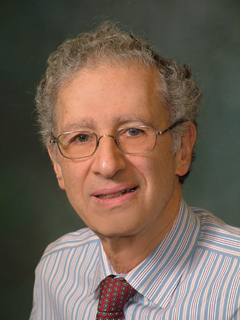
Jonathan L. Gross is a Professor of Computer Science at Columbia University, with a joint appointment in the School of Engineering and Applied Science. He previously held a position at Princeton University, where he worked with Ralph Fox, and earned his Ph.D. in 3-dimensional topology from Dartmouth College, solving a problem posed by John Milnor. His undergraduate studies were at MIT. His research spans topological graph theory, knot theory, computer graphics, and mathematical models for social anthropology. Notable contributions include the voltage graph construction for graph imbeddings and foundational work on enumerative techniques in topological graph theory. He has authored/co-authored influential books such as Topological Graph Theory and Graph Theory and Its Applications . Research Interests: Genus polynomials, Celtic knots, woven shapes, voltage graphs, grid-group theory, 3-manifold topology. Teaching: Courses include Graph Theory (COMS 4203), Combinatorial Theory (COMS 4205), and Topics in Graph Theory (COMS 6204). Recognition: Alfred P. Sloan Fellowship, IBM Postdoctoral Fellowship, and the Columbia Great Teacher Award. His work bridges pure mathematics and applied domains, including collaborations with artists and computer scientists on weaving algorithms and 3D modeling tools. He has developed software for performance evaluation and reusable software design at Bell Labs and IBM.
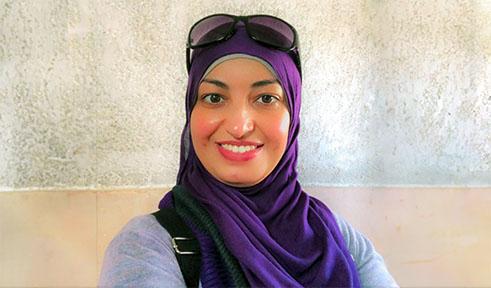
Fatma Ebrahim is a Visiting Professor in the Department of Mathematics at Ohio University's College of Arts and Sciences. She is based in Morton Hall 526A and can be contacted via email at f.ebrahim@ohio.edu or by phone at 740-597-2713. Her academic work falls within the broad discipline of Mathematics, with research interests spanning both pure and applied areas including algebra, analysis, and geometry. There is no public information available regarding recent publications or scientific awards. She has not been noted to advise any students at this time, and there are no mentions of grants, laboratories, or research teams associated with her profile.
Piotr Micek is a Professor at the Department of Algorithmics, Faculty of Mathematics and Computer Science, Jagiellonian University. He holds a habilitated doctorate and focuses on combinatorics, graph theory, and discrete mathematics. His research spans graph coloring, probabilistic methods, approximation algorithms, and structural graph theory. He has led multiple grants including 'Order and Geometry' (2023–2027) and 'Structural Theory of Posets' (2020–2023). His work bridges theoretical foundations with algorithmic applications in combinatorial geometry and posets. Education: PhD in Mathematics (2008), Habilitation in Computer Science (2020). Research interests include poset dimension, graph algorithms, and combinatorial geometry. He collaborates internationally and has published over 70 papers in top journals/conferences like Journal of the ACM and Combinatorica . Grants include funding from the National Science Center (NCN) for projects on poset dimensions (2023–2027) and structural theory (2020–2023). Advised PhD student Michał Seweryn. His lab, the Algorithmics Research Group, explores foundational and applied aspects of discrete mathematics.
Bernt Tore Jensen is an Associate Professor in the Department of Mathematical Sciences at the Norwegian University of Science and Technology (NTNU), based at the Gjøvik campus. He is actively involved in research and teaching within mathematics, particularly in algebra and representation theory. Research Interests: His work focuses on advanced topics in algebra, including representation theory of quivers, Lie algebras, cluster algebras, Hecke algebras, and A-infinity structures. He investigates geometric realizations of algebraic objects and structural properties of modules and categories. The publication trends show a sustained focus on algebraic structures and their representations over the past decade, with frequent collaborations with researchers such as Xiuping Su, Alastair King, and Dag Oskar Madsen. His work appears in prestigious journals like Advances in Mathematics , Journal of Algebra , and Transactions of the American Mathematical Society , reflecting high-quality theoretical contributions. Teaching Responsibilities: He teaches a range of engineering mathematics courses, including Matematikk for ingeniørfag and Matematiske metoder , indicating a strong commitment to applied mathematical education. Collaborations and Advising: While formal student advisees are not listed, his extensive co-authorships suggest active research collaboration. There is no mention of grants or awards in the provided text, but his publication record implies recognition within the mathematical community. Laboratories and Research Groups: Though specific labs or teams are not mentioned, his research is likely conducted within the algebra and representation theory group at NTNU's Department of Mathematical Sciences.
Prof. Dr. Dirk Hachenberger is an Associate Professor of Mathematics for Computer Scientists at the University of Augsburg, Germany. He is affiliated with the Faculty of Mathematics, Natural Sciences and Technology, specifically within the Institute of Mathematics where he works in the Chair of Discrete Mathematics, Optimization and Operations Research. His academic work focuses on theoretical and applied aspects of discrete structures, with particular emphasis on finite fields and their applications in coding theory and cryptography. Prof. Hachenberger's research interests span multiple areas of discrete mathematics, with a strong focus on finite fields , normal bases , and completely free elements . His work demonstrates deep connections between pure algebra and practical applications in information security. He has made significant contributions to understanding primitive elements in field extensions and developing theoretical frameworks for various algebraic structures used in cryptographic systems and error-correcting codes. Analysis of Prof. Hachenberger's publication record reveals a consistent focus on algebraic structures with applications in information theory. His work shows a progression from foundational theoretical research on normal bases to more applied studies on coding theory, demonstrating both mathematical depth and practical relevance. The recurring themes in his research include primitive elements, field extensions, and algebraic structures with cryptographic applications. Among his notable recognitions is the Prize for Good Teaching awarded by the Bavarian State Minister for Science, Research and the Arts in 2004, highlighting his excellence in academic instruction. Prof. Hachenberger has supervised numerous graduate students, with thesis records spanning from 2006 to 2022. His supervision covers both theoretical mathematical investigations and applied business mathematics problems, reflecting the interdisciplinary nature of his work. He has also authored influential textbooks including "Mathematik für Informatiker" (2005, 2008) and "Topics in Galois Fields" (2020), which have significantly contributed to mathematical education for computer scientists.
Professor Norman Dancer is a distinguished academic in the Department of Mathematics at the University of Sydney, Faculty of Science. His research has significantly contributed to the field of nonlinear analysis and partial differential equations over several decades. He maintains an active research profile with publications extending to 2022. Professor Dancer's research focuses on Nonlinear Analysis , with particular expertise in degree theory, Morse theory, and Conley index. His work explores applications to nonlinear ordinary and partial differential equations, including singular perturbations and bifurcation theory. He is a member of the Nonlinear Analysis Research Group at the University of Sydney and serves on the Editorial Advisory Board of a mathematics book publishing program focused on Central and Eastern Europe, launched jointly by de Gruyter and Versita. Analysis of Professor Dancer's recent publications reveals a consistent focus on elliptic equations, stability analysis, and nonlinear phenomena. His work frequently addresses problems related to the Gross-Pitaevskii system, Liouville-type results, and solutions with specific properties like stability or finite Morse index. His research demonstrates sophisticated mathematical techniques applied to challenging problems in nonlinear analysis. Professor Dancer has secured significant research funding through multiple Australian Research Council Discovery Projects. His collaborative work, particularly with S. Yan and Y. Du, has focused on nonlinear partial differential equations, bubbles, layers, stability, and related topics. His research program has maintained remarkable consistency and productivity over many years, addressing fundamental questions in nonlinear analysis and partial differential equations. Professor Dancer is affiliated with the Nonlinear Analysis Research Group at the University of Sydney, where he contributes to the vibrant research environment in mathematical analysis. His work connects with broader mathematical physics applications, particularly in understanding phenomena related to Bose-Einstein condensates through the Gross-Pitaevskii equations.
Clemens Huemer is a professor affiliated with the Department of Mathematics at the Escola d'Enginyeria de Telecomunicació i Aeroespacial de Castelldefels (EETAC), part of the Universitat Politècnica de Catalunya (UPC). He is a key member of the DCCG (Discrete, Combinational, and Computational Geometry) research group, where he contributes extensively to theoretical and applied geometric research. His work spans computational, discrete, and combinatorial geometry with strong ties to graph theory and combinatorics. His primary research interests include computational geometry, discrete and combinatorial geometry, Voronoi diagrams (especially higher-order variants), geometric graphs, point set configurations, and algorithmic geometry. He investigates structural properties of geometric objects, combinatorial configurations, and optimization problems in discrete settings. His recent publications emphasize Voronoi constructions, matching problems in colored point sets, spectral properties of token graphs, and production matrices for enumerating geometric graphs. The trends in his recent articles (2021–2024) reflect a deep focus on higher-order Voronoi diagrams, geometric matching, and combinatorial properties of point sets and graphs. His work combines theoretical depth with algorithmic insights, often involving polynomial representations, spectral analysis, and geometric enumeration. The recurring themes include structural analysis of geometric arrangements, extremal problems in point sets, and algebraic-combinatorial methods in geometry. Clemens Huemer has been involved in multiple competitive R&D projects, including those funded under the Spanish State Research Plans and Horizon 2020, often in collaboration with leading researchers in computational geometry. He has served on scientific committees of conferences such as the Workshop on Geometric Networks and the Intensive Research Program on Discrete, Combinatorial and Computational Geometry, indicating leadership in the academic community. He advises and collaborates with numerous researchers and students, though specific advisees are not listed in the provided data. His research is supported through national and European grants, and he actively contributes to the dissemination of results via conference presentations and journal publications in top venues such as Discrete and Computational Geometry , Computational Geometry: Theory and Applications , and European Workshop on Computational Geometry . Clemens Huemer is based at the Baix Llobregat campus of UPC and is deeply embedded in the UPC research network, with extensive collaborations across institutions in Spain and internationally. His work is central to the DCCG group’s efforts in advancing the theoretical foundations of discrete and computational geometry.
Hajime Kaneko is an Associate Professor at the Department of Mathematics, Faculty of Pure and Applied Sciences, University of Tsukuba . His research focuses on Uniform Distribution Theory , Diophantine Approximation , and Transcendental Number Theory , with a particular emphasis on the behavior of number sequences in beta expansions and geometric progressions involving algebraic numbers. Key research topics include Markoff-Lagrange Spectrum , Sturmian Type Numbers , and Digit Exchange Properties in numerical systems. He has actively participated in and organized seminars such as DARF (Diophantine Analysis and Related Fields) and the 2024 Workshop on Number Theory and Ergodic Theory at Kanazawa University. His recent publications highlight collaborations with prominent mathematicians like Shigeki Akiyama , Thomas Stoll , and Wolfgang Steiner . Notably, his work on the Markoff-Lagrange Spectrum (2024) and binary digits of algebraic numbers (2023) has advanced the understanding of digit patterns and their connections to Diophantine equations. He also contributes to the study of rotational beta expansions and irrationality exponents through symbolic dynamics and Padé approximations.
Jodi Dunkelman is a Lecturer in the Department of Mathematics at Rutgers University, The State University of New Jersey. Her academic role focuses on teaching and mentoring students within the mathematics discipline. Office Hours: Tuesdays/Thursdays 5:00pm-5:30pm in Scott Hall Room 215; Wednesdays 4:30pm-5:30pm via Zoom Email: jodidunk@math.rutgers.edu Her research and teaching interests align with core mathematical fields, including Mathematics Education, Algebra, Calculus, Geometry, Number Theory, and Applied Mathematics. No additional details about awards, publications, or student advisement are available in this profile.
Sarasij Maitra is a Visiting Assistant Professor of Mathematics and Statistics at Haverford College. Previously, he was a Postdoctoral Researcher/Lecturer in Mathematics at the University of Utah. He earned his PhD from the Department of Mathematics at the University of Virginia under the guidance of Professor Craig Huneke. Dr. Maitra completed his bachelor's and master's degrees at Indian Statistical Institute Bangalore and Indian Statistical Institute Kolkata, respectively. His research primarily focuses on Commutative Algebra, specifically studying Noetherian commutative local rings and the structure theory of modules over such rings. He investigates concepts such as torsion, reflexivity, and Ulrichness of modules using tools like local cohomology, Hilbert-Samuel Multiplicity, numerical semi-group rings, and Frobenius numbers (related to the Chicken McNugget Problem!). Dr. Maitra has developed a strong research portfolio examining Berger's Conjecture, trace ideals, and the module of differentials. His work shows a consistent pattern of collaboration with researchers like Vivek Mukundan, Craig Huneke, and others, demonstrating expertise in both theoretical aspects of commutative algebra and computational approaches using Macaulay2. His recent publications indicate a growing interest in applying algebraic methods to data science and machine learning. All University Graduate Teaching Award (University of Virginia) Postdoc Teaching Award (University of Utah) Dr. Maitra actively mentors undergraduate students, currently supervising senior theses at Haverford College in Commutative Algebra, Cryptography, and Deep Learning. He has taught a wide range of undergraduate mathematics courses including Multivariable Calculus, Real Analysis, Linear Algebra, and specialized topics like Commutative Algebra. He has also contributed to the mathematical community through software development for Macaulay2, including the RandomRationalPoints and SwitchingFields packages.
Michal Outrata is an Assistant Professor in the Department of Numerical Mathematics at Charles University's Faculty of Mathematics and Physics in Prague, Czech Republic. He began his position in fall 2024 after completing a postdoctoral fellowship at Virginia Tech with Prof. Eric de Sturler and earning his PhD under Prof. Martin Gander at the University of Geneva, where his thesis was awarded the Henri Fehr Prize in 2023. His academic journey started with undergraduate studies in Prague under Prof. Zdeněk Strakoš (bachelor) and Prof. Miroslav Tůma (master). Dr. Outrata's research focuses on understanding why certain numerical methods work for specific problem classes, with emphasis on numerical linear algebra , Krylov subspace methods , and domain decomposition techniques . His work bridges theoretical analysis with practical algorithm development, particularly in preconditioning strategies for iterative solvers. Current projects include the Primus Research Programme (2025-2028) titled 'Divide, Conquer and Optimize: Domain Decomposition Methods in Scientific Computing' which explores hierarchical matrix formats and mixed precision computations for optimizing domain decomposition methods. His publication record demonstrates consistent contributions to top journals including SIAM Journal on Scientific Computing and Linear Algebra with Applications. His research shows progression from foundational work on GMRES convergence to sophisticated analyses of block Runge-Kutta preconditioners and optimized Schwarz methods with data-sparse transmission conditions. His recent work increasingly integrates hierarchical matrix formats and explores mixed precision computing approaches. Swiss Government Excellence Scholarship (3-year award) Henri Fehr Prize for best PhD thesis in mathematics (2023) Primus Research Programme grant (2025-2028) Dr. Outrata actively mentors students and postdocs, currently supervising Marouan Handa and Lenka Ptáčková (PostDocs) along with undergraduate researchers. He teaches courses including Numerical Analysis and Introduction to Numerical Mathematics at Charles University. His collaborative network spans international institutions including University of Geneva, Virginia Tech, and various European research centers. He is also involved in organizing major conferences including DD29 and GAMM95.
Mina Aganagic is a Professor in the Department of Mathematics and Department of Physics at the University of California, Berkeley. She joined UC Berkeley in 2003 as an Assistant Professor, advancing to Associate Professor in 2008 and full Professor in 2012. Her research bridges string theory and pure mathematics, focusing on quantum dualities and their implications for problems in geometry, topology, and representation theory. Aganagic's work centers on string theory dualities—relations between different classical descriptions of the same quantum physics—which generate predictions for deep mathematical questions. Key areas include knot categorification, mirror symmetry, geometric Langlands, and topological string theory. Her research reveals fundamental connections between quantum physics and modern mathematics. Her publications emphasize knot theory invariants, quantum Langlands correspondence, and topological string models, consistently leveraging dualities to solve complex problems in geometry and quantum field theory. Awards include the Simons Investigator (2016–2026), APS Fellowship (2016), and Sloan Fellowship (2004).
Stefano Marini serves as a fixed-term Researcher at the Department of Mathematical, Physical and Computer Sciences, University of Parma. His teaching portfolio includes: Mathematics (First cycle degree, Gastronomic Science, 2025/2026) Algebra and Geometry (First cycle degree, Computer Science, 2024/2025) Geometry 1 - mod 2 (First cycle degree, Mathematics, 2024/2025) Geometry and Algebra (First cycle degree, Information Systems Engineering, 2020/2021) His research expertise spans: Differential Geometry Complex Geometry Lie Algebras CR Geometry Homogeneous Spaces Algebraic Geometry Marini's scholarly work centers on the geometric analysis of CR manifolds and Kähler structures, with particular emphasis on homogeneous models, nondegeneracy conditions, and Levi form theory. His investigations frequently employ Lie group actions and algebraic classification methods to address fundamental questions in complex differential geometry. Analysis of his 13 publications (2017-2024) reveals a cohesive research trajectory focused on CR geometry and Lie algebras, with 12/13 articles in pure mathematics. His recent work (2022-2024) explores projectively induced Kähler cones, root involutions in real forms, and finitely nondegenerate CR structures. The sole interdisciplinary exception (2019) applies GPU-accelerated optimization to terrestrial laser scanning in computer science. No information is available regarding academic advising, research grants, laboratory affiliations, or professional awards.
Miguel Tribolet de Abreu is a Professor in the Department of Mathematics at Instituto Superior Técnico, Universidade de Lisboa. He has been actively contributing to the field of symplectic and contact geometry for over two decades, with numerous publications in top mathematical journals. Education: Agregação in Mathematics, 2008, Universidade Técnica de Lisboa Ph.D. (Mathematics), 1996, Stanford University M.Sc. (Mathematics), 1992, Stanford University Licenciatura in Applied Mathematics and Computing, 1990, Instituto Superior Técnico Professor Abreu's research focuses primarily on symplectic and contact geometry/topology, with special emphasis on toric constructions, Reeb dynamics, and Lagrangian submanifolds. His work bridges pure mathematics with mathematical physics, exploring deep connections between geometric structures and dynamical systems. He has made significant contributions to understanding periodic orbits in contact manifolds, the geometry of toric varieties, and the interplay between Kahler metrics and contact topology. His recent publications (2019-2024) demonstrate a continued focus on contact invariants of toric manifolds, periodic orbits of Reeb flows, and the application of symplectic techniques to geometric problems. The research shows a progression from foundational work on symplectomorphism groups to more specialized investigations of contact structures and their invariants. Professional Activities: Member of the Center for Mathematical Analysis, Geometry and Dynamical Systems President of the Portuguese Mathematical Society (2010-2014) Organizer of numerous workshops and conferences including the Workshop on Symplectic Dynamics (2022) and Geometric Analysis Conference (2014) Professor Abreu has been actively involved in mentoring students and teaching a wide range of mathematics courses at Instituto Superior Técnico, including Calculus, Differential Geometry, and Symplectic Geometry. His teaching portfolio shows consistent engagement with both undergraduate and graduate education. He has also contributed to mathematical outreach through talks for high school students and collaborations on educational materials such as "22 Centuries Measuring Area" with Ana Cannas da Silva.
Lucia Santamaria Sanz is an Assistant Professor at the Department of Mathematics and Computation within the Universidad de Burgos . Her research spans Quantum Field Theory , Mathematical Physics , and Entanglement , with a focus on symmetry-resolved entanglement , Doubly Special Relativity , and Casimir Effect . She earned her PhD in Applied Mathematics from the Universidad de Valladolid in 2023. Research Interests : Lucia's work bridges theoretical physics and mathematical formalisms , particularly in nonlocal field theories , geometrical approaches to relativity , and quantum systems with periodic structures . Her recent publications explore entanglement measures in free and interacting theories, noncommutative spacetime , and transfer operators in Casimir energy calculations . Collaboration : She works with Dr. Luis Miguel Nieto and Dr. Jose María Muñoz Castañeda on quantum field theory and mathematical physics. Her research involves UIC 377 and the FISMAT-UBU Mathematical Physics group.