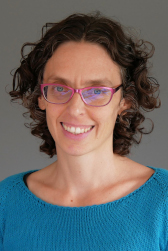
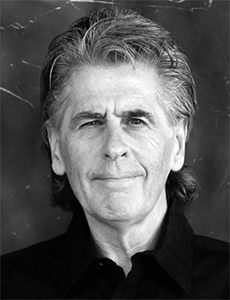
Mie Kano Glückstad serves as a Lecturer in the Department of Mathematical Sciences within the Faculty of Science at the University of Copenhagen, located at Universitetsparken 5, 2100 København Ø. Her academic focus spans core mathematical disciplines, with primary engagement in: Mathematics as a foundational field Pure Mathematics exploring abstract structures Applied Mathematics addressing real-world problems Specialized study in Algebra, Analysis, and Geometry She maintains active academic operations through her departmental affiliation and research activities in mathematical sciences.
Christian Pascal Hirsch is an Associate Professor for Data Science and Statistics at the Department of Mathematics, Aarhus University. His research focuses on random networks inspired by biology and health sciences, utilizing techniques from topological data analysis and stochastic geometry. He is affiliated with the Stochastics group, AU DIGIT Centre, and AU Quantum Campus. Research Interests: Topological data analysis, large deviations theory, spatial random networks, and stochastic geometry. His work includes studies on percolation theory, Gibbs measures, and applications to neural networks and geometric functionals. Publications span journals such as the Journal of Applied and Computational Topology, Journal of Statistical Physics, and Stochastic Processes and Their Applications, covering topics from network topology to Poisson approximation.
Elisenda Feliu is a Professor at the Department of Mathematical Sciences, University of Copenhagen. She holds an ERC Consolidator Grant (2023-2027) and is an associate editor of Mathematical Biosciences . Her research focuses on applied algebraic geometry and chemical reaction network theory, emphasizing positive solutions to polynomial systems. She has organized workshops like the Mathematical Trends in Reaction Network Theory (2015) and contributed to conferences globally. She has advised multiple PhD students and postdocs, including Joan Ferrer Rodríguez and M. Telek. Her academic journey includes a PhD in Mathematics (2007, UB), a Master in Bioinformatics (2008, UB/UPF), and postdoctoral positions in Barcelona, Aarhus, and Copenhagen. She is a former member of the Danish Young Academy and has held roles in committees such as the ESMTB Board (2021–2026) and the diversity committee at her department (2018–present). Education: Llicenciatura (BSc) in Mathematics (2000, UB), DEA (MSc) in Mathematics (2002, UB), Master in Bioinformatics (2008, UB/UPF), PhD in Mathematics (2007, UB). Research Interests: Her work bridges algebraic geometry and systems biology, addressing challenges such as multistationarity, Hopf bifurcations, and model reduction in biochemical networks. She explores how algebraic methods can elucidate network properties like steady states and bistability. Awards & Grants: Sapere Aude Starting Grant (2015–2020), ERC Consolidator Grant (2023–2027), Josep Teixidor Prize (2010). Her projects include Signs, Polynomials, and Reaction Networks (ERC-funded) and collaborations with institutions like MPI Leipzig and the Novo Nordisk Foundation. Advisees & Collaborations: Supervised 5 PhD students and multiple postdocs. Her team hosts the Mathematics of Reaction Networks seminar and maintains active collaborations internationally. She co-organized the 2015 workshop on reaction network theory and chairs committees promoting diversity in STEM.
Søren Eilers is a Professor at the Department of Mathematical Sciences, University of Copenhagen, affiliated with both the QA (Analysis & Quantum) and AG (Algebra & Geometry) sections. He holds editorial roles at Journal of Mathematical Analysis and Applications and contributed to Springer's Operator Algebra and Dynamics proceedings. Education : M.S. (1993), PhD (1995) in Mathematics from the University of Copenhagen. Positions : Assistant Professor (1996–1999), Associate Professor (1999–2008), Professor (2008–present). Research Interests : Focus on operator algebras, particularly C*-algebras associated with discrete structures. Active in symbolic dynamics, K-theory, and experimental mathematics. His work bridges algebraic structures and dynamical systems, with notable contributions to the classification of graph C*-algebras and the LEGO counting problem. Recent efforts emphasize computer-aided methods in mathematical research. Key Contributions : Pioneered geometric classification of graph C*-algebras, explored flow equivalence of shift spaces, and authored Introduction to Experimental Mathematics (2017). His research has been supported by grants such as the Villum Fonden's Experimental Mathematics initiative (2012–2016). Teaching & Mentorship : Supervised 28 PhD theses and numerous projects in analysis, discrete mathematics, and experimental mathematics. Taught courses in functional analysis, dynamical systems, and experimental methods. Scientific Leadership : Organized major programs like the 2016 Mittag-Leffler Institute's classification of operator algebras. Served as President of the Danish Mathematical Society (2006–2008) and led NordForsk's Operator Algebras and Dynamics network (2009–2012). International Collaboration : Extensive visiting appointments at institutions like MSRI (Berkeley), Fields Institute (Toronto), and Institut Mittag-Leffler (Stockholm). Maintains global research networks in operator algebras and dynamics.
Jørgen Ellegaard Andersen is a Professor and Center Director at the Department of Mathematics and Computer Science, University of Southern Denmark (SDU), and holds the D-IAS Chair at the Danish Institute for Advanced Study (DIAS). He is also a Distinguished Visiting Professor at the California Institute of Technology since 2013, reflecting his international stature in mathematical sciences. University: University of Southern Denmark School: Faculty of Science Department: Department of Mathematics and Computer Science Position: Professor, Center Director, D-IAS Chair Andersen earned his DPhil in Mathematics from the University of Oxford in 1992, with a thesis on Jones-Witten theory and the Thurston Compactification of Teichmüller space. His research lies at the intersection of quantum theory and geometry, focusing on quantum topology, geometric quantization of moduli spaces, topological quantum field theory, low-dimensional geometry, and applications to RNA and protein folding. His work combines deep mathematical rigor with potential applications in quantum computing and biophysics. The trends in his recent publications show a consistent focus on quantization of moduli spaces, topological recursion, mapping class group representations, and quantum Chern-Simons theory. His work often bridges pure mathematics and theoretical physics, with increasing attention to computational and applied aspects in quantum technologies. ERC Synergy Grant ReNewQuantum (EUR 10m, Principal Investigator) Distinguished Visiting Professor, Caltech Andersen leads major research projects such as ReNewQuantum and TopQC2X, securing significant funding from the EU and Danish agencies. He actively supervises PhD students and collaborates with leading mathematicians worldwide, including Maxim Kontsevich and Bertrand Eynard. His work is frequently highlighted in the media for its potential impact on quantum computing and Danish industry. He is a central figure in the Quantum Mathematics center at SDU and collaborates with institutions like MSRI and the University of Hamburg. His research group is part of international networks focused on geometric and topological methods in quantum theory.
Jesper Møller is a Professor in the Department of Mathematical Sciences at Aalborg University's Faculty of Engineering and Science, specializing in Statistics and Mathematical Economics. His research focuses on advanced statistical methodologies with applications across various scientific domains. His educational background includes extensive training in mathematical sciences, though specific degree details aren't provided in the current materials. His research interests span: Applied probability theory Markov chain Monte Carlo methods (MCMC) Spatial statistics Stochastic geometry Stochastic simulation Point process modeling Professor Møller's recent publication record shows consistent productivity with 239 research outputs including journal articles, reports, and book chapters. His work demonstrates strong focus on spatial point processes, Bayesian inference methods, and applications of stochastic geometry. The research trends indicate increasing sophistication in modeling complex spatial patterns and developing computational methods for statistical inference. His scientific contributions have been supported by numerous research projects, with 28 projects documented including the current "Peculiar Distribution Functions and Interesting Stochastic Processes" (2022-2026). His work has generated significant scholarly impact with citations across multiple disciplines. Professor Møller has supervised 8 PhD students and maintains active collaborations across international research networks. His current projects suggest continued research activity in developing novel statistical methodologies for complex spatial data analysis with applications in materials science, neuroscience, and environmental statistics.
Andreas Asp Bock is a postdoctoral researcher at the Department of Applied Mathematics and Computer Science within the Technical University of Denmark . His work focuses on scientific computing and numerical linear algebra, with particular emphasis on matrix approximation techniques, preconditioning strategies, and optimization methods. Current affiliation: Technical University of Denmark (College of Engineering) Academic role: Researcher (postdoctoral level) Research interests include: Matrix factorization and truncation Bregman divergence applications Baysian inversion frameworks Curve registration algorithms High-dimensional data analysis Preconditioning for iterative solvers Recent publications demonstrate expertise in improving approximate factorization preconditioners, geometric curve registration, and divergence-based preconditioner design. Collaborations with Martin S. Andersen and others indicate ongoing contributions to sparse linear algebra and computational statistics. Supervision : Currently mentoring J. V. Galvão da Mata in a PhD project focused on Optimization methods for data-sparse models , active from 2022-2025.
Alexander F Taveira Blomenhofer is a Postdoctoral Fellow at the Department of Mathematical Sciences , University of Copenhagen. His research focuses on algebraic geometry and computational algebra. Research Interests: Power sum decomposition Tensor decomposition Algebraic statistics Optimization problems Publication Trends: Recent work in SIAM Journal on Applied Algebra and Geometry explores polynomial optimization and tensor decomposition algorithms. Keywords include Algebraic Geometry, Signal Processing, and Machine Learning.
Tong Chen is a Postdoc in the Machine Learning section at the Department of Computer Science, University of Copenhagen, focusing on theoretical and applied machine learning with applications in information retrieval, medical data analysis, remote sensing, sustainability, and biological data modeling. His research spans adversarial machine learning, neural network compression, and robustness verification using polynomial and semialgebraic optimization techniques. Chen develops mathematically rigorous frameworks to enhance deep learning model efficiency, security, and reliability while addressing real-world implementation challenges. Chen's publication trajectory reveals increasing emphasis on formal verification methods and compression-robustness trade-offs, with recent work integrating semialgebraic geometry for neural network certification. This demonstrates a clear trend toward foundational approaches that bridge theoretical optimization and practical AI safety requirements. As part of the Machine Learning section, Chen contributes to the SCIENCE AI Centre and TreeSense initiative, utilizing the department's dedicated compute cluster for resource-intensive remote sensing and deep learning experiments in global environmental monitoring.
Keith Devlin is an Adjunct Professor of Mathematics Education and Science Outreach at the University of Southern Denmark's Department of Mathematics and Computer Science, appointed in 2022. He is renowned for his dual role as a mathematician and science communicator, popularly known as 'The Math Guy' on American National Public Radio. With a PhD from the University of Bristol (1971), he has held academic positions at institutions like Stanford University, King's College London, and the University of Lancaster, and led initiatives such as the Stanford Mathematics Outreach Project. His research focuses on applying mathematical thinking to information theory, communication models, reasoning systems, and mathematics education. He has authored over 80 articles and 29 books, including influential works like The Millennium Problems and Introduction to Mathematical Thinking . Notable awards include the Carl Sagan Prize for Science Popularization (2007) and the American Mathematical Society Fellowship (2012). Devlin’s outreach efforts bridge academia and the public, including co-founding the Human-Sciences and Technologies Advanced Research Institute (H-STAR) and the BrainQuake educational gaming company. His work emphasizes the societal role of mathematics, blending rigorous scholarship with accessible communication.
Lisbeth Fajstrup is an Associate Professor at Aalborg University's Department of Mathematical Sciences, part of The Faculty of Engineering and Science. Her work bridges topology, algebraic methods, and their applications in computer science and materials science. She has contributed to projects like the 'Deciphering Nanoporosity of Amorphous Materials' and the 'National Centre for Development of Mathematics Education (NCUM).' Her research focuses on geometric methods in concurrency theory, topological data analysis for material structure, and mathematics education reform. Key areas include applying algebraic topology to concurrent systems and using persistent homology to study medium-range order in glasses. She has been involved in interdisciplinary projects funded by institutions like the Novo Nordisk Foundation. Notable publications include studies on medium-range order in amorphous materials and pedagogical strategies for engineering calculus education. Fajstrup collaborates internationally, contributing to both theoretical advancements and practical applications in material science and education.
Daniele Toller is an Assistant Professor in the Department of Computer Science at Aalborg University, Denmark. His affiliation is with The Technical Faculty of IT and Design, where he contributes to research and teaching in computer science and related interdisciplinary areas. His research focuses on algebraic topology, control systems, mathematical biology, and abstract algebra. He explores topics such as cellular automata dynamics, topological entropy, and the interplay between algebraic structures and topological properties. Notably, his work bridges pure mathematics with applications in systems biology and engineering, particularly in optimizing complex networks and chemical reaction systems. Recent research trends include studies on optimal control strategies for complex networks, reduction techniques for chemical reaction networks, and the algebraic entropy of linear cellular automata. His contributions to group theory, including work on Zariski and Markov topologies, reflect a deep engagement with foundational mathematical structures. Dr. Toller's publications span journals and conferences in mathematics and computer science, addressing both theoretical advancements and practical applications. His work has been recognized through collaborations with institutions worldwide and contributions to prestigious venues such as the IEEE Transactions on Automatic Control and the Journal of Group Theory.
Metine Rahbek Tarp serves as a Lecturer in the Department of Mathematical Sciences at the University of Copenhagen, Denmark, with her office located at Universitetsparken 5, 2100 København Ø. Her research spans foundational and applied mathematical disciplines, emphasizing theoretical depth and analytical rigor across diverse subfields: Mathematics Algebra Analysis Geometry Topology Statistics Probability Contact is facilitated via email at mert@math.ku.dk , reflecting her active engagement in academic instruction and scholarly activities within the department.
Mathai Jakob Thomas serves as an Instructor (mapped to Lecturer rank) in the Department of Mathematical Sciences at the University of Copenhagen, Denmark. His academic appointment is housed within the Department of Mathematical Sciences, which operates under the university's broader science division structure. His research spans foundational mathematical disciplines with emphasis on theoretical and applied frameworks: Algebra Analysis Geometry Topology Probability Statistics These research areas align with the department's focus on advancing core mathematical sciences through rigorous theoretical exploration and practical applications across scientific domains.
Kristian Olgar Ellendersen Brogård serves as a Lecturer in the Department of Mathematical Sciences at the University of Copenhagen, with his office located at Universitetsparken 5, 2100 København Ø. Contact is facilitated via email at koeb@math.ku.dk and his professional profile at https://www.math.ku.dk/ . His research spans foundational and applied mathematical disciplines, with primary focus areas including: Mathematics Algebra Analysis Geometry Topology Mathematical Physics Statistics While specific publications and advising activities are undocumented in the source material, his institutional role emphasizes teaching and research within the mathematical sciences framework at Denmark's premier research university.