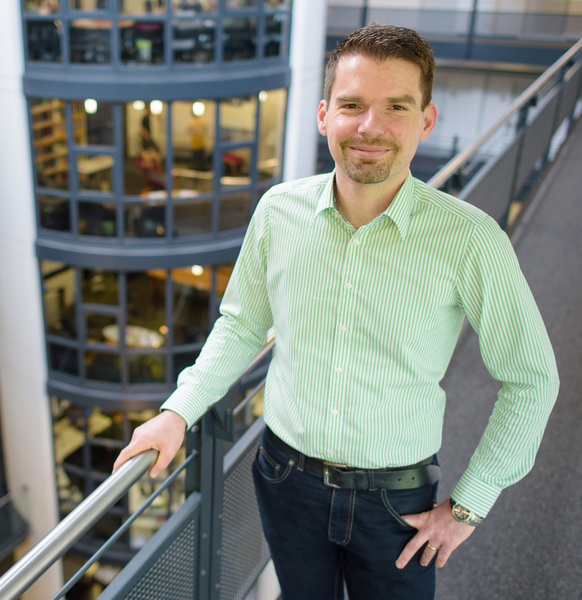
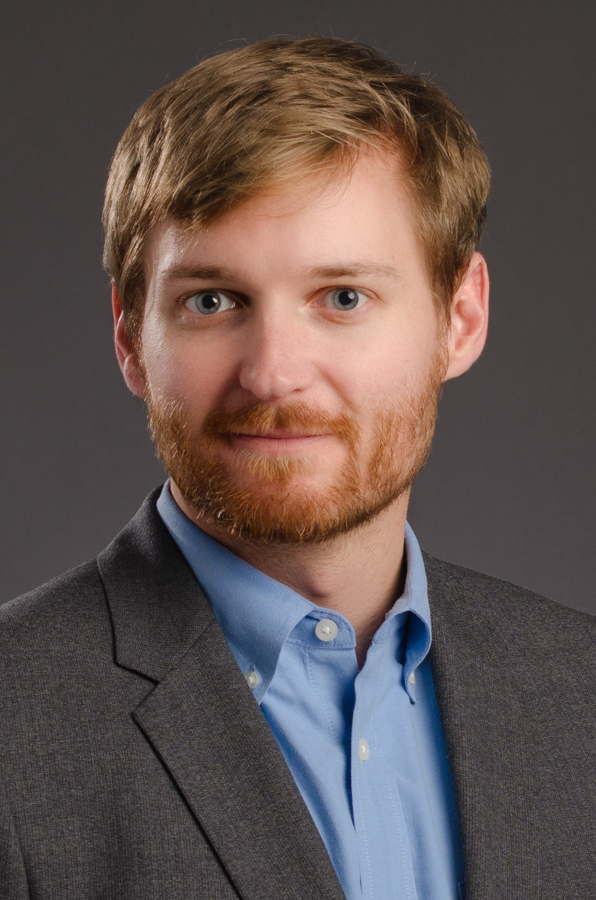
Matthew Louis Mauriello is an Assistant Professor in the Department of Computer and Information Sciences at the University of Delaware , where he directs the Sensify Lab . He holds a PhD in Computer Science from the University of Maryland (2018) and completed postdoctoral work at Stanford University (School of Medicine, 2020; School of Public Policy & Environmental Engineering Department, 2019). Research interests span Human-Computer Interaction (HCI), Ubiquitous Computing, and User-Centered Design with applications in: Sustainability Human-Building Interaction Wearable Technology Personal Informatics Educational Game Design Mental Health Interventions Recent publications highlight trends in stress monitoring (skin-like biosensors, workplace wellbeing), energy auditing (thermography systems), and educational technology (block-based programming tools for teachers). His work appears in ACM CHI, ACM Human-Computer Interaction, and Building and Environment. Scientific awards include: Best Paper Honorable Mention, CHI 2016 Best Paper Honorable Mention, CHI 2015 Best of WebSci'18 Teaching at University of Delaware encompasses courses like Educational Game Design Operating Systems Advanced Web Technologies Computing for Social Good with a focus on project-based learning and systems thinking.
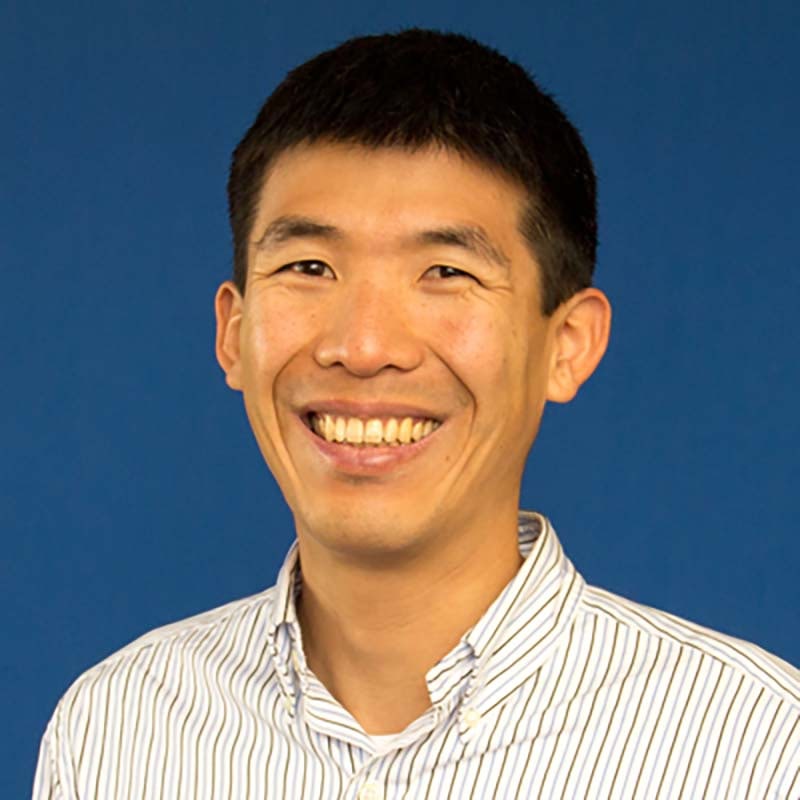
Christian Theobalt is a Professor of Computer Science at Saarland University and Scientific Director of the Visual Computing and Artificial Intelligence Department at the Max Planck Institute for Informatics . He leads the Saarbruecken Center for Visual Computing as a strategic partnership between Google and MPI. PhD in Computer Science (2005) from MPI-INF/Saarland University Postdoctoral Researcher at MPI (2005-2007) Visiting Assistant Professor at Stanford (2007-2009) His research focuses on the intersection of Computer Graphics, Computer Vision, and Artificial Intelligence , with specializations in: 3D/4D Human Reconstruction Neural Rendering Performance Capture Geometric Deep Learning Volumetric Video Quantum Visual Computing Recent article trends show emphasis on: Quantum computing applications in visual reconstruction Neural rendering with radiance fields Human motion capture from egocentric views Gesture-language interaction modeling Multi-modal scene understanding Real-time free-viewpoint rendering Scientific Awards : Fellow of EUROGRAPHICS (2022) CVPR Best Student Paper Honorable Mention (2020) ERC Consolidator Grant (2017) Karl Heinz Beckurts Award (2017) Busy Beaver Teaching Award (2016) ERC Starting Grant (2013) Advising over 50 students and researchers including: Current researchers: Viktor Rudnev, Linjie Lyu, Mohit Mendiratta Postdocs: Kwang In Kim, Kiran Varanasi Alumni: Franziska Mueller (Google), Dushyant Mehta (Qualcomm), Ayush Tewari (MIT) Grants include ERC grants, Google Glass Research Award, and multiple industry partnerships. His lab maintains cutting-edge facilities with: Multi-camera capture systems Quantum annealing infrastructure HDR radiance field technology GPU clusters for AI research Time-of-flight imaging systems Event camera arrays
Jason D. Lee is an associate professor of Electrical Engineering and Computer Sciences (EECS) and Statistics at the University of California, Berkeley. Previously, he held academic positions at Princeton University as an associate professor, and was a research scientist at Google DeepMind. He completed his Ph.D. in Computational and Mathematical Engineering at Stanford University under the advisement of Trevor Hastie and Jonathan Taylor. For students and collaborators, his primary contact email is jasonlee@princeton.edu, though prospective students and postdocs are asked to include "filter_student" in the subject line. Ph.D., Computational and Mathematical Engineering, Stanford University (2015) B.Sc., Mathematics, Duke University (2010) Lee's research lies at the intersection of machine learning, statistics, and optimization, focusing on the theoretical foundations of artificial intelligence. His work addresses fundamental questions in deep learning, including optimization landscapes, representation learning, and reinforcement learning theory. He has made significant contributions to understanding how gradient descent operates in neural network training and has developed provably efficient algorithms for various learning scenarios. His ten most recent publications represent a diverse yet coherent body of work across machine learning theory, focusing on topics such as Gaussian multi-index models, transformer learning capabilities, shallow neural networks, and optimization techniques. These publications appear in top venues including COLT, ICML, NeurIPS, and JMLR. Among his notable accolades are: Samsung AI Researcher of the Year Award (2023) NSF Career Award (2022) ONR Young Investigator Award (2021) Sloan Research Fellow in Computer Science (2019) NIPS Best Student Paper Award (2016) Princeton Commendation for Outstanding Teaching (ECE538B) Lee has advised numerous students including Alex Damian, Wenhao Zhan, Eshaan Nichani, Tianle Cai, Zixuan Wang, and Yunwei Ren. Former advisees have gone on to positions at institutions like NYU Courant, Facebook AI Research, UW, MIT, Duke, and Microsoft Research. His research group and collaborators span multiple institutions, working on theoretical and applied aspects of machine learning and artificial intelligence, with a particular focus on the optimization and learning dynamics of neural networks and transformer models.
Hao Su is an Associate Professor in the Department of Computer Science and Engineering at University of California, San Diego . He serves as Chairman & CTO of Hillbot Inc , and leads the SU Lab which focuses on building autonomous systems that learn actively in physical environments. His affiliations include the Institute for Learning-enabled Optimization at Scale , Artificial Intelligence Group , Contextual Robotics Institute , Halicioğlu Data Science Institute , and Center for Visual Computing . As a researcher in Computer Vision, Robotics, and Neural Geometry , he has made significant contributions to 3D foundation models, reward-free world models, diffusion policy frameworks, and GPU-accelerated simulation environments. His 2024-2025 publications include advancements in hand-eye calibration, dynamic mesh reconstruction, and multi-stage robotic manipulation. His scientific awards include: Frontiers of Science Award (2025) TPAMI Young Research Award (2025) NSF CAREER Award (2023) ACM SIGGRAPH Best Doctorate Thesis Honorable Mention (2019) He has served as Program Chair for CVPR 2025 and Area Chair for ICLR 2022 and NeurIPS 2023 , while previously serving as Publication Chair for 3DV 2016 and Program Committee for SIGGRAPH Asia Workshops .
Adrian Weller is a prominent researcher and academic at the University of Cambridge, serving as a Director of Research in Machine Learning within the Department of Engineering. He holds multiple significant leadership roles including Programme Director for Trust and Society at the Leverhulme Centre for the Future of Intelligence (CFI), and previously served as Programme Director for AI at The Alan Turing Institute, the UK national institute for data science and AI. His work bridges theoretical machine learning research with practical applications and societal implications of artificial intelligence. Weller's research interests span a broad spectrum of AI and machine learning topics with a particular focus on ensuring beneficial societal outcomes. His work encompasses explainability, fairness, robustness, scalability, privacy, safety, and ethics in AI systems. He has made significant contributions to trustworthy machine learning, including developing frameworks for AI governance, certification, and human-AI collaboration. His research group actively investigates neuro-symbolic approaches, privacy-preserving techniques, and methods for improving the reliability and interpretability of AI systems. His recent publications demonstrate a strong trend toward addressing the practical challenges of deploying AI systems in real-world contexts, particularly focusing on certification frameworks, governance mechanisms, and human-centered approaches. His work spans theoretical advances in machine learning architectures while maintaining a strong connection to societal impact, with publications appearing in top venues across AI, machine learning, and interdisciplinary applications. Scientific Awards: MBE for services to digital innovation (2022 Queen's Birthday Honours) Turing AI Fellowship for Trustworthy Machine Learning Weller actively supervises a large group of PhD students and postdocs, with current students including Juyeon Heo, Yanzhi Chen, Katie Collins, Isaac Reid, Yichao Liang, Herbie Bradley, and Shoaib Siddiqui. His former students have gone on to positions at leading institutions including Google DeepMind, ETH Zurich, NYU, and MPI-IS Tübingen. He has served on numerous advisory boards including the Centre for Data Ethics and Innovation, UNESCO's expert group on AI ethics, and the World Economic Forum's Global Future Council on AI. His research has been supported through his Turing AI Fellowship and various collaborative projects focused on safe and ethical AI development. Weller leads a vibrant research group focused on trustworthy machine learning, which actively organizes workshops and conferences including ICML 2024 (where he served as Program Chair), multiple workshops on responsible AI, and events through the ELLIS network. His group collaborates extensively across disciplines, working with researchers in computer science, social sciences, law, and policy to address the multifaceted challenges of developing beneficial AI systems.
Heng Huang is the Brendan Iribe Endowed Professor in the Department of Computer Science and the Department of Electrical and Computer Engineering at the University of Maryland, College Park . He earned his Ph.D. in Computer Science from Dartmouth College and holds prior degrees from Shanghai Jiao Tong University. His research focuses on advancing the foundations and applications of artificial intelligence, particularly in machine learning, data mining, natural language processing, computer vision, and biomedical informatics . His work integrates large-scale optimization, fairness, and robustness in deep learning systems. Heng Huang’s recent publications demonstrate a strong trend in large language models, federated learning, model watermarking, continual learning, and medical image analysis . His work appears consistently in top venues like NeurIPS, ICML, CVPR, ICLR, and MICCAI, reflecting a broad impact across theoretical and applied AI. He actively mentors students and postdocs, seeking highly motivated researchers in machine learning and related domains. His work has significant implications for healthcare, privacy, and trustworthy AI.
Bülent AKAT is a full-time Lecturer (Dr) at Çankaya University , Faculty of Arts and Sciences, Department of Translation and Interpreting Studies (English), where he has taught since 2007. His career is anchored in literary and cultural translation studies, with a particular focus on English-Turkish translation. Education: Dr Akat earned his Bachelor of Arts (1982–1986) from Boğaziçi University, Faculty of Arts and Sciences, Department of Western Languages and Literatures. He then completed a Master of Arts (1986–1994) at Boğaziçi University’s Institute of Social Sciences in English Language Teaching. Finally, he obtained his PhD (1994–2000) from Hacettepe University’s Institute of Social Sciences in American Culture and Literature. Research Interests: His scholarly work spans translation of children’s literature , idiom translation , subtitling and dubbing , culture-bound elements , and neologism translation . He often employs comparative methodologies, drawing on theorists such as Jan Pedersen, Mona Baker, and Teresa Tomaszkiewicz to evaluate strategies of domestication, foreignization, and receptor-oriented translation. Academic Output: Between 2018 and 2025 Dr Akat (co-)authored nine journal articles, two conference papers, and five books. Recurring themes include the translation of Dr Seuss’s neologisms, idiomatic renderings in TV dubbing, Oscar Wilde’s drama in Turkish, and Can Yücel’s interpretation of The Great Gatsby . His publications appear in leading Turkish and international indexes, notably TR Dizin , Mediterranean Journal of Humanities , and RumeliDE . Teaching & Supervision: Dr Akat has supervised twelve master’s theses at Çankaya University’s Institute of Social Sciences, concentrating on English literature and cultural studies. Representative topics include gender in Virginia Woolf, colonialism in Defoe, existentialism in Fowles, and Gothic elements in Wilde. Labs & Projects: No dedicated laboratory or externally funded projects are listed in the provided data.
Lior Wolf is a Professor at the School of Computer Science, Tel Aviv University. Previously, he was a postdoctoral researcher at MIT's Center for Biological and Computational Learning (CBCL) under Prof. Tomaso Poggio and earned his PhD from Hebrew University of Jerusalem with Prof. Amnon Shashua. His educational background includes: PhD in Computer Science, Hebrew University of Jerusalem Postdoctoral Research, MIT CBCL Prof. Wolf's research centers on artificial intelligence with seminal contributions to deep learning, computer vision, and natural language processing. His work bridges theoretical foundations (e.g., attention mechanisms, transformer analysis) with practical applications in medical imaging, speech processing, and sign language technology. He pioneered methods for neural network interpretability, efficient sequence modeling, and multimodal fusion. Analysis of his 2023-2025 publications reveals dominant trends in large language model optimization (neuron pruning, attention analysis), efficient video generation, and cross-modal learning. His work increasingly integrates medical applications (fMRI/EEG analysis) while maintaining theoretical rigor in model architecture design. His scientific achievements include: Best paper award at EMNLP 2024 for 'Backward Lens: Projecting Language Model Gradients into the Vocabulary Space' Best paper award at SCIA 2023 for 'Gradient Adjusting Networks for Domain Inversion' Best paper award at FG 2021 for 'Generating Master Faces for Dictionary Attacks' Prof. Wolf mentors graduate students in the School of Computer Science and leads research at the ICRC building laboratory. His team collaborates with 'the friends of TAU' on projects spanning biometric security, medical imaging, and generative AI. Current work focuses on efficient transformers, neural network interpretability, and multimodal medical diagnostics.
Andrea Tagliasacchi is an Associate Professor in the School of Computing Science at Simon Fraser University (SFU), where he holds the Visual Computing Research Chair. He is also a part-time (20%) Staff Research Scientist at Google DeepMind in Toronto and holds an associate professor (status only) appointment in the Department of Computer Science at the University of Toronto. Education: PhD in Computing Science – Simon Fraser University (NSERC Alexander Graham Bell Fellow) Postdoctoral Research – École Polytechnique Fédérale de Lausanne (EPFL) MSc in Computer Science – Politecnico di Milano (Gold Medalist) His research lies at the intersection of computer vision, computer graphics, and machine learning, with a focus on 3D visual perception. Key areas include neural radiance fields (NeRF), 3D Gaussian splatting, inverse rendering, and geometric deep learning, with applications in robotics, augmented reality, and autonomous systems. His work emphasizes robust and efficient scene understanding and reconstruction from visual data. His recent publications, appearing in top venues like CVPR, SIGGRAPH, NeurIPS, and ECCV, demonstrate a strong emphasis on neural fields, 3D reconstruction, and generative modeling. Trends include improving rendering efficiency, enhancing robustness to noise and distractors, and enabling controllable and 3D-aware generation. His group has made significant contributions to Gaussian splatting, NeRF optimization, and diffusion-based 3D/4D synthesis. Scientific Awards: 2024 CVPR Best Paper Award (Honorable Mention) 2020 CVPR Best Student Paper Award 2015 SGP Best Paper Award NSERC Alexander Graham Bell Canada Graduate Scholarship MITACS Best Paper Award (SIGGRAPH Asia 2009) NSF Best Poster Award (SGP 2012) He has advised numerous PhD and MSc students, many of whom are now researchers at leading institutions and companies. His research has been supported through collaborations with Google, Intel, and academic partners. He serves the community as a Senior Area Chair for CVPR 2025, Associate Editor for IEEE TPAMI (2024–2026), Guest Editor for IEEE TPAMI on 3D GenAI, and Program Chair for 3DV 2024. He leads a vibrant research lab at SFU focused on pushing the boundaries of 3D scene understanding with machine learning.
Byron Yu is a Professor in Electrical & Computer Engineering and Biomedical Engineering at Carnegie Mellon University, with affiliations to the Neuroscience Institute and Robotics Institute. He is a core faculty member of the Center for the Neural Basis of Cognition. Research focuses on computational neuroscience , neural dynamics , and brain-machine interfaces . Key contributions include dimensionality reduction techniques and neural population activity analysis. Recent publications explore topics such as neural dynamics during motor imagery, BCI optimization, and attentional processing. His work has appeared in Nature Neuroscience , Neuron , and eLife , often as cover articles. Awardees include the Gerard G. Elia Career Development Professorship and AIMBE Fellowship . His lab has mentored numerous PhD and postdoctoral researchers, many now in academic and industry leadership roles.
Sandro Carrara is a Full Professor at École Polytechnique Fédérale de Lausanne (EPFL), where he leads the Bio/CMOS Interfaces (BCI) laboratory. He is affiliated with the School of Engineering (STI), the Institute of Electrical Engineering (SCI-STI-SC), and the Integrated Systems Laboratory (LSI). His academic leadership spans teaching, doctoral supervision, and editorial roles in major journals including IEEE Sensors Journal and BioNanoScience. Education: Diploma in Electronics, National Technical Institute of Albenga, Italy Master in Physics, University of Genoa, Italy PhD in Biochemistry and Biophysics, University of Padua, Italy His research focuses on the integration of biological systems with CMOS technology, particularly in the development of nanoscale biosensors for health monitoring. Key areas include memristive biosensors, wearable and implantable sensors, electrochemical detection, and therapeutic drug monitoring. His work bridges electronics, nanotechnology, and biomedicine to enable point-of-care diagnostics and personalized medicine. His recent publications (2023–2025) show a strong trend toward sustainable printed electronics, machine learning for biosensing, in-memory computing for cancer diagnostics, and remote health monitoring. These works appear in high-impact journals such as IEEE Sensors Journal , Nanoscale , and Biosensors and Bioelectronics: X . Scientific Awards: IEEE Fellow (2015) IEEE Sensors Council Technical Achievement Award (2016) Distinguished Lecturer, IEEE Sensors Council (2017) Best Paper Award, IEEE MeMeA Symposium (2020) Multiple Gold and Bronze Leaf Prizes at PRIME and IEEE conferences Best Poster Awards at EMBEC and Nano-Tera meetings He actively advises PhD students and leads research projects involving CMOS-based biosensors, wireless implants, and smart sensor systems. His lab collaborates widely across disciplines and institutions, focusing on real-world applications in oncology, neurology, and environmental health. He has also contributed to the development of battery-free wearable devices, optical power transfer systems, and IoT-enabled telemedicine platforms. Laboratories and Teams: Bio/CMOS Interfaces (BCI) Laboratory, EPFL Integrated Systems Laboratory (LSI), EPFL Collaborations with IEEE Sensors Council and Circuits and Systems Society Editorial leadership in IEEE Sensors Journal and BioNanoScience
Andreas Bulling is a Professor at the Institute for Visualisation and Interactive Systems , University of Stuttgart, Germany. His research focuses on Human-Computer Interaction , Eye Tracking , and Computer Vision , with applications in Machine Learning , Virtual Reality , and Information Visualization . 2025 Publications: HOIGaze (Extended Reality), ChartQC (Data Visualization), HAIFAI (Human-AI Interaction), SummAct (Behavioral Summarization), Chartist (Chart Reading). 2024 Contributions: HumanEYEze (Multimodal AI), HOIMotion (3D Object Detection), MultiMediate'24 (Engagement Estimation), Unified Model of Saliency (Scanpath Prediction). His recent work explores gaze estimation , interactive behavior modeling , and privacy-preserving eye-tracking systems . Key subfields include Extended Reality , Neural Networks , and Behavioral Biometrics . While no explicit scientific awards are mentioned, his research has been widely cited (8,003 total citations) and downloaded (132,740 times). Andreas leads projects in Interactive Systems and collaborates with institutions such as Aalto University , KU Leuven , and National University of Singapore . His lab focuses on eye movement analysis , human motion forecasting , and task-driven input modeling .
Karl Gustafsson is a Professor at Stockholm University within the Department of Economic History and International Relations. His work bridges security studies , collective memory , and digital research methods in international relations. Current Role: Professor of International Relations, Stockholm University Previous Positions: Post-Doc at Lund University, Researcher at Swedish Institute of International Affairs Visiting Appointments: University of Tokyo, Osaka University, Keio University, Academia Sinica, Nordic Institute of Asian Studies Research Focus: Karl specializes in memory politics , ontological security , and anxiety-driven international dynamics , particularly in Sino-Japanese relations and digital platforms . His studies explore how historical narratives and online memory construction influence state identity and policy. Awards & Grants: Recipient of the Wang Gungwu Prize (2014) and Stockholm University Association’s award (2011). Holds Swedish Research Council and Marianne & Marcus Wallenberg Foundation grants for projects on apologies in international politics and digital memory in East Asia . Publications: His work appears in journals such as International Studies Quarterly , European Journal of International Relations , and Memory Studies , addressing topics like narrative power in East Asia, anxiety’s role in policy change , and digital humanities applications in IR.
Brenden Lake is an Associate Professor of Computer Science and Psychology at Princeton University, starting Fall 2025. Previously, he was an Associate Professor of Psychology and Data Science at New York University. He is the principal investigator of the lab for Human & Machine Intelligence, which moved from NYU to Princeton in 2025 and is jointly affiliated with the Department of Computer Science and the Department of Psychology. His lab is located in Princeton's Peretsman Scully Hall, rooms 117, 120, and 121. Ph.D., Massachusetts Institute of Technology, 2014 Lake's research focuses on the intersection of human and machine intelligence, specifically examining human cognitive abilities that elude current AI systems. His work centers on few-shot learning of new concepts, learning by generating new goals, learning by asking questions, and learning by producing novel combinations of known components. He employs modern neural network modeling approaches including meta-learning, fine-tuning LLMs, neuro-symbolic modeling, and learning from child headcam videos. His research aims to advance both psychology and computer science by exploring what makes human intelligence unique and using those insights to develop more powerful AI systems. Lake's recent publications demonstrate significant trends in grounded language acquisition through child perspectives, systematic generalization in neural networks, and the intersection of developmental psychology with AI. His work has appeared in top-tier venues including Science (2024) and Nature (2023), with multiple publications exploring how insights from human cognition can improve machine learning systems. His research shows how incorporating human cognitive ingredients can make AI systems more powerful and human-like while addressing longstanding debates about neural network capabilities. Science publication (2024) on Grounded language acquisition through the eyes and ears of a single child Nature publication (2023) on Human-like systematic generalization through a meta-learning neural network Multiple publications covered by major media outlets including New York Times and Washington Post Lake advises Ph.D. students in computer science, psychology, and related fields through his lab. His research is supported by publications in top venues across computer science and cognitive science. He teaches courses including Computational Cognitive Modeling and Advancing AI through Cognitive Science, bridging the theoretical and practical aspects of his research. Lake leads the lab for Human & Machine Intelligence, which studies the ingredients of intelligence in humans and machines. The lab investigates human cognitive abilities that current AI systems cannot replicate, with the dual goal of advancing psychological understanding of human intelligence while developing more capable artificial intelligence systems. Current research focuses on few-shot concept learning, learning through goal generation, and learning by asking questions.
Dean Eckles is an Associate Professor of Marketing at MIT Sloan School of Management and serves as an Associate Director of the MIT Institute for Data, Systems, and Society (IDSS). He is also affiliated with the MIT Schwarzman College of Computing through the Institute for Data, Systems & Society and its Statistics and Data Science Center. Additionally, he leads the analytics research area at the Initiative on the Digital Economy and organizes the annual Conference on Digital Experimentation (CODE@MIT). His educational background includes a BA in philosophy, BS and MS in cognitive science, MS in statistics, and PhD in communication, all from Stanford University. Prior to joining MIT, Eckles worked as a scientist at Facebook, where he contributed to areas including News Feed, messaging, advertising, tools for randomized experiments, and survey methods. He previously held research positions at Nokia and Yahoo. Eckles's research primarily focuses on social influence mediated by interactive technologies, examining how communication technologies mediate, amplify, and direct social influence. His work spans multiple specific areas including social interactions, contagion, and interventions in networks; experimental design and inference in networks; and methods for causal inference. His research often combines social science with advanced statistical methods. His notable publications include research on long ties in social networks and their relationship to economic prosperity, how network structure affects social contagions, and algorithmic transparency in social media platforms. His work has appeared in prestigious journals including PNAS and Nature Human Behaviour, and he has provided expert testimony before the US Senate on algorithmic ranking. Long ties, disruptive life events and economic prosperity (PNAS) Long ties accelerate noisy threshold-based contagions (Nature Human Behaviour) Algorithmic transparency and assessing effects of algorithmic ranking (Senate testimony) Eckles actively shares his research through social media platforms including Bluesky, Twitter, and Mastodon, as well as through his blog and contributions to the Gelman et al. blog. His work bridges academic research with practical applications in technology and policy.