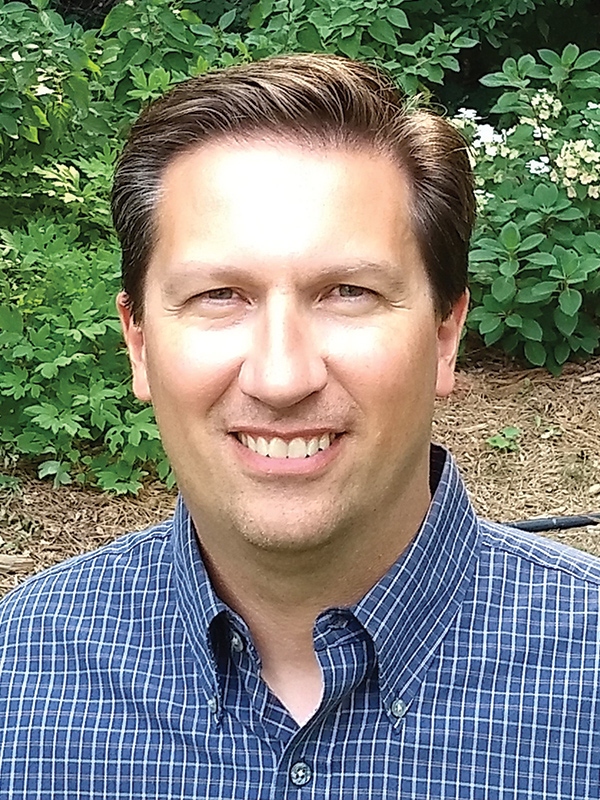
Marek Parchem is a Professor at the Faculty of Theology, Cardinal Stefan Wyszyński University in Warsaw, Poland. His research focuses exclusively on theological sciences, with specialized expertise in biblical studies, Dead Sea Scrolls (Qumran manuscripts), Septuagint analysis, and apocryphal texts of the Old Testament. His work centers on interpreting ancient religious manuscripts, including the Temple Scroll and pesher commentaries, with emphasis on historical contexts like Second Temple Judaism. He maintains an active publication record with 42 scholarly articles advancing these research domains.
Ewa Balicka-Witakowska serves as an Affiliated Researcher in Art History at Uppsala University's Department of Linguistics and Philology, maintaining active scholarly engagement through publications from 1974 to 2023. Her work bridges Ethiopian Christian art, Syriac manuscript studies, and Byzantine iconography, establishing her as a specialist in Eastern Christian visual traditions across Africa and the Near East. Her academic credentials include a PhD in Art History, though specific institutional details of her education remain unlisted in available materials. This foundation supports her extensive research output spanning five decades. Dr. Balicka-Witakowska's scholarship centers on Ethiopian Art (particularly rock-hewn church paintings and manuscript illumination), Syriac Manuscripts (with emphasis on codicological analysis), Byzantine Iconography (including spatial placement in liturgical contexts), and Liturgical Art (such as ceremonial fans and sun feathers). Her research reveals nuanced connections between textual traditions and visual representations across cultural boundaries, exemplified by studies of Saint Ephrem's influence in Ethiopia and the Holy Face of Edessa narrative. Publication analysis shows consistent thematic evolution: early work (1970s-1980s) focused on Ethiopian illuminated psalters and magic scrolls; the 1990s-2000s expanded into Syriac gospel books and Byzantine icon placement; recent scholarship (2015-2023) returns to Ethiopian contexts with detailed studies of specific painted panels and literary narratives, emphasizing patronage and regional variations in Tigray. While no scientific awards appear in the record, her co-editorship of the 2012 Rosenqvist Festschrift demonstrates academic recognition. Collaborative work with scholars like Witold Witakowski (on triptych analysis) and Michael Gervers (on silk curtains) indicates interdisciplinary engagement, though no formal advising or grant activities are documented. The absence of laboratory references suggests traditional humanities scholarship methods, with research conducted through archival study, field documentation of religious sites, and comparative analysis of artistic traditions within institutional frameworks.
Aaron M. Kahn serves as Reader in Spanish at the Sussex Centre for Language Studies within the School of Media, Arts and Humanities at the University of Sussex. He holds multiple leadership positions including Joint Subject Lead for Department of Language Studies, Head of Modern Languages, and member of the School's Senior Leadership Team. Dr. Kahn also plays a significant role in the Liberal Arts programme as final year convenor and Exams and Assessment Officer. His research focuses on Golden Age Spanish literature with particular expertise in political thought expression across literary genres. Dr. Kahn specializes in pre-Lopean Spanish playwrights of the late sixteenth century, Cervantes attribution studies, and theatrical adaptations of Don Quixote. His scholarly interests extend to Spanish and European history and culture, film, religion, politics, and the connection between sport (particularly baseball) and society. Dr. Kahn maintains an active publication record with recent works including The Oxford Handbook of Cervantes (2021) and multiple 2024 publications on early modern literary voices in contemporary contexts. His research demonstrates consistent engagement with Golden Age Spanish literature and its modern interpretations. As Academic Misconduct Panel Chair since 2018, Dr. Kahn leads university policy development regarding academic integrity, with particular focus on addressing AI use in assessments. He successfully led validation of the MA in Translation Studies (2022) and previously served as Assessment Convenor for ML degrees (2016-2022). His European Union-funded Q. THEATRE project (2017-2019) explored theatrical adaptations of Don Quixote across Europe. Dr. Kahn teaches across the Liberal Arts programme including Applied Research modules, Global Humanities, and specialized courses on resistance, social justice, and early modern life/death concepts. His teaching portfolio reflects deep integration of literary scholarship with broader cultural and historical contexts.
Timothy P. Henderson, Ph.D., serves as an Adjunct Instructor at the University of Northwestern - St. Paul, teaching Bible, theology, Church history, and Greek with 12 years of experience across Minnesota universities and local churches. His academic credentials include: Ph.D. from Marquette University MATS from Bethel Seminary Research centers on New Testament and Early Christianity, examining the Gospels, Paul's letters, early Christian-non-Christian relations, New Testament canon development, second-century Christianity, and historical Scripture interpretation. His work bridges ancient contexts with modern church applications through textual and historical analysis. Publications feature a monograph on the Gospel of Peter (2011) and extensive contributions to reference works like the Baker Expository Dictionary (44 articles, 2019) and Baker Illustrated Bible Dictionary (25 articles, 2013), revealing consistent focus on apocryphal literature and early Christian apologetics. Dr. Henderson has advised students throughout his teaching career without documented grants. His academic presentations at SBL/AAR conferences since 2007 address Gospel of Peter intertextuality, Philippians allusions, and resurrection narratives.
Philip Freeman is a Professor of Classics and former Visiting Scholar at Harvard Divinity School specializing in ancient history, Celtic mythology, and early Christian Ireland. His academic career spans both scholarly research and accessible writing for general audiences. Freeman's research interests focus on the intersection of Ireland and the classical world, early Christian Ireland (particularly Saint Patrick), Celtic mythology, and Greek and Roman mythology. His work bridges historical scholarship with narrative storytelling, as evidenced by both his academic publications and historical fiction set in early medieval Ireland. His publications demonstrate consistent output across multiple related fields, with recent works focusing on storytelling theory (2022), Celtic mythology (2017), and historical fiction exploring early Christian Ireland (2015-2017). Earlier scholarly works established his expertise in ancient Irish history and its connections to the classical world. Freeman's work shows a trajectory from academic scholarship toward making classical knowledge accessible to broader audiences, including modern interpretations of ancient texts and historical fiction that brings his research to life. His publications consistently explore themes of cultural transition, religious change, and the enduring power of mythological storytelling.
Dr. Malka Zeiger Simkovich serves as the Crown-Ryan Chair of Jewish Studies at Catholic Theological Union in Chicago and directs their Catholic-Jewish Studies program. Her academic focus centers on Second Temple Judaism and Jewish-Christian historical relations. Her research interests include: Second Temple Judaism and its literary traditions Rabbinic literature and midrashic interpretation Jewish identity formation in Hellenistic contexts Gender studies in biblical narratives Early Jewish-Christian relations Ancient Jewish historical figures and royal dynasties Her publications demonstrate consistent exploration of Jewish universalism, martyrdom traditions, and reinterpretation of biblical narratives in early Jewish literature. Key thematic threads include the adaptation of Jewish traditions in response to Roman occupation, the evolution of Passover rituals after the Temple's destruction, and the characterization of female figures in Jewish texts. Notable scholarly contributions include: The Making of Jewish Universalism: From Exile to Alexandria (2016) Discovering Second Temple Literature: The Scriptures and Stories that Shaped Early Judaism (2018) Analysis of Hasmonean martyrdom traditions across Christian and Jewish texts Reinterpretation of biblical figures like Pharaoh's daughter and Queen Berenice Her academic leadership in Catholic-Jewish dialogue represents significant interfaith scholarly work, particularly through directing the Catholic-Jewish Studies program at her institution.
Dr. Brandon Hawk is a Professor in the Department of English at Rhode Island College, where he has been teaching since 2015 after joining as an Assistant Professor. His academic journey progressed through Associate Professor (2020-2024) to his current full Professor position (2024-present), with prior experience as a Post-Doctoral Teaching Associate at the University of Tennessee (2014-2015). Dr. Hawk's educational foundation includes a Ph.D. in Medieval Studies from the University of Connecticut (2014), an M.A. in Medieval Studies from the same institution (2009), and a B.A. in English from Houghton College (2007), supplemented by specialized training at the First Summer School on Christian Apocryphal Literature at Université de Strasbourg (2012). His research centers on biblical apocrypha in Anglo-Saxon England, particularly the Gospel of Pseudo-Matthew and related texts, examining how medieval communities adapted, translated, and transmitted religious narratives. He has pioneered the concept of 'transmission studies' to analyze textual circulation across cultural boundaries. Notably, Dr. Hawk bridges academic scholarship with public engagement through his analyses of Star Wars and medieval manuscript traditions, making medieval studies accessible to broader audiences. His scholarly output reveals a clear evolution from focused textual studies toward interdisciplinary approaches combining traditional philology with digital humanities tools. Recent publications demonstrate increasing attention to transmission networks, digital methodologies for manuscript analysis, and cross-cultural reception of religious narratives, while maintaining his core focus on how medieval communities engaged with texts beyond the biblical canon. Dr. Hawk's contributions have been recognized through numerous prestigious awards: Multiple Faculty Scholarship and Development Grants from Rhode Island College for digital research initiatives Book Subvention Award from the Medieval Academy of America Most Valuable Professor Award from the Rhode Island College Athletics Department University of Connecticut Humanities Institute Dissertation Fellowship As an educator, Dr. Hawk has developed innovative courses spanning traditional medieval literature to specialized topics like 'Star Wars and Theory.' He currently serves as Director of the Liberal Studies Program and Director of Graduate Studies in English at Rhode Island College. His grant activity reflects a sustained commitment to building digital infrastructure for medieval studies, including the Sources of Old English and Anglo-Latin Literary Culture project. Dr. Hawk co-directs the Digital Research Center at Rhode Island College and serves as Director of the Sources of Old English and Anglo-Latin Literary Culture project. His collaboration with Dot Porter at the University of Pennsylvania on the 'Sacred Texts: Codices Far, Far Away' video series has gained significant public attention, appearing in Forbes , Space.com , and The Daily Pennsylvanian . This work exemplifies his unique ability to connect academic medieval studies with contemporary popular culture through media appearances, podcasts, and contributions to major outlets like The Washington Post and The Conversation .