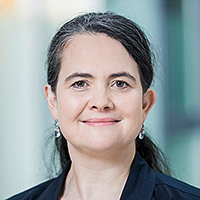
Prof. Sophie Schwartz is a leading neuroscientist at the University of Geneva , where she heads the Sleep & Cognition Lab within the Faculty of Medicine . Her research integrates neuroimaging (fMRI, hd-EEG, MEG) , behavioral testing , and computational modeling to unravel the neural mechanisms underlying memory consolidation , emotion processing , and dreaming during sleep, while also developing clinical interventions to enhance sleep in neurological and psychiatric disorders.
Lilly Shanahan is an Associate Professor at the Department of Psychology , University of Zurich (UZH), and an Adjunct Professor of Psychology and Neuroscience at the University of North Carolina at Chapel Hill. She leads the Risk & Resilience Research Area and co-directs the z-Proso International Research Network . Her affiliations include the Jacobs Center for Productive Youth Development , the International Max Planck Research School on the Life Course , and Duke University's Center for Developmental Epidemiology . Her research focuses on: Social and biological risk factors for depression and anxiety Long-term developmental consequences of childhood mental/physical health issues Intersection of mental and physical health in adolescence Gender differences in developmental psychopathology Substance use and decision-making dynamics Recent publications analyze maternal mental health impacts, cannabis use trajectories, hormonal biomarkers, and digital mental health interventions. Scientific awards include a NICHD Postdoctoral Fellowship. She collaborates extensively with longitudinal cohort studies like the Zurich Project on Social Development and Great Smoky Mountains Study.
Dr. Christina Haag is a postdoctoral researcher at the Institute for Implementation Science in Health Care , affiliated with the Faculty of Medicine at the University of Zurich . She leads interdisciplinary projects at the intersection of mental health, digital health, and computational linguistics, focusing on chronic illnesses like multiple sclerosis (MS). Her work leverages free text, sensor data, and advanced analysis techniques such as hierarchical modeling and natural language processing (NLP). Doctorate from the Institute of Psychology, University of Zurich Research experience at the MRC Cognition & Brain Sciences Unit, University of Cambridge Her research explores: Daily-life mental and physical health indicators in MS Development of NLP methods for text classification and topic modeling Digital biomarker creation using wearable sensor data Mindfulness interventions for affective executive control Implementation of remote monitoring tools in healthcare Her recent publications highlight trends in applying NLP and machine learning to unstructured health data, analyzing MS activity patterns, and refining interdisciplinary research methodologies. She contributes to DSI communities including AI & Law , Health , and Ethics , and collaborates on projects like BarKA-MS and DSI-Approach . She is a core member of the UZH Digital & Mobile Health Group , working under Prof. Viktor von Wyl.
Prof. Dr. Georgia Salanti serves as Associate Professor in Biostatistics and Epidemiology and Head of the Evidence Synthesis Methods Research Group at the Institute of Social and Preventive Medicine (ISPM) , University of Bern, Switzerland. Previously, she held academic positions at the University of Ioannina School of Medicine (Greece) from 2006–2015 and postdoctoral/research associate roles at MRC Biostatistics Unit (UK) and Technical University of Munich (Germany). Research Focus: Statistical modeling for evidence synthesis, methodology of systematic reviews, publication bias, network meta-analysis, and applications to mental health. Key Applications: Major depressive disorder, schizophrenia, antipsychotic drugs, stroke with atrial fibrillation, PTSD, and pharmacological interventions. Recent Publications emphasize network meta-analysis advancements, dose-response modeling (e.g., aripiprazole, antidepressants), and real-world clinical questions via projects like the MHCOVID Initiative . Her work spans 2003–2025 with over 289 PubMed-indexed articles. Collaborations: ELAN Investigators, Cochrane Network, MRC Biostatistics Unit, CIBIO (Spain).
Edouard Gentaz is a Professor in the Psychology Section of the Faculty of Psychology and Educational Sciences at the University of Geneva (UNIGE). He leads the Sensory-Motor, Affective and Social Development Laboratory (SMAS), where he conducts research on child development with particular focus on sensory-motor, emotional, and social aspects across typical and atypical developmental trajectories. His research interests span multiple domains of developmental psychology, with emphasis on emotion comprehension in children , tactile exploration skills , social-emotional development , and intervention strategies for children with developmental challenges including autism spectrum disorders, preterm infants, and children with intellectual disabilities. His methodological approach frequently employs eye-tracking technology to assess socio-emotional capabilities in populations with communication limitations. Gentaz's publication record shows consistent productivity with 78 publications spanning two decades, with recent work focusing on screen time effects on young children, emotion training interventions, and sensory processing in neurodevelopmental conditions. His collaborative approach is evident in publications addressing practical applications in educational settings and healthcare contexts. His scientific contributions include research on: Early social-emotional abilities in infants and toddlers Development of emotion discrimination across childhood Interventions for preterm children's emotional and executive competences Multisensory perception in neurodevelopmental disorders Impact of digital media on young children's development Gentaz has supervised 120 academic works, indicating significant mentorship activity. His research demonstrates strong translational potential with applications in educational settings, clinical interventions, and parenting guidance, particularly regarding screen exposure for very young children.
Prof. Fred Mast is a full professor of Cognitive Psychology at the University of Bern, leading the section 'Cognitive Psychology, Perception, and Research Methods'. He holds positions as Co-Director of the Interfacultary Research Cooperation 'Decoding Sleep' and Head of the Technology Platform at the Faculty of Humanities. Previously, he was Dean of the Faculty of Humanities (2015-2017) and held academic roles at Harvard University, MIT, and the University of Lausanne. His research focuses on mental imagery, sensorimotor processing, and visual perception, funded by the Swiss National Science Foundation. Education: PhD in Psychology from University of Zurich, Habilitation (2003), and full professorships at multiple institutions. Key roles include: Member of the Management Board of the Translational Imaging Center (TIC) Bern Co-leader of the Decoding Sleep initiative Research emphasizes experimental studies on perception and cognitive processes, with recent work exploring neurostimulation effects and virtual reality applications. His labs focus on interdisciplinary approaches combining psychology, neuroscience, and technology.
Western Switzerland University of Applied SciencesSwitzerland
Jeanne Bertuit is an Associate Professor at HESAV - Haute Ecole de Santé Vaud , Switzerland. She specializes in pelvic-perineal rehabilitation with a focus on female genital mutilation (FGM) , urinary incontinence , and pregnancy-related pelvic pain . Her work spans clinical research, systematic reviews, and international collaborations, particularly in the Democratic Republic of Congo (DRC) and Belgium . Current Projects : Investigating long-term perineal consequences of FGM in DRC (2021-2026), evaluating mobile app-based urinary incontinence treatment. Research Themes : Mixed-method studies on FGM, pelvic floor muscle training (PFMT), mobile health applications, COPD-pelvic health links, and lumbopelvic pain associations with incontinence. Publications : Over 15 peer-reviewed articles (2018-2025) on FGM, SUI, PFMT efficacy, and technological interventions in women's health. Collaborations : Partnerships with University Clinics of Kinshasa , ULB , HUG , and Professor Denis Mukwege (DRC). Extensive international co-authorships in urogynecology and physiotherapy journals. Methodologies : Systematic reviews, meta-analyses, randomized controlled trials, and qualitative-quantitative mixed designs. Focus on cross-sectional studies and phenomenological interviews. Key Findings : Demonstrated 24% UI prevalence in Africa, 28.3% UI in COPD patients, and positive impact of PFMT on non-specific low back pain. Highlighted psychological consequences of FGM, including PTSD and anxiety.
Swiss Federal Institute of Technology in LausanneSwitzerland
Lijing Xin is an Assistant Professor at the Department of Physics and a research staff scientist at the Center for Biomedical Imaging (CIBM) at Ecole polytechnique fédérale de Lausanne (EPFL), Switzerland. She teaches courses on Biomedical Imaging and Translational MR Neuroimaging, while also contributing to academic administration. PhD in Physics (2010, EPFL) Master's Project (2002-2005) on MRI instrumentation Her research focuses on high-field magnetic resonance spectroscopy (MRS) and MRI for studying brain function and neurological diseases. She develops novel acquisition and quantification methods for 1 H, 13 C, and 31 P nuclei, particularly on 7T clinical platforms . Her work bridges preclinical and clinical research , with collaborations in psychiatry to explore pathophysiology and biomarkers for disorders like schizophrenia and mood disorders. Recent publications include studies on epilepsy , Alzheimer's disease , brain energy metabolism , and neurochemical profiling using advanced MRS and deep learning for psychosis classification. She has contributed to RF coil design , macromolecule suppression , and metabolic pathway analysis across multiple disciplines. She advises PhD students and collaborates on interdisciplinary projects involving neuroimaging hardware , metabolic disease research , and psychiatric biomarker identification . Her lab at EPFL CIBM-AIT develops cutting-edge techniques for high-resolution brain metabolism analysis and clinical translation .
Daphné Bavelier is a prominent Professor in the Department of Psychology at the University of Geneva, Switzerland, with an extensive research portfolio spanning cognitive neuroscience, video game effects on cognition, and neuroplasticity. Her work has established her as a leading authority on how digital experiences, particularly video gaming, reshape brain function and cognitive abilities. Professor Bavelier's primary research interests focus on understanding how action video game play enhances various cognitive functions including attentional control, perceptual learning, and task-switching abilities. Her groundbreaking work demonstrates that video games are not merely entertainment but powerful tools for cognitive enhancement, with implications for education, rehabilitation, and cognitive training across the lifespan. She investigates how gaming experience alters neural processing in visual attention, spatial cognition, and multitasking abilities, challenging traditional assumptions about screen time effects. Analysis of her recent publications reveals a clear trajectory toward translational research, where fundamental discoveries about gaming's cognitive benefits are being applied to clinical populations. Her work now spans amblyopia treatment through video game therapy, anxiety reduction in adolescents, and cognitive interventions for autism spectrum disorder. Notably, her research increasingly examines contextual factors rather than screen time alone, emphasizing that how technology is used matters more than mere exposure duration. Professor Bavelier has supervised 42 academic works throughout her career, mentoring the next generation of cognitive scientists. Her research has garnered significant attention, with many publications accumulating thousands of views and downloads, reflecting the broad impact of her work across multiple disciplines including psychology, neuroscience, education, and clinical practice.
Dr. Andrea B. Horn is a researcher at the University of Zurich, affiliated with the Faculty of Arts and Social Sciences and the Center for Gerontology. She leads the research group CoupleSense: Health and Interpersonal Emotion Regulation within the University Research Priority Program Dynamics of Healthy Aging , focusing on how daily social processes shape health through momentary assessment, mobile sensing, and psychological language analysis. PhD in Psychology (Tübingen, 2004), with expertise in health psychology and emotion regulation Licensed health psychologist (Switzerland, 2010) and psychotherapist (Germany, 2005) Her research spans life span psychology , trauma studies , and digital health , emphasizing dyadic interactions and unstructured data analysis. Recent work examines language markers in aging, mental health diagnostics, and cross-cultural pandemic responses. Key collaborations include the European Health Psychology Society and International Association for Relationship Research . She contributes to educational programs as head of continued education at the Center for Competence in Gerontology and mentors peers in dyadic data analysis.
Dr. Michaela Bauer serves as Deputy Senior Physician at the Center for Diagnostics and Crisis Intervention within the University Psychiatric Clinics (UPK) Basel, which is affiliated with the University of Basel's Faculty of Medicine. She is based at Wilhelm Klein-Strasse 27 in Basel, Switzerland, and can be reached at +41 61 325 51 11 or michaela.bauer@upk.ch. Dr. Bauer's clinical expertise spans psychiatric emergency services and crisis intervention. Her work focuses on: Emergency psychiatric assessments Crisis intervention for acute mental health conditions Diagnostics of severe psychiatric disorders Management of psychosis and schizophrenia Depression and anxiety disorders in crisis situations Early intervention for mental health emergencies As part of the University Psychiatric Clinics Basel, Dr. Bauer contributes to both clinical service delivery and academic training in psychiatric emergency medicine. The institution provides comprehensive psychiatric care across multiple specialized centers including diagnostics, crisis intervention, addiction treatment, and specialized services for different age groups and conditions. Dr. Bauer works within a multidisciplinary team that includes psychiatrists, psychologists, nurses, and social workers who collaborate to provide integrated care for patients experiencing psychiatric emergencies. Her work intersects with the Early Intervention Outpatient Clinic (BEATS), Transcultural Outpatient Clinic, and various specialized diagnostic services within the UPK structure.
Nicola Magnavita is an Associate Professor of Occupational Medicine at the Catholic University of the Sacred Heart (UCSC), Rome, and Contract Teacher in the Department of Life Sciences and Public Health. He serves as Director of the UCSC School of Specialization in Occupational Medicine (since 2018) and Coordinator of Environmental and Workplace Prevention Techniques (since 2015). Occupational Medicine Risk Assessment Healthcare Worker Safety Epidemiological Studies Recent Research Focus: Workplace stress, health surveillance, and technology applications in occupational health. His 2024 publications examine violence risk assessment, work ability in nurses, and pandemic-related mental health impacts. Scientific Metrics: Scopus h-index: 28 (236 documents); Web of Science h-index: 24 (157 documents); Google Scholar h-index: 34. Published 770+ works €1M+ in research funding 5 copyrights
Dr. Yves Jackson is an Assistant Professor at the University of Geneva's Faculty of Medicine, working within the LIVES Centre (Interdisciplinary Centre for Research on Life Course and Vulnerabilities). His research focuses on vulnerable populations, particularly undocumented migrants in Switzerland, examining the intersection of legal status, health outcomes, and social determinants of health. His educational background includes medical training (MD), which informs his public health research approach. Dr. Jackson has established himself as a leading researcher on migrant health in Switzerland, with particular expertise in the health impacts of regularization processes for undocumented workers. Dr. Jackson's research portfolio demonstrates consistent productivity with numerous publications annually, primarily examining health inequalities among undocumented migrants. His work often employs longitudinal methodologies to track changes in health status following regularization, with particular attention to mental health outcomes, access to healthcare services, and social determinants of health. He has also conducted significant research on Chagas disease among Latin American migrant populations in Switzerland. His publication record shows a strong emphasis on policy-relevant research, with many studies directly addressing Swiss migration and health policies. The articles demonstrate interdisciplinary approaches, combining medical, sociological, and public health perspectives to understand complex health challenges faced by vulnerable populations. Dr. Jackson frequently collaborates with Claudine Burton-Jeangros, Jan-Erik Refle, and other researchers at the University of Geneva, contributing to a robust research program on migration and health. His work has been published in high-impact journals across public health, migration studies, and medical disciplines. His research has practical implications for health policy, particularly regarding equitable access to healthcare services for undocumented populations and the health consequences of migration status regularization. Dr. Jackson's work contributes significantly to understanding how legal frameworks impact health outcomes for vulnerable populations in Switzerland.
Chantal Martin Sölch is a full Professor at the Department of Psychology , University of Fribourg , Switzerland. She specializes in clinical psychology, neuroimaging, and mental health interventions, with a focus on trauma, depression, and chronic pain. Her research integrates neuropharmacological studies with mindfulness-based and psychedelic-assisted therapies. Current Projects : RESIST-D (neurobiology of resilience in depression), TIMED (digitalization’s impact on time perception), and mindfulness interventions for fibromyalgia. Methodologies : PET/fMRI neuroimaging, experience sampling, and cross-cultural studies. Research Trends : Recent articles examine psychedelic drug mechanisms, trauma’s long-term effects, and culturally adapted mental health interventions. Her work bridges neuroscience and clinical practice, emphasizing dopamine function, stress response, and intergenerational trauma. Grants : Funded by the Swiss National Science Foundation (SNSF) for projects on depression, fibromyalgia, and digital age mental health.
Dr. Vera Mitter is a Senior Researcher at the Bern University of Applied Sciences , leading applied research initiatives in the School of Health Professions under the Department of Obstetrics . With a PhD in Health Sciences and Public Health, she specializes in perinatal epidemiology, pharmacoepidemiology, and digital health applications in reproductive medicine. Her work bridges academic research with clinical practice, focusing on maternal and child health outcomes. Education : PhD (University of Bern & Swiss School of Public Health, 2020), MSc Demography & Health (London School of Hygiene & Tropical Medicine, 2009), Pharmacy (Universities of Bern/EPFL/Basel, 2005) Dr. Mitter's research explores women's health across pregnancy, analyzing digital health frameworks and real-world data to improve maternal care. Her recent publications investigate migraine in pregnancy, endometriosis-complication links, and fertility treatment protocols, reflecting her commitment to evidence-based obstetric practices. She contributes to public health policy through pandemic-related studies on quality of life and anxiety, while her collaborations with institutions in Norway, Austria, and Switzerland strengthen international reproductive health research . Dr. Mitter's leadership in clinical trials and pharmacological studies establishes her as a key figure in applied perinatal science .