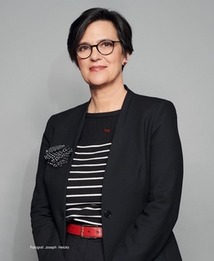
Prof. Paula-Irene Villa Braslavsky holds the Chair of Sociology/Gender Studies at Ludwig Maximilian University of Munich (LMU), Faculty of Social Sciences. She is on sabbatical during Summer Semester 2025 but continues research supervision and colloquia. Her research focuses on intersections of racism, sexism, and neoliberalism, with notable works like The Future of Difference and Top Girls . She co-edits the journal Gender Salon and leads projects on gender studies, queer theory, and postfeminism. Her academic contributions span monographs, anthologies, and journal articles addressing global social movements, anti-genderism, and body politics. Key themes include critical analysis of contemporary gender regimes, decolonial theory, and the sociocultural implications of neoliberalism. Her work frequently bridges theory and activism, emphasizing intersectional approaches to systemic oppression. Publications include edited volumes on #MeToo, fat studies, and the sociological analysis of bodies, reflecting her commitment to interdisciplinary research. She maintains an active academic presence through her website LMU Gender Studies and Academia.edu .
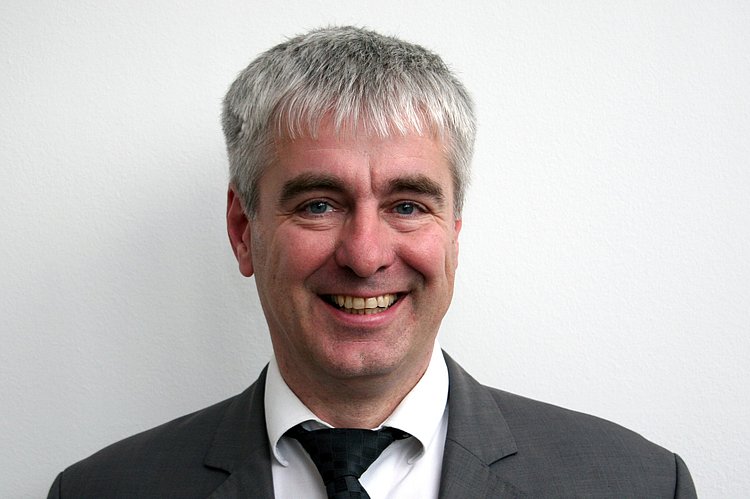
Lorenz Narku Laing serves as Professor of Racism Research at the Evangelical University of Rhineland-Westphalia-Lippe (EvH Bochum) and founded the diversity consultancy Vielfaltsprojekte GmbH. He holds advisory roles with the Journal for Diversity in Business and Law and the Bochum Center for Disability Studies, while also serving on the German Federal Government's Expert Council on Anti-Racism and the Protestant Church Congress Presidential Assembly. Education: Doctorate in Political Theory, University of Munich Master's in Politics, Administration, and International Relations, Zeppelin University Bachelor's in Sociology, University of Frankfurt His research pioneers interdisciplinary approaches to systemic racism and discrimination, bridging political theory with practical anti-discrimination frameworks across sports, business, and social institutions. His work critically examines power structures while developing actionable inclusion strategies for commercial and social enterprises through his consultancy. Major recognitions include: German Diversity Award (2023) for consulting excellence Bavarian Innovation Award for Volunteering (2022) Generation Grenzenlos' 30 under 30 distinction Zeppelin University Best Teaching Award Prof. Laing maintains significant international academic engagement as a trusted lecturer for the Hans Böckler Foundation and through invited teaching positions at McGill University and the University of Birmingham. His speaking engagements span elite institutions including Harvard University, Max Planck Society, and Howard University, establishing him as a leading voice in applied diversity research and policy development.
Prof. Dr. Sabrina Zajak serves as Head of the Consensus & Conflict Department at the Deutsches Zentrum für Integrations- und Migrationsforschung (DeZIM-Institut) and holds an adjunct professorship at the Faculty of Social Sciences, Ruhr University Bochum. A founding member of the Institute for Protest and Movement Research (ipb), she also serves on the board of Research Committee 47, 'Social Movements and Social Classes,' of the International Sociology Association. Her academic trajectory includes significant positions at Humboldt University Berlin, the Max Planck Institute for the Study of Societies Cologne, and the Social Science Center Berlin (WZB). Zajak's research centers on political sociology with dual emphases on consensus and conflict dynamics in plural societies. Her consensus research examines civil society engagement, refugee assistance networks, alliance formation, and everyday solidarity practices, while her conflict research analyzes protest movements, diversity challenges, and discrimination patterns. She has pioneered studies on transnational civil society alliances, particularly examining how social movements navigate national boundaries and build cross-border solidarity. Her recent publications reveal a decisive shift toward analyzing intersectional dynamics of race, migration, and social movements in European contexts. With significant attention to the Black Lives Matter movement's reception in Germany, her work demonstrates how global racial justice movements are adapted to local contexts. Her research increasingly addresses civil society responses to refugee crises, examining both supportive engagement and exclusionary practices, while also investigating structural barriers to diversity in German federal administration and cultural institutions. As a prolific academic leader, Zajak has served as (co-)editor for special journal issues including Development and Change (2017), Industrial Relations (2018), Social Movement Studies (2021), Competition and Change (2020), Moving the Social (2020), and European Cultural and Political Sociology (2022). Her department currently manages over 20 active research projects spanning discrimination experiences in Saxony, diversity in federal administration, Muslim youth association work, and violence protection in refugee accommodations, demonstrating the breadth and policy relevance of her research agenda.
Prof. Dr. Gert Pickel is a Professor of Sociology of Religion and Church at the Institute for Practical Theology, Faculty of Theology, Leipzig University. His roles include deputy spokesperson for the Competence Center for Right-Wing Extremism and Democracy Research, member of the Center for the Study of Religion, and advisory board member for the Academy of World Religions in Hamburg and the Hannah Arendt Institute at Dresden University of Technology. He heads the "Racism in Institutions" project network and co-directs the Leipzig branch of the Research Institute for Social Cohesion. Research focuses on sociology of religion , democracy , and political culture Current projects: German-Swiss study on religious/political collective identities, modern populism in Europe (East Germany), racism in institutions Research Interests span comparative sociology of religion (secularization, pluralization), political sociology (social capital, populism, radicalism), and integration of migrants in Germany. He explores how religion interacts with politics, addressing issues like euthanasia, abortion, and gender identities through empirical, theory-driven methodologies. Teaching covers religion in Germany/Europe, secularization processes, religion-politics dynamics, group-based prejudices, and intercultural comparisons. Courses are interdisciplinary (social sciences, humanities) with field trips to Central/Eastern Europe. Scientific Awards : No awards explicitly mentioned in the text. Grants and Projects : DFG-funded "Multiple Bible Uses in Late Modern Society" (2021-2024) BMBF-funded "Social Polarization and Radicalization" (2020-2024) EU-funded Jean-Monnet Centre (2020-2024) "InRa-Study" (2021-2024) on institutional racism Labs and Teams : Member of Research Academy Leipzig; co-leader of the Leipzig branch of the Research Institute for Social Cohesion; contributor to the Leibniz WissenschaftsCampus Eastern Europe–Global Area.
Miriam Stock is Professor of Cultural Studies at the Institute of Humanities at Pädagogische Hochschule Schwäbisch Gmünd, where she also serves as Director of the Cultural Studies Department and Spokesperson for the Master's program 'Interkultur und Integration.' She is a founding member of the Center for Migration and Integration Studies 'Migration – Society – School.' Dr. Stock holds a PhD in Geography from Europa-Universität Viadrina Frankfurt (Oder) and completed her diploma in Geography at Ludwig-Maximilians-Universität München. Her academic journey includes research fellowships, organizational roles in international projects, and advisory work with refugee communities. Her research focuses on migration geographies, cultural theories, postcolonial approaches, urban development from post-migrant perspectives, and qualitative research methodologies. She examines migration and flight between the Arab region and Europe, urban development and consumption, rural perspectives on migration society, anti-discrimination in schools, critical masculinity and family studies, and theoretical-practical approaches. Dr. Stock's recent publications reveal a strong emphasis on transnational migration experiences, particularly Syrian refugee families, with attention to emotional dimensions, gender dynamics, and educational contexts. Her work frequently bridges theoretical frameworks with practical applications through projects like Erasmus Mundus Joint Master Program 'Education, Migration, and Diversity' (2024-2030). Success Story 2020 award for the Enable project As an advisor, Dr. Stock has supervised PhD candidates like Sara Mazzei (University of Calabria/PH Schwäbisch Gmünd) working on Arab-Islamic education systems in migrant experiences. Her grant portfolio includes significant Erasmus+ projects such as Enable (Self-learning for Arab refugee children) and PARENTable (Communicating with parents of newly migrated children), alongside research funded by the Werner-Zeller Foundation. Dr. Stock leads the Institute for Humanities and directs Cultural Studies department activities, including organizing lecture series on topics like 'Right Established - How the New Right Changes Education and Society,' 'Migration and Body,' and 'Emotions in Migration Society.'
Prof. Dr. Paul Mecheril is a faculty member at Bielefeld University , Germany, where he conducts research and contributes to academic discourse in the fields of racism, migration, and educational sociology. His research interests center on racism research , particularly from a postpositivist and critical perspective. He advocates for rassismuskritische Forschung (racism-critical research) that moves beyond identifying individual prejudice to analyzing the historical, institutional, and affective structures that sustain racism. His work emphasizes the epistemic, political, and existential dimensions of conducting research on racism, especially for those personally affected by racialization. He explores concepts such as family resemblance in racist practices, the ideal-typical basic form of racism , and the affective logic (fear, anger, shame) underpinning societal responses to migration and difference. His scholarship critically examines the articulation of racism with nation, state, and capitalism, and the ways in which even anti-racist rhetoric can perpetuate subtle, indirect forms of exclusion. His recent contributions, such as his 2021 commentary on the RfM debate, demonstrate his active engagement in shaping the future of racism research in Germany, calling for more conceptual work and reflexivity in the field. Scientific Awards: No awards mentioned in the provided text. As a scholar who has reflected on his own motivations and experiences of racialization, Prof. Mecheril's work is deeply personal and politically committed. He has collaborated on research projects, such as the 2016 work on the affective logic of migration society. While no specific information about student advising or grants is provided, his prominent role in public academic debates suggests significant influence and leadership in his field. He is a key figure in advancing a nuanced, historically grounded, and self-reflective approach to understanding and combating racism in contemporary society.
Prof. Dr. Julia Bernstein is a Professor of Discrimination and Inclusion in Immigration Society at Frankfurt University of Applied Sciences (since 2015), affiliated with the Department of Social Work and Health. Her academic background includes a B.A. in Sociology, Cultural Anthropology, and Art History (1992–1995), an M.A. in Sociology and Cultural Anthropology (1996–2000) from the University of Haifa, Israel, and a Ph.D. in Cultural Anthropology from Goethe University Frankfurt (2009). She leads the research area Social Legacy of National Socialism and coordinates international projects on antisemitism prevention. Bernstein's research examines discrimination through interdisciplinary lenses, focusing on: Antisemitism in institutional and everyday contexts Migration, identity, and transnationalism among Russian-speaking Jews Stereotyping mechanisms and racialization processes Holocaust memory and its societal repercussions Food sociology as a marker of cultural identity Her recent publications (2020–2022) demonstrate a strong focus on antisemitism in educational settings, analyzing victim perspectives, teacher training gaps, and pedagogical counter-strategies. She frequently addresses media representations of Jewish communities and the normalization of Israel-related antisemitism. Honors include the Barbara-und-Piergiuseppe-Scardigli-Preis for her dissertation (2011) and nomination for the WISAG-Preis (2010). Bernstein directs federally funded projects like Mach mal keine Judenaktion! (2017–2019) and collaborates with institutions including the German Federal Anti-Discrimination Agency, Anne Frank Educational Center, and Tel Aviv University's Kantor Center. At Frankfurt UAS, she teaches courses on antisemitism, social inequality, and Holocaust legacy in Bachelor of Social Work and Master of Diversity and Inclusion programs. She mentors emerging scholars through the Ernst Ludwig Ehrlich Studienwerk and co-leads the Frankfurt meets Haifa academic exchange initiative.
Christine Hatzky is Professor of the History of Latin America and the Caribbean at Leibniz University Hannover, Faculty of Philosophy, Historical Seminar, and serves as Dean of Research of the Faculty since 2021. She is founding spokesperson of the interdisciplinary M.A. programme Atlantic Studies in History, Culture and Society and directs the university’s Centre for Atlantic and Global Studies . Since 2019 she leads a CALAS sub-project on Visions of Peace in Latin America and previously co-directed the EU Horizon 2020 project ConnectCaribbean . Her research integrates Atlantic, global and trans-regional perspectives with gender and oral history to analyse decolonization, violence and peace processes in Latin America and the Caribbean. Education & Career 1990–1997: Studies in Iberian and Latin American History, Romance Studies, Medieval and Modern History, University of Cologne & Universidad Nacional Autónoma de México (UNAM) 1997: M.A., University of Cologne 2003: Ph.D. in Modern History, University of Hanover – dissertation on Julio Antonio Mella 2010: Habilitation, University of Duisburg-Essen – thesis on Cubans in Angola 2010–present: Professor, Leibniz University Hannover Research Focus Hatzky’s work centres on the decolonization of Latin America, Africa and the Caribbean , analysing violence, conflicts and peace processes through trans-regional and global lenses. She investigates transnational solidarity networks during the Cold War , revolutions in Europe and the Americas , and the global history of science and knowledge transfer . Methodologically she combines oral history, biographical research and gender perspectives to illuminate entangled histories of the Global South. Awards & Recognition 2016: Luciano Tomassini Book Award, Latin American Studies Association 2013: Geisteswissenschaften International Award for Cubans in Angola 2011, 2004, 1999: Printing-cost and doctoral scholarships from DFG, VG Wort, Heinrich Böll Foundation Doctoral Supervision & Projects She currently supervises six ongoing PhD projects on topics ranging from Afro-descendant women in Colombia to Turkish-Syrian-Lebanese migration in Argentina. Eight further dissertations have been successfully completed under her guidance, exploring Central American peace processes, German solidarity movements, Cuban-African networks and urbanisation in Brazil. Laboratories & Networks Hatzky co-directs the CALAS/Merian Regional Center Centroamérica y Caribe (with Universidad de Costa Rica) and leads the CEAGS research hub, hosting more than 50 visiting scholars from Latin America and the Caribbean over the past five years.
Prof. Dr. Heinz Stapf-Finé is a Professor of Social Policy at Alice Salomon University of Applied Sciences Berlin (ASH Berlin) . His work focuses on democracy development , social equality , and political participation through applied research projects. Current projects include Krise als Chance (2023-2025) analyzing pandemic impacts on volunteer engagement Gleiche politische Teilhabe (2021-2024) guiding outreach political education DEMOKRATIE (2015) examining democracy-distant attitudes His research spans social policy analysis , healthcare systems , and democratic resilience , with emphasis on qualitative methodologies and participatory research . Publications include: Handbuch aufsuchende politische Bildung (2025) on outreach political education The World We Want to Live In (2022) addressing digital transformation Scientific awards encompass roles as Vertrauensdozent (Hans-Böckler & Friedrich-Ebert Stiftungen) and editorial board membership of Sozialer Fortschritt journal. He supervises PhD students like Irene Köppe and Nele Rathke , and has received third-party funding from institutions like the Stiftung Deutsche Klassenlotterie Berlin .
Dr. Matthias Möller is a researcher and academic coordinator at the University of Freiburg, currently serving as Scientific Coordinator of the Strategy Network KulturWissen vernetzt since July 2021. He holds a doctorate from the Ludwig Uhland Institute for Empirical Cultural Studies in Tübingen (2012) and has held academic roles including Acting Professor at the Institute for Cultural Anthropology and European Ethnology (2019–2020) and lecturer at University College Freiburg (2015–2018). His work focuses on social movements, urban studies, right-wing extremism, and cooperative housing. Education: Master's degree in Empirical Cultural Studies, Sociology, and Computer Science (2005) Doctorate, Ludwig Uhland Institute for Empirical Cultural Studies, Tübingen (2012) Research Interests: His research explores cultural knowledge networks, self-organization in housing cooperatives (e.g., Freidorf), right-wing populism, and urban-rural dynamics. Key projects include GrundRisse – A Neighborhood in Transition (2019–2021) and the Work is Work project (2017–2019). He has authored monographs like Living in Cooperation (2015) and co-edited volumes on housing and social movements. Teaching & Grants: Recent courses include seminars on urban-rural representations and cultural anthropology methods. He has received grants from the Hans Böckler Foundation and coordinates interdisciplinary projects linking academia with museums and urban initiatives. Professional Networks: Active in organizations like the German Society for Empirical Cultural Studies and the Société Internationale d'Ethnologie et de Folklore. He organizes conferences on topics like mobility and civil society, and has presented widely on housing cooperatives and political radicalism.
Dr. Richard Rohrmoser is a Researcher and Academic Advisor for History Teaching (B.Ed., M.Ed.) at the Chair of Contemporary History, University of Mannheim. His research focuses on the history of protest, social movements, and historical peace/conflict studies. He holds a doctorate in contemporary history and has published extensively on topics like anti-fascist movements, nuclear disarmament protests, and memory studies of social conflicts. His work examines both historical case studies and the intersection of memory and activism. Education: PhD in contemporary history (not specified, inferred from text). Research interests include analyzing protest strategies from grassroots movements, the role of historical memory in activism, and socio-political conflicts in 20th century Germany. His monographs and essays highlight key moments like the 1983 Mutlangen protests against nuclear weapons and the 1992 Mannheim-Schönau pogrom attempt. Recent publications emphasize interdisciplinary approaches to protest historiography, combining social movement theory with specific case studies. His work bridges historical analysis and contemporary activism, particularly regarding nonviolent resistance and civil disobedience. Labs/Teams: Affiliated with the Chair of Contemporary History at University of Mannheim.
Franziska Dübgen is a Professor of Philosophy at the Westfälische Wilhelms-Universität Münster, specializing in Political Philosophy and Legal Philosophy. She leads project A3-34 on Articulations of the 'Political' in Contemporary Postcolonial Contexts within the Cluster of Excellence's Research Field A. Education : Doctorate in Philosophy (2008-2012), JW Goethe University Frankfurt, supervised by Rainer Forst Magisterstudium in Philosophy, Political Science, and Italian (2000-2007), Humboldt-Universität zu Berlin Research Interests : Dübgen explores transformative legal critique, epistemic injustice, and transcultural justice frameworks. Her work intersects Critical Race Studies, Philosophy of Gender, and African Environmental Ethics, addressing structural inequalities in legal systems and postcolonial knowledge production. Key Article Trends : Recent publications focus on Paulin Hountondji's epistemic liberation, authoritarian legal systems, Ubuntu-inspired environmental ethics, and decolonial practices in Arabo-Islamic philosophy. These works emphasize dismantling Eurocentrism and reimagining justice through global South perspectives.
Professor Dr. Johannes Ismaiel-Wendt is a faculty member at the Institute for Music and Musicology , part of the University of Hildesheim ’s School of Cultural Studies & Aesthetic Communication. He earned a doctorate in cultural studies, sociology, and musicology from the University of Bremen (supervised by Prof. Dr. Sabine Bröck and Prof. Dr. Alexander Weheliye) with his dissertation tracks'n'treks. Popular Music and Postcolonial Analysis (2011). Ismaiel-Wendt is a certified educator, known for blending research with live drum machine performances and sound lectures. From 2012 to 2018, he served as Junior Professor for Systematic Musicology and Music Sociology before being appointed University Professor in 2018.
Professor Iman Attia is a distinguished academic at Alice Salomon Hochschule Berlin (ASH Berlin), where she serves as Professor for Racism research, anti-racist education and remembrance work. Her academic career spans several decades with significant contributions to critical race theory, postcolonial studies, and decolonial approaches to understanding racism, particularly anti-Muslim racism in German and European contexts. Her research interests focus on interdisciplinary, comparative and relational racism research and theories; Orientalism, postcolonialism and decoloniality; anti-colonial, anti-racist and diasporic voices and movements; and culture and politics of remembrance. She has developed module responsibilities for Positionings and Relationalities (MA Social Work KriDiCo), theory-practice specialization in racism and migration (BA Social Work), and Diversity Studies / Racism and Migration (BA Social Work). Professor Attia's scholarly work demonstrates consistent engagement with the interdependencies, interrelations, and intersections of social power relations, particularly examining how racism operates in complex ways across different social categories. Her research trajectory shows increasing focus on decolonial approaches and entangled histories, as evidenced by her leadership in the 'Verwobene Geschichten' project. Principal investigator for 'Das Bedrohungsszenario des 'islamistischen Terrorismus'' (BMBF 2018-2021) Lead researcher for 'Rassismuserfahrungen von Rom*nja und Sinti*zze' (UKAZ beim BMI 2019-2020) Coordinator of 'Verwobene Geschichten' (IFAF 2014-2016 and 2017-2019) Researcher on 'Markierungs- und Diskriminierungserfahrungen von Muslim*innen' (2012) As a dedicated academic mentor, Professor Attia supervises numerous doctoral candidates across various German universities, focusing on topics related to racism, migration, and social justice. Her academic journey began with a Diplom and Promotion in Educational Science from the Universities of Lüneburg and Oldenburg, followed by positions at the Technical University of Berlin before her appointment as Professor at ASH Berlin in 2009.
Gholamhossein Movahedian is the Diversity, Equity, and Inclusion (DEI) Manager at the German Cancer Research Center (DKFZ) in Heidelberg. His work focuses on developing and implementing DEI strategies, promoting social justice, and advocating for equal opportunities and the inclusion of marginalized communities. Prior to this role, he served as a Diversity Manager, Advisor on Anti-Discrimination and Anti-Racism, and Lecturer on Migration Ethics, emphasizing the intersectional integration of DEI principles in research and public institutions. Research Interests: Movahedian specializes in advancing diversity, equity, and inclusion within academic and research environments. His expertise spans democracy promotion, gender equality, anti-discrimination frameworks, and migration ethics, with a strong ethical commitment to addressing systemic inequities through intersectional approaches. Scientific Awards: None listed in the provided text. Advising and Grants: As DEI Manager, he coordinates initiatives to embed inclusive practices at DKFZ. While specific grants are not mentioned, his focus on marginalized communities and ethical institutional reform underscores his professional mission. Labs and Teams: The text does not specify direct involvement with labs or research teams, though his role at DKFZ—a leading cancer research center—implies collaboration with multidisciplinary teams to institutionalize DEI policies.