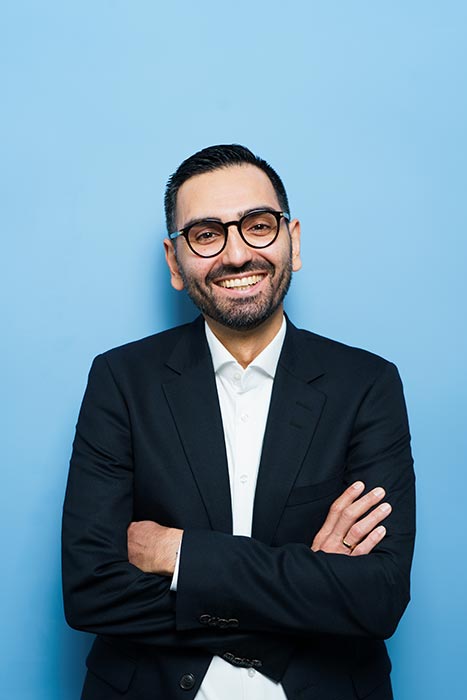
Sabine Netz is a researcher affiliated with the Social and Cultural Anthropology department at the Faculty of Humanities and Social Sciences , University of Bayreuth. She previously worked as a research and teaching associate at the Free University of Berlin and has collaborated with activist groups like 'Together we are Bremen'. Research Focus: Border and migration governance Citizenship classification practices Material semiotics in administrative contexts Global postcolonial entanglements Anti-racist social movements Global agrifood systems Her recent publications in Citizenship Studies , Ethnos , and Hinterland examine how biometric and bureaucratic practices hierarchize human life through age determination, body politics, and techno-medical assessments. Current projects include the DFG-funded research 'How Age Makes a Difference', analyzing political subjectivity among young refugees in Germany.
Albert Scherr is a Senior Professor at the Institute of Sociology at Pädagogische Hochschule Freiburg. His academic career spans decades of research and teaching in sociological theory and social work. He maintains an active role in both academic and public discourse on contemporary social issues. Professor Scherr's research interests encompass sociological theories, critical systems theory, social work theory, migration and refugee research, sociological discrimination and racism research, education research, and youth research. His work focuses on non-dogmatic theory development based on Luhmann's differentiation theory while challenging school-forming boundaries to critical theories and subject theories. He has conducted numerous empirical projects examining forms and effects of discrimination, particularly regarding refugees and Sinti and Roma communities. His recent publications reveal a strong focus on migration policy, discrimination studies, educational equality, and social work theory. Scherr examines the intersection of structural discrimination with individual coping mechanisms and empowerment strategies. His work increasingly addresses contemporary challenges like pandemic responses, border politics, and the relationship between social work and geopolitical shifts. Trust professor for Hans-Böckler Foundation Trust professor for Friedrich-Ebert Foundation Member of editorial boards for Sozial Extra, Soziale Probleme, and Zeitschrift für Flucht- und Flüchtlingsforschung Reviewer for German Research Foundation and Swiss National Fund Scherr has supervised numerous doctoral students whose work examines discrimination in immigration societies, anti-Semitism among youth, Islamophobia, educational selection processes, and the right to education for asylum-seeking minors. His approach combines theoretical rigor with practical engagement in policy evaluation projects on integration measures and youth work. He is actively involved in several research networks including the Center for Capability Research at Bielefeld University and the Freiburg Network for Migration Research.
Dr. Isabell Diekmann is a researcher at TU Dortmund University in the Collaborative Research Center 1604 "The Production of Migration" (Subproject A2). She is affiliated with the Institute for Migration Research and Intercultural Studies (IMIS) at the University of Osnabrück and the Institute for Interdisciplinary Conflict and Violence Research at Bielefeld University. Education: MA in Sociology, Bielefeld University (WS 2014/15 – SoSe 2017) BA in Sociology and Educational Sciences, University of Osnabrück (WS 2011/12 - SoSe 2014) Her research focuses on anti-Muslim racism , hostile attitudes toward Islam , and social inequality . She explores intersections between religion, race, and migration, emphasizing prejudice reduction , discrimination mechanisms , and intercultural education . Her work includes analyzing the impact of environmental degradation on migration ethics and loneliness among international students . Scientific Awards: 2023: Augsburg Science Prize for Intercultural Studies 2022: DGS Young Researcher Award (Poster) She has contributed to journals like Environmental Sociology and International Migration , examining topics such as transnational networks of Chinese students and quasi-experimental studies on mosque tours reducing prejudice . Her monograph "Muslim*innen- und Islamfeindlichkeit" (2023) provides a systematic analysis of anti-Muslim hostility.
Prof. Dr. Jan-Henrik Witthaus serves as Professor and Head of the Department of Spanish Literature at the University of Kassel, where he also holds the position of Vice Dean. His academic work centers on Spanish and Latin American literary traditions, with particular emphasis on political representation, dictator novels, Enlightenment-era literature, and colonial histories. He leads the Latin America Research Center of the University of Kassel (CELA), demonstrating his institutional commitment to interdisciplinary Latin American studies. Witthaus's research interests span multiple interconnected domains including Spanish Enlightenment studies, economic thought in literature, translation history, colonial narratives, and political representation in literary works. His scholarly approach combines historical analysis with theoretical frameworks examining power dynamics, sovereignty, and cultural production across Spanish and Latin American contexts. Recent work has increasingly focused on extractivism, narco-literature, pandemic narratives, and gender politics in contemporary Latin American fiction. His publication trajectory reveals consistent scholarly productivity with numerous monographs, edited volumes, and articles. Recent publications (2020-2025) demonstrate evolving interests in environmental humanities, affect theory, and political economy as applied to literary analysis. His work frequently examines intersections between literature and broader socio-political phenomena, including sovereignty, power structures, and historical transitions. As an academic leader, Witthaus has edited significant volumes including Renaissances of Realism? Romance Studies Contributions to the Representation of Social Inequality in Literature and Film (2023), Pandemic and Literature (2021), and Right-Wing Turn in Latin America (2020), reflecting his engagement with contemporary social issues through literary scholarship.
Jessica Röhner serves as Professor of Personality Psychology and Psychological Diagnostics at Otto-Friedrich-Universität Bamberg's Faculty of Social Sciences. Her research bridges psychological assessment methodology with contemporary societal challenges through leadership of the Response Bias Research Lab at the ZIAI Center for Artificial Intelligence. Her research focuses on response bias detection , employing a distinctive multimethod approach integrating: Diffusion model analyses of response latencies Machine learning classification of faking patterns Qualitative content analysis of cognitive faking processes Experimental manipulation of frame-of-reference effects Current work examines how intelligence and gender interact to shape faking behaviors in personnel selection contexts, with significant implications for assessment validity. Dr. Röhner's publication record shows consistent output in top-tier journals including Behavior Research Methods and International Journal of Selection and Assessment , with recent emphasis on: Faking strategy taxonomies IAT faking detection limitations AI applications in bias-resistant assessment Intersectional analysis of social origin and gender Her research program is supported by substantial funding: DFG grant (2024-2028): €784,000 for multimethod faking analysis Three internal University of Bamberg grants (2023-2025): €127,000 total Prior Equal Opportunities Office funding for faking detection projects As an active member of the Society for Personality and Social Psychology and Association for Psychological Science, she contributes to methodological advancement through tutorials like her 2024 R-based IAT computation guide. Her lab provides structured graduate training emphasizing methodological rigor while fostering intellectual independence through embedded project leadership roles.
Prof. Dr. Robel Abay is a Visiting Professor for Disability Studies at Alice Salomon Hochschule Berlin (ASH Berlin), specializing in intersectional disability justice, decolonial methodologies, and critical race theory. His work focuses on the intersections of disability, race, migration, and coloniality, with an emphasis on participatory research approaches. Currently serving as a substitute professor for participatory approaches in social and health sciences until March 2025, he will transition to a visiting professorship in Disability Studies from April 2025 to March 2026. Dr. Abay's academic journey includes: PhD in Rehabilitation Sciences, Humboldt-Universität zu Berlin (2019-2023), dissertation on "Participatory Research on Discrimination and Participation in Employment of BIPoC with Disability Experiences" MA in Social Work in Interdisciplinary Research and Practice, University of Kassel (2017-2019) BA in Social Work, University of Kassel (2014-2017) Study Abroad in Sociology of Race and Ethnic Relations, Cardiff University, Wales (2016) BA in Sociology and Political Sciences, Addis Ababa University, Ethiopia (2007-2010) Dr. Abay's research centers on intersectional disability justice, examining how ableism, racism, and colonial legacies intersect to shape experiences of marginalization. His work employs decolonial methodologies to challenge Eurocentric knowledge production and promote pluriversal approaches in social work. He investigates the lived experiences of Black, Indigenous, and People of Color (BIPoC) with disabilities, particularly at the intersections of migration, queerness, and climate crisis. His scholarship critically analyzes power relations embedded in social structures, with a focus on developing transformative practices that foster social justice and equity. Through participatory research methods, he centers the voices of marginalized communities in knowledge production, challenging traditional academic hierarchies and epistemic violence. Dr. Abay's recent publications reveal a strong focus on decolonial approaches to disability studies, with particular attention to intersectionality and participatory methodologies. His work consistently examines how colonial legacies persist in contemporary social structures, particularly in healthcare, education, and migration systems. A significant portion of his scholarship addresses the experiences of BIPoC with disabilities, highlighting how racialization and ableism intersect to create unique forms of marginalization. His research increasingly engages with climate justice, exploring connections between environmental crisis, migration, and disability. The methodological approach across his publications emphasizes pluriversalism, challenging Eurocentric frameworks and advocating for diverse knowledge systems in social work research and practice. Dr. Abay has received several notable research fellowships and funding awards: "The Good Family Visiting Faculty Fellowship" from Queen's University, Canada (January-September 2026) Early Career Support from Hans-Böckler-Stiftung at ASH Berlin (October 2023-September 2024) Dr. Abay serves as a peer mentor for displaced scholars through The Kaldor Centre for Displaced Scholars Peer Mentoring Program at the University of New South Wales, Sydney. His current research projects include "Queer(ing) Migration," funded by The Good Family Visiting Faculty Fellowship and Hans-Böckler-Stiftung, which examines the experiences of queer refugees in Berlin through an intersectional lens. He is also involved in the GLOHRA (Global Health Research Alliance) project, which addresses structural challenges of decolonization in global health research. Additionally, he co-leads the AdiCoBe project, the first initiative by and for people with African roots and disability experiences in Germany, funded by aidFIVE gemeinnützige Gesellschaft mbH. Dr. Abay founded and coordinates the IDJ-Network (Intersectional Disability Justice), a collaborative platform for scholars and activists working at the intersections of disability, race, and coloniality. He is an associated research member at the University of Johannesburg, South Africa, and actively participates in the Migration and Social Transformation Network (MSTN). His institutional affiliations include membership in the German Alliance for Global Health Research (GLOHRA), the Society for Transdisciplinary and Participatory Research (GTPF), and the Center for Inclusion Research Berlin (ZfIB). He also serves as co-spokesperson for the "Flucht, Migration, Rassismus- und Antisemitismuskritik" (Migraas) working group of the German Society for Social Work (DGSA).
Professor Esther Lehnert is a prominent faculty member at ASH Berlin (Alice Salomon University of Applied Sciences Berlin), where she serves as Professor of Theory, History and Practice of Social Work. Her academic career is deeply rooted in critical analysis of right-wing extremism through gendered and historical lenses, with particular focus on how these phenomena intersect with social work practice. Dr. Lehnert's research interests span multiple interconnected domains: gender and right-wing extremism, socio-educational strategies for dealing with right-wing extremism, history of social work, and history of residential care in both East and West Germany. Her work consistently examines ideologies of inequality, with special attention to how right-wing movements instrumentalize gender constructs. She has developed significant expertise in analyzing the roles of women within right-wing movements, challenging the misconception that these spaces are exclusively male-dominated. Her publication record demonstrates remarkable consistency and progression, with 15+ publications annually in recent years. The thematic evolution shows increasing sophistication in connecting historical analysis with contemporary right-wing movements, particularly examining how völkisch ideology functions as an exclusionary mechanism. A defining characteristic of her scholarship is the insistence on gender-reflective and historically informed approaches to understanding and countering right-wing extremism in social work contexts. Lehnert is actively involved in practical applications of her research through her current project JUPORE (Youth work, police and right-wing youth in the 1990s), which examines historical patterns to inform contemporary prevention strategies. She serves as co-editor of ZRex – Zeitschrift für Rechtsextremismusforschung, demonstrating her leadership in establishing right-wing extremism research as a legitimate academic field. Her professional activities extend beyond academia to include advisory roles with the Gender and Right-Wing Extremism Unit of the Amadeu Antonio Foundation and cooperation with ufuq eV. She has also served as liaison lecturer for the Hans Böckler Foundation, bridging academic research with practical social movement work.
Prof. Dr. Riem Spielhaus holds the Chair of Islamic Studies with a focus on education and knowledge cultures at the Georg-August-Universität Göttingen and heads the department "Knowledge in Transition" at the Leibniz-Institut für Bildungsmedien | Georg-Eckert-Institut. Since 2021 she also serves on the Scientific Advisory Board of the Islamkolleg Deutschland e.V. and is a board member of the German Council for Migration. She studied Islamic Studies and African Studies, earned her doctorate at Humboldt-Universität zu Berlin on Islam debates and Muslim self-positioning in Germany, and worked as postdoctoral fellow at the University of Copenhagen and as research associate at EZIRE/Friedrich-Alexander-Universität Erlangen-Nürnberg. Her research covers representations of Islam in textbooks, anti-Muslim racism, female Islamic authority, the institutionalisation of Islam in Europe, constitutional religious law, and educational media in migration societies. She currently leads major collaborative projects such as FuturMig, COMPOUNDS and RIRA, and participates in numerous textbook analyses from Afghanistan to Europe. Her work has been recognised with the Augsburg Science Prize for Intercultural Studies (2010), the Renate-Wittern-Sterzel Prize (2014) and the Equality Prize of FAU Erlangen-Nürnberg (2014). She contributes regularly to public debates through interviews, policy advice and media commentary on Islamophobia, antisemitism and diversity education.
Amanda Wise is a Professor in the School of Communication, Society and Culture at Macquarie University in Sydney, Australia. She is affiliated with the Housing and Urban Research Centre and has established herself as a leading researcher in the fields of migration, diversity, and urban sociology. With over two decades of academic experience, Professor Wise has secured numerous Australian Research Council grants and has advised government bodies on issues related to diversity and anti-racism strategies. Her work bridges academic research with practical policy applications, focusing on the everyday experiences of living in culturally diverse urban environments. Professor Wise earned her PhD in Cultural Research (Anthropology) with a thesis titled "Exile & Return Among the East Timorese" in 2003. She completed her BA (Hons) in Sociology at the University of Wollongong in 1998. Her academic journey reflects a deep commitment to understanding cultural diversity, migration, and urban life through both anthropological and sociological lenses. Wise's research centers on social inequalities in global cities, with particular focus on migration, diversity, and the urban commons. She pioneered the concept of "everyday multiculturalism" which examines positive modes of living with difference in urban settings, challenging previous dystopian narratives about multiculturalism. Her work explores how people "rub along" with those different from themselves in extremely diverse urban environments, investigating the dispositions, discourses, and practices that underpin mundane situations of togetherness. She has conducted extensive fieldwork in Australia and Singapore, comparing approaches to diversity in longstanding multicultural societies versus recent immigrant-receiving nations. Her recent publications reveal a consistent focus on the intersection of migration, urban space, and informal social practices. Wise examines how everyday interactions in public spaces—particularly through activities like informal sports—create opportunities for social cohesion in superdiverse contexts. Her work increasingly emphasizes community resilience, highlighting strengths-based approaches to understanding how diverse populations navigate urban life. The geographical focus spans Australia, Singapore, and comparative studies across multicultural societies, with special attention to the experiences of migrant workers. Supervised numerous PhD students on topics related to everyday multiculturalism, migrant workers, and social inequality Principal Chief Investigator on Australian Research Council Discovery Project "Delivering Inequality? Wellbeing & Survival in Australia's Gig Economy" (2023-2025) Chief Investigator on Australian Research Council Discovery Project "Social Resilience, Migrant Integration and Informal Sport in Public Space" (2022-2024) Extensive experience advising government on diversity and anti-racism strategies Wise is actively involved with the Housing and Urban Research Centre at Macquarie University, where she contributes to interdisciplinary research on urban challenges. Her current projects focus on how public spaces and informal activities like sports can foster social cohesion among diverse populations, particularly new migrants. She works closely with researchers like Selvaraj Velayutham and Kristine Aquino on projects examining the relationship between urban infrastructure, migration, and community resilience in both Australian and Singaporean contexts.
Dr. Marko Perels serves as a Lecturer in the Department of Social Work and Social Welfare at the University of Kassel, specializing in the Section of Sociology of Social Differentiation and Socio-culture. His academic work bridges theoretical sociology with practical social work applications. His research portfolio centers on: Precarization and labor market dynamics Qualitative methodological frameworks Migration and diaspora studies with focus on German-Turkish contexts Gender and political identity formation Critical analysis of racism and anti-Semitism Dr. Perels maintains active engagement with students through structured thesis supervision protocols requiring detailed preliminary proposals. His consultation process emphasizes preparedness with 15-minute scheduled sessions available both physically and digitally. Professional affiliations include: German Sociological Association (DGS) Political Psychology Working Group (University of Hanover)
Anne-Linda Amira Augustin serves as Scientific Associate at FGZ Leipzig (Leibniz Science Campus for Social Cohesion) within the University of Leipzig, where she provides scientific and administrative coordination for the INRA_Z research project investigating institutional racism and social cohesion dynamics. Her research specialization centers on: Sociological analysis of systemic racism Qualitative methodologies in social cohesion studies Intersectional approaches to identity and integration Policy impacts on marginalized communities Dr. Augustin's current work focuses on the federally funded INRA_Z project, employing ethnographic and narrative-centered approaches to examine how anti-racist practices actively constitute social cohesion in European urban contexts. Her methodological rigor emphasizes capturing lived experiences through in-depth qualitative frameworks. Contact details: Email: augustin@uni-leipzig.de Phone: +49 341 97 37806
Carol Chan is an Associate Professor in the Department of Anthropology at Diego Portales University in Chile. Her academic work focuses on migration, gender, racialization, and critical development studies, with particular attention to Southeast Asian and Chinese diaspora communities in Latin America. Her research interests include migration studies, gender studies, racialization processes, critical development, Chinese diaspora, Southeast Asian migration to Chile, multiculturalism, labor studies, and the anthropology of mobility. She examines how multi-scalar discourses about migration are moralizing and moralized, and how they influence and shape transnational flows of capital and labor. Her work often employs ethnographic methods and narrative analysis to understand the lived experiences of migrants. Analysis of her recent publications (2018-2025) reveals consistent scholarly engagement with migration patterns in Latin America, particularly focusing on Chinese and Southeast Asian communities in Chile. Her work demonstrates a strong interdisciplinary approach, bridging anthropology, gender studies, migration studies, and critical race theory. Key thematic areas include the impact of cultural phenomena like Hallyu (Korean Wave) on racialization, the dynamics of migrant friendships and care networks, multinational migration trajectories, and the experiences of Chinese diaspora communities in Chilean society. While specific scientific awards are not mentioned in the available information, her publications in high-impact journals such as Ethnic and Racial Studies, American Anthropologist, and Global Networks indicate recognition within her field. Her collaborative work with numerous co-authors suggests active participation in academic networks focused on migration and diaspora studies. Carol Chan's research demonstrates significant engagement with both theoretical and practical aspects of migration. Her work on migrant brokers, trafficking, and psychological abuse of domestic workers shows attention to structural issues affecting migrant communities. She appears to be actively involved in current research projects examining the evolving nature of migration in Latin America, particularly in the context of changing geopolitical relations between China and Latin American countries. Her research often centers on the experiences of migrant women, particularly Filipina and Indonesian domestic workers in Chile, examining the complex relationships between employers and employees, the impact of migration policies, and the social networks that support migrant communities. Her work contributes to understanding how migrant communities navigate structural constraints while building meaningful lives in new contexts.
Dr. Lina Pranaitytė serves as a scientist at the Heidelberg School of Education (HSE), part of Heidelberg University, specializing in Critical Media Literacy and Antigypsyism research within teacher education. Her work focuses on analyzing media representations of Sinti and Roma communities and developing educational counter-strategies for teacher training programs. Her research interests center on Critical Media Literacy , Antigypsyism analysis , and anti-racist teacher education . Through interdisciplinary approaches, she examines how media constructs perpetuate anti-Roma stereotypes and develops frameworks for deconstructing these narratives in educational contexts. Her work connects media analysis with practical teacher training methodologies to combat structural racism in educational settings. Dr. Pranaitytė contributes to research initiatives like the MeAviA project (Media Antigypsyism – From Interdisciplinary Analysis to Critical Media Literacy), which develops digital educational materials for anti-Gypsyism training. Her institutional affiliation includes the Critical Media Literacy work area at the Heidelberg School of Education, where she collaborates on projects examining media-based racism and developing critical media literacy approaches for educators. Her work supports the development of anti-racist professionalization in teacher education through empirical research on media representations and their educational implications. Dr. Pranaitytė's research helps educators recognize and address discriminatory content in teaching materials while developing critical media literacy skills among future teachers.
Nina Degele is a Professor of Sociology and Empirical Gender Studies at the Institute of Sociology, University of Freiburg, where she has held a C-3 Professorship since 2001 and has directed the Center for Anthropology and Gender Studies (ZAG) since 2000. Her academic career spans over three decades with significant contributions to gender studies, intersectionality, and the sociology of sport. Her research interests focus on sociology of gender relations, modernization theory, gender and social theory, body and sport studies, knowledge and science sociology, sustainability issues, and qualitative research methods. Degele's work demonstrates a consistent evolution from early interests in technology and knowledge sociology toward more focused gender and intersectional analyses, with recent work increasingly addressing climate change through sociological frameworks. Her publications reveal significant scholarly productivity with monographs published from 1994 through 2020 and numerous journal articles extending into 2025. Recent articles show her engagement with contemporary issues including climate change adaptation, privilege-blind behaviors, and critical examinations of political correctness through intersectional lenses. Gendering MINT digital – actively shaping open science (BMBF, 2017-2020) Established Outsiders (DFG, 2017-2019) Body taboos, sexism, and homophobia in football (Friedrich Ebert Foundation, 2010-2011) How We Tell Each Other About Love (DFG, 2008+) Degele's research demonstrates sustained engagement with critical social issues through sophisticated theoretical frameworks, particularly intersectionality, which she has helped develop as a key methodology in German sociology. Her work bridges theoretical sophistication with empirical research, particularly in the sociology of sport where she has made significant contributions to understanding discrimination through intersectional perspectives.
Prof. Dr. Karim Fereidooni serves as Professor of Didactics of Social Science Education at the Faculty of Social Sciences, Ruhr University Bochum, and holds a co-opted position in the Faculty of Philosophy and Education. His work critically examines systemic racism and diversity frameworks within educational systems. Research interests include: Criticism of Racism in Educational Institutions School Research and Political Education in Migration Societies Diversity-Sensitive Teacher Training Methodologies Prof. Fereidooni has shaped national policy through advisory roles for multiple German federal cabinets. He contributed to the Cabinet Committee to Combat Right-Wing Extremism and Racism (Merkel IV), served on the Independent Expert Group on Islamophobia for the Federal Ministry of the Interior (Merkel IV and Scholz I Cabinets), and advised the Federal Ministry of Education and Research on the National Action Plan for Integration. His scientific recognition includes: Walter Jacobsen Prize (Innovation category, 2021) for embedding anti-racist critique into political education discourse Notable engagements featured a keynote address at the Federal Integration Summit (2021) addressing diversity inclusion strategies and presentation of the "Islamophobia: A German Assessment" report to Federal President Steinmeier at Bellevue Palace (2023).