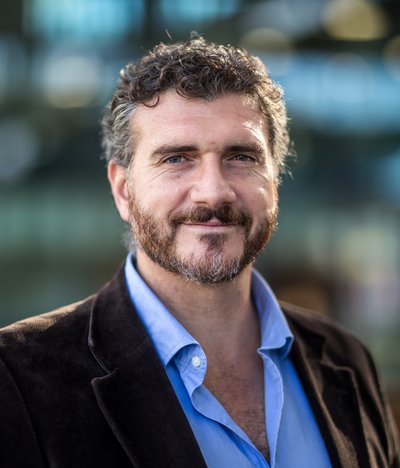
Dusan Milosevic is an Assistant Professor at Eindhoven University of Technology (TU/e) in the Electrical Engineering department. He is affiliated with the Mixed-Signal Microelectronics research group and the RF Sensing & Communication Lab. His research focuses on analog and RF electronics, particularly in power amplifiers, ultra-low-power RF systems, and energy harvesting. He holds an MSc from the University of Niš and a PhD from TU/e. Education: MSc in Electronics and Telecommunications Engineering (University of Niš, 2001) PhD in Electrical Engineering (TU/e, 2009) Research Interests: Design of RF power amplifiers and mm-wave circuits Ultra-low-power communication systems RF energy harvesting technologies High-efficiency analog circuit design His work emphasizes circuit techniques for wireless communication and integrates analog methods with digital control for improved performance. Teaching: Electronic Circuits 1 RF Transceivers 1: Fundamentals Electronics: Selected Topics Collaborations: Active in mm-wave communication, satellite links, and sensor networks. His recent work includes inter-satellite link front-ends and optoelectronic modulation systems. Labs/Teams: Leads the RF Sensing & Communication Lab, focusing on mm-wave systems and energy-efficient RF design.
A. Asadi is an Assistant Professor at the Faculty of Electrical Engineering, Mathematics and Computer Science at TU Delft. He leads the Wireless Communication and Sensing (WISE) Lab within the Embedded Systems Group, focusing on the integration of wireless communication and sensing systems for Beyond-5G and 6G networks. His research leverages machine learning to develop practical solutions for next-generation wireless networks, with strong industrial collaborations from companies such as Nokia, NEC, and National Instruments. Research Themes : Wireless Sensing, 6G Networks, Physical Layer Security, Reconfigurable Intelligent Surfaces (RIS), mmWave Communication Key Collaborations : Industry partnerships with Nokia, National Instruments, and NEC Recent research outputs highlight his work on Reconfigurable Intelligent Surfaces (RIS) for 6G systems, including liquid crystal-based designs for fast beam switching and temperature compensation. His publications emphasize practical implementations in mmWave communication, security protocols, and experimental validation. Scientific Awards : Athene Young Investigator Prize (2017) Educational Fellowship (2025) Asadi contributes to the academic community through committee roles at major conferences like IEEE INFOCOM , IEEE ICNP , and ACM CoNEXT , and his work on D2D communication has been cited as an ESI highly cited paper.
André B.J. Kokkeler is a Full Professor at the Digital Society Institute and affiliated with the Radio Systems department at the University of Twente. His research focuses on wireless communication systems, signal processing, and mmWave technology, particularly in applications like beamforming, cognitive radio, and error-resilient algorithms. Recent research outputs highlight his work on: Hybrid beamforming techniques for full-duplex integrated sensing and communication (ISAC) systems Energy-efficient iterative algorithm implementations Single-bit angle-of-arrival (AoA) localization methods mmWave channel characterization in reverberation chambers Radar-driven human gait modeling His work contributes to advancements in wireless systems for IoT, automotive radar, and energy-constrained environments. Collaborations span multiple institutions and focus on propagation modeling, antenna characterization, and sensing applications.
Angelo Freni is an Associate Professor of Electromagnetism at the University of Florence with a primary focus on antenna design, microwave engineering, and terahertz imaging. His work spans theoretical and applied electromagnetism, including numerical methods for electromagnetic simulation, beamforming, and microwave component optimization. His most recent research includes: 2017: Simultaneous generation of pseudo-Bessel vortex modes with RLSA antennas 2017: THz imaging using uncooled wideband direct detection focal plane arrays 2017: Near-field focusing by non-diffracting Bessel beams Earlier work emphasizes microwave propagation modeling, reflectarray design, and tropospheric interference analysis. Key collaborations include researchers such as M. Albani, P. De Vita, and G. Vecchi.
Ramiro Serra is an Associate Professor at the Department of Electrical Engineering at Eindhoven University of Technology (TU/e) in the Netherlands. He is affiliated with the Electrical Energy Systems group and the High Tech Systems Center , focusing on Power Conversion and Electromagnetics . Research Interests include Electromagnetic Compatibility (EMC) , Statistical Electromagnetics , Wireless Coexistence , and Interference Studies . His expertise spans the design, modeling, and operation of Electromagnetic Mode-Stirred Reverberation Chambers , noise propagation in IC substrates, and EMC aspects in large infrastructures. Notable Contributions involve novel methods for EMI Reduction in mixed electrical class modules, VNA-Based TRP Measurements , and quantifying Loading Effects in reverberation chambers. His work impacts domains like Consumer Electronics , Automotive , and Medical Devices . Academic Leadership includes roles in international committees such as the International Steering Committee of EMC Europe , Chair of URSI Commission E , and Secretary of the General National URSI Committee . He also contributes to standardization efforts via IEC 61000-4-21 and CIRED/CIGRE joint working groups.
O.J. Luiten is Full Professor in the Coherence and Quantum Technology group at Eindhoven University of Technology. His research focuses on fundamental quantum physics, materials science, nanotechnology, and life sciences, with emphasis on improving temporal resolution in electron microscopy and developing ultracold electron sources. He leads the Coherence and Quantum Technology group and is a core member of ICMS. His research interests center on quantum materials, ultrafast electron microscopy, and coherent light-electron interactions. Key areas include: Ultracold plasma applications for high-coherence electron sources Coherent manipulation of electron beams using laser light X-ray generation via electron beams His publications demonstrate a consistent focus on advancing charged particle beam technologies and light-matter interactions, with recent work emphasizing compact X-ray sources, ultrafast microscopy, and quantum electron manipulation. Scientific Awards: Smart*Light: Een tafelmodel synchrotron (2016) He leads multiple research projects including 'ICS-SAXS: Hard X-ray metrology' and 'Smart*Light 2.0', collaborating with institutions like ASML. Manages labs for ultrafast electron microscopy and quantum beam technology.
Christian A. Nijhuis is a Full Professor at the University of Twente's MESA+ Institute for Nanotechnology, within the Faculty of Science and Technology. His research focuses on hybrid materials for opto-electronics, molecular electronics, and nanotechnology, with emphasis on self-assembled monolayers, molecular tunnel junctions, and plasmonic devices. He leads the Hybrid Materials for Opto-Electronics group, driving innovations in molecular-scale devices and electronic hardware. His work integrates chemistry, physics, and engineering to develop advanced materials and nanoscale systems. Notable contributions include molecular-scale reconfigurable electronics, plasmonic energy harvesting, and biomimetic sensors. Recent projects explore proton-coupled electron transport, self-assembled monolayer stability, and plasmonic waveguide engineering. Research trends in his publications highlight molecular-level control over charge transport, plasmonic phenomena, and integration of organic-inorganic systems. He actively collaborates internationally, advancing optoelectronic devices and sensor technologies. His group's work addresses challenges in energy-efficient computing and sustainable materials. He has delivered invited talks on 'Intelligent molecular materials' and 'Biomolecular interactions', showcasing interdisciplinary research impact. His lab develops cutting-edge tools for in-operando characterization of molecular junctions and nanoscale systems.
Marion K. Matters-Kammerer is a Full Professor of Electrical Engineering at Eindhoven University of Technology, leading research in terahertz (THz) and millimeter-wave systems. She holds positions in the Center for Wireless Technology, THz Electronics and Integration Lab, and RF Sensing & Communication Lab. Her expertise includes integrated circuits, antenna design, and power amplifier systems. She has led EU projects like 3DmicroTune and ULTRA, and co-authored over 70 journal/conference papers with 13 US patents. Education: MSc in Physics from École Normale Supérieure (Paris) and TU Berlin (1999), PhD in Physics from RWTH Aachen (2007). Past roles include Senior Scientist at Philips Research (1999–2011) and Guest Professor at RWTH Aachen (2009–2010). Research focuses on THz spectroscopy, mm-wave integrated circuits, and energy-efficient wireless systems. Key projects involve THz biosensing, 60 GHz sensor networks, and co-integration of photonics and electronics. Her work addresses UN SDGs like affordable and clean energy, and industry-academia collaboration via NXP Smart Mobility projects. Recent articles highlight advancements in mm-wave power amplifiers, waveguide integration, and radar signal processing. Grants include €2.5M for TeraIBs (2025–2028) and €1.8M for Future Wireless Interfaces (2024–2029). Labs include THz Electronics Lab and RF Sensing Team, advancing sensor and communication technologies.
Alexander Yarovoy is a Full Professor at the Faculty of Electrical Engineering, Mathematics and Computer Science at Delft University of Technology (TU Delft), specializing in Radar Systems, Antenna Design, and mm-Wave Technology. His research bridges theoretical and applied domains, with a focus on automotive radar, weather radar, and machine learning integration in radar signal processing. Active in radar, antennas, and microwave engineering Key contributions to automotive radar and human activity recognition Collaborates on datasets like RaDelft for autonomous driving Recent work explores OTFS radar for communication integration, polarimetric calibration, and high-resolution imaging algorithms. His research often addresses challenges in real-world applications, such as urban meteorology and vehicular safety. In 2023, he received the outstanding paper award at IEEE MetroAeroSpace for radar waveform coexistence studies. He participates in conferences and editorial activities, advancing radar metrology and phased array technologies.
Elmine Meyer is an Assistant Professor in the Electrical Engineering department at Eindhoven University of Technology. Her research focuses on antenna design, millimeter wave technology, and RF engineering. She leads the EM Antenna Systems Lab and EM for Radio Science Lab, contributing to advancements in 5G/6G communication systems and space-based radio astronomy. She holds a PhD in Electrical Engineering from the University of Stellenbosch (2018) and a Bachelor of Engineering from Fairleigh Dickinson University (2013). Meyer's projects include leadership roles in the ANTERRA (6G Non-Terrestrial Networks), INNOSTAR (EM), and MyWave initiatives. She has organized events like the 28th European Microwave Week 2025 and contributed to high-impact research on antenna arrays, 3D-printed RF devices, and pedestal resonators. Her work bridges academic research with industrial applications, emphasizing practical implementations in wireless communication systems. Her research interests span antenna array design, millimeter wave systems, and electromagnetic compatibility. Over 38 citations highlight her contributions to fields like substrate integrated waveguide (SIW) technology and adaptive beamforming. Collaboration networks include institutions globally, particularly in antenna measurement systems and space-based communication technologies.
Maxim S. Pchenitchnikov is Professor of Physics at the University of Groningen's Faculty of Science and Engineering, leading the Optical Condensed Matter Physics group within the Department of Physics. He joined the university in 1996 after completing his PhD at Moscow State University, transitioning from the Chemistry Department to Physics in 2006. His research focuses on ultrafast phenomena in organic materials at nanoscopic scales and femtosecond timeframes, with particular emphasis on exciton dynamics, molecular motors, and photon echo techniques. Pchenitchnikov's work bridges physics, chemistry, and materials science to develop advanced spectroscopic methods for studying energy transfer processes in complex molecular systems. His laboratory specializes in designing experiments that capture molecular dynamics occurring in quadrillionths of a second. Analysis of his 15 most recent publications reveals a strong trend toward biomimetic light-harvesting systems, molecular nanotube assembly, and dual-function molecular motors. His research increasingly integrates cryogenic imaging, linear dichroism microscopy, and advanced photon echo techniques to study non-equilibrium states in artificial photosynthetic systems. Recent work demonstrates significant progress in tracking molecular motors through photoluminescence while maintaining rotary function. Guinness Book of World Records certificate for shortest flashes of light (4.5 femtosecond) Pchenitchnikov has secured substantial research funding including a 3.8 MEuro European Innovative Training Network grant (SEPOMO) in 2016 with 8 academic and 3 industrial partners, and an NWO grant in 2020 for studying self-assembly pathways of artificial light harvesting complexes. His research contributes to UN Sustainable Development Goals through advancements in renewable energy materials and sustainable technologies. His laboratory maintains extensive national and international collaborations through memberships in the Optical Society of America, American Chemical Society, and Materials Research Society.
Institute for Atomic and Molecular PhysicsNetherlands
Ewold Verhagen is a **Professor of Applied Physics (part-time)** at Eindhoven University of Technology and **Group Leader** of the Photonic Forces Group at AMOLF , Amsterdam. His research focuses on light-matter interactions at the nanoscale , particularly coupling between photons and phonons in nano-optomechanical systems. He explores fundamental principles like spatiotemporal symmetries and quantum mechanics, with applications in sensing, metrology, and communication. Education & Career : PhD in Physics from AMOLF (FOM Institute), followed by a postdoc at EPFL under Tobias Kippenberg. Key breakthroughs include demonstrating optomechanical cooling to near-quantum ground states and pioneering topological photonics in nanoscale systems. Research Interests : Quantum optomechanics, topological photonics, nano-optomechanical sensing, synthetic gauge fields, and photonic crystal engineering. His work bridges theoretical and experimental approaches to push boundaries in nanophotonics. Achievements : Recipient of the **NWO Vidi Grant (2014)** and **ERC Starting Grant (2017)**. Over 50 peer-reviewed publications, including articles in Nature , Science Advances , and Nano Letters . Labs/Teams : Leads the Photonic Forces Group at AMOLF, collaborating with experts in optomechanics, nanophotonics, and materials science. Active in training PhD students and postdocs in cutting-edge nanoscale physics.
Geert Heijenk is a Full Professor at the Digital Society Institute, specializing in the Design and Analysis of Communication Systems. His research focuses on Intelligent Transport Systems, Autonomous Vehicles, and vehicular networking. He has been actively publishing since 1990, with over 220 research outputs, including peer-reviewed articles, conference contributions, and books. Key research interests include adaptive cruise control algorithms, vehicular network protocols, energy efficiency in communication systems, and cooperative driving systems. His work bridges theoretical contributions (e.g., network scheduling algorithms) with practical applications (e.g., smart traffic systems). Awards: 6 Best Paper Awards (2021, 2016, 2011, 2008, etc.) Grants/Advising: Supervised 10 academic works, including PhD/Master’s theses. He is actively involved in collaborative projects and has delivered invited talks on topics like infrastructure support for vehicular networks and geocast scheduling in mmWave systems. Labs/Teams: Leads research groups exploring vehicular communication, green networking, and intelligent transport systems integration.
Daan Brinks is an Assistant Professor at Delft University of Technology in the Department of Imaging Physics within the Faculty of Applied Sciences. He leads the Brinks Lab, which operates at the intersection of physics, biochemistry, optics, mathematics, and nanofabrication, focusing on developing novel imaging tools for neuroscience applications. His research spans both fundamental biophysics and practical biomedical applications, with significant collaborations including Erasmus MC. Faculty of Applied Sciences, Delft University of Technology Department of Imaging Physics (ImPhys) Brinks Lab leader Founding member of BIOlab (Biomedical Intervention Optimization lab) Lead of a convergence Health and Technology Consortium Dr. Brinks' academic journey began with an MSc in Molecular Nanophotonics from the University of Twente (2002-2007), followed by a PhD at ICFO Institute Barcelona (2007-2012). He then completed prestigious fellowships at Harvard University as a Rubicon Fellow (2012-2014) and HMMI Fellow (2014-2017) before joining TU Delft as an Assistant Professor in 2017. His research interests center on voltage imaging techniques to monitor neural activity, optogenetics for neural control, nonlinear optical microscopy for enhanced resolution, and AI applications in bioimaging . The lab develops tools to transduce information in neurons into detectable photons, addressing questions from biophysical principles to behavioral consequences and from subcellular compartments to complete organisms. Current projects include Voltage nanoscopy using plasmonic enhancement, Absolute Voltage Imaging through fluorescence lifetime measurements, Multiphoton Voltage Imaging for deep tissue applications, and advanced image analysis with machine learning. The publications reveal a strong focus on developing novel optical tools for neuroscience, particularly genetically encoded voltage indicators and plasmonic enhancement techniques. His work bridges physics, molecular biology, and neuroscience, with applications ranging from fundamental understanding of neural circuits to cancer cell identification. The research shows progression from fundamental physics (early career) to increasingly applied neuroscience and biomedical applications (recent work), with publications in top journals including Nature, Science Advances, and Nature Biomedical Engineering. Rubicon Fellow (2012-2014) HMMI Fellow (2014-2017) Publications in Nature, Science Advances, Nature Biomedical Engineering Media coverage in major outlets including Delta TU Delft and Trouw Dr. Brinks actively mentors students and researchers, with his lab welcoming enthusiastic students, PhD candidates, and postdocs interested in multidisciplinary projects at the junction of optics, molecular biology, and neuroscience. His research has received external funding through fellowships and likely additional grants supporting his lab's operations. The Brinks Lab collaborates extensively with both academic and medical institutions, particularly evident in the cancer cell research with Erasmus MC. The lab maintains strong physical infrastructure including advanced microscopy systems and nanofabrication capabilities, supporting their work in voltage imaging, plasmonics, and single-cell analysis. They have developed several hardware and software interfaces for automated interaction with excitable tissues and model dynamics in hybrid systems, reflecting their interdisciplinary approach to neuroscience questions.
Alessandro Chiumento is an Assistant Professor at the Department of Pervasive Systems, Faculty of Electrical Engineering, Mathematics and Computer Science (EEMCS), University of Twente. His research focuses on artificial intelligence, edge AI, wireless communication, and sensor systems for industrial and health applications. Key Research Areas: Reinforcement Learning, Deep Learning, 5G/6G Networks, Human Activity Recognition Recent publications highlight his work in mmWave radar systems for vital sign monitoring, UAV-based communication networks, and AI-driven resource management for IoT. He has contributed to 5G-RedCap optimization, WiFi network performance analysis, and biomedical sensor development. In 2024-2025, his team released comprehensive datasets for mmWave radar applications, explored non-invasive animal health monitoring, and advanced cross-layer QoS optimization frameworks. Earlier works (2016-2023) addressed Bluetooth mesh networking, LTE interference management, and multi-antenna systems for UAVs. Technical Themes: Spectrum Efficiency, Network Topology, Channel Quality Prediction, Autonomous Agents