

Andrea Megela Simmons is a Professor at Brown University in the Department of Cognitive, Linguistic, and Psychological Sciences with a secondary appointment in the Department of Neuroscience . She is a member of the Carney Institute for Brain Science and serves as a Principal Investigator on an ONR MURI project. Education : A.B. from the University of Pennsylvania (1973), Ph.D. from Harvard University (1978), Postdoctoral research at Cornell University Simmons specializes in cognitive and neural mechanisms of sound perception and communication across species including frogs, bats, dolphins, and humans. Her work bridges behavioral neuroscience, comparative neurology, and developmental studies to explore auditory processing, echolocation, and sensory integration. Her recent publications highlight interdisciplinary trends in auditory neuroscience, focusing on sound exposure effects, metamorphic neurodevelopment, and sensory-motor coordination in cluttered environments. Key subfields include echolocation, lateral line function, tectal connectivity, and acoustic adaptation across species. Scientific Awards : Fellow, Acoustical Society of America Simmons has received grants from the Office of Naval Research (ONR) for MURI projects and has taught courses such as Animal Behavior , Evolution and Development of the Brain , and Auditory Perception Laboratory .
جستوجوی استاد و پژوهشگر
استاد راهنما، استاد دانشگاه یا پژوهشگر مناسب برای مسیر پژوهشیتان را پیدا کنید و با او ارتباط بگیرید.
نمایش ۱۶-۳۰ از ۱٬۲۴۱ استاد راهنما
اطلاعات این پروفایلها از صفحات عمومی دانشگاهها جمعآوری شده و ممکن است بهروز نباشد.
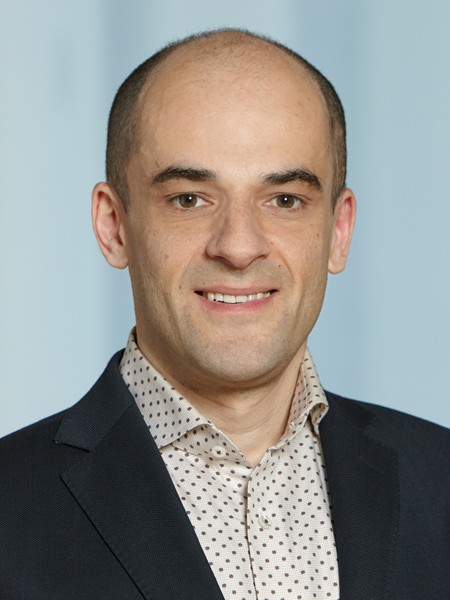
Daniel Razansky is a Full Professor at the Department of Information Technology and Electrical Engineering, ETH Zurich, leading the Professorship for Biomedical Imaging. His research spans engineering, physics, biology, and medicine, focusing on developing advanced in vivo imaging tools like optoacoustic tomography and ultrasound neuromodulation. His recent work emphasizes multi-scale functional and molecular imaging , with applications in neuroscience , Alzheimer’s disease , and stroke diagnostics . Collaborations include National Tsing Hua University and the EU Horizon consortium SWEEPICS. Current projects target hybrid imaging systems (e.g., MRI-MSOT) and image-guided neuromodulation. Scientific awards include the IPPA James Smith Prize for his contributions. His lab has secured significant grants, including a $2.5M NIH award and SNSF funding. He mentors PhD students like Quanyu Zhou and Eva Remlova, who have received accolades for their research. The Razansky Lab at ETH Zurich’s Preclinical Imaging Center explores medical microrobotics , dynamic fluid flow imaging , and neuroimaging techniques , aiming to bridge engineering with clinical applications.
Ian Condry is a Professor of Japanese Culture and Media Studies at MIT, affiliated with the Department of Anthropology. He holds a BA in Government from Harvard (1987) and a PhD in Anthropology from Yale (1999). His research focuses on Japanese popular culture, media globalization, and creative industries. He is best known for his seminal work on hip-hop in Japan and anime production, emphasizing collaborative creativity and cultural hybridity. Condry leads the MIT Spatial Sound Lab, exploring immersive audio technologies, and co-founded the music discovery platform Hearby.com. He hosts the 'Near and Far' Japanese hip-hop radio show on WMBR 88.1FM since 2018 and releases music as Leftroman. Condry’s academic roles include former Head of Global Studies and Languages at MIT and Executive Committee member of the Technology Broadcasting Corporation. His work bridges academic research with creative practice, including organizing the Dissolve Music conference and curating multimedia projects. He has pioneered open-access publishing, making his books available under Creative Commons licenses. His research spans media anthropology, youth culture, and digital media’s societal impact. Key projects include the MIT/Harvard 'Cool Japan' research initiative and studies on post-3/11 cultural recovery. Condry’s interdisciplinary approach integrates ethnographic methods with technological innovation, addressing themes of global cultural flows and participatory media production.
Dr James Herbert-Read is an Associate Professor and Whitten Lecturer in Marine Biology at the Department of Zoology, University of Cambridge. He serves as Deputy Head of Department (Postgraduate Education) and leads the Marine Behavioural Ecology Group. His research focuses on understanding how animals, particularly marine organisms, collect and process information from their environments to make behavioral decisions, with emphasis on social interactions, adaptation mechanisms, and ecological constraints. His group employs theoretical frameworks, controlled experiments, and quantitative field studies to investigate behavioral diversity in marine species. Key themes include collective behavior, predator-prey dynamics, camouflage strategies, and the impacts of environmental stressors on animal decision-making. Recent publications highlight work on lionfish vocalization mechanisms, cuttlefish camouflage, citizen science applications in marine research, and behavioral responses to visual and acoustic noise. Scientific awards and affiliations include: Whitten Lecturer in Marine Biology Associate Professor, University of Cambridge He has supervised research projects on topics such as: Social attraction in invasive fish species Evolution of coordinated movement Neurophysiological basis for leadership in shoals Maternal effects on offspring exploration
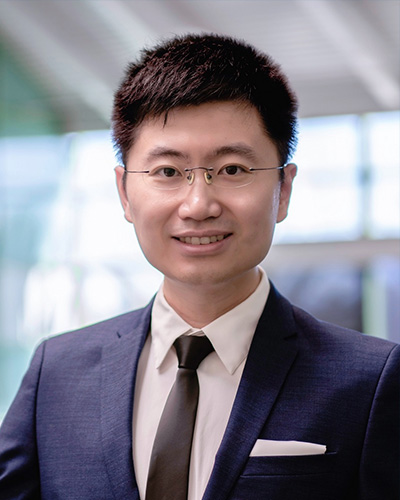
Xilin Liuمشاهده پروفایل
استادیار
Xilin Liu is an Assistant Professor at the Edward S. Rogers Sr. Department of Electrical & Computer Engineering (University of Toronto) and the Center for Advancing Neurotechnological Innovation to Application (CRANIA) . He obtained his PhD from the University of Pennsylvania and previously worked at Qualcomm Inc. in California. Expertise in integrated circuits and systems for brain-machine interfaces , neuromodulation , and edge AI Published in top venues including Nature Electronics , IEEE JSSC , and ISSCC Recipient of multiple best paper awards and IEEE Senior Member His research spans three main themes: High-speed data converters for wireless/wireline communication IC design for neural interfacing Accelerating machine learning via hardware Recent publications focus on closed-loop neuromodulation , ultra-wideband transceivers , and flexible biomedical sensors . These works integrate analog IC design , edge AI , and real-time neural interfacing across medical rehabilitation , parkinson's monitoring , and memory research . Awards include: IEEE Solid-State Circuits Society Predoctoral Achievement Award (2016) Best Paper Award at BioCAS (2015) ECE Department Teaching Award (2022) Multiple conference best paper finalists His lab collaborates with UHN , EMBS , and global institutions while maintaining strong commitments to equity, diversity, and inclusion (EDI) in research practices.
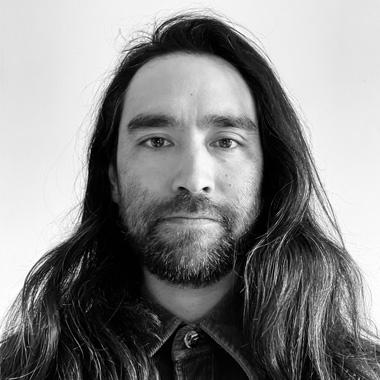
Nicholas Mortimerمشاهده پروفایل
مدرس ارشد
Nicholas Mortimer is a Senior Lecturer in Design at Goldsmiths, University of London. He holds an MA in Design Interactions (Royal College of Art, 2013) and a BA in Fine Art Sculpture (University of Brighton, 2005). His work focuses on socially engaged design practices, reimagining historical performance traditions to address contemporary labor and societal issues. As co-founder of Post Workers Theatre (PWT), he explores workers’ theatre and creative resistance through collective writing, performance, and design. His research spans topics like gig economy critiques, housing privatization, and community activism, often blending performance, sound, and participatory methods. Education: MA Design Interactions, Royal College of Art, 2013 BA Fine Art Sculpture, University of Brighton, 2005 Research Interests: Performance as social critique Historical folk traditions and modern labor struggles Community-driven design practices Radical pedagogy and participatory methods Key Projects: Post Workers Theatre : Investigates politically engaged performance, addressing labor inequality through updated workers’ theatre forms. Autohoodening : Critiques Amazon labor practices via a reimagined midwinter ritual. Rave of the Ritualesque : Examines rave culture’s potential for collective resistance. Affiliations: Department of Design, Goldsmiths, University of London IASPIS (Swedish Arts Grants Committee) residency collaborations Labs/Teams: Post Workers Theatre collective Collaborations with institutions like Tate Liverpool, Luleå Arts and Crafts Biennale, and the Maidstone Museum
- Art History
- Screen Studies
- Chinese Visual Culture
- +۷ مورد دیگر
Panpan Yang is a Lecturer in Arts and Visual Cultures of Modern China at the School of Arts, SOAS University of London. She joined SOAS in 2021 after completing her joint PhD at the University of Chicago under the direction of Wu Hung, Tom Gunning, W. J. T. Mitchell, Judith Zeitlin, and Dana Polan. Her interdisciplinary work bridges art history, screen studies, East Asian studies, and digital humanities, with a focus on innovative methodologies in art historical writing. Dr. Yang earned a dual BA from Peking University, double majoring in art and philosophy, followed by an MA from Tisch School of the Arts at NYU, and a PhD from the University of Chicago. During her undergraduate studies, she served as president of the Society of Dream of the Red Chamber Studies, which informed her secondary academic interest in Redology and the visual material world of the novel Hong lou meng. Panpan Yang's research explores how minor discourses can deterritorialize the terrains of both art history and screen studies. Her work demonstrates a multimethodological approach attentive to archival research, material practices, close visual analysis, computer-aided vision, and cross-cultural theorization. She is particularly interested in Chinese animation history, calligraphic imagination in contemporary art, and the intersections between traditional Chinese art forms and new media. Her publications reveal a consistent focus on Chinese visual culture across multiple media forms, with particular attention to animation, film, and calligraphy. Yang's work demonstrates how traditional Chinese art forms engage with contemporary digital media, creating new hybrid forms that challenge disciplinary boundaries. Her research shows a trajectory from historical analysis of Chinese animation to contemporary explorations of calligraphy in digital contexts, revealing the ongoing relevance of traditional Chinese aesthetics in modern media. Dr. Yang has received several prestigious awards for her scholarly and creative work: China's National Young Screenwriter Award Domitor Essay Award Dean's Distinguished Dissertation Award Nomination Honourable Mention from the Association for Chinese Animation Studies As a Principal Investigator, Dr. Yang leads the AHRC-funded research project "Stroke by Stroke: Calligraphic imagination in contemporary Chinese art and emergent media" (2023-25) with Shane McCausland. She was also a collaborating partner on the NEH-funded "Media Ecology Project." Her research has received additional support from the Getty Foundation and the Sino-British Fellowship Trust. At SOAS, she works closely with faculty and graduate students interested in Chinese arts and cultures, art theory, cinematic arts, and digital art history. Dr. Yang is currently developing innovative research at the intersection of traditional Chinese calligraphy and contemporary digital media through her AHRC-funded project. This work explores how calligraphic imagination manifests in contemporary art and emergent media contexts, creating new pathways for understanding Chinese cultural heritage in the digital age.

Andrew Gersick is a Lecturer in the Department of Ecology and Evolutionary Biology at Princeton University. His research focuses on animal behavior, particularly in large social species such as spotted hyenas, zebras, and cowbirds. He explores topics including collective behavior, social dynamics, communication systems, and ecological adaptations. His work integrates field studies with technological tools like accelerometers to analyze activity patterns and signaling mechanisms. Notably, he investigates how zebra stripes repel biting flies and how hyenas use vocalizations for individual recognition. Gersick also contributes to conservation efforts, such as the Great Grevy’s Rally in Kenya, and studies social learning in avian species like cowbirds. His recent articles highlight interdisciplinary approaches, combining ecology, physiology, and technology to understand animal behavior in natural and social contexts. While no awards are explicitly listed, his contributions to understanding collective behavior and conservation biology are significant. Advising and grants: No formal advisees or grant details are provided in the text. His work appears to focus on collaborative research and field-based methodologies. Labs/Teams: No specific laboratory or team affiliations are mentioned beyond his departmental role at Princeton.
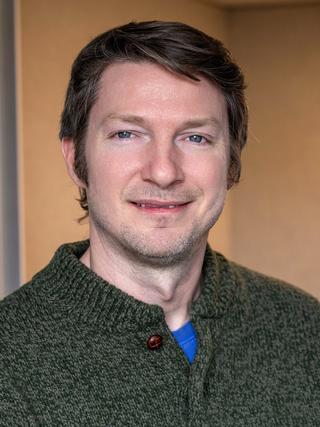
Dr. Kenneth S. Henry is an Associate Professor at the University of Rochester Medical Center (SMD) with joint appointments in the Departments of Otolaryngology, Biomedical Engineering, and Neuroscience. His research focuses on auditory neuroscience, cochlear synaptopathy, and neural mechanisms of hearing, using behavioral, neurophysiological, and histological approaches. Department of Otolaryngology Department of Biomedical Engineering Department of Neuroscience Research Interests: His lab investigates auditory nerve loss, hidden hearing loss, and neural bases of masked amplitude-modulation perception. Using avian and mammalian models, his work explores how cochlear neurodegeneration impacts behavioral and neural sensitivity to complex sounds in noise. Publications Trends: Recent research examines auditory nerve encoding, envelope processing in hearing loss, cochlear fluid dynamics, and neural mechanisms of speech-in-noise perception using avian models. Lab Members: Current researchers include graduate students Leslie Gonzales (Neuroscience) and Yingxuan Wang (Biomedical Engineering). Alumni include John Wilson (PhD student) and Steph Wong (ENT resident). Contact: Email kenneth_henry@urmc.rochester.edu or call (585) 275-4851 for collaboration/postdoc opportunities.
Irene Albers is a full Professor at Free University of Berlin's Department of Philosophy and Humanities, holding dual appointments at the Peter Szondi Institute for General and Comparative Literature and Institute for Romance Philology since 2004. She chairs both the Examination Board and Doctoral Committee for General and Comparative Literature, serves as Trustee of Studienstiftung des deutschen Volkes since 2004/05, and has been Principal Investigator for the Friedrich-Schlegel Graduate School for Literary Studies and Cluster Languages of Emotion since 2007. Her research bridges comparative literature, anthropology, and visual culture with institutional leadership spanning editorial projects and international conferences. Her educational background includes: Born in Bremen (1967) Romance Studies, Philosophy, and German Studies at Universities of Tübingen, Tours, and Konstanz M.A. from University of Konstanz (1993) Ph.D. from University of Konstanz (1999) on literature and photography in Émile Zola, Proust, and Claude Simon Albers' core research examines literary anthropology through colonial/postcolonial lenses, focusing on French literary engagement with Africa, surrealism, and literature-photography intersections. She pioneered studies on Michel Leiris' ethnological poetics and Claude Simon's photographic techniques, extending to historical emotion research (anatomy of affects, body language) and romance novella traditions. Her work consistently challenges Eurocentric literary canons through primitivism critique and heteronomy aesthetics, emphasizing textual restitution and cultural reclamation. Recent publications (2018-2025) reveal a sharp turn toward colonial restitution ethics, particularly in oral literature provenance. Articles increasingly analyze literature as colonial loot, connecting French modernism with African/Caribbean contexts through collaborative projects with anthropologists like Eléonore Devevey. This trajectory builds from earlier surrealist studies to concrete frameworks for decolonizing literary scholarship, spotlighting institutional complicity in cultural appropriation while advancing symmetrized modernity revisions. Scientific awards include: Senior Fellow and Prize Winner of the Zukunftskolleg, University of Konstanz (2009) Albers supervises master's and doctoral students through dedicated AVL colloquia while securing major research funding as Principal Investigator for Friedrich-Schlegel Graduate School (2007-present) and Cluster Languages of Emotion (2007-2012). Her current DFG-funded project 'Literature as Colonial Loot?' with Andreas Schmid pioneers philological provenance research. Earlier, she contributed to Collaborative Research Center 511 'Literature and Anthropology' (Konstanz, 1999-2002) and DFG-funded conferences on Claude Simon. She leads the DramaNet research project and co-edits the 'machina' series at transcript Verlag since 2010. As board member (2007-2009) and deputy (2008-2012) of Cluster Languages of Emotion, she coordinates Area D 'Cultural Codings of Emotions'. Her Zukunftskolleg fellowship (2012-2013) and Marcel Proust Society collaborations underscore sustained engagement with literary anthropology networks.

Adam Reedمشاهده پروفایل
دانشیار
Adam Reed is an Associate Professor in Social Anthropology at the University of St Andrews, School of Philosophical, Anthropological & Film Studies. His research spans multiple interconnected fields including legal anthropology, urban studies, literary anthropology, and the anthropology of ethics. With extensive fieldwork experience in Papua New Guinea, the UK, and Australia, Reed has developed a distinctive approach to understanding social phenomena through ethnographic engagement with diverse communities. His research interests form five interconnected strands: Legal Anthropology focusing on cultures of incarceration in Papua New Guinea Anthropology of the City examining London through walking tour guides and digital journal keepers Anthropology and Literature studying literary societies and reading practices Anthropology of Ethics investigating animal welfare campaigning in Scotland Anthropology of Migration analyzing Papua New Guinean experiences in Western Australia Reed's recent publications reveal a strong trajectory toward ethical subjectivity and human-animal relationships, with numerous 2023-2025 works exploring moral dilemmas in animal protection, silence practices in zoos, and character theory. His work increasingly bridges anthropology with literary studies, philosophy, and environmental science, demonstrating interdisciplinary reach while maintaining ethnographic depth. His scientific recognition includes prestigious awards such as the Junior Research Fellowship at Clare College, Cambridge (1997), Emslie Horniman Award from the Royal Anthropological Institute (1994), and multiple early-career funding awards. Reed has led three major research projects including 'Listening to the Zoo' and 'Compatriot Sociality' focusing on Papua New Guinean migrants. As an active academic, Reed has supervised 9 postgraduate students, participated in 59 scholarly activities including conference organization and invited talks, and maintains strong engagement with both theoretical debates and practical applications of anthropological knowledge, particularly regarding sustainable development goals related to ethical practices and cultural understanding.
Prof. Raimon Jané Campos is a leading figure in biomedical signal processing at the Universitat Politècnica de Catalunya (UPC) and Universitat de Barcelona (UB). As co-director of UPC's Biomedical Signal and System Group (CREB) and coordinator of the Biomedical Engineering PhD Programme, he bridges engineering and clinical applications. His work focuses on respiratory and sleep disorder diagnostics, with significant contributions to COPD and sleep apnea monitoring through wearable devices and machine learning. PhD in Biomedical Engineering (UPC, 1989) Visiting researcher at Université de Nice-Sophia Antipolis Vice-president of Spanish Society of Biomedical Engineering Research spans respiratory mechanics , sleep-disordered breathing , acoustic biomarkers , bioimpedance , and machine learning in biomedical contexts . His 2025 work on microcalorimetric pathogen classification and 2024 spiking neural networks for apnea detection demonstrate cutting-edge integration of computational methods with physiological monitoring. Articles from 2017-2024 reveal consistent focus on non-invasive diagnostics , cardiorespiratory synchronization , and smartphone-based health solutions . Awarded the Barcelona City Technology Research Award (2005) and serving on the International Advisory Board for Physiological Measurement since 2010, his career combines academic leadership with real-world clinical translation through IBEC's technology transfer initiatives.
- Music Theory
- Composition
- Estonian Music History
- +۳ مورد دیگر
Kerri Kotta is a Professor of Music Theory and Head of Musicology at the Estonian Academy of Music and Theatre. She holds a PhD in Musicology (2004) and an MA in Composition (1997) from the same institution. Her research focuses on music theory, tonal analysis, Estonian music history, and contemporary composition, with special expertise in the works of Eduard Tubin and Dmitri Shostakovich. She coordinates the International Eduard Tubin Society and edits the composer's complete works. Her research interests span music theory , compositional techniques , Estonian cultural heritage , and interdisciplinary performance studies . Recent publications explore modernism in Estonian art music, Beethoven's structural rhetoric, and socio-psychological dimensions of contemporary opera. Kotta received the Reet Neimar Criticism Award (2023) for her contributions to music scholarship. She leads the project How to share the ardor? Conveying complex musical structures through animated scores (2024-2025), funded by the Estonian Ministry of Culture. Administratively, she chairs the Estonian Musicological Society (2013–present) and the International Eduard Tubin Society (2015–present), while serving on the board of the Estonian Composers Union (2022–present).
- Photography
- Performance Art
- Body Politics
- +۴ مورد دیگر
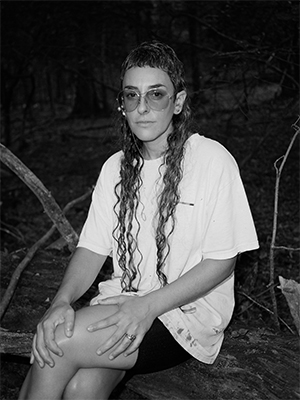
Katherine Hubbard is an Associate Professor of Art and Director of the MFA Program at Carnegie Mellon University School of Art. Her practice integrates photography, writing, and performance to explore the intersection of social politics, history, and narrative through a lens of bodily engagement. Hubbard's work emphasizes analog photography as a medium that mimics and interrogates the body's relationship to visual processes, often staging performances where participants' physical positioning becomes integral to the artwork's temporal experience. Education: MFA from the Milton Avery Graduate School of the Arts at Bard College (2010). Research focuses on the politics of looking, the malleability of vision, and bridging the imaginary with the familiar through interdisciplinary projects. Notable collaborations include the Poetry Parade series (2012–ongoing), a migratory feminist reading action performed in institutions like the Whitney Museum, and cyclops & slashes (2015), a participatory performance addressing social dynamics through photography and text. Awards: 2020 Guggenheim Fellowship in Photography. Hubbard has exhibited widely, including solo shows at Higher Pictures (New York) and Company Gallery (NY), with works featured in Frieze Magazine . Her projects often involve site-specific installations, such as Four shoulders and thirty five percent everything else (2014), which interrogates landscape and perception in Utah's desert.
Milad Abedi is a PhD candidate in Linguistics at the University of Zurich and Institut national des langues et civilisations orientales (INALCO), Paris, focusing on the cultural history of Sino-Iranian lexical contacts. He has taught Zoroastrian Middle Persian and Middle Iranian languages at the University of Zurich while conducting research on topics including language contact mechanisms and historical Persian grammar. PhD in Linguistics (2020–Present), University of Zurich & INALCO, Paris MA in Ancient Languages and Cultures of Iran (2015–2019), Allameh Tabataba'i University (Highest Distinction) BSc in Cellular-Molecular Biology (2010–2015), Islamic Azad University His research spans ancient Iranian language contact (Elamite-Iranian, Sino-Iranian, Arabic-Iranian), historical grammar of Persian, and Classical Persian literature. He has published on topics such as kinship term evolution, cuneiform epigraphy, and metonymic phrases in Achaemenid Elamite. Recent publications highlight his focus on lexical diffusion across Eurasia, with key works on donkey terminology in cross-cultural contexts and the origins of felt words in Iranian languages. His collaborative research with Wolfgang Behr and Samira Müller demonstrates interdisciplinary approaches combining linguistics and archaeology. 2021 Travel grant, University of Zurich 2016 Travel grant, Allameh Tabataba'i University 2016 Top student award, Allameh Tabataba'i University As a Lecturer at the University of Zurich, he has taught courses on Zoroastrian Middle Persian and historical linguistics. His digital humanities expertise includes ELAN software, GIS, and SQL for language documentation.
فقط ۷۵۰ نتیجه اول نمایش داده میشود. برای رسیدن به نتایج دقیقتر، جستوجو را با فیلترها محدودتر کنید.