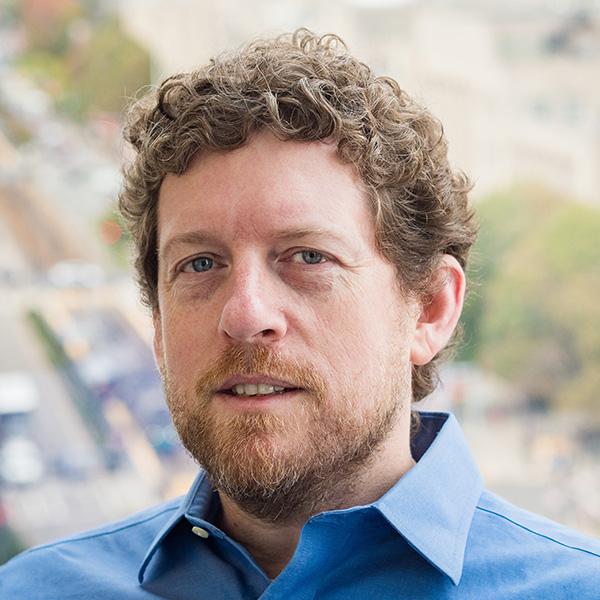
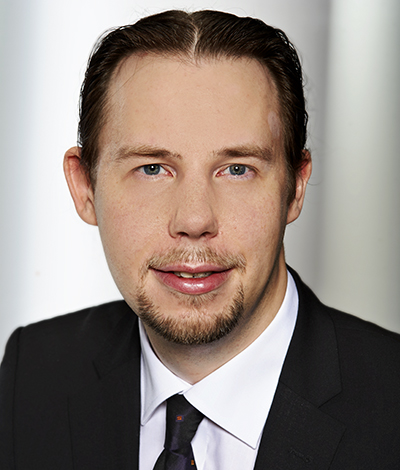
Jason Ritt is an Associate Professor of Brain Science (Research) and Scientific Director of Quantitative Neuroscience at the Robert J. and Nancy D. Carney Institute for Brain Science, Brown University. He holds affiliations with the Data Science Institute and collaborates across disciplines on quantitative research methods. Education : B.S., M.A., and Ph.D. in Neuroscience from Boston University (1997–2003). Research : Focuses on neural processing during active sensing and neuroengineering for neurostimulation. Combines electrophysiology, optogenetics, and theoretical approaches in rodent models. Develops closed-loop systems for studying sensory neural prosthetics and brain-machine interfaces. Key areas include synaptic diversity, neurocontrol algorithms, and sensory restoration. Teaching : Instructs NEUR 2100 NeuroPracticum, integrating hands-on neuroscience research training.
Noah J. Cowan is a Professor of Mechanical Engineering at Johns Hopkins University's Whiting School of Engineering, with secondary appointments in Computer Science, Electrical & Computer Engineering, and Neuroscience. He is the founder and director of the Locomotion in Mechanical and Biological Systems (LIMBS) Laboratory, part of the Laboratory for Computational Sensing and Robotics. His research focuses on neuromechanics, robotics, and control theory, bridging neuroscience, biomechanics, and engineering. Cowan's work investigates how organisms achieve precise locomotion and applies these insights to advance robotics, neuroprosthetics, and rehabilitation technologies. Education: B.S. Electrical Engineering (Ohio State, 1995), M.S. and Ph.D. Electrical Engineering & Computer Science (University of Michigan, 1997/2001). Postdoctoral fellowship at UC Berkeley (2001–2003) before joining Johns Hopkins. Research Interests: Neuromechanics of motion, bio-inspired robotics, multisensory integration in animals (e.g., electric fish, Drosophila), and sensorimotor control in clinical contexts like cerebellar ataxia. His lab studies how neural circuits interact with biomechanics to produce movement, with applications to robotic design and neurological disorder treatments. Awards & Recognition: Presidential Early Career Award for Scientists and Engineers (2010), IEEE Fellow, NSF CAREER Award (2009), and multiple teaching and research excellence awards at Johns Hopkins. His work has been published in top journals like Nature , Proceedings of the National Academy of Sciences , and IEEE Transactions on Robotics . Outreach & Mentorship: Longtime mentor for high school and undergraduate students in STEM, leading programs like the Baltimore Ingenuity Project and WISE. Served as team leader for the STEM Achievement in Baltimore Elementary Schools (SABES) initiative. Key Projects: Development of the LIMBS Lab’s VR systems for animal studies, bioelectric navigation technologies for medical devices, and collaborations with clinicians on upper limb movement disorders. His team’s research on electric fish and fruit flies has revealed principles of adaptive control applicable to robotics and AI.
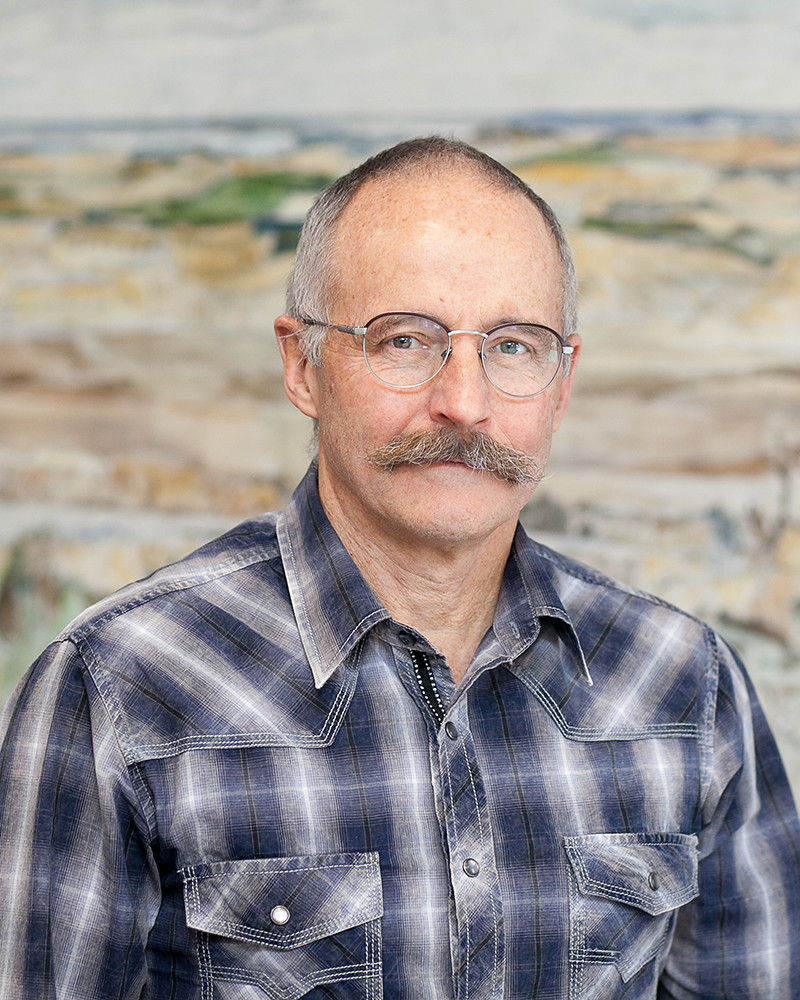
Trent K. Bollinger is a Professor in the Department of Veterinary Pathology at the University of Saskatchewan's Western College of Veterinary Medicine (WCVM), and serves as Regional Director for the Western/Northern Region of the Canadian Wildlife Health Cooperative (CWHC). His academic credentials include a BSc (Honours) from the University of Saskatchewan (1984), a DVM (Distinction) from the University of Saskatchewan (1988), and a DVSc in Pathology from the Ontario Veterinary College (1992). Dr. Bollinger's research focuses on the pathology and epidemiology of diseases in wildlife and fish, with particular emphasis on chronic wasting disease in deer/elk and white-nose syndrome in bats. He has conducted extensive studies on disease transmission dynamics, wildlife population health, and the ecological impacts of emerging pathogens. His work bridges veterinary science, ecology, and conservation biology. His publications demonstrate expertise in viral and bacterial zoonoses, fungal pathogens affecting bats, and spatial epidemiology of wildlife diseases. Recent research highlights include investigating sylvatic plague in prairie dogs, coronavirus persistence in hibernating bats, and landscape connectivity's role in chronic wasting disease spread. His studies often combine molecular diagnostics, field observations, and ecological modeling. Dr. Bollinger collaborates with national and international wildlife agencies, contributing to disease surveillance and management strategies for endangered species. His work emphasizes the interconnectedness of wildlife health, ecosystem health, and public health concerns.
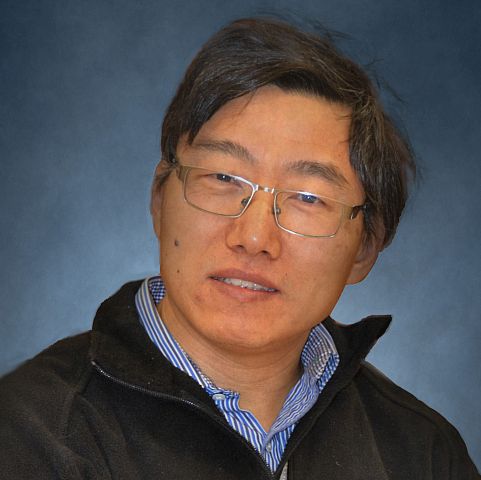
Qingguo Li is a Professor and Associate Head at the Department of Mechanical and Materials Engineering , Queen's University , and a member of the Ingenuity Labs Research Institute . He specializes in biomechanical system design, energy harvesting, wearable sensors, gait analysis, and load carriage systems. His research integrates robotics, biomedical engineering, and sensor technology to develop human-centric devices and mobility aids. Current Roles : Professor, Associate Head, Queen's University Research Institute : Ingenuity Labs Research Institute Lab : Bio-Mechatronics and Robotics Laboratory His work focuses on biomechanical energy harvesting , IMU-based motion analysis , and assistive device development . Key applications include stroke rehabilitation, gait monitoring, and wearable power generation systems. Articles span cable-driven robots , smart walkers , and 3D printing mechanisms , emphasizing human-robot interaction and dynamic modeling . The lab explores sensor calibration , adaptive control algorithms , and human movement optimization . Areas of impact include rehabilitation engineering , load carriage stability , wearable sensor accuracy , and assistive robotics . His team develops solutions for gait asymmetry detection , post-stroke mobility , and low-cost energy systems , leveraging machine learning and kinetic modeling .
Gerd Bruder is an Associate Professor at the University of Central Florida , affiliated with the Department of Computer Science . He previously held positions as a Research Associate Professor at UCF's Institute for Simulation and Training (2016-2022), Post-Doc at University of Hamburg (2014-2016), and Post-Doc at University of Würzburg (2011-2014). Habilitation : Computer Science, University of Hamburg (2017) Ph.D. : Computer Science, University of Münster (2011) M.Sc. : Computer Science (minor in Mathematics), University of Münster (2009) Research Interests : Gerd Bruder's work focuses on Extended Reality (XR) systems, spanning Virtual Reality (VR) , Augmented Reality (AR) , and Mixed Reality (MR) . Key areas include human factors , digital twins , 3D user interfaces , and perceptual modeling , with applications in healthcare, military operations, architecture, and smart environments. Recent Publications highlight innovations in XR locomotion , trust calibration with autonomous agents, spatial cognition , and haptic-visual integration . His 2025 articles address task-switching efficiency in XR and collaborative mixed reality design. Scientific Awards : Best Paper at ACM VRST 2023 2021 TechConnect Innovation Award Best Demo at ACM SUI 2021 Multiple Best Paper Awards (2016-2023) Best Poster & Demo Awards (2015-2020) Patents include systems for medical simulation , smart environment interruption management , and adaptive AR interfaces . His work bridges academic research and practical applications across VR, AR, and MR domains.
Professor Julie Harris is a faculty member at the University of St Andrews, holding the position of Professor of Psychology within the School of Psychology and Neuroscience since 2005. She previously held academic posts at Newcastle University and the University of Edinburgh, and conducted postdoctoral research at the Smith-Kettlewell Eye Research Institute in California. Her research focuses on human visual processing, including vision and camouflage, depth perception, binocular stereopsis, and eye movements in natural environments. She earned a BSc in Physics from Imperial College London and a DPhil from Oxford University. Research interests include exploring how visual systems process environmental cues for depth and motion, with applications in camouflage design and stereo display technologies. Her lab employs psychophysical, behavioral, and computational methods. Notable projects address countershading camouflage effectiveness, motion-in-depth perception, and visual-motor interactions in driving scenarios. Selected grants include funding from BBSRC, Leverhulme Trust, and Medical Research Scotland. Collaborations span evolutionary biology, neuroscience, and applied vision science. She supervises PhD students Federico De Filippi and Rebecca Maguire. Awards include the Davida Teller Award Nomination and Fellowship in the Society of Biology. Labs/Teams: Julie Harris Lab (St Andrews), St Andrews Vision Labs, and the Institute of Behavioural and Neural Sciences. Current projects investigate warning signal design, visual perception in virtual environments, and the impact of visual processing on driving ability.
Dr. Ting-Feng Lin is an Assistant Professor at the Cell Biology, Neurobiology and Biophysics department within the Faculty of Science at Utrecht University, Netherlands. His research focuses on understanding the mechanisms of learning and memory formation in the cerebellum, particularly how synaptic and intrinsic plasticity mechanisms coordinate to regulate neuronal signaling and behavior. He employs advanced microscopy, optogenetic, and chemogenetic techniques in transparent zebrafish models to study these processes in vivo, with implications for neurodevelopmental disorders like autism spectrum disorder (ASD) and schizophrenia. 2025: Assistant Professor, Utrecht University 2019-2025: Postdoctoral Researcher, University of Chicago 2015-2019: PhD in Neuroscience, Neuroscience Center Zurich (ZNZ) 2010-2014: MS in Physiology, National Taiwan University 2006-2010: BS in Sports Medicine, China Medical University His work investigates how sensory experiences shape cerebellar processing during development, focusing on climbing fiber pathways and their role in sensory prediction errors. His group also studies the interaction between synaptic, intrinsic, and structural plasticity mechanisms in neural circuits, using zebrafish models with genetic modifications (e.g., Grid2 knockout) to model human neurological conditions. Dr. Lin has received scientific recognition including the SfN Trainee Professional Development Award for his work on Purkinje cell plasticity and the JNS Meeting Award for research on parallel fiber ramping activity and LTD. His publications span topics from cerebellar plasticity to voltage-gated K+ channel dynamics, reflecting his interdisciplinary approach to neurobiology.
Oswald J. Schmitz is the Oastler Professor of Population and Community Ecology at the Yale University School of the Environment. His research bridges biodiversity and ecosystem services, focusing on species interactions, climate change impacts, and conservation strategies. He employs field experiments and mathematical models to study predator-herbivore-plant dynamics, nutrient cycling, and carbon sequestration. Education: B.Sc., M.Sc., University of Guelph Ph.D., University of Michigan Research areas include: Trophic rewilding for climate solutions Human-wildlife conflict dynamics Meta-ecosystem nutrient flows Animal-driven carbon cycle modifications Context-dependent conservation strategies His 2024 Bormann Prize-winning work on calving impacts in nutrient cycles and other recent publications highlight innovative ecosystem science. Schmitz mentors students like Kristy Ferraro and collaborates with alumni such as Rob Buchkowski and Julia Monk. He teaches three conservation-focused courses with an emphasis on quantitative skills and real-world applications.
Zion Zibly, MD, MBA is an Associate Professor in the Department of Neurosurgery at Yale School of Medicine . He holds multiple leadership roles including Director of the Center of Neuromodulation , Director of the Center of Neurosurgical Cancer Pain , and Head of Stereotactic & Functional Neurosurgery and the Focused Ultrasound Institute . Previously served as Chair of Neurosurgery at Sheba Medical Center after graduating from Technion’s Faculty of Medicine (MD) and Coller School of Management (MBA). Research Interests: Specializes in Neuromodulation for movement disorders (Parkinson’s, tremors, dystonia), Deep Brain Stimulation , Gene Therapy for pediatric neurodegenerative conditions, Oncological Neurosurgery , and Neurological Pain Management . Combines Functional Neurosurgery with Focused Ultrasound technology. Scientific Contributions: Participated in pioneering Alzheimer’s brain stimulator procedures and Gene Therapy applications. Active member of the North American Association of Functional Neurosurgery and Israeli Neurosurgical Society . Clinical Expertise: Implantation of electrostimulators for Parkinson’s and essential tremor, treatment of Benign/Malignant CNS Tumors , and management of Neurological Pain Conditions . Affiliated with Yale Cancer Center and Center for Brain & Mind Health .
Tom Greaves is an Associate Professor in Philosophy at the University of East Anglia (UEA), affiliated with the School of Politics, Philosophy and Area Studies. He holds a PhD from Warwick University (2007) and has been at UEA since 2008. His research focuses on ecological phenomenology, environmental ethics, and the philosophical engagement with nature, particularly through the lens of thinkers like Heidegger and Collingwood. His work explores how aesthetic, ethical, and historical perspectives shape human-nature relationships. Greaves teaches courses on phenomenology, environmental philosophy, Nietzsche, and the philosophy of art. His recent publications (2023–2025) address topics such as ecological finitude, the role of movement in animal aesthetics, and the rewilding paradigm. He actively participates in academic events, including conferences on environmental humanities and workshops on nature valuation. His research emphasizes the intersection of ecological communities and valuation processes, advocating for an ecologically grounded understanding of value that transcends traditional economic frameworks. Greaves’ academic activities include editorial roles, hosting academic visitors, and examining PhD theses.
Dr James Herbert-Read is an Associate Professor and Whitten Lecturer in Marine Biology at the Department of Zoology, University of Cambridge. He serves as Deputy Head of Department (Postgraduate Education) and leads the Marine Behavioural Ecology Group. His research focuses on understanding how animals, particularly marine organisms, collect and process information from their environments to make behavioral decisions, with emphasis on social interactions, adaptation mechanisms, and ecological constraints. His group employs theoretical frameworks, controlled experiments, and quantitative field studies to investigate behavioral diversity in marine species. Key themes include collective behavior, predator-prey dynamics, camouflage strategies, and the impacts of environmental stressors on animal decision-making. Recent publications highlight work on lionfish vocalization mechanisms, cuttlefish camouflage, citizen science applications in marine research, and behavioral responses to visual and acoustic noise. Scientific awards and affiliations include: Whitten Lecturer in Marine Biology Associate Professor, University of Cambridge He has supervised research projects on topics such as: Social attraction in invasive fish species Evolution of coordinated movement Neurophysiological basis for leadership in shoals Maternal effects on offspring exploration
James Warwick Bisley is a Professor of Neurobiology in the School of Medicine at the University of California Los Angeles (UCLA). His research focuses on the neural mechanisms underlying visual attention, eye movement control, and spatial processing in the brain. Dr. Bisley has made significant contributions to understanding how the brain guides attention and eye movements during visual search tasks, particularly through his work on the lateral intraparietal area (LIP) and frontal eye field (FEF). Dr. Bisley earned his PhD in Neuroscience from the University of Melbourne in December 1997. His research has been consistently supported by NIH funding, including R01 grants R01EY027968 (2018-2022) and R01EY019273 (2008-2019), where he served as Principal Investigator investigating neural processing in covert attention and the neural mechanisms underlying the guidance of visual attention. His research interests span visual attention, neural remapping, eye movement control, and the neural basis of spatial cognition. Dr. Bisley's work has demonstrated how brain areas like LIP and FEF contribute to visual attention and eye movement planning through the creation of priority maps. His recent publications show an expansion into haptic feedback applications in robotic surgery, demonstrating the translational potential of basic neuroscience research to improve surgical technologies. Dr. Bisley's publication record from 2016-2022 reveals a dual research focus: approximately half of his work continues to explore fundamental mechanisms of visual attention and neural processing, while the other half applies these principles to enhance robotic surgical systems through improved haptic feedback and tactile sensing. This interdisciplinary approach bridges cognitive neuroscience with biomedical engineering to address practical challenges in medical technology. Neural processing in covert attention (NIH R01EY027968, 2018-2022) The Neural Mechanisms Underlying the Guidance of Visual Attention (NIH R01EY019273, 2008-2019) Dr. Bisley has established himself as a leading researcher in visual neuroscience, with numerous highly cited publications in top journals including Journal of Neuroscience, Cerebral Cortex, and Proceedings of the National Academy of Sciences. His collaborative work spans multiple disciplines, connecting basic neuroscience with engineering applications to create innovative solutions for medical challenges.
Prof. Ruth King is the Thomas Bayes’ Professor of Statistics at the University of Edinburgh’s School of Mathematics. Her research focuses on applying Bayesian statistical methods to ecological and public health challenges, including population estimation for hidden groups (e.g., injecting drug users, modern-day slaves) and wildlife conservation. She develops computationally efficient techniques for analyzing large datasets, such as spatial capture-recapture models for animal populations and spatio-temporal abundance models for hidden human populations. Key projects include estimating survival rates of guillemots (30,000 individuals) and improving capture-recapture models to account for animal movement dynamics. Her work bridges statistical methodology with real-world applications, emphasizing rigorous inference and scalable algorithms. King’s academic contributions span Bayesian modeling frameworks, parameter clustering in neuroscientific data, and hierarchical centering in random effects models. She collaborates with biologists and policymakers to address conservation and public health issues. Notable recent projects include incorporating memory effects into spatial capture-recapture models and developing semi-complete data augmentation for state-space models. Her interdisciplinary approach addresses challenges in ecology, epidemiology, and computational statistics, with a focus on methodological innovation for large-scale data. Her scientific contributions are highlighted through over 100 peer-reviewed articles, including work on integrated population models, animal movement dynamics, and hidden Markov models for seabird behavior. King emphasizes the importance of statistics in uncovering hidden information within datasets, advocating for robust methodologies that ‘stand up in court’ when applied to critical real-world problems.
Professor Lindsay Turnbull is a Professor of Plant Ecology at the University of Oxford's Department of Biology. Her research focuses on understanding the evolutionary and ecological basis of plant trait diversity and its consequences for ecosystems. Key interests include seed size variation, plant-soil interactions, and the impact of organic farming on biodiversity. She leads a research group exploring topics such as mutualism stability, species coexistence, and island conservation genetics. Turnbull's work integrates experimental, observational, and computational approaches to address fundamental questions in ecology. Her lab, based at the Department of Biology (Mansfield Road and South Parks Road campuses), has contributed to global understanding of biodiversity-ecosystem functioning relationships and plant-microbe symbioses. Notable projects include studies on Aldabra giant tortoises and coral reef connectivity in the Seychelles, highlighting her commitment to applied conservation science. Her research spans multiple scales—from molecular interactions in legume-rhizobia systems to large-scale biodiversity patterns in grasslands and tropical ecosystems. Recent work emphasizes the role of trait-based approaches in predicting ecological responses to environmental changes such as eutrophication and climate variability. Her publications frequently bridge theoretical and applied ecology, offering insights into both natural and human-managed ecosystems.
Murat FİDAN serves as an Associate Professor in the Department of Economics at Kastamonu University's Faculty of Economics and Administrative Sciences, where he has been a full-time faculty member since 2020. Previously, he held academic positions at Gaziantep University and Kilis 7 Aralık University, specializing in Ottoman economic history and price dynamics. His career spans over two decades of teaching and research in Turkish higher education. His academic credentials include a PhD in Islamic History and Arts from Ondokuz Mayıs University (2003), a Master's in Islamic Law from İnönü University (1996), and a BA in Theology from Ankara University (1993). His foreign language proficiency includes English (YÖKDİL score 60, 2017). FİDAN's research centers on Ottoman economic structures, with particular expertise in price history, trade relations, and institutional analysis. His work bridges Ottoman history with economic methodology, examining narh (price control) records, guild systems, and international trade dynamics. He has published extensively on Kastamonu's regional economy, Ottoman-Russian commercial relations, and the evolution of monetary systems, contributing significantly to understanding pre-modern economic mechanisms through primary source analysis. His publication portfolio shows consistent output with 43 total works including 19 journal articles, 14 conference papers, 2 books, and 8 book chapters. The research demonstrates chronological depth from 2004 to 2024, with recent focus on waqf (endowment) institutions, comparative economic thought, and Eastern Mediterranean maritime history. Methodologically, he combines archival research with economic analysis, primarily using Ottoman-era price records and customs tariff documents. FİDAN has successfully supervised 13 master's theses focusing on Ottoman economic history, Turkish women's labor participation, and regional price dynamics. His sole research project (2016-2018) examined price movements in Kastamonu between 1673-1806 using narh records. He maintains active collaborations with scholars like Serkan Dilek and Tolga Ulusoy, co-authoring multiple publications on economic history topics.