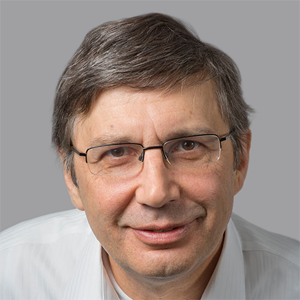
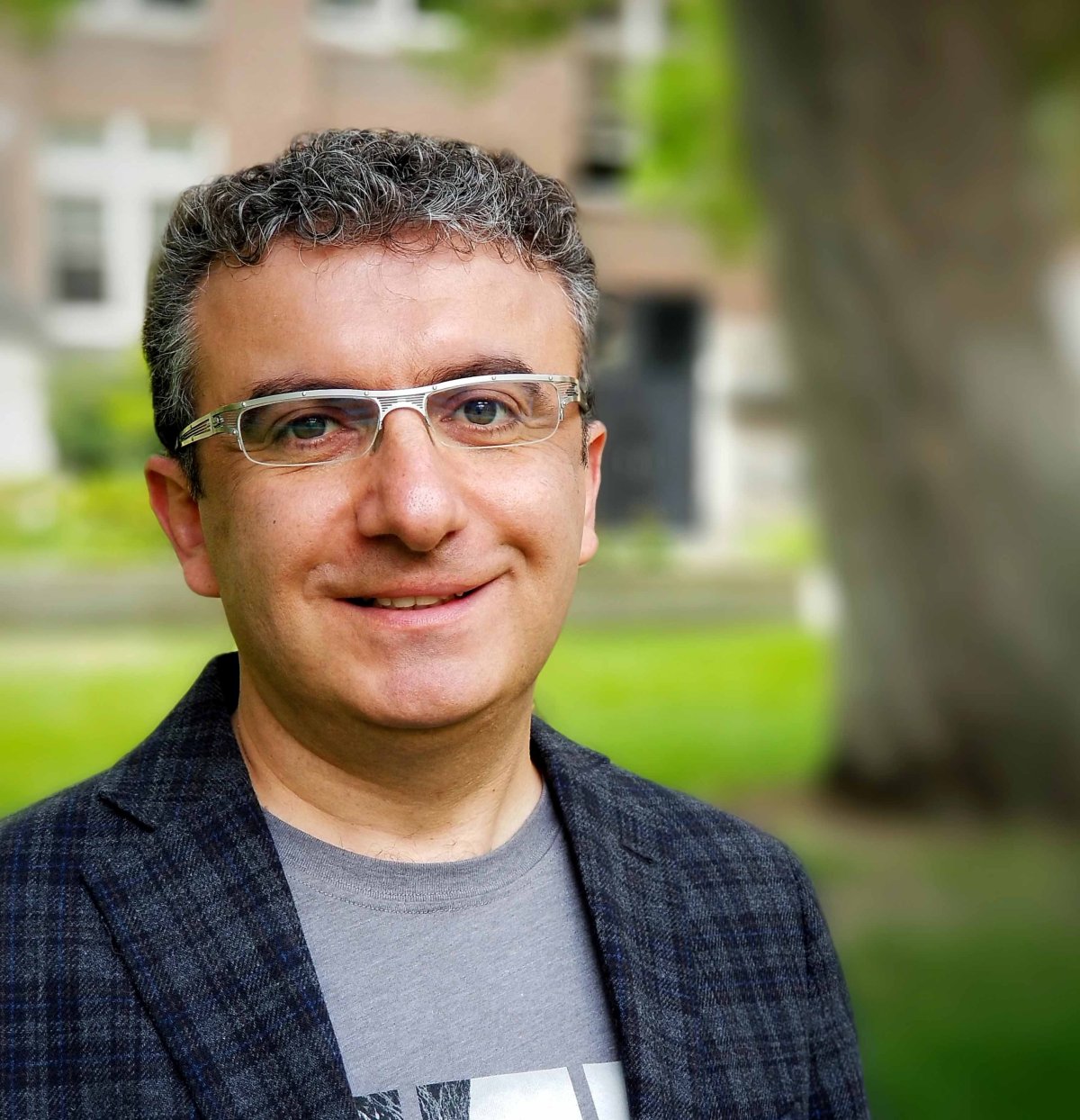
Prof. Radha Boya leads the Angstrofluidics Group at the University of Manchester, pioneering research on angstrom-scale fluidics and 2D material applications. Her work has redefined molecular transport and nanochannel engineering. Research Interests: Boya explores quantum devices, ion sieving, and mass transport via atomically thin channels, leveraging graphene and boron nitride. Her lab develops protocols for precise nanofabrication. Articles Focus: Recent publications detail innovations in unclogging nanochannels, magnetic imaging of 2D materials, and ionic liquid interactions with carbon surfaces. Awards: Royal Society Fellowship (2018) L’Oréal-UNESCO Rising Talent (2018) Fellow of the Royal Society of Chemistry (2021) Leadership: Boya promotes gender equity in STEM through initiatives like Women in Science UK-Brazil partnerships.
Kumar Varoon Agrawal is an Associate Professor at École Polytechnique Fédérale de Lausanne (EPFL), holding the Gaznat Chair for Advanced Separations. He is affiliated with the School of Basic Sciences (SB), the Institute of Chemical Sciences and Engineering (ISIC), and the Laboratory of Advanced Separations (LAS) in Sion, Switzerland. Additionally, he contributes to the Swiss Doctoral School in Chemical and Bioengineering (SCGC) and serves as Vice President of the Confédération des Chimistes et des Génie Chimique (CCE). Research Focus: Material Chemistry & Engineering at the Ångström scale for high-performance inorganic and hybrid membranes, emphasizing energy-efficient molecular separations. Teaching: Courses include Fundamentals of separation processes , Diffusion and mass transfer , and Chemical engineering product design . Scientific Contributions: His 15 most recent publications (2025-2020) span topics like graphene pore engineering , 2D material synthesis , carbon capture , and gas separation membranes , with keywords such as Nanotechnology , Materials Science , and Molecular Transport . Subfields include Atomic-Scale Pores , Membrane Stability , and Industrial Scalability . Students and Collaborations: He advises 10 current PhD students and has mentored 9 past PhD candidates in areas like graphene membranes , ion separation , and MOF films . He is an Academic Referent for the EPFL Carbon Team and a committee member for the EDCH Doctoral Program in Chemistry and Chemical Engineering.
Nikita Kavokine serves as Tenure Track Assistant Professor at École Polytechnique Fédérale de Lausanne (EPFL) within the School of Basic Sciences . His dual appointments span the Institute of Chemical Sciences and Engineering (ISIC) and the School of Chemical Sciences and Engineering (SCGC) , where he leads the Quantum Plumbing Lab (LNQ) and contributes to graduate teaching. Based at Building CH A2 398 in Lausanne, he maintains active research and instructional roles across EPFL's chemistry and chemical engineering programs. His research pioneers quantum nanofluidics and nanoscale transport phenomena , focusing on electron-ion coupling mechanisms in confined geometries. Key investigations include quantum friction in water-carbon interfaces, hydroelectric energy conversion through nanochannels, and plasmon-hydron resonances in two-dimensional materials. His work bridges condensed matter physics, electrochemistry, and fluid dynamics to develop fundamental principles for next-generation nanofluidic devices and quantum sensors. Analysis of his 15 most recent publications (2023-2025) reveals three dominant research thrusts: quantum-enhanced energy conversion (evident in hydroelectric drag and electron cooling studies), non-classical ion transport (including ionic Coulomb blockade and interaction confinement), and emergent quantum hydrodynamics (momentum tunneling, collective modes). These publications consistently integrate advanced numerical methods with nanoscale experimental systems, establishing new paradigms for solid-liquid quantum interactions. Kavokine currently supervises three PhD students: Gispert Peter , Lu Hao , and Rigaux Killian David . His teaching portfolio includes graduate courses in Statistical Mechanics for Chemistry and Nanofluidics , emphasizing theoretical frameworks for many-particle systems and nanoscale fluid dynamics. Research funding supports his laboratory's exploration of quantum effects in nanofluidic channels, though specific grant details are not provided in source materials. The Quantum Plumbing Lab (LNQ) operates at the forefront of nanoscale quantum transport research, utilizing advanced nanofabrication and characterization techniques to probe electron-ion coupling phenomena. The lab's interdisciplinary team combines expertise in quantum physics, electrochemistry, and fluid dynamics to investigate fundamental limits of energy conversion and transport at atomic scales, with particular focus on graphene-based systems and angstrom-scale confinement.
Dr. Ashok Keerthi is a Presidential Fellow (Academic) in Materials Chemistry at The University of Manchester, affiliated with the National Graphene Institute. He holds a PhD from the National University of Singapore and an MSc from the University of Hyderabad. His research focuses on nanographenes, 2D materials, nanofabrication, and self-assembly, with applications in energy, advanced materials, and nanofluidics. He has received prestigious awards like the Ramsay Memorial Fellowship (2019) and Researcher of the Year (2020). His work includes groundbreaking studies on angstrom-scale channels, nanofluidic transport, and graphene-based materials. He collaborates widely and contributes to datasets like CCDC crystal structures. Current projects explore nanochannel fabrication, ion transport mechanisms, and energy conversion systems. Education: PhD (National University of Singapore), MSc (University of Hyderabad). Research Interests: Design and synthesis of nanographenes and 2D materials Nanofluidic systems and ion transport Self-assembly and supramolecular chemistry Applications in energy storage and sensing Key Contributions: Developed angstrom-scale nanochannels for ion transport, pioneered electric field-mediated unclogging mechanisms, and advanced graphene-based capacitor technologies. His articles highlight innovations in nanofabrication, material characterization, and quantum emission sensing. Awards: Ramsay Memorial Fellowship (2019) Researcher of the Year (2020) Advising and Grants: Supervises PhD students in nanomaterials and energy systems. Engaged in grants related to advanced materials and nanofluidics. Active in professional organizations like the Royal Society of Chemistry and Materials Research Society. Labs/Teams: Part of the National Graphene Institute, collaborating on 2D materials and nanofluidic platforms. Involved in datasets for crystallographic and material science studies.
Harish Vashisth serves as Professor of Chemical Engineering & Bioengineering at the University of New Hampshire, where he teaches graduate courses including Advanced Chemical Engineering Thermodynamics and Computational Molecular Bioengineering. His research focuses on computational approaches to biomolecular problems with applications in therapeutic design and materials discovery. His educational background includes: Ph.D. in Chemical Engineering from Drexel University Bachelor of Technology in Chemical Engineering from National Institute of Technology Research Expertise: Dr. Vashisth specializes in Computational Biophysics, Chemical Physics, and Soft Matter Self-assembly. His laboratory employs molecular thermodynamics and statistical mechanics to investigate complex macromolecules including proteins, nucleic acids, and colloids. This work bridges fundamental biophysical principles with applications in drug design, biomaterials engineering, and artificial water channel development. Publication Trends: Analysis of 15 most recent publications (2023-2025) reveals dominant themes in viral peptide-receptor interactions, transmembrane domain dynamics, and light-responsive colloidal systems. His group consistently integrates molecular dynamics simulations with quantum chemistry methods, demonstrating strong interdisciplinary collaboration between computational and experimental approaches in biophysical chemistry. Scientific Recognition: No major awards or fellowships are documented in current profile Academic Leadership: Dr. Vashisth supervises doctoral research in chemical engineering and bioengineering, teaching core graduate courses while directing the Vashisth Research Group. His work has secured federal research funding for projects on biomolecular modeling and soft matter systems, particularly in biomimetic membrane development. Research Infrastructure: The Vashisth Research Group operates within UNH's Chemical Engineering & Bioengineering department, utilizing high-performance computing for molecular simulations. The lab collaborates extensively with experimental groups on projects involving artificial water channels, viral replication mechanisms, and novel biomaterials for Angstrom-scale separations.
John H. Cushman is a University Distinguished Professor at Purdue University, holding appointments in both the Department of Earth and Atmospheric Sciences and the Department of Mathematics . With a Ph.D. in Mathematics and Soil Physics from Iowa State University (1978), his career spans over four decades of research and teaching. Educational Background: B.S. in Mathematics (1975), Iowa State University M.S. in Mathematics and Soil Physics (1976), Iowa State University Ph.D. in Mathematics and Soil Physics (1978), Iowa State University Cushman’s research focuses on the physics of fluids in porous media across scales from picoseconds/angstroms to years/miles. Key areas include species separation in micropores , non-Markovian dispersion theories , swelling biopolymer systems , environmental contaminant transport , and gene transconjugation in microbial populations . Recent work explores Lagrangian trajectory analysis and micromorphic continuum theories for plate tectonics. Publication Trends show expertise in stochastic hydrology , anomalous diffusion , and multiscale modeling . His articles frequently bridge statistical mechanics , porous media physics , and environmental applications , with a strong emphasis on Levy processes , nonlocal transport , and swelling systems . Awards and Recognitions: University Distinguished Professor (2005) Fellow, American Geophysical Union (1996) Herbert Newby McCoy Award (1995) Graduate Mentor Award (2006) Cushman has advised numerous graduate students (e.g., M. Park , N. Kleinfelter , M. Moroni ) and received continuous NSF and institutional research support . His work impacts environmental engineering , nanofluidics , and geophysics , with applications to groundwater contamination , food drying , and biomedical systems .
Hisham Mazal is a Research Fellow at the Max Planck Institute for the Science of Light (MPL), part of the group led by Prof. Vahid Sandoghdar. His research focuses on advancing cryogenic super-resolution fluorescence microscopy to study protein structures in native environments. Key objectives include developing workflows for correlative light-electron microscopy using vitrified samples and enhancing detection sensitivity for small proteins via machine learning. Education: BSc in Biotechnology Engineering (ORT Braude College, 2010-2013), MSc in Chemical and Biological Physics (Weizmann Institute, 2013-2015), PhD in Single-Molecule Protein Dynamics (Weizmann Institute, 2016-2020). Joined MPL as a postdoc in 2020. Research interests span cryogenic microscopy innovations, protein dynamics, membrane protein analysis, and machine learning applications in imaging. His work bridges structural biology and biophysics, with recent contributions to PIEZO1 channel studies, α-Synuclein aggregation, and sub-10kDa protein detection. Notable collaborations include work on AAA+ protein machines and enzymatic activity modulation, leveraging single-molecule FRET and advanced microscopy techniques. His lab integrates interdisciplinary approaches to uncover functional protein mechanisms at atomic scales.
Dr. Jue Hou is a Senior Research Fellow and DECRA Fellow at RMIT University's School of Engineering. He holds a BS in Materials Chemistry from Peking University (2011) and a PhD in Materials Science from ICCAS (2016). His postdoctoral work included roles at Monash University (2017–2019) and CSIRO (2019–2022). His research focuses on MOFs, membrane separation, photonic crystals, sensors, and bio-inspired materials. Key projects include developing MOF-based membranes for separation and photonic sensors for intelligent packaging and environmental monitoring. Dr. Hou's teaching interests include courses such as PROC2088 Process System Design and OENG1167/OENG1168 Capstone Project. He is actively supervising PhD and Masters students in areas like ammonium-selective membranes, lithium extraction, and bioinspired ion transporters. His awards include the ARC DECRA Fellowship (2022–2025) and the Rod Rikards Fellowship (2025). He collaborates widely, with ORCID 0000-0003-0325-6979 and LinkedIn profile linked. His research outputs span 49 publications, with recent work emphasizing nanofluidic devices, ion selectivity, and sustainable separation technologies. He engages in editorial roles (e.g., Biomimetics) and professional memberships (e.g., Membrane Society of Australasia). His lab focuses on translating MOF-based innovations into practical applications for energy and environmental challenges.
Professor Sir Andre Geim is Regius Professor and Royal Society Research Professor at the University of Manchester and Distinguished Visiting Professor at the National University of Singapore. Renowned for isolating graphene, he received the 2010 Nobel Prize in Physics and remains the only individual awarded both a Nobel and Ig Nobel Prize (for levitating frogs in 2000). Geim's research centers on condensed matter physics with revolutionary contributions to two-dimensional materials. His work explores quantum phenomena in graphene systems, diamagnetic levitation, and van der Waals heterostructures. Key focus areas include electronic band structures, quantum transport, and novel material properties at atomic scales, establishing new research fronts like twistronics and gecko tape technology. Analysis of his 2013-2021 publications reveals sustained innovation in graphene-based systems, with dominant themes in moire superlattices, ion transport through angstrom-scale membranes, and quantum phase engineering. His work consistently bridges fundamental physics with potential applications in quantum computing and nanofluidics. Major scientific recognitions include: Nobel Prize in Physics (2010) Ig Nobel Prize (2000) John Carty Prize from the US National Academy of Sciences Copley Medal from the Royal Society Geim leads a world-leading research group at Manchester, directing extensive experimental programs in 2D materials. His work has attracted substantial funding from the Royal Society and international bodies, supporting breakthroughs that initiated three major research fronts and generated multiple record-breaking highly-cited publications.
Andre Mkhoyan is a Professor in the Department of Chemical Engineering and Materials Science at the University of Minnesota Twin Cities, operating within the College of Science and Engineering. He leads the Analytical Electron Microscopy Lab , focusing on atomic-scale materials characterization. Research Focus: Sub-Angstrom resolution transmission electron microscopy (TEM/STEM), quantitative spectroscopy, nanomaterials, and electron beam channeling phenomena Key Facilities: Access to aberration-corrected FEI Titan and Thermo Fisher TALOS FX200 transmission electron microscopes His research group has produced groundbreaking work in Science , Nature , and Nature Materials publications, covering topics like spintronic device degradation , 2D material interfacial states , and metal-organic framework stability . Recent scientific recognition includes Fellowship in the Microscopy Society of America (2024). Notable achievements include: $1M+ in research funding from NSF, SRC, and University initiatives Development of novel TEM sample preparation techniques Mentoring 15+ graduate students including Supriya Ghosh and Hwanhui Yun The lab's technological impact spans semiconductor manufacturing (through SRC partnership), materials discovery (graphene oxide for filtration), and fundamental understanding of crystal defect behavior at nanoscale dimensions.