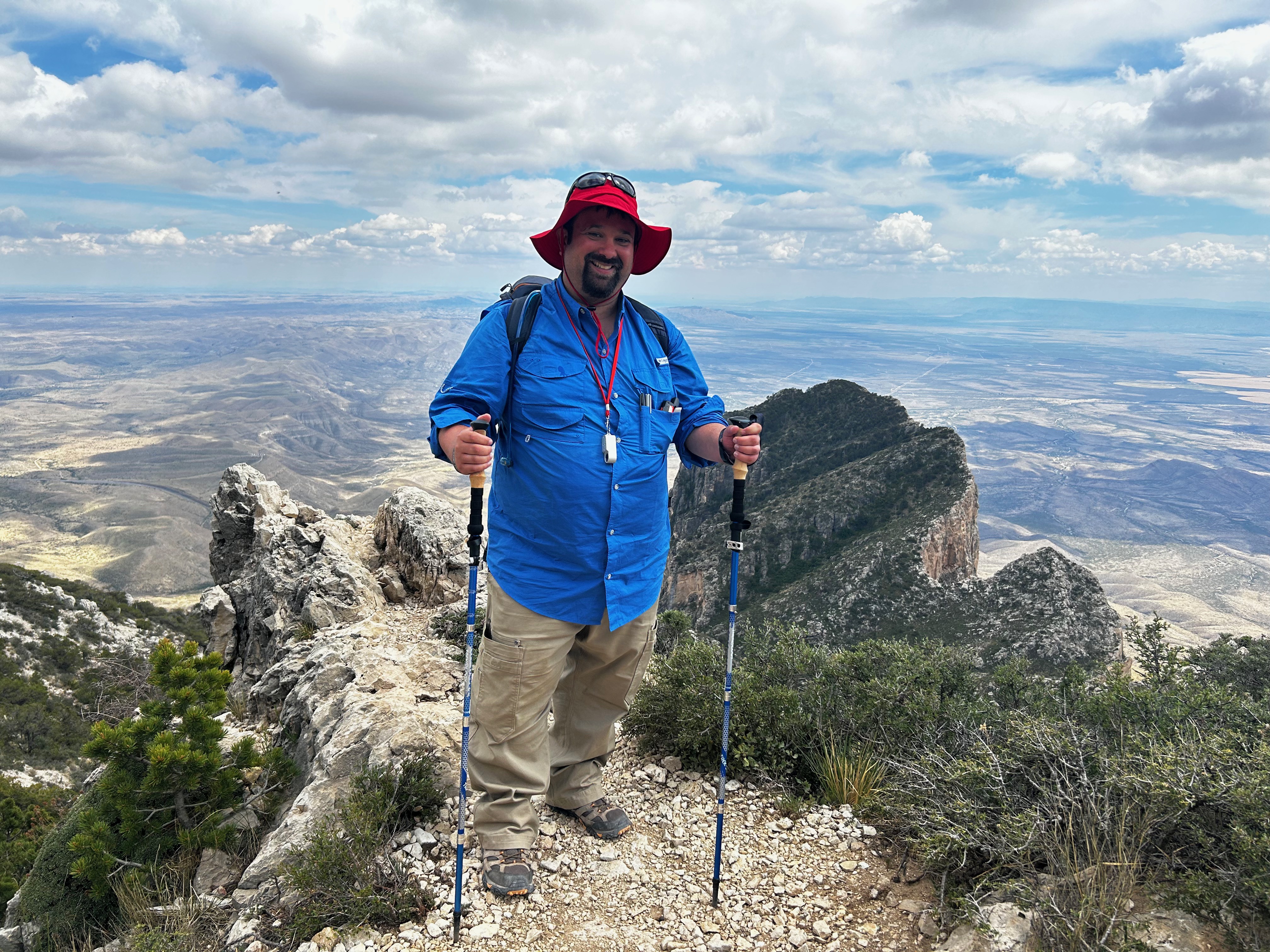
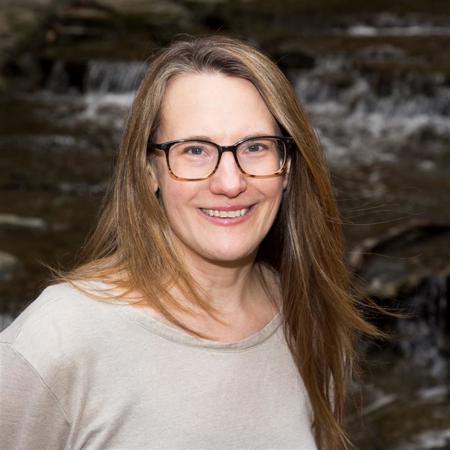
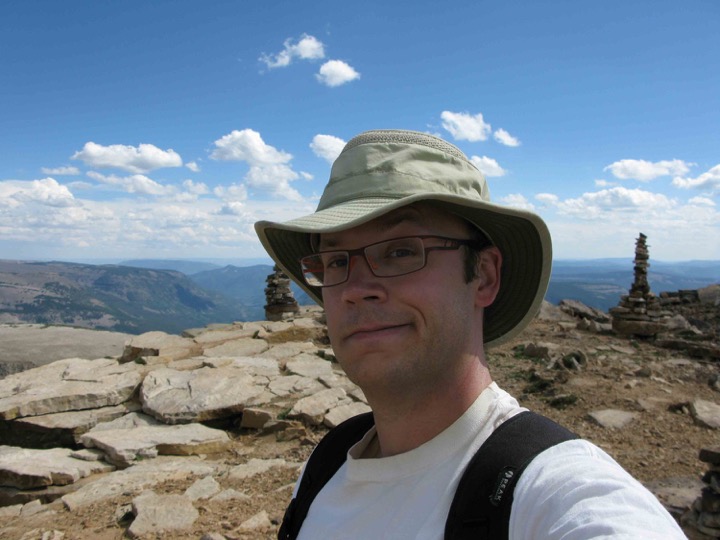
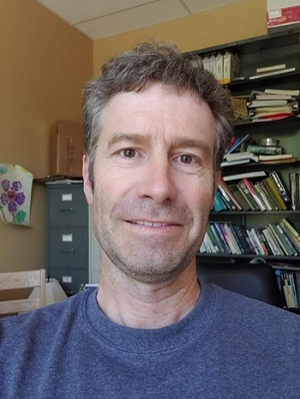
Richard Hodel is an Assistant Professor in Biological Sciences at Northern Arizona University , specializing in plant phylogenomics, evolutionary biology, and genetics. His research focuses on resolving complex evolutionary relationships in angiosperms through genomic data and taxonomic analysis. Key research areas: phylogeography, polyploidy, hybridization, and bioinformatics Recent work includes resolving the Pyrus (pear) phylogeny, studying reticulate evolution in Rosaceae, and developing AI practices in botanical research. Methodological expertise in genome skimming, RAD-seq, and phylogenetic conflict analysis.
Matthew G. Johnson is an Assistant Professor in Biological Sciences at Texas Tech University and Director of the E.L. Reed Herbarium. He holds a B.S. and Ph.D. from Duke University, focusing on plant phylogenomics and the evolution of mosses like Sphagnum. His research integrates fieldwork, bioinformatics (e.g., HybPiper tool development), and computational analysis to study genome evolution, polyploidy, and ecological genetics. His lab bridges field biology and computational methods, emphasizing herbarium specimen use. Johnson collaborates on projects like the Sphagnome Project and contributes to open-source phylogenetic tools. His work spans moss systematics, plant mating systems, and phylogenomic method development, with outreach in STEM education through digitized collections. Education: B.S. and Ph.D. in Biology from Duke University Postdoc: Chicago Botanic Garden (bioinformatics for moss phylogenetics) Labs/Teams: Mossmatters Lab at Texas Tech, E.L. Reed Herbarium Research Themes: Plant phylogenomics, genomic evolution in mosses, bioinformatics tool development, and ecological genetics of peat mosses. His lab focuses on hybridization, polyploidy, and phylogenetic methods using targeted sequencing (Hyb-Seq). Publications: Over 50 peer-reviewed articles on phylogenomics, moss evolution, and bioinformatics tools. Recent work includes studies on allopolyploidy in Physcomitrium and Entosthodon, and the Angiosperms353 universal probe set for flowering plant phylogenomics.
Professor Rachel Warnock leads the Systems Paleobiology research group at the GeoZentrum Nordbayern , part of Friedrich-Alexander University Erlangen-Nuremberg (FAU). Her work bridges paleontological and molecular data through advanced phylogenetic methodologies. Develops Bayesian phylodynamic frameworks Specializes in fossil data integration Focus on speciation/extinction processes Recent publications emphasize Bayesian phylogenetic inference , fossilized birth-death modeling , and macroevolutionary analysis across biological and cultural systems. She co-authored the FossilSim and FossilSimShiny packages for fossil occurrence simulation. Her research team includes collaborators from computational biology, paleontology, and evolutionary ecology domains, operating within FAU's Paleontology Department .
Anne Bruneau is a Professor in the Department of Biological Science at Université de Montréal. She serves as Principal Investigator of Canadensys, Co-PI of the Legume Phylogeny Working Group, and Co-PI of the CABO Project. Her research focuses on reconstructing phylogenetic relationships in angiosperms, particularly within the legume family (Fabaceae), to develop predictive classification systems and understand species evolution. Bruneau's research integrates molecular phylogenomics, morphological studies, and biogeographical analyses to examine floral evolution, pollination mechanisms, and ecological adaptations in tropical plants. She employs diverse approaches including DNA sequencing and ecological dataset analysis to advance global plant biodiversity understanding.
Professor Dame Jane Francis is the Director of the British Antarctic Survey and a Professor of Palaeoclimatology at the University of Leeds’ School of Earth & Environment. Her research focuses on palaeoclimatology and palaeobotany , particularly the use of fossil plants to understand past climate change and biodiversity in polar regions. She has led numerous expeditions to Antarctica and the Arctic, including projects funded by NERC and NSF, and has held leadership roles in international polar science initiatives. Education: PhD from University of Southampton (1982), NERC Postdoctoral Research Fellow (1982-1984), Royal Society Leverhulme Trust Senior Research Fellow (2003-2004) Her research spans greenhouse and icehouse periods , with emphasis on Antarctic and Arctic climates . Recent publications explore Cretaceous stratigraphy , Eocene-Oligocene climate transitions , and Paleocene leaf flora , highlighting interdisciplinary work in geochemistry , sedimentology , and climate modeling . She has contributed to policy and climate science through roles like Chair of the Antarctic Treaty Consultative Meeting’s Working Group on Science & Operations. Scientific Awards: Dame DCMG (2017), Polar Medal (2002), Coke Medal (2014), Sorby Medal (2010), Royal Society Leverhulme Fellowship (2003-2004), and multiple honorary doctorates. Collaborations: NERC, NSF, Geological Survey of Canada, University of Svalbard, and international polar research networks. Jane Francis leads the BAS-Arctic Working Group and has been instrumental in advancing UK polar science. Her work underscores the sensitivity of polar regions to climate change and informs modern climate policy and environmental conservation efforts.
Dr. Daniela E. Winkler is a Postdoc (Assistant) at Kiel University's Zoological Institute and Museum, working within the Böhmer Group focused on Zoology and Functional Morphology of Vertebrates. She conducts research on dental microwear texture analysis across various vertebrate species, both extant and fossil, to reconstruct dietary patterns and ecological adaptations. Her position includes teaching responsibilities and she is currently working on her habilitation. Dr. Winkler earned her doctorate from the University of Hamburg on the functional morphology of ungulate dentition (magna cum laude). Her academic journey includes postdoctoral research at the University of Mainz (2016-2020) in the ERC project 'Vertebrate Herbivory' with Prof. Thomas Tütken, followed by a JSPS Postdoctoral Fellowship at the University of Tokyo (2020-2022) with Dr. Mugino O. Kubo. Since December 2022, she has been working at Kiel University on her habilitation while serving as an elected member of the CAU Postdocs' Interest Group (2023-2025). Her research primarily focuses on functional morphology and dental wear analyses across diverse vertebrate groups including mammals, lepidosaurs, and archosaurs. Through dental microwear texture analysis, she investigates how wear patterns can reveal information about diet, habitat, and paleoecology. Her experimental approach combines feeding experiments with analysis of collection material, examining both microscopic and macroscopic wear patterns. She is particularly interested in how internal (phytoliths) and external (mineral dust) abrasives affect dental wear formation, and how these patterns can be used for dietary reconstruction in both extant and extinct species. Dr. Winkler has expressed interest in expanding her research to include invertebrate mouthparts, recognizing that all feeding structures show signs of wear. Analysis of Dr. Winkler's recent publications (2023-2025) reveals a strong methodological focus on dental microwear texture analysis (DMTA), with particular attention to instrument comparability and standardization across different optical profilometers. Her work spans diverse taxa including sauropod dinosaurs, crocodyliforms, small mammals, and even invertebrates like crickets, demonstrating the broad applicability of DMTA across vertebrate systems. A significant portion of her research involves controlled feeding experiments with model organisms like guinea pigs and rats to establish baseline relationships between diet composition and resulting microwear patterns, with applications in paleontology, ecology, and evolutionary biology. CAU DenkRaum Fellowship (2024-2026) for interdisciplinary work on 'Energy in the Changing Times and the World' Dr. Winkler serves as an active member of the CAU Postdocs' Interest Group and has been involved in several collaborative research projects. Her teaching responsibilities include practical exercises and lectures in fundamental zoology (biol102), biodiversity identification (biol104), and vertebrate evolution courses (biol-261/biol-261b), including outdoor excursions to locations like the Wadden Sea. She has supervised student research projects within the Böhmer Group and collaborates extensively with researchers across multiple institutions in Germany, Japan, and Switzerland. As part of the Böhmer Group at Kiel University, Dr. Winkler works within a multidisciplinary team that includes Prof. Christine Böhmer, Dr. Ghislaine Cárdenas Posada, and other researchers. Her laboratory work involves advanced imaging techniques and dental microwear texture analysis using optical profilometers, with applications spanning paleontology, ecology, and evolutionary biology. Her research has received media attention including coverage in Spiegel online (October 6, 2024), DER SPIEGEL 41/2024, and Kieler Nachrichten (October 24, 2024).
Béatrice Albert serves as a Lecturer at Université Paris-Saclay within the Laboratoire Écologie, Société et Évolution (IDEEV), specifically in the “Plant diversity and evolution” research team. She has maintained continuous academic employment since 1998 as an Assistant Professor at Paris XI University (now part of Université Paris-Saclay), teaching genetics, molecular biology, and statistics across multiple institutions including Paris VII, Paris XIII, and the University of Sussex. Her educational foundation includes a PhD in Genetics and Evolution (1993-1996) and a Master in Biodiversity, Genetics and Evolution (1992-1993), both completed at Paris XI University. These qualifications established her trajectory in evolutionary biology and molecular genetics. Albert’s research centers on evolutionary developmental biology (Evo-Devo), with particular emphasis on pollen morphology and aperture pattern formation in angiosperms. She investigates how developmental mechanisms determine aperture patterns while examining the interplay between selective pressures and developmental constraints. Her methodology integrates experimental approaches with theoretical modeling to understand morphological evolution at cellular and organismal levels, bridging molecular genetics with macroevolutionary patterns. Publication analysis reveals a distinct research evolution: early work (1996-2002) focused on mitochondrial genome dynamics in plants and fungi, transitioning to pollen development studies (2003-2013) where she established expertise in microsporogenesis and aperture pattern ontogeny. Her recent publications demonstrate sophisticated integration of comparative phylogenetics with cellular developmental biology, particularly in monocots and eudicots. PhD student: Mohamed DIALLO (2018-2021) on “Interdisciplinary assessment of plant species translocations for conservation purpose” (co-supervised with Bruno Colas) Master’s student: Juliette BARON (2019) on “Cost assessment of exotic invasive species” (co-supervised with Christophe Diagne) She actively collaborates with researchers across France (A. Ressayre, P.-H. Gouyon), the UK (C. Furness), and USA (M. Yang), contributing to international projects while maintaining her core research program within the IDEEV laboratory’s plant evolution team.
Stephen R. Downie is a Professor of Plant Systematics in the Department of Plant Biology at the University of Illinois at Urbana-Champaign and serves as the Associate Dean for Curricula and Academic Policy in the College of Liberal Arts and Sciences. He is also the Curator of the University of Illinois Vascular Plant Herbarium. His work focuses on plant systematics, particularly the Apiaceae family (carrot, celery, and parsley family), with emphasis on the large subfamily Apioideae. Dr. Downie's research integrates molecular, morphological, and anatomical evidence to reconstruct evolutionary histories and clarify taxonomic relationships. His work spans from herbarium-based studies to advanced phylogenomic analyses, with international collaborations across multiple continents. He has made significant contributions to understanding chloroplast genome evolution and structural rearrangements in flowering plants. His recent publications (2019-2024) demonstrate a consistent focus on Apiaceae systematics, with particular attention to North American, East Asian, and Iranian genera. His work combines traditional morphological approaches with modern genomic techniques, addressing fundamental questions in plant evolution, biogeography, and taxonomy. The publications show a progression toward increasingly sophisticated genomic methodologies, including phylogenomics and complete chloroplast genome analysis. Dr. Downie has mentored numerous graduate students through their PhD and MS programs, with recent graduates including Rhiannon Peery (2015), Mary Ann Feist (2011), and Clark Danderson (2011). His laboratory has hosted numerous international visitors and postdoctoral researchers from institutions around the world, reflecting the global nature of his collaborative research program. His educational background includes a B.Sc. from the University of Guelph (1982), a Ph.D. from the University of Alberta (1988), and postdoctoral positions at the University of Michigan and Indiana University. This strong foundation has supported his distinguished career in plant systematics and evolutionary biology.
Andrea Case is a Professor in Plant Biology at Michigan State University and Chairperson of the Plant Biology department. She is affiliated with the Ecology, Evolution & Behavior Program and leads the Plant Evolutionary Ecology Lab at 138 Plant Biology Lab. Her research focuses on plant evolutionary ecology, reproductive biology, sexual-system variation, and mechanisms of species coexistence. Education: Ph.D., University of Toronto (2000) Her work explores ecological and evolutionary processes influencing species interactions, with recent studies including phylogenomic analyses of Lobelia populations and plant-soil feedback dynamics. She emphasizes interdisciplinary collaboration and sustainability in her lab's mission to advance biological understanding for societal benefit. Teaching: PLB 801: Foundations of Plant Biology
Dr. Jakub Baczyński is a researcher with affiliations at the University of Warsaw and the University of Georgia. He completed a postdoctoral internship in Plant Biology at the University of Georgia (2023–2025) following an internship at Johannes Gutenberg University Mainz (2017). His work focuses on evolutionary developmental biology, plant systematics, and phylogenetic comparative methods with emphasis on Apiaceae and campanulids. Current research explores floral pseudanthia evolution, inflorescence architecture, and adaptive trait diversification. Affiliations: University of Warsaw (primary), University of Georgia (postdoc) Key research themes: Evo-Devo of flowers, plant phylogeny, morphological adaptation Research interests include understanding how developmental mechanisms shape floral diversity, particularly in Apiaceae subfamily Apioideae. His work applies integrative approaches combining morphological analysis with molecular phylogenetics to unravel evolutionary patterns in plant structures like pseudanthia and wood anatomy. Recent studies examine non-consumptive predator effects and wood functional traits in Heliophila. Publications highlight exceptional lability in inflorescence structures and parallel evolution in island species. His work contributes to understanding both micro- and macro-evolutionary processes shaping plant diversity. No formal teaching roles or awards are listed, though active participation in international collaborations is evident through co-authorships.
Julian R. Starr is a Full Professor in the Department of Biology at the University of Ottawa, affiliated with the Faculty of Science . His research focuses on systematics, phylogenetics, and biodiversity of vascular plants, particularly the Cyperaceae (sedge) family. He leads the lab at the Center for Advanced Research in Environmental Genomics (CRAGE) , employing both morphological/anatomical techniques and modern molecular tools like next-generation DNA sequencing. Research interests include molecular systematics, phylogeny, evolutionary patterns, and taxonomic classification of plants. His work emphasizes resolving evolutionary relationships in challenging plant groups using genomic and morphological approaches. Recent studies address rapid radiations in angiosperms, biogeographic histories of sedges, and taxonomic revisions of understudied taxa. Publications span topics from discovering new species in Vietnam to analyzing global sedge distributions, with methodological innovations in phylogenomics. No scientific awards are explicitly mentioned, but his contributions reflect advanced expertise in plant systematics. He advises students through lab opportunities at CRAGE and collaborates internationally on biodiversity projects.
Donovan Bailey is a Professor in the Department of Biology at New Mexico State University (NMSU), affiliated with the College of Arts and Sciences. His research focuses on plant systematics, evolutionary biology, and the genetic mechanisms underlying plant hybridization and speciation. He specializes in the mustard (Brassicaceae) and legume (Fabaceae) families, with a particular emphasis on polyploid evolution, phylogenomics, and the integration of molecular, morphological, and fieldwork approaches. His expertise includes the study of homoploid and polyploid hybridization in wild and semi-domesticated plants, as well as the development of genomic resources for crop improvement. Recent work has explored genetic variation in Leucaena species, the phylogenetic relationships within Brassicaceae, and the impact of environmental factors like precipitation on plant diversification. Education: Not explicitly listed in the provided text. Lab Affiliation: Bailey Lab at NMSU, conducting research in molecular biology, phylogenetics, and plant taxonomy. His publications highlight advancements in plant genomics, including the creation of sterile leucaena germplasm and the analysis of genome-wide patterns in Aedes aegypti mosquitoes. Bailey has been recognized for his contributions, including the 2020 Asa Gray Award (Recipient: Jeff J. Doyle, mentioned in a collaborative work). Research activities engage both graduate and undergraduate students in projects spanning fieldwork, laboratory techniques, and computational biology, fostering interdisciplinary training in evolutionary science.
James Smith is a Teaching Fellow at the University of Portsmouth's Faculty of Creative and Cultural Industries, specifically within the School of Film, Media and Creative Technologies. His role centers on teaching and research in creative media disciplines. Research Focus: His scholarly work spans: Film Studies: Analysis of cinematic techniques and historical evolution Media Studies: Examination of media systems and societal impacts Creative Technologies: Development of digital tools for artistic expression Scientific Recognition: No awards, fellowships, or major honors documented Professional Activities: Contributed to the 'Phylogenomics and the rise of the angiosperms' dataset (2024) as creator 'Smith, J.' and served on the programme committee for 'Get In The Game 2024' workshop. No information available regarding student supervision, research grants, or laboratory teams.
Hugh Morris is a Senior Lecturer in Integrated Land Management at Scotland's Rural College , with a focus on Forestry & Land-based Engineering . He combines research and teaching to advance understanding of woody plant physiology and sustainable forest management.
Joey T. Shaw is a Professor at the University of Tennessee at Chattanooga, specializing in plant systematics and conservation biology. His work bridges traditional herbarium curation with modern molecular techniques and digital biodiversity informatics. PhD in Botany (Molecular Systematics and Chloroplast Evolution), University of Tennessee, Knoxville (2005) MS in Botany (Floristics, Herbarium Curation, Biodiversity Inventories), University of Tennessee, Knoxville (2001) BS in Biology, University of Tennessee at Chattanooga (1998) Shaw's research integrates floristic studies of the Southeastern United States with advanced molecular systematics and phylogeographic analysis . His lab focuses on: Baseline floristic data for conservation planning Chloroplast genome evolution in Prunus species Digitization of over 1 million Tennessee herbarium specimens Conservation metrics for rare and invasive plant species Public outreach through the Spring Wildflower Pilgrimage Recent publications highlight his leadership in: Digital herbarium workflows using AI/ML models Conservation status modeling for Tennessee flora Phylogenetic resolution in angiosperms Collaborative field-to-database research frameworks Scientific Awards : 2015 Elizabeth Ann Bartholomew Award Shaw actively mentors students through: Field botany programs Molecular systematics lab work Thesis supervision in plant ecology Outreach education initiatives