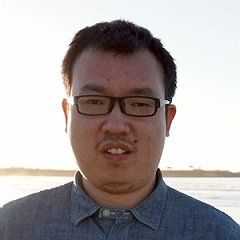
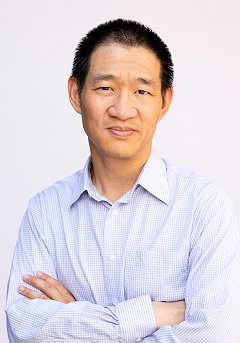
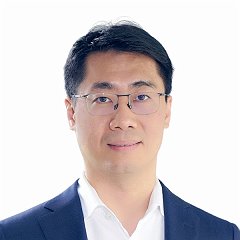
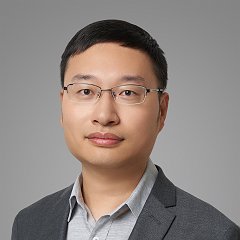
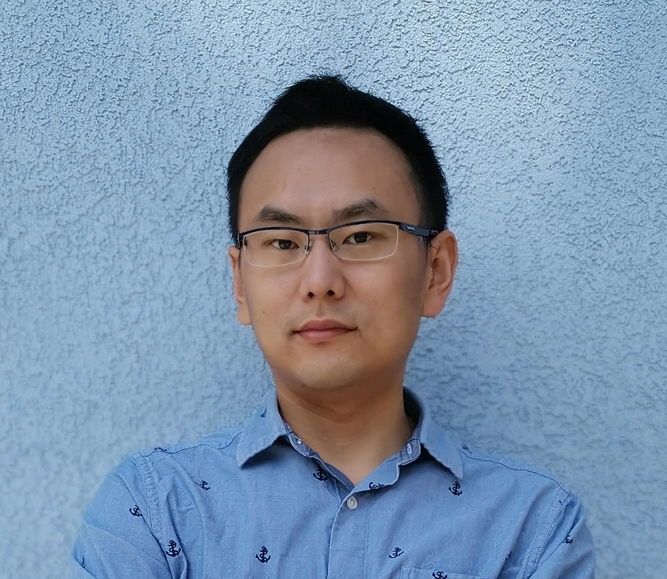
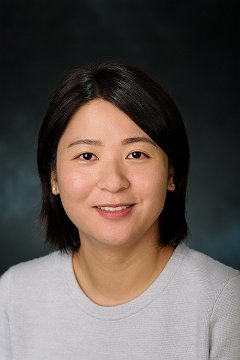
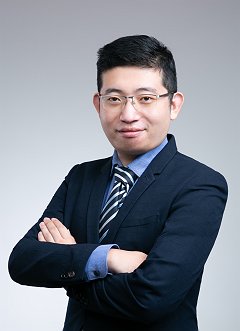
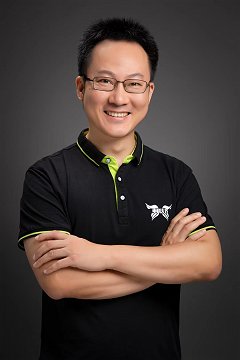
Ding Li is an Assistant Professor in the School of Computer Science at Peking University. He holds a Ph.D. in Computer Science from the University of Southern California (USC) and a B.S. from Peking University. His research focuses on program analysis, energy optimization for mobile applications, and security, with publications in top conferences including ICSE, FSE, and ASE. His research interests span: Program Analysis : Techniques to optimize mobile application energy consumption. System Security : Identifying vulnerabilities in Android apps and WebAssembly binaries. Cloud/Edge Computing : Enhancing serverless computing efficiency and federated learning security. Dr. Li's recent work explores the integration of large language models into pointer analysis and automated optimization of resource inefficiencies. His publications demonstrate a consistent focus on practical system optimizations and security enhancements across mobile, cloud, and machine learning domains. Awards: Viterbi Undergraduate Research Mentoring Award (2014)
David Lie is a Professor in the Department of Electrical and Computer Engineering at the University of Toronto. He holds additional appointments in the Department of Computer Science and the Faculty of Law. He is a Tier 1 Canada Research Chair in Secure and Reliable Systems, a research lead at the Schwartz Reisman Institute for Technology and Society, an Associate Director at the Data Sciences Institute, a Vector Faculty Affiliate, and a Senior Massey College Fellow. His educational background includes: BASc from the University of Toronto (1998) MS from Stanford University (2001) PhD from Stanford University (2004) David Lie's research spans computer security, privacy, and cybersecurity. He is renowned for pioneering the XOM architecture—a foundational model for modern trusted execution environments like ARM TrustZone and Intel SGX—and developing the widely adopted PScout Android permission mapping tool. His current work emphasizes program analysis, fuzzing, and symbolic execution to enhance software security and reliability, addressing critical vulnerabilities in mobile and system software. His recent publications reveal a strong trajectory in integrating machine learning with program analysis techniques. Key themes include optimizing symbolic execution for Android apps, leveraging LLVM IR for bug detection, and using predictive models to guide test generation. These contributions underscore a practical focus on scalable, automated security tools that bridge theoretical advances with real-world software vulnerabilities. His notable awards include: Best Paper Award at SOSP Tier 1 Canada Research Chair in Secure and Reliable Systems Senior Massey College Fellow No specific information on student advising or research grants was provided in the available text, though his extensive program committee service for top security conferences (OSDI, IEEE Security & Privacy, CCS, etc.) indicates significant academic leadership. David Lie actively contributes to interdisciplinary research ecosystems through his roles at the Schwartz Reisman Institute for Technology and Society (as research lead), the Data Sciences Institute (as Associate Director), and the Vector Institute for Artificial Intelligence (as Faculty Affiliate), fostering collaborations between security research, law, and societal impact studies.
Thorsten Riemke-Gurzki is a fulltime Professor for Web Technology, Corporate Portals & Usability at Stuttgart Media University in Stuttgart, Germany, where he has been working since 2008. Prior to his academic career, he worked as a freelance and employed consultant for various companies including SAP Germany. He describes himself as having 'grown up with hardware, CP/M, mailbox systems' and being 'web addicted since 1991,' positioning himself as both a frontend and backend developer and a 'web technology evangelist.' Professor Riemke-Gurzki's research interests span a comprehensive range of web technologies: Frontend and backend web development HTML, CSS, JavaScript and modern frameworks (React, React Native, Vue.js) Server-side technologies including Node.js, Go, Docker, and database systems Microservices architectures and single page applications Web 3D/AR, AI applications for the web, and Internet of Things User experience, usability, and content management systems His recent publications demonstrate a strong focus on practical web development techniques, covering topics from CSS fundamentals to advanced server implementation in Go and exploration of emerging technologies like JavaScript-based microcontrollers. His work bridges academic research with practical industry applications through his website riemke.dev where he shares technical articles and hosts a podcast on web development topics. Professor Riemke-Gurzki maintains an active presence in both academic and developer communities, with educational materials on GitHub and engagement with industry technologies like the Daimler UXLab truck. His approach emphasizes hands-on learning and practical application of web technologies.
Yang Liu is a Full Professor and University Leadership Forum Chair at the School of Computer Science and Engineering, Nanyang Technological University (NTU) in Singapore. He serves as Programme Director for HP-NTU Digital Manufacturing Corp Lab, Deputy Director of the National Satellite of Excellence of Singapore, and Cluster Director in Cybersecurity at Energy Research Institute @NTU. His research spans Cybersecurity , Software Engineering , and Artificial Intelligence . He leads research in malware modeling and detection, vulnerability analysis using machine learning and program analysis, formal verification of security systems, program specification learning, performance analysis, Android system security, and AI security, robustness, fairness, and explainability. His notable work includes the Process Analysis Toolkit (PAT) for model checking and the Deep-Series tools for deep learning testing. Professor Liu has published extensively in top-tier conferences including ASE, ICSE, FSE, ISSTA, and S&P. His research demonstrates strong trends toward integrating AI/ML techniques with traditional software engineering and security approaches, particularly focusing on large language models for code analysis, vulnerability detection, and program repair. Recent publications show a growing emphasis on blockchain security, smart contract analysis, and addressing security challenges in AI systems. NRF Investigatorship (Class 2020) ACM's Distinguished Speaker Nanyang Research Award (Young Investigator) Microsoft Asia Research Fellowship 20 Year ICFEM Most Influential System Award for PAT Multiple ACM SIGSOFT Distinguished Paper Awards Professor Liu actively advises students and has seen notable student achievements, including Singapore Data Science Consortium research award winners and AISG PhD Fellowship recipients. His research is supported by numerous grants including a $900,000 NTU-NAP grant for Formal Verification on Cloud and a $471,000 grant for Vulnerability Detection in Binary Code. He leads the HP-NTU Digital Manufacturing Corp Lab and contributes to RollsRoyce@NTU Corporate Lab research on complex business systems simulation.
Minxue Pan is a Professor and PhD supervisor at the Software Institute, State Key Laboratory for Novel Software Technology, Nanjing University, China. His research focuses on the dependability of complex software systems, with expertise spanning software modeling and verification, software analysis and testing, cyber-physical systems, mobile computing, and intelligent software engineering. Ph.D. in Computer Science and Technology from Nanjing University (2014), supervised by Prof. Xuandong Li B.Sc. from Nanjing University Studied at UC Berkeley's Department of Electrical Engineering and Computer Sciences (2009-2010) under Prof. Edward A. Lee Professor Pan's research interests center on improving software dependability through innovative approaches to modeling, analysis, and testing. His work spans traditional software systems, mobile applications (particularly Android), cyber-physical systems, and the application of AI techniques to software engineering problems. He has made significant contributions to GUI testing, vulnerability detection, and deep learning applications in software engineering. His recent publications (2024-2025) demonstrate a strong focus on applying advanced machine learning techniques to software testing and security challenges. Key trends include leveraging large language models for test migration, enhancing fault localization with graph learning and contrastive learning, developing specialized frameworks for Android security analysis, and improving test efficacy through GUI and functional equivalence. His work consistently targets real-world industrial settings and addresses practical challenges in mobile and complex software systems. ISSTA 2020 Distinguished Paper Award ICSE 2025 Best Artifact Award Professor Pan actively advises graduate students and has developed several notable tools including Q-testing (reinforcement-learning based Android testing), ISDChecker (model checking for interrupt-driven systems), PREFEST (preference-wise testing for Android), Sketchoid (GUI code search), and PI-REC (hand-drawn draft conversion). His research is supported by extensive publication records in top-tier software engineering venues including ASE, ICSE, FSE, ISSTA, and TOSEM. He teaches undergraduate courses in Advanced Programming with C++, Software System Design, and Software Construction, as well as graduate courses in Advanced Software Design. His laboratory work focuses on developing practical solutions for real-world software dependability challenges through the State Key Laboratory for Novel Software Technology.
Zhiyun Qian is the Everett and Imogene Ross Professor in the Department of Computer Science and Engineering at the University of California Riverside. His research bridges academic security research with practical hacking techniques, focusing on vulnerability discovery and analysis across operating systems, networks, and mobile platforms. His primary research interests include: System security: Automated cyber attacks/defenses, kernel vulnerability discovery, and security tool development Network security: TCP side channels, multi-path TCP flaws, and firewall evasion techniques AI/ML applications for security: LLM-integrated static analysis and reinforcement-learning-based fuzzing His work has led to critical discoveries including unfixable TCP side channel vulnerabilities (CVE-2016-5696) recognized with GeekPwn awards. His research methodology combines program analysis, reverse engineering, fuzzing, model checking, and machine learning to build practical security systems. Notable scientific awards include: GeekPwn 2016 most creative idea award Geekpwn 2017 winner award Applied Networking Research Prize Professor Qian actively mentors students in security competitions including Pwn2Own and GeekPwn. He serves on prestigious program committees including IEEE Security and Privacy (Oakland), ACM CCS, and USENIX Security. His teaching portfolio includes graduate courses CS 254 (Network Security) and CS 255 (Computer Security), along with undergraduate courses CS 153 (Operating Systems) and CS 165 (Computer Security). He leads the SecLab research group at UCR (GitHub: seclab-ucr, 3824★) developing security tools for kernel and Android ecosystems. Current projects focus on LLM-enhanced static analysis, precise vulnerability detection, and automated patch testing.
Andreas Zeller serves as Professor for Software Engineering at Saarland University and faculty at the CISPA Helmholtz Center for Information Security in Saarbrücken, Germany. His dual appointments position him at the intersection of academic research and practical cybersecurity applications, contributing significantly to both institutions' research profiles. Professor Zeller's research spans multiple dimensions of software quality assurance, with particular expertise in automated debugging techniques, mining software repositories for insights, specification mining, and security testing methodologies. His work consistently bridges theoretical foundations with practical implementation, resulting in tools and frameworks adopted widely in both research and industry contexts. Analysis of his recent publications reveals an evolutionary trajectory from foundational debugging work toward increasingly sophisticated grammar-based testing approaches, with notable integration of machine learning techniques in recent years. His research demonstrates consistent focus on improving software reliability through automated analysis, with growing emphasis on security applications including XML injection testing, GNSS module security, and binary file format vulnerabilities. Recipient of two ERC Advanced Grants (including the S3 project) ACM Fellow ACM SIGSOFT Outstanding Research Award Professor Zeller has successfully secured substantial research funding through competitive mechanisms including ERC grants, enabling his team to pursue ambitious research agendas. His leadership extends to mentoring through his roles as doctoral symposium co-chair and active participation in new faculty development initiatives. He maintains strong engagement with the research community through numerous program committee memberships and conference organization roles. At CISPA Helmholtz Center for Information Security, Zeller contributes to the center's mission through research focused on software security testing and analysis. His work on grammar-based testing and fuzzing directly addresses critical security challenges in modern software systems, with practical applications for improving software resilience against attacks.
Austin Mordahl is an Assistant Professor in the Department of Computer Science at the University of Illinois Chicago. His research focuses on improving the usability and reliability of software quality assurance tools, particularly static analyses and fuzz testing. Dr. Mordahl actively seeks students interested in cutting-edge research in software engineering at UIC. Dr. Mordahl's research interests span multiple areas of software engineering with a particular emphasis on: Static Analysis and Taint Analysis for software security Automated Testing techniques including fuzz testing Improving the usability and reliability of software quality assurance tools Configurable static analysis tools and their behavior Applying machine learning to triage and configure static analysis tools Lifting static analysis to work on software product lines Improving evaluations of fuzz testing tools His recent publications demonstrate a strong focus on addressing challenges in configurable static analysis tools, with particular attention to nondeterministic behavior, configuration spaces, and automatic testing and debugging approaches. Mordahl's work bridges theoretical foundations with practical applications, aiming to make software quality assurance tools more accessible and effective for developers. Dr. Mordahl has received several prestigious awards for his work: NSF Graduate Research Fellowship Awardee (2020) Eugene McDermott Graduate Research Fellowship Awardee (2020) ICSE 2019 Student Research Competition Winner Dr. Mordahl is actively involved in mentoring and seeks students interested in software engineering research. He has served on numerous program committees for top software engineering conferences including ICSE, ASE, ISSTA, and PLDI. His service to the academic community extends to artifact evaluation committees, demonstrating his commitment to research reproducibility and rigor.
Lu Xiao is an Assistant Professor in the School of Systems and Enterprises at Stevens Institute of Technology, where she conducts research in software engineering with a focus on software architecture, software economics, cost estimation, and software ecosystems. Dr. Xiao completed her PhD in Computer Science at Drexel University in 2016 under the supervision of Dr. Yuanfang Cai. Her doctoral research focused on the relationship between software architecture and quality attributes. Her research spans several key areas in software engineering with emphasis on empirical methods. She investigates how software architecture influences quality attributes, studies software economics and cost estimation techniques, and examines the dynamics of software ecosystems. Her work frequently analyzes real-world software projects, particularly those in the Apache Software Foundation, providing insights into software maintenance patterns, testing practices, and performance issues. Dr. Xiao has developed practical tools like SAIN for software architecture infrastructure and eFish'nSea for performance education. Analysis of Dr. Xiao's publication record reveals consistent contributions to empirical software engineering, particularly in software architecture analysis, testing methodologies, and performance issues. Her research often centers on Apache projects, demonstrating methodological rigor in studying real-world development practices. She has made significant advances in understanding test refactoring, mocking frameworks, and the identification of performance bottlenecks through linguistic analysis of issue reports. Dr. Xiao has actively contributed to the software engineering research community through service on program committees for major conferences including ASE, ICSE, ESEC/FSE, and ICSA. Her work on program committees spans multiple tracks including Research Papers, Student Research Competition, and specialized workshops. As an academic advisor, Dr. Xiao guides graduate students in research on software architecture analysis, testing practices, and performance optimization. Her research methodology combines empirical analysis of large software repositories with tool development and validation, ensuring practical relevance of her findings. Dr. Xiao leads research efforts focused on understanding the relationship between software architecture and quality attributes. Her current work on bots in pull requests represents cutting-edge research into automation in open source development processes, continuing her tradition of investigating real-world software engineering phenomena.
Maxime Lamothe is an assistant professor at Polytechnique Montreal specializing in empirical software engineering and mining software repositories. His research focuses on software APIs, build systems, and the intersection of AI and software engineering. Previously, he was a postdoctoral researcher at the University of Waterloo's Software REBELs Lab under Prof. Shane McIntosh. Dr. Lamothe's educational background includes: Ph.D. in Software Engineering from Concordia University (2020) M.Eng from Concordia University (2017) B.Eng from McGill University (2013) His research interests center around empirical studies of software engineering practices, with particular focus on API design and evolution, software build systems, and performance analysis. Dr. Lamothe investigates how developers interact with APIs, how build systems operate in practice, and how AI techniques can enhance software engineering processes while maintaining human oversight of critical decisions. Dr. Lamothe's publication record shows a consistent focus on empirical approaches to understanding software engineering practices. His work frequently examines API usage patterns, code review processes, and continuous integration systems. A notable trend is his growing interest in applying AI techniques to software engineering challenges while maintaining empirical validation of proposed solutions through rigorous case studies and longitudinal analyses. Dr. Lamothe actively serves the academic community as a reviewer for top journals including Transactions on Software Engineering (TSE), Empirical Software Engineering (EMSE), and Journal of Systems and Software (JSS). He has served on program committees for major conferences including ASE, ICSE, ESEC/FSE, MSR, and SANER across multiple years, with particular involvement in the NIER Track, Research Papers track, and Tool Demonstration tracks. Currently seeking Masters and Ph.D. students, Dr. Lamothe leads research at the intersection of traditional software engineering practices and emerging AI techniques. His work combines rigorous empirical methods with practical applications to solve real challenges in software development, with implications for improving API design, enhancing code review processes, optimizing build systems, and developing trustworthy AI-assisted software engineering tools.
Dr. Yutian Tang serves as an Assistant Professor (UK Lecturer) and Principal Investigator at the School of Computing Science, University of Glasgow, where he supervises PhD students and leads research in AI-driven software engineering. His academic journey includes a PhD from The Hong Kong Polytechnic University's Department of Computing. His research spans AI+SE integration , particularly focusing on Large Language Models for program analysis, software testing, and Android security. Key areas include: LLM-assisted vulnerability detection and repair Empirical studies of real-world software systems Privacy protection mechanisms Configuration compatibility in mobile applications Smart contract security optimization His publication portfolio shows a clear trajectory toward AI-augmented software engineering , with recent work demonstrating how LLMs can enhance taint analysis, binary code similarity detection, and test generation. This evolution reflects the field's broader shift toward AI integration while maintaining rigorous empirical validation. Award highlights include: Best Industry Paper Award at ISSRE'18 Elevation to IEEE Senior Member (2024) Three Android OS defects confirmed by Google Security Team As an active researcher and community contributor, Tang serves on 40+ program committees including PLDI, ICSE, and FSE. His work receives funding from National Natural Science Foundation of China, Shanghai Science Commission, OpenAI, and Google. Current projects focus on automated bug localization and LLM-based testing frameworks, with recent grants from OpenAI Cybersecurity and Google Cloud programs. He leads research groups investigating Android security and AI-assisted program analysis, collaborating with institutions like Lund University.
Lian Li is a Professor in the Institute of Computing Technology at the Chinese Academy of Sciences, where he leads the program analysis research group. He holds a PhD from the University of New South Wales, Australia, and a Bachelor's degree from Tsinghua University in Engineering Physics. His research focuses on developing innovative program analysis techniques and tools to enhance software reliability and security. His educational background includes a PhD in Computer Science from the University of New South Wales (2003-2007) with a thesis on "ScratchPad Management for Static Data Aggregates" under Professor Jinling Xue, and a Bachelor's degree in Engineering Physics from Tsinghua University (1993-1998). Lian Li's research primarily centers on program analysis techniques, particularly static analysis methods for software security and reliability. His group developed Wukong, a static analysis and detection system capable of identifying deep security vulnerabilities across functions, components, and complex dependencies in C/C++, Java, and Android applications. This tool has discovered thousands of errors in popular open-source software including Google Chromium, Bash, sed, and Hadoop, with hundreds confirmed by developers and over 50 CVEs assigned. His publication record shows a strong focus on program analysis, particularly context-sensitive pointer analysis, taint analysis, and vulnerability detection. His recent work (2021-2024) demonstrates continued innovation in context-free language reachability, efficient IFDS algorithms, and specialized analysis for generics and authorization vulnerabilities. His research spans cybersecurity, programming languages, and software engineering domains, with emphasis on practical applications for real-world software systems. ASE 2019 Distinguished Paper Award CCS 2022 Best Paper Honorable Mention Lian Li has guided numerous PhD and Master's students in computer system architecture and software theory. His research group maintains active collaborations across various software analysis domains, with funding supporting their work on tools like Wukong. They have developed significant intellectual property including multiple patents related to program analysis techniques. The program analysis research group he leads focuses on developing practical tools for software reliability and security. Their work bridges theoretical program analysis with real-world applications, particularly through the Wukong analysis system which has been successfully applied to major open-source projects.