- Machine Learning
- Computer Vision
- Image Processing
- +۳ مورد دیگر
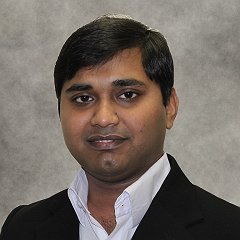
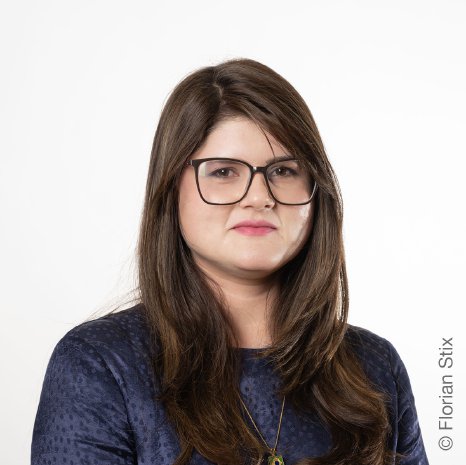
Sakeena Muntaha serves as a Junior Researcher at the University of Applied Sciences St. Pölten, affiliated with the Institute of Creative\Media/Technologies and the Department of Media and Digital Technologies since 2017. Currently on leave, she contributes to the institution's research mission through interdisciplinary projects spanning computer vision and applied machine learning. Her academic foundation includes a Master's degree in Computer Engineering from the National University of Sciences and Technology (NUST), Pakistan (2016) and a Bachelor's degree in Computer System Engineering from the NFC Institute of Engineering and Technology (NFCIET), Pakistan (2012). These qualifications underpin her technical expertise in visual computing systems. Dr. Muntaha's research program centers on machine learning and computer vision with dual application tracks: medical diagnostics (skin lesion segmentation, dermoscopy analysis) and environmental/urban systems (building footprint extraction, flood monitoring, real estate analysis). Her methodological approach integrates deep learning architectures with classical image processing techniques like level sets and Gabor filters, demonstrating versatility across domains from cultural heritage preservation to cybersecurity. Recent work shows increasing focus on robustness evaluation and real-world deployment challenges in vision systems. Analysis of her 15 most recent publications reveals strong thematic continuity in computer vision applications, with growing sophistication in handling real-world data constraints. Early work focused on medical imaging and malware detection, while recent publications emphasize urban infrastructure analysis and environmental monitoring, reflecting strategic alignment with societal challenges. The consistent use of deep learning frameworks across diverse domains highlights her technical agility. As an active member of the Media Computing Research Group, she contributes to projects including IMREA (Intelligent Multimodal Real Estate Assessment), Scribe ID AI (cultural heritage analysis), and ImmBild (location assessment via computer vision). Her collaborative research involves partnerships with institutions across Austria and Pakistan, though specific grant details and advising activities are not documented in available sources.