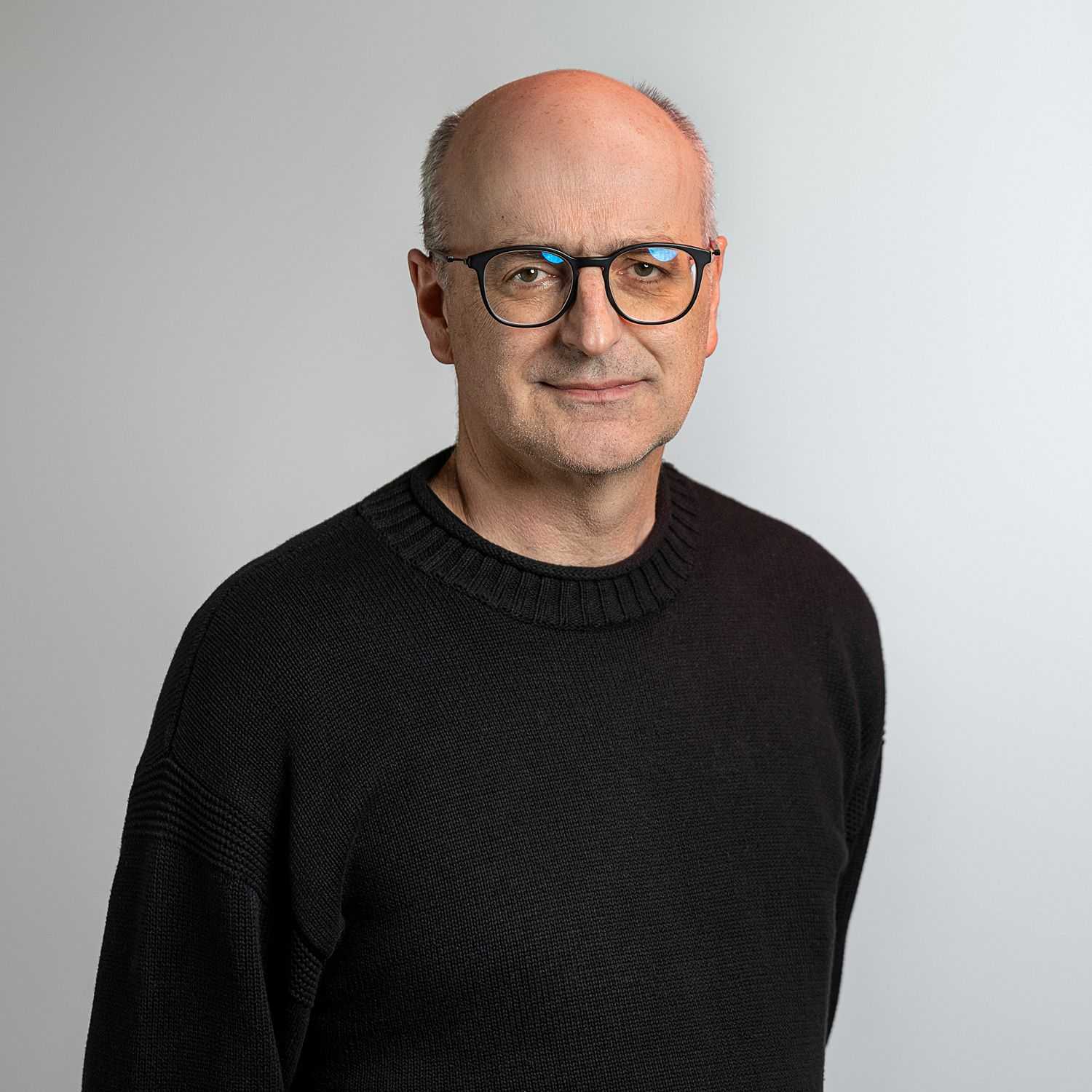
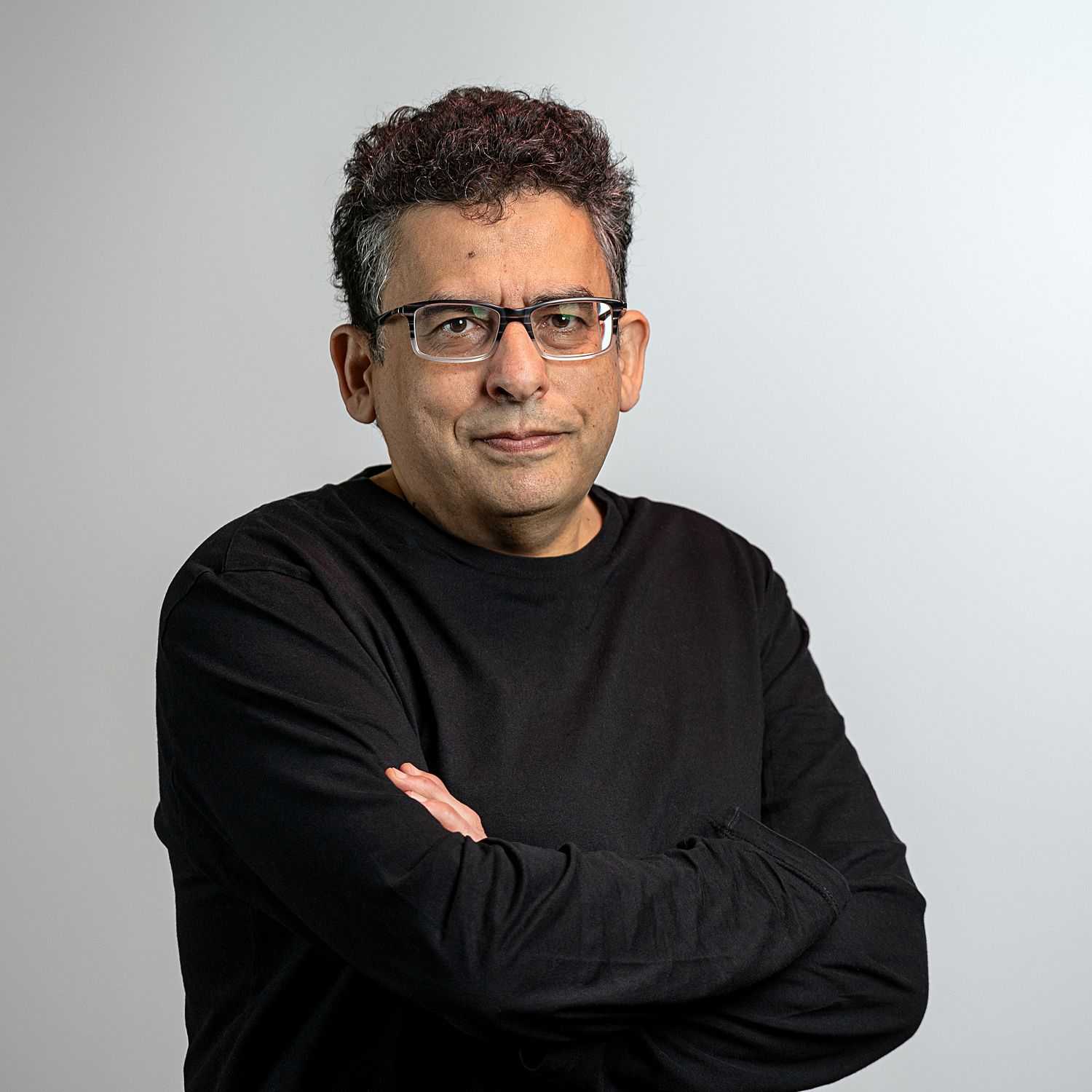
Shiva Houshmand is an Associate Professor in the Department of Mathematics and Computer Science at Santa Clara University's College of Arts and Sciences. Their research focuses on cybersecurity, password security, and digital forensics. B.S. in Mathematics from the University of Tehran M.S. and Ph.D. in Computer Science from Florida State University Research interests include password cracking techniques, IoT security, probabilistic algorithms, and forensic analysis. Recent work explores smartphone-wearable interactions, homophone-based attacks, and vulnerabilities in smart home systems. 15 most recent publications (2011-2025) demonstrate expertise in probabilistic password cracking, IoT forensics, and mobile security systems. Articles span topics from dictionary-based Viterbi algorithms to forensic data extraction in consumer devices.
Paulo Ferreira is a Professor in the Department of Informatics at the University of Oslo's Faculty of Mathematics and Natural Sciences. He specializes in programming technology with a focus on distributed systems, mobile computing, and fog/cloud computing. His research interests include: Distributed systems and programming of mobile devices Concurrency, parallelism, and replication Fog and cloud computing architectures Software security and adaptability Algorithms for garbage collection Professor Ferreira teaches "Programming Ubiquitous Things" (IN5600) in Spring and "Fog and Cloud Computing" (IN5700) in Autumn. His recent publications show a strong focus on transport mode detection using edge and fog computing, garbage collection optimization, and mobile application development. His work demonstrates trends toward more efficient resource utilization in distributed environments, particularly in mobile and edge contexts. He has received numerous awards including: Best Prize for Master Thesis supervision (Norsk Regnesentrals pris, Dec. 2023) Two Best Paper Awards at the ACM/IFIP/Usenix Middleware Conference Recognition of Service Award from ACM "Excellent teaching" awards at the University of Lisbon (2010/2011 and 2013/14) Professor Ferreira currently supervises PhD students Mahdieh Kamalian (transport mode detection) and Lyla Naghipour Vijouyeh (fog emulator development). He has led more than 15 research projects, served as an expert for the European Union for assessment of projects proposals under the 7th Framework Program, and serves on various program committees (e.g. Middleware, ICDCS, DAIS, etc.). He is a senior member of ACM and IEEE, serves on the editorial board of the Springer Journal of Internet Services and Applications, and is a member of the Steering Committee of EuroSys (ACM European Chapter of the Special Interest Group on Operating Systems).
Ektor Arzoglou serves as a Doctoral Student and Visitor (Doctoral Researcher) in the School of Electrical Engineering at an institution (university not explicitly named), working within the Networked Systems research group. His research employs system dynamics to analyze privacy paradoxes in social media and digital business platforms, with a focus on user behavior modeling and system interactions. His primary research areas include System Dynamics, Privacy, Business Platforms, Distributed Ledger Technology, Internet of Things, and Mobile Operating Systems. He investigates the structural causes behind privacy paradox phenomena, platform competition dynamics between iOS and Android ecosystems, and resilience mechanisms for IoT federations using distributed ledger technology. His methodological approach consistently applies system dynamics to model complex behavioral and technical interactions. Analysis of his publication timeline (2019-2023) reveals an evolution from mobile platform analysis to sophisticated privacy paradox modeling and IoT security applications. His work demonstrates strong interdisciplinary integration between computer science, behavioral modeling, and system theory, with increasing emphasis on real-world implications of privacy decisions and platform design. As part of the Networked Systems research group, his contributions advance understanding of complex networked systems through quantitative modeling of user-platform interactions, with implications for privacy engineering, platform governance, and resilient IoT architectures.
Professor Douglas Leith is the Chair of Computer Systems at the School of Computer Science and Statistics, Trinity College Dublin. His research spans online privacy (investigating data collection by Google/Apple devices and COVID-19 contact-tracing apps) and predictive analytics (machine learning for recommender systems and decentralized algorithms). Research Interests: His work includes privacy verification for digital ecosystems, differential privacy frameworks, and transformer-based neural networks for cold-start problems. Past projects cover wireless networks, multipath TCP, and nonlinear control theory for wind turbines. Awards & Grants: Royal Society Research Fellowship (1995-2005) Principal Investigator on multiple Science Foundation Ireland grants (e.g., €1.8M for privacy-enhanced analytics, €3M for green networks) Teaching: He instructs courses on Machine Learning (CS7CS4/CSU44061) and Optimization for Machine Learning (CS7DS2).
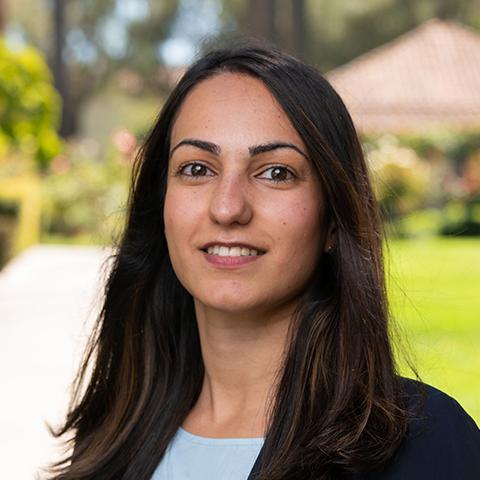
Eric Larson is a Professor and Associate Chair in the Department of Computer Science at Seattle University's College of Science & Engineering. He holds a PhD in Computer Science & Engineering from the University of Michigan and maintains an active research program focused on software engineering tools with educational applications. His research interests include: Software testing and verification Concurrency and parallel programming Educational tools for computer science education Static and dynamic program analysis Mobile security and Android applications Computer architecture and simulation Dr. Larson's publication record shows a consistent research trajectory from low-level architectural simulation (MASE, 2001) to educational concurrency tools (MDAT, 2013) and specialized analysis tools (EGRET, 2016). His work demonstrates strong practical applications in computer science education, with tools designed specifically to help students grasp challenging concepts in programming and systems. Notable contributions include: EGRET for regular expression testing MDAT for multithreading education Permeate for Android security analysis ANNA for computer architecture education SUDS for bug detection infrastructure MASE for microarchitectural simulation Dr. Larson actively collaborates with students, as evidenced by numerous co-authored publications, and maintains laboratory space for software analysis and educational tool development. His personal website (last updated September 2022) serves as a repository for his research tools and publications, reflecting his commitment to open dissemination of educational resources.
Christos Kaklamanis is a Full Professor and Chair of the Department of Computer Engineering and Informatics at the University of Patras, Greece, with significant leadership roles including President of Computer Technology Institute & Press "Diophantus" (CTI) from 2016-2021. His academic career includes serving as Vice-Chair of the Department (2009-2011 and 2003-2005) and Director of the Division of Applications and Foundations of Computer Science (1997-2003). Dr. Kaklamanis earned his S.B. in Computer Science and Engineering from MIT (1986), followed by S.M. (1989) and Ph.D. (1992) from Harvard University. He completed postdoctoral work at DIMACS (Center for Discrete Mathematics and Theoretical Computer Science) and worked as a research consultant for NEC Research Institute, Princeton. His research spans theoretical and applied computer science with expertise in algorithm design, computational complexity, communication networks, parallel and distributed computing, and algorithmic game theory. He has made significant contributions to network algorithms, particularly in optical networks and wireless communication, with recent expansion into computational social choice and educational technology applications. His work bridges theoretical foundations with practical implementations, especially in developing educational tools that make complex algorithms accessible. Analysis of his publication history reveals an evolution from foundational algorithm research toward practical applications of theoretical concepts, particularly in educational technology and community-oriented computing solutions. His recent work focuses on creating web and mobile applications that address real-world challenges in campus management, cultural tourism, and community engagement while maintaining strong theoretical underpinnings. Elected member of EATCS council (2009-2021) Active in ACM, IEEE, SIAM, and Technical Chamber of Greece Program Committee Chair for WAOA (Workshop on Approximation and Online Algorithms) Conference co-chair for ICALP (International Colloquium on Automata, Languages and Programming) As an educator, Dr. Kaklamanis has taught core courses including Theory of Computation, Parallel Algorithms, Communication Algorithms, and Cryptography. He has led major research initiatives including EU-FET projects CRESCCO and AEOLUS (as coordinator), EU-ICT Project EULER, and the "DIGITAL SCHOOL" project focused on national educational platforms. His leadership extends to directing research laboratories in Combinatorial Algorithms, Distributed Systems and Telematics, and Pattern Recognition. His current work continues to bridge theoretical computer science with practical applications, particularly in educational technology, with numerous recent publications focused on developing interactive learning tools and platforms that leverage algorithmic principles for educational and community benefit.
Milan Oulehla serves as an Assistant Professor at the Institute of Informatics and Artificial Intelligence within the Faculty of Applied Informatics, Tomas Bata University in Zlín, Czech Republic. Concurrently, he holds a position as Designer and Analyst of Information Systems at Mendel University in Brno since 2005 and functions as Security Analyst for the Penetration Testing Laboratory (PTLAB). His academic credentials include a Ph.D. in Engineering Informatics (2013-2020), MSc in Information Technology (2011-2013), and BSc in Applied Informatics (2007-2011) from Tomas Bata University and Palacký University respectively, complemented by Microsoft Certified Professional certification (2003). Dr. Oulehla's research specializes in Mobile Platform Security , leveraging Algebraic Structures for Cryptography and Artificial Intelligence Applications to address vulnerabilities in Android ecosystems. His work integrates penetration testing methodologies with practical cybersecurity solutions for governmental and military entities, focusing on malware detection and secure application development. His publication portfolio demonstrates concentrated expertise in mobile security frameworks, with recurring emphasis on Android platform vulnerabilities, cryptographic implementations, and AI-driven threat analysis across his research timeline. Notable recognitions include: Hakin9 IT SECURITY MAGAZINE award for "Hiden APK" article (2016), achieving cover feature status and inclusion in "Best 20 Hacking Tutorials" special issue (2018) Mayor of Zlín Award for diploma thesis on Android data encryption (2013) Dr. Oulehla directs the Mobile Security Section for the "Process Management and Application of Modern Technologies – Cybersecurity" conference series while conducting classified security training for Czech Police and Army units. His current applied research focuses on Google Play security mechanisms and mobile application infection detection systems.
Ahmad Y. Javaid is an Assistant Professor in the Electrical Engineering and Computer Science Department within the College of Engineering at The University of Toledo. He serves as the founding director of the Paul A. Hotmer Cybersecurity and Teaming Research (CSTAR) lab and holds the position of Cyber Education and Cyber Threat Mitigation Faculty Fellow. Dr. Javaid received his B.Tech. (Hons.) Degree in Computer Engineering from Aligarh Muslim University, India in 2008 and his Ph.D. from The University of Toledo in 2015, where he was awarded the prestigious University Fellowship Award. Prior to joining the University of Toledo faculty, he worked for two years as a Scientist Fellow in the Ministry of Science & Technology, Government of India. Dr. Javaid's research spans multiple domains within cybersecurity and human-machine interaction. His primary expertise lies in cyber security of drone networks, smartphones, and wireless sensor networks. He has conducted extensive research on human-machine teams and applications of AI and machine learning to attack detection and mitigation. His work bridges theoretical security frameworks with practical implementations across various domains including UAV security, physical layer communications security, and multimodal human-computer interaction systems. His recent publications demonstrate a continued expansion into nuclear-renewable energy systems security and advanced cybersecurity education frameworks for K-12 students. Dr. Javaid has secured significant research funding, with collaborative proposals totaling $9.7M (including all partners along with UToledo), of which $1.4M has been allocated specifically to him. Approximately $4.1M has been allocated to the University of Toledo from these projects. His research has been funded by prestigious agencies including the NSF, AFRL, NASA-JPL, Department of Energy, and the State of Ohio. He has also played a critical role in cultivating private gifts to support the CSTAR lab. IEEE Graduate Student Member (2012) IEEE Member (2015) IEEE Senior Member (2019) University Fellowship Award As an educator, Dr. Javaid has developed innovative cybersecurity curriculum modules and educational tools. He has served as a reviewer for high-impact journals and as a member of technical program committees for reputed conferences. His work extends to cybersecurity education initiatives targeting K-12 students, with projects focused on developing interactive learning modules to improve cybersecurity awareness at the high school level. He has published more than 85 peer-reviewed publications across journals, conferences, and posters, demonstrating consistent scholarly productivity with significant output in recent years. Dr. Javaid leads the Paul A. Hotmer Cybersecurity and Teaming Research (CSTAR) lab, which focuses on cutting-edge research in cybersecurity, particularly in the areas of UAV security, physical layer security, and human-machine teaming. The lab has received support from both government agencies and private sources, enabling the development of novel security frameworks and educational tools. His interdisciplinary approach bridges computer science, electrical engineering, cybersecurity, and human factors research, making significant impacts in both academic and practical cybersecurity domains.
Raja Khurram Shahzad is a University Lecturer at the Department of Communication, Quality Technology and Information Systems (KKI) at Mid Sweden University. His research and teaching focus on Machine Learning, Malware Analysis, and Data Science. Research Areas: His work bridges theoretical and applied aspects of artificial intelligence, cybersecurity, and educational technology. Key themes include: Formative assessment systems and personalized feedback tools Android malware detection using machine learning Integration of data science in quality technology Publications: Recent work explores educational software innovation (2023) and cybersecurity challenges in mobile systems (2018). His contributions span both pedagogical frameworks and technical solutions.
Lothar Fritsch serves as Associate Professor in Digital Security at the University of Oslo and concurrently holds a Professorship at Oslo Metropolitan University's Department of Information Technology. His research bridges technical cybersecurity mechanisms with societal implications, focusing on privacy engineering and critical infrastructure security through active publications and media engagement. Research interests span cybersecurity, privacy, societal security, and risk assessment methodologies. His work examines privacy harm categorization frameworks for organizational risk management, develops multilateral analysis methods for mobile applications, and investigates societal dimensions of cybersecurity failures. Current projects address practitioner adoption of privacy frameworks and infrastructure resilience in critical systems like energy grids. Analysis of recent publications reveals a clear trajectory toward operationalizing privacy frameworks in real-world contexts. The 2025 Journal of Information Security and Applications paper demonstrates how practitioners implement privacy harm categories in risk assessments, while the 2019 Annual Privacy Forum contribution established foundational methods for Android app privacy analysis. This consistent focus on practical privacy engineering tools reflects growing industry demand for actionable security methodologies that address both technical vulnerabilities and human factors.
Dr. José Carlos Cabaleiro Domínguez is a Full Professor in the Department of Electronics and Computing at the University of Santiago de Compostela's Faculty of Computing, Spain. He has been a member of CiTIUS (Centro singular de investigación en tecnoloxías da información e comunicación) since 2010 and was promoted to Full Professor in 2022 after serving as an Associate Professor since 1994. His academic journey began with a BS and PhD in Physics from the University of Santiago de Compostela in 1989 and 1994 respectively, with initial teaching experience at the University of A Coruña from 1990-1994. His research focuses on high performance computing, particularly in parallel systems architecture, development of parallel algorithms for irregular problems with sparse matrices, performance prediction and improvement of parallel applications, memory hierarchy optimization, and applications for grid and cloud computing. He has developed significant expertise in 3D point cloud processing from remote sensors like LiDAR, with applications in urban infrastructure analysis, powerline detection, and route planning. Analysis of his recent publications reveals a strong emphasis on optimizing resource allocation for big data frameworks, developing deep learning applications for point cloud classification, and creating efficient algorithms for powerline detection in LiDAR surveys. His work bridges theoretical computer science with practical applications in geospatial analysis and infrastructure monitoring. His research has been published in top-tier journals including IEEE Transactions, ISPRS Journal of Photogrammetry and Remote Sensing, and Future Generation Computer Systems, reflecting his significant contributions to the field of high performance computing and its applications. Dr. Cabaleiro actively collaborates with researchers across multiple institutions, as evidenced by his extensive publication record with co-authors from various universities and research centers. His work demonstrates a consistent trajectory of advancing parallel computing techniques while applying them to increasingly complex real-world problems involving large-scale geospatial data.
Tomás Fernández Pena is a Full Professor at the University of Santiago de Compostela (USC) and Senior Researcher at the Research Center in Intelligent Technologies (CiTIUS) . With a career spanning over three decades, he has held academic positions since 1990 and contributed extensively to High Performance Computing (HPC), Big Data, and emerging quantum computing fields. Ph.D. in Physics from USC (1994) Senior Member of IEEE Associate Editor for IEEE Transactions on Computers and IEEE Access Research Contributions : His work focuses on parallel systems architecture, cloud computing middleware, and quantum simulation optimization. He has pioneered methods for NUMA systems, LiDAR data processing, and Big Data applications in bioinformatics/cheminformatics. His recent articles show increasing emphasis on quantum computing frameworks and distributed quantum processing. Scientific Recognition : Holds four Spanish Ministry of Education six-year research excellence periods (sexenios de investigación) and has served as Principal Investigator in 3 public projects and co-investigator in 31 EU/Xunta de Galicia funded initiatives. Supervised 7 Ph.D. theses and published 43+ international journal papers. International Collaborations : Maintains academic connections through funded research stays at Loughborough University, University of Tennessee, and University of Illinois Urbana-Champaign. Active in IEEE and participates in global conferences like Euro-Par and CHEP.
Angelo Spognardi is an Associate Professor in the Department of Computer Science at Sapienza University of Rome, leading the Network Security Lab group since March 2020. He teaches courses including Practical Network Defense and Programming Unit 2 for Computer Science and Cybersecurity programs. His research spans information security , with emphasis on fake phenomena in social media , fake content analysis in review systems, adversarial machine learning , and network security for resource-constrained devices . His work integrates bio-inspired models for bot detection and focuses on resilient metrics against disinformation campaigns. Recent publications explore LLM-powered bot detection and IPv6 security. He leads the Prebunking research project predicting coordinated inauthentic behaviors in social media. His lab promotes initiatives like CyberX Mind4Future , offering cybersecurity training with virtualized labs and hackathons. Master's students in Cybersecurity under his guidance achieve 100% placement with top salaries in Italy. Spognardi maintains active collaborations with the Sysma group at IMT Lucca and previously worked with DTU IoT Center and CNR's Institute of Informatics and Telematics. His industry impact includes frameworks like SafeDroid for Android malware detection and analyses of IoT broker vulnerabilities.
Xiao Cheng is a Lecturer in the School of Computing at Macquarie University, specializing in the intersection of Programming Languages and Software Engineering. His research focuses on enhancing software security and reliability through advanced analysis techniques. PhD in Computer Science and Engineering from the University of New South Wales Research interests include: Abstract interpretation and typestate analysis Integration of AI technologies like graph neural networks Malware detection in Android systems using DNN Recent publications address challenges in: Quantum search-optimized static analysis Dynamic malware label noise mitigation Recursion handling through topological ordering Scientific recognition includes: FSE 2024 ACM SIGSOFT Distinguished Paper Award OOPSLA 2020 ACM SIGPLAN Distinguished Paper Award Professional service includes: Web Chair for LCTES 2024 PC member for FSE 2026, ISSRE 2025, PAKDD 2025 Artifact Evaluation Committee for ICSE 2025 and ISSTA 2024
Prof. Dr.-Ing. habil. Dr. hc Sahin Albayrak is a distinguished academic and entrepreneur at the Technical University of Berlin , where he founded and directs the Distributed Artificial Intelligence Laboratory (DAI Laboratory) . He leads the Agent Technologies in Business Applications and Telecommunications research group and serves as founding member of Deutsche Telekom Laboratories (2004) and European Center for ICT (EICT) (2005). As initiator of Connected Living e.V. (2009) and managing director of German-Turkish Advanced Research Center for ICT (2012), he bridges international collaborations. He also founded IOLITE GmbH (2014) and other startups. Research Focus: Agent technology, autonomous driving, smart cities, cyber security, machine learning, and AI applications in energy systems Awards: Federal Cross of Merit (2014), multiple Best Paper Awards Leadership: Director of DAI Laboratory, head of research group at TU Berlin His 20+ recent publications (2022-2025) demonstrate expertise in agent-based architectures , smart mobility solutions , context-aware computing , and AI-driven security systems . Notable trends include integrating large language models into database interfaces, optimizing multi-agent coordination for logistics, and advancing explainable AI through feature attribution frameworks. Scientific Contributions: Recipient of Germany's Bundesverdienstkreuz for German-Turkish cooperation Best Paper Award at Smart Grid Architectures conference



/0x49:1964x2351/prod01/channel_34/media/seattle-university/directory/faculty-amp-staff-directory/images/scieng/Larson,-Eric.jpg)