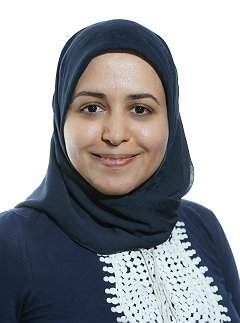
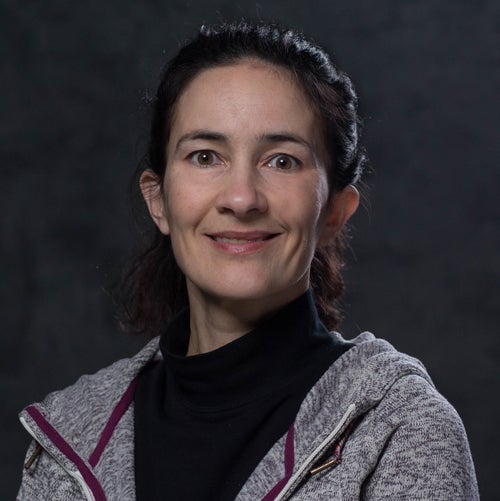
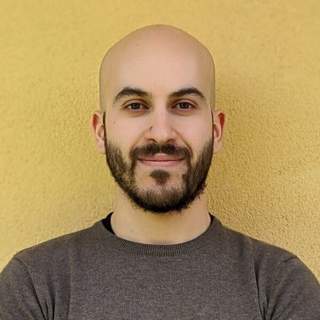
Barbara Carminati is a Professor at the Department of Theoretical and Applied Science, University of Insubria, Italy. Her work focuses on security, privacy, and trust management in decentralized systems, particularly online social networks, IoT, and emerging technologies like blockchain and digital twins. She has contributed extensively to access control, risk assessment, and collaborative frameworks. Her research spans trust modeling , privacy-preserving mechanisms , and malware detection , with a strong emphasis on decentralized social networks and UAV security . She actively explores the application of blockchain for secure workflows and information sharing. Recent publications highlight her engagement with large language models for security optimization, IoT botnet detection , and metadata leakage analysis . Her work bridges theoretical foundations with practical implementations in cybersecurity, social network management, and edge computing. Contact: barbara.carminati@uninsubria.it
Xiaofei Xie is an Assistant Professor at the School of Computing and Information Systems (SCIS), Singapore Management University (SMU). He received his PhD from Tianjin University in 2018 and was a postdoctoral researcher at Nanyang Technological University (2018-2021) before joining SMU in 2022. His research focuses on software engineering, AI systems, and cybersecurity. Dr. Xie's primary research areas include program analysis, software testing, vulnerability detection, and quality assurance of AI systems. His work spans: Testing methodologies for autonomous systems and games AI security including backdoor detection and model robustness Automated program repair and code generation Formal methods and semantic code analysis His recent publications demonstrate strong emphasis on AI/ML system testing, cybersecurity applications, and program analysis techniques. Research trends show increasing focus on LLM-based program repair, autonomous system validation, and federated learning security. Major Awards: ACM SIGSOFT Distinguished Paper Awards (ASE'23, ISSTA'22, ASE'19, FSE'16) CCF Outstanding Doctoral Dissertation Award (2019) 3rd place in AI Singapore's Trusted Media Challenge (2022) Wallenberg-NTU Presidential Postdoctoral Fellowship (2019) APSEC Best Paper Award (2020) He currently advises 7 PhD/Master's students including CHENG Mingfei, KONG Jiaolong, and YU Jiongchi. Dr. Xie leads research in software reliability and AI security at SMU's SCIS.
Reyhaneh Jabbarvand is an Assistant Professor in the Department of Computer Science at the University of Illinois at Urbana-Champaign, where she leads the Intelligent CAT Lab. Her research focuses on improving software quality, reliability, and maintenance through neuro-symbolic approaches that combine AI techniques with formal methods. Her research interests span Neural Program Analysis, Software Testing (with emphasis on mobile apps and autonomous software), Bug Localization, and Applied Optimization for Software Analysis. She has made significant contributions to the fields of energy testing for Android applications, neuro-symbolic approaches for code analysis, and large language models for software engineering tasks. Dr. Jabbarvand's recent publications reveal strong trends in applying machine learning to software engineering problems, particularly using neuro-symbolic methods to bridge the gap between deep learning and formal program analysis. Her work on code translation, test flakiness, and test oracle generation demonstrates her focus on practical applications of AI in software development workflows. Google PhD Fellowship in Programming Technology and Software Engineering Rising Star in EECS NSF CAREER Award Dr. Jabbarvand has received research funding from multiple sources including NSF, IBM Research, and C3.ai. She actively mentors students through her Intelligent CAT Lab and has served on numerous program committees for major software engineering conferences including ICSE, FSE, and ISSTA. She teaches courses on Advanced Topics in Software Engineering, ML for Code, and Software Engineering I. Her lab focuses on neuro-symbolic approaches to software engineering problems, bringing together PhD, undergraduate, and high school students to tackle challenges in AI-assisted software development and testing.
Gail-Joon Ahn is a Professor of Computer Science and Engineering at Arizona State University (ASU), serving as the Founding Director of the Center for Cybersecurity & Trusted Foundations (CTF) and the SEFCOM Laboratory. Previously, he was an Associate Professor at the University of North Carolina at Charlotte, leading the Center for Digital Identity and Cyber Defense Research. He holds a Ph.D. in Computer Science from George Mason University (2000). His research focuses on security analytics, big data-driven security intelligence, vulnerability management, identity privacy, and formal security models. Notable contributions include work on SDN security, phishing defense, and user-centric identity management systems. His research has been funded by major agencies like NSF, NSA, DoD, DOE, and industry partners including Cisco, Intel, and Microsoft. Ahn has received prestigious awards, including IEEE Fellow (2023), ACM Distinguished Scientist (2015), and the DOE Early Career Award (2003). He serves on editorial boards of top journals (e.g., IEEE TDSC, ACM TIFS) and chairs conferences like ACM CCS and ACM SACMAT. His leadership roles include steering committees for cybersecurity initiatives and advisory boards for institutions like NC A&T State University. Education: Ph.D., Computer Science, George Mason University, 2000 Key Grants: NSF-CISE (Privacy-Aware Data Sharing), NSA (DoD Information Assurance), DOE (Assured Resource Sharing) Labs: SEFCOM Lab, CTF Center
Sam Malek is a Professor in the Department of Informatics at the University of California, Irvine (UCI), and Director of the Software Engineering and Analysis Lab (SEAL). He holds a B.S. from UCI (2000) and M.S./Ph.D. from the University of Southern California (2004/2007). His research focuses on software engineering, security, accessibility, and self-adaptive systems, emphasizing tools for large-scale software analysis and protection. Malek has received prestigious awards, including the ACM SIGSOFT Test of Time Award (2020) and NSF CAREER Award (2013). His work bridges technical and human factors in cybersecurity, leveraging interdisciplinary approaches in the Donald Bren School of Information and Computer Sciences. Malek leads the Institute for Software Research (ISR) and has been funded by agencies like the Department of Defense, Department of Homeland Security, and NSF. His lab develops frameworks such as FUSION for self-adaptive systems and tools like Ma11y for accessibility testing. He also directs GAANN-funded cybersecurity initiatives to strengthen graduate education. Malek’s contributions span academic leadership, including editorial roles for top journals and expert testimony in intellectual property litigation. Research interests include secure software architectures, mobile computing vulnerabilities, and inclusive technology. His work addresses socio-technical challenges, such as balancing human behavior with technical safeguards against cyberattacks. Malek actively recruits Ph.D. students in software engineering to advance these critical areas.
Alexandra Dmitrienko is a researcher at the University of Würzburg's Institute of Computer Science. Her work focuses on cybersecurity, privacy-preserving technologies, and secure machine learning systems. She has collaborated extensively with institutions like TU Darmstadt and the University of California. Her research spans federated learning security, IoT device protection, Tor network analysis, and mobile platform vulnerabilities. Key contributions include defenses against poisoning attacks in federated learning, analysis of contact discovery exploits in messengers, and practical SGX cache attack mitigations. She has authored over 90 publications across top conferences like NDSS, CCS, and USENIX Security, and contributed to open-source tools like DNNShield and ClearMark for model ownership verification.
Taher Ghaleb is an Assistant Professor in the Computer Science Department at Trent University, Peterborough, Canada. He completed his Ph.D. at Queen’s University under Prof. Jenny Zou, followed by postdoctoral research at the University of Ottawa and a senior research role at the University of Toronto. His research focuses on applying data science and AI to address software engineering challenges. Education: Ph.D., Queen’s University, Software Evolution & Analytics Lab (SEAL) Postdoctoral Fellow, University of Ottawa Senior Research Position, University of Toronto Research Interests: Data-Driven Software Analytics: Empirical analysis of software development practices. AI in Software Engineering: Leveraging generative AI for code generation and bug detection. Continuous Integration/DevOps: Optimizing CI/CD pipelines for efficiency and reliability. LLM-Oriented Development: Integrating language models into software lifecycle processes. Publications: Taher’s work spans CI/CD practices, test case minimization, and AI-driven software testing. Recent trends emphasize empirical studies on open-source Android apps and flaky test prediction using language models. Awards: No explicit awards listed, but holds multiple U.S. patents related to software engineering and compiler systems. Advising & Grants: Seeks Master’s students and interns to join his team. Teaches courses like Software Design & Modelling (COIS 2240) and Software Engineering Project (COIS 4000) at Trent University. Labs & Teams: Formerly part of the Software Evolution & Analytics Lab (SEAL) at Queen’s University.
Dr. Ana Milanova is a Professor in the Department of Computer Science at Rensselaer Polytechnic Institute, where she has been since 2003. Her research focuses on programming languages, compilers, and software engineering, with emphasis on static program analysis, security, and applications in Android app taint analysis, secure cryptographic protocols, and machine learning library verification. Research Interests: Her work addresses challenges in secure software development, privacy-preserving techniques, and static analysis methodologies. Recent projects include federated learning frameworks, Python-based static analysis tools, and secure computation protocols. She has contributed to tools like Submitty for automated programming assignment grading and frameworks for secure MapReduce applications. Scientific Awards: NSF CAREER Award, Google Faculty Research Award Grants: SaTC: CORE grants for secure computation and multi-party optimization Labs/Teams: Leads research in secure computation, federated learning, and static analysis tool development. Collaborates on open-source platforms for educational grading systems (Submitty).
Dr. LIANG Zhenkai is an Associate Professor and Chairman of the Department of Computer Science at the National University of Singapore's School of Computing. He also serves as the Lead Principal Investigator for the National Cybersecurity R&D Lab (NCL). With extensive experience in academic leadership and cybersecurity research, Dr. Liang has established himself as a prominent figure in the field of system and software security. Dr. Liang received his Ph.D. in Computer Science from Stony Brook University in 2006 and his B.S. degrees in Computer Science and Economics from Peking University in 1999. His dual background provides a unique perspective on security challenges that bridges technical expertise with economic understanding. Dr. Liang's research focuses on system and software security , with particular emphasis on security in emerging platforms including Web, mobile, and Internet-of-Things (IoT) systems. His specific research interests include program analysis, Web and IoT system security, and virtualization. As the leader of the Curiosity Research Group, his team pursues missions centered around "Understanding systems (理解系统), abstracting knowledge (提炼知识), and connecting facts (参悟规律)". This philosophical approach to security research has yielded numerous significant contributions to the field. Dr. Liang's recent publications demonstrate a strong evolution from fundamental security mechanisms to sophisticated solutions addressing AI security, blockchain, and advanced vulnerability analysis. His work increasingly integrates machine learning techniques with traditional security approaches, focusing on developing robust defenses against sophisticated attacks while maintaining system usability. The trend shows a progression toward addressing contemporary challenges in large language models, secure system observability, and vulnerability propagation analysis. Dr. Liang has received numerous prestigious awards recognizing his research excellence: Outstanding Paper Award at ACSAC (2003) Best Paper Award at USENIX Security Symposium (2007) ACM SIGSOFT Distinguished Paper at ESEC-FSE (2009) Best Paper Award at W2SP Workshop (2014) Annual Teaching Excellence Award at NUS (2014, 2015) As an educator, Dr. Liang has taught various undergraduate and graduate courses including CS3235 Computer Security, CS5231 Systems Security, and CS5321 Network Security. His teaching philosophy, which he has published on in "Tool, Technique, and Tao in Computer Security Education," emphasizes both technical expertise and philosophical understanding of security principles. He has successfully mentored numerous students and researchers in the cybersecurity field. Dr. Liang leads the Curiosity Research Group, which actively seeks curious minds to join their exploration of security systems. The group maintains strong connections with industry and government cybersecurity initiatives, particularly through the National Cybersecurity R&D Lab (NCL). Their research environment encourages innovative thinking with the requirement that "Curiosity is required, while mentality for repairing things (such as bicycles) is a plus."
Xiaolu Zhang is currently a Professor in the Information Systems and Cybersecurity department at the University of Texas at San Antonio (UTSA), affiliated with the College of AI, Cyber and Computing. Her research focuses on digital forensics, cybersecurity, and emerging technologies like IoT and blockchain. Specializes in Digital Forensics, IoT Security, and Privacy in Virtual Environments Active in Mobile Application Forensics, Cloud Storage Forensics, and Blockchain Forensics Her recent publications highlight trends in Metaverse privacy challenges, advanced forensic techniques for mobile and cloud platforms, and automated knowledge-sharing systems for IoT investigations. She also contributes to digital forensic education through experiential learning frameworks.
Wen Li is an Assistant Professor at the School of Computing , Utah State University. Their research focuses on software security , software engineering , and network security , with significant contributions to analyzing multilingual software systems. Recent work highlights include: Characterization of multilingual software and language selection patterns Security analysis of cross-language interactions and runtime vulnerabilities Development of fuzzing frameworks like Pyrtfuzz and POLYFUZZ Investigation of dynamic information flow and memory management in complex systems Research trends demonstrate expertise in software testing, language interoperability, and security verification across programming environments.
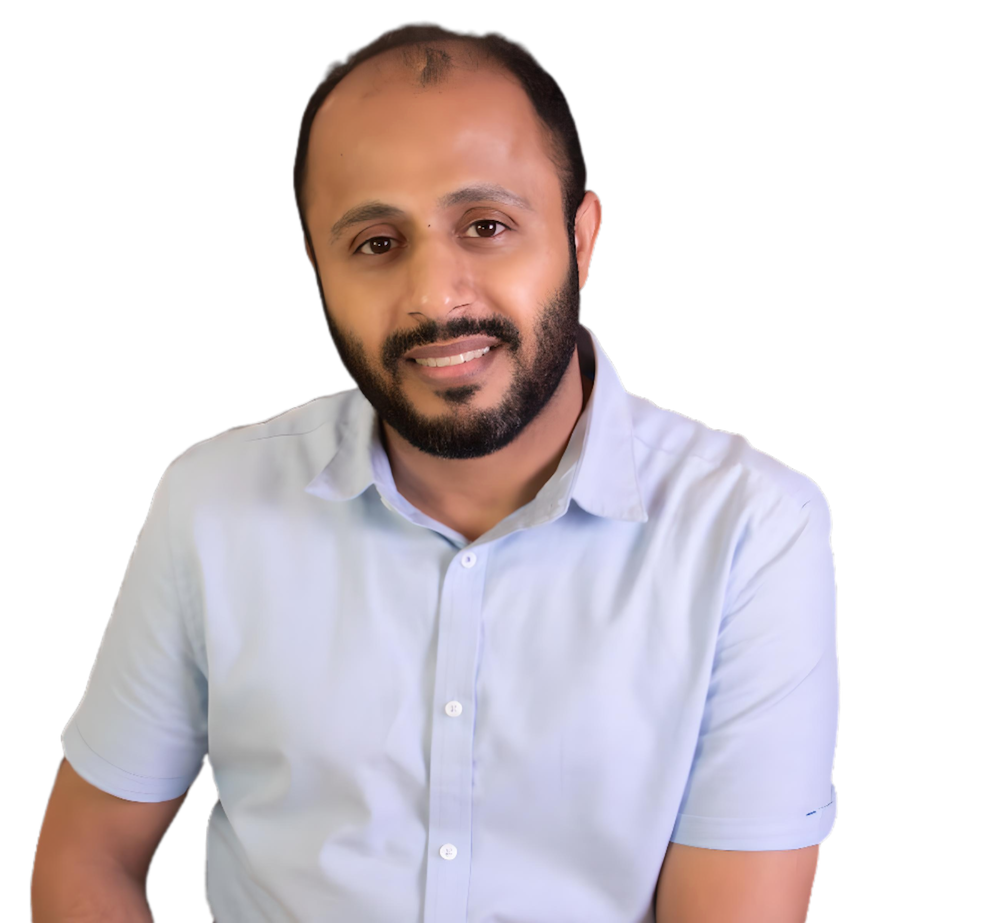
Abdul-Rahman Mawlood-Yunis is an Associate Professor in the Department of Physics and Computer Science at Wilfrid Laurier University. His research focuses on Artificial Intelligence, Android Mobile Application Development, Software Engineering, Distributed Systems, and P2P Networking with an emphasis on fault-tolerant systems and semantic web technologies. He has contributed to frameworks for live streaming apps and machine learning algorithms for feature selection. Research interests include: Chatbots and Natural Language Processing (NLP) Ontology engineering and knowledge representation Algorithm design for distributed systems Mobile agent performance analysis Fault-tolerant semantic P2P networks His recent work (2022-2024) emphasizes machine learning applications in feature selection and real estate price estimation, reflecting a shift towards data-driven solutions. Earlier contributions (2003-2013) explored foundational aspects of mobile agents and semantic interoperability in P2P networks. Teaching responsibilities include courses on Android development and Java programming, with associated open-source materials and courseware. His book Android for Java Programmers provides foundational resources for students and instructors. Languages spoken: English, Kurdish, Arabic, Farsi.
Dr. Inah Omoronyia is an Honorary Lecturer at the School of Computing Science, University of Glasgow. Her research focuses on privacy engineering, software security, and adaptive systems. Her primary research interests include developing models for privacy-aware software design, analyzing security knowledge sharing mechanisms, and creating adaptive privacy frameworks for dynamic environments. Recent work has examined privacy conflicts in web systems and malware detection through user behavior analysis. Publications demonstrate consistent focus on security and privacy, with recent work emphasizing practical applications in mobile security and web-based systems. Earlier research established foundations in adaptive privacy requirements and runtime security frameworks. Dr. Omoronyia contributes to several research projects including privacy engineering initiatives and security knowledge-sharing frameworks. She maintains an active research profile with numerous conference publications and journal articles.
Jianliang Wu is an Assistant Professor in the School of Computing Science at Simon Fraser University. His research focuses on systems security and privacy, formal analysis, and machine learning security. He holds a PhD from Purdue University (2022), and MSc and BSc from Shandong University (2015 and 2012). His research interests include Bluetooth security, IoT privacy, and formal methods for protocol analysis. He teaches courses such as Network Security, Software Security, and Networks, including CMPT 403 (System Security and Privacy) and CMPT 479 (Special Topics in Computing Systems). His work spans both theoretical and applied cybersecurity, with a strong emphasis on real-world system vulnerabilities and mitigation strategies. Recent research highlights include systematic reviews of Bluetooth protection strategies, analyses of IoT data exposure via companion apps, and formal model-driven discovery of protocol design flaws. His contributions address critical challenges in wireless communication security and IoT ecosystem vulnerabilities. No scientific awards are explicitly mentioned in the provided text. Advising and grants details are not available here. He is affiliated with the School of Computing Science, which hosts labs like the Tangent Lab, though direct lab affiliations for Wu are not specified.
A. Continella is an Associate Professor in the Semantics, Cybersecurity, and Services group at the University of Twente, affiliated with the International Secure Systems Lab (iSecLab). Previously, they served as a Postdoctoral Researcher at UC Santa Barbara’s Computer Science Department and earned a Ph.D. cum laude from Politecnico di Milano. Their research focuses on systems security, particularly analyzing software for malware detection, privacy leaks, and vulnerability identification. They emphasize open science and actively participate in Capture The Flag (CTF) competitions, including DEFCON Finals with Shellphish. Education: Ph.D. cum laude in Computer Science and Engineering, Politecnico di Milano, Italy Research exchanges at UC Santa Barbara and University of Sydney’s School of Computer Science Research Interests: Security of daily-use software Ransomware defense mechanisms Obfuscated privacy leaks in Android apps Program analysis for firmware vulnerabilities Awards: Ph.D. cum laude distinction Labs & Collaborations: International Secure Systems Lab (iSecLab) SecLab at UC Santa Barbara