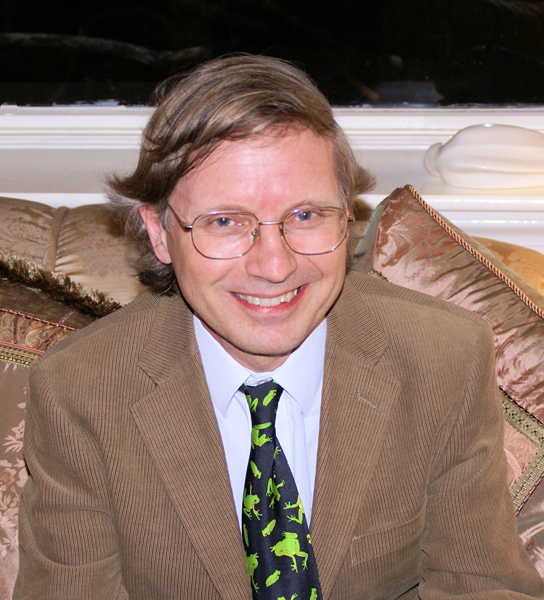
Daniel Perret is a senior Researcher at the French School of the Far East (EFEO), based at the University of Malaya 's Department of History within the Faculty of Arts and Social Sciences. His work focuses on the history and archaeology of maritime Southeast Asia, particularly Sumatra and Malaysia, spanning from ancient settlements to pre-20th century urban developments. His research integrates excavation of sites like Kota Cina and Si Pamutung analysis of Muslim funerary art ( Aceh batu stelae) epigraphic studies of Indian-origin scripts interdisciplinary collaborations with institutions across Indonesia, Malaysia, and France Recent publications examine Tamil diaspora , Malacca Strait trade networks , and environmental history . He has co-edited major works on Padang Lawas and Pengkalan Bujang glassware, while serving as editor-in-chief of Archipel (2010–2018) and coordinating international archaeological programs in Malaysia and Indonesia. His projects have received support from French Embassy in Malaysia Advisory Commission for Excavations Abroad IRIS-Global Studies (PSL) French School of the Far East
Giorgos Bourogiannis is an Adjunct Professor at the Department of History and Archaeology , National and Kapodistrian University of Athens. He holds a PhD in Classical Archaeology from the University of Athens and has conducted postdoctoral research at institutions including the British Museum, Medelhavsmuseet (Stockholm), and the National Hellenic Research Foundation. His research focuses on the Early Iron Age Aegean , Cypriot-Phoenician interconnections , and script development in the Eastern Mediterranean. Education : BA in History and Archaeology (University of Athens), MSc by Research in Classical Archaeology (University of Edinburgh), PhD in Classical Archaeology (University of Athens) Current Appointments : Adjunct Faculty at Universities of Athens, Aegean, Hellenic Open University, and Open University of Cyprus Research Themes : Explores Iron Age state formation , maritime trade networks , and religious landscapes through archaeological theory and fieldwork. His 15 most recent publications (4 listed here) emphasize Cypriot connectivity, Aegean-Phoenician interactions, and the role of scripts in cross-cultural exchange. He has organized two international conferences on ancient Cyprus and authored a catalogue raisonné of Cypriot pottery. Scientific awards include a prestigious Harvard Early Career Fellowship . Bourogiannis has excavated extensively in Greece, Italy, Egypt, Cyprus, and Lebanon, and remains an active member of the American Society of Overseas Research and editorial board of Rivista di Studi Fenici .
Alice Mandell is an Assistant Professor and holder of the William Foxwell Albright Chair in Biblical and Ancient Near Eastern Studies at Johns Hopkins University (JHU). She serves as Director of Undergraduate Studies and is affiliated with JHU's Jewish Studies program. Her research focuses on ancient Levantine scripts, sociolinguistic approaches to writing, and alphabetic literacy practices. Education: PhD in Near Eastern Studies from UCLA's Department of Near Eastern Languages and Cultures. Research interests include Hebrew Bible studies, Northwest Semitics, ancient Near Eastern history/religion, and the sociolinguistic analysis of ancient texts. She has published on scribal practices in Canaanite Amarna Letters and craft-based literacy in the ancient Levant. Current projects include Alphabetic Word Craft: Levantine Craft Communities and their Literacies (under NEH and Catalyst awards) and collaborative works on ritual spaces in ancient Judah and Israelite religion. Grants/Awards: Getty Research Initiative Grant (2020-2021), NEH Award, and JHU Catalyst Award. Upcoming projects include a Cambridge University Press commentary on 1-2 Kings. Labs/Teams: Collaborates with Jeremy D. Smoak (UCLA) on materiality and spatial theory in Israelite religion studies. Active in JHU's Archaeological Museum and Umm el-Marra excavations.
Dr. Stefan Bojowald is a Lecturer in the Egyptology department at the Institute of Archaeology and Cultural Anthropology, University of Bonn. He holds a doctorate completed between 2014 and 2017 and has been actively contributing to the field through teaching and extensive scholarly publication. His institutional affiliations include membership in ATINER, Academic Genesis, and the Alliance Academy of Sciences, reflecting his engagement with international academic networks. Doctoral studies: 2014–2017 Master's degree: 2001 Studies: Egyptology, Classical Archaeology, Classical Philology, Semitic Studies, and Studies of the Christian Orient (1992–2000) Stefan Bojowald's research is deeply rooted in philological and linguistic analysis of ancient Egyptian and Coptic texts. His primary interests include Egyptian lexicography and phonology, with a particular focus on sound changes and word origins. He investigates cultural and linguistic contacts between Egypt and the Near East, drawing parallels between Egyptian, Hebrew, Akkadian, and Ugaritic languages. A distinctive aspect of his work is Egyptian ornithology—the study of birds in ancient Egyptian literature and symbolism. Additionally, he explores Coptic monasticism, especially through the lens of the Vita of Pachom , analyzing textual details, moral themes, and biblical intertextuality. His scholarship often bridges linguistic precision with cultural and religious interpretation. His recent publications, spanning from 2021 to 2025, reveal a consistent output in high-quality journals such as Aula Orientalis , Göttinger Miszellen , N.A.B.U. , and Le Muséon . These articles primarily focus on etymological investigations, phonological shifts (e.g., loss of 'q', 'n', 'h'), lexical analysis of specific terms, and comparative studies across Semitic and Afro-Asiatic languages. A significant trend is his exploration of linguistic survivals from ancient Egyptian into Coptic, metaphorical language in religious texts, and the interpretation of monastic literature. His 2023 monograph on the Vita of Pachom underscores his expertise in Coptic hagiography. While no scientific awards are listed in the provided text, Bojowald’s extensive publication record in specialized Egyptological and Coptic journals demonstrates scholarly recognition and contribution to the field. Dr. Bojowald advises students in Egyptology and Coptic studies, particularly through his courses in Coptic language (Koptisch I + II) and Coptic reading. There is no public information on external research grants he may have received. He is an active academic with a strong focus on textual analysis and linguistic research. There is no information provided about specific research labs or collaborative teams led by Dr. Bojowald. However, his membership in academic platforms and frequent publication in collaborative journals suggest participation in broader scholarly communities and networks within Egyptology and Coptic studies.
Dr. Joaquim Azevedo is a Professor at Southwestern Adventist University (SWAU), where he has worked for 11 years. He specializes in religion, biblical languages, and theology, teaching courses such as Biblical Archaeology, Hebrew, New Testament Greek, Christian Beliefs, and Christian Ethics. His academic journey includes a Ph.D. in Old Testament from Andrews University (1999) and graduate studies in biblical languages (1994). Ph.D. in Old Testament, Andrews University, 1999 M.A. in Biblical Languages, Andrews University, 1994 B.A. in Religion, Seventh-day Adventist Theological Seminary, Brazil, 1998 Dr. Azevedo's research focuses on Old Testament theology, biblical languages, archaeological contexts of scripture, and ethical implications of biblical narratives. His work bridges ancient near eastern studies with contemporary theological interpretations. His publications span biblical archaeology, linguistic analysis, theological exegesis, and comparative religious studies. Key areas include Hebrew syntax, divine judgment in Psalms, anthropological concepts in Chronicles, and historical development of alphabetic systems.
Konstantin Klein is a Visiting Professor at the University of Amsterdam 's Faculty of Humanities, specializing in History, European Studies, and Religious Studies. His research focuses on Late Antiquity, particularly the intersection of epigraphy, religious history, and urban development in Constantinople and Jerusalem. Research interests include: Epigraphic analysis of ancient Semitic inscriptions Digital humanities applications in text restoration Urban spatial organization in religious contexts Material culture of Late Antique cities Gender roles in epigraphic patronage Recent publications demonstrate expertise in: Machine learning for damaged inscription recovery Comparative urbanism of Byzantine capitals Analysis of Palmyrene funerary art Epigraphic patterns in Christian holy sites Interpretation of Late Antique decay processes Gender-regulated epigraphic expressions
Carlo Giovanni Cereti is a Full Professor of Iranian Philology, Religions, and History at the Department of Classics, Faculty of Humanities, Sapienza University of Rome. His academic career spans over three decades, with notable roles including Director of the Italian Archaeological Mission in Iraqi Kurdistan and Cultural Counsellor at the Italian Embassy in Tehran (2009–2017). He holds leadership positions such as Coordinator of the Humanities Class at Scuola Superiore di Studi Avanzati and Director of the Winter School in Cultural Heritage of the Near and Middle East. Education: PhD in Iranian Studies (1992, Istituto Universitario Orientale, Naples), Postgraduate studies at SOAS (1986–1987), and MA in Oriental Languages (1985, Istituto Universitario Orientale). Research Focus: Zoroastrian traditions, Sasanian history, Middle Iranian epigraphy, and cultural heritage preservation. His work bridges textual analysis with archaeological fieldwork, particularly in Iraqi Kurdistan. Awards: Farabi Prize (2010), UNESCO/ISESCO recognition, and leadership roles in international organizations like UNIMED and the Association for the Study of Persianate Societies. Cereti’s scholarly output includes over 150 publications on Iranian languages, Zoroastrian texts, and Sasanian archaeology. He contributes to editorial boards of journals like Iran and the Caucasus and Journal of Persianate Studies . His current projects emphasize interdisciplinary approaches to Iranian cultural heritage and international academic collaboration.
Daniel González León is an Adjunct Professor of Egyptology at the Autonomous University of Barcelona and currently a Visiting Fellow at Yale University’s Near Eastern Languages and Civilizations department. His research focuses on ancient Egyptian epigraphy, hieroglyphic paleography, and titles of the Old Kingdom elites. He holds a PhD in Egyptology (2023) from the Autonomous University of Barcelona, following a BA (2015) from the University of the Basque Country and an MA (2017) from the Autonomous University of Barcelona. His work includes a paleographic study of the 6th and 8th Dynasty Coptos decrees at The Metropolitan Museum of Art, funded by the Andrew W. Mellon Fellowship (2022–2023) and the Basque Government (2024–2028). He is also part of the Spanish-Egyptian Archaeological Mission in Saqqara (SEAMS), focusing on the Kom el-Khamaseen necropolis. His research on the title ỉmȝ-ʿ and the Memphite high priest Imy Nikauptah has contributed to understanding elite structures during the Old Kingdom’s collapse. Education: PhD in Egyptology, Autonomous University of Barcelona (2023) MA in Egyptology, Autonomous University of Barcelona (2017) BA in History, University of the Basque Country (2015) His research interests span prosopography, ancient Egyptian religion, and archaeological fieldwork. Notable achievements include editing monographs on Kom el-Khamaseen and co-authoring studies on Coptos decrees. He has taught Egyptian Epigraphy and Paleography since 2018 and serves as Assistant Editor of Aula Aegyptiaca-Studia . Key awards include the Basque Government Fellowship (2018–2022) and Mellon Fellowship (2022–2023). His current projects explore hieroglyphic script variability and the role of Memphite priests in societal transitions.
C. Michele Thompson is a Professor in the Department of History at Southern Connecticut State University. Her research centers on the history of medicine in Southeast Asia, with a specialization in Vietnam, exploring themes like colonial medicine, traditional healing practices, and environmental interactions. She has edited volumes such as Southern Medicine for Southern People: Vietnamese Medicine in the Making (2012) and authored Vietnamese Traditional Medicine: A Social History . Her work examines the intersection of medicine, culture, and politics, including Buddhist healing in 14th-century Đại Việt, smallpox vaccination in colonial Indochina, and wildlife conservation ethics. Recent publications analyze interspecies dynamics and critiques of colonial medical empires. Thompson's articles frequently appear in journals like EASTM and Journal of Asian Studies , with a strong focus on historical methodology and cross-cultural exchanges. She has secured multiple grants, including: "Medicalize Fauna" (CSCU, $4,800, 2022-2023) Travel Grant for AAS presentation (Geiss Hsu Foundation, $3,000, 2022) "History of Vaccination for Smallpox in Southeast Asia" (National Library of Medicine, 2017-2020) Research funding for fieldwork in Vietnam, Laos, and Singapore (2011-2018) Thompson actively presents at conferences like the Association for Asian Studies and History of Medicine in Southeast Asia symposia, discussing topics from vaccine history to Buddhist environmental ethics.
Nicholas John Sims-Williams is Research Professor of Iranian and Central Asian Studies at the School of Oriental and African Studies (SOAS), University of London, where he has maintained continuous academic employment since 1976. His career progression includes positions as Lecturer in Iranian Languages (1976), Reader in Iranian Studies (1989), Professor of Iranian and Central Asian Studies (1994), Professorial Researcher (2008-2011), and his current role as Research Professor (2012-present). His educational background includes studies in Old and Middle Iranian languages, Sanskrit, Syriac and historical linguistics at Cambridge University, where he completed his PhD under Dr. Ilya Gershevitch. His doctoral thesis, an edition of a fragmentary manuscript containing Christian texts translated from Syriac into Sogdian, was published as The Christian Sogdian manuscript C2, Berlin 1985 and awarded the Prix Ghirshman of the Institut de France. Professor Sims-Williams' research interests focus on Middle Iranian languages of Eastern Iran and Central Asia, with particular expertise in Sogdian and Bactrian languages. His scholarly work equally emphasizes the linguistic structures of these Indo-European languages and their Central Asian cultural context, examining the complex interplay of languages, cultures, and religions in the region. His teaching has covered seven Iranian languages (Avestan, Old Persian, Middle Persian, Parthian, Bactrian, Sogdian and Khotanese) along with Syriac. His extensive honors reflect his standing in the academic community, including Fellowship in the British Academy, membership in multiple international academies, and prestigious research fellowships. Notable positions include Chairman of the Ancient India and Iran Trust and Vice-President of the Union Académique Internationale. Professor Sims-Williams has held visiting professorships at leading institutions worldwide including the Collège de France, Harvard University, and the University of Rome "La Sapienza," demonstrating his international recognition as a leading scholar in his field.
David Sasseville is a Post-Doc researcher in Comparative Linguistics (Hittitology) at Philipps University Marburg, specializing in Anatolian languages with particular focus on Luwian, Lycian, and Lydian. A French-Canadian from the Gaspésie peninsula of Québec, he completed his undergraduate studies in Ancient Greek, Latin, and Historical Linguistics at Concordia University in Montreal before pursuing two Master's degrees at Marburg University: one in Indo-European Linguistics focused on the Anatolian branch, and another in Ancient Greek Philology. His research centers on the linguistic structure and historical development of Anatolian languages, with special emphasis on verbal morphology, phonology, and syntax. Through meticulous philological analysis combined with comparative linguistic methods, Sasseville bridges traditional philology with modern linguistic theory to reconstruct earlier stages of these languages and their relationship to Proto-Indo-European. Sasseville's scholarly output demonstrates consistent advancement in understanding Anatolian languages through careful examination of fragmentary texts. His 2021 monograph Anatolian Verbal Stem Formation: Luwian, Lycian and Lydian provides a comprehensive classification of verbal stem classes across these languages. His more recent work includes studies on Luwian dative-locative endings, Lydian o-vocalism, Palaic texts from Hattusa, and the identification of new languages in Hittite archives. He actively collaborates with international scholars including Susanne Görke (with whom he's preparing a new edition of Palaic texts from Hattusa), Elisabeth Rieken, Ilya Yakubovich, and Annick Payne across multiple institutions. His work on the eDiAna digital dictionary project has involved supervising academic internships for doctoral student Oscar Billing from Uppsala University and MA student Jonas Döll from Philipps University Marburg. Sasseville teaches a diverse range of courses including Hieroglyphic Luwian, Cuneiform Luwian, Palaic, Historical Grammar of Sanskrit, Hittite Reading for Beginners, Latin Linguistics, Lycian Varieties, and Introduction to Historical Linguistics, reflecting his broad expertise across ancient languages and linguistic theory.
Dr. Ute Pietruschka (b. 1959) is a senior research fellow at the Academy of Sciences Göttingen and associate researcher in the Seminar für Arabistik/Islamwissenschaft, University of Göttingen. From 2001-2021 she taught as Lehrbeauftragte at the Oriental Institute, University of Halle, after earlier appointments at Queensland and Marburg. Her projects include the Corpus of Arabic and Syriac Gnomologia and the Union Catalogue of Oriental Manuscripts in Germany. Education & Career 1982 Diplom, Martin-Luther-Universität Halle-Wittenberg (Arabic & Christian-oriental languages) 1986 Dr. phil. Halle, thesis on Ethiopian transmission of Greek philosophical sayings 1985-1992 wiss. Mitarbeiterin / Oberassistentin, University of Halle 1992-1994 Lecturer, University of Queensland 1994-2001 Assistentin, University of Marburg 2001-2021 Lecturer, Oriental Institute, University of Halle 2012-2022 Senior researcher, Academy of Sciences Göttingen Research Interests Pietruschka investigates the circulation of Greek wisdom literature into Arabic, Syriac, Coptic and Ethiopic cultures. Using philological and Digital-Humanities methods she edits gnomologia, traces manuscript transmission, and studies the educational role of monasteries and schools in the Islamicate world. Additional interests include the representation of nomads in Syriac writing and the reuse of biblical material in Islamic adab. Publication Profile Recent articles cluster around three thrusts: (1) Edition and analysis of Greek-Arabic gnomologia and doxographies, showing how compilations like Ps.-Plutarch’s Placita served as textbooks; (2) Study of Christian Arabic and Syriac wisdom collections, especially the monastic Apophthegmata Patrum and their pedagogical Sitz im Leben; (3) Codicological surveys of Coptic and Karšūnī manuscripts, highlighting monasteries as intellectual hubs after the Islamic conquest. Projects & Grants Head, Corpus der arabischen und syrischen Gnomologien (since 2011, continuation planned 2023-) Co-leader (with Jürgen Tubach) DFG-SFB project “Das Bild des Nomaden in der syrischen Literatur” (2004-2008) Senior researcher, Union Catalogue of Oriental Manuscripts in Germany, Göttingen Academy (2012-2022) Teaching & Digital Humanities Together with Dr. Marco Büchler (Leipzig) she regularly offers courses on Digital Humanities applied to Semitic manuscript cultures, combining codicology, XML/TEI and network analysis.
Dr. Daniel A. Werning is the Head of Department for the Research Project 'Structures and Transformations of the Vocabulary of the Egyptian Language' at the Berlin-Brandenburg Academy of Sciences and Humanities (BBAW). His primary affiliation is with the BBAW's Department of Egyptian Language Vocabulary, located at Unter den Linden 8, Berlin. He leads multidisciplinary research initiatives focusing on Ancient Egyptian linguistics and digital humanities. Research Focus: Grammar of Hieroglyphic Egyptian, Morpho-syntax, Script Systems, Language History, Spatial Linguistics, and Digital Text Encoding (TEI/EpiDoc). Key Projects: Leads the Thesaurus Linguae Aegyptiae corpus and studies New Kingdom Netherworld Texts and Theology. Contact: +49-30-20370-447 | daniel.werning@bbaw.de His work bridges traditional philology with computational methods, contributing to both historical linguistics and digital scholarship frameworks. Current research emphasizes diagrammatology in religious texts and diachronic language structure analysis.
Yannick Alexander Wiechmann is a Lecturer and doctoral candidate in the Department of Egyptology at the Institute of Archaeology and Cultural Anthropology, University of Bonn. He teaches courses in Middle Egyptian, late hieroglyphic texts, and thematic seminars on ancient Egyptian religion and text transmission. His academic work is deeply embedded in the philological and cultural study of ancient Egypt, with strong interdisciplinary ties to Indology and Near Eastern studies. His research interests center on funerary texts , particularly the Book of the Dead and Coffin Texts , exploring themes of paratextuality , intertextuality , and textual canonization . He investigates cultural contacts in antiquity, especially in Late Antique Egypt, where his work on the Coptic script examines the intersection of linguistics, religious symbolism, and Christian identity. His philological analyses extend to Sandhi phenomena in earlier Egyptian and the interpretation of classical texts like the Prophecy of Neferti. The trends in his publications reveal a strong focus on textual history , linguistic evolution , and religious symbolism across ancient Egyptian and Coptic traditions. His work often bridges Egyptology with religious studies, epigraphy, and comparative philology, demonstrating a methodologically rigorous and interdisciplinary approach. His scientific awards include: Promotionsstipendium der Konrad-Adenauer-Stiftung (since 2023) Stipendium der Studienstiftung des Deutschen Volkes (2017–2019) He has advised no students listed publicly but has served as a tutor (student assistant) from 2015 to 2019. He has been involved in multiple research projects, including collaborative grants with Emory University, and has presented at international conferences such as Current Research in Egyptology and the European Conference of Egyptologists. He has not received external grant funding explicitly mentioned in the text. He is affiliated with several academic bodies: Verband der Ägyptologie Verein zur Förderung des Ägyptischen Museums der Universität Bonn e.V. Arbeitsgemeinschaft Christliche Archäologie International Association of Egyptologists
Prof. Dr. Nikolai Grube is a University Professor in the Department of Ancient American Studies & Ethnology at the Institute of Archaeology and Cultural Anthropology, University of Bonn. He has held this position since 2004 and is a leading expert in Maya archaeology, epigraphy, and cultural anthropology. His research spans Mesoamerica, with a focus on the Maya Lowlands, political anthropology, state formation, writing systems, and cultural heritage. Research Interests: His work integrates archaeology, historical linguistics, and digital humanities to study Classic Maya writing, literacy, and political structures. He investigates the evolution of hegemonic rule through fieldwork at Uxul, Mexico, and leads the Text Database and Dictionary of Classic Maya project. His research bridges epigraphic analysis with broader cultural and historical contexts. Recent Publications Trends: His recent scholarly output emphasizes digital epigraphy, glyph decipherment, ceramic inscriptions, and collaborative international research. Themes include lunar astronomy, punctuation in writing, animated logographs, and the sociopolitical rhetoric of Terminal Classic inscriptions, reflecting a deep integration of linguistic, archaeological, and computational methods. Scientific Awards and Honors: Doctor honoris causa, Instituto Politécnico Nacional, Mexico (2016) Benedictus Polonius Prize, University of Warsaw (2015) Honorary Citizenship of Guatemala City (2007) Full member, German Archaeological Institute Full member, North Rhine-Westphalian Academy of Sciences Heisenberg Professorship (DFG, 1999) Advising and Grants: While specific students are not listed, Grube leads major collaborative projects funded by international bodies and has served as an expert reviewer for NWO, FNRS, CNRS, and NEH. He has organized academic symposia, curated exhibitions, and held editorial roles, demonstrating extensive mentorship and academic leadership in the field of Mesoamerican studies. Labs and Teams: He is central to the Text Database and Dictionary of Classic Maya team at the University of Bonn, promoting digital epigraphy and open-access research. His work involves interdisciplinary collaboration with linguists, archaeologists, and computer scientists to advance the understanding of Maya writing and culture.