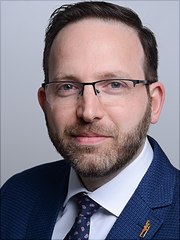
Professor Max Deeg is a leading scholar in Buddhist Studies at Cardiff University , holding a personal chair since 2009. With a career spanning institutions in Germany, Austria, and the UK, his research focuses on transcultural Buddhist history from India to East Asia, Chinese Buddhist travelogues , and interreligious encounters in medieval China. He has held visiting positions at universities in Japan, Nepal, the US, and Germany, and currently directs the Centre for the History of Religion in Asia (CHRA) . PhD from University of Würzburg (1990) Dr. phil. habil. in Religious Studies (1998) Full Professor at University of Vienna (2002-2006) His research explores Buddhist narratives as tools for constructing religious identity, foundation myths in trans-Himalayan contexts, and terminology evolution in Chinese Buddhist translations. Recent publications analyze Indian Buddhist monasticism through Chinese sources and religious concepts like xin (trust) across Buddhist, Manichaean, and Christian traditions. Awarded the KHK Visiting Research Fellowship (2016) and a DAAD Scholarship (1986-87) , Prof Deeg contributes to editorial boards of major journals. He supervises PhD students and teaches Buddhist Studies , Life of the Buddha , and Chinese Buddhist Texts .
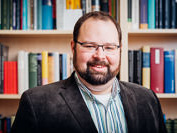
Prof. Dr. Kianoosh Rezania is a Professor of West Asian Religious History and Director of the Käte Hamburger Kolleg Dynamics of Religious History at Ruhr University Bochum. His research focuses on Zoroastrianism, Iranian religions, and the history of religions, with a particular emphasis on ancient Iranian languages and interreligious dynamics. He holds a Ph.D. from Georg-August University Göttingen and has conducted extensive research on topics such as Zoroastrian cosmology, Sasanian-Zoroastrian interactions, and the transmission of religious texts. His work combines philological analysis with historical and cultural studies approaches. Rezania's academic career includes roles as a research associate at Göttingen University and his habilitation project on spatial concepts in early Zoroastrianism. He has directed major research initiatives like the Graduate School of Metaphor and Religion (GSMR) and the Käte Hamburger Kolleg. His publications span monographs, edited volumes, and peer-reviewed articles exploring themes such as religious economics, Middle Persian lexicography, and cross-cultural exchanges between the Safavid and Mughal empires. His current projects include the 'Zoroastrian Middle Persian: Digital Corpus and Dictionary' initiative and studies on Pahlavi literature's interreligious context. He collaborates internationally, leading interdisciplinary teams and contributing to digital humanities efforts in religious studies.
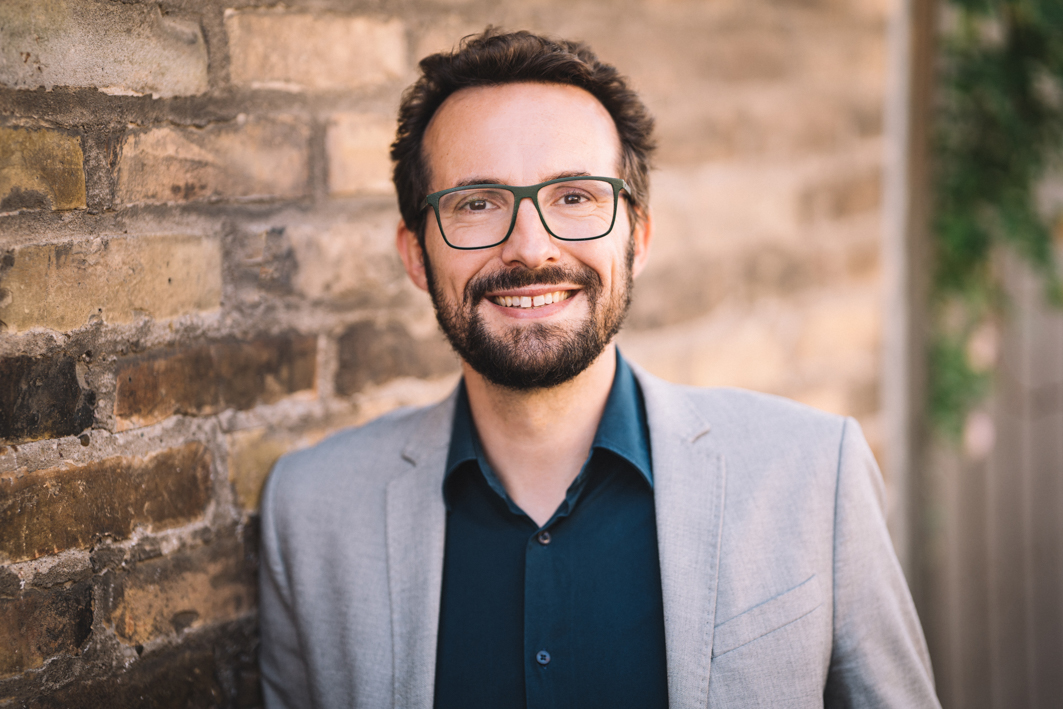
Dr. Harry O. Maier is Professor of New Testament and Early Christian Studies at Vancouver School of Theology since 1994, with ongoing fellowships at the Max Weber Center for Advanced Cultural and Social Studies at the University of Erfurt since 2017. His academic career spans over 25 years with significant contributions to understanding early Christianity within the context of the Roman Empire. His educational background includes a D. Phil from Oxford University (1987), Master of Divinity from Lutheran Theological Seminary (1989), and B.A. from Pacific Lutheran University (1981). Maier's research focuses on the intersection of New Testament studies, early Christianity, and spatial theory within the Roman Empire. His work examines how early Christian communities navigated urban spaces, constructed religious identity, and engaged with imperial ideologies. He has pioneered approaches that analyze biblical texts through spatial theory, examining how geography, urban structures, and neighborhood dynamics shaped early Christian thought and practice. His research particularly emphasizes the Book of Revelation, the Shepherd of Hermas, and Pauline literature, with attention to how these texts engaged with Roman imperial culture. His scholarly contributions include significant publications such as New Testament Christianity in the Roman World (Oxford University Press, 2018) and Picturing Paul in Empire (Bloomsbury, 2013), which won recognition for their innovative approaches to understanding early Christian texts within their socio-spatial contexts. Canadian Christian Writers Association Award for Best Book in Philosophy and Christian Leadership (2003) for Apocalypse Recalled: The Book of Revelation after Christendom Canadian Corportation of Religion Award for Best Dissertation in Religion (1990) for The Social Setting of the Ministry as Reflected in the Writings of the Shepherd of Hermas, Clement and Ignatius Maier has organized numerous academic conferences including "The Shepherd of Hermas and Religious Experience" (2018), "Religion of Quarters" (2018), and "Locating Martyrs and Space/Time" (2017). He serves on editorial boards for several prestigious publications including as associate editor for the Bryn Mawr Classical Review since 2016 and co-editor of the Christian Religion and Public Life book series since 2020. His external reviewing work includes major academic presses such as Oxford University Press and Cambridge University Press. As founder and co-organizer of The Greater Vancouver Biblical Colloquium since 2008, Maier has fostered interdisciplinary dialogue among scholars of biblical studies and related fields. His academic leadership extends to professional societies including the Society of Biblical Literature and the North American Patristics Society.
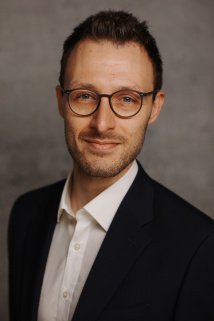
Nephele Papakonstantinou, Ph.D. (Sorbonne), is an Assistant Professor of Latin Philology at National and Kapodistrias University of Athens (Department of Philology) and a Research Fellow at Julius-Maximilians-University Würzburg's Institute of Classical Philology. She holds dual affiliations in classical philology and legal medicine interdisciplinary research. Ph.D., Sorbonne University Evaluated by Conseil National des Universités de France (2023) for Maître de Conférences qualification Her research focuses on intersections between Roman legal rhetoric (particularly Quintilian and declamation traditions), Roman jurisprudence, Greco-Roman medical thought, and their Renaissance reception. Current work examines historical development of medical jurisprudence in classical Rome and late Renaissance Italy through the lens of case histories and consilia literature. Key publication trends include analysis of Pseudo-Quintilian's legal frameworks, trauma representation in classical texts, and Renaissance humanist adaptations of ancient medical-legal concepts. Her 2025 monograph on crimen raptus in Roman law and upcoming work on Paolo Zacchia's poisoning consilia demonstrate this interdisciplinary approach. Recipient of Alexander von Humboldt Post-doctoral Research Fellowship Co-editor of Narratio in Medicine and the Law (forthcoming, Palgrave Macmillan) Active in collaborative research projects, she directs initiatives connecting classical philology with legal medicine traditions across antiquity and the Renaissance, supported by ongoing institutional funding and international academic partnerships.
Rhenish Friedrich Wilhelm University of BonnGermany
Christian Weigel serves as a Researcher at the Department of Ancient History within the Institute for Historical Science at the University of Bonn, a position he has held continuously since October 2016. His academic career includes prior roles as a lecturer (2014-2016) and research associate in the DFG-Graduiertenkolleg 1878 on pre-modern economic spaces (2013-2016), demonstrating deep institutional integration at Bonn. His educational foundation includes: Magister degree (2012) in Ancient History, Political Science, and Public Law from the University of Bonn Advanced studies (2005-2012) in Ancient History, Political Science, and Public Law Foundational studies (1999-2005) in Medieval/Modern History, Political Science, and Law Weigel's research interrogates Greek family structures through ancient novels while examining economic and social frameworks of antiquity. His focus on demographic patterns, ancient international law, and literary sources reveals innovative methodological approaches to social history. Recent work analyzes how ancient novels function as socioeconomic mirrors, particularly regarding slavery, migration, and gender dynamics in Greco-Roman societies. His publication trajectory (2015-2019) demonstrates consistent exploration of antiquity's socioeconomic textures through diverse lenses—from piracy in ancient fiction to Cold War-era science fiction's classical reception. This body of work establishes connections between ancient economic mentalities and modern cultural productions while maintaining rigorous historical analysis of demographic patterns and legal frameworks. As an active conference participant, Weigel has presented at major venues including the German Historians' Congress and German Sociological Association meetings. His teaching portfolio reveals substantive engagement with students through specialized courses on Homer's society, Roman slavery, Greek federalism, and ancient demographics, often incorporating field components like Adriatic coast excursions.
Dr. Alexandra von Lieven is a Senior Lecturer in the Department of Egyptology at the Free University of Berlin , specializing in Ancient Egyptian mythology, religious studies, and cultural history. She held a fellowship at the Lichtenberg-Kolleg (University of Göttingen) from October 2010 to July 2011. Her research focuses on divine norm transgression in Egyptian myths, analyzing hierarchies, gender roles, and legal frameworks. She explores comparative phenomena in other ancient mythologies to distinguish Egyptian-specific traits from cultural universals. Education : Egyptology and Comparative Religious Studies, with additional studies in Ancient Near Eastern Archaeology, Classical Archaeology, and Indology at the University of Tübingen. Research Highlights : Compiling a comprehensive inventory of deities involved in norm transgression; identifying mythemes related to rape, hierarchies, and gender in the Osiris myth; comparative analysis with other ancient mythologies. Key Publications : Studies on celestial mythology, Thoth's role in cross-cultural traditions, Seth cult sites, divine manifestations in nature, and rituals for goddesses.
Prof. Dr. Michael Schramm serves as an Extraordinary Professor of Classical Philology at the University of Göttingen's Faculty of Humanities. His academic journey spans prestigious institutions including Heidelberg, Jena, Leipzig, and Bielefeld, with doctoral and habilitation degrees establishing his expertise in ancient philosophical traditions. Research interests center on Neoplatonism, Greek tragedy reception, and Late Antique political-religious dynamics, particularly focusing on Julian the Apostate's theological works and Euripides' influence in imperial philosophy. His publications demonstrate rigorous engagement with textual criticism, philosophical exegesis, and intercultural dialogue between pagan and early Christian thought. Current research includes DFG-funded projects on Julian's religious philosophy (2015-2019) and Euripidean tragedy's relationship to providence (2020-2021), alongside a Gerda Henkel Foundation research fellowship (2020-2021). His editorial leadership in volumes like Euripides-Rezeption in Kaiserzeit und Spätantike (2020) shapes contemporary scholarship in classical reception studies. Advisory roles include postdoctoral mentoring through DFG research groups, with institutional service comprising temporary professorships at Bamberg, Bonn, Tübingen, and Jena since 2012. His methodological approach integrates philological precision with philosophical analysis across monographs, critical editions, and interdisciplinary handbooks.
Professor Shervin Farridnejad is a faculty member at the Asia-Africa Institute of the University of Hamburg, where he holds the Professorship of Iranian Studies since September 2022. He also serves as the Head of the MA program 'Manuscript Cultures' at the Centre for the Study of Manuscript Cultures (CSMC) within the Cluster of Excellence 'Understanding Written Artefacts'. PhD in Ancient and Middle Iranian Philology and Zoroastrian Studies (2014) - Georg-August University Göttingen MA in Ancient Iranian Studies (2007-2009) - Georg-August University Göttingen MA in Fine Arts and Art History (2003-2006) - Tarbiat Modares University Tehran BA in Fine Arts (Painting) (1998-2002) - Tehran University His research focuses on Zoroastrianism , particularly examining its cultural and religious history from antiquity to the early Islamic period. He investigates the dynamics between Zoroastrians and non-Zoroastrians, Zoroastrian art and iconography, and manuscript cultures. His work also extends to Judeo-Persian literature , Ancient Iranian philology , and Persian calligraphy . Recent publications highlight ritual practices in Zoroastrianism, including sacrificial food traditions and gift-exchange theology. The 2024 article on canine roles in Zoroastrian meat ethics and 2023 works on Safavid manuscript iconography demonstrate his interdisciplinary approach combining textual analysis with visual culture studies. 2022-2024: Editorial board member for Sasanian Studies series 2020-2023: Book Review Editor of the journal Iranian Studies 2016-2022: Co-editor of Ancient Iran Series 2015-2024: Contributor to Bibliographia Iranica and DABIR journals As an active academic leader, he serves as Sustainability Officer of the Asia-Africa Institute, member of the CSMC Steering Committee, and deputy member of the Faculty Council of Humanities at University of Hamburg. His teaching spans from introductory courses on Iranian history to specialized seminars on Zoroastrian rituals and Persian manuscript cultures.
Joris Spigt is a Researcher at the University of Leipzig's Humanities Centre , affiliated with the Philosophy with a focus on the history of philosophy department. He combines systematic philosophy with history of philosophy , specializing in Hegel, skepticism, ancient philosophy, Kierkegaard, and phenomenology (Husserl, Heidegger, Patočka). Education: University of Amsterdam (BA), KU Leuven (MA, MPhil, PhD 2019/2020) Research: Explores skepticism as a structural element in Hegel's philosophy and self-knowledge as ethical knowledge Teaching: Seminars on Hegel's Phenomenology of Spirit , ancient ethics, forms of skepticism, and phenomenological traditions Publications: Focus on Hegel's dialectics, Kantian subjectivism, and European philosophical currents His work intersects German Idealism and phenomenology , with methodological emphasis on historical-philosophical analysis. Office hours: Monday 1:00 PM – 2:00 PM (pre-registration required).
Jonathan Miles Robker is a Lecturer (Privatdozent) at the University of Münster's Faculty of Protestant Theology. He holds a Habilitation in Old Testament (2018), Doctor of Theology (2011), Master of Theological Studies (2006), and dual Bachelor's degrees in History and Philosophy (2003). Since 2020, he serves as Editor for Biblical Studies and has held research positions at the university since 2013. His research focuses on textual criticism, ancient Near Eastern epigraphy, Deuteronomistic history, and literary analysis of biblical texts. Primary interests include the Book of Kings, history of Israel, and comparative ancient Near Eastern traditions. Robker's publications demonstrate consistent engagement with textual variants across ancient manuscripts, particularly examining the Deuteronomistic History through Septuagint and Masoretic textual traditions. His works frequently analyze political theology, prophetic literature, and the development of biblical canons.
Thomas Blank is a Professor of Ancient Cultural History at Johannes Gutenberg University Mainz (JGU) since August 2016, affiliated with the Department of History. Previously, he held positions as Junior Professor of Greek History at Saarland University (2013-2016) and served as Acting Chair of Ancient History at the University of Münster (2019-2020). His academic trajectory includes research assistantships in Tübingen and Mainz. Education: Dr. phil. in Ancient History (summa cum laude) from Eberhard Karls Universität Tübingen (2012) State Examination in History, Latin, and Greek from Eberhard Karls Universität Tübingen (2007) Undergraduate studies in History, Latin, and Greek at Eberhard Karls Universität Tübingen (2001-2007) Research Focus: Blank's work centers on ancient rhetoric's intersection with political philosophy (especially in Classical Athens), Roman religious practices, and cultural communication mechanisms. He investigates how social 'third spaces' form through religious secrecy, neighborly relations, and theatrical performance. Current projects include urban foreignness studies and the cultural role of Graeco-Roman rhetoric. Publication Trends: His 15 most recent articles demonstrate consistent focus on Isocratean rhetoric, political communication in Athenian/Roman contexts, and reception of antiquity in modern media. Methodologically, they blend historical analysis with literary criticism and cultural theory, frequently examining power dynamics through rhetorical frameworks. Awards & Fellowships: Research Scholarship from Friedrich-Ebert-Stiftung (2008-2010) Study Grant from Friedrich-Ebert-Stiftung (2002-2007) Academic Leadership: Blank directs doctoral candidates in projects ranging from Athenian legal systems to Ptolemaic athletic competitions. He leads the DFG-funded graduate program 'Urban Difference' and co-leads subprojects in the LOEWE Center 'DynaRel' and MSCA-DN 'TheSPIS'. As liaison lecturer for the Friedrich-Ebert-Stiftung since 2015, he mentors scholarship recipients. Professional Engagement: Secretary General of the International Society for the History of Rhetoric (ISHR) and founding president of Societas Isocratica. He has held administrative roles including Managing Director of JGU's History Department (2022-2023) and serves on multiple academic committees.
Christoph Hammann is a researcher at the Department of New Testament Studies within the Faculty of Protestant Theology at the University of Münster, working under Professor Eve-Marie Becker's chair since August 2022. He is currently completing his habilitation on "Authority, Power, and Rule in the Lukan Double Work: Exegetical Investigations of Luke's Ascending Christology Against the Background of Greek-Roman Biography, Historiography, and Epic" (2022-present). His research spans multiple interdisciplinary areas at the intersection of biblical studies, ancient philosophy, and cultural history. Hammann's primary interests include Pauline theology and epistolography, the Lukan works in Greco-Roman cultural context, the relationship between natural science and theology in early Christianity, philosophy of the Imperial Period and Late Antiquity, conceptions of history in the New Testament, and the beginnings of Christianity in Rome. His academic background combines classical philology (specializing in Greek studies) with Protestant theology, enabling unique cross-disciplinary approaches to biblical texts. Hammann's publication record reveals a consistent engagement with how early Christian texts interacted with and transformed contemporary Greco-Roman discourses on topics like purity, authority, and cosmology. His work often examines the philosophical and medical contexts of biblical concepts, particularly in relation to heart metaphors, sacrificial practices, and Christological development. DAAD Congress Travel Grant (2023) Publication subsidy for dissertation (2019) PhD Prize from Philipps-Universität Marburg (2019) Multiple international research grants from Evangelisches Studienwerk Villigst (2015-2018) Fondation Hardt research grant (2017) Hammann actively contributes to academic life through teaching undergraduate and graduate courses in New Testament exegesis (including Greek language instruction), organizing conferences such as the upcoming Colloquium Biblicum Lovaniense LXXIV on The Corinthian Letters (2025), and co-editing scholarly volumes like "Opfer in Antiochien" (2023). He serves on multiple academic committees and is a member of several scholarly societies including the Society of Biblical Literature (since 2025) and the Münster School of Ancient Cultures (since 2023). His research group within the Excellence Cluster "Religion and Politics" focuses on ancient cultural contexts of early Christianity, with particular attention to the intersections between biblical texts and Greco-Roman philosophical, medical, and political discourses. Hammann also leads student excursions to Rome to study early Christian sites and Pauline contexts.
Prof. Dr. Hilary Anne-Marie Mooney serves as Professor of Catholic Theology and Religious Education at the University of Education Weingarten, Germany, a position she has held since her 2009 appointment. Previously, she was appointed "außerplanmäßige Professorin" at Albert-Ludwigs-Universität Freiburg in 2006 and held visiting professorships at Weingarten (2007-2008). Her academic career spans multiple institutions including Boston College, Eberhard-Karls-Universität Tübingen, and Albert-Ludwigs-Universität Freiburg, where she conducted habilitation research from 1998-2000 and 2001-2005. Education: Bachelor of Arts in Philosophy, Ancient Greek and Latin, University College Dublin Baccalaureate in Divinity in Philosophy and Theology, Milltown Institute of Theology and Philosophy, Dublin Doctorate in Theology, Phil.-theol. Hochschule Sankt Georgen, Frankfurt am Main (1991) Habilitation in Dogmatics, History of Doctrine, and History of Theology, Albert-Ludwigs-Universität Freiburg (2003) Dr. Mooney's research centers on systematic theology and historical theology, with specialized expertise in ancient church history and medieval theology. She is internationally recognized for her groundbreaking work on Johannes Scottus Eriugena's theological framework, particularly regarding theophany and theological anthropology as demonstrated in her monograph Theophany: The Appearing of God According to the Writings of Johannes Scottus Eriugena (2009). Her scholarship consistently bridges patristic sources (especially Gregory of Nyssa) with contemporary theological challenges, exploring themes of imago Dei, eschatology, and mystical theology within early Christian thought. She maintains active dialogue with modern theologians including Hans Urs von Balthasar and Bernard Lonergan, examining intersections between theological aesthetics and anthropological foundations. Analysis of her 15 most recent publications reveals three dominant research trajectories: first, sustained engagement with Eriugena's thought across multiple dimensions including creation theology, wisdom literature, and sin theology; second, comparative studies of patristic writers (particularly Gregory of Nyssa) on eschatological themes and imago Dei concepts; third, contemporary applications of historical theology to issues of pluralism, tolerance, and scriptural interpretation. Her methodological approach consistently integrates historical-critical analysis with hermeneutical reflection, demonstrating how ancient theological frameworks address modern anthropological and ecclesiological questions. Scientific Awards: Lonergan Fellowship at Boston College (1990) DFG Habilitation Fellowship (1998-2000) Dr. Mooney has provided significant academic leadership through her service on the executive board of the German section of the European Society for Catholic Theology (2015-2023) and editorial roles including co-editing the series Ökumenische Religionspädagogik (2009-present). While specific grant details beyond her DFG fellowship are not enumerated, her sustained research output indicates continuous funding support. Her teaching encompasses systematic theology, historical theology, and religious education methodology, though specific student mentorship details are not provided in the source text. She maintains active international scholarly engagement through presentations at major conferences including the International Conference on Patristic Studies in Oxford and the Annual Lonergan Workshop at Boston College. Her collaborative work extends across European theological networks, particularly through her involvement with Pro Oriente publications and the European Society for Catholic Theology. Current research directions appear focused on integrating patristic anthropology with contemporary theological challenges, as evidenced by her 2024 publications addressing memoria, transformation, and biblical-doctrinal roots within modern theological frameworks.
Dr. Peter Mainka is a part-time lecturer at the Chair of Modern History at the University of Würzburg, with a focus on Early Modern European history and colonial contexts. He holds a PhD in Modern and Contemporary History from Würzburg and has extensive experience in German-Brazilian academic collaborations. Education : History, German Studies, and Ancient Greek at the University of Würzburg and Vienna. Research Interests span colonial history, Ibero-American studies, enlightened absolutism, and the role of religious orders in colonial contexts. His work often intersects with educational history and cultural exchange. His recent publications emphasize the Portuguese Empire, Jesuit missions in Brazil, and Early Modern political philosophy. Notable awards include the Wissenschaftspreis der Stiftung Ostdeutscher Kulturrat (2nd Place, 1995). He has led student excursions to Brazil and the Netherlands, fostering cross-cultural academic engagement. Teaching activities at Würzburg include seminars on the Portuguese seaborne empire, Ibero-American colonialism, and the Thirty Years' War. Since 2014, he has been a pedagogical staff member at the Würzburg Adult Education Center (vhs).
Dr. Josephine Fechner is a researcher at the University of Göttingen's Seminar for Ancient Near Eastern Studies, specializing in Mesopotamian mythology, proverbial literature, and ritual practices. As coordinator of the DFG Research Group 2064 STRATA, she focuses on transmedial comparative analysis of underworld narratives and mythological demonology. Her work bridges textual studies with iconographic analysis, particularly examining the Apkallū figures and Dumuzi myth cycles. Research Focus: Mesopotamian mythological traditions, Akkadian/Sumerian proverbs, ritual hermeneutics Current Projects: Edition of Lamentations on Netherworld Demons; Analysis of the 7 Sages tradition Academic Affiliation: University of Göttingen (Faculty of Humanities) Her recent publications explore intertextuality in underworld myths, transformative ritual language, and human-animal encounters in proverbial texts. She actively contributes to international conferences including Rencontre Assyriologique Internationale and SOAS Cuneiforum, while teaching advanced seminars on Mesopotamian wisdom literature and comparative mythology.