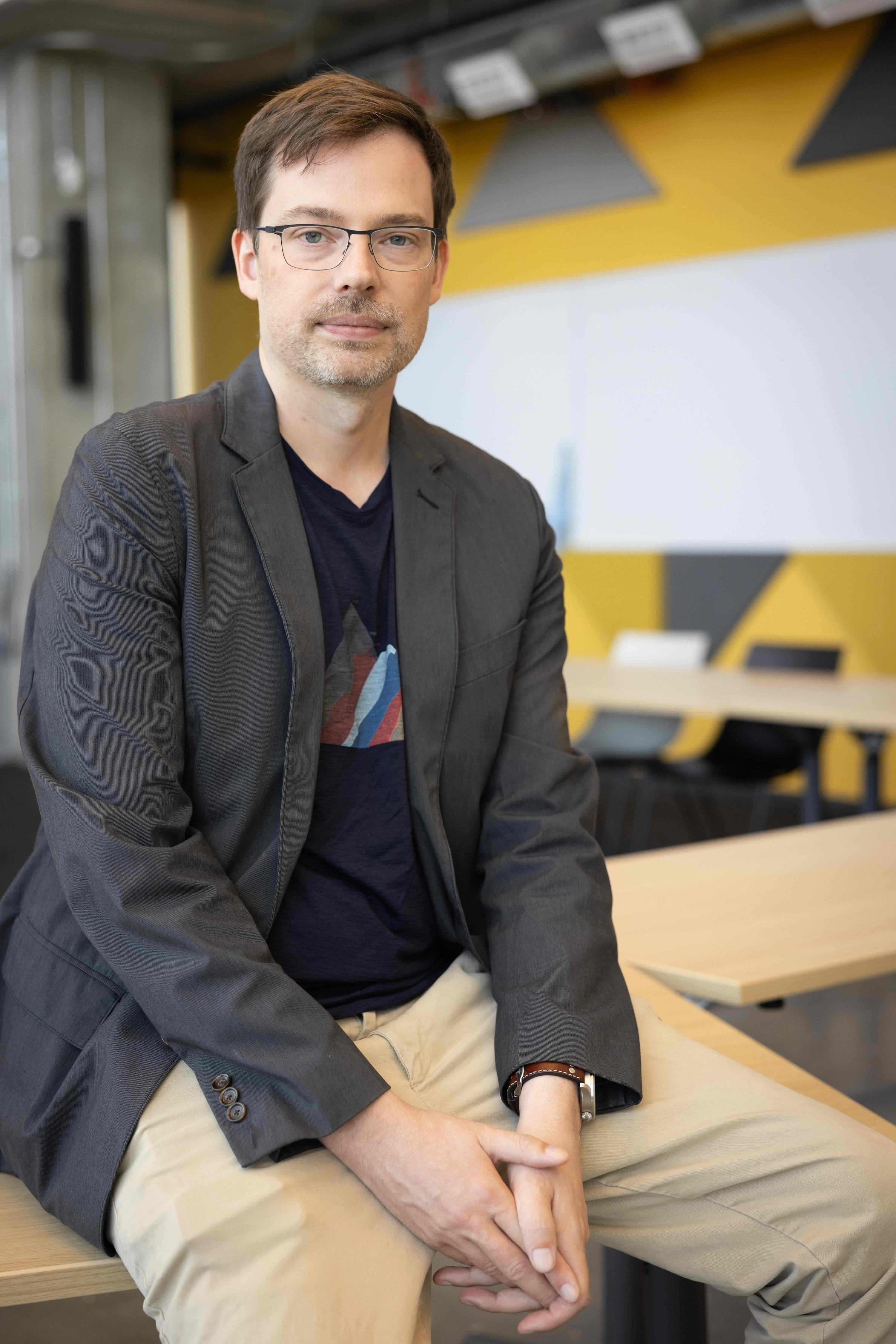
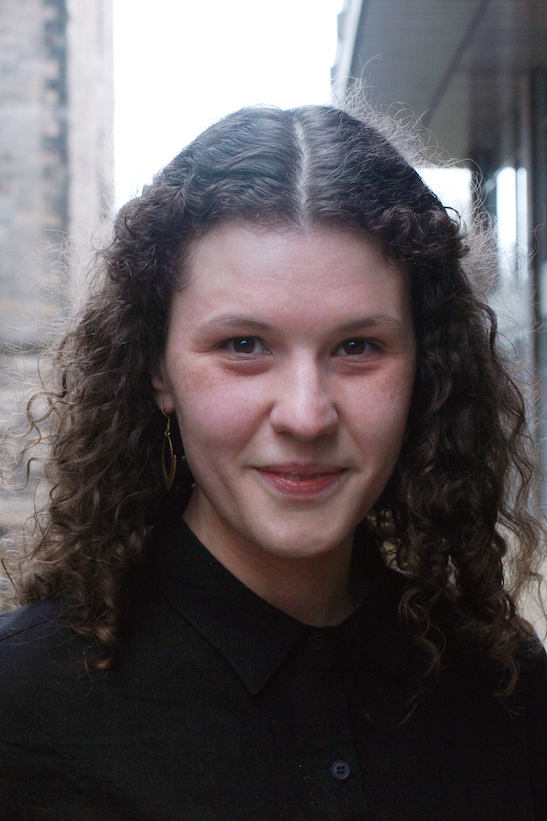
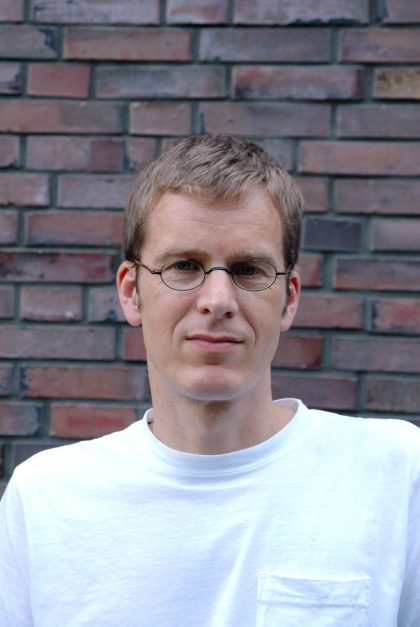
Alan Ritter is an Associate Professor at the School of Interactive Computing , Georgia Institute of Technology, with additional affiliation to the Machine Learning Center . His research focuses on Natural Language Processing , particularly robust models across domains/languages with fewer labels and efficient resource use, plus data-driven dialogue agents for open-topic conversations. Research Interests : Robust NLP models, cross-lingual transfer, resource-efficient learning, dialogue systems, cultural bias measurement, and privacy-aware language models Students : Mentors Ph.D. students in Georgia Tech's ML and CS programs, including Junmo Kang, Yang Chen, and Duong Minh Le. Alumni include Fan Bai (Ph.D. 2023), Yang Chen (Ph.D. 2024), and Andrew Li (M.S. 2024). Awards : NSF CAREER Award, Amazon Research Award, ACL 2024 Best Social Impact Paper, IUI 2009 Best Student Paper. Recent Work : Studies training budget allocation between supervised and preference-based finetuning, cross-lingual information extraction, cultural bias in LLMs, and privacy risk mitigation in social media disclosures. Service : Served as Program Chair for NAACL 2025, Area Chair for multiple top-tier conferences (COLM, EMNLP, ACL, EACL, AAAI). Email : alan.ritter@cc.gatech.edu
Professor Dorit Abusch is a faculty member in the Department of Linguistics and Philosophy at Cornell University's College of Arts & Sciences. Her research focuses on semantics, pragmatics, and their applications to visual narratives. She explores topics like tense semantics, presupposition triggering, modal logic, and the interplay between language and visual media. Current work extends linguistic methodologies to analyze art forms such as comics, cave paintings, and temple sculptures. Her research interests include formal semantics applied to visual narratives, dynamic semantics, possible world theory, and multimodal discourse representation. She investigates how visual elements like sequential art and pictorial sequences convey temporal progression, aspectual distinctions, and free perception constructions through semiotic frameworks. Recent presentations include talks on applying semantics to film and picturebooks at institutions like MIT and the University of Padua. Her publications emphasize cross-media analysis, with key works published in Linguistics & Philosophy and Sinn und Bedeutung . Abusch has received grants for projects studying visual narratives in Indian art and wall paintings of Rajasthan. These include a 2012-2013 Humanities Research Grant and a Cornell Institute for Social Sciences award. Her work bridges linguistics with philosophy and visual studies, offering innovative frameworks for understanding non-linguistic communication through formal semantic tools.
Daniel Hardt serves as Associate Professor in the Department of Management, Society and Communication at Copenhagen Business School. His interdisciplinary research bridges computational linguistics, artificial intelligence, and social analysis, with particular focus on natural language processing applications and theoretical linguistic phenomena. His primary research domains include Computational Linguistics (specializing in ellipsis resolution and sluicing phenomena), Natural Language Processing (developing methods for psychographic classification and sentiment analysis), and Artificial Intelligence (examining large language model capabilities and limitations). Recent work analyzes travel behavior during crises, gender effects in evaluations, and GDPR policy comprehension through NLP techniques. His publications span top venues including Linguistic Inquiry , Tourism Management , and ACL proceedings. Hardt actively engages with practical business applications through 27 media contributions discussing AI implementation, ChatGPT transparency, and data-driven leadership strategies. His academic service includes organizing events like the 2019 "Fake News" conference at CBS and presenting at international venues including JSAI 2024. With 28 supervised academic works documented, he maintains substantial mentoring activity while contributing to public discourse on digital transformation challenges.
Prof. Dr. Anke Holler is a Professor of German Linguistics at the University of Göttingen , specializing in formal grammar, discourse analysis, and computational linguistics. Her career spans roles in academic administration, including Vice President for Appointments since 2021, and leadership in DFG and Leibniz Association committees. Education : University of Tübingen, University of Leipzig, and University of Massachusetts, Amherst Current Projects : GRK 2636 'Form-Meaning Mismatches', DFG 'Structuring Literature' (SPP 2207), VW Foundation 'Uncertain Attribution' Research Interests focus on the intersection of grammar theory, experimental linguistics, and computational modeling. She explores discourse structures, narrative perspective, and constraint-based parsing, with applications in digital humanities and text mining. Her recent work involves neural networks for speaker attribution and computational analysis of literary reflexivity. Collaborations include the Carl Friedrich Lehmann-Haupt Doctoral Program and the 'Textstrukturen' center. She serves as editor for the Zeitschrift für Sprachwissenschaft and coordinates interdisciplinary initiatives.
Massimo Poesio is a Professor of Computational Linguistics at Queen Mary University of London and a full Professor of Natural Language Understanding at Utrecht University. He leads the ARCIDUCA project (EPSRC-funded) on conversational agents and the Dealing with Meaning Variation project (NWO-funded) exploring NLP applications. His research focuses on anaphora resolution, games-with-a-purpose, and applying NLP to combat deception and misinformation. He is a Fellow of the Alan Turing Institute and supervises students in PhD programs like IGGI and Health Data in Practice. Education: Previous affiliations include University of Essex and University of Trento (founded CLIC Lab). Research Projects: DALI (ERC), SENSEI (EU), AnaWiki (EPSRC), and LiveMemories (Provincia di Trento). His work combines formal semantics with empirical methods, including brain data and corpus analysis. He has developed tools like Phrase Detectives and BART for anaphora resolution, and co-founded the Lingotowns platform for language learning.
Orphée De Clercq is an Assistant Professor at Ghent University, specializing in language technology for educational applications. Her research focuses on leveraging Natural Language Processing (NLP) and Machine Learning (ML) to enhance computer-assisted language learning , readability prediction , and automated writing evaluation . She also explores sentiment analysis , emotion detection , and event coreference resolution in Dutch and multilingual contexts. Education : PhD in 2015 with groundbreaking work in readability prediction and fine-grained sentiment analysis for Dutch. Research Trends in her recent publications emphasize: Readability across domains and languages Emotion Detection using transformers and affect lexica Event Coreference in cross-document news Automated Writing Evaluation through NLP Implicit Sentiment Analysis in user-generated content Cross-Lingual Transfer with multilingual datasets She co-supervises four PhD students and contributes to interdisciplinary projects like Steunpunt Toetsen , SentEMO , and NewsDNA . Her teaching includes courses on digital communication and Computer-Assisted Language Learning .
Dr. Estrid He is a Senior Lecturer at RMIT University's School of Computing Technologies. She obtained her PhD from the University of Melbourne in 2020, where she subsequently served as a postdoctoral research fellow. Her research bridges natural language processing, data mining, and deep learning optimization, with applications spanning healthcare, communications, and algorithmic fairness. Research Focus: Core NLP techniques for knowledge extraction from complex texts (patents, medical records) Enhancing security/efficiency of deep learning models in resource-constrained environments Multimodal learning integrating text, sensor data, and biomedical signals Fairness-aware AI systems for computer vision and graph neural networks Her publication portfolio demonstrates strong cross-disciplinary collaboration, with recent work in: Wireless communications (terahertz signal processing, 6G hardware) Biomedical applications (brain disorder prediction, clinical NLP) Generative models for sensor data and multimodal content Algorithmic fairness in computer vision and graph networks She actively supervises graduate research, with current projects including: Graph learning for brain disorder prediction Multimodal health data mining Privacy-preserving AI for urban sensing Integration of spiking neural networks with LLMs
Dag Trygve Truslew Haug is a Professor at the Department of Classics at the University of Oslo, specializing in Greek and Latin linguistics with a focus on syntax and computational approaches. His research bridges classical philology with modern computational linguistics, particularly through treebank development and semantic analysis. His primary research interests include: Greek and Latin grammatical structures Lexical-Functional Grammar and formal semantics Computational linguistics and treebank development Historical linguistics and syntactic change Semantic annotation frameworks Morphological tagging systems His recent publications demonstrate a strong focus on computational linguistics applications for classical languages, semantic parsing methodologies, and the development of linguistic resources for Norwegian. The work shows consistent innovation in formal semantics, corpus linguistics, and interdisciplinary applications in computational biology. He leads the DAMOS project (Database of Mycenaean at Oslo) and participates in multiple research groups including Digital Humanities, Grammar and Meaning, Language Change, Linguistics and Poetics, Pragmatics: Theory & Experiments, and Super Linguistics.
Stephen Neale is a Professor of Philosophy and Linguistics at the Graduate Center, City University of New York (CUNY) . His research bridges Philosophy of Language, Philosophical Logic, and their intersections with Linguistics, Metaphysics, and Cognitive Science. He holds the John H. Kornblith Family Chair in the Philosophy of Science and Values and has been affiliated with CUNY since at least 2012. Ph.D., Stanford University (1988) Neale’s work explores intention, context, semantic composition, pragmatic inference , and the indeterminacy of meaning. His research extends to interdisciplinary applications in legal interpretation, archaeological theory, and cognitive science. He is a proponent of rigorous analysis of semantic and pragmatic boundaries in language and logic. The 15 most recent articles (2001–2016) reflect his focus on Philosophy of Language , with recurring themes of anaphora , contextual parameters , definite descriptions , logical form , and pragmatic enrichment . His scholarship engages deeply with Gricean pragmatics, Davidsonian semantics, and the theoretical underpinnings of linguistic interpretation. Scientific Awards : University of California President’s Fellow (1994) Rockefeller Fellow (Bellagio, Italy, 1995) National Endowment for the Humanities Fellow (1998) Guggenheim Fellow (2002) Neale has taught graduate and undergraduate courses in Philosophy of Language, Linguistic Pragmatism, Metaphysics, and Interpretive Practices at CUNY and Rutgers University. His editorial contributions include co-edited volumes such as Mind (Special Issue) and Descriptions and Beyond .
Dr. Nafise Sadat Moosavi is a Lecturer in Natural Language Processing at the University of Sheffield's School of Computer Science, and a Deputy School Head of ED&I. She holds a PhD from Heidelberg University, with prior postdoctoral research at the Technical University of Darmstadt's UKP Lab. Her research focuses on NLP and machine learning, including end-to-end reasoning, robustness, coreference resolution, text generation, sustainability, and evaluation metrics. Her academic journey includes bachelor's and master's degrees in computer science from Alzahra University and Sharif University of Technology, Iran. She leads projects like the Royal Society-funded 'Geometric Representations of Uncertainty for Foundation Models' (2025–2028). Her work emphasizes ethical AI, bias mitigation, and improving model generalization. Grants: £193,560 Royal Society Grant (PI) for foundational model uncertainty research Research Groups: Member of the University of Sheffield's NLP research group Key Themes: Debiasing NLU models, sustainable NLP practices, and advancing coreference resolution techniques Her publications span 2020–2025, addressing topics like hate speech detection, LLM limitations, and evaluation metric design. She co-organized workshops including SustaiNLP and contributed to datasets like PeerQA and SciGen.
Amir Zeldes is an Associate Professor in the Department of Linguistics at Georgetown University, where he leads the Corpling@GU Corpus Linguistics lab. He serves as President of the ACL Special Interest Group on Annotation (SIGANN). His primary research focuses on computational models of discourse, including referentiality and discourse relations, leveraging multilayer corpus studies to advance NLP and linguistic theory. Zeldes holds a Ph.D. from Humboldt Universität zu Berlin, complemented by an M.A. and B.A. in linguistics from Humboldt and the Hebrew University of Jerusalem. His work emphasizes discourse analysis, coreference resolution, and annotation frameworks, with contributions to Universal Dependencies treebanks and discourse parsing benchmarks like DISRPT. Zeldes has authored influential texts such as Multilayer Corpus Studies (2018/2020), exploring methodologies for parallel linguistic analyses. His research bridges theoretical linguistics and computational tools, addressing challenges in discourse signaling, entity salience, and cross-linguistic NLP applications. Zeldes' lab develops open-source tools for corpus creation and annotation, fostering interdisciplinary collaboration in computational linguistics. His recent projects include advancing discourse relation parsing, LLM evaluation, and historical language restoration through RNN models. Despite no listed awards, his extensive grants and publications reflect significant academic impact in NLP and corpus linguistics.
Aleksandre Maskharashvili serves as Assistant Professor in the Department of Linguistics at the University of Illinois Urbana-Champaign, specializing in computational approaches to linguistic theory with particular expertise in Georgian language processing. His research profile reveals deep engagement with: Formal grammatical frameworks (Abstract Categorial Grammar, Tree Adjoining Grammar) Probabilistic semantics and Bayesian inference models Discourse relation analysis and connective generation Computational treatment of anaphora and coreference Neural language model applications for linguistic tasks Georgian language-specific computational challenges Analysis of recent publications (2021-2023) shows a pronounced shift toward integrating probabilistic reasoning with neural architectures in linguistic theory, particularly in natural language semantics and discourse generation. His work bridges theoretical linguistics with practical computational implementations, emphasizing how discourse relations enhance pre-trained language model performance.
Elizabeth Pankratz is a Lecturer in Psychology (Statistics) at the University of Edinburgh's Department of Psychology within the College of Humanities and Social Science. She specializes in teaching statistical methods for psychological research and maintains active contributions to computational research tools through GitHub repositories. Her research focuses on psycholinguistics and statistical learning mechanisms in language acquisition, with particular emphasis on rule formation, segmentation, and generalization processes. Current work investigates how frequency distributions facilitate linguistic rule generalization and the role of production in morphosyntactic learning. Her methodological approach combines computational modeling experimental paradigms like serial reaction time tasks corpus analysis simulation-based hypothesis testing Analysis of her 15 most recent publications reveals strong interdisciplinary connections between cognitive science, linguistics, and statistical methodology. Key trends include the investigation of scalar inferences under cognitive load, cross-linguistic register analysis, and computational approaches to coreference resolution in indigenous languages. Her work frequently employs simulation methods to formalize null hypotheses in cognitive science research. Pankratz has developed technical resources including a jsPsych 7 plugin for gathering serial reaction times to audio stimuli, demonstrating her integration of programming skills with experimental psychology. Her GitHub activity shows consistent contributions through 2025, including development of lecture materials and data playgrounds for statistical courses.
Michael Strube is an Honorary Professor at the Department of Computational Linguistics at Heidelberg University and leads the Natural Language Processing (NLP) Group at HITS (Heidelberg Institute for Theoretical Studies) in Germany. He has been with HITS (previously EML Research and European Media Laboratory) since 2003 and became an Honorary Professor at Heidelberg University in 2010. He is also a Fellow of the Association for Computational Linguistics (2019). Dr. Strube received his PhD from the Computational Linguistics Department at the University of Freiburg in December 1996 under the supervision of Udo Hahn. Between 1997 and 1999, he was a postdoctoral fellow at the Institute for Research in Cognitive Science at the University of Pennsylvania, Philadelphia. Michael Strube's research focuses on semantics and discourse pragmatics, graph-based methods for text representation and analysis, extraction of world knowledge from Wikipedia for computational linguistics, and development of methods to synchronize multilingual content. His work spans coreference resolution, discourse processing, text summarization, entity linking, and natural language generation. He has made significant contributions to coherence modeling, anaphora resolution, and the application of geometric deep learning in NLP. His recent publications demonstrate strong trends in discourse processing, coreference resolution, and the application of geometric approaches to NLP problems. Strube has pioneered work in hyperbolic space for entity typing and graph embeddings, while maintaining his foundational work in discourse and coherence. His research bridges theoretical linguistics with practical NLP applications across multiple languages. Dr. Strube has received several prestigious awards, including: Fellow of the Association for Computational Linguistics (2019) Best Paper Award for "Fine-grained entity typing in hyperbolic space" (2019) Honorable Mention for the IJCAI-JAIR best paper prize 2010 for "Knowledge Derived from Wikipedia for Computing Semantic Relatedness" Professor Strube has advised numerous PhD students who have gone on to successful careers in academia and industry. His current PhD students include Yi Fan, Wei Liu, Haixia Chai, Mehwish Fatima, and Sungho Jeon, working on topics such as discourse structure, discourse relations, coreference resolution, and cross-lingual summarization. His former students include Federico Lopez, Benjamin Heinzerling, Mohsen Mesgar, and Nafise Moosavi, who now hold positions at institutions like Argo AI, RIKEN, Bosch Center for AI, and the University of Sheffield. As group leader of the NLP Group at HITS, Strube oversees a team focused on advancing natural language processing through research in discourse analysis, coreference resolution, text generation, and knowledge extraction. The group has been involved in numerous collaborative projects and has made significant contributions to the field through publications, shared tasks, and community building via workshops and conferences.
Juntao Yu is a Lecturer in Computer Science at Queen Mary University of London's School of Electronic Engineering and Computer Science. Previously, he held a Lecturer position at the University of Essex and worked as a post-doctoral researcher at Queen Mary University on the ERC-funded DALI project under Professor Massimo Poesio. His PhD from the University of Birmingham focused on out-of-domain dependency parsing under Dr. Bernd Bohnet. Research Interests: Deep Learning for NLP, Coreference Resolution, Conversational AI, Dependency Parsing, Domain Adaptation, and Multi-task Learning. His work emphasizes scalable anaphora resolution systems, hybrid crowdsourcing approaches for corpus development, and cross-linguistic NLP challenges. He has contributed to major frameworks like the Universal Anaphora Scorer and the ARRAU corpus family. Yu's recent research explores large language model capabilities in coreference tasks and dialogue system evaluation. He maintains active collaboration with industry through projects like the CODI-CRAC shared tasks. Labs/Teams: Active member of the School's Natural Language Processing group and collaborator with the DALI project team.