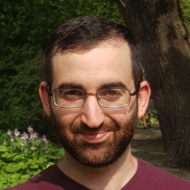
Kyle Rawlins is a Professor in the Department of Cognitive Science at Johns Hopkins University (JHU), where he heads the Semantics Lab located in Krieger Hall 105. His research focuses on semantics, pragmatics, syntax, and their intersections, often collaborating with labs like the Van Durme Lab in Computer Science. The Semantics Lab facilitates weekly meetings for discussing research, structured as seminars or traditional lab sessions, and co-organizes projects such as the Decomp Project and MegaAttitude Project . Current lab members include PhD students Karl Mulligan and Natalia Talmina. Notable collaborators: Ilaria Frana (University of Enna), Barbara Landau (JHU), Ben Van Durme (JHU CS), and Aaron Steven White (Rochester). His research spans topics like: Questions Under Discussion (QUD) frameworks Evidentiality and bias in language Multimodal semantic parsing Decompositional semantics Pragmatic particles in Italian Recent publications analyze polar questions, neural network representations, and discourse particles. The lab maintains a mailing list for event announcements, emphasizing collaborative research in semantics and computational linguistics.
Johanna Mattissen is a Research Fellow in the Department of Linguistics at the University of Cologne, specializing in European Legal Linguistics. Her office is located at Bernhard-Feilchenfeld-Str. 11, 50969 Köln, with postal address Albertus-Magnus-Platz, 50923 Köln. Contact is available by appointment via telephone (+49-221-470-3012) or email. Her research spans: Linguistic typology with focus on polysynthesis, morphological complexity, and endangered languages (Nivkh, Japanese, Laz, Greenlandic, Basque) Legal linguistics analyzing multilingual EU legislation, coordination phenomena, and terminology in European law Cross-linguistic analysis of discourse markers, modality, and reference-tracking in legal texts Machine translation challenges in human vs neural approaches for specialized domains Her recent publications (2021-2023) predominantly examine linguistic structures in EU legal instruments, investigating coordination ambiguity, terminological precision, and multilingual equivalence in binding texts. Earlier works establish foundations in polysynthesis typology and morphological theory.
Prof. Dr. Anke Holler is a Professor of German Linguistics at the University of Göttingen , specializing in formal grammar, discourse analysis, and computational linguistics. Her career spans roles in academic administration, including Vice President for Appointments since 2021, and leadership in DFG and Leibniz Association committees. Education : University of Tübingen, University of Leipzig, and University of Massachusetts, Amherst Current Projects : GRK 2636 'Form-Meaning Mismatches', DFG 'Structuring Literature' (SPP 2207), VW Foundation 'Uncertain Attribution' Research Interests focus on the intersection of grammar theory, experimental linguistics, and computational modeling. She explores discourse structures, narrative perspective, and constraint-based parsing, with applications in digital humanities and text mining. Her recent work involves neural networks for speaker attribution and computational analysis of literary reflexivity. Collaborations include the Carl Friedrich Lehmann-Haupt Doctoral Program and the 'Textstrukturen' center. She serves as editor for the Zeitschrift für Sprachwissenschaft and coordinates interdisciplinary initiatives.
Massimo Poesio is a Professor of Computational Linguistics at Queen Mary University of London and a full Professor of Natural Language Understanding at Utrecht University. He leads the ARCIDUCA project (EPSRC-funded) on conversational agents and the Dealing with Meaning Variation project (NWO-funded) exploring NLP applications. His research focuses on anaphora resolution, games-with-a-purpose, and applying NLP to combat deception and misinformation. He is a Fellow of the Alan Turing Institute and supervises students in PhD programs like IGGI and Health Data in Practice. Education: Previous affiliations include University of Essex and University of Trento (founded CLIC Lab). Research Projects: DALI (ERC), SENSEI (EU), AnaWiki (EPSRC), and LiveMemories (Provincia di Trento). His work combines formal semantics with empirical methods, including brain data and corpus analysis. He has developed tools like Phrase Detectives and BART for anaphora resolution, and co-founded the Lingotowns platform for language learning.
Stuart Shieber is the James O. Welch, Jr. and Virginia B. Welch Professor of Computer Science in the School of Engineering and Applied Sciences at Harvard University. He is a prominent researcher in computational linguistics and natural language processing, with significant contributions across multiple related fields including theoretical linguistics, computer-human interaction, automated graphic design, and the philosophy of artificial intelligence. Professor Shieber's research interests focus primarily on computational linguistics, examining natural language from the perspective of computer science. His work spans scientific and engineering goals, utilizing foundational formal and mathematical tools. He has made significant contributions to grammar formalisms, psycholinguistics, semantics, and synchronous grammars with applications in machine translation and sentence compression. Beyond computational linguistics, his research extends to automatic layout of charts and maps, novel interaction techniques for document reading and diagram layout, online auction mechanisms, library book access prediction, biological evolution tree reconstruction, and the philosophical basis for Turing's test for machine intelligence. His recent publications demonstrate a continued focus on neural language models, syntactic agreement mechanisms, readability assessment, conversational understanding, and bias detection in language models. His research has evolved from traditional grammar formalisms to incorporate modern neural network approaches while maintaining a strong theoretical foundation. The trend shows increasing attention to ethical considerations in NLP, particularly around bias detection and mitigation, alongside continued theoretical work on language structure. Presidential Young Investigator award (1991) Presidential Faculty Fellow (1993) John L. Loeb Associate Professorship in Natural Sciences (1993) Harvard College Professorship (2001) Fellow of the American Association for Artificial Intelligence (2004) Fellow of the Association for Computing Machinery (2014) Fellow of the Association for Computational Linguistics (2017) Professor Shieber has advised numerous PhD students who have gone on to successful careers at institutions including UCSD, Cornell University, Microsoft Research, Google, and various academic institutions. His work on open access and scholarly communication policy, particularly his development of Harvard's open-access policies, led to his appointment as the first director of the university's Office for Scholarly Communication. He is also the founding director of the Center for Research on Computation and Society and a faculty co-director of the Berkman Center for Internet and Society. His laboratory work has focused on advancing computational linguistics through both theoretical and applied research, with numerous patents and co-founding of Cartesian Products, Inc., a high-technology research and development company. His future work appears to be focusing on the intersection of neural network approaches with traditional linguistic theory, particularly in understanding and mitigating bias in language models, while continuing his long-standing interest in the theoretical foundations of language processing.
Hajime Hoji is an Associate Professor of Linguistics at the University of Southern California (USC) , specializing in Language Faculty Science through an internalist approach. His research bridges linguistics with the scientific method, emphasizing definite predictions , experimental validation , and universal reproducibility . Education: Ph.D. in Linguistics, University of Washington (1985). Key Publications: Language Faculty Science (Cambridge University Press, 2015) and The Theory and Practice of Language Faculty Science (De Gruyter Mouton, 2022). Research Focus: Hoji’s work centers on studying the language faculty as a cognitive system using the Guess-Compute-Compare method inspired by Richard Feynman. He prioritizes rigorous testability , replication , and exceptionless experimental results , particularly in Japanese syntax (anaphora, scope dependency, c-command effects). Collaborations: Co-edited volumes with Daniel Plesniak and Yukinori Takubo , extending his research to cross-linguistic analysis (English, Korean, Mandarin). Methodological Contributions: Developed self-experimentation and non-researcher-informant experiments to validate hypotheses about formal dependencies and grammatical structures . His framework challenges traditional compatibility-seeking linguistic approaches.
Orphée De Clercq is an Assistant Professor at Ghent University, specializing in language technology for educational applications. Her research focuses on leveraging Natural Language Processing (NLP) and Machine Learning (ML) to enhance computer-assisted language learning , readability prediction , and automated writing evaluation . She also explores sentiment analysis , emotion detection , and event coreference resolution in Dutch and multilingual contexts. Education : PhD in 2015 with groundbreaking work in readability prediction and fine-grained sentiment analysis for Dutch. Research Trends in her recent publications emphasize: Readability across domains and languages Emotion Detection using transformers and affect lexica Event Coreference in cross-document news Automated Writing Evaluation through NLP Implicit Sentiment Analysis in user-generated content Cross-Lingual Transfer with multilingual datasets She co-supervises four PhD students and contributes to interdisciplinary projects like Steunpunt Toetsen , SentEMO , and NewsDNA . Her teaching includes courses on digital communication and Computer-Assisted Language Learning .
Marcela Depiante is a Professor of Spanish in the Department of Languages at the University of Wisconsin-Eau Claire, affiliated with the College of Arts and Sciences. She holds a Ph.D. in Linguistics from the University of Connecticut (2000), an M.A. in Linguistics from the University of Maryland (1993), and a B.A. in Psychology with Linguistics concentration from the University of Massachusetts Boston. Her research focuses on Romance Linguistics, particularly comparative syntax and morphology between Spanish and English. Key interests include ellipsis and anaphora phenomena, syntax-semantics of adpositions, bilingualism, L1 attrition, and the syntax of Heritage Spanish in the U.S. Notable work includes studies on null complement anaphora, non-canonical agreement patterns, and stranded prepositions in Spanish. Recent presentations include discussions on Spanish 'parecer' complement structures (2023), locative constructions in Argentine Spanish (2023), and hyper-raising phenomena (2022). Her publications appear in venues like Oxford Handbook of Ellipsis and Hispanic Linguistics Symposium proceedings. She collaborates frequently with Adolfo Ausín on syntactic analysis projects. Teaching responsibilities include Spanish linguistics courses (e.g., Span 491, 492), advanced grammar, and translation. Her work bridges formal syntax with sociolinguistic aspects of language variation and attrition.
Daniel Hardt serves as Associate Professor in the Department of Management, Society and Communication at Copenhagen Business School. His interdisciplinary research bridges computational linguistics, artificial intelligence, and social analysis, with particular focus on natural language processing applications and theoretical linguistic phenomena. His primary research domains include Computational Linguistics (specializing in ellipsis resolution and sluicing phenomena), Natural Language Processing (developing methods for psychographic classification and sentiment analysis), and Artificial Intelligence (examining large language model capabilities and limitations). Recent work analyzes travel behavior during crises, gender effects in evaluations, and GDPR policy comprehension through NLP techniques. His publications span top venues including Linguistic Inquiry , Tourism Management , and ACL proceedings. Hardt actively engages with practical business applications through 27 media contributions discussing AI implementation, ChatGPT transparency, and data-driven leadership strategies. His academic service includes organizing events like the 2019 "Fake News" conference at CBS and presenting at international venues including JSAI 2024. With 28 supervised academic works documented, he maintains substantial mentoring activity while contributing to public discourse on digital transformation challenges.
Guillaume Thomas is an Associate Professor in the Department of Linguistics at the University of Toronto. His research focuses on the study of meaning (semantics and pragmatics) in relation to morphosyntactic structures, particularly in Mbyá Guaraní, a Tupí-Guaraní language spoken in Argentina, Brazil, and Paraguay. He combines corpus linguistics and digital methods with fieldwork, developing resources like dependency treebanks and morphological analyzers. His work includes language documentation projects, such as the National Inventory of the Cultural Heritage of the Guaranis in Brazil, which involved community-based documentation of oral traditions. His research interests also encompass usage-based approaches, probabilistic models in language analysis, and the interface between semantics and syntax. Education: PhD in Linguistics from the Massachusetts Institute of Technology (MIT). Research Interests: Cross-linguistic semantics and pragmatics Morphosyntax and its interface with meaning Language documentation and digital linguistics Corpus-based methods and computational tools for endangered languages Funding: Supported by grants from the Social Sciences and Humanities Research Council of Canada and the Connaught Fund. His work integrates theoretical linguistics with practical applications in language preservation and computational modeling. Labs/Teams: He collaborates with the Indigenous Museum of Rio de Janeiro on documentation projects and contributes to the Universal Dependencies project for syntactic annotation.
Janosch Haber is a Visiting Professor at Queen Mary University of London's School of Electronic Engineering and Computer Science. His research focuses on Natural Language Processing (NLP), Computational Linguistics, and Semantic Analysis, with emphasis on polysemy, word sense similarity, and contextualized language models. He has contributed to studies on anaphora resolution, dialogue systems, and neuro-linguistic modeling using tools like GPT-2. His work bridges cognitive science and machine learning, addressing challenges in multilingual NLP and social media analysis. Recent publications explore polysemy patterns, human ratings for word concreteness, and visual dialogue datasets like PhotoBook. His research aims to improve contextualized embeddings and collaborative dialogue systems, reflecting a commitment to interdisciplinary applications in AI and linguistics.
Andrew Weir is a Professor of English Language and Linguistics at the Norwegian University of Science and Technology (NTNU), Department of Language and Literature (ISL). He holds positions in the Faculty of Humanities and serves on NTNU's Language Policy Committee and the MLSPRÅK teacher training committee. His academic journey includes an MA in Linguistics from the University of Edinburgh (2008), an MA in Syntax from University College London (2009), and a PhD in Linguistics from the University of Massachusetts Amherst (2014). Before NTNU, he was a postdoctoral researcher at Ghent University's English department. Weir specializes in generative syntax and semantics, focusing on ellipsis (particularly clausal ellipsis) and interfaces between syntax, semantics, and phonology. He studies register variation in 'reduced written registers' (diaries, text messages) and dialectal features of Scottish English. As co-leader of the ForMAAL research group, he explores formal, mental, and acquisition-based approaches to language. His teaching spans theoretical linguistics courses including syntax, semantics, and linguistic theories. Weir's research emphasizes syntax-semantics interactions, dialectal syntax, and the role of prosody in ellipsis. He has supervised numerous student theses and actively participates in academic outreach, including lectures on Scots language history and generative syntax methodologies.
Noortje Venhuizen is an Assistant Professor in the Department of Cognitive Science and Artificial Intelligence at the Tilburg School of Humanities and Digital Sciences, Tilburg University. She serves as Academic Director for the BSc Cognitive Science and Artificial Intelligence program since 2024, and has held academic positions at Saarland University (2015-2022) including roles as Scientific Staff member and Principal Investigator in SFB 1102 projects. PhD in Computational Semantics (University of Groningen, 2015) MSc in Logic (ILLC, University of Amsterdam, 2011) BSc in Artificial Intelligence (Utrecht University, 2009) Her research focuses on expectation-based language comprehension, neurocomputational modeling of semantic processing, distributional formal semantics, and pragmatic reasoning in discourse. Key contributions include PDRT-SANDBOX (Haskell NLP library) and DFS Tools (Prolog implementation of distributional formal semantics). Recent publications (2023-2025) explore multimodal word meaning, informativity in reference production, and neurocognitive models of surprisal processing. Her work combines formal semantics with cognitive neuroscience and computational modeling. LOT Grotevragenprijs essay contest - Second Prize She has presented research at major conferences including CogSci, AMLaP, and Sinn und Bedeutung. Current teaching includes courses on artificial intelligence, statistics, and semantic theory.
Alan Hezao Ke is an Assistant Professor in the Department of Linguistics at Michigan State University's College of Arts & Letters. His primary research focuses on syntax, semantics, and psycholinguistics, with particular emphasis on experimental and computational approaches to syntax, language acquisition, and sentence processing. He completed his Ph.D. in Linguistics at the University of Michigan in 2019. Research Interests : Syntax, Semantics, Psycholinguistics, Computational Linguistics Specializations : Experimental syntax, Parametric variation, Neural synchrony in language processing Publications demonstrate his expertise in: Syntactic theory and parametric variation Binding theory and null object resolution Computational modeling of language acquisition Neural mechanisms in syntactic processing Quantifier domains and distributive semantics Chinese-specific syntactic phenomena Contact: kehezao@msu.edu | Office: Wells Hall, Michigan State University
Ezer Rasin is a Senior Lecturer in the Department of Linguistics at Tel Aviv University (TAU), where he also leads the TAU Phonological Computation Lab. He holds a PhD in Linguistics from MIT (2018), an MA and BSc in Linguistics and Mathematics from TAU (both prior to his PhD). Before joining TAU, he was a postdoctoral researcher in Leipzig University's IGRA program. His research focuses on theoretical and computational phonology, learnability, and formal linguistics. Key areas include phonological opacity, optimality theory, and the interaction between phonology and morphosyntax. His work bridges empirical phonology with computational modeling, addressing questions about language acquisition and formal grammatical architecture. Recent publications examine challenges to size-based parallel analyses in Hebrew vowel deletion, opacity phenomena in Gua and Akan, and computational approaches to phonological learning. He has contributed to journals like Linguistic Inquiry and Journal of Language Modelling , and co-edited proceedings for NELS and other conferences. Rasin teaches courses on phonological opacity, computational phonology, and the phonology-morphology interface at TAU. His research also involves developing audio databases for endangered languages like Judeo-Baghdadi Arabic, reflecting his commitment to computational methods in linguistic documentation.