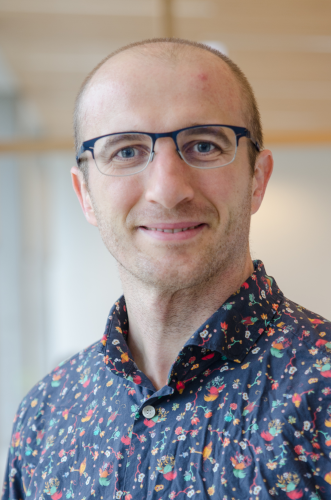
Josette Rebeyrolle is a Lecturer in Language Sciences at the University of Toulouse - Jean Jaurès , affiliated with the Cognition, Languages, Language, Ergonomics (CLLE) research center. Her work spans discourse analysis, semantics, and corpus linguistics, focusing on referential continuity and discourse markers in educational contexts. Research Themes: Referential continuity ties, discourse markers, text world theory, corpus-based studies, and pragmatic markers in French. Collaborations: Frequent collaborator with Lydia-Mai Ho-Dac on annotation methodologies and student narrative analysis. Her recent publications explore the evolution of temporal expressions like "à un moment donné" and the pragmatic functions of discourse markers in both written and oral French. She has developed annotation tools like the RESOLCO and ANNODIS corpora for studying textual cohesion.
Cécile Fabre is a Professor of Language Sciences at the University of Toulouse 2 - Jean Jaurès, affiliated with the CLLE laboratory (Cognition, Languages, Ergonomics). She serves as Director of the Maison des Sciences de l'Homme et de la Société de Toulouse (MSHS-T, UAR 3414) and Co-head of the H-SHS (Humanities, Human and Social Sciences) research center of the Comue de Toulouse. Her research focuses on Natural Language Processing (NLP) , Computational Linguistics , and Corpus Linguistics , particularly in extracting semantic information and lexical relations using Distributional Semantics . She has contributed to understanding discourse structures, medical interactions, and morphological derivatives in French. Research Trends include: Distributional Semantics applications in lexical substitution and specialized corpora Discourse organization through empirical analysis and annotated corpora Semantic discrimination of nominalizations and technical terms Corpus-driven studies in French linguistics and NLP Methodological innovations in linguistic annotation and semantic modeling Interdisciplinary collaborations in medical discourse and cognitive sciences
Prof. Dr. Doreen Bryant serves as Studiendekanin (Dean of Studies) at the Deutsches Seminar within the Faculty of Humanities at Eberhard Karls Universität Tübingen. Her work focuses on German Linguistics with specialization in German as a Second Language (DaZ). Her research spans three core areas: (i) language acquisition across all stages (first/second/tertiary language acquisition; spoken/written language development; typical and disordered language development), (ii) language diagnostics, and (iii) language education and support in early childhood, primary, and secondary education. She leads the DaZ degree program established in 2021 and contributes to other programs including BA German Studies, B.Ed./M.Ed. German, and MA German Linguistics. Her recent publications demonstrate expertise in referential coherence, anaphora resolution, and passive constructions in educational contexts. She oversees the mandatory module 'Inclusion, Diversity and Heterogeneity' in the Master of Education program and coordinates the additional qualification for German as a Second Language. Prof. Bryant supervises doctoral candidates including Derya Dinçer and maintains an active research group focused on language development and education. Her team includes researchers like Benjamin Siegmund and Sophie Vogel.
Katarzyna Kijania-Placek is a Professor at the Institute of Philosophy, Jagiellonian University in Kraków, Poland. She leads the Philosophy of Language and Mind Workshop and maintains active research and teaching responsibilities. Her office is located at Grodzka Street 52, room 29, with office hours on Tuesdays from 4:15-5 p.m. via Teams or in person by appointment. Her primary research interests include philosophy of language, philosophical logic, philosophy of logic, theory of truth, and epistemology. She has developed a polysemic theory of proper names that accounts for both referential and non-referential uses of proper names, challenging traditional direct reference theories. Her work extends to indexicals, definite descriptions, and the semantic properties of singular expressions in natural language. Kijania-Placek's recent publications reveal a consistent focus on the polysemic nature of singular expressions, descriptive indexicals, deferred reference mechanisms, and the philosophical implications of linguistic usage patterns. Her research demonstrates how proper names and indexicals can function descriptively in certain contexts, challenging strict direct reference theories. OPUS25 (2024-2028): Polysemic nature of singular expressions (project manager) OPUS10 (2016-2021): Polisemiczna teoria nazw własnych (project manager) OPUS5 (2014-2016): Deskryptywne użycia wyrażeń jednostkowych (project manager) Her research has theoretical implications for the semantics-pragmatics boundary debate and the minimalist-contextualist debate in philosophy of language. Through her leadership of multiple research projects, she has fostered collaboration with scholars like Olga Poller and Paweł Banaś, producing significant contributions to the understanding of reference and meaning in natural language.
Prof. Zofia Wodniecka-Chlipalska is a distinguished faculty member at Jagiellonian University's Institute of Psychology within the Faculty of Philosophy. Her research spans bilingualism, cognitive neuroscience, and psycholinguistics, focusing on language control mechanisms and cross-linguistic influences. She leads the Laboratory of Language Psychology and Bilingualism 'LangUsta', overseeing critical studies on bilingual children's language processing and neural adaptations. Key Research Areas: Bilingual language control, social biases in multilingual contexts, lexical access, neuropsychological mechanisms of second language acquisition. Recent Trends: 2025 articles explore neural efficiency in bilingual environments, vocabulary dynamics in Polish-English children, and motivation-driven prejudice reduction.
Klim Zaporojets is a Marie Skłodowska-Curie Postdoctoral Fellow in the Department of Computer Science at Aarhus University, where he conducts research within the Data-Intensive Systems Group. His work bridges theoretical advancements and practical applications in natural language understanding. His research focuses on information extraction systems that connect textual content with structured knowledge bases. His methodology emphasizes leveraging external knowledge sources to enhance information extraction performance, particularly in document-level contexts where entities evolve over time. His work spans temporal relation extraction, entity linking, and biomedical text mining applications. The publication record reveals a strong focus on document-level information extraction with increasing emphasis on temporal aspects and knowledge integration. Recent work explores large language model applications for graph learning and calibration challenges in LLMs, showing evolution from traditional NLP tasks to cutting-edge foundation model research. His publications appear in top-tier venues including ACL, EMNLP, CIKM, and NeurIPS. His scientific recognition includes the prestigious Marie Skłodowska-Curie Postdoctoral Fellowship, supporting his research at Aarhus University. His work has produced several influential datasets including DWIE, TempEL, and BioDEX that have become benchmarks in document-level information extraction. Zaporojets maintains active collaborations with researchers at Ghent University (evidenced by his ugent.be email address) and has contributed to multiple interdisciplinary projects spanning computational linguistics, healthcare informatics, and knowledge representation. His technical contributions include open-source implementations of his research, demonstrating commitment to reproducible science.
Costanza Navarretta serves as a Senior Researcher at the Department of Nordic Studies and Linguistics, University of Copenhagen, where she conducts advanced research in computational linguistics and multimodal communication through the Centre for Language Technology. Her work bridges theoretical linguistics with practical applications in digital text modeling and language resource development. Her academic foundation includes: PhD in Computational Linguistics (2002, University of Copenhagen) with dissertation 'The Use and Resolution of Intersentential Pronominal Anaphora in Danish Discourse' Master in Computer Science (1992, University of Copenhagen) with film minor Master in Scandinavian Languages and Literature (1982, University "La Sapienza" of Rome) Visiting studies in Nordic Philology (1980-1982, University of Copenhagen) Navarretta's research centers on multimodal communication systems, computational cognitive science, and intersentential pronominal anaphora. She develops methodologies for annotating and utilizing multimodal corpora while advancing natural language processing techniques for coreference resolution. Her expertise spans language technology, corpus linguistics, machine learning, and XML-based digital text modeling, with particular focus on parliamentary discourse and online interaction environments. As National Coordinator for CLARIN-DK since 2019, she shapes national infrastructure for language resources. Recent publications reveal a concentrated trajectory in parliamentary corpus linguistics, with significant contributions to the ParlaMint project across 20+ European languages. Her work integrates computational analysis of policy domains, gender representation, and sentiment in political debates, demonstrating interdisciplinary convergence between digital humanities, political science, and NLP. The GEHM Zoom corpus project further extends her research into multimodal behavior in virtual environments, reflecting adaptation to contemporary communication contexts. Navarretta actively shapes her field through extensive peer review for LREC, Nodalida, and journals including Natural Language Engineering, while co-organizing annual workshops on multimodal communication. Her leadership includes Programme Responsible for IT and Cognition (2013-2017, 2020-2023) and Head of Studies at the Nordic Research Institute (2015-2017), alongside developing courses at both University of Copenhagen and IT University. Current collaborations through CLARIN and ParlaMint networks demonstrate sustained international engagement in language resource development.
Andrei Moldovan is a Professor at the University of Salamanca, Spain, where he works in the Department of Philosophy, Logic and Aesthetics under the Faculty of Philosophy. He is affiliated with the University Institute for Studies of Science and Technology and the Research Group on Studies on Science and Technology, focusing on Logic and Philosophy of Science. His academic background includes a PhD in Philosophy from the University of Barcelona (2015) with the thesis 'The Literal Meaning of Definite Descriptions,' supervised by Dr. Manuel García-Carpintero and Dr. Max Kölbel, and a Master's degree in Philosophy from the University of Windsor, Canada (2007). Moldovan's research centers on philosophy of language, particularly the semantics and pragmatics of definite descriptions, presuppositions, and argumentation theory. His work bridges linguistic analysis with philosophical inquiry, examining how language functions in communication, persuasion, and logical reasoning. He investigates issues like polysemy, technical language as evidence of expertise, and the boundaries between semantic entailment and pragmatic implicature. His publication record reveals consistent contributions to the field since 2009, with increasing focus on presuppositions and argumentative strategies in recent years. His work demonstrates engagement with both historical philosophical debates and contemporary linguistic theory, particularly in the analysis of definite descriptions and their referential properties. Moldovan has established connections with researchers across multiple institutions, including collaborations with scholars from New Bulgarian University, University of Illinois, Central European University, and University of California, Los Angeles, reflecting the interdisciplinary nature of his work at the intersection of linguistics, philosophy, and cognitive science.
Nesrin Atak serves as a Lecturer in the English Prep Unit at Bogazici University, Turkey, where she is concurrently pursuing doctoral studies in English Language Education. Her academic credentials include: Ph.D. in English Language Education (ongoing), Boğaziçi University, Turkey M.A. in Curriculum and Instruction, Bilkent University, Turkey (2019) B.A. in Foreign Language Education, Middle East Technical University, Turkey (2013) Her research centers on bilingual cognition, investigating neurolinguistic and psycholinguistic mechanisms in child bilinguals, with emphasis on syntactic/morphological processing, anaphora resolution, heritage language maintenance, and cognitive underpinnings of language acquisition/attrition. She integrates cognitive science frameworks with natural language processing methodologies to examine mental representation and processing systems. Recent publications analyze developmental trajectories of syntactic and lexical complexity in Turkish EFL learners' argumentative writing, revealing proficiency-dependent variation and genre-topic interaction effects. This work establishes empirical foundations for understanding how linguistic complexity evolves across developmental stages in second language writing. She actively disseminates findings through conference presentations at venues including the INGED ELT Conference and IATEFL RESIG Conference, focusing on writing complexity and formulaic language use in academic contexts.