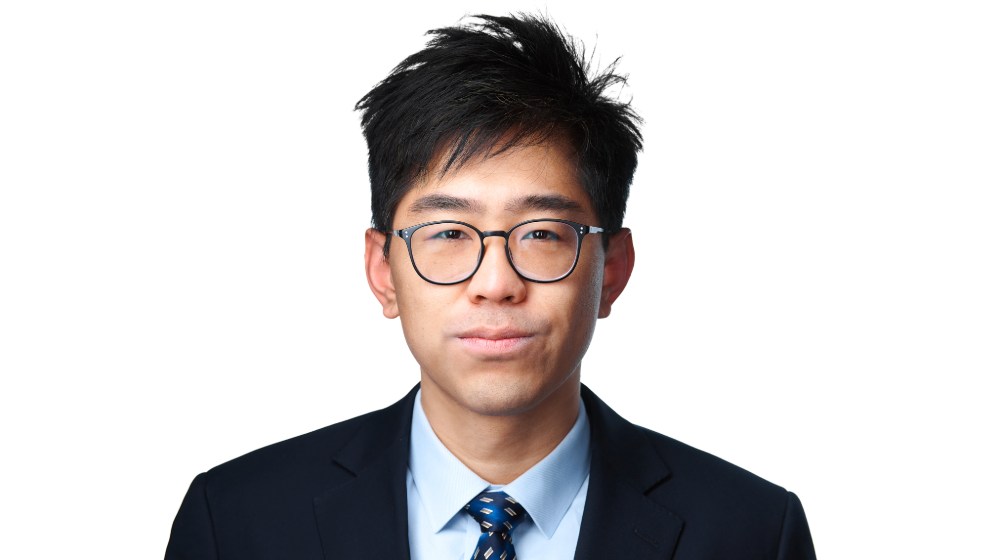
Darryl Ono is an Assistant Professor in the Department of Business Administration, with extensive expertise in mathematical programming, financial economics, and cost accounting. His multidisciplinary career bridges quantitative analysis, financial modeling, and educational innovation. PhD in Business Administration (California Miramar University) MS in Operations Research, Systems Engineering, and Engineering Management (Southern Methodist University) MS in Finance (Golden Gate University) MBA (Claremont Graduate School) BA in Business Economics and Physical Sciences (UCLA) Dr. Ono's research integrates mathematical programming with financial economics, focusing on cost accounting innovations, quantitative risk analysis, and educational methodologies in business instruction. His work spans synthetic financial instruments, auditing frameworks, and organizational dynamics. Recent publications demonstrate trends in computational finance, project management optimization, and educational technology. Key themes include internal audit validation of mathematical models, marginal cost methodologies, and comparative organizational structures. Dr. Ono has contributed to pedagogical strategies for quantitative courses, emphasizing critical thinking through technological tools. His scholarship bridges theoretical finance with practical implementation challenges in small businesses and educational institutions.
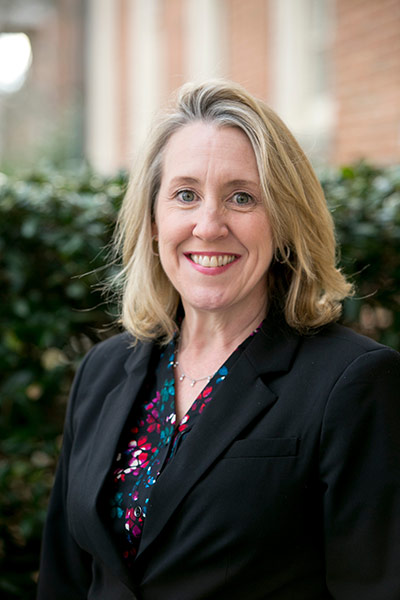
Xiang Gao is an Assistant Professor of Finance at the Quinlan School of Business, Loyola University Chicago. His research focuses on corporate finance, financial markets, credit risk, and financial innovation, particularly examining how financial instruments and systems influence firm behavior and risk dynamics. Research Interests: Corporate Finance Financial Markets and Institutions Credit Risk and Fixed Income Debt Maturity Structure Financial Innovation Machine Learning in Finance His recent publications explore topics such as corporate bond maturities, credit default swaps, firm location and risk, and behavioral responses to data breaches. These works appear in leading journals including Management Science , Journal of Financial and Quantitative Analysis , Review of Accounting and Finance , and Journal of Business Research , reflecting a strong empirical and interdisciplinary approach to finance. Scientific Recognition: Research featured by the International Swaps and Derivatives Association (ISDA) Teaching and Advising: Dr. Gao teaches courses such as Principles of Corporate Finance, Introduction to Derivatives, Financial Institutions, and Financial Management. While no formal advisees are listed, he contributes to graduate and undergraduate education in finance. He is involved in research that bridges traditional finance with emerging analytical techniques. Laboratories and Research Centers: Although not explicitly listed as a member, his work aligns with research initiatives at the Lab for Applied Artificial Intelligence and the CME Group Foundation Business Analytics Lab at Quinlan, particularly in applying machine learning to financial data.
Andrea Macrina is Professor of Mathematics at the Department of Mathematics, University College London (UCL), and Honorary Professor at the African Institute of Financial Markets and Risk Management, University of Cape Town (UCT). He founded the Financial Mathematics MSc programme at UCL in 2012 and served as its director until 2024. He co-founded the annual Financial Mathematics Team Challenge (FMTC) at UCT and holds adjunct and visiting positions across multiple international institutions, including King's College London, Kyoto University, and ETH Zurich. His research focuses on information-based asset pricing and the emerging field of Mathematical Climate Finance . He has pioneered stochastic frameworks for pricing credit, equity, fixed-income, and insurance-linked assets using information filtrations. Recent work extends to climate risk modelling, climate-contingent bonds (e.g., S-CloCo), and ensemble stress testing frameworks. His research integrates applied probability, martingale transport, quantile processes, and risk measure distortions. His recent publications reflect a strong trend toward integrating climate risk into financial mathematics, with a focus on innovative instruments, systemic risk quantification, and sustainable finance. These works span stochastic modelling, real-time risk management, and regulatory frameworks in post-LIBOR financial systems. Fields Research Fellowship Elliott-Yui Distinguished Visitor, The Fields Institute Prof. Macrina has supervised and collaborated with doctoral students and researchers across Africa, Europe, North America, and East Asia. His research programme is supported by international collaborations and academic-industry partnerships in The City of London. He is Associate Editor of the International Journal of Theoretical and Applied Finance and a member of several professional societies, including the London Mathematical Society and the Bachelier Finance Society. He leads research initiatives such as the ISM-UCL-UCSB-MQ Workshop on Climate Finance and Risk and contributes to special issues on climate and nature risk in mathematical finance. He is actively involved in shaping the future of financial mathematics through education, editorial work, and interdisciplinary research in climate finance.
Gregory Characklis, PhD, is the W. R. Kenan Jr. Distinguished Professor in the Department of Environmental Sciences and Engineering at the University of North Carolina at Chapel Hill’s Gillings School of Global Public Health. He also serves as Director of the Institute for Risk Management and Insurance Innovation (IRMII) and the Center on Financial Risk in Environmental Systems (CoFiRES). His research focuses on evaluating and managing financial risks from natural hazards (e.g., floods, droughts, pandemics) through interdisciplinary modeling integrating engineering, economics, and data science. Characklis leads pan-campus initiatives supported by industry and federal partners, addressing risk mitigation for sectors such as water utilities, energy, agriculture, and real estate. Education: PhD in Environmental Science and Engineering (Rice University, 1999), MS (Rice, 1994), BS in Materials Science (Johns Hopkins, 1989). Research emphasizes financial risk from hydrometeorological variability, with innovations like index-based insurance instruments and adaptive water management contracts. Key projects include flood exposure mapping in North Carolina and resilience strategies for California’s water infrastructure. Characklis has received accolades for teaching and research, including the Newton Underwood Award for Excellence in Teaching and the ASCE Quentin Martin Award. Service activities include leadership roles in AEESP, CUAHSI, and AGU; advisory roles for water policy initiatives; and editorial work for journals like Water Security and Water Resources Research . Collaborations span federal agencies, insurers, and financial institutions to design risk management tools.
Adam R. Urbach is a Professor in the Department of Chemistry at Trinity University's Semmes School of Science, where he has been a faculty member since 2004. He serves as the Principal of the COMPASS Program on Student Career Mentoring (2017-2024), was Acting Department Chair in Fall 2023, and holds editorial positions with Frontiers in Chemistry and Supramolecular Chemistry. Dr. Urbach is also heavily involved in university service, currently sitting on the Admissions, Scholarships & Financial Aid Committee and the Advisory Board for Strategic Communications & Marketing publications. Dr. Urbach's educational background includes: NIH Postdoctoral Fellow, Harvard University Ph.D. in Organic Chemistry, California Institute of Technology B.S. in Chemistry, University of Texas at Austin Dr. Urbach's research focuses on biomolecular recognition - how to interact predictively with biological molecules. His work spans aqueous supramolecular chemistry, peptide and protein recognition, drug formulation, diagnostics and biosensors, protein engineering, and biomaterials. His group has developed methods for interacting with peptides and proteins based on amino acid sequence, with applications in drug development and diagnostic technologies. A native Texan, Dr. Urbach discovered his passions for chemistry, teaching, and service as an undergraduate at UT Austin, where he also met his future wife. Dr. Urbach's recent publications demonstrate a strong focus on cucurbituril-based molecular recognition systems, particularly for peptide and protein interactions. His work shows increasing sophistication in designing synthetic receptors that can recognize specific amino acid sequences with high affinity, even in complex biological environments. There's also a growing emphasis on practical applications in drug delivery, diagnostics, and biosensors, alongside fundamental studies of molecular recognition principles. Dr. Urbach has received numerous prestigious awards: 2023 Elected Fellow of the American Association for the Advancement of Science 2019 Trinity University Faculty Award for Distinguished Research 2016 LEAD Award, Research Corporation for Science Advancement 2009 Henry Dreyfus Teacher-Scholar Award 2008 National Science Foundation CAREER Award 2007 Trinity University Distinguished Junior Faculty Award 2005 Cottrell Scholar, Research Corporation for Science Advancement Dr. Urbach has successfully mentored numerous undergraduate researchers, many of whom have gone on to prestigious graduate programs and careers. His research has been supported by $4.4M in grants from federal agencies and private foundations including the Welch Foundation, the National Science Foundation (CAREER, RUI, and MRI programs), the National Institutes of Health (R15 program), Research Corporation for Science Advancement, the Camille and Henry Dreyfus Foundation, and the American Chemical Society Petroleum Research Fund. He is also deeply committed to professional mentoring, having co-edited the ACS Symposium Series 1470 on Professional Mentoring Programs for Science Students. Dr. Urbach leads the Urbach Research Group at Trinity University, which focuses on developing synthetic receptors for biomolecular recognition. The group maintains active collaborations with researchers at other institutions and has organized significant scientific events, including the International Conference on Cucurbiturils. The lab is equipped with advanced instrumentation supported by NSF MRI grants, enabling cutting-edge research in supramolecular chemistry and biomolecular recognition.
Patrick Bernet serves as Assistant Professor in the Department of Interprofessional Health Sciences and Health Administration at Seton Hall University, leveraging over 35 years of healthcare industry experience including executive roles at Aetna and Cigna where he pioneered physician report cards and Medicare Advantage implementation. His career spans healthcare IT management, consulting on provider performance assessment, and primary care practice management in Newark. His educational background includes: Ph.D. in Healthcare Finance from Temple University MBA in Healthcare Administration from Temple University BS in Economics and Management Information Systems from Albany State University Dr. Bernet's research applies economic and financial theory to critical health issues, with dual foci on health behaviors/disparities/pregnancy outcomes and cost-benefit analysis of health interventions. His methodology integrates quantitative analysis of large datasets with practical industry insights, particularly examining racial disparities and socioeconomic determinants through the lens of Florida's healthcare landscape. This approach has yielded significant contributions to understanding pandemic responses, maternal health outcomes, and public health financing mechanisms. His publication trajectory reveals evolving research priorities: early work established foundational knowledge in healthcare finance and hospital efficiency (2004-2012), followed by a strategic pivot toward public health systems research (2012-2018) examining resource allocation and service delivery, culminating in contemporary pandemic-focused investigations (2020-2022) that analyze COVID-19's intersection with race, politics, and geography. This progression demonstrates increasing engagement with social determinants of health and health equity frameworks. Professional recognition includes: Teacher of the Year award for innovative pedagogy integrating industry experience with teaching technologies His academic service extends beyond campus through active partnerships with maternal and child health organizations and the New Orleans Musicians’ Clinic, reflecting commitment to community-engaged scholarship. While specific grant details aren't documented, his publication record in premier journals like The Milbank Quarterly and Social Science and Medicine indicates successful research funding.
Cynthia Frownfelter-Lohrke is Interim Chair and Professor of Accounting at Samford University's Brock School of Business, Department of Accounting. She joined Samford in 2000 after teaching at the University of South Florida, Delaware, Texas at San Antonio, and Southern Mississippi. Her teaching focuses on Accounting Information Systems, Data Analytics for Accounting/Finance, and foundational accounting courses. She holds a Ph.D. in Business and M.S. in Accounting from Drexel University, an M.S.E. in Instructional Design from Samford University, and a B.B.A. in Accounting from Loyola University New Orleans. She maintains CPA credentials with prior experience in public accounting auditing and consulting. Her research spans: Accounting pedagogy innovations (e.g., Excel training frameworks, data analytics curriculum) Financial reporting effectiveness (e.g., visualization in annual reports) Information systems auditing (e.g., COBIT/Systrust integration) Cybersecurity's organizational impact (recent focus) Publication analysis reveals evolving emphasis on cybersecurity management (2023–2025) alongside sustained contributions to accounting education methodology and strategic frameworks like SWOT-enhanced teaching models. Professional service includes past presidency of the Accounting Information Systems Educator’s Association and memberships in the American Accounting Association and AICPA.
Luís Miguel da Silva Laureano is an Assistant Professor at ISCTE Business School and an associate researcher at BRU-Iscte - Business Research Unit . He holds a PhD in Management (Finance specialization) and has authored/co-authored multiple publications in national and international journals. PhD in Management (Finance) - ISCTE-IUL (2010) Master's in Information Systems Management - ISCTE-IUL (2001) Bachelor's in Business Organization and Management - ISCTE-IUL (1996) His research focuses on Corporate Finance and Financial Markets , with recent work on gold hedging properties, debt maturity structures, and financial incentive management. He has co-authored several Portuguese finance textbooks. His recent publications analyze topics like gold's safe haven role , asymmetric banking profitability , and predictive models for EU financial incentives , with citations across Web of Science (424), Scopus (320), and Google Scholar (696).
Prof. Dr. Imke Keimer is a Professor at the Lucerne University of Applied Sciences and Arts (Hochschule Luzern) in the Department of Economics within the Business School. She is based at the Campus Zug-Rotkreuz and works at the Institute for Financial Services Zug (IFZ) in the CC Controlling (IFZ CO) division. Her work focuses on the intersection of digital transformation and financial management, particularly in the field of controlling. Her educational background includes: 2016: Appointed Professor at Lucerne University of Applied Sciences and Arts 2013: Certificate in University Teaching, Lucerne University of Applied Sciences and Arts 2011: Financial Risk Manager (FRM), Global Association of Risk Professionals (GARP) 2005-2009: Dissertation (Dr. rer. oec.), University of Bern, Topic: "Accounting Policy, IT Investments and the Strategic Orientation of Cost Management - Empirical Work in the Field of Accounting" (summa cum laude) 1999-2005: Studied Business Mathematics (M.Sc.), Technical University of Dortmund (overall grade: very good) Prof. Keimer's research primarily centers on digital transformation in controlling, business analytics, and agile finance. She has developed frameworks for assessing digital maturity in controlling functions and has pioneered approaches to integrate agile methodologies into financial management. Her work bridges theoretical research with practical applications, often through collaborations with industry partners. She has established herself as a thought leader in how digital technologies are reshaping the controller role from traditional accounting functions toward strategic business partnership. Her recent publications reveal a clear trajectory from foundational research on digital controlling frameworks toward more specific applications in sustainability, agile methodologies, and educational technology. The articles show increasing focus on practical implementation challenges, with notable attention to sustainable business practices and the evolving role of controllers in complex organizational environments. Her work consistently emphasizes the human dimension of digital transformation - how skills, mindsets, and organizational culture must evolve alongside technological changes. Scientific awards and recognitions include: Publication Award 2021 in the "Teaching" category for "PLAYMOBIL pro im Controlling: Mit Plastikfiguren das zukünftige Controlling-Rollenprofil gestalten" Financial Risk Manager (FRM) certification from GARP Prof. Keimer has been actively involved in advising and research projects. She served as Program Director for the MSc International Financial Management program and has led several significant research initiatives including the Innosuisse Project "Digital Transformation in Controlling" (2017) and the "Business Analytics in Controlling" project (2019). Her grant portfolio demonstrates strong industry-academia collaboration, with projects often co-developed with financial institutions and corporate partners seeking to modernize their controlling functions. She has also been instrumental in developing continuing education programs that bridge academic research with professional practice. She is closely associated with the Institute for Financial Services Zug (IFZ), where she contributes to research and teaching in the CC Controlling division. Her work often involves cross-disciplinary collaboration, particularly with colleagues in information systems and organizational behavior. She has developed a distinctive approach to teaching and research that combines academic rigor with practical applicability, frequently using case studies and industry partnerships to ground theoretical concepts in real-world challenges.
Reyhan Öztürkmen serves as a Lecturer at Gaziantep University's Vocational School of Social Sciences within the Department of Accounting and Taxation. With over a decade of continuous service since 2012, she teaches a comprehensive curriculum spanning Corporate Accounting, Financial Management, Public Finance, and Business Administration across undergraduate programs. Her extensive teaching portfolio includes 97 distinct course instances from 2012-2025, demonstrating deep institutional commitment. Her academic credentials feature a Doctorate in Business Administration from Gaziantep University (2013-2022), a Master's in Business Administration without thesis (2010-2011), an Associate Degree in Marketing and Advertising from Anadolu University (2005-2007), and a Licence in Business Administration (2003-2007). This progression reflects specialized development in financial disciplines. Dr. Öztürkmen's research centers on corporate finance mechanisms within emerging markets, particularly examining cash holding policies, working capital dynamics, and bank performance metrics using econometric modeling. Her work frequently analyzes Borsa Istanbul (BIST) manufacturing and banking sectors, with recent publications integrating machine learning for financial forecasting and investigating macroeconomic uncertainty impacts. This scholarly trajectory bridges theoretical finance with practical Turkish market applications. Analysis of her nine publications reveals consistent focus on Turkish financial institutions and market behaviors, with increasing sophistication in methodology from traditional econometrics to AI-driven approaches. Her contributions address critical policy questions regarding corporate financial resilience during inflationary periods and regulatory frameworks for financial instruments. No scientific awards or fellowship recognitions are documented in available sources. Her professional contributions manifest primarily through pedagogical excellence and scholarly output, including leadership as Department Head since 2020. While specific graduate advisees aren't listed, her decade-long teaching career implies substantial undergraduate mentoring across business disciplines. There is no information regarding research laboratories, specialized teams, or externally funded grants. Her professional identity remains firmly rooted in vocational education and applied financial research within the Turkish academic context, complemented by prior industry experience in banking and corporate management.
Massimo Costabile is a Full Professor of Mathematical Methods for Economics, Actuarial and Financial Sciences at the Department of Economics, Statistics and Finance 'Giovanni Anania' (DESF) of Università della Calabria, where he also serves as Department Director. He teaches Quantitative Models in Finance in the Master's degree course in Finance and Insurance and Financial Mathematics in the Mathematics degree program. Laurea in Economic and Social Sciences, Università della Calabria (1993) PhD in Actuarial Science, Sapienza Università di Roma (1996) Research Interests: His work focuses on computational finance, life insurance policy valuation, and analytical methods for complex financial instruments. Key areas include: Numerical methods for derivative securities and insurance products Stochastic volatility modeling in financial and actuarial contexts Regime-switching and jump-diffusion option pricing frameworks Guaranteed minimum withdrawal benefits (GMWB) in variable annuities Risk capital requirements under CVaR constraints Discrete-time lattice approaches for financial modeling Recent Research Trends: Recent publications examine stochastic correlation in life insurance pricing, mixed fractional Brownian motion applications, and semiparametric models for non-life insurance capital allocation. His work combines binomial lattice techniques with advanced volatility models to address insurance risk and financial derivative valuation challenges. Administration & Collaborations: As Department Director, he oversees academic operations while collaborating with national and international researchers. He serves on editorial boards and peer-review panels for journals like Decisions in Economics and Finance and Insurance: Mathematics and Economics. Laboratories: Co-manages the Multimedia Teaching Lab (Laboratorio di Didattica Multimediale) and Informatica 3 Lab at DESF, focusing on didactic applications of computational methods in economics and finance education.
Laurent MERIADE is a full Professor of Management Sciences at Clermont Auvergne University's IAE School of Management, where he co-holds the 'Health and Territories' research chair. His academic career includes progression from Lecturer (2016-2022) to Professor (2022-present), with previous positions at university institutes in Clermont-Ferrand and Albi. His research focuses on three interconnected domains: Healthcare organization governance examining performance tensions in public hospitals Public management control systems including cost accounting and policy instrumentation Territorial health systems analyzing geographic determinants of care pathways Recent work investigates crisis management adaptations during COVID-19, e-health implementation challenges, and thermal therapy integration for long COVID rehabilitation. Analytical examination of his 15 most recent publications (2011-2025) reveals methodological emphasis on: Comparative case studies of public institutions Geospatial analysis of healthcare access Hybrid management control frameworks Cross-cultural public administration studies (particularly France-China) Crisis-driven organizational adaptation patterns He leads research activities within the CleRMa laboratory and maintains extensive collaborations across healthcare institutions in Auvergne. His work has been published in journals including Social Science & Medicine , Implementation Science , and Abacus .
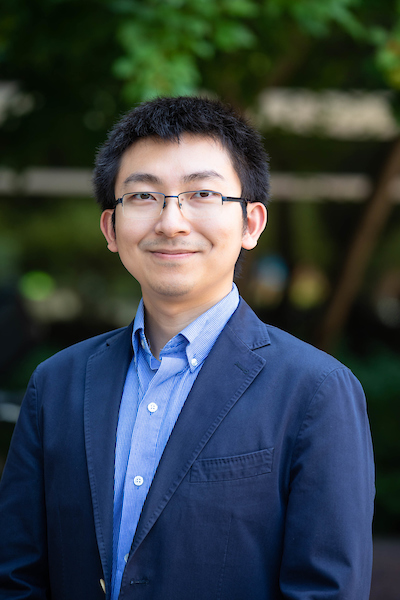
Mochen Yang is an Associate Professor in the Department of Information and Decision Sciences at the Carlson School of Management, University of Minnesota. His research bridges algorithmic decision-making with practical organizational challenges. Education: Ph.D. (2018) and B.A. (2013) from Tsinghua University. His research focuses on algorithmic decision-making from both "make" and "use" perspectives. From the "make" angle, he designs robust algorithms for information-intensive environments, while the "use" perspective examines how algorithmic decisions affect fairness, privacy, and user trust. Key areas include federated learning, causal inference, and human-AI collaboration. Recent work explores federated learning partnership dynamics, classifier calibration, and algorithmic governance in short-video platforms. He also investigates user engagement on social media and error impacts in human-AI reliance. Current affiliations include the University of Minnesota, where he contributes to academic and research initiatives in information systems.
Brian Mattmann is a Lecturer at the Institute for Financial Services Zug (IFZ) of the Lucerne University of Applied Sciences and Arts . He holds a PhD in Business and Economics from the University of Basel (2023), a Master in Economics from the University of Zurich (2013), and a Bachelor in Economics from the same institution (2009). As an expert in Sustainable Investments , Asset Management , and Corporate Bond Markets , he contributes to research on ESG integration, climate risk assessment, and market microstructure. Education : PhD (University of Basel), MA/BA (University of Zurich) His research focuses on Sustainable Finance through the IFZ Sustainable Investments Study series examining biodiversity impact, social responsibility, and regulatory contexts. Recent publications analyze Green Bonds , Climate Risk Management , and ESG Ratings . He received the 2024 Lucerne University Publication Award and the 2023 Mezger Doctoral Prize. Scientific Awards : 2024 Lucerne University Publication Award for Sustainable Finance 2023 Mezger Doctoral Prize for Basel PhD 2018 Ambros Lüthi Prize for Ethical Economics
Yizhe Dong is a Professor (Personal Chair) in Banking and Risk Analytics at the University of Edinburgh Business School , where he serves as Head of the Management Science and Business Economics Group. His research bridges finance, machine learning, and risk analytics, focusing on corporate finance, credit risk assessment, climate risk, green finance, and equity valuation. PhD in Banking and Risk Analytics from University of Edinburgh MSc and MA from Cardiff University and Nottingham University BSc from South China University of Technology His work explores the intersection of generative AI and climate risk in finance, with over 40 publications in journals like Nature Food , Journal of Corporate Finance , and European Journal of Operational Research . Recent research includes graph-based semi-supervised learning for risk management and text analytics in credit default prediction using generative AI. Key journals he edits or has edited include: Journal of Chinese Economic and Business Studies (Editor-in-Chief) European Journal of Finance (Associate Editor) Journal of International Financial Markets, Institutions and Money (Guest Editor) He has received accolades for Excellence in Doctoral Supervision and teaching, with active projects in ESG equity returns and zoonotic disease-environment interactions. Collaborations span public health and quantitative investment with UK industry partners.

/filters:format(webp)/prod01/channel_18/media/website/directory/daryl-ono.jpg)