Mohammed Aledhari is an Assistant Professor at the University of North Texas, specializing in cybersecurity, machine learning, and data science. His research focuses on applications in computational medicine, bioinformatics, and autonomous systems. He holds a Ph.D. from Western Michigan University and degrees from the University of Basrah and the University of Anbar. His research interests include social cybersecurity techniques, federated learning in IoT, and AI-driven solutions for healthcare and transportation. Recent work explores blockchain-enabled digital twins, DDoS attack detection, and equitable ASD diagnostics using machine learning. His publications span cybersecurity frameworks, autonomous vehicle communication protocols, and biomedical IoT innovations. Notable contributions include optimizing intrusion detection in IoMT networks and developing interpretable machine learning models for healthcare. While no formal awards or grants are listed, his work emphasizes interdisciplinary applications of AI in healthcare, transportation, and energy markets. His email is Mohammed.Aledhari@unt.edu .
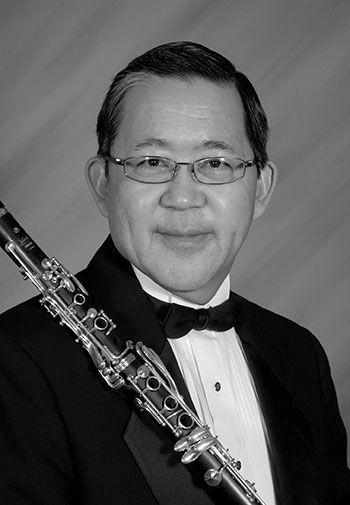
Miles M. Ishigaki serves as Professor of Music in the Department of Music within California State University, Fresno's College of Arts and Humanities. He has taught applied clarinet, chamber music, music theory, and music appreciation at Fresno State since 1987 while directing the university clarinet choir. From 1989-2017, he held the position of state chair for the National Association of College Wind and Percussion Instructors, demonstrating sustained institutional commitment. His academic credentials include: Doctor of Musical Arts in Performance, University of Oklahoma (1988) Doctoral study in Music Performance, University of Arizona (1981-1982) Master of Music in Performance, Colorado State University (1981) Dual Bachelor's degrees: Music Education and Music Performance, University of Northern Colorado (1978) Dr. Ishigaki's research centers on the dialectic between intuition and analytical understanding in musical performance, particularly regarding clarinet repertoire. His seminal work documents interpretive approaches of legendary clarinetists including Larry Combs, Stanley Hasty, and Leon Russianoff, focusing on Stravinsky's Three Pieces for Solo Clarinet. His collaborative research with Dr. Michael Rogers bridges music theory and performance practice, revealing how structural analysis informs expressive execution. This scholarly trajectory consistently examines the cognitive and technical dimensions of artistic mastery. His publications from 1988-2017 reveal evolving emphases from symposium documentation and performance analysis toward technology integration in music education, culminating in the 2017 Music Fundamentals ebook. Collectively, his work establishes clarinet pedagogy as both scientific discipline and artistic practice, with growing attention to digital learning environments while maintaining core focus on interpretive authenticity. His recognitions include: 2013 Provost's Teaching Award in Technology for innovative digital pedagogy 2006 Honorary Alumnus distinction from University of Northern Colorado Dr. Ishigaki has mentored exceptional students who have earned Fulbright Scholarships, McNair Doctoral grants, and participation in national honor ensembles. His studio consistently produces competition winners while he maintains active performance engagements with regional orchestras and international venues. Beyond academia, he serves as COO of I&M, Inc., applying sustainable technology principles to water and energy systems, demonstrating interdisciplinary impact beyond music. As founder of both the West Coast Clarinet Congress and Fresno State Faculty Clarinet Quartet, he cultivates professional communities while maintaining Yamaha Artist status. His community outreach through organizations like the Japanese American Citizen's League and Valley Children's Hospital reflects deep civic engagement alongside scholarly pursuits.
Luc Anselin is the Stein-Freiler Distinguished Service Professor of Sociology and the College at the University of Chicago. He serves as Director of the Center for Spatial Data Science and Senior Fellow at NORC, with affiliations in the Department of Sociology and the Committee on Quantitative Research Methods in Social, Behavioral, and Health Sciences. B.S., Vrije Universiteit Brussel, 1975 M.S., Vrije Universiteit Brussel, 1976 M.A., Cornell University, 1979 Ph.D., Cornell University, 1980 Anselin is a pioneer in spatial data science, spatial econometrics, and computational social science. His work bridges quantitative geography, regional science, and computer science, with applications in urban studies, economic analysis, and health research. His recent publications focus on spatial regimes, software ecosystems like GeoDa and PySAL, stigma analysis in public health, and computational methods for urban equity. These reflect interdisciplinary trends in spatial statistical modeling, open-source development, and geospatial policy evaluation. Scientific recognition includes: Fellow, Regional Science Association International (2004) Walter Isard Prize (2005) William Alonso Memorial Prize (2006) National Academy of Sciences (2008) American Academy of Arts and Sciences (2011) Anselin has led major grants and directed institutions like the GeoDa Center for Geospatial Analysis and Computation at Arizona State University. He has mentored interdisciplinary collaborations across sociology, economics, and data science. His laboratories and teams include the Center for Spatial Data Science at the University of Chicago and the GeoDa Center at Arizona State University, fostering innovation in geospatial computation and open-source spatial analytics.
Jeffrey T. Jensen, M.D., M.P.H., is the Leon Speroff Professor and Vice Chair for Research in the Department of Obstetrics and Gynecology at Oregon Health & Science University (OHSU). He holds joint appointments as Professor of Public Health and Preventive Medicine and serves as a Core Scientist at the Oregon National Primate Research Center (ONPRC). Dr. Jensen completed his medical degree at Emory University, a Master of Public Health at the University of Washington, and residency training at OHSU. Research Focus: Dr. Jensen leads translational and clinical research programs focused on contraceptive innovation. His work emphasizes nonhuman primate models to develop: Novel contraceptive agents targeting oocyte-specific pathways Non-surgical permanent contraception methods Optimized emergency contraception for diverse populations He directs OHSU's Women’s Health Research Unit and the Gates Foundation-funded Oregon Permanent Contraception Research Center (OPERM). Recent Publications: His 15 most recent articles (2023-2025) demonstrate concentrated expertise in: Advanced hormonal contraceptive formulations (IUDs, vaginal rings, oral agents) Weight-adjusted dosing strategies for emergency contraception Biomarker validation for contraceptive efficacy monitoring Real-world assessment of bleeding pattern management Leadership & Collaboration: Dr. Jensen is Principal Investigator of the NICHD Contraception Clinical Trials Network and collaborates with global health organizations (CONRAD, FHI360, Population Council). He serves as Deputy Editor for the journal Contraception and consults for multiple pharmaceutical companies on product development.
Gautam Kamath is an Assistant Professor at the University of Waterloo's Cheriton School of Computer Science, a Faculty Member at the Vector Institute, and a Canada CIFAR AI Chair. He leads The Salon, a research group focused on statistics, algorithms, machine learning, and optimization. His work bridges theoretical foundations with practical applications in data privacy and robustness, contributing to both academic research and real-world deployments that impact millions of users. Dr. Kamath earned his PhD and SM degrees in Electrical Engineering and Computer Science at MIT, where he was advised by Costis Daskalakis. Prior to MIT, he graduated from Cornell University in May 2012 with a degree in Computer Science and Electrical and Computer Engineering, where he worked with Bobby Kleinberg. His academic journey reflects a strong foundation in both theoretical computer science and practical applications. His research focuses on developing solutions for trustworthy and reliable machine learning and statistics, with particular emphasis on data privacy and robustness. He addresses fundamental problems in these areas, revitalizing statistical toolkits for the modern data era where privacy preservation is paramount. His work spans theoretical foundations of differential privacy to practical applications that have been deployed at scale, including contributions to systems that protect the sensitive information of hundreds of millions of individuals. Analysis of his recent publications reveals a strong trend toward addressing the interplay between privacy, robustness, and machine learning performance. His work increasingly examines practical deployment challenges while maintaining theoretical rigor, with growing emphasis on diffusion models, generative AI, and the legal implications of AI systems. There's a clear trajectory from foundational privacy theory toward addressing real-world implementation challenges across diverse application domains. Canada CIFAR AI Chair Ontario Early Researcher Award 2024 Caspar Bowden Award for Outstanding Research in Privacy Enhancing Technologies STOC Best Student Presentation Award ICML 2024 Best Paper Award Microsoft Research Fellow at the Simons Institute for the Theory of Computing Dr. Kamath actively mentors students, with notable successes including Valentio Iverson winning the Germain-Erdős Undergraduate Award and Chris Trevisan receiving the CRA Outstanding Undergraduate Researcher Award. His service to the research community is extensive, serving as Editor-in-Chief of TMLR, on the Executive Committee of the Learning Theory Alliance, and on steering committees for major conferences including ICML, COLT, and ALT. He has organized numerous workshops focused on privacy-preserving machine learning and differential privacy. Through The Salon research group, Dr. Kamath fosters a collaborative environment where postdoctoral fellows, graduate students, and undergraduates work together on cutting-edge problems at the intersection of statistics, algorithms, machine learning, and optimization. The group maintains strong connections with industry partners and participates in major research initiatives, including the Vector Institute's privacy and security research efforts. Looking forward, Dr. Kamath will be moving to the Computer Science department at NYU's Courant Institute of Mathematical Sciences in September 2026, where he plans to expand his research program.
Cheng Yuhan is an Assistant Professor at Shandong University's School of Management, serving as director of the Center for Artificial Intelligence and Digital Finance and recognized as a Taishan Scholar Young Expert in Shandong Province. His interdisciplinary research bridges artificial intelligence with finance, accounting, and economics through collaborations with MIT and Tsinghua University. His educational background includes: Bachelor of Science in Mathematical Sciences from Beijing Normal University Double Degree in Economics from Peking University National School of Development PhD in Finance from Tsinghua University PBC School of Finance Cheng's research focuses on AI applications in accounting, auditing, and finance, particularly large language models for financial regulation, asset pricing, and macro-finance. He integrates computational methods to solve complex financial problems using industrial-grade computing infrastructure, enabling novel approaches to traditional economic analysis. His recent publications demonstrate a clear trend toward generative AI in financial modeling, with emphasis on stock factor generation, predictive analytics, and economic forecasting. These works showcase how language models transform financial analysis through automated insight extraction and data-driven decision frameworks. Key honors include: Taishan Scholar Young Expert award Best Paper Award at 2024 China International Risk Forum Outstanding Paper Awards at 13th International Conference on Futures and Derivatives Membership in Shandong Provincial Philosophy and Social Sciences Young Talent Team Cheng mentors students across Master of Accounting, Master of Auditing, and MBA programs while securing competitive grants including National Natural Science Foundation of China Youth Fund. His lab supports students in academic exchanges, with former research assistant Dou Yun admitted to University of Chicago Economics Master's with scholarship. His research lab features industrial-grade hardware including NVIDIA H100, Huawei Ascend 910b, A100, and A800 processors, providing near-tech-company computing power for large-scale AI/finance research and industrial application development.
Dan Lizotte is an Associate Professor jointly appointed to the Department of Computer Science in the Faculty of Science and the Department of Epidemiology and Biostatistics in the Schulich School of Medicine & Dentistry at Western University. Additional affiliations include the Schulich Interfaculty Program in Public Health and a cross-appointment to the Department of Statistics and Actuarial Sciences. Based in Middlesex College, London, Ontario, his contact email is dlizotte@uwo.ca. His research centers on machine learning and biostatistics for health decision support, with emphasis on sequential decision-making in chronic disease management where evolving patient health status and preferences inform adaptive interventions. Core contributions involve adapting reinforcement learning frameworks to model dynamic health decisions in public health and primary care settings, addressing methodological challenges in personalized medicine and risk prediction. Analysis of his publication record reveals consistent focus on healthcare applications of machine learning, particularly in chronic disease risk modeling using electronic medical records, intersectionality frameworks in public health AI, and Bayesian methods for dose personalization. His work bridges reinforcement learning with clinical decision support systems, advancing dynamic treatment regimes and statistical methodologies for evolving patient data. No scientific awards were mentioned in the provided text. The text does not specify any advisees, grant funding, or educational background details. Lizotte leads a research laboratory focused on machine learning applications in health, as evidenced by the dedicated lab site referenced in his contact information. His team likely explores intersections of statistical methodology, AI ethics, and clinical implementation for personalized health interventions.
Javier Zamora is a Professor at IESE Business School , part of the University of Navarra. He holds a Ph.D. in Electrical Engineering from Columbia University and an M.Sc. in Telecommunications Engineering from the Polytechnic University of Catalonia. Education Ph.D., Electrical Engineering, Columbia University M.Sc., Telecommunications Engineering, Polytechnic University of Catalonia PDG, IESE Business School Research Interests : Zamora specializes in digital transformation, focusing on data-driven organizations and artificial intelligence. His work explores how new technologies reshape business models, organizational structures, and leadership strategies. Publications span topics from AI implementation in finance and sports management to cloud computing in crisis scenarios. His research emphasizes practical frameworks like the "Digital Density" concept and tools for assessing digital maturity. Professional Roles : He co-founded Inqbarna (AI-powered mobile solutions) and served as CEO of eNeo Labs (digital home products). Currently, he directs executive programs at IESE, including Digital Transformation: Senior Management Program and Navigating IT Architecture .
John Hale, Ph.D., is a Professor and Chair of Computer Science at The University of Tulsa's Tandy School of Computer Science, where he holds the Tandy Endowed Chair in Bioinformatics and Computational Biology. He is a founding member of the TU Institute of Bioinformatics and Computational Biology (IBCB) and a faculty research scholar in the Institute for Information Security (iSec). Education: Ph.D., Computer Science, The University of Tulsa (1997) M.S., Computer Science, The University of Tulsa (1992) B.S., Computer Science, The University of Tulsa (1990) Dr. Hale's research spans cybersecurity , bioinformatics , cyber-physical systems , and applied formal methods . His work focuses on neuroinformatics, cyber trust, attack modeling, secure software development, and information privacy. Recent publications highlight trends in large-scale graph analysis for cybersecurity, attack graph generation on high-performance computing clusters, and security frameworks for nuclear reactor control systems. His research also explores hybrid attack graph modeling, reflective deception strategies, and compliance methods for cyber-physical infrastructures. Scientific Awards: 2000 National Science Foundation CAREER Award Dr. Hale has advised numerous research projects and received funding from the U.S. Air Force, Army, NSF, NIH, DARPA, NSA, and NIJ. He has testified before Congress on cybersecurity and holds a patent for anti-piracy technology. His lab work includes developing cyber-physical testbeds and science DMZ security solutions.
Sara McLaughlin Mitchell is Professor of Political Science and courtesy Professor at the College of Law at the University of Iowa, where she holds the Collegiate Fellow honor. Her interdisciplinary work bridges international relations, political methodology, and gender dynamics in academia. Her educational background: PhD in Political Science, Michigan State University, 1997 BS in Economics and Political Science, Iowa State University, 1991 Professor Mitchell's research centers on international conflict with deep expertise in maritime disputes, identity claims, and climate-conflict linkages. She pioneers political methodology through large-scale datasets like the Issue Correlates of War (ICOW) project, while her groundbreaking work on gender in academia examines citation patterns and career advancement barriers for women scholars. Her analytical rigor spans quantitative conflict modeling and qualitative institutional analysis. Recent publications reveal three dominant trajectories: environmental security (climate volatility impacts on human rights and disasters), geopolitical conflict (Russia-Ukraine War analysis, maritime/river disputes), and gender equity (academic networks, citation practices). She consistently integrates methodological innovation with real-world policy relevance, particularly in disaster response and international adjudication. Her major scientific awards include: Collegiate Fellow, University of Iowa Quincy Wright Distinguished Scholar Award (2015) Foreign Policy Analysis Distinguished Scholar Award (2023) Conflict Processes Lifetime Achievement Award (2023) Distinguished alumni award from Iowa State University A dedicated mentor, Mitchell co-founded the Journeys in World Politics workshop for junior women in international relations, earning university mentoring awards. Her research program is sustained by substantial grants from: Department of Defense National Science Foundation United States Agency for International Development She leads the Issue Correlates of War project and collaborates extensively through the Peace Science Society (where she served as President), driving interdisciplinary research on conflict management regimes and gender equity initiatives across academic networks.
Tom Ian Battin is a Full Professor at the École Polytechnique Fédérale de Lausanne (EPFL), affiliated with the School of Architecture, Civil and Environmental Engineering (ENAC). He holds roles in three departments: the River Ecosystems Research Laboratory (RIVER), the Laboratory of Management of Infrastructures, Networks and Construction (LIMNC-GE), and the SSIE Teaching Unit (ENS). His research focuses on aquatic ecosystems, microbial communities in glacier-fed streams, climate change impacts, and biogeochemical processes in alpine environments. He advises numerous doctoral students and has supervised over ten theses at EPFL. Battin teaches courses such as 'Fundamentals in Ecology,' 'Aquatic Ecosystems,' and 'Global Change Ecology and Fluvial Ecosystems.' He is actively involved in academic governance, serving on the EPFL Academic Strategic Committee (ASC) and the ENAC Academic Evaluation Committee (CEA). His work investigates how glacier retreat affects stream microbiomes, dissolved organic carbon dynamics, and ecosystem resilience. Key themes include microbial metabolism, biofilm functionality, and the interplay between hydrology and biogeochemistry. Battin leads research projects on global glacier-fed stream biogeography and the resistome of stream biofilms. His interdisciplinary approach bridges ecology, microbiology, and environmental engineering, addressing critical questions about mountain ecosystems under climate change.
Dr. Kaibo Liu is the Grainger STAR Professor in the Department of Industrial and Systems Engineering at the University of Wisconsin-Madison and serves as Associate Director of the UW-Madison IoT Systems Research Center. He earned his B.S. from the Hong Kong University of Science and Technology (2009), and M.S. and Ph.D. from Georgia Tech (2011/2013). His research focuses on system informatics, big data analytics, and data fusion for process modeling, monitoring, and decision-making. He has been funded by NSF, ONR, DOE, and industry partners. Notable awards include the 2024 Hromi Medal (ASQ), 2021 IISE Technical Innovation Award, and multiple early-career recognitions. Recent work emphasizes real-time cyber-physical security, reinforcement learning for data streams, and Bayesian methods for prognosis. He edits IEEE Transactions on Automation Science and Engineering and IISE Transactions on Data Science.
Cathy Wu is a distinguished academic holding the Unidel Edward G. Jefferson Chair in Engineering and Computer Science at the University of Delaware. She serves as Director of the Center for Bioinformatics & Computational Biology (CBCB), Data Science Institute (DSI), and Protein Information Resource (PIR). Her roles include professorships in the Departments of Computer & Information Sciences and Biological Sciences. Education: BS in Plant Pathology (National Taiwan University, 1978), MS and PhD in Plant Pathology (Purdue University, 1982–1984), and a second MS in Computer Science (University of Texas at Tyler, 1989). She completed postdoctoral training in Molecular Biology at Michigan State University (1985–1986). Research interests focus on computational biology, bioinformatics, and data science with emphasis on protein informatics, biological text mining, ontology development, gene-disease-drug networks, and machine learning applications. She leads initiatives in integrating FAIR principles into biological databases like UniProt and InterPro. Her work bridges computational methods with biomedical challenges, including cancer genomics, epigenetic regulation, and proteomic analyses. She has spearheaded educational programs such as the Online Graduate Certificates in Applied Bioinformatics and Biomedical Informatics and Data Science. Her contributions include over 290 peer-reviewed publications (48,000+ citations, h-index 71) and authored/co-authored four books on bioinformatics. She directs multidisciplinary research teams and collaborates internationally on projects like the HALO study on ovarian cancer genetics. Awards and recognition are implied through her leadership roles and academic appointments, though specific prizes are not listed here. Her grants and funding support large-scale initiatives in bioinformatics infrastructure and translational research.
Gang Wang is an Associate Professor in the Department of Computer Science at the University of Illinois at Urbana-Champaign (UIUC), affiliated with the Siebel School of Computing and Data Science. He also holds affiliate roles in the Department of Electrical and Computer Engineering, the Informatics Program (School of Information Sciences), and the Coordinated Science Laboratory (CSL). He joined UIUC in 2019, previously serving as an Assistant Professor at Virginia Tech. Education: Ph.D. in Computer Science from UC Santa Barbara (2016), advised by Ben Y. Zhao and Heather Zheng; B.E. from Tsinghua University (2010). Awards include the NSF CAREER Award (2018), Amazon Research Award (2021), and multiple best paper awards in top conferences like USENIX Security and ACM CCS. Research focuses on Security and Privacy, Internet Measurement, and Data Mining. Key areas include email spoofing vulnerabilities, adversarial machine learning, and AI-driven security tools. Recent projects involve explainable AI for phishing detection, benchmark contamination in LLMs, and mitigating deepfake disinformation. Publications span top venues like USENIX Security, IEEE S&P, ACM CCS, and IMC. He collaborates with industry partners and researchers in HCI and AI. Current roles include Associate Director of the Capital One Illinois Center for Generative AI Safety (ASKS) and leadership in NSF-funded initiatives like the ACTION AI Institute.
Naisyin Wang is a Professor of Statistics at the University of Michigan, where she has been since 2009. Previously, she served as a faculty member in Statistics and Toxicology at Texas A&M University from 1992. She holds a Ph.D. in Statistics from Cornell University (1992), an M.A. in Statistics from Ohio State University (1987), and a B.S. in Mathematics from National Tsing-Hua University, Taiwan (1986). Her research focuses on longitudinal and functional data analysis, measurement error models, semiparametric methods, and applications in biological and medical fields, particularly genomics and metabolomics. Key contributions include methodologies for handling missing data, mixed effects models, and clustering techniques. Education: Ph.D. in Statistics, Cornell University (1992) M.A. in Statistics, Ohio State University (1987) B.S. in Mathematics, National Tsing-Hua University (1986) Dr. Wang’s honors include the College of Science Distinguished Alumni Award (2012), the Distinguished Achievement Award in Research (2003), and fellowships from the AAAS, ASA, and IMS. She has held leadership roles, including Co-editor of Statistica Sinica (2011–2014) and President of the International Chinese Statistical Association (2010). Her teaching includes courses such as Applied Statistics (STATS 500), Linear Models (STATS 600), and Special Topics in Applied Statistics (STATS 700). She has advised numerous students and contributed to research on cancer genomics, dietary interventions, and statistical methodology.