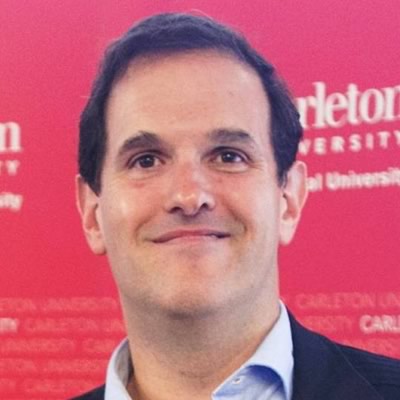
Dr. Gabriel Wainer is a Professor in the Department of Systems and Computer Engineering at Carleton University's Faculty of Engineering and Design. He leads the Advanced Real-Time Simulation Lab and specializes in modeling and simulation methodologies, particularly focusing on discrete event systems, real-time modeling, cellular automata, and DEVS formalism. Research Interests: Discrete event systems, DEVS formalism, cellular automata, real-time simulation, IoT applications, and parallel/distributed simulation Affiliation: Carleton University Recent publications highlight his work in advanced simulation frameworks, energy-efficient 5G systems using deep reinforcement learning, and pandemic modeling with cellular automata. His lab develops tools like PROMETHEUS and Devsmap for standardized DEVS model representation, while also exploring applications in wireless communication, building energy systems, and behavioral epidemiology.
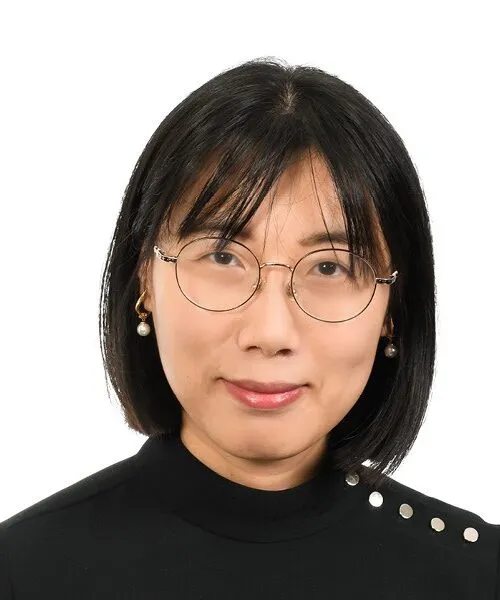
Dr. June Cao is an Associate Professor at the University of Southampton . Her research focuses on Environmental, Social, and Governance (ESG) Accounting , Corporate Social Responsibility (CSR) , and Sustainability Reporting , with a particular emphasis on Greenwashing , Carbon Emission Trading , and Accounting Education . Key research areas include ESG, CSR, and sustainability frameworks. Prominent publications analyze environmental regulation, green revenues, and digital transformation in sustainability. Her recent work explores greenwashing behaviors, peer benchmarking, and labor investment dynamics. Scientific Awards : None explicitly mentioned in the data. Notable collaborations include co-authoring papers with scholars from Curtin University , Satya Wacana Christian University , and Xiamen University . Her contributions to Systematic Literature Reviews and Bibliometric Analysis highlight her methodological expertise.
Danielle Butler is a Visiting Fellow at the National Centre for Epidemiology and Population Health, Australian National University, and a part-time General Practitioner/Researcher at the Institute of Urban Indigenous Health. With 20+ years clinical experience and a PhD (2018), her work focuses on healthcare access equity for underserved populations through linked data analysis, mixed-methods research, and telehealth evaluation. Current projects: Enhancing Safe Telehealth , Patient-Centered Medical Homes , Primary Care Data Linkage Key collaborations: ANU, IUIH, Australian Institute of Health and Welfare Her research combines multilevel modeling of administrative data with participatory action research to evaluate primary care innovations. Recent work examines telehealth impacts , out-of-pocket costs , and Aboriginal health service models . Publications span BMJ Open , BMC Health Services Research , and Health Policy , with emphasis on systematic reviews , linked data methodology , and health equity metrics . Research fingerprint shows dominant themes: Primary Health Care (100%), Aboriginal and Torres Strait Islander Health (66%), Health Services Research (49%), and Telehealth (100%).
Matteo Brunelli is Associate Professor of “Mathematical Methods of Economics and Actuarial and Financial Sciences” at the University of Trento , Department of Industrial Engineering, and Adjunct Professor (docent) at Lappeenranta University of Technology , Finland. He is nationally habilitated as Full Professor in Italy and has held long-term visiting positions at Berkeley, Turku, Auckland, JAIST and Binghamton. Education: Ph.D. (Doctor of Science) in Information Technologies, Åbo Akademi University, Finland, 2011 – graded Eximia cum laude approbatur M.Sc. in Economics, University of Trento, 2007 – grade 110/110 cum laude B.Sc. in Economics, University of Trento, 2005 Research focus: Brunelli’s work sits at the intersection of multi-criteria decision analysis , operations research and computational optimisation . He develops axiomatic foundations and algorithms for pairwise comparison matrices , consistency indices , the best-worst method and fuzzy preference relations , and applies them to energy planning, sustainable inventory, maintenance scheduling, 3-D printer selection, and blockchain governance. His 2023-2025 articles reveal intensified interest in uncertainty modelling (Dempster-Shafer theory), bi-objective optimisation of inventory and maintenance, and group decision protocols that integrate probabilistic or active-learning components, demonstrating both methodological depth and practical relevance. Scientific awards & grants: Academy of Finland Postdoctoral Researcher grant (€254 670, 2014-2017) Claudio Dematté Research Grant (€19 000, 2008) Teacher of the Year Award, Aalto University (2013 – both Spring & Autumn semesters) Bernard Roy Award 2021 for outstanding contribution to Multiple Criteria Decision Aiding (under-40 category) Supervision & funding: While specific doctoral students are not listed, Brunelli currently supervises graduate theses at Trento and has continuously held competitive national grants. His Academy of Finland project “Consistency of valued preference relations for decision analytics methods” financed three years of full-time research and international collaboration. Editorial & community roles: He serves on the editorial boards of International Journal of General Systems and Mathematical and Computational Applications , and acts as area editor for Journal of Multi-Criteria Decision Analysis , positioning him among the key gatekeepers of the MCDA community.
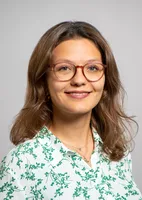
Fatma Deghim is a Research Fellow at the Technical University of Munich , affiliated with the Chair of Energy Efficient and Sustainable Design and Building. Her work focuses on urban microclimate, building energy simulation, and data-driven methods for sustainability. Education : Master’s Degree in Civil Engineering (2019–2022) and Bachelor’s Degree in Civil Engineering (2015–2019), both from TUM. Research Interests include: Urban microclimate and indoor-outdoor interactions Building energy simulation and comfort analysis Integration of green infrastructure in climate-resilient design Data-driven methods for environmental monitoring Publications highlight her expertise in applying machine learning to occupancy modeling, thermal comfort prediction, and multi-objective optimization frameworks for sustainable building design. Her work emphasizes uncertainty analysis, resource efficiency, and computational methods. Teaching contributions include assisting in courses on sustainable architecture, building energy principles, and urban water systems at TUM.
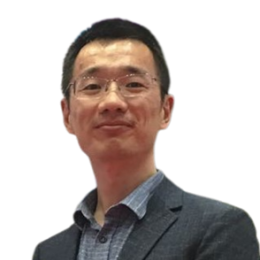
Yu Xia is a Post Doc at the Department of Chemistry, Stockholm University, Sweden. He is affiliated with the Tom Willhammar Research Group, focusing on advanced electron microscopy and diffraction techniques for structural characterization of materials. PhD (2019–2023) from a joint program between the University of Birmingham (UK) and the Southern University of Science and Technology (China). Research emphasizes fabrication of metallic nanoparticles with non-equilibrium structures and shapes using gas-phase condensation and thermal shock methods. Specializes in scanning transmission electron microscopy (STEM), in-situ heating experiments, and electron energy loss spectroscopy (EELS) for nanoparticle analysis. Current work prioritizes 4DSTEM imaging for electron beam-sensitive materials and Python-based post-processing of electron microscopy datasets. Yu Xia's research spans Materials Science , Nanotechnology , and Electrocatalysis , with applications in photocatalytic hydrogen evolution , graphene composites , and advanced electron microscopy techniques . His work often integrates computational image processing with structural characterization to optimize material properties. Publications highlight innovations in heterostructure engineering , metallic alloy catalysts , and electron beam-sensitive material imaging . No scientific awards are explicitly mentioned in the provided text. Yu Xia's technical expertise includes Python scripting for image analysis, in-situ electron microscopy , and multifunctional graphene-based materials .
Michael Pyrcz is a Professor in the Hildebrand Department of Petroleum and Geosystems Engineering and holds the rank of Associate Professor in the Jackson School of Geosciences at the University of Texas at Austin. He is the recipient of the B. J. Lancaster Professorship in Petroleum Engineering and the George H. Fancher Centennial Teaching Fellowship in Petroleum Engineering. His research focuses on subsurface data analytics, geostatistics, and machine learning applications in energy systems and CO2 sequestration. Pyrcz teaches widely, including through online lectures and GitHub workflows, and has authored over 50 peer-reviewed publications and a textbook on spatial data analytics. His work integrates machine learning with geoscience challenges, such as uncertainty quantification in reservoir modeling and CO2 storage site evaluation. He leads initiatives in energy data analytics through the Freshman Research Initiative and collaborates with industry on workflow development. Key research areas include generative AI for subsurface models, stochastic methods for fracture networks, and anomaly detection in geologic monitoring. Education: Background in petroleum engineering and geosciences (details not explicitly provided). Grants/Advising: Extensive industry collaboration and mentorship roles at Chevron prior to UT Austin. Labs/Teams: Maintains active GitHub repositories (GeostatsGuy), YouTube lecture series (GeostatsGuyLectures), and social media outreach (X/GeostatsGuy).
Kerry Fang is an Associate Professor in the Department of Urban & Regional Planning at the University of Illinois Urbana-Champaign. Her research focuses on economic development, land use policy, and their socio-environmental consequences, with interdisciplinary methods spanning economics, statistics, geography, sociology, and computer science. She examines global contexts including the U.S., China, Australia, and Russia. Education: PhD, Urban and Regional Planning and Design, University of Maryland, College Park (2018) MA, Land Management, Zhejiang University (2013) BA, Land Management, Zhejiang University (2011) Research Interests: Corruption in economic development projects Land use programs for coastal resilience Text-mining of planning literature Her work bridges theory and practice, addressing questions like regional inequality and policy efficacy in job creation and innovation. Her recent articles explore topics such as communication networks in development projects, minority-owned business data utilization, and integrating urban data science into economic development curricula. These contributions highlight interdisciplinary approaches to urban challenges. No scientific awards were explicitly mentioned in the provided text. Teaching and Advising: Teaches courses like UP 545: Economic Development Policy and Land Use and Environmental Planning. She advises students on topics intersecting economic development and spatial policy, though specific advisee names are not listed. Labs/Teams: No specific lab or team affiliations were detailed, though her work likely involves collaborations with interdisciplinary research groups.
Roel Leus is a full professor at KU Leuven's Faculty of Economics and Business (FEB), part of the Operations Research and Statistics Research Group (ORSTAT). He holds roles such as Program Director for the Business Engineering programs and Chairman of the KU Leuven Advisory Committee for the Chinese Region. He earned his PhD in Applied Economics from KU Leuven in 2003, focusing on project planning under uncertainty. His research emphasizes operations research and management, particularly scheduling, project planning, and decision-making under uncertainty. Education: PhD in Applied Economics (KU Leuven, 2003); Master's in Business Engineering (Handelsingenieur, KU Leuven, 1998). He has held academic positions since 2003, including adjunct professorships at Beijing Jiaotong University. His administrative roles include heading ORSTAT research group (2012–2016) and program directorships. Research Interests: Sequencing and scheduling, project planning under uncertainty, discrete optimization, and practical quantitative decision support. He has supervised 12 graduated PhD students as primary supervisor and contributed to numerous publications in top journals like INFORMS Journal on Computing and European Journal of Operational Research. Teaching: Courses include 'Introduction to Operations Research,' 'Operations Research,' and 'Applications of Operations Research.' He coordinates master's theses in Data Science and Business Analytics, focusing on practical optimization problems. Grants and Projects: Acquired over €2 million in research funding from private companies, the National Bank of Belgium, and KU Leuven. His work spans satellite scheduling, supply chain management, and cross-docking logistics. Labs/Teams: Active in ORSTAT, collaborating on projects like drone-assisted delivery and robust scheduling algorithms. His research bridges theoretical advancements with real-world applications in logistics, manufacturing, and aerospace.
KHOO Siau Cheng is an Associate Professor in the Department of Computer Science at the National University of Singapore (NUS) School of Computing. He also serves as Co-Director of the NUS Business Analytics Centre, established in 2013 in collaboration with the Economic Development Board of Singapore and IBM. His academic journey began with a Ph.D. in Computer Science from Yale University in 1992. Professor Khoo's research focuses on improving software developer productivity through advanced programming language theories and software engineering techniques. His work spans multiple areas including static program analysis, dynamic program optimization, code analytics, and specification mining. He has applied his expertise to develop domain-specific languages for financial data analysis and has pioneered techniques for discovering dynamic program behaviors via data-mining approaches. Research Interests: Programming Languages and Software Engineering Code Analytics and Program Analysis Specification Mining and Bug Signature Discovery Static and Dynamic Program Analysis Program Transformation and Optimization Domain-Specific Languages Professor Khoo's publications demonstrate a consistent focus on improving software quality and developer productivity. His recent work emphasizes scalable approaches to refactoring detection, bug signature mining, and specification inference, showing an evolution from theoretical foundations to practical applications in software maintenance and quality assurance. As an educator and mentor, Professor Khoo has supervised numerous graduate students to completion of their M.Sc. and Ph.D. degrees. His research projects have provided valuable training opportunities for students while addressing important challenges in software development. He has also contributed significantly to academic administration, having served as Vice Dean (Undergraduate Studies) in the School of Computing from 2005 to 2011 and currently as Co-Director of the Master of Science (Business Analytics) Programme.
Paul Ward is an Associate Professor in the Department of Electrical and Computer Engineering at the University of Waterloo and a faculty fellow at the IBM Centre for Advanced Studies. He holds a PhD (2002) and MASc (1993) from Waterloo and a BScE (1998) from the University of New Brunswick. His research focuses on distributed systems management, dependable systems, autonomic computing, wireless networks, and IoT. Key areas include fault detection in web services, service-oriented networking, and optimization of wireless mesh networks. Ward's publications span computer networks, cognitive science, and sports analytics, reflecting interdisciplinary applications of computational methods. He holds two patents in mobile web services and fault resolution.
Dr. Karthika Mohan is an Assistant Professor of Computer Science in the College of Engineering at Oregon State University, affiliated with the School of Electrical Engineering and Computer Science. Her research bridges artificial intelligence and causal inference, focusing on graphical models, missing data, and non-IID data challenges. Her work has been recognized with the Google Outstanding Graduate Research Award. She serves as an associate editor for the Journal of Causal Inference and has secured NSF funding for research on incomplete data. Dr. Mohan mentors students in causal inference methods and maintains collaborations with institutions like UC Berkeley and UCLA. Her laboratory develops innovative approaches for causal reasoning in AI systems.
Susan D. Richardson is the Arthur Sease Williams Professor of Chemistry in the Department of Chemistry and Biochemistry at the University of South Carolina, affiliated with the McCausland College of Arts and Sciences. Her research focuses on improving drinking water safety through environmental analytical chemistry, particularly studying disinfection by-products (DBPs), emerging contaminants like PFAS, and advanced analytical methods such as mass spectrometry. She leads a lab equipped with six mass spectrometers and collaborates on projects involving water reuse, toxicology, and environmental policy. Education: B.S. in Chemistry & Mathematics from Georgia College & State University (1984); Ph.D. in Physical Organic Chemistry from Emory University (1989). Research Interests: Environmental analytical chemistry and drinking water safety Disinfection by-products (DBPs) formation and toxicity Emerging contaminants (PFAS, microplastics, algal toxins) Development of novel analytical methods (e.g., Total Organic Fluorine, VASE-GC-MS) Impact of wastewater reuse and hydraulic fracturing on water quality Article Trends: Recent work emphasizes high-molecular-weight DBPs, iodinated DBPs from cooking practices, and global PFAS hotspots. Innovative methods like tandem mass spectrometry and TOF analysis dominate her approaches. Awards: National Academy of Engineering (2024) Multiple Analytical Scientist Power List recognitions (2023–2019) Walter J. Weber Jr. AEESP Frontier in Research Award (2021) Fellowships from AAAS (2019) and ACS (2016) Advising & Grants: Richardson’s lab supports interdisciplinary collaborations, with funding from agencies like the National Science Foundation and industry partnerships. She mentors students in environmental chemistry and toxicology, emphasizing real-world applications of research. Labs/Teams: Her research group operates in state-of-the-art facilities (GSRC 209/237/238), focusing on cutting-edge technologies for contaminant detection and mitigation.
Meredith Borden is an Assistant Professor in the Department of Chemistry at Trinity University, specializing in organic and polymer chemistry with a focus on sustainable materials. She holds a B.A. in Chemistry from Carleton College, a Ph.D. and M.A. from Princeton University, and completed postdoctoral research at the University of North Carolina-Chapel Hill. Her research bridges photocatalysis, polymer synthesis, and computational methods to develop eco-friendly polymers. She teaches Organic Chemistry and has garnered awards such as the 2022 Polymeric Materials Future Faculty Award and the 2017 Pickering Teaching Award. Her research group, The Borden Group, emphasizes interdisciplinary approaches using visible light to innovate polymer synthesis. Collaborative projects include modifying poly(caprolactone) degradation via C-H functionalization and exploring asymmetric ion-pairing in polymerization. Notable publications include work in Macromolecules , ACS Catalysis , and Nature Chemistry . Award recognition highlights her contributions to polymer science and teaching excellence. She actively mentors students, including the WinSPIRE program, and engages in professional development workshops to advance her academic career. Her work aims to address sustainability challenges through innovative chemical methodologies.
Lena Simine is an Associate Professor in the Department of Chemistry at McGill University, affiliated with the Faculty of Science. She holds a B.Sc. (2009) and Ph.D. (2015) from the University of Toronto, followed by a postdoctoral fellowship at Rice University (2015–2019). Her laboratory is located in P&P 118A, focusing on developing computational approaches for modeling molecular phenomena in theoretical chemistry and chemical physics. Her research interests center on computational materials design, quantum dynamics, and the application of machine learning to chemistry. Specific areas include simulating amorphous materials, aptamer design, and quantum systems modeling. She teaches CHEM 365 (Statistical Thermodynamics) and CHEM 593 (Statistical Mechanics and Machine Learning for Chemistry). Her work explores interdisciplinary frontiers, such as path-integral simulations, GFlowNets for molecular design, and the physical principles underlying deep learning in materials science. Recent studies highlight innovations like DeltaGzip for binding affinity prediction and the MAP protocol for 3D disordered matter simulations. Her lab’s contributions span computational methods, material innovation, and quantum phenomena, with a focus on advancing both theoretical frameworks and practical applications in chemistry and materials science.