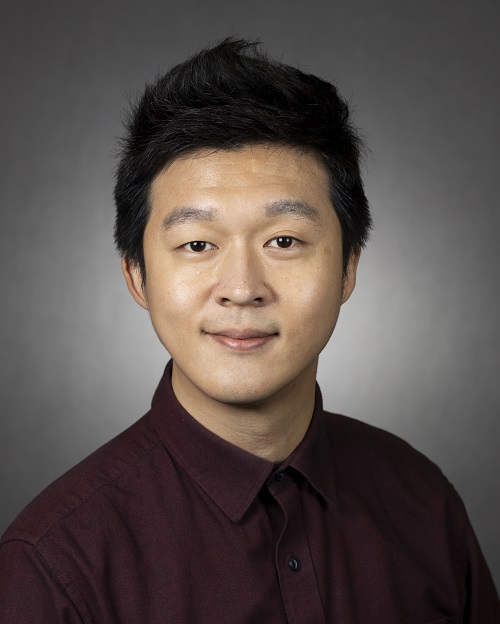
Joonhyuk Suh is an Assistant Professor in the Department of Food Science & Technology at the University of Georgia's College of Agricultural & Environmental Sciences. His research focuses on applying analytical chemistry and metabolomics/flavoromics to enhance food flavor, quality, and safety. Research Interests : Multidisciplinary food chemistry analysis Metabolite and flavor profiling Nut and fruit quality evaluation Dairy product flavor chemistry Food safety biomarkers Recent Publication Trends (2025-2022) show expertise in: Metabolomic evaluation of agricultural products Flavor chemistry in tropical fruits and nuts Food processing safety and contaminant analysis Plant-based food characterization Microbiome and nutritional interventions
Prof. Dr. Wolfgang Lutz is a Full Professor and Head of the Department of Clinical Psychology and Psychotherapy at the Faculty of Psychology, University of Trier, Germany. He also serves as Director of the Outpatient Clinic and Postgraduate Clinical Training. Additionally, he holds an Adjunct Professor position at the University of Western Australia and is a Fellow of the Association for Psychological Science (APS). Dr. Lutz's research focuses on advancing clinical psychology and psychotherapy through precision mental health care, treatment personalization, and feedback-informed psychological therapy. His work emphasizes using data-driven approaches to optimize treatment outcomes, with particular attention to depression, anxiety disorders, and PTSD. He has pioneered the development of the Trier Treatment Navigator (TTN), a system for feedback-informed treatment that helps match patients to the most effective therapeutic approaches. His recent publications reveal a strong emphasis on integrating technology and artificial intelligence into psychotherapy research and practice. This includes developing algorithms for personalized therapy, using large language models to analyze therapy sessions, and implementing routine outcome monitoring systems. His research shows how temporal dynamics in therapy processes affect outcomes and how clinical microskills can predict therapeutic alliance and success. Fellow of the Association for Psychological Science (APS) Editor of Psychotherapy Research He leads initiatives to develop a European Psychotherapy Consortium (EPoC) to standardize outcome measurement across countries and promote cooperation in psychotherapy research. His laboratory focuses on precision mental health care, developing tools for treatment personalization, and investigating the mechanisms of change in psychotherapy.
Andrew Torrance is Professor of Theology at the School of Divinity, University of St Andrews, and Co-Director of the Logos Institute for Analytic and Exegetical Theology alongside Oliver Crisp. He received his doctorate from the University of Otago in 2013, focusing on Søren Kierkegaard's and Karl Barth's theology of conversion. His educational background includes a doctorate from the University of Otago (2013), with a focus on Kierkegaard and Barth's theology of conversion. Prior to his permanent appointment at St Andrews, he launched and led the programme 'Scientists in Congregations Scotland,' exploring constructive conversations about science and faith within church contexts. Professor Torrance's research spans systematic theology (analytic, exegetical, and philosophical approaches), Christian doctrine (creation, Christology, theological anthropology, revelation, pneumatology), 19th-20th century Christian thought (Kierkegaard, Bonhoeffer, Barth), philosophy of religion, and science-theology dialogue. His work consistently bridges theological inquiry with philosophical and scientific frameworks. His recent publications demonstrate a sustained focus on accountability, theological anthropology, and science-theology intersections. A significant trend emerges in how he develops theological concepts that engage contemporary philosophical and psychological frameworks, particularly regarding human flourishing, accountability as a relational virtue, and the nature of religious belief within scientific contexts. $329,372 (NZD) from John Templeton Foundation (2020-2023) for 'Theological Anthropology, Fundamental Need, and Human Flourishing' $134,966 (USD) from Templeton Religion Trust (2018-2021) for 'Accountability as a Relational Virtue' $100,000 (USD) from Blankemeyer Foundation (2018-2021) for James Gregory lectures £1,584,754 from Templeton Religion Trust (2016-2020) for Logos Institute $50,000 (USD) from John Templeton Foundation (2016-2018) for James Gregory lectures $3,500 (USD) for project on Christian conversion (2016-2017) £509,389 from John Templeton Foundation (2013-2016) for 'Scientists in Congregations, Scotland' Professor Torrance supervises postgraduate research students, with 14 students listed in his supervised work. He teaches courses including Theology: Issues and History, The Theology of Søren Kierkegaard, Theological Anthropology, Analytic Theology: God, History, and Revelation, Reconciliation: Divine and Human, Persons: Divine and Human, and Pauline Theology. He serves as theological advisor for Learn, member of the Theological Forum for Church of Scotland, and member of the Advisory Council for the Grasping the Nettle initiative in Scotland.
Alessandro Rigolon is an Associate Professor and MCMP Program Coordinator in the Department of City and Metropolitan Planning at the University of Utah, where he has been on the faculty since 2019. A dual-PhD scholar (Design & Planning, University of Colorado Denver; Architecture, University of Bologna), he is internationally recognized for research on environmental justice, green-space equity, and the public-health consequences of urban greening. Education: Ph.D. in Design and Planning, University of Colorado Denver (2015) Ph.D. in Architecture, University of Bologna, Italy (2012) B.Arch. & M.Arch. in Architecture and Urban Design, University of Bologna, Italy (2007) Research Interests: Rigolon’s work sits at the intersection of environmental justice, urban planning, and public health. He investigates four interconnected themes: (1) policy drivers of inequity in green-space provision; (2) the mechanisms and resistance to green gentrification; (3) green infrastructure’s role in equitable climate adaptation; and (4) health impacts of urban nature on marginalized communities. His studies span multiple scales—from census microdata in Miami-Dade County to machine-learning analyses across 263 Chinese cities—deploying mixed-methods, spatial analytics, and community-engaged research. Publications & Impact: Across 89 peer-reviewed outputs, recent work (2024-2025) reveals complex pathways by which gentrification both precedes and follows greening, quantifies disparities in park access among racial/ethnic groups, and evaluates policies aimed at achieving green-space equity. Collectively, these studies highlight the need for fine-scale spatial data, intersectional analyses, and robust procedural justice when designing equitable greening interventions. Scientific Awards & Recognition: Stanford/Elsevier Top 2 % Scientist (2024) Clarivate Highly Cited Researcher (2024) APA-Utah High Achievement Award (2022) Urban Studies Editor’s Featured Articles (2021) University of Utah Celebrate U Researcher Honoree (2020) Arnold O. Beckman Award (2019) Grants & Advising: Rigolon currently leads or co-leads six funded projects totaling over one million dollars from the Center for Equitable Transit-Oriented Communities, Center for Climate Smart Transportation, Prevention Institute, and University of Illinois. These grants support interdisciplinary teams examining transit-oriented green gentrification, climate adaptation for active transportation, and equitable park policy implementation. Graduate students and post-docs are active collaborators on all projects. Teaching & Community Engagement: He teaches graduate courses including Design Ecologies , Plan Making , Professional Project Studio , and Research Design . Through studio courses, students partner with local governments (South Salt Lake City, Liberty Wells Community Council) to produce actionable plans advancing environmental justice.
Juan Alcacer is the James J. Hill Professor of Business Administration at Harvard Business School. He holds a PhD in International Business and Strategy from the University of Michigan, an M.A. in Economics, an MBA in Finance, and a Computer Engineering degree. His research focuses on international strategies, location decisions, and agglomeration economies. PhD - University of Michigan (Ross School of Business) MA - Economics, University of Michigan MBA - IESA Computer Engineering - Universidad Simon Bolivar Alcacer’s work examines how firms build competitive advantage through geographic choices, supply chain dynamics, and knowledge transfer. Recent projects analyze Brexit’s impact on investment and the role of internal/external agglomeration economies. His publications span top journals like Strategic Management Journal , Management Science , and Journal of International Business . Awards include the 2024 HBS Student Association Faculty Teaching Award and the 2016 Michigan Ross Distinguished PhD Alumni Award. 2024 HBS Student Association Faculty Teaching Award 2019 Greenhill Award for Field Global Immersion program 2016 Michigan Ross Distinguished PhD Alumni Award 2013 Meritorious Service Award from Management Science At HBS, he teaches required MBA strategy courses, Executive Education programs, and PhD seminars. His consulting spans global corporations on competitive advantage and location strategy.
Julian Adamek is a computational cosmologist and lead developer of gevolution , a general-relativistic N-body code for cosmological simulations. His work focuses on modeling relativistic effects in cosmic structure formation to better understand gravity’s role on large scales and dark energy. Research Interests: Computational Cosmology, Theoretical Cosmology, Large-scale structure of the Universe, Relativistic N-body simulations. Technical Leadership: Lead developer of gevolution , a public cosmological simulation code available via GitHub. Recent publications span diverse applications of deep learning in geospatial analytics, environmental monitoring, and computer vision, including phenology modeling, biomass mapping, conflict assessment, and 3D reconstruction from point clouds. Key Trends: Integration of AI/ML for environmental tasks, cross-domain applications (cosmology, ecology, forestry), and satellite data processing. Technical Focus: Transformer networks, diffusion models, super-resolution imaging, and ensemble learning for uncertainty quantification. Julian collaborates with researchers in cosmology and geospatial science, though specific students or awards are not mentioned in the provided texts.
Professor Katsuyuki Kubo serves as a faculty member at Waseda University's Faculty of Commerce, School of Commerce. Holding a Ph.D. in Industrial Relations from the London School of Economics, he has been affiliated with Waseda University since 2003, following his position as Lecturer at Hitotsubashi University's Institute of Economic Research from 2000 to 2003. His academic career demonstrates consistent focus on Japanese corporate governance structures and their economic implications. Professor Kubo's research interests center on Corporate Governance, Ownership Structure, Board of Directors, Executive Compensation, and Employment Relations. His scholarly work examines how corporate governance mechanisms affect firm performance, employee welfare, and broader economic outcomes in Japan and East Asia. He has conducted extensive empirical analyses on the relationship between board composition and employment practices, executive compensation structures, and the impact of foreign ownership on Japanese firms. His publication record reveals a clear trajectory of increasingly sophisticated research on corporate governance. Early work focused on basic relationships between executive compensation and firm performance, while more recent research examines nuanced aspects including female representation on corporate boards, decent work policies, and the impact of sovereign wealth funds. His studies often employ rigorous quantitative methods using large datasets of Japanese listed companies, contributing significantly to our understanding of the unique characteristics of Japanese corporate governance. Professor Kubo has led multiple significant research projects funded by the Japan Society for the Promotion of Science, including 'Corporate Governance Reforms and their Consequences' (2019-2024) and 'The impact of board composition on employment' (2020-2023). His work bridges theoretical frameworks with practical implications for corporate governance reform in Japan. He teaches courses including Managerial Economics, Corporate Governance and M&A, and Data Science and Business Research at both graduate and undergraduate levels. His educational contributions extend to authoring textbooks such as 'Statistics and Data Analysis for Business Administration' (2021), demonstrating his commitment to developing analytical skills among business students.
Sriraam Natarajan is a Professor and Director of the Center for Machine Learning and StaRLing Lab at The University of Texas at Dallas (UTD), part of the Erik Jonsson School of Engineering & Computer Science. He holds additional roles as a hessian.AI Fellow at TU Darmstadt and an RBCDSAI Distinguished Faculty Fellow at IIT Madras. His expertise spans Artificial Intelligence, Machine Learning, and their applications in healthcare, with a focus on Relational Learning, Reinforcement Learning, and Graphical Models. He has been honored as an AAAI Fellow (2025), elected to the AAAI Executive Council, and recognized with the UTD Outstanding Graduate Teaching Award. Education: Completed his PhD in Computer Science at Oregon State University in 2007 under Prof. Prasad Tadepalli. Postdoctoral work at the University of Wisconsin-Madison with Professors Jude Shavlik and David Page. Previously served as faculty at Indiana University and Wake Forest School of Medicine. Research: Active in developing AI systems for healthcare, including predictive models for gestational diabetes and cardiac arrest in children. His work emphasizes integrating human knowledge into machine learning (e.g., Human-in-the-Loop systems) and advancing statistical relational AI frameworks like Markov Logic Networks and Probabilistic Circuits. Publications: Over 100 peer-reviewed articles, including notable works on causal learning, relational reinforcement learning, and knowledge graph construction. Recent focuses include explainable AI and scalable probabilistic models. Awards: AAAI Fellow, RBCDSAI Distinguished Fellowship, UTD Teaching Excellence Award. Advising and Collaboration: Mentored over 30 students, many now in academia and top institutions like IBM Research, Facebook, and Microsoft. Collaborates globally on projects like GLAD (Glocalized Anomaly Detection) and StaRLing Lab initiatives. Labs/Teams: Leads the StaRLing Lab, focusing on statistical relational AI, and directs UTD's Center for Machine Learning. Engaged in interdisciplinary projects with healthcare, robotics, and data science communities.
Professor Asaf Shapira is a faculty member in the Department of Theoretical Mathematics at Tel Aviv University's School of Mathematical Sciences. He has been actively contributing to combinatorics and graph theory research for over a decade, with numerous publications in top journals including Journal of the ACM, Advances in Mathematics, and Geometric and Functional Analysis. Professor Shapira's research focuses on extremal combinatorics, graph theory, and property testing. His work explores fundamental questions in Ramsey theory, hypergraph theory, and probabilistic methods in combinatorics. He has made significant contributions to the study of graph regularity, removal lemmas, and extremal problems in dense and sparse graphs. His recent publications demonstrate a consistent focus on theoretical aspects of combinatorics with connections to theoretical computer science. A notable trend is his work on developing polynomial bounds for various combinatorial theorems and exploring connections between combinatorial structures and computational complexity. His research often bridges pure mathematics with theoretical computer science applications. Professor Shapira teaches advanced courses at Tel Aviv University including Extremal Graph Theory, Basic Combinatorics, and seminars on specialized topics in combinatorics. His teaching spans undergraduate and graduate levels, reflecting his commitment to educating the next generation of mathematicians.
Christopher P. Higgins serves as Professor and AMAX Distinguished Chair in the Department of Civil and Environmental Engineering at the Colorado School of Mines, a position he attained in 2025 following his 2022 designation as University Distinguished Professor. Joining Mines in 2009, he leads critical research on environmental contaminants with emphasis on poly- and perfluoroalkyl substances (PFASs) in natural and engineered systems. His educational foundation includes: PhD in Civil and Environmental Engineering from Stanford University (2007) MS in Civil and Environmental Engineering from Stanford University (2002) AB in Chemistry from Harvard University (1998) Dr. Higgins' research program investigates chemical fate and transport mechanisms, particularly PFAS movement through soils and water, human exposure pathways, and remediation technologies. His work integrates field studies, laboratory experiments, and mathematical modeling to address: PFAS leaching dynamics in vadose zones Advanced treatment methods for contaminated media Exposure assessment via water, food, and indoor environments Environmental risk characterization at contaminated sites His recent publications demonstrate increasing focus on analytical method development, source identification, and destruction technologies for ultrashort-chain PFAS compounds. Notable recognitions include: ASCE Huber Prize for Civil Engineering Research (2019) SERDP Environmental Restoration Project of the Year (2020) Honorary Professorship at The University of Queensland, Australia His research program has secured substantial funding from NSF, NIH, EPA, USDA, and DoD, supporting interdisciplinary collaborations and graduate student mentorship. Current initiatives emphasize translating laboratory findings to field applications through partnerships with regulatory agencies and industry stakeholders. Dr. Higgins directs the Center for Environmental Risk Assessment and co-leads the PFAS@Mines Initiative, which coordinates campus-wide research on PFAS contamination through integrated experimental, computational, and policy-focused approaches.
Benjamin Day is a Senior Lecturer in the Department of International Relations at the Coral Bell School of Asia Pacific Affairs, Australian National University (ANU). His research focuses on leaders' roles in foreign policy decision-making, particularly how leaders drive policy change. He co-authored *Foreign Policy Analysis: Classic and Contemporary Theory* (3rd ed., 2019), a leading textbook in the field. His recent work explores leaders' 'thinking practices' about global order, informed by elite interviews with over 100 politicians and policymakers. Education: BA (University of Queensland) BEcon (University of Queensland) MIS (University of Queensland) PhD (ANU, 2018) Research Interests: Political Decision Making and Foreign Aid Leaders and World Order Aid Policy Dynamics Elite Influence in Policymaking Academia-Policymaker Bridging Affiliations and Fellowships: Partners around the Globe Fellow, NATO Defence College (2025) Visiting Fellow, University of Edinburgh (2023) Australian National Fellow, King’s College London (2019) Centre Associate, ANU Development Policy Centre (since 2016) Contributions: Regularly publishes in platforms like *The Strategist*, *Devpolicy Blog*, and *The Conversation*. Designs courses for diplomats and public servants via the ANU Diplomacy Forum. Previously worked in international development for a decade, including health sector reform in Papua New Guinea. Labs/Teams: Active in the ANU’s Development Policy Centre and collaborates with institutions globally to advance policy-relevant research on foreign aid and leadership.
Albert H. Titus is a Professor in the Department of Biomedical Engineering and an Adjunct Professor in the Department of Electrical Engineering at the University at Buffalo, State University of New York. He serves as Associate Vice President for Regulatory Support in the Office of the Vice President for Research and Economic Development. His research focuses on analog VLSI design for neuromorphic visual processing, biosensors, wearable devices, optoelectronic systems, and neural networks. Education: PhD in Electrical and Computer Engineering, Georgia Institute of Technology (1997) MS in Electrical Engineering, University at Buffalo (1991) BS in Electrical Engineering, University at Buffalo (1989) Research Interests: His work spans wearable and implantable sensors, bioinstrumentation, neural network-based visual processing, analog VLSI implementations, optoelectronics, and electronic packaging. He pioneered CMOS-based neuromorphic systems and developed patented technologies for glare sensing and RF power calorimetry. Publication Trends: His recent articles emphasize CMOS-integrated sensors, machine learning for bioimpedance analysis, implantable medical devices, and xerogel-based optical biosensors. These works bridge biomedical engineering and microelectronics. Scientific Recognition: He is a Fellow of the National Academy of Inventors and has received the SUNY Chancellor’s Award for Excellence in Service (2017), NSF CAREER award, and Western New York Inventor of the Year (2010). His inventions include a patented low-power glare sensor (U.S. Patent 7,586,079) featured in Popular Science’s 2011 Top Ten Inventions. Academic Leadership: As a faculty member, he has supervised nearly 20 PhD and over 40 MS students, while teaching courses in circuits, IC design, sensors, and signal processing across electrical and biomedical engineering disciplines.
Philipp Otto is a Professor of Statistics and Data Science at the University of Glasgow. Previously, he was a Reader in Statistics and Data Analytics (2023–2024) and held a Junior Professorship in Big Geospatial Data at Leibniz University Hannover (2018–2023). He earned his PhD in Statistics (summa cum laude) from European University Viadrina in 2016 and a B.Sc. in International Economics, with study visits to Saint Petersburg State University. His research focuses on spatial and spatiotemporal statistics, environmetrics, network modeling, and machine learning applications. Education: PhD in Statistics (2016), European University Viadrina, Frankfurt (Oder) B.Sc. in International Economics (with study visits to Saint Petersburg) Research Interests: Philipp’s work centers on spatial statistics, spatiotemporal volatility modeling, environmental data analysis, and network processes. He develops statistical methods for geo-referenced and network data, with applications in climatology, finance, and environmental risk assessment. His contributions include advancements in GARCH models, spatiotemporal clustering detection, and statistical process monitoring for AI systems. Grants & Projects: He has secured €1,038,847 in research grants, leading projects on historical map time series analysis, agricultural air quality impacts, and high-dimensional spatial dependence structures. Industry collaborations include survival analysis for building information models. Awards: 2017 Fellowship to attend the Lindau Nobel Laureate Meeting (Economic Sciences) 2017 Best Presentation Award (Data Science, Statistics, and Visualisation) Teaching: He teaches statistics and data science across disciplines, including economics, engineering, and mathematics, at both undergraduate and postgraduate levels. Professional Activities: Editorial Boards: Environmetrics (2021), AStA Advances in Statistical Analysis (2020) Member of German Statistical Society (Treasurer, 2013)
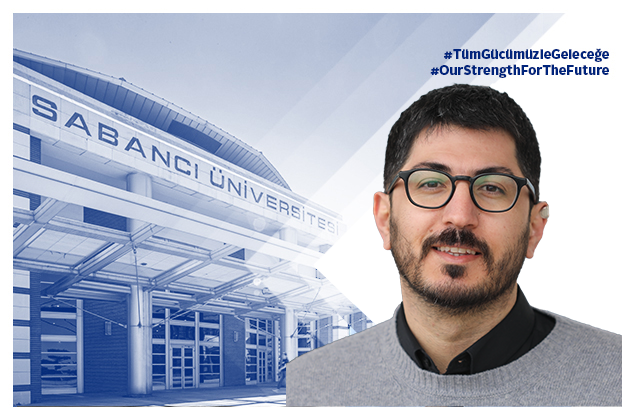
Dr. Morteza Ghorbani is a researcher and faculty member at Sabancı University's Faculty of Engineering and Natural Sciences (FENS), specializing in fluid mechanics and environmental engineering. He leads the AquaCav project, a collaborative effort with Oxford Brookes University, focused on developing sustainable water treatment solutions using hydrodynamic and acoustic cavitation. His research addresses global challenges such as PFAS pollution and wastewater management, with applications in biomedical devices and energy-efficient technologies. Key collaborations include projects funded by the International Science Partnership Fund (ISPF), leveraging his expertise in microfluidic systems and cavitation dynamics. Dr. Ghorbani's work combines experimental and numerical methods to optimize cavitation-based processes for environmental and biomedical applications. His contributions span from fundamental fluid dynamics studies to applied technologies like flexible cystoscopes and clot-on-a-chip platforms. Scientific achievements include the ISPF Research Collaboration Grant (2024) and advancements in PFAS removal, graphene exfoliation, and microalgae cultivation. His research group at Sabancı University explores interdisciplinary solutions at the intersection of engineering, nanotechnology, and sustainability.
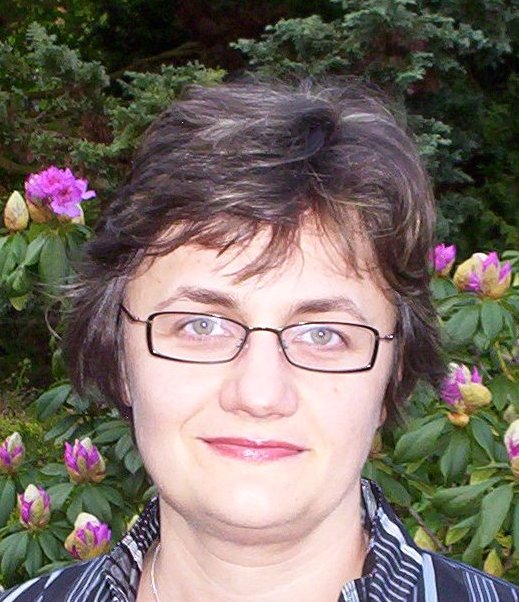
Laura Maruster is an Assistant Professor at the Faculty of Economics and Business, University of Groningen, Netherlands. She holds an MSc from the West University of Timisoara, Romania, and a PhD in Technology Management from Eindhoven University of Technology, Netherlands. Her research focuses on process mining, process modelling, and healthcare networks, with applications in operations research and data science. She collaborates extensively with industry and public sector partners on projects like the Casimir initiative (RuG and Gasunie). Teaching areas include business processes, data mining, and research methodology. Recent work includes studies on healthcare logistics optimization and process mining beyond traditional workflows. Her publications appear in leading journals such as BMJ Open , IEEE Transactions on Engineering Management , and Computers in Industry . Research interests span healthcare networks, emergency medical services analytics, and enterprise process optimization. Notable recent contributions include analyzing interhospital patient transfers and redesigning engineering design processes using data-driven methods.