
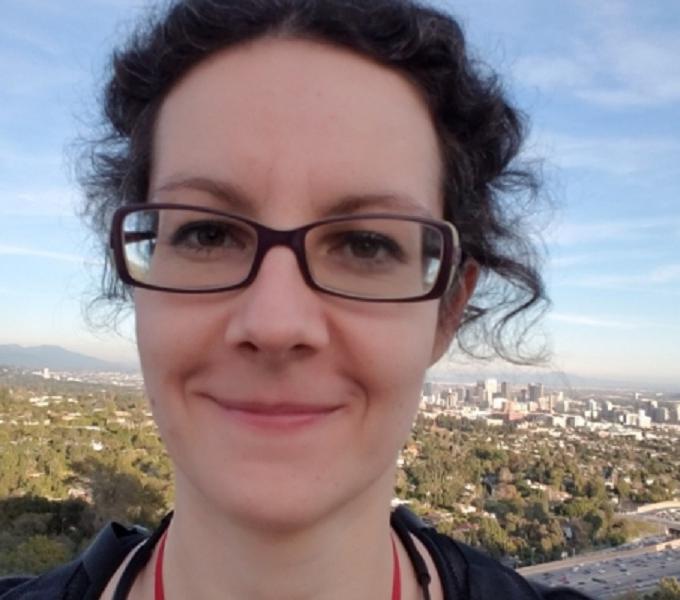
Adriana Kovashka is an Associate Professor at the University of Pittsburgh , affiliated with the School of Computing and Information and serving as Department Chair . Her academic journey began with BA degrees in Computer Science and Media Studies from Pomona College (2008) and a PhD in Computer Science from The University of Texas at Austin (2014). Joined Pitt’s faculty in January 2015 NSF CAREER awardee (2021) Google Faculty Research Award recipient Dr. Kovashka’s research spans Computer Vision , Machine Learning , and Natural Language Processing , focusing on visual rhetoric, weak multimodal supervision, and domain adaptation. She pioneered techniques for analyzing political imagery, developing robust object detection frameworks, and exploring the intersection of visual and textual persuasion through large-scale annotated datasets. Her recent work emphasizes geographic diversity in vision-language systems, audio-visual fusion for domain generalization, and shape-texture bias mitigation in CNNs. Key publications include groundbreaking studies on symbolic reasoning, multimodal dialogue systems, and ethical AI applications in education. Scientific honors include: NSF CRII Award (2016) NSF CAREER Award (2021) Pitt CRDF Award (2016, 2018) Best Paper at ECV Workshop (2021) Google Faculty Research Award (2016, 2018) Dr. Kovashka actively mentors students in multimodal learning projects and collaborates with interdisciplinary teams on NSF-funded initiatives. She co-organizes workshops like the first CVPR workshop on advertisement understanding and leads research groups exploring human-AI co-learning systems.
جستجوی استاد راهنمای دانشگاهی
برای مسیر پژوهشیتان، استاد راهنما، استاد دانشگاه و پژوهشگر مناسب را پیدا کنید و با آنها ارتباط بگیرید.
نمایش ۱-۱۵ از ۷۰۵ استاد راهنما
اطلاعات پروفایلها از صفحات عمومی دانشگاهها گرفته شده و ممکن است بهروز نباشد.

Amin Keramatiمشاهده پروفایل
استادیار
Dr. Amin Keramati is an Assistant Professor of Supply Chain Management at Widener University’s School of Business Administration. He holds a PhD in Transportation & Logistics from North Dakota State University and previously served as a graduate research assistant at the Upper Great Plains Transportation Institute. His work includes federally funded projects like the Mountain-Plains Consortium’s MPC-550 project, focusing on highway-rail grade crossing safety. Dr. Keramati teaches courses in enterprise resource planning, decision analytics, database management, transportation/logistics, project management, and data analytics. Education: PhD in Transportation & Logistics, North Dakota State University Graduate Research Assistant at Upper Great Plains Transportation Institute Research Focus: Dr. Keramati develops mathematical, statistical, and machine learning approaches to solve complex problems in transportation, supply chain, and logistics. Key areas include data mining, big data decision support, transportation network analytics, project scheduling, smart manufacturing, and accident analysis. His interdisciplinary work bridges supply chain optimization with emerging technologies like blockchain for healthcare and clinical trials. Awards & Recognition: Student Paper Award, American Association of State Highway and Transportation Officials (2017) Grants & Projects: Lead researcher on the Mountain-Plains Consortium’s MPC-550 project, which expanded his dissertation work on safety systems for highway-rail crossings. Collaborates on federally funded transportation safety initiatives and supply chain optimization for bioethanol and pharmaceutical industries. Labs/Teams: Active in Widener’s School of Business research groups focusing on supply chain innovation and interdisciplinary projects combining logistics with emerging technologies.

Lexing Xie is a Professor in Computer Science at the Australian National University. He leads the ANU Computational Media Lab ( http://cm.cecs.anu.edu.au ) and the ANU Integrated AI Network. His work focuses on the intersection of machine learning, social media analysis, and multimedia understanding. Dr. Xie's research broadly focuses on innovative design and use of machine learning algorithms, especially on large-scale graph data and collective behaviour. His recent work spans several key areas: Popularity in social media -- understanding, predicting, and optimization Multimedia knowledge graphs, vision and language integration Humanising machine intelligence through better understanding of social dynamics His publications reveal a strong trend toward understanding information diffusion patterns in social media, particularly through visual content. He has made significant contributions to the study of visual memes, popularity prediction using point processes, and multimodal learning that connects vision with language. His work often bridges theoretical machine learning with practical applications in social media analysis. Dr. Xie has received recognition for his research, including an Honourable Mention at CSCW 2019 for his work on attention flow in online video networks. His research has been supported by collaborations with major institutions including IBM Research and Columbia University. As an advisor, Dr. Xie has mentored numerous students who have gone on to contribute significantly to publications in top-tier conferences. His lab, the ANU Computational Media Lab, serves as a hub for interdisciplinary research connecting computer science with social sciences.
Babak Falsafi is a Full Professor at the School of Computer and Communication Sciences (IC) at EPFL, leading the Parallel Systems Architecture Laboratory (PARSA). He is a renowned expert in computer architecture, datacenter systems, and cloud-native server design. His research focuses on post-Moore era computing, emphasizing heterogeneous architectures, energy efficiency, and scalable IT infrastructure. Falsafi is the founder of EcoCloud, an EC-sponsored industrial-academic consortium investigating sustainable information technology. He holds ACM and IEEE fellowships, a Sloan Research Fellowship, and has contributed to major projects like Optimus Prime (data transformation acceleration), AstriFlash (flash-based online service systems), and Midgard (virtual memory re-design). His work spans hardware-software co-design, memory systems, and security. Falsafi advises numerous PhD students and collaborates with industry partners such as Google and Cavium. Key achievements include pioneering scalable multiprocessor architectures, snoop filters in IBM BlueGene, and spatial memory streaming in ARM cores. His lab develops open-source tools like QFlex for server simulation. He frequently presents at top conferences (HPCA, ISCA, MICRO) and chairs workshops on post-Moore infrastructure. Teaching roles include leading courses in computer architecture and parallel systems across multiple EPFL departments (SIN, EDIC, SSC, SMA). His work addresses datacenter challenges like the 'data tax' and mitigating latency through specialized accelerators.
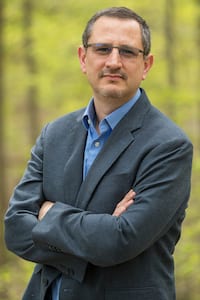
José F. Martínez holds the Lee Teng-hui Professorship of Engineering at Cornell University's College of Engineering, where he leads research in computer architecture and systems. His roles include Vice Chair of ACM SIGARCH, IEEE Fellow, and past leadership roles in ISCA, MICRO, and IEEE Computer Society journals. He has received prestigious awards such as the NSF CAREER Award, IBM/Qualcomm Faculty Awards, and multiple teaching accolades including Tau Beta Pi Professor of the Year (2011). Education: Licenciado en Informática de Sistemas (1996), Universidad Politécnica de Valencia M.S. (1999) and Ph.D. (2002) in Computer Science, University of Illinois at Urbana-Champaign His research focuses on computer architecture , including microprocessors, multiprocessors, memory subsystems, embedded systems, and processing-in-memory (PIM) innovations. He co-leads the DARPA/SRC ACE Center for Evolvable Computing and NSF's CROPPS Center, and previously co-founded Cornell's Institute for Digital Agriculture (CIDA). His work bridges hardware-software co-design and sustainable computing. Key Contributions: Advancing energy-efficient multiprocessor architectures Developing PIM frameworks like PUMICE and Membrane Market-based resource allocation systems (e.g., XChange, ReBudget) His advising spans over 15 graduate students and has guided Merrill Presidential Scholars. Current research explores evolvable computing paradigms and AI hardware acceleration, reflecting his dual focus on foundational architecture and applied systems innovation.
Holger Fröning is a full professor at Heidelberg University’s Institute of Computer Engineering (ZITI), where he leads the Hardware and Artificial Intelligence (HAWAII) Lab. His research focuses on embedded machine learning , high-performance computing , and hardware-software co-design , with emphasis on resource efficiency, power optimization, and emerging architectures like analog , photonic , and resistive memory systems. He has held leadership roles including Managing Director of ZITI (2023–present) and Dean of Studies for Computer Science (2019–2022) , and has collaborated with institutions such as NVIDIA Research, Chinese Academy of Sciences, and Graz University of Technology. Research Trends : His recent publications explore Bayesian neural networks , green machine learning , analog computing noise mitigation , and GPU/FPGA optimization . Articles highlight photonic computing for AI , memory-efficient training , and hardware-aware DNN compression . Scientific Awards : 2025 HiPEAC Paper Award (Nature Computational Science) 2014 Google Faculty Research Award Multiple Best Paper Awards (IPDPS, ICPP, ECML-PKDD workshops) Leadership & Service : Organized workshops (WEML, ITEM, F4HD), chaired tracks at EuroPar and ISC, and served on program committees for ICPR, ECAI, and FPL. Education & Affiliations : PhD and MSc from University of Mannheim (2007/2001). Sponsors include DFG, FWF, FFG, NVIDIA, SAP, and XILINX.
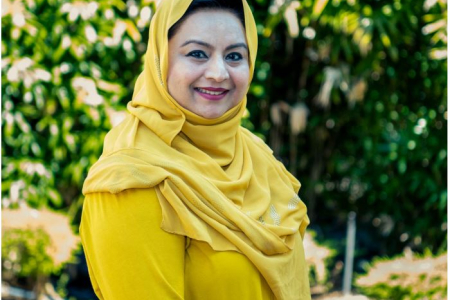
Dr. Farha Sattar is a Lecturer in Education (Mathematics) at the Faculty of Arts and Society, Charles Darwin University. With over thirty years of teaching experience in Mathematics, Science education, GIS, Remote Sensing, and e-Learning technologies at undergraduate and postgraduate levels, Dr. Sattar brings extensive expertise to her academic role. She holds a PhD in Geospatial Science from Charles Darwin University, focusing on Spatial Mathematical Modelling for 3D Gully Mapping and Erosion Quantification. Her educational background includes: PhD in Geospatial Science (Three Dimensional Gully Mapping and Erosion Quantification within a Geoinformatics Framework), Charles Darwin University (2012) Prior academic experience at several Asian and European universities Dr. Sattar's research spans multiple interdisciplinary fields with a strong focus on the intersection of education and technology. Her primary research interests include Mathematics Education, STEM Education, Geoscience Education, Spatial Mathematical Modelling, Drone Technology, Remote Sensing, Geographic Information Systems, and Innovative Pedagogies such as experiential learning and inquiry-based approaches. She has developed expertise in cognitive development, particularly in fostering critical and creative thinking skills through iSTEM approaches. An analysis of Dr. Sattar's recent publications reveals a consistent trajectory toward integrating emerging technologies like drones, augmented reality, and geospatial artificial intelligence into educational contexts. Her work demonstrates a progression from foundational geospatial research on erosion mapping to innovative applications in STEM education. Recent publications increasingly focus on drone technology for educational purposes, spatial data infrastructure for policy development, and computational thinking development through technology-enhanced learning. Dr. Sattar has received numerous accolades for her contributions to education and research: NT Science Week Awards – Inspired NT STEM Hero of the Year award (2021) Long Service Recognition Award (2023) Finalist, CDU Alumni Award (2023) Multiple Best Presentation Awards (2008, 2010, 2017) Australian College of Educators - 2021 College Medal Nominee As a supervisor, Dr. Sattar mentors postgraduate research students including Ayesha Farhan, who is working on "A Framework for Cognitive Development: Fostering Critical and Creative Thinking Skills, Using iSTEM Approach." She actively secures research funding through various projects such as "DBELaSTEM: Drone-Based Experiential Learning and STEM Education," "STEM_D & VR: Youth STEM Learning and Empowerment with Drones and VR," and "CodProg Drone Lab." Her research is supported by grants from NT Government projects and other external funding sources. Dr. Sattar leads the CodProg Drone Lab, an innovative research space exploring drone technology applications in education. She is a certified drone pilot and aeronautical radio operator, which enables her to bridge theoretical knowledge with practical applications. Her work with the "Flying Forward: Drones, STEM Equity, and Indigenous Empowerment" initiative demonstrates her commitment to community engagement and addressing educational disparities through technology.

Professor Tulika Mitra is the Dean of the School of Computing and Vice Provost (Special Projects) at the National University of Singapore (NUS). She holds the Provost’s Chair Professor in the Department of Computer Science and has been instrumental in shaping academic policies and strategic initiatives at NUS since joining in 2001. PhD in Computer Science, Stony Brook University (2000) M.E. in Computer Science, Indian Institute of Science (1997) B.E. in Computer Science, Jadavpur University (1995) Her research focuses on hardware-software co-design for energy-efficient computing systems, particularly in real-time embedded systems, heterogeneous architectures, and AI accelerators. She leads major research programs such as the NRF Competitive Research Programme on Low-Power Edge Accelerators and the MOE Tier-3 Programme on Green AI , collaborating with industry leaders like ARM, AMD, and Meta. Her recent publications highlight innovations in CGRA optimization , sparse attention mechanisms , photonic-digital hybrid architectures , and low-power ML inference . These works often integrate compiler techniques, architectural design, and real-time constraints for edge computing applications. Scientific Awards : ESWEEK Test-of-Time Award (2022), ACM SIGDA Distinguished Service Award, IEEE CEDA Outstanding Service Recognition Award, Teaching Excellence Award (2006), and multiple best paper recognitions. Education Leadership : Spearheaded the Computer Engineering (CEG) Programme at NUS, a joint initiative between Engineering and Computing. As a mentor , she has supervised over 25 PhD students , many now in prominent academic or industrial roles. Her research group eCO Lab focuses on embedded computing challenges, while her grant collaborations include projects on 5G base stations, reconfigurable architectures, and IoT-optimized SoCs.

Xavier Brusset is a Professor in Supply Chain at SKEMA Business School since 2016, where he also serves as Director of the PRISM Research Center since 2017. Previously, he held professorial positions at Toulouse Business School (2015-2016) and ESSCA School of Management (2009-2015), where he was responsible for the Master 2 in Purchasing and Supply Chain Management program. His academic journey includes a PhD in Management Sciences from Université Catholique de Louvain (2010) and a Habilitation à Diriger des Recherches from Université Paris Ouest Nanterre La Défense (2016). His research spans multiple critical areas in supply chain management, with particular focus on supply chain resilience, blockchain applications, weather risk management, and pandemic impacts on supply chains. Brusset has developed innovative approaches to understanding how supply chain partners interact, how information affects their behavior, and how external disruptions like weather anomalies and pandemics impact operational efficiency. His work bridges theoretical models with practical applications, often developing decision-support tools for managers facing complex supply chain challenges. Brusset's publication record shows a clear evolution of research interests, beginning with foundational work on supply chain contracts and information sharing, then expanding to weather risk management, and most recently focusing on pandemic disruptions and blockchain applications. His 15 most recent publications (2018-2025) demonstrate increasing sophistication in modeling complex supply chain phenomena, with particular emphasis on network effects, ripple effects, and multi-echelon optimization under disruption scenarios. Editorial board member of Logistics Research Editor of International Journal of Retail and Distribution Management (2022-2023) Recognized EU expert for CINEA research projects evaluation Organizer of the Colloquium on European Research in Retailing (CERR) Reviewer for multiple top journals including International Journal of Production Economics As an advisor, Brusset has supervised doctoral students including R. Alkhudary (co-director, Université Paris 2 Panthéon-Assas) and V. Capocasale (rapporteur). His professional experience extends beyond academia to include industry roles in financial markets and logistics technology, having co-founded WebLogistix, a platform for sharing logistics information in Argentina. His research has practical applications across multiple sectors, particularly in retail, food supply chains, and manufacturing, where he develops tools to help managers mitigate risks and optimize operations under uncertainty.
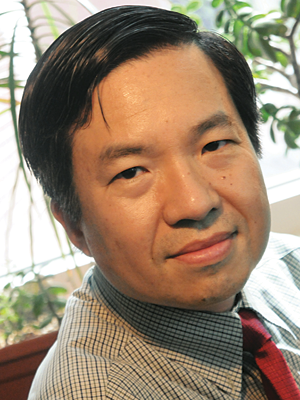
Shih-Fu Chang is the Dean of Columbia Engineering and holds the Morris A. and Alma Schapiro Professorship at Columbia University. His research focuses on computer vision, machine learning, and multimedia information retrieval. He is recognized as a foundational figure in the field of content-based visual search and has pioneered innovations in image/video search engines, crime prevention systems, and brain-machine interfaces. His leadership roles include Chair of Columbia's Electrical Engineering Department (2007-2010), Editor-in-Chief of the IEEE Signal Processing Magazine (2006-2008), and Senior Executive Vice Dean at Columbia Engineering, where he drives strategic planning and international collaboration. Dr. Chang has received prestigious awards including the ACM Multimedia Technical Achievement Award, IEEE Signal Processing Technical Achievement Award, and IEEE Kiyo Tomiyasu Award. He is a Fellow of AAAS, ACM, and IEEE, and an Academician of Academia Sinica. His recent work emphasizes multimodal reasoning, few-shot learning, and vision-language systems, with applications in healthcare diagnostics and multimedia benchmarking. His research spans cross-modal understanding, event extraction, and adaptive AI systems. Key contributions include systems like Ferret-v2 for multimodal grounding and RESIN for schema-guided event tracking. He has advised multiple startups and actively contributes to curriculum development in AI and engineering education.
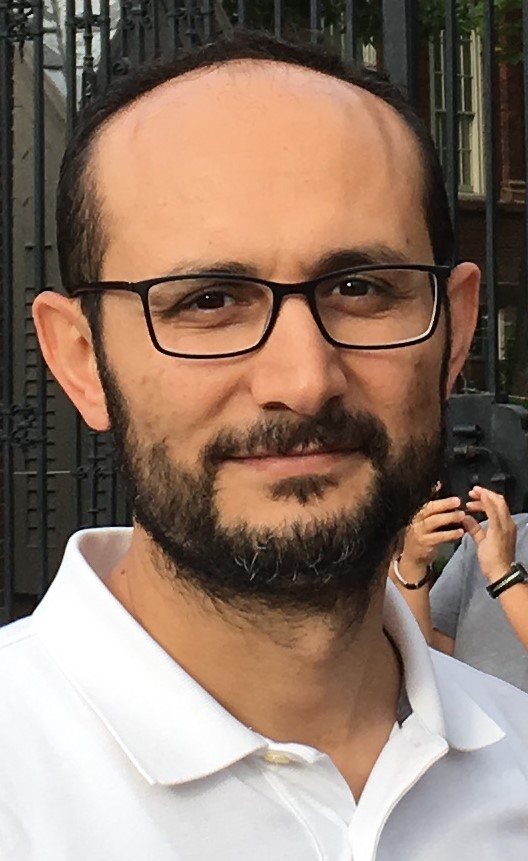
Ozcan Ozturk is a Professor in the Computer Science and Engineering and Electronics Engineering programs at Sabancı University's Faculty of Engineering and Natural Sciences. Previously, he held professorships at Bilkent University and adjunct roles at North Carolina State University. His expertise spans heterogeneous computing, parallel systems, processor architecture, and compiler optimization. He earned his Ph.D. from Penn State University, with prior academic roles at the University of Florida and internships at Intel and Marvell. Education: Ph.D. in Computer Science and Engineering (2007), Pennsylvania State University M.S. in Computer Engineering (2002), University of Florida B.Sc. in Computer Engineering (2000), Bogazici University Research interests include accelerator technologies, GPU-based systems, multicore processors, and compiler optimizations. His work focuses on improving parallelization efficiency, energy optimization, and reliability in heterogeneous architectures. He leads funded projects like 'Machine Learning for Compiler Flags' and 'Graph Accelerator Design'. Notable awards include the Bilkent Teaching Award (2019), BAGEP (2018), and HiPEAC Paper Award (2016). He serves on editorial boards of IEEE and ACM journals and chairs major conferences like ASPLOS and ICS. Grants and collaborations include partnerships with Huawei, Intel, NVIDIA, and TÜBİTAK. He advises over 20 students and has supervised projects in safety-critical systems, FPGA accelerators, and compiler-directed optimizations. His lab develops domain-specific architectures, including RISC-V extensions for graph processing.
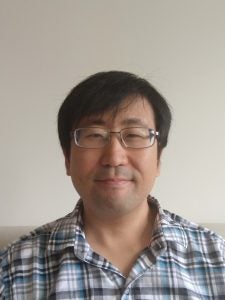
Jee Choiمشاهده پروفایل
استادیار
Jee Choi is an Assistant Professor in the Department of Computer and Information Science within the College of Arts and Sciences at the University of Oregon. His research focuses on developing high-performance algorithms for big data analytics, particularly in tensor decomposition and parallel computing systems. Education: PhD in Electrical and Computer Engineering, Georgia Institute of Technology, 2015 MS in Electrical and Computer Engineering, Georgia Institute of Technology, 2004 BS in Electrical and Computer Engineering, Georgia Institute of Technology, 2000 Research Interests: Dr. Choi specializes in High Performance Computing with expertise in parallel algorithm design, performance modeling, and energy efficiency. His work targets Tensor Decomposition & Data Mining for big data, developing scalable solutions for sparse and dense tensor computations. He advocates leveraging HPC systems to transform massive datasets into societal benefits through efficient data mining techniques. Publication Trends: Choi's recent publications (2021-2025) demonstrate consistent innovation in tensor decomposition methodologies, with increasing focus on adaptive storage (Alto), streaming data factorization, and energy-aware autotuning. His work spans GPU clusters, distributed systems, and emerging architectures, maintaining strong connections to real-world big data challenges while advancing theoretical algorithm design. Professional Background: After completing his PhD under Richard Vuduc at Georgia Tech (notable for SpMV GPU autotuning and Energy Roofline Model), Choi conducted DoD-funded research on tensor decomposition at IBM Watson Research Center (2015-2018) before joining the University of Oregon faculty.
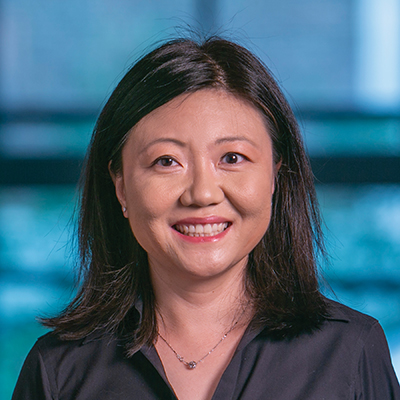
Jing Liمشاهده پروفایل
دانشیار
Dr. Jing Li is an Associate Professor and Eduardo D. Glandt Faculty Fellow at the University of Pennsylvania , holding dual appointments in the Electrical and Systems Engineering and Computer and Information Science departments. As co-director of the CyberSavvy nationwide security research center and director of the Penn Computational Intelligence Lab (PennCIL) , she pioneers innovations in non-von Neumann computing paradigms. Her research spans post-CMOS technologies, in-memory computing, and hardware-software co-design for security and AI applications. PhD in Computer Engineering, Purdue University (2009) BSc in Electrical Engineering, Shanghai Jiaotong University (2004) Research Focus: Dr. Li's work addresses fundamental challenges in computer systems across the stack. Key areas include: In-Memory Computing: Liquid Silicon architecture combining RRAM with silicon CMOS through monolithic 3D integration Security Engineering: Transforming computer security from "Art" to formal "Engineering" discipline within CyberSavvy Virtualization: Cloud FPGA abstraction layers decoupling compilation from runtime resource management Graph Analytics: Degree-aware optimization techniques for massive-scale graph processing Deep Learning Systems: Roofline model extensions for FPGA-based CNN acceleration Scientific Impact: Awarded DARPA Young Faculty Award , NSF CAREER Award , and IBM CEO Milestone Award , her team has achieved world records in energy-efficient computing (ENIAD supercomputer). With 46 U.S. patents and over 80 publications, she leads ecosystem development for emerging computing architectures through initiatives like the open-source MEG simulation platform . Community Leadership: Dr. Li serves on program committees for flagship conferences ( ISCA , FPGA Symposium ), chairs the International Memory Workshop , and contributes to the MLsys conference's inaugural committee. She actively mentors through multiple PhD openings and industry collaborations.
Stephen Marshall is Professor of Urban Morphology and Urban Design at The Bartlett School of Planning, University College London. He also served as Visiting Professor at the Department of Architecture and Urban Studies, Politecnico di Milano, Italy from 2019 to 2021. With over twenty-five years of experience in the built environment fields, initially in consultancy and subsequently in academia, Professor Marshall has established himself as a leading expert in urban morphology and design. His educational background includes a Doctor of Philosophy from University College London (2001), a Postgraduate Diploma from Edinburgh College of Art (1995), a Master of Science from the University of Leeds (1989), and a Bachelor of Engineering from the University of Glasgow (1988). Professor Marshall's principal research focuses on urban morphology and street layout, examining their relationships with urban formative processes including urban design, coding and planning. His work bridges urban design theory with practical applications, exploring how cities evolve through complex interactions of physical form, social processes, and planning interventions. He has written or edited several influential books including 'Streets and Patterns' (2005), 'Cities, Design and Evolution' (2009), and 'Urban Coding and Planning' (2011). His recent publications reveal a growing interest in applying complexity science to urban morphology, with particular attention to biological analogies for understanding self-organizing cities. He has pioneered research on digital participation methods in urban planning, exploring how online platforms can enhance public engagement in urban space design. His work consistently bridges theoretical urban morphology with practical applications for contemporary urban challenges like pandemic adaptation and sustainable transport. Professor Marshall has served as Chair of the Editorial Board of Urban Design and Planning from its launch to 2012, and is now co-editor of Built Environment journal. His editorial work has significantly shaped scholarly discourse in urban planning and design. He leads several significant research initiatives including the Incubators of Public Spaces project, which explores digital platforms for co-creating urban spaces, and the Self-Organising Built Environment project, which investigates biological analogies in urbanism. These projects reflect his interdisciplinary approach to understanding and shaping urban environments, connecting with Sustainable Development Goal 11 (Sustainable Cities and Communities).
Ahmed Hammadمشاهده پروفایل
دانشیار
Ahmed Hammad is an Associate Professor in the Department of Civil and Environmental Engineering at the University of Alberta's Faculty of Engineering, where he also serves as Director of Academic Integrity, ENG WIL, Co-op and Career Connections. With 25 years of industry experience as a Project Planning & Control Manager on global mega-projects (including Oil Sands, LNG, and Infrastructure across Canada, UAE, Australia, and Egypt), he brings extensive practical expertise to academia. Education: Doctorate of Philosophy, Construction Engineering & Management, University of Alberta (2009) Master of Science, Construction Engineering & Management, University of Alberta (1999) Master of Engineering, Construction Engineering and Management, Cairo University (1996) Bachelor of Science, Civil Engineering, Mansoura University (1989) Research Focus: Dr. Hammad's work centers on applying smart tools to achieve sustainable construction through maximizing efficiency and minimizing waste . His research employs Machine Learning , Multi-Criteria Decision Making , Knowledge-Based Decision Support Systems , and digital twin technologies to optimize project planning, resource allocation, and sustainable material selection. He investigates the integration of BIM and Augmented Reality to enhance construction processes while reducing environmental impact. Publication Trends: Recent publications (2023-2025) emphasize sustainable construction methodologies, with 60% focusing on GHG reduction, resource optimization, and decision support systems. Key themes include machine learning for labor estimation, TOPSIS/MCDM for sustainable material selection, and digital twins for production planning, reflecting his NSERC-funded projects on KBDSS and construction-oriented digital twins. Scientific Recognition: Best Paper Award at 8th International Conference on Industrial Engineering and Operations Management (2018) Best Paper Award at HBRC Green Smart Sustainable Buildings Conference (2024) Research Leadership: Dr. Hammad secures major industry-academic partnerships, including NSERC Mission Alliance Grants ($1.2M+) with 16 industry partners for GHG reduction projects and NSERC Alliance Grants with 9 partners for digital twin development. His completed projects include collaborations with the City of Edmonton and Alberta Ministry of Infrastructure on resource allocation models. Research Ecosystem: As leader of the Sustainable Construction Research Group (SCRG), he fosters industry-academia collaboration through regular workshops with construction firms and government agencies, focusing on translating research into practical tools for sustainable project delivery.