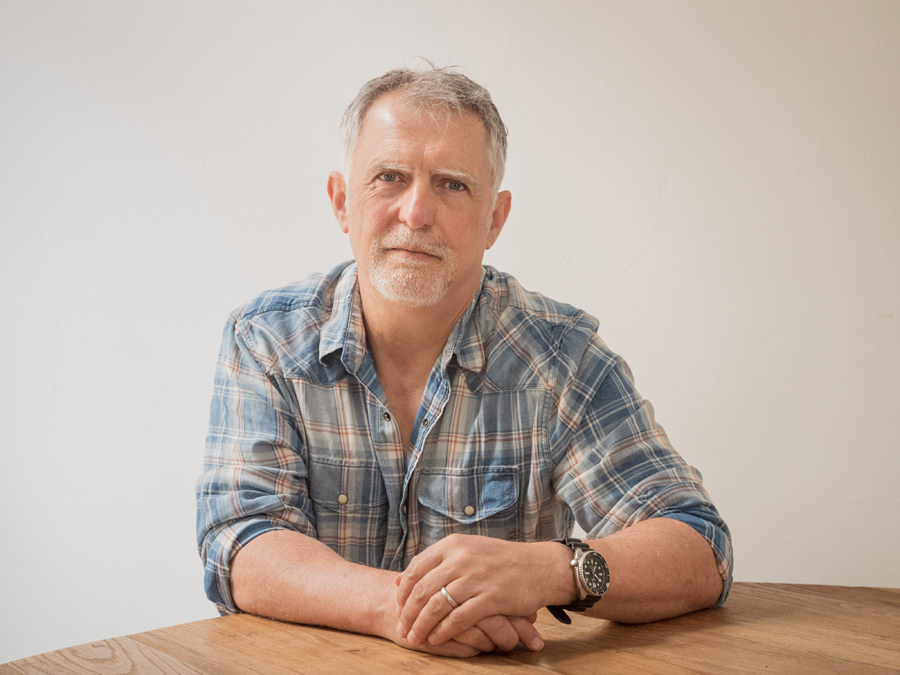
Johnny Golding is a Professor at the Royal College of Art (RCA), School of Arts & Humanities. His career spans roles such as Director of the Centre for Fine Art Research at Birmingham City University, Professor of Philosophy in the Visual Arts & Communication Technologies (2000–2012), and honorary Professorship in Philosophy and Imaging at Dundee School of Art (2009). Born in New York, he holds a PhD from the Universities of Toronto and Cambridge. Education : - PhD in Philosophy from the Universities of Toronto and Cambridge. - Earlier studies in Toronto and New York. Research Interests : Golding’s work explores post-Newtonian analytics, new materialisms, and the erotics of sense as 'radical matter.' His interdisciplinary approach bridges art, philosophy, and 'wild sciences' like AI, robotics, and quantum theory. Key themes include data proliferation's societal impact, emergent systems, and the interplay between art and technology. Recent Articles & Projects : Focus on Data Loam (2020), exploring future knowledge systems through art and science collaborations. Recent works address radical empathy, distributed intelligence, and the ethics of AI. His 2018 opera Entanglement: The Opera and installations like Of The Thick and the Raw exemplify his practice-led philosophy. Grants & Leadership : - Led the Data Loam project (FWF-PEEK funded), involving over 20 artists and scholars. - PI for AiDesign Labs on generative AI at RCA. Labs & Collaborations : - Radical Matter Lab (2017–2018), a pedagogical experiment at RCA. - Collaborations with institutions like the University of Applied Arts Vienna and the British Library.
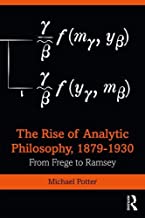
Michael Potter is Professor of Logic at the Faculty of Philosophy , University of Cambridge, and a Life Fellow at Fitzwilliam College. Previously at Balliol College, Oxford (D.Phil. in pure mathematics), he has held research fellowships at St Andrews, Harvard, and Stirling University (AHRC-funded). His work bridges historical and systematic philosophy, focusing on History of analytic philosophy (Frege, Russell, Wittgenstein, Ramsey) Philosophy of mathematics and logic Philosophy of religion Potter's research has produced major works like Set Theory and its Philosophy (OUP 2004) and The Rise of Analytic Philosophy (Routledge 2019), with significant contributions to understanding the Metaphysical underpinn't> of the Tractatus Neo-Fregean logicism Paradoxes in mathematical foundations He has supervised research on topics spanning dialetheism, predicative mathematics, and modal ontological arguments. Scientific awards include the AHRC Senior Research Fellowship (2004-2005). His recent publications analyze Transcendental arguments in Wittgenstein Sortition-based democratic theory Philosophical implications of Ramsey's infinite proofs via peer-reviewed chapters and journal articles.
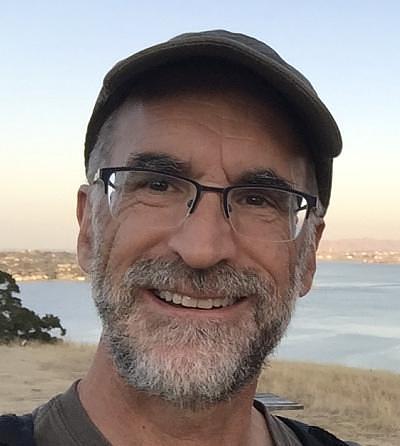
John MacFarlane is a Professor of Philosophy at the University of California, Berkeley , with affiliations to the Group in Logic and the Methodology of Science and co-organizer roles in the Meaning Sciences Club and Townsend Center Working Group . His research spans philosophy of language, philosophical logic, metaphysics, epistemology, philosophy of mathematics, history of logic , and ancient philosophy , particularly Aristotle . He has held visiting positions at institutions like École des Hautes Études en Sciences Sociales (EHESS), Paris . Education : Ph.D. in Philosophy (2000, University of Pittsburgh), M.A. in Classics (1997) and Philosophy (1994), A.B. summa cum laude in Philosophy (1991, Harvard). Research Interests focus on semantic relativism , particularly assessment sensitivity as explored in his book Assessment Sensitivity: Relative Truth and Its Applications (Oxford, 2014). He investigates how epistemic modals and vagueness interact with truth evaluation. His work in philosophical logic includes a textbook Philosophical Logic: A Contemporary Introduction (Routledge, 2021). Secondary interests include ancient philosophy (Aristotle, Plato), formal logic , and fiddlosophy . Article Trends reveal contributions to relativism , epistemic modals , vagueness , and logicism . His recent work (2025) examines Plato’s Protagoras and belief utility , while 2022–2020 articles address semantic indecision and probabilistic knowledge . Earlier works (2008–2000) include foundational studies on Frege, Kant, and Aristotle . Scientific Awards include a 2023 Residential Fellowship at Wissenschaftskolleg, Berlin (declined), 2016–17 Fellow at IEA Paris , and 2015 American Academy of Arts and Sciences membership . He has received multiple Humanities Research Fellowships at Berkeley (2016, 2008, 2003) and Research Enabling Grants (2000–2009). Advising includes supervising 15+ PhD students in areas like logic, epistemology, and philosophy of language . Notable advisees include Richard Lawrence (2017) and Sophie Dandelet (2021). He also guided honors theses at Berkeley, such as Benjamin Logan’s work on epistemic modals (2018). Labs and Teams involve co-organizing the Townsend Center Working Group in History and Philosophy of Logic, Mathematics, and Science and contributing to the Group in Logic and Methodology of Science . His interdisciplinary approach integrates philosophy, logic, and computational tools , including creating Pandoc for document conversion.
Alexander R. Pruss is a tenured Professor in the Department of Philosophy at Baylor University , within the College of Arts and Sciences . He holds a dual PhD in Philosophy (University of Pittsburgh, 2001) and Mathematics (University of British Columbia, 1996), and has held previous academic positions at Georgetown University. His work is deeply interdisciplinary, bridging metaphysics, philosophy of religion, formal epistemology, and ethics. Education: Ph.D. in Philosophy, University of Pittsburgh (2001) Ph.D. in Mathematics, University of British Columbia (1996) B.Sc. (Hon.) in Mathematics and Physics, University of Western Ontario (1991) Pruss’s research interests include metaphysics—particularly the Principle of Sufficient Reason , modality , and infinity —philosophy of religion, divine attributes , cosmological arguments , and sexual ethics . He is known for integrating rigorous formal methods with classical theistic metaphysics. His recent publications explore the intersection of probability theory, paradox, and theology, particularly in infinite domains. He has authored influential books such as The Principle of Sufficient Reason: A Reassessment (2006), Infinity, Causation and Paradox (2018), and One Body: An Essay in Christian Sexual Ethics (2012). The trends in his recent articles show a sustained focus on the philosophical implications of infinity, symmetry, and probability. He frequently investigates paradoxes in probability (e.g., infinite lotteries), challenges to modal realism, and the metaphysical coherence of divine attributes. His work combines analytic rigor with theological depth, often aiming to defend classical theism through logical and mathematical reasoning. Scientific awards and honors: Aquinas Medal, American Catholic Philosophical Association (2025) Wilde Lecturer, Oriel College, University of Oxford (2019) Outstanding Tenured Faculty Research Award, College of Arts and Sciences (2013) National Endowment for the Humanities Summer Stipend (2002) Social Sciences and Humanities Research Council of Canada Fellowship (1997–2000) Pruss has been actively involved in academic service, including serving on the Executive Council of the American Catholic Philosophical Association (2021–2024) and the Society of Christian Philosophers (2011–2013) . He has held editorial roles for journals such as American Philosophical Quarterly and Analysis and Existence . He has delivered numerous invited lectures globally, including at Oxford, Notre Dame, and MIT. There is no mention of formal PhD or Master’s students in the provided text, but he advises through graduate seminars and research supervision. He has not received specific grant mentions beyond fellowships and stipends. He is affiliated with research groups such as the Baylor Institute for Faith and Learning and the Thomistic Institute , and contributes to philosophy of science and theology dialogues. His work continues to shape contemporary debates in analytic philosophy of religion and metaphysics.
Associate Professor James Andrew Phillips is a faculty member in the Department of Philosophy within the School of Humanities and Languages at the University of New South Wales (UNSW). He has been at UNSW since 2006, initially serving as a Vice-Chancellor's postdoctoral fellow, followed by an ARC Australian Research Fellow from 2007-2011, before assuming his current combined research-teaching position. His educational background includes undergraduate studies at the University of Queensland, an MA in Comparative Literature and Critical Theory from Monash University, and a PhD in Philosophy from the University of Tasmania (2002). During his doctoral studies, he spent time as an OeAD scholar in Innsbruck and a DAAD scholar in Potsdam. He has also been a visiting research fellow at the Institute for Advanced Studies in the Humanities at the University of Edinburgh and a resident associate at the National Humanities Center in North Carolina. Phillips' research focuses on aesthetics, phenomenology, film and philosophy, political theory, literary criticism, and British and Irish literature. His current book project explores the philosophy of fiction, drawing on concepts of 'world' in Kant and Heidegger. He has translated two significant philosophical works: Christoph Menke's Tragic Play: Irony and Theater from Sophocles to Beckett (2009) and Alexander García Düttmann's Philosophy of Exaggeration (2007). His recent publications demonstrate a strong focus on the intersection of philosophy, aesthetics, and cinema, with particular attention to phenomenological approaches to film studies and the political dimensions of aesthetic experience. His work bridges continental philosophy with contemporary cultural analysis, creating connections between historical philosophical traditions and modern artistic practices. Philosophy Group Convenor Research Committee Member - School of Humanities and Languages Phillips currently supervises PhD candidate Finnegan Hassey (on Arendt's concept of nationalism, jointly with Jess Whyte) and MA student Sofia Kartavtseva (on Sade and aesthetics). He teaches political philosophy, aesthetics, and the history of German philosophy, with planned courses for 2025 including ARTS3368 'Modern European Philosophy' and ARTS2384 'Political Philosophy'.
Mark Lance is a Professor in the Philosophy Department at Georgetown University and co-founded the Program on Justice and Peace , where he also holds a professorial appointment. His academic career includes a three-year post-doctoral fellowship at Syracuse University after earning his Ph.D. at the University of Pittsburgh and a B.A. from the Ohio State University . Education Ph.D., University of Pittsburgh B.A., Ohio State University Lance's research spans Philosophy of Language , Epistemology , and Metaphysics , with a focus on Normative Pragmatics , Anarchist Theory , and Social Justice Activism . He collaborates with Rebecca Kukla on projects examining intersubjective norms, such as in his work ‘Yo!’ and ‘Lo!’: The Pragmatic Topography of the Space of Reasons (Harvard University Press, 2009), and engages with Wilfrid Sellars ' legacy in works like Placing in a Space of Norms (2008). His recent Google Scholar publications (2024–2020) highlight intersections of Gender Ethics , Mutual Aid , and Pragmatic Normativity . For instance, Telling Gender (2023) bridges linguistic pragmatics and ethical ascription, while Anarchist Responses to a Pandemic (2020) analyzes collective action during crises. The Truth Telling Project further reflects his commitment to anti-racist organizing and education. notable works include: Leave the Gun, Take the Cannoli (2013) on second-person normative calls. The Grammar of Meaning (2002), a foundational text on linguistic normativity. Defending Moral Particularism (2006), challenging theoretical ethical frameworks.
James Conant is the Chester D. Tripp Professor of Humanities, Professor of Philosophy, and Professor in the College at the University of Chicago. He also served as Humboldt Professor of Theoretical Philosophy at Leipzig University (2017–2022). He holds a BA (1982) and PhD (1990) from Harvard University. His academic roles include Interim Chair of the Department of Philosophy at the University of Chicago (2014–2015, 2025–2026), co-director of the Forschungskolleg Analytic German Idealism, and director of the Center for German Philosophy at Chicago. Education: Bachelor of Arts, Harvard University (1982) Doctor of Philosophy, Harvard University (1990) Research Interests: Focuses on Philosophy of Language, Philosophy of Mind, Aesthetics, German Idealism, and the History of Analytic Philosophy. He explores themes such as skepticism, Wittgenstein’s methods, rule-following paradoxes, and the interplay between German Idealism and analytic philosophy. Publications Trends: Conant’s recent work includes monographs on skepticism and film aesthetics, co-authored volumes on Wittgenstein, and edited collections of Hilary Putnam’s papers. His articles often critically engage with figures like Kant, Wittgenstein, Nietzsche, and Frege, emphasizing methodological rigor and historical context. Scientific Awards: Anneliese Meier Research Award (2012) Humboldt Prize (2017) Neubauer Collegium Award Grants and Advising: Co-recipient of Mellon Sawyer Seminar Grants (2006–2008) and Humboldt TransCoop Awards. Advised numerous postdoctoral and doctoral researchers through initiatives like the Leipzig-Chicago collaborative projects. Labs/Teams: Leads the Center for German Philosophy at Chicago and co-directs the Center for Analytic German Idealism in Leipzig. Collaborates internationally on projects bridging analytic and continental philosophy.
Irene McMullin is a Professor at the University of Essex within the School of Philosophical, Historical, and Interdisciplinary Studies, affiliated with the Department of Philosophy. She joined the university in 2013 after postdoctoral work at Bergische Universität Wuppertal and six years teaching at the University of Arkansas. Her academic background includes a PhD from Rice University, an MA from the University of Toronto, and a BA Hons from St. Francis Xavier University. Her research examines questions of personhood, agency, and self-becoming, particularly emphasizing the role of others in these processes. Drawing from both Continental and Analytic traditions, McMullin explores: Existentialism and Phenomenology Virtue ethics and Kantian ethics Moral psychology and social relations Current investigations focus on the phenomenology of ideality and how encounters with 'the good' shape practical agency. Her publications demonstrate sustained engagement with themes of moral deliberation, trust, and rationality across philosophers including Heidegger, Kant, and Løgstrup. Analysis reveals consistent interdisciplinary bridges between ethics, phenomenology, and social theory, with recent work increasingly addressing normative foundations of shared human experience.
Jonathan Cohen is a Professor of Philosophy at the University of California, San Diego (UCSD), and serves as an Associate Dean in the School of Arts and Humanities. Previously, he held a Killam Postdoctoral Fellowship at the University of British Columbia (2000-2001). He earned his Ph.D. in Philosophy from Rutgers University (2000), and holds a M.A. (1995) and B.A. (1993) in Philosophy and Mathematics from the University of Chicago. His research primarily focuses on the philosophy of perception and language, with a special emphasis on their intersections with cognitive science. Key areas include relationalist theories of color properties, multimodal perception, and the semantics/pragmatics of context-sensitive expressions. Recent work explores perceptual interactions across modalities, synesthesia, and the role of extrasemantic expansion in communication. Cohen’s publications span over two decades, with recent trends emphasizing perceptual architecture, phenomenal contrasts, and interdisciplinary approaches to cognitive penetration. His work often bridges analytic philosophy with empirical findings in psychology and neuroscience. While no formal grants or awards are explicitly noted, his extensive bibliography reflects sustained engagement with foundational questions in philosophy of mind and language. No lab affiliations or student advisees are listed in the provided materials.
Professor Peter Godfrey-Smith holds a half-time position in the School of History and Philosophy of Science at the University of Sydney, alongside his role at the CUNY Graduate Center. He earned his undergraduate degree from the University of Sydney and a PhD in Philosophy from UC San Diego. His research spans the philosophy of biology, animal cognition, and consciousness evolution, with notable books like Other Minds and Metazoa . Key awards include the Royal Society of NSW Medal (2017) and the Lakatos Award (2010) for his work Darwinian Populations and Natural Selection . His fieldwork on octopuses has garnered international attention, exploring their intelligence and implications for understanding consciousness. Peter has taught at Stanford, Harvard, and ANU, balancing academic roles with public engagement through media appearances and podcasts. Education: B.A. University of Sydney; PhD in Philosophy, UC San Diego. Research Interests: Evolution of consciousness, animal minds, cephalopod behavior, philosophy of biology, and interdisciplinary studies on cognitive evolution. Awards: Royal Society of NSW Medal (2017), Lakatos Award (2010), multiple fellowships and recognitions in philosophy and biology. Grants and Advising: While no specific grants are listed, his extensive publications reflect sustained research funding. Advises students in history and philosophy of science, though current names are not provided. Labs/Teams: Engages in fieldwork on octopuses, collaborating with marine biologists and philosophers globally. Active in interdisciplinary research groups studying animal cognition.
Professor Katja Vogt is a distinguished faculty member in the Department of Philosophy at Columbia University's Faculty of Arts and Sciences. She serves as Professor of Philosophy, Director of the M.A. Program in Philosophy, and Chair of the Climate Committee. Additionally, she is an Affiliate of the Data Science Institute and has affiliations with Computing Systems for Data-Driven Science, Data, Media and Society, and Health Analytics. Professor Vogt joined Columbia University in 2002 after teaching at Humboldt University Berlin, both in the Philosophy Department and at the Charité Medical School. Professor Vogt specializes in ancient philosophy, ethics, and normative epistemology, with particular expertise in Plato, Aristotle, Stoicism, and Pyrrhonian skepticism. Her research explores fundamental questions that bridge ancient and contemporary philosophical discussions: What are values? What kind of values are knowledge and truth? What does it mean to want one's life to go well? She has developed significant work on the role of knowledge in ethics, generics and generalizations, and is currently finalizing a monograph entitled The Original Stoics . Her approach combines careful historical scholarship with contemporary philosophical analysis, creating dialogues between ancient texts and modern debates in metaethics, epistemology, and philosophy of action. Professor Vogt's scholarly output reveals consistent engagement with ancient philosophical frameworks while addressing contemporary concerns. Her recent work shows a particular focus on Stoic philosophy, with multiple papers examining Stoic logic, physics, and ethics. She also maintains a strong interest in skepticism, particularly Pyrrhonian approaches, and has made significant contributions to understanding how ancient philosophical concepts can inform current debates about generics, value theory, and the relationship between knowledge and virtue. Her collaborative work with Jens Haas on topics like ignorance, love, and hatred demonstrates her interdisciplinary approach that connects ancient philosophy with contemporary philosophical issues. Columbia Distinguished Faculty Award Class of 1932 Fellow in Classical Philosophy at Princeton University Fellowships from the Templeton Foundation, Maimonides Centre in Hamburg, Center for Advanced Studies in Munich, DFG (German Research Association), and Columbia University-Paris 1 Alliance Program Professor Vogt is actively involved in mentoring students and developing innovative educational approaches. She serves as academic sponsor for "Logic Made Accessible," a project mentored with Columbia College student Jonathan Tanaka that has reached students in over 30 countries. The project makes ancient logic freely accessible to learners of all ages, backgrounds, and interests. She has also served on numerous university committees including the Provost's Faculty Committee on Educational Innovation, Policy and Planning Committee, Committee on Instruction, and as Acting Director of the Center for the Ancient Mediterranean. Her grant work includes support from major foundations that have enabled her to pursue research at the intersection of ancient philosophy and contemporary epistemology. Professor Vogt collaborates with photographer and artist Jens Haas on the "On the Road" project, which combines artistic photography with philosophical reflection. She is also involved in "Movies and Morals," a collaboration with H8URS that provides philosophical commentary on contemporary film and television. These projects demonstrate her commitment to making philosophical inquiry accessible beyond traditional academic settings.
Samuel Newlands is the Carl E. Koch Professor of Philosophy at the University of Notre Dame, affiliated with the College of Arts and Letters and the Department of Philosophy. He earned his PhD from Yale University and has been at Notre Dame since 2006. His research focuses on early modern philosophy, metaphysics, and philosophy of religion, with a particular emphasis on Spinoza, Leibniz, and theodicy. He is the author of Reconceiving Spinoza (Oxford University Press, 2018) and co-editor of multiple volumes. Newlands has led major research initiatives totaling over $12.5 million in grants, including projects on hope and optimism, transformative experiences, and the metaphysics of evil. He has held prestigious fellowships from the National Endowment for the Humanities and serves as Director of the Center for Philosophy of Religion. His teaching spans early modern metaphysics, Spinozism, and contemporary analytic philosophy. Notable publications include groundbreaking analyses of Spinozistic monism and Leibnizian metaphysics, such as 'Baumgarten’s Steps Towards Spinozism' (2022) and 'From Theism to Idealism to Monism' (2021). He has advised numerous PhD students and contributed to interdisciplinary projects bridging philosophy with psychology and theology. Newlands' work emphasizes conceptual relations in early modern systems and their relevance to contemporary metaphysics. His awards include the NEH Fellowship (2021-22) for his book project on Spinozistic readings of early modern thought and recognition for his 2014 article on Leibniz's metaphysics of evil. Beyond academia, he enjoys retro gaming, tennis, and family life in South Bend.
Alex Moran is an Assistant Professor at Bilkent University starting Fall 2025. He holds a PhD from the University of Cambridge (2019), a BPhil from Oxford (2014), and a BA from University College London (2012). His research focuses on metaphysics, philosophy of mind, meta-ethics, and the history of philosophy. He has held fellowships including the Leverhulme Early Career Fellowship (Oxford, 2019-2022), IRC Research Fellowship (Trinity College Dublin, 2022-2023), and SNSF Research Fellowship (Université de Fribourg, 2023-2025). He is also a Research Associate at Stockholm University for his project on contingent grounding and the mind-body problem. Education: PhD, University of Cambridge (2019) BPhil, University of Oxford (2014) BA, University College London (2012) Research interests include metaphysical grounding, perceptual experience (naïve realism), physicalism, and early analytic philosophy. His current projects explore contingent grounding physicalism and the disclosive nature of sensory experience, with a book under contract with Oxford University Press. He also writes popular philosophy, including a trade book In Praise of Mischief (Reaktion Press). Awards include the Leverhulme Early Career Fellowship and recognition in the Philosophy of Memory Essay Prize (runner-up, 2022). His work appears in journals like Australasian Journal of Philosophy , Philosophical Studies , and Inquiry . Beyond academia, he publishes poetry and is working on a novel, while engaging in music and boxing.
Christian Martin is a Professor of Philosophy including the History of Philosophy and Managing Director of the Institute of Philosophy at the University of Stuttgart. He holds a PhD (2010) and habilitation (2019) from LMU Munich. His research spans systematic philosophy (metaphysics, philosophy of language, philosophy of nature, ecological foundations, aesthetics) and historical philosophy (classical German, early analytic, and 20th-century continental traditions). Key focuses include Hegel's philosophy of nature, Kantian transcendental aesthetics, and Wittgenstein's language-games. He leads the 'Nature and Mind' research area addressing ecological crisis through philosophical frameworks. Recent roles include visiting professorships at the University of Chicago, Paris 1 Panthéon-Sorbonne, and Leipzig. He has organized conferences on classical German philosophy and ecological philosophy. His work bridges analytical and continental traditions, emphasizing systematic integration of philosophical problems. Education: PhD in Philosophy (2010), LMU Munich Habilitation (2019), LMU Munich M.A. in Philosophy (2006), LMU Munich Research Interests: Systematic work emphasizes metaphysical foundations of ecology, logic-nature relationships, and forms of knowledge (e.g., art, religion). Historical studies focus on Kant, Hegel, Schelling, Frege, Wittgenstein, and 20th-century continental thinkers. Current projects explore nature's philosophical conceptualization in the ecological crisis context. Professional Activities: Organized conferences like 'Conceptions of Nature in Classical German Philosophy' (2023) and 'Epistemology and Philosophy of Mind after Kant and Hegel' (2023) Editorial roles for journals and series such as Cambridge Elements: The Philosophy of Hegel Visiting fellowships at institutions including the University of Chicago and the FAGI Leipzig Research Area 'Nature and Mind': Develops critical frameworks for human-nature relationships in ecological crises, integrating philosophical analysis with contemporary environmental challenges.
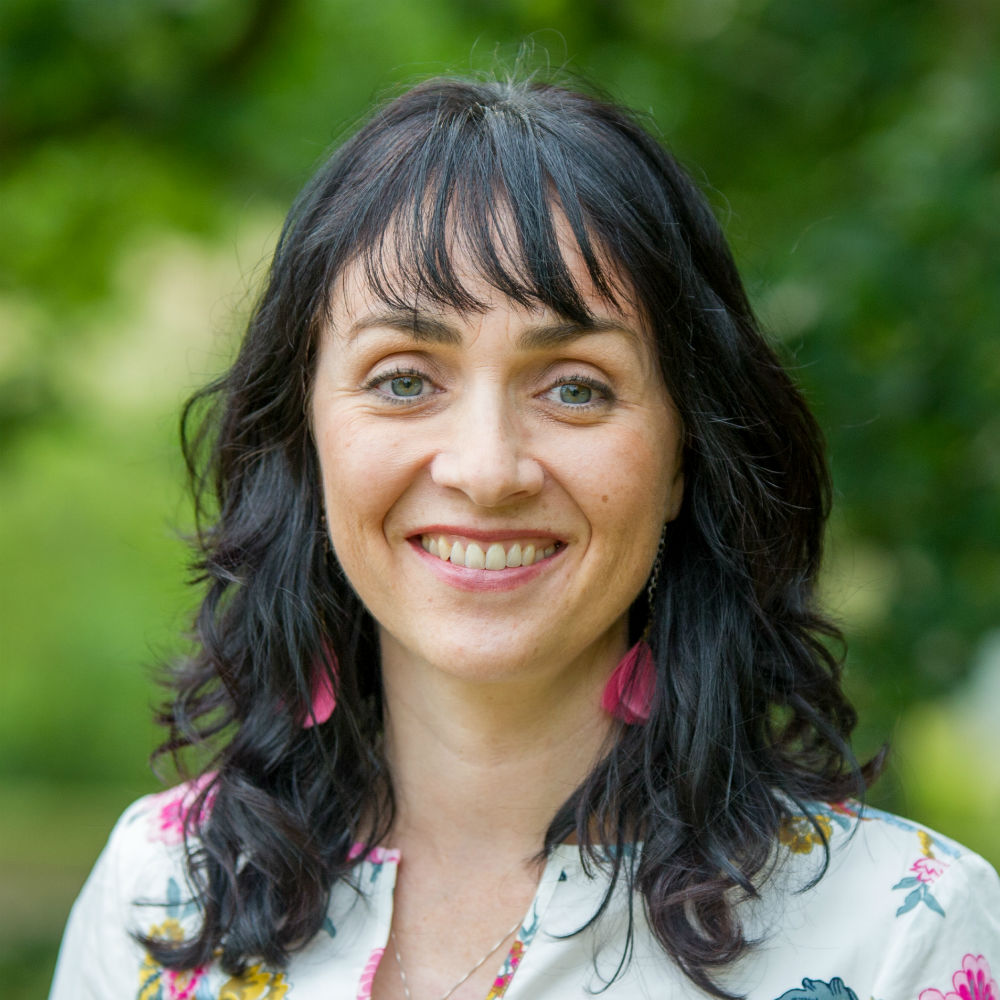
Lisa Heldke is a Professor in the Department of Philosophy at Gustavus Adolphus College and an affiliated faculty member in Gender, Women and Sexuality Studies. She has been a longstanding contributor to the academic community, teaching courses such as Modern Philosophy, American Philosophy, Feminist Philosophy, Critical Race Theory, and specialized seminars on food and eating. Her interdisciplinary work bridges philosophy with social justice, education, and culinary ethics. B.A. in Music and Philosophy from Gustavus Adolphus College M.A. and Ph.D. in Philosophy from Northwestern University Her research centers on American Philosophy , Feminist Philosophy , Critical Race Theory , and most notably, the Philosophy of Food . She critically examines food adventuring, colonialist attitudes in cuisine, and the ethical dimensions of eating. Her work explores how food shapes identity, community, and moral responsibility. Her recent and forthcoming publications reveal a deepening inquiry into biological interdependence—particularly parasitism and mutualism—suggesting a novel ontological framework rooted in eating relationships. This innovative direction reflects her ability to connect everyday practices with profound philosophical questions. Lisa Heldke’s scholarly contributions include influential books such as Exotic Appetites: Ruminations of a Food Adventurer and Philosophers at Table: On Food and Being Human , as well as co-editing Oppression, Privilege and Resistance . She is also on the editorial board of The Encyclopedia of Food and Agriculture Ethics (Springer). While specific details about student advising are not listed, her long-standing teaching career and mentorship through seminars suggest active engagement with students. She has no listed scientific awards in the provided texts, but her sustained publication record and editorial roles indicate significant recognition in her field. She is deeply involved in experiential learning, combining her philosophical inquiries with hands-on activities like baking bread in a backyard mud oven and studying sustainable agriculture. Her current research promises to expand the boundaries of philosophical thought by integrating ecological and biological realities into metaphysical and ethical frameworks.