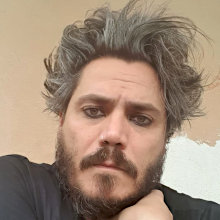
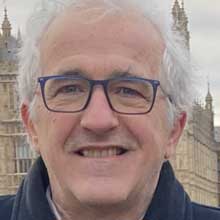
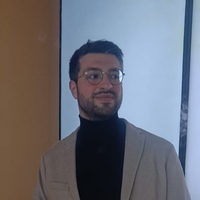
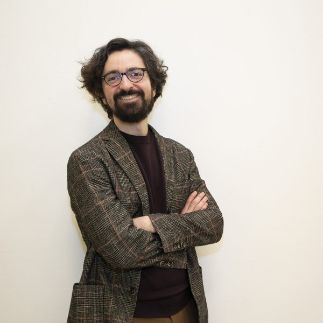
Claudio Calosi is an Assistant Professor of Philosophy at Ca' Foscari University of Venice and holds a Visiting Professor position at USI, Lugano, MAP. His career includes prior appointments as Assistant Professor at the University of Geneva and visiting roles at Oxford, Leeds, Lisbon, UNAM (Mexico City), Trento, and Perugia. Department : Philosophy and Cultural Heritage Research Focus : Analytic Metaphysics, Philosophical Logic, Philosophy of Physics Contact : claudio.calosi@unive.it Calosi’s work bridges metaphysics and quantum physics , with a focus on topics like quantum monism , mereology , and spacetime ontology . His recent publications explore the logic and metaphysics of location , quantum indeterminacy , and relational quantum mechanics , reflecting his interest in reconciling physical theories with metaphysical frameworks. He co-founded AMAMI (Analytical Metaphysics Association of the Italian-Speaking World) and contributes to TiPS (Trust in Philosophy and Science) center at Ca' Foscari as a research coordinator for Formal Methods in Philosophy and Science . His collaborative projects include a forthcoming monograph on location with Fabrice Correia (Oxford University Press).
Alice Morelli is a Research Fellow at the Department of Philosophy and Cultural Heritage , Ca' Foscari University of Venice. Her work bridges 20th-century analytic philosophy with contemporary debates on dispositions, habits, and methodological frameworks. Research Focus: Wittgenstein studies, habit theory, naturalism, intercultural understanding, and philosophical methodology. Publications: Authored monographs on dispositions, with recent articles in journals like European Journal of Analytic Philosophy and JOLMA , spanning topics from Frank Ramsey's philosophy to Jamesian habit theory. Editorial Contributions: Co-edited volumes including Philosophical Counseling Today: Training and Research (2022). Key Themes: Critical analysis of reductive therapeutism, semantic theory, and the interplay between ethics and aesthetics.
Francesca Poggi is a Full Professor of Philosophy of Law at the Cesare Beccaria Department of Legal Sciences, University of Milan. She serves as the university's gender equality liaison and oversees the Gender Equality and Violence Against Women project at Human Hall. Her academic work bridges legal theory with moral philosophy, focusing on analytic philosophy and general legal theory. She is a member of the scientific committee for Italian legal journals and actively contributes to interdisciplinary initiatives like the Inter-University Center ‘Cultures of Gender’. Her research spans gender equality, legal interpretation methodologies, bioethics, and social sustainability. Notable projects include analyzing gender-based violence frameworks, exploring constitutional legal systems' communicative theories, and addressing linguistic inclusivity in policy-making. She critiques moral biases in legal reasoning and examines the intersection of law with human rights, migration, and multiculturalism. Her scholarship engages with contemporary debates on autonomy in healthcare decisions, xenotransplantation ethics, and the application of Robert Alexy’s correctness claims in legal contexts. She also participates in EU-funded initiatives like the MUSA project, aiming to build innovation ecosystems through territorial R&D leadership.
Vera Tripodi is an Associate Professor at the Department of Electronics and Telecommunications (DET) at Politecnico di Torino. Her academic career spans multiple institutions including the University of Milan 'La Statale,' University of Turin, University of Barcelona, University of Oslo, and Columbia University. She serves on the Single Guarantee Committee and is actively involved in gender equality initiatives. Dr. Tripodi earned her PhD in Logic and Epistemology from Sapienza University of Rome. Her academic journey includes postdoctoral research positions at prestigious international institutions and a research position at the University of Milan from July 2021 to March 2022. Her research focuses on the intersection of philosophy, technology, and gender. She specializes in bioethics, ethics of technology, feminist philosophy and ethics, and social ontology. Her work addresses critical contemporary issues including climate change ethics, reproductive technologies, AI ethics, and gender equality in philosophy and academia. She has made significant contributions to understanding the ethical dimensions of emerging technologies and their social implications. Dr. Tripodi's publication record demonstrates a consistent focus on ethical frameworks for technological development, gender issues in philosophy and society, and the philosophical implications of medical and technological innovations. Her work bridges theoretical philosophy with practical ethical concerns in rapidly evolving technological landscapes. Vice President of SWIP Italia (Society for Women in Philosophy) for two terms (2018-2021, 2021-2024) Member of the Bioethics Committee since 2019 Member of SIFA (Italian Society of Analytical Philosophy) since 2008 Associate Editor of AESTHETICS MAGAZINE since 2022 Member of the APHEX editorial board since 2010 Dr. Tripodi advises PhD students in philosophy programs at the University of Pavia and University of Eastern Piedmont. She teaches courses on Research Ethics in Dual-Use Technology, Gender and Diversity in Research, Ethics of Technology, and Bio- and Nanotechnologies in Medicine across various engineering programs at Politecnico di Torino. She also serves on course committees for Biomedical Engineering and Electronic, Telecommunications and Physics Engineering programs. She leads the NOW research project (2023-2025) titled 'Understanding Natural History: Nature, Evolution and Human Beings. A New Philosophical Framework' funded through the National Research PRIN program.
Giovanni Matteucci is a Full Professor of Aesthetics at the University of Bologna since 2014. His research focuses on contemporary aesthetics, German and Anglo-American philosophical traditions, and the interplay between perception, expression, and form. He has held leadership roles including Head of the Department of Philosophy and Communication Studies (2021–24) and President of the Italian Society of Aesthetics (2018–24). Education: 1987: M.A. in Philosophy, University of Bologna 1993: PhD in Philosophy (Aesthetics), University of Bologna Research Interests: Matteucci explores aesthetics through interdisciplinary lenses, including philosophical anthropology, cognitive sciences, and everyday aesthetics. Key themes include the extended mind model, aesthetic practices, and the role of fashion in contemporary philosophy. His work bridges historical figures (Dilthey, Cassirer, Adorno) with contemporary pragmatism and analytic philosophy. Awards: 2020: Premio Nazionale Frascati Filosofia 'Elio Matassi' 2008: Excellence Teaching Award, University of California Grants & Collaborations: He has directed international projects (e.g., '1909-2009. Un secolo di moda') and serves on editorial boards of journals like Aisthesis and Studi di estetica . He coordinates the 'almæsthetics' research center and oversees Erasmus exchanges with institutions in Lyon, Potsdam, and Paris. Labs/Teams: Leads the almæsthetics center, focusing on contemporary aesthetic studies and international collaborations.
Maria Antonia Rancadore is an Associate Professor at the University of Palermo , specializing in Philosophical Studies with a focus on psychology, dialectics, and 20th-century philosophy. She holds office hours on Mondays at Viale delle Scienze, Building 15, 6th floor, room P6 015, and can be contacted at mariaantonia.rancadore@unipa.it (phone: +3909123897010). Research Focus : Her work bridges philosophy and psychology, analyzing figures like Sartre, Freud, and Marx through dialectical frameworks and historical materialism. Publications : Recent contributions explore Hegelian dialectics, phenomenology, and interdisciplinary educational proposals in Mediterranean philosophy. Academic Engagement : Active in teaching, research, and editorial projects, with no listed scientific awards or supervised theses in available texts.
Francesca Boccuni is a Professor at the Faculty of Philosophy, Università Vita Salute San Raffaele, with additional contractual teaching roles at Università della Svizzera Italiana (USI). Her research focuses on the Foundations of Mathematics , Classical and Non-Classical Logics , and the Metaphysics of Abstract Objects , alongside work in Philosophy of Language and Ontology . Current affiliations: USI (Professore a Contratto), UNISR (Università Vita Salute San Raffaele) Major grants: PRIN 2023 (Italian Ministry of Research), British Academy Postdoctoral Fellowship (2008) Research Trends : Her publications (2020–2024) emphasize plural logic , neo-logicism , and Fregean foundations , with recent work extending to qualitative social ontology and eidetic phenomenology . Scientific Awards : British Academy Postdoctoral Fellowship (2008), PRIN Grant (2023) Editorial roles: Argumenta, Bulletin of Symbolic Logic, Logique et Analyse Academic Leadership : Co-founder of the Italian Network for Philosophy of Mathematics (FilMat, since 2012); served on program committees for international philosophy of mathematics conferences.
Wolfgang Andreas Huemer is an Associate Professor at the Department of Humanistic, Social, and Cultural Industries, University of Parma. His academic career spans institutions in Canada, Austria, Germany, and Italy, with research expertise in philosophy of mind, language, literature, and aesthetics. He has held visiting positions at universities across Europe and North America and received prestigious fellowships from DAAD, DFG, and Austrian Ministry of Research. Education: PhD in Philosophy (University of Toronto, 2000) Mag.phil in Philosophy and German Literature (University of Salzburg, 1994) His research bridges analytic and continental traditions, focusing on perception, fiction-reality distinctions, and the philosophy of Ludwig Wittgenstein/Wilfrid Sellars. He has organized major conferences on moral emotions, epistemic seeing, and social practices. Publications include works on imagination, philosophical methodology, and cross-cultural dialogues in aesthetics. Recent articles explore thought experiments, fictional truth, and the cognitive value of art. He has refereed for top journals like Erkenntnis and Philosophical Quarterly , and co-edits the Phenomenology and Mind book series. Funding includes DAAD, DFG, and European Research Council support. Awards: DAAD Fellow (2006) University of Toronto Doctoral Fellowship (1997–1999) Austrian Ministry of Research Fellowships (1994–1997) Contact: Via D'Azeglio 85/a, Parma (Italy); wolfgang.huemer@unipr.it .
Gian Luigi Paltrinieri is a Full Professor in Theoretical Philosophy at Ca' Foscari University of Venice, affiliated with the Department of Philosophy and Cultural Heritage. He serves as Director of the 12th edition of the Master's Degree in Philosophical Counseling and teaches Theoretical Philosophy and Philosophical Hermeneutics at both undergraduate and graduate levels. Research focuses on Kantian philosophy and modernity (Hobbes, Leibniz, Rousseau, Hume) Specializes in hermeneutic-philosophical fields (Heidegger, Gadamer, Ricoeur, Nietzsche) Key publications examine Heidegger's Epoché , Nietzsche's interpretations of Dostoevsky, and Kantian ethical frameworks As a member of the Italian Society of Kantian Studies and the Italian Society of Theoretical Philosophy, he contributes to editorial boards of journals like Filosofia e Teologia . His recent works include curated volumes and critical analyses of 20th-century Italian philosophical-religious thought.
Antonio Branca is a Contract Lecturer in the Department of Cultural Heritage Sciences at the University of Salerno. He holds a PhD in Aesthetics and Metaphysics from the University Vita-Salute San Raffaele in Milan, Italy, with a dissertation on Kant's logical institution and mathematical construction of experience. His academic background includes a Bachelor's degree focusing on the problem of object determination in Kant's "Critique of Pure Reason" and a Master's degree (specific details not provided in the source materials). Branca maintains an active academic presence with regular office hours for students on Wednesdays (2:20pm-4:20pm) and Thursdays (10:30am-12:30pm) by appointment. Branca's research centers on Metaphysics, Aesthetics, Transcendental Philosophy, and German Idealism, with particular emphasis on Kant's philosophy and its relationship to Hegel, Schelling, and Lyotard. His work explores the connections between judgment, subjectivity, and empirical knowledge in Kant's critical system. He has made significant contributions to understanding Kant's conception of transcendental idealism, especially in the Opus Postumum, where he argues against interpretations that position Kant's late philosophy as turning toward absolute idealism. His publication record demonstrates consistent scholarly productivity, with recent works examining Kant's Physical Geography, the relationship between the transcendental and empirical I, and Lyotard's interpretation of Kant's aesthetic theory. His research shows a clear trajectory from examining Kant's early works through to his later philosophy and its reception in German Idealism. Significant publications include "Remarks on Kant's Geographies of the Empirical" (2024) "Kant and the Formalism of Reason" (2024) "Scrivere io. Note su autobiografismo e situazione del soggetto in Kant" (2023) Branca is also an active translator of philosophical works, having translated Kant's Physical Geography and Lyotard's "Lezioni sull'Analitica del sublime." His academic engagement extends to international conferences, including the VIII International Congress of the Spanish Society for Hegel's Studies in Malaga (April 2025), where he presented on transcendental idealism in Kant, Fichte, and Schelling.
Andrea Bianchi is an Associate Professor at the Department of Humanistic, Social and Cultural Enterprise Disciplines, University of Parma (M-FIL/05). With a PhD in Philosophy of Language from Università del Piemonte Orientale (2004) and MA in Philosophy from Università Ca' Foscari di Venezia (1999), he has held visiting positions at UCLA (2008, 2005) and Uppsala University (2002). His research focuses on Philosophy of Language , Semantics , and Cognitive Science , particularly reference theories, logically perfect languages, and linguistic theory intersections. Key contributions include works on semantic uniformity of kind terms direct referentialism language-reality connections mental representation systems As a Consulting Editor for the Journal of the American Philosophical Association and referee for 15+ journals, he actively shapes academic discourse. Notable conference participations (2001-2018) span topics like Frege puzzles, artifactual terms, and Kaplanian semantics.
Pierluigi Graziani is an Associate Professor of Logic and Philosophy of Science at the University of Urbino Carlo Bo , affiliated with the Department of Pure and Applied Sciences (DiSPeA) . His academic career spans over two decades, during which he has held postdoctoral positions at the University of Urbino and the University of Chieti-Pescara, and has been actively involved in teaching, research, and academic service. Education: Master Degree in Philosophy, University of Urbino (Italy), 2001 Ph.D. in Logic and Epistemology, University of Rome “La Sapienza”, 2007 Research Interests: Graziani's research is deeply rooted in the intersections of logic, philosophy of science, and computer science . He has made significant contributions to the foundations of geometry , exploring the logical and philosophical underpinnings of geometric systems. His work in logic and computer science includes formal methods, modal logics, and their applications in software engineering and artificial intelligence. Additionally, he delves into the history and philosophy of logic and mathematics , examining the evolution of logical and mathematical thought from historical and epistemological perspectives. His interests also extend to social robotics , where he investigates the ethical and logical aspects of human-robot interactions. Scientific Contributions and Trends: Graziani's publications reflect a consistent engagement with formal logic and its applications . Recent works include studies on probabilistic modal logics , ignorance and belief reasoning , and geometric problem taxonomies . His research often bridges theoretical developments with practical applications, such as software engineering and formal verification. The trend in his articles indicates a focus on epistemic logics , formal methods in computer science , and historical-philosophical analyses of scientific concepts . Scientific Awards and Honors: While specific awards are not listed, Graziani has received National Scientific Qualifications for Associate Professorship in Italy , attesting to his recognized expertise and contributions to his field. Advising and Research Supervision: Graziani has supervised a substantial number of bachelor's and master's theses , guiding students in topics ranging from intuitionistic logic and Church-Turing thesis to artificial intelligence ethics and virtual reality philosophy . His mentorship reflects his broad expertise and commitment to nurturing the next generation of scholars. Labs, Teams, and Future Works: He serves as the Scientific Coordinator for several departmental research projects, including studies on formal models in social phenomena , epistemological analyses of ignorance , and history of science . His ongoing projects suggest a continued focus on interdisciplinary approaches combining logic, philosophy, and computer science to address contemporary scientific and societal challenges.
Elisabetta Sacchi is an Associate Professor in Philosophy of Language at the Faculty of Philosophy, Vita-Salute San Raffaele University, Milan. She holds a permanent Research Fellow position since 2008 and teaches Theories of Communication in the undergraduate program. Her academic journey includes teaching roles at the University of Bologna, University of Padua (Philosophy of Language and Philosophy of Mind), and the University of Modena and Reggio Emilia. PhD in Philosophy of Language (University of Padua) Degree in Philosophy, cum laude (University of Bologna) Visiting student at Oxford University Her research focuses on Philosophy of Language and Philosophy of Mind , with specific interests in intentionality, singular reference, content individuation, ontology of thought, and cognitive externalism. She has published extensively on these topics, including two books and numerous papers in international journals. Her recent work explores the intersection of ontology and the metaphysics of mind. Key trends in her publications include logical foundations of singular reference, ontology of propositions, and the graspability of Fregean concepts. She has contributed to edited volumes and conference proceedings, often collaborating with scholars like Massimiliano Carrara and Annalisa Coliva. Board Member, Italian Society for Analytic Philosophy (SIFA) (2004-2008) Her career spans interdisciplinary collaborations, including work on the ontological commitment of natural and formal languages, and translations of seminal works by Sellars and Putnam into Italian.
Ariano Raffaele is a tenured Assistant Professor (RTDb) in History of Philosophy at Vita-Salute San Raffaele University's Faculty of Philosophy. He teaches courses on contemporary philosophy, art sociology, and philosophical themes. His research focuses on 19th-20th century philosophy, film aesthetics, and intellectual history, engaging with thinkers like Nietzsche, Foucault, and Cavell. Education: PhD in Philosophy from Vita-Salute San Raffaele (2015), MA in Film Aesthetics from Oxford (2017), and degrees from the same university. His doctoral thesis explored Lionel Trilling's moral imagination, advised by Andrea Tagliapietra. Research interests include moral philosophy, trauma studies, and philosophical aesthetics. He co-leads the PRIN 2022 project on heterodox analytic philosophy traditions with Rome and Turin universities. His work bridges continental and analytic traditions through film and literature analysis. Teaching responsibilities include courses on contemporary thought, art sociology, and philosophical competencies in organizations. His publications span philosophy journals and edited volumes, addressing topics like Cavell's ethics, Wittgensteinian cinema, and Foucault-Austin discourse analysis. He serves on doctoral committees for Philosophy programs and organizes public engagement events like summer schools and art exhibitions. Current research emphasizes reenactment in documentary film and Cavellian moral philosophy.
Gaetano Pecora is a Full Professor at the University of Sannio's Department of Law, Economics, Management and Quantitative Methods (DEMM). He holds the disciplinary sector of History of Political Doctrines (SPS/02) and has been active in academic roles since at least 1988. Research Focus : Liberalism, Socialism, Secularism, Democratic Theory, and Ethical Foundations. Key Contributions : 2024 book on Bertrand Russell analyzing tensions between Liberalism and Socialism; 2017 monograph on Carlo Rosselli bridging socialist and liberal traditions. Notable Themes : Anti-authoritarianism, ideological conflicts, and critical re-examinations of foundational political concepts. Recent Publications explore the intersection of skepticism and absolutism in political thought, with specific attention to figures like Russell and Kelsen. His work often challenges simplistic categorizations of political ideologies. Contact : pecora@unisannio.it | Phone: 0824305248