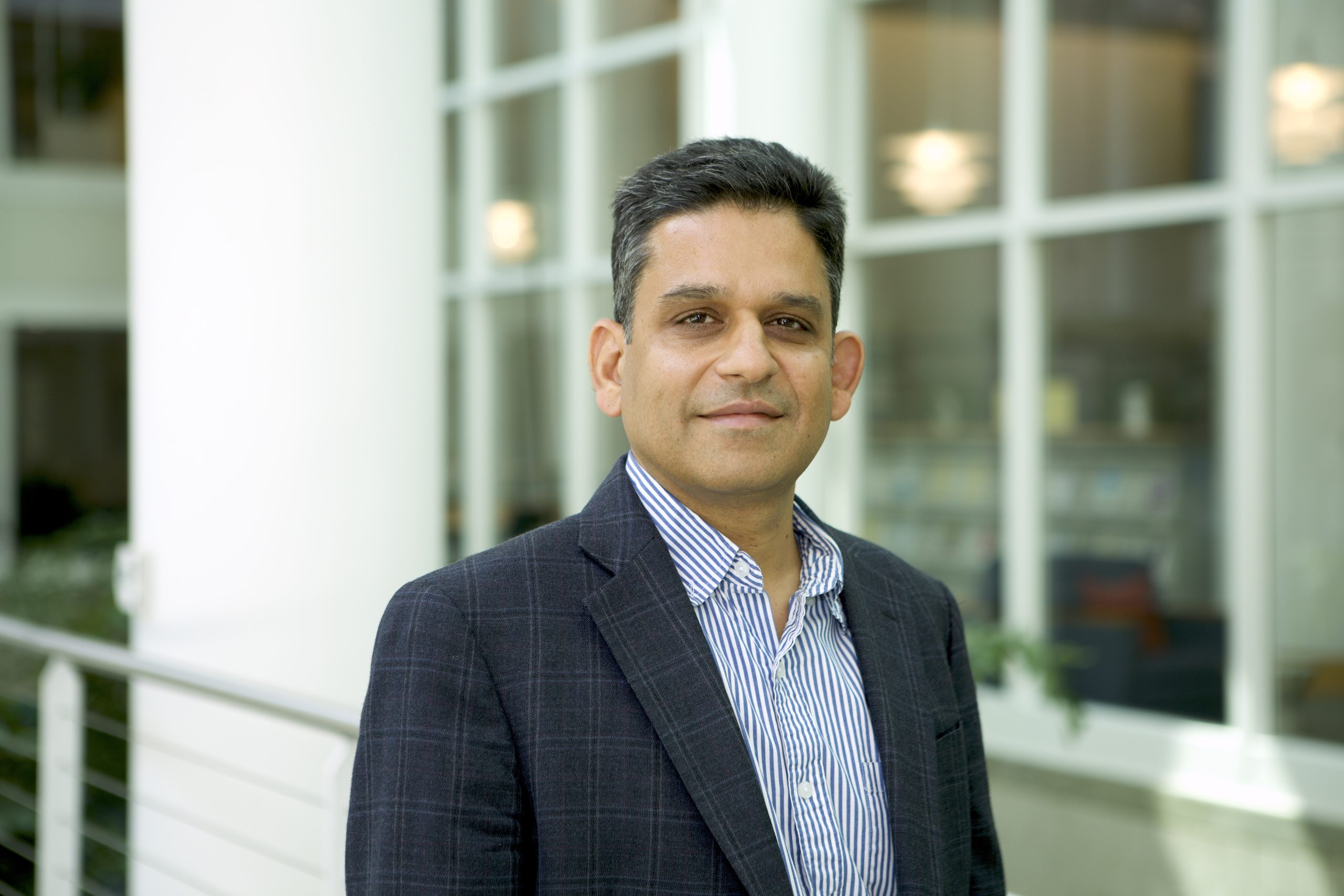
Juan Yao is a Senior Lecturer at the Finance Discipline, Business School, The University of Sydney. Her research focuses on empirical asset pricing , funds management , foreign exchange markets , and business forecasting . She has contributed to national research projects such as "Strategies and Approaches to Teaching and Learning Cross Cultures" (2007-2009) and is affiliated with the Sydney Environment Institute, China Study Centre, and Australia-China Business Network. Research Interests: Juan’s work explores financial market efficiency, investor behavior, and cross-cultural economic dynamics. Her publications address hedge fund performance, mutual fund strategies, and behavioral anomalies in both Australian and Chinese markets. Publications: Recent articles analyze price bubbles, sentiment analysis, and institutional trading impacts, spanning journals like Journal of Banking & Finance and Pacific-Basin Finance Journal . Grants: She served as Chief Investigator for a national teaching and learning grant (2007-2009) and a 2014 CIPR grant on asset-price bubbles in Australia.
Allaudeen Hameed is the Tang Peng Yeu Professor in Finance at the National University of Singapore (NUS) Business School , where he has been a Professor since 2006. He also holds editorial roles at several leading finance journals and has previously held visiting positions at the Chinese University of Hong Kong, University of North Carolina at Chapel Hill, and University of Texas at Austin. Education: Ph.D. in Finance, University of North Carolina at Chapel Hill Bachelor of Business Administration (Honours), Second Class Upper Division, National University of Singapore Research Interests: His research spans a wide range of topics in finance, including return-based trading strategies , stock return co-movement , liquidity , the role of financial analysts , and international financial markets . These interests are deeply rooted in empirical asset pricing, market microstructure, and behavioral finance. His work often explores how market frictions, investor behavior, and institutional features affect asset prices and trading strategies, with a strong focus on cross-country and emerging market contexts. Scientific Awards & Honors: Asian Finance Conference Best Paper Award – 2024 Pacific Basin Finance Journal Best Paper Award – 2024 UM Distinguished Visiting Scholar, University of Macau – 2024 Best Paper of PERC Award – 2023 Tun Ismail Mohamed Ali Distinguished Chair, Universiti Kebangsaan Malaysia – 2022–2024 Teaching Excellence Team Award, NUS Business School – 2020 Best Paper Awards, FMA – 2016 & 2018 Outstanding Researcher Award, NUS Business School – 2015 & 2003 University of North Carolina Kenan-Flagler Alumni Merit Award – 2011 Professional Service: He serves as Editor of the International Review of Finance and Associate Editor of the Journal of Financial and Quantitative Analysis and Pacific-Basin Finance Journal . He is also a Senior Fellow at the Asian Bureau of Financial and Economic Research (ABFER) and a former Council Member of the Society for Financial Studies. Leadership Roles: He is currently Chair of the Faculty Promotion & Tenure Committee (FPTC) and Chair of the Faculty Promotion in Educator Track Committee (FPEC), both from 2025–2026.
Rong Pan is a Professor at the School of Computing and Augmented Intelligence, Arizona State University (ASU). He holds a Ph.D. in Industrial Engineering from Pennsylvania State University (2002), an M.S. from Florida A&M University (1999), and a B.S. in Materials Science from Shanghai Jiao Tong University (1995). His research focuses on quality and reliability engineering, design of experiments, time series analysis, and statistical learning theory. Key projects involve NSF-funded research on reliability prediction, accelerated life testing, and degradation modeling. He serves as an Associate Editor for the Journal of Quality Technology and has authored over 80 publications. Courses taught include Reliability Engineering, Design of Experiments, and Statistics for Data Analysts. His academic service includes roles as a referee for IEEE Transactions and IIE journals. Research interests emphasize statistical methods for reliability improvement, with recent work on Bayesian inference models, optimal experimental design, and machine learning applications in industrial systems. Grants include collaborations with the NSF, Arizona Department of Transportation, and Science Foundation Arizona. His work bridges theoretical advancements and practical applications in manufacturing, energy systems, and semiconductor reliability. Education: Ph.D. (2002), M.S. (1999), B.S. (1995) Key Research Areas: Reliability Engineering, Bayesian Methods, Time Series, DOE Active Grants: NSF CMMI, SUNY IT Visiting Scholar Program Teaching: IEE 573 Reliability Engineering, DSE 501 Statistics Service: Journal of Quality Technology (Associate Editor), IEEE Transactions (Referee)
Peter Kondor is an Assistant Professor affiliated with the London School of Economics & Political Science (LSE) and Central European University (CEU). His research focuses on finance, asset pricing, liquidity risk, market microstructure, and arbitrage dynamics. Research Interests: Asset pricing with heterogeneous agents Liquidity risk and intermediary capital Over-the-counter market structures Behavioral finance and sentiment analysis Global financial cycles and investment waves Information diffusion and market stability Key Publications Trends: 2011-2025: Explores causal inference in asset pricing, hedge fund impacts on idiosyncratic risk, and liquidity risk dynamics. 2018: Investigates arbitrage capital and liquidity risk in global markets. 2020-2025: Analyzes rational sentiments, narrative momentum, and aggregate earnings.
Benjamin F. Hobbs serves as the Theodore M. and Kay W. Schad Professor of Environmental Management at Johns Hopkins University, holding a primary appointment in the Department of Environmental Health and Engineering and a joint appointment in the Department of Applied Mathematics and Statistics. He is co-director of the USEPA Yale-JHU SEARCH Center and director of the NSF-funded Electric Power Innovation for a Carbon-free Society (EPICS) Center, focusing on interdisciplinary research at the intersection of energy systems, environmental management, and public health. Hobbs' educational background includes a BS from South Dakota State University (1976), an MS in Resources Management and Policy from SUNY-Syracuse (1978), and a PhD in Environmental Systems Engineering from Cornell University (1983). Prior to joining Johns Hopkins in 1995, he worked at Brookhaven and Oak Ridge National Laboratories and served as a professor at Case Western Reserve University, with additional visiting appointments at institutions including Cambridge University. His research integrates systems analysis, economics, and optimization to address critical challenges in electric utility planning, renewable energy integration, and environmental resource management. Key focus areas include solar forecasting using AI, green infrastructure for urban water management, health impacts of energy transitions, and grid reliability under high renewable penetration. His work emphasizes practical applications through engineering-economic modeling with rich technological and environmental detail. Analysis of his recent publications reveals a strong trend toward addressing grid reliability in decarbonizing systems, with increasing emphasis on market design innovations, resource adequacy under uncertainty, and storage-transmission tradeoffs. His research consistently bridges theoretical optimization with real-world policy implementation, particularly evident in his leadership of the EPICS Center's 100% renewable grid initiatives. Lifetime Achievement Award by Energy Systems Integration Group (ESIG), 2024 Fellow of the Institute of Electrical and Electronics Engineers (IEEE) Fellow of the Institute for Operations Research and Management Science (INFORMS) Hobbs advises graduate students through Johns Hopkins' interdisciplinary programs, with alumni employed as energy consultants, policy analysts, and researchers. His current grants include leadership of the NSF Global Center EPICS and co-direction of the USEPA SEARCH Center, focusing on energy-air-climate-health interactions. He chairs the Market Surveillance Committee for the California Independent System Operator and serves on editorial boards for Energy Economics and other leading energy journals. He leads the Hobbs Energy & Environment Decisions Research Group, which collaborates with institutions including IBM, National Renewable Energy Laboratory, and University of Texas at Dallas. The group participates in the Global Power Systems Transformation Consortium and Columbia-JHU Future Power Markets Forum, conducting fieldwork initially in California and the central United States.
Rahul Vashishtha is a Professor of Accounting at Duke University's Fuqua School of Business, where he has served since earning his PhD in Accounting from the University of Pennsylvania in 2012. His research focuses on the determinants of corporate and banking sector disclosure, emphasizing economic consequences such as investment behavior, financial stability, and transparency's impact on institutions. Key areas include how mandated reporting frequency influences managerial myopia, banking sector fragility, and the interplay between mutual fund transparency and corporate decision-making. Dr. Vashishtha's work explores topics like loan covenant violations, bank mergers' effects on disclosure, and the role of analyst recommendations in stock price bubbles. He teaches Financial Statement Analysis in Duke's Daytime MBA program, blending academic rigor with practical business insights. His research has been published in top-tier journals such as the Journal of Financial Economics , Journal of Accounting Research , and Review of Financial Studies . Notable contributions include demonstrating how quarterly financial reporting pressures lead to short-term investment biases and analyzing bank transparency's role in deposit flows. His findings have been widely cited in media outlets like the Wall Street Journal , Financial Times , and Forbes . While no formal awards are listed, his extensive publication record and media engagement highlight his influence in accounting and finance research. Advising roles and grants are not explicitly detailed in available materials. He is actively involved in ongoing research on liquidity transformation in banking and voluntary disclosure strategies during financial crises.
Professor Tan Hun Tong is a Professor in the Division of Accounting at the Nanyang Business School, Nanyang Technological University (NTU), holding the UOB Chair in Banking. He is also Director of the Centre for Accounting & Auditing Research (CAAR). His academic journey includes a B. Acc (Honors) from NUS, M.A. in Psychology, and Ph.D. in Business Administration (Accounting) from the University of Michigan. Research focuses on judgment and decision-making in accounting, leveraging psychological theories and experimentation. Key interests include preparers, users, and intermediaries of accounting information, and institutional/environmental influences on financial judgments. His editorial roles include Editor-in-Chief of Accounting, Organizations and Society , and Editor of Journal of International Accounting Research . Recent work spans critical audit matters, investor decision-making, and auditing standards, reflecting themes in behavioral accounting and regulatory impact. Awards: 2021 ABO Notable Lifetime Contribution Award Public Administration Medal (Silver, 2016) Nanyang Award for Research (2008) Long Service Awards (2015, 2019) Advising and grants: No formal advisee list provided. Active in editorial and AAA committees, emphasizing professional standards and research advocacy. Labs/Teams: Leads CAAR, focusing on accounting and auditing research. Engaged in interdisciplinary projects merging psychology with financial decision-making.
Dongyoung Lee is an Associate Professor of Accounting and Desautels Faculty Scholar at McGill University's Desautels Faculty of Management. He holds a PhD in Business Administration from the University of Utah, an MSc in Accounting from the University of Hawaii at Manoa, and a BA in Business Administration from Hanyang University, Korea. His research focuses on corporate social responsibility (CSR), capital markets, international business strategies, and disclosure practices. Key areas include CSR ratings, technological innovation disclosure, global supply chain dynamics, tax haven implications for U.S. firms, and labor market interactions with corporate governance. Recent articles highlight trends in linking CSR with firm innovation, analyzing how successful technological innovations influence corporate transparency, and cross-country comparisons of manufacturing strategies. His work often bridges accounting practices with broader business strategies. Grants: SSHRC Partnership Engage Grant (2024), SSHRC Insight Development Grant (2022, 2019), FRQSC New Academics Grant (2018) He teaches courses in financial and management accounting. His research is featured in top journals including Strategic Management Journal and The Accounting Review .
Ke Xu is an Assistant Professor at the Department of Finance, Faculty of Business and Economics, University of Victoria. His research bridges finance, econometrics, and cryptocurrency, focusing on market microstructure, high-frequency trading, and price discovery mechanisms. He has extensively studied Bitcoin ETFs, fractional cointegration models, and machine learning applications in financial markets. Key Research Areas: Market Microstructure High-Frequency Trading Cryptocurrency Dynamics Price Discovery Machine Learning in Finance Financial Econometrics Article Trends: Xu’s work spans empirical analyses of Bitcoin ETFs, volatility modeling (e.g., affine GARCH), and algorithmic trading strategies. His recent papers explore mini flash crashes using machine learning, regulatory impacts on market quality, and sustainable crypto portfolios.
Cristi A. Gleason is a Professor of Accounting at the Tippie College of Business, University of Iowa, holding the prestigious Carlson-KPMG Research Professorship. As Editor of The Accounting Review , she shapes scholarly discourse in the field. Her 20-year academic career spans roles at the University of Arizona and leadership as Department Executive Officer (2020-2024). PhD in Management, Cornell University MS in Business and Public Administration, Cornell University MAC in Accounting, Brigham Young University BS in Accounting, Brigham Young University Professor Gleason's research focuses on corporate financial reporting , particularly income tax disclosures , analyst forecasts , and corporate governance . Her work examines how firms strategize around unrecognized tax benefits , interim reporting , and the information environment created by analyst interactions. Over 20 publications in top journals explore these intersections, emphasizing regulatory impacts like FIN 48 and strategic board composition. Recent research trends include: Worker representation effects on corporate tax behavior Accuracy of tax expense estimation frameworks Contagion risks in accounting restatements Construct validity in accounting measurement Post-Reg FD selective disclosure mechanisms Political economy of accounting standard adoption Scientific Recognition : American Tax Association Manuscript Award (2007) Public Interest Section AAA Best Paper (2020) Recipient of multiple teaching honors, including the Gilbert P. Maynard Award (2013, 2017) and Dean's Teaching Award (2006), she mentors doctoral students through her PhD seminar while maintaining editorial service on Contemporary Accounting Research (2010-2021).
Dr. Matthias Nnadi serves as a Senior Lecturer in Accounting at Cranfield School of Management, Cranfield University, within the Department of Economics, Finance and Business Data Analytics. His academic career spans both theoretical research and practical industry applications in accounting and finance. His educational background includes a Bachelor's degree in Accounting (BSc), Master in Business Education (MEd), MBA, and PhD, complemented by Postgraduate certificates in Academic Practice and Business Enterprise. Professional memberships span multiple accounting bodies, reflecting his deep engagement with the field. Dr. Nnadi's research focuses on accounting in emerging economies, particularly examining the relevance of International Financial Reporting Standards (IFRS) in developing contexts, corporate mergers and acquisitions, and earnings management practices. His work bridges academic theory and practical application through extensive industry engagement. His scholarly output demonstrates consistent contributions to top accounting journals, with recent publications examining IFRS implementation effects, corporate sustainability impacts, and M&A performance metrics. The research shows particular strength in African and Asian emerging markets contexts. Chartered Institute of Taxation research grant recipient Seedcorn funding awardee for academic research Editorial Board member of Journal of Bonds and Derivatives As an educator, Dr. Nnadi developed the Individualised Accounting Technique (IAQ), a teaching and assessment model widely adopted in business schools for large accounting classes. His industry contributions include executive training programs on IFRS and IPSAS for both private and public sector organizations, drawing on his practical experience as former budget manager at a telecommunications company and stock accountant at a multinational corporation.
Wendy Beekes is Senior Lecturer in Accounting and Finance at Lancaster University Management School. She holds a BSc Econ (Hons), MSc Econ in Accounting/Finance, and PhD from University of Wales Aberystwyth, joining Lancaster in 2000. Her research examines corporate governance linkages to disclosure quality and accounting transparency, with cross-country studies funded by the Leverhulme Trust. Publications analyze governance effects on disclosure practices, reporting timeliness, and market impacts, with recent focus on IFRS implementation and Japanese governance systems. A Senior Fellow of the Higher Education Academy, she received teaching awards for innovative pedagogy. Service roles include Director of Teaching/Learning in Accounting and Study Abroad Advisor.
Professor Shaun Bond is the Frank Finn Professor of Finance at the UQ Business School, University of Queensland. He has held prior positions as the West Shell Professor of Real Estate at the University of Cincinnati (Director of the UC Real Estate Center) and as a lecturer at the University of Cambridge’s Department of Land Economy. He has also served as a visiting professor at Pennsylvania State University and George Washington University. Education: PhD and MPhil in Economics from the University of Cambridge; Bachelor of Economics (First Class Honours) from the University of Queensland. Research Interests: Real estate finance, financial economics, investment and risk management, and financial econometrics. Publications: Over 33 works including 28 journal articles, 2 book chapters, and 2 conference publications, focusing on real estate markets, financial forecasting, and ESG integration. Funding: Current Macoun Research Scholar Program (2021–2025); recent grants from Queensland Government and QIC Limited for short-term rental regulation and investment management research. Supervision: Available for PhD supervision in real estate asset pricing and financial market sentiment.
Eli Bartov is a Professor of Accounting at the Leonard N. Stern School of Business, New York University, where he has been a faculty member since 1992. He holds a Ph.D. in Accounting from the University of California, Berkeley, and a B.A. in Accounting and Economics from Tel Aviv University, along with a CPA designation. Ph.D., Accounting, University of California, Berkeley, 1989 B.A., Accounting and Economics, Tel Aviv University, 1977 CPA, 1979 His research focuses on financial reporting, executive compensation, forensic accounting, earnings management, equity valuation, and the role of social media in capital markets. He has published extensively in top-tier journals, exploring topics such as the predictive power of Twitter on earnings, post-earnings announcement drift, and the economic implications of executive stock options. His work bridges theoretical and empirical perspectives in accounting and finance. His recent publications show a strong trend in leveraging alternative data sources like social media to understand investor behavior and market efficiency, while maintaining a deep engagement with core accounting issues such as disclosure quality, fraud detection, and valuation. His interdisciplinary approach combines accounting, finance, and information systems. AAA/AICPA Notable Contributions to Accounting Literature Award (2022) Stern's Executive MBA Great Professor Award (2014–2019) Stern's Executive MBA Excellence in Teaching Award (2010) Professor Bartov has served as the coordinator of the Accounting Ph.D. Program (2001–2010) and teaches courses at the MBA, EMBA, and Ph.D. levels, including financial statement analysis and empirical research in financial accounting. He has advised doctoral students and contributed to academic leadership. He has also been an expert witness in high-profile legal cases, including the New York civil fraud trial against Donald Trump, where he testified on accounting standards and the absence of fraud. His research has practical implications for regulatory bodies (SEC, FASB, PCAOB) and corporate governance. He has collaborated with researchers across institutions and has contributed to both academic literature and public discourse on accounting integrity and market efficiency.
Guofu Zhou , the Frederick Bierman & James E. Spears Professor of Finance at Washington University's Olin Business School , has been a faculty member since 1990. His academic career includes multiple Reid Teaching Awards (2020, 2019, 2018, 2014, 2010) Best Paper Awards (Institute for Quantitative Investment Research 2019, Chinese Finance Association 2010, Inquire UK/Europe 2019 & 2024) and affiliations with journals like the Journal of Financial Economics and Management Science . Education: PhD, Duke University (1990) MA, Duke University (1987) MS, Academia Sinica (1985) BS, Chengdu University of Technology (1982) His research bridges empirical asset pricing and applied AI/machine learning , with a focus on market efficiency anomaly exploitation Bayesian inference option pricing Chinese financial markets behavioral finance He has contributed to understanding equity risk premium predictability, technical analysis, and portfolio optimization techniques. Key trends in his Journal of Financial Economics , Journal of Finance , and Review of Financial Studies publications include machine learning applications in asset pricing , anomaly-market linkages , and fear sentiment in Treasury markets . Recent work with ChatGPT explores textual analysis of earnings calls. Scientific Awards: Best Paper Award, Institute for Quantitative Investment Research (2019) Finalist for Crowell Memorial Prize (2024) Led multiple Best Paper Awards at conferences like FMA and SIF Contact: zhou@wustl.edu | Office: Simon Hall Room 207