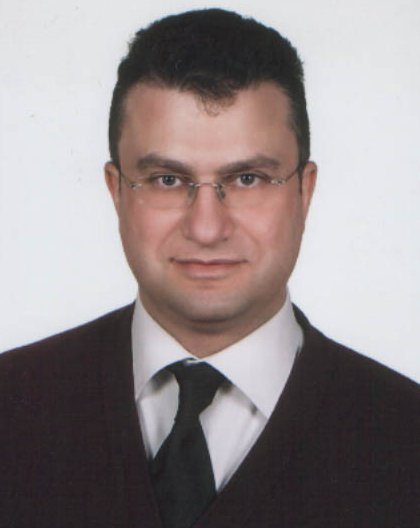
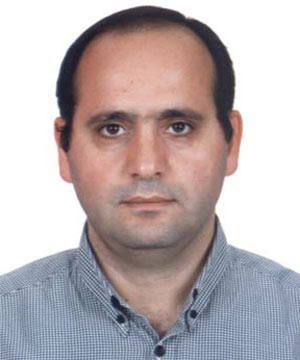
Professor Serdar Özoğuz is a full faculty member at the Department of Electronics and Communication Engineering , Istanbul Technical University . Holding a Ph.D. from ITU (2000) and a M.Sc. from ITU (1993) , he has taught courses like Active Network Synthesis , Basics of Electrical Circuits , and Scientific Research Ethics since 2014. His research focuses on Active RC filters Nonlinear electronic circuits Analog integrated circuit design Network synthesis . His recent publications emphasize machine learning applications in RF/microwave design , quantum computing for CAD tools , and emerging memory devices . The department's Devreler ve Sistemler Laboratuvarı Çok Geniş Ölçekli Tümdevre (VLSI) Tasarımı Laboratuvarı likely support his work. Despite no explicit awards listed, his 15+ recent articles in high-impact journals underscore his technical contributions.
Hacer Atar Yıldız is an Associate Professor at the Department of Electronics and Communication Engineering, Faculty of Electrical and Electronics Engineering at Istanbul Technical University (ITU). She holds a B.Sc. (1997) and M.Sc. (2000) in Electronics Engineering from Karadeniz Technical University, and a Ph.D. (2015) in Electronics Engineering from ITU. Her research focuses on analog circuit design, integrated circuits, analog filters, memristor structures, and graphene sensors. Education: Ph.D. in Electronics Engineering (2015), Istanbul Technical University M.Sc. in Electronics Engineering (2000), Karadeniz Technical University B.Sc. in Electronic Communication Engineering (1997), Karadeniz Technical University German Language Education (2001), Munich Technical University Research Interests: Her work emphasizes innovative analog circuit solutions, including memristor-based systems, neural networks, and sensor technologies. Notable contributions include memcapacitor/meminductor emulator circuits and cryogenic bandgap designs. She also explores applications in plant identification using copula models and thermal compensation for microbolometers. Professional Experience: Associate Professor at ITU (2022–present) Researcher at Virginia University (2018) Expert Engineer at Türk Telekom (2003–2009) Intern at Marco GmbH (Munich, 2001–2002) Teaching: She has taught courses such as Introduction to Electronics, Electronic Design, and Analog Circuits at both undergraduate and graduate levels. Recent courses include EHB 222E and EHB 335. Languages & Hobbies: Fluent in English and German. Enjoys swimming, long-distance running, Turkish folk music, and outdoor activities.
Rıza Can Tarcan is a retired Lecturer at the Department of Electronics and Communication Engineering (EHMB), Istanbul Technical University (ITU). He holds a PhD from ITU (2002), following his MSc (1994) and BSc (1986) in the same field. His research focuses on analog and digital electronics, with expertise in current-mode circuits, filter design, and signal processing. He has taught courses such as Analog Electronics Laboratory and Introduction to Electronics. His publications include works on analog multiplier design and precision circuits, presented at international conferences like ELECO and SIU. Though retired, his contributions to academic and research activities in electronics remain notable.
Professor İsmail Serdar Özoğuz is a distinguished academic at Istanbul Technical University , affiliated with the Department of Electronics and Communication Engineering . Holding the title of Professor since 2009, he has contributed extensively to analog circuit design, neural network applications, and wireless communication systems. Ph.D. in Electronics and Communications Engineering (1995) Department Head (2020-present) Vice Dean (2017-2020) Research Interests: His work spans Electronics , Analog Design , Circuits and Systems Theory , with recent focus on: Neural network-based filter optimization Memristor emulator circuits Spintronic devices for wireless and memory applications Intelligent optimization in RF designs Article Trends: Recent publications highlight AI integration in engineering challenges, power efficiency in wireless systems, and hardware-software co-optimization . His work bridges theoretical models (e.g., fractional-order neural networks) with practical implementations (e.g., GaN amplifiers). Scientific Awards: GEBIP Award (TUBA), 2002 Mustafa Parlar Foundation Research Incentive, 2003 TUBITAK Incentive Award, 2004 Grants & Projects: As Principal Investigator, he has led initiatives on: Spintronic devices for wireless/memory/analog uses Passive combiners in HF transmitters High-power GaN amplifier development Fractional-order neural network models
Oğuzhan Çiçekoğlu is a Full-Time Professor at Boğaziçi University specializing in electrical engineering. His research focuses on analog circuit design methodologies, signal processing architectures, and current-mode circuit implementations for electronic systems. Primary research areas include active filter design techniques, analog signal conditioning circuits, and low-power circuit solutions.
Cihan Bayındır is an Associate Professor at Istanbul Technical University's Faculty of Civil Engineering, Department of Civil Engineering, specializing in fluid mechanics, coastal engineering, and computational methods. His research integrates advanced mathematical techniques with practical engineering applications across multiple disciplines. His primary research areas include Fluid Mechanics, Coastal Sciences and Engineering, Numerical Modeling, Fluid Physics, Acoustics and Vibrations, Nonlinear Dynamics, and Quantum Hydrodynamics. Bayındır's work demonstrates a strong interdisciplinary approach, bridging traditional civil engineering with cutting-edge computational methods and quantum phenomena. His research has significant applications in coastal protection, renewable energy systems, disaster management, and infrastructure resilience. Analysis of his recent publications reveals a clear trend toward applying artificial intelligence and machine learning techniques to traditional civil engineering challenges. His work increasingly focuses on using compressive sensing, deep learning (particularly LSTM networks), and fuzzy logic systems to solve complex problems in wave dynamics, vibration analysis, and tsunami prediction. The integration of quantum computing concepts with classical fluid mechanics represents another distinctive aspect of his research portfolio. ITU Doctoral Special Award-2024-Advisor (2025) ITU 2023 Academic Performance Award (2024) Turkish Academy of Sciences (TUBA) Outstanding Young Scientist Award (GEBİP) (2022) Elsevier Frontiers Article Award (2020) Kaleidoscope Award (American Physical Society, 2016) Bayındır leads multiple research projects funded by ITU's Scientific Research Projects Unit (BAP), including studies on dam break wave propagation using fractional equations, optimization of wave energy concentrators with AI methods, and three-dimensional vibration control in marine structures. His work involves collaborations with international institutions, including previous engagement with CERN on accelerator design. He maintains an active research laboratory focused on hydraulics and coastal engineering, with specialized equipment for wave and vibration analysis in the Hydraulics Laboratory HL 216 at ITU.
İbrahim Hökelek is a Part-Time Lecturer at Istanbul Technical University's Department of Electronics and Communication Engineering, with a focus on telecommunications and biomedical applications. He holds a Ph.D. in Electrical Engineering from City University of New York (2006), an M.S. (2002) and B.S. (2000) from Bilkent University. His research spans telecommunications network planning , biomedical imaging , and signal processing , contributing to projects like Photoacoustic Tomographic Imaging for Skin Cancer Diagnosis and Development of Laser Scanning Wireless Capsule Endoscopy . He has taught courses such as Telecom Network Planning & Management and Queueing Theory since 2014. Key projects include collaborations on microwave imaging , low-power circuits , and network security , often involving institutions like TÜBİTAK and İTÜNOVA. His work bridges theoretical analysis and practical implementations in analog/digital systems, focusing on medical device innovation and communication technologies.
Nil TARIM is an Associate Professor at the Electronics and Communications Engineering Department of Istanbul Technical University. She specializes in RF electronics and analog circuit design, focusing on CMOS technologies and microwave systems. Her teaching responsibilities include core courses like Electronics I (EHB 231E) and Analog Electronic Circuits (EHB 335E). Academic Affiliation: Faculty of Electrical and Electronics Engineering Research Focus: RF applications, low-noise amplifiers, and high-Q CMOS components Her recent work emphasizes compact, low-voltage solutions for RF systems and SiGe-based amplifier designs. Courses materials and academic regulations for dual-degree programs are maintained through institutional portals.
Mustak E. Yalcin is a Professor in the Department of Electronics and Telecommunications Engineering at Istanbul Technical University (ITU). He holds a PhD from Katholieke Universiteit Leuven (2004), an MSc from ITU (1997), and a BSc from ITU (1993). His research focuses on nonlinear dynamics, chaos theory, FPGA-based systems, and secure communication. He has been elevated to IEEE Senior Member (2019) and serves as an Associate Editor for multiple journals, including the International Journal of Bifurcation and Chaos and SpringerBriefs in Nonlinear Circuits. His work spans applications in cryptographic systems, cellular neural networks, and hardware security. Notable contributions include FPGA implementations of hyperchaotic systems for medical image encryption, and designs for GPS spoofing detection. He leads projects on sensor-based navigation systems, smart weighing technologies, and energy-efficient embedded systems. Recent activities include chairing tracks at IEEE conferences and organizing events like FOSSistanbul. His lab actively explores wave computing, memristor-based networks, and bio-inspired algorithms for odor classification. Current projects include the design of fault-tolerant cryptographic hardware and real-time spectrum analyzers.
Ulaş YURTSEVER serves as Assistant Professor in the Department of Computer Engineering at Sakarya University's Faculty of Computer and Information Sciences. He has held academic positions since 1999, including Research Assistant roles at the Computer Research and Application Center (2005-2013) and Faculty of Engineering (1999-2013), and has been Lecturer at Adapazari Vocational School since 2013. His academic credentials include: Doctorate in Computer and Information Engineering (2007-2019): Thesis on "Colon cancer detection using deep learning method on segmented histopathological images" Master's in Electrical and Electronics Engineering (2000-2002): Thesis on "PC-based building automation" Bachelor's in Electrical and Electronics Engineering (1994-1999) Dr. YURTSEVER's research integrates Artificial Intelligence, Machine Learning, and Deep Learning to solve critical problems in medical diagnostics and environmental sustainability. His work focuses on computer vision applications for colon cancer detection in histopathological images and machine learning-driven analysis of plastic degradation across environmental matrices. He actively develops IoT systems for predictive maintenance in industrial settings. His publication trajectory (2018-2025) reveals strong thematic continuity in AI applications, with recent emphasis on plastic waste characterization (2023-2024) and medical AI (2024-2025). The TÜBİTAK 1001 projects on football agility prediction and plastic aging demonstrate his capacity for securing competitive research funding. He has secured multiple TÜBİTAK 1001 grants for interdisciplinary research bridging computer engineering with environmental science and healthcare. His collaborative work spans medical diagnostics (fundoscopy devices, cerebral angiography), environmental monitoring (plastic degradation tracking), and industrial systems (electrical panel anomaly detection).
Prof. Yasar Gurbuz is a Professor of Electrical Engineering at Sabanci University's Faculty of Engineering and Natural Sciences, where he has been a faculty member since 2000. He holds a B.Sc. (1990), M.S. (1993), and Ph.D. (1997) in Electrical Engineering. Prior to Sabanci, he worked as a senior research associate at Vanderbilt University (1997-1999) and at Aselsan Inc. (1999-2000). His research focuses on microelectronic systems, RF/microwave integrated circuits, MEMS, and semiconductor-based sensors/actuators. He is a member of IEEE and SPIE and leads a research group at Sabanci University. His research interests emphasize high-performance analog/mixed-signal ICs, phased array systems for 5G applications, low-noise amplifier design, and infrared photodetectors. Recent work includes advancements in SiGe BiCMOS technology for RF front-ends, plasmon-enhanced infrared sensors, and adaptive phased array architectures. His publications span topics like low-phase-noise oscillators, wideband power amplifiers, and smart pixel readout integrated circuits (DROICs). Prof. Gurbuz’s contributions extend to microbolometer thermal modeling, biomedical sensors for point-of-care diagnostics, and nanorectenna-based energy harvesting. His designs often integrate novel fabrication techniques with advanced signal processing algorithms to address challenges in high-frequency electronics and biomedical sensing.
Muhammet Oğuz KORKMAZ is a Doctor Lecturer at the Department of Electrical and Electronic Engineering, Faculty of Engineering and Natural Sciences, Bandırma Onyedi Eylül University. He currently serves as the Deputy Head of the Department. His academic career includes roles as a Research Assistant (2019–2024) and transition to Doctor Lecturer in 2024. His research focuses on memristor-based circuit design, microgrid protection, and analog electronics. Research interests include memcapacitor/meminductor emulator circuits, fault detection in microgrids, and CMOS-based circuit performance analysis using neural networks. Recent work emphasizes eliminating passive elements in circuits and leveraging OTA/CCII components for tunable systems. His publications span journals like AEU-International Journal of Electronics and Communications, Indian Journal of Pure & Applied Physics, and Sakarya University Journal of Science. He holds a 'Training of Trainers' certificate from his university. No advising or grant information is explicitly stated in the provided texts.
Dr. Lecturer İnci Umakoglu is an Assistant Professor at the Faculty of Engineering , Kütahya Dumlupınar University . She holds a PhD in Electrical-Electronics Engineering from the same university and has been a Research Assistant in multiple laboratories since 2015, including Analog & Digital Communications, Measurement & Circuit, and Logic Design. Her research focuses on Wireless Communication Systems (NOMA, OTFS modulation) Antenna Design for 5G and beyond UAV-assisted network architectures IoT device security protocols She has led and advised numerous student research projects in avionics, telemetry, and low-altitude defense systems under the TÜBİTAK 2209-A and Scientific Research Project (BAP) programs. Recent publications highlight her work in deep learning for signal detection , LoRa-based telemetry systems , and IoT security methods , with a strong emphasis on practical implementations in 5G and UAV technologies. She is an active member of IEEE and the Applied Computational Electromagnetics Society (ACES) .
Oğuzhan Çiçekoğlu is a Professor in the Department of Electrical and Electronics Engineering at Boğaziçi University, part of the College of Engineering. His research focuses on analog circuits and signal processing, particularly in active filters, current-mode circuits, and CMOS-based designs. He holds a full-time faculty position and contributes to high-impact publications in electronics and circuit design. His work emphasizes innovative filter topologies, MOSFET-based solutions, and low-power CMOS implementations. Key contributions include MOS-only all-pass filters, current-mode multifunction filters, and versatile rectifier circuits. His research bridges theoretical circuit design with practical applications in signal processing and electronics. Recent articles highlight advancements in current-mode filters, voltage-mode all-pass configurations, and low-power amplifier designs. These studies address challenges in circuit efficiency, component reduction, and signal integrity. While no awards are explicitly listed, his extensive publication record underscores his technical expertise. No advising roles or grants are mentioned in the provided text. His academic contributions are centered on advancing analog circuit design methodologies and their real-world applicability.
Tufan Coşkun Karalar is an Associate Professor in the Department of Electronics and Communication Engineering at Istanbul Technical University (ITU), College of Engineering. His research spans integrated circuits, analog-to-digital converters, wireless sensor networks, and energy-efficient electronic systems. He is actively involved in advanced IC design projects for applications in biomedical implants, green energy, and automotive communications. Research Interests: Integrated and analog circuit design High-speed data converters (ADCs) In-memory computing architectures RF front-end and V2X communication circuits Low-power and energy-efficient sensor networks Hall effect and current sensing technologies His recent publications focus on SRAM-based in-memory computing energy models, high-speed pipelined ADCs, and RF front-end modules for vehicle-to-everything (V2X) systems. These works reflect a strong trend toward energy efficiency, high performance, and application-specific circuit design in modern electronics. Scientific Awards: ELECO 2019 Best Student Publication Award Dr. Karalar has served as Principal Investigator (PI) on multiple research projects funded by TUBITAK and TTO, including studies on ASIC design, micro-implant power control ICs, high-speed ADCs, and improved Hall effect sensors. He is currently supervising 24 theses, indicating an active role in mentoring graduate students. His work involves close collaboration with industry and academic partners in Turkey and internationally. Labs and Research Teams: While specific lab names are not mentioned, his project leadership and publication record suggest he leads a research group focused on analog and mixed-signal integrated circuit design within the Department of Electronics and Communication Engineering at ITU.