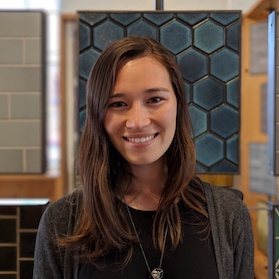
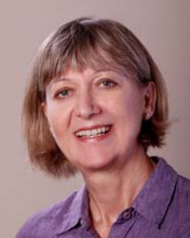
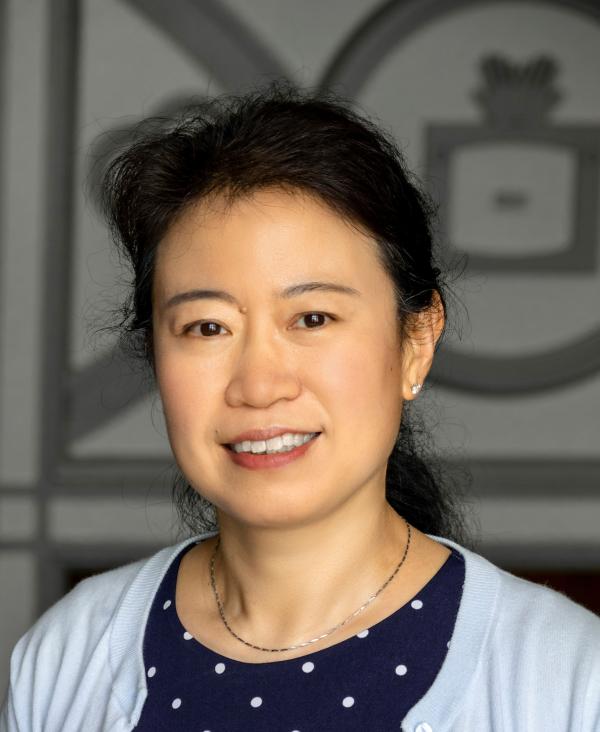
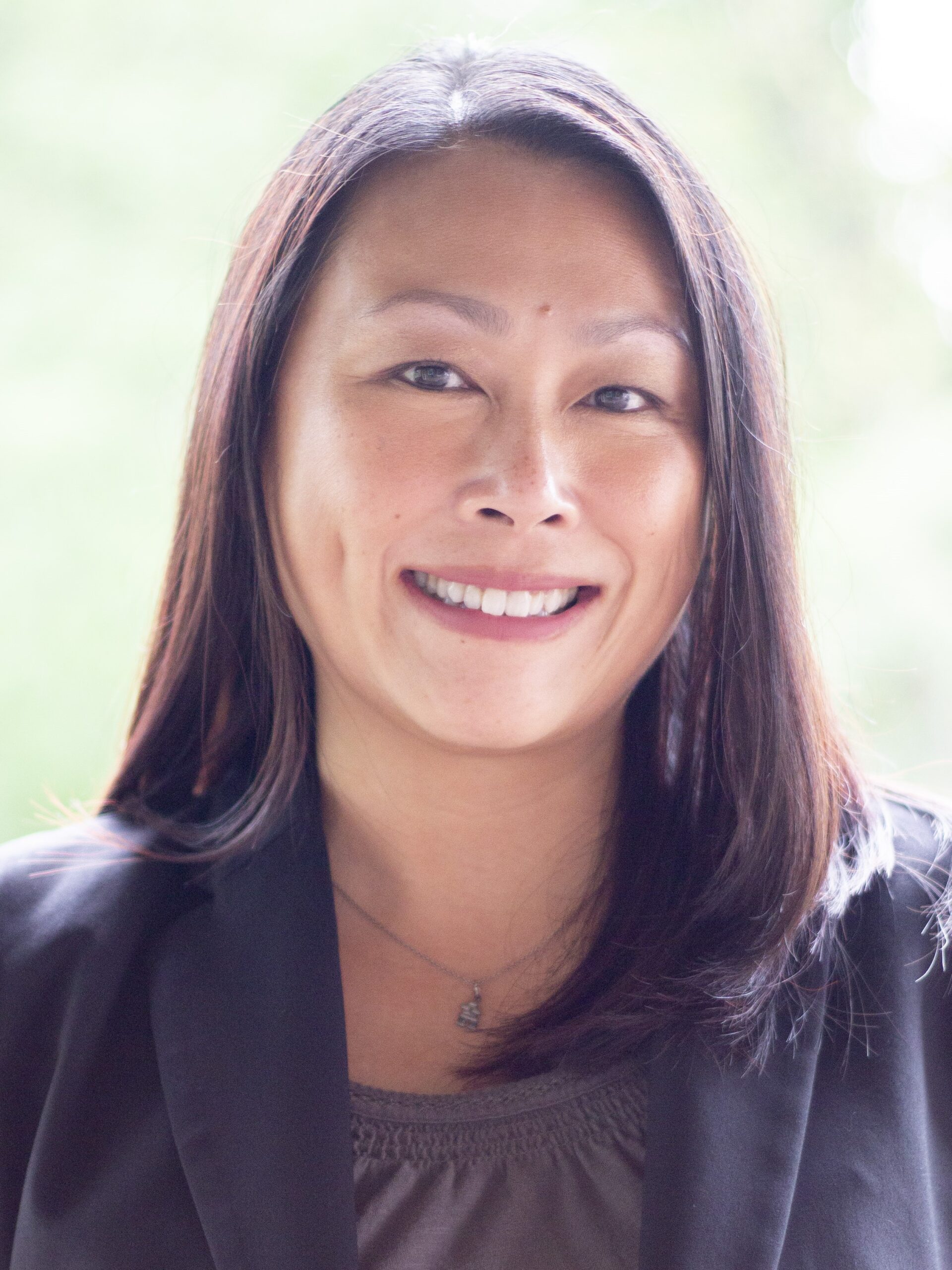
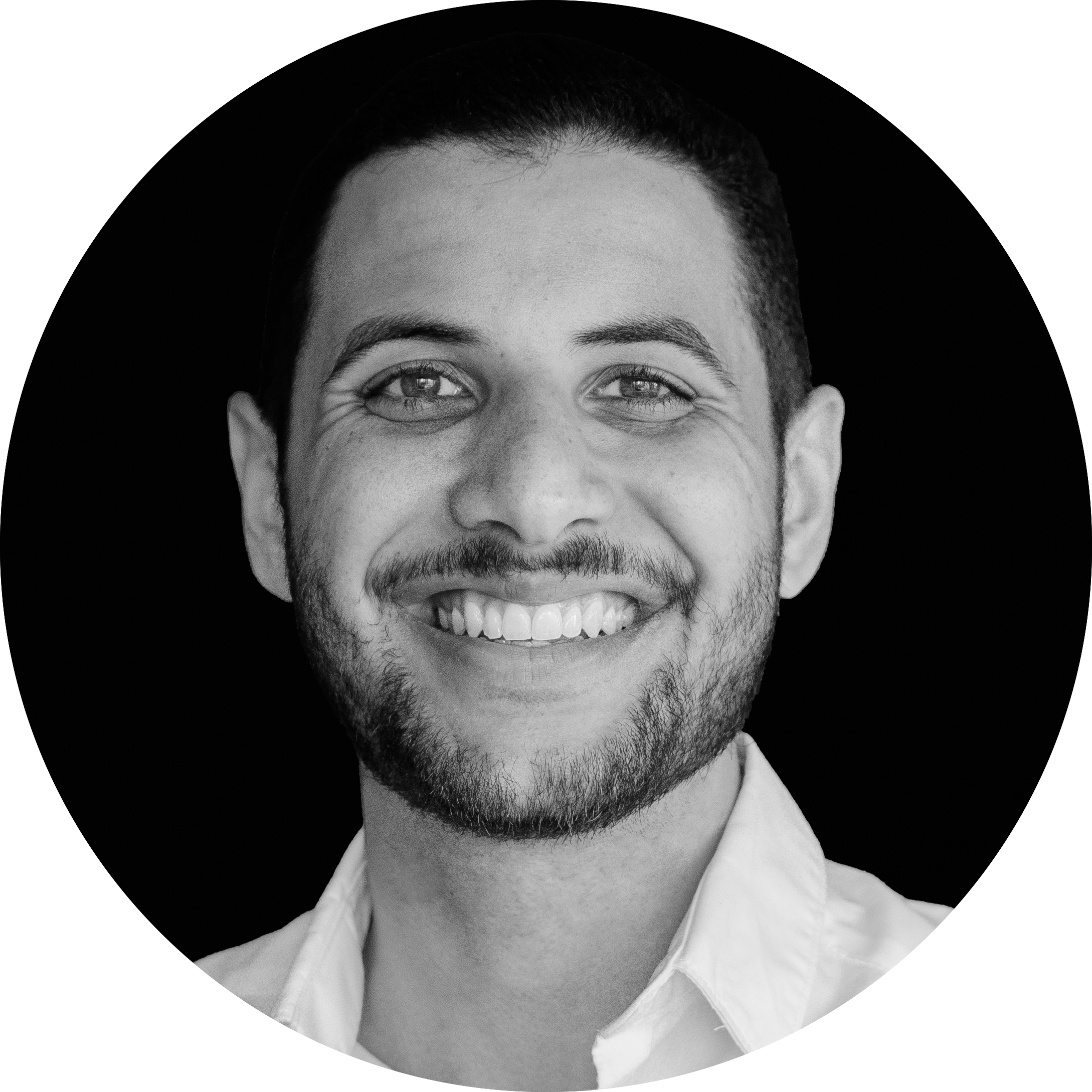
Meredith Tamminga is an Associate Professor of Linguistics at the University of Pennsylvania, where she directs the Language Variation and Cognition Lab . Her work bridges sociolinguistics , psycholinguistics , and theoretical linguistics , focusing on how linguistic variability is represented in mental grammar and how social context influences speech perception and production. She co-leads the Philadelphia Signs Project , exploring sign language sociolinguistics with collaborators at Penn and Gallaudet University. PhD in Linguistics (2014), University of Pennsylvania BA in Linguistics (2009), McGill University Her research integrates experimental methods with naturalistic speech analysis to study individual and group-level language change. Keywords include phonetics-phonology mapping , intraspeaker variation , and quantitative modeling . Notable grants include NSF awards and SAS Dean’s Mentorship Award . Key affiliations include MindCORE , Penn’s hub for integrative mind sciences, and collaborative ties to the Phonetics Lab , Child Language Lab , and Cultural Evolution of Language Lab . Her lab emphasizes cross-departmental research and welcomes undergraduate RAs and PhD students.
Allison Koenecke is an Assistant Professor of Information Science at Cornell Tech and a field faculty member in Computer Science at Cornell University. Previously, she was a postdoctoral researcher at Microsoft Research New England and completed her PhD at Stanford University’s Institute for Computational & Mathematical Engineering. Her research focuses on algorithmic fairness, computational social science, and causal inference in public health, addressing disparities in automated systems like speech recognition and policy decision-making. Education : PhD, Stanford Institute for Computational & Mathematical Engineering MA/MS, Stanford University BA/BS, Massachusetts Institute of Technology Research Interests : Dr. Koenecke’s work bridges economics and computer science, emphasizing equity in AI systems. Key areas include: Algorithmic bias in speech recognition (e.g., racial disparities in voice assistants) Fairness in policy tools like environmental justice data systems Causal analysis in public health interventions Ethical implications of large language models in education Media & Impact : Her research has been featured in outlets like New York Times , Science , and Scientific American . Notable studies include exposing racial gaps in speech-to-text systems and advocating for inclusive dataset development. She also explores societal impacts of AI in education and governance. Awards : Sloan Research Fellow in Computer Science Forbes 30 Under 30 in Science NSF Awards Cornell CIS Teaching Excellence Award (2024) Teaching & Outreach : She teaches courses like Designing Fair Algorithms and Data Science for Global Development , emphasizing interdisciplinary collaboration. Her PhD Professionalization course addresses hidden curricula in academia. She advises on AI ethics for nonprofits, tech companies, and government agencies.
Hyunghoon Cho is an Assistant Professor at Yale School of Medicine in the Department of Biomedical Informatics & Data Science, with a secondary appointment in the Department of Computer Science. He received his PhD in Electrical Engineering and Computer Science from MIT (2019) and MS/BS in Computer Science from Stanford University (2013). His research focuses on computational challenges in biomedical data privacy, single-cell genomics, and network biology. Assistant Professor (Primary): Biomedical Informatics & Data Science Assistant Professor (Secondary): Computer Science Appointments: Yale School of Medicine | Broad Institute (Schmidt Fellow) Research Themes: Privacy-Enhancing Technologies for genomic and health data Scalable AI/ML tools for omics data analysis Structured biological modeling for system-level discovery His work includes secure GWAS, transcriptomic privacy assessment, and sfkit - a federated genomic analysis toolkit. He received the NIH Director's Early Independence Award and leads NSF-funded projects on confidential genome analytics. Awards: NIH Director's Early Independence Award Lab Members: Haris Smajlović (Postdoc), Vincent Angelo (CBB MS), Denis Loginov (Senior Software Engineer), Lucy Zheng (CBB PhD)
Angela Reyes is Professor in the Department of English at Hunter College, City University of New York (CUNY), and Doctoral Faculty in Anthropology at the CUNY Graduate Center. She teaches courses on English linguistic structures, discourse theory, and linguistic anthropology, while serving on advisory boards for Hunter College's Asian American Studies Program and Mellon-Mays Undergraduate Fellowship Program. Education: PhD, University of Pennsylvania (2003) Her research focuses on semiotics, racialization, and coloniality, particularly examining language-personhood relationships in the U.S. and Philippines through three major ethnographic studies: Southeast Asian American youth videomaking (Philadelphia), Korean American fifth graders in a "cram school" (NYC), and Filipino college communities (Manila). She analyzes how elite linguistic registers and mixed-race discourses reflect colonial anxieties and modern aspirations. Key publications include Discourse Analysis Beyond the Speech Event (2021, awarded Edward Sapir Book Prize) and work in The Oxford Handbook of Language and Race (2020). Awards include Advanced Research Collaborative Distinguished Fellowship (2016), Spencer Foundation Postdoctoral Fellowship (2009-2010), Woodrow Wilson Career Enhancement Fellowship (2006-2007), and Ford Foundation Dissertation Fellowship (2002-2003). Scientific Awards: Advanced Research Collaborative Distinguished Fellowship (2016) Spencer Foundation Postdoctoral Fellowship (2009-2010) Woodrow Wilson Career Enhancement Fellowship (2006-2007) Ford Foundation Dissertation Fellowship (2002-2003) Edward Sapir Book Prize (2016) Her work bridges linguistic anthropology with English studies, focusing on how language mediates colonial histories, social media dynamics, and academic institutions. She employs ethnographic, archival, and new media methodologies to trace discursive patterns across time and space.
Christiane Fellbaum serves as Lecturer with Rank of Professor in Princeton University's Program in Linguistics and Department of Computer Science, where she has been a senior research scholar since returning in 1987 after postdoctoral work at the University of Paris. Her foundational contributions to computational linguistics include co-developing WordNet and co-founding the Global WordNet Association. Her educational background features: Ph.D. in Linguistics, Princeton University (1980) Postdoctoral Fellowship, University of Paris Fellbaum's research integrates theoretical linguistics with computational applications, specializing in lexical semantics, corpus analysis, and semantic network construction. Her work bridges computational linguistics and lexicography through projects like WordNet and Medical WordNet, with recent emphasis on multilingual resources, bias analysis in embeddings, and African language technology development. She examines semantic phenomena including idioms, verb alternations, and emotion scales through both corpus linguistics and formal ontological frameworks. Analysis of her publication trajectory reveals sustained innovation in lexical resource development since the 2000s, evolving from foundational WordNet studies to contemporary work on large language model adaptation and social bias mitigation. Current research demonstrates increasing interdisciplinary collaboration across NLP, cognitive science, and social justice applications. Her scientific recognition includes: Wolfgang Paul Prize from the German Humboldt Foundation (2001) Antonio Zampolli Prize (2006) Fellbaum has secured continuous research funding from the U.S. National Science Foundation, European Union Seventh Framework, Frank Moss Foundation, and Tim Gill Foundation. She actively mentors junior researchers through Princeton's Independent Work seminars and hosts the North American Computational Linguistics Olympiad (NACLO), while leading major international collaborations including the KYOTO and SIERA European projects. As director of the WordNet project and permanent fellow at the Berlin-Brandenburg Academy of Sciences, she maintains leadership in global lexical resource initiatives through the Princeton Language and Intelligence initiative and Natural and Artificial Minds research group.
YingLi Tian is a CUNY Distinguished Professor in the Department of Electrical Engineering at The City University of New York. Their work focuses on computer vision, machine learning, and medical imaging. Key areas include sign language recognition, medical image analysis, and AI-driven healthcare solutions. Research Interests: Artificial Intelligence applications in healthcare 3D point cloud and scene understanding Self-supervised learning and domain adaptation Sign language recognition systems Medical imaging segmentation and diagnosis Human-robot interaction and assistive technologies Notable Projects: Developed AI systems for American Sign Language recognition using RGB-D data Pioneered self-supervised feature learning techniques in medical imaging Created virtual contrast enhancement tools for CT scans Advanced sea ice motion prediction using deep learning Labs & Teams: Leads the Media and Information Technology Lab at CCNY, focusing on multimodal AI and healthcare technology innovations.
M. Tamer Özsu is a University Professor of Computer Science at the David R. Cheriton School of Computer Science, University of Waterloo, where he holds a Cheriton Faculty Fellowship. He also serves as a Distinguished Visiting Professor at Tsinghua University and is the Founding Director of Waterloo-Huawei Joint Innovation Laboratory since 2018. His extensive contributions to computing have earned him numerous prestigious awards including the 2024 ACM Presidential Award for long-standing and significant contributions to the computing field. Professor Özsu's research focuses on data engineering aspects of data science, particularly addressing data management issues with two main foci: management of non-traditional data and large-scale distributed data management. He is renowned for his seminal book "Principles of Distributed Database Systems" (co-authored with Patrick Valduriez), now in its fourth edition, and the "Encyclopedia of Database Systems" (co-edited with Ling Liu), in its second edition. His work bridges theoretical foundations with practical system implementations, targeting grand societal challenges through computational approaches. His recent publications reveal a strong trend toward graph analytics, streaming data processing, and the integration of large language models with vector data management. The research shows increasing focus on GPU-accelerated graph processing, RDF query optimization, and multimodal data analysis, reflecting the evolution of data management challenges in the era of big data and AI. His work continues to address fundamental challenges in distributed data systems while adapting to emerging technologies and application domains. Scientific Awards and Fellowships ACM Presidential Award (2024) IEEE TCDE Education Award (2024) IEEE Innovation in Societal Infrastructure Award (2022) CS Can | Info Can Lifetime Achievement Award (2018/2019) ACM SIGMOD Test-of-Time Award (2015) ACM SIGMOD Contributions Award (2006) The Ohio State University College of Engineering Distinguished Alumnus Award (2008) Fellow of the Royal Society of Canada Fellow of the American Association for the Advancement of Science (AAAS) Life Fellow of the Association for Computing Machinery (ACM) Life Fellow of the Institute of Electrical and Electronics Engineers (IEEE) Fellow of the Asia-Pacific Artificial Intelligence Association (AAIA) Elected member of the Science Academy, Türkiye Professor Özsu has been deeply involved in academic leadership and community building. As Founding Editor-in-Chief of ACM Books (2013-2019), he launched a series that by 2019 had published 28 major books with another 30 under contract. His service to ACM, particularly through SIGMOD, has been exemplary and widely recognized. He directs the Waterloo-Huawei Joint Innovation Laboratory, which focuses on cutting-edge research in data management and distributed systems, fostering strong industry-academia collaboration.
Charles Denroche is Senior Lecturer in Linguistics and Applied Language Studies at the University of Westminster, based in the School of Humanities within the College of Liberal Arts and Sciences. His interdisciplinary career combines bioscience (Magdalen College, Oxford) with advanced linguistics (PhD UCL-IOE, PGDip Westminster, PGCE TESOL IOE), and extensive professional experience as translator, lexicographer and language educator. Education & Training MA in Bioscience – Magdalen College, University of Oxford PhD in Education (Linguistics) – UCL Institute of Education, University of London Post-Graduate Diploma in Linguistics – University of Westminster PGCE TESOL – UCL Institute of Education Certificate in English Phonology – International Phonetic Association Studies in Italian Language & Literature – University of Florence Studies in Germanistik & Anglistik – Heinrich Heine University of Düsseldorf Research Interests Denroche’s work centres on how meaning is made through language. His research integrates cognitive linguistics , semiotics and translation studies to explore the roles of metaphor and metonymy in discourse, multimodal communication and pedagogy. He is particularly interested in the cognitive processes that underlie figurative language, the interface between grammar and semantics, and how these insights can inform translator training and language education. Current projects extend his theory of metonymic processing to literary translation collaboration and the analysis of visual and multimodal texts, aiming to bridge theoretical linguistics with practical applications in education and professional practice. Recent Publications & Trends Over the past decade Denroche has produced a coherent body of work that moves from foundational theory-building—most notably the 2015 monograph Metonymy and Language —to innovative methodological applications such as using drawing as a research tool for metaphor-led discourse analysis. Across 15 key outputs (2011-2024), the research trajectory shows a consistent focus on metaphtonymy (the interplay of metaphor and metonymy) at text level and on developing practical frameworks for translators, educators and discourse analysts. Honours & Awards Award of Excellence in Teaching and Learning (2008) – Westminster Exchange, University of Westminster Doctoral Supervision & Grants Denroche currently supervises one active doctoral researcher (MPhil/PhD) investigating metaphor in Arabic urban literature. He welcomes applications from prospective postgraduate students in the areas of figurative language, semiotics/multimodality, discourse analysis and translation/interpreting studies. Professional Memberships & Service International Association for Cognitive Semiotics (IACS) Researching and Applying Metaphor (RaAM) External examiner for Birkbeck, University of Hertfordshire, UCL Institute of Education Reviewer for American Journal of Semiotics , Journal of Pragmatics , Language and Cognition , Cognitive Linguistics Studies , Metaphor and the Social World
Dr. Clara Cheng serves as the Interim Associate Dean of Faculty Professional Development, Director of the Undergraduate Psychology Program, and Professor of Psychology at Carlow University. Her roles include overseeing faculty development, directing the Psychology program, and teaching statistics and social psychology in flipped and online formats. She advises the Carlow chapter of Psi Chi, which she co-founded in 2013, and is a certified therapy team member with her mini labradoodle, Mochi. Dr. Cheng holds an Hon BSc in Psychology (2000) from the University of Toronto and MA (2002) and PhD (2006) in Social Psychology from The Ohio State University. She also earned certificates in American Sign Language and Online Teaching with a focus on accessibility. Her research focuses on social cognition, stereotyping, implicit bias, and culturally informed teaching methods. She contributed to the APA’s college teaching guide and frequently addresses racism and implicit bias in campus workshops. Her awards include the Sisters of Mercy Award for Advising (2020), Center for Digital Learning Fellowship (2017), and multiple teaching honors from Ohio State. Dr. Cheng’s scholarship spans over two decades, with notable contributions to implicit bias measurement, Buddhist coping mechanisms, and cross-cultural identity formation. She actively serves as Vice President for Resources for the Society for the Teaching of Psychology, promoting pedagogical innovation and inclusivity. Her advising and grants include fostering student honor societies and accessibility initiatives. Her 'therapy team' with Mochi underscores her commitment to mental health. Collaborative work with international researchers highlights her global impact in social and cultural psychology.
Laurent Matthey is an Associate Professor at the University of Geneva's Department of Geography and Environment since 2014. He directs the Urban Planning orientation of the joint UNIGE-HES-SO Master's in Territorial Development and co-directs the UNIGE-EPFL MAS in Urban Planning. His work bridges ethnography and literary studies, examining political issues in urban narrative production through sensitive registers and attentional regimes. Current affiliations: CRESSON team (UMR AAU) since 2023 Active in EspaceSuisse committee and RAMAU network management Research focuses on epistemology of urban planning knowledge , organized into two streams: Planning discourses and narrative studies Ethnography of urban projects His research-creation explores intersections between: Communication and urban planning Fiction and urban planning Narrative and sensitive methods Urban social quality Current projects include "Participez! Neighborhood makers" (FNS Division 1 funding) and completed works like "The narrative making of the city" (FNS-COST 18126) and "Developing housing cooperatives in Greater Geneva" (Interreg V France-Switzerland). He has supervised doctoral students in Geneva, including Hugo Campi ("Flowers to Convince"), Nicole Peccoud ("Social emergency in Geneva"), and Morgane Rudaz ("Feminist collages"). Key scientific contributions appear in GeoHumanities , Planning Theory , and Social Inclusion , with recent emphasis on: AI's role in urban narrative (2024) Decolonial planning approaches (2023) Affective urbanism (2018) Teaching encompasses: Urban geography and ecology (T206059 BGEO) Research-creation seminar (T416007 MDT) Creative methods in metropolitan foresight Professional engagements include urban quality studies for Geneva's Urban Planning Office and Lausanne's Roads Department. He has co-authored foundational texts on Swiss urbanism with Christophe Mager and David Gaillard, exploring topics like "Urbanism fictionnel" (2011) and "Being an urban planner" (2016).
Zheng (Tracy) Ke is an Associate Professor of Statistics at Harvard University. She holds a Ph.D. from Princeton University (2014) and a B.S. from Tsinghua University (2009). Her research focuses on high-dimensional statistics, machine learning, social network analysis, text mining, and bioinformatics. Notable contributions include advancements in network data analysis (e.g., SCORE normalization), text analysis methodologies, and statistical genetics pipelines. Dr. Ke has received prestigious awards such as the COPSS Emerging Leader Award (2024) and the Sloan Research Fellowship (2023). She has organized major conferences like the Workshop on Statistical Network Analysis and Beyond (2024) and contributed to the MADStat dataset analyzing statisticians' co-authorship networks. Her research interests span theoretical and applied domains, with a focus on developing scalable algorithms and rigorous statistical frameworks for complex data. Recent work emphasizes challenges like severe degree heterogeneity in networks and rare/weak signal detection in high-dimensional settings. Dr. Ke is an Associate Editor for the Journal of the American Statistical Association and actively collaborates on interdisciplinary projects.
Oliver Alonzo is an Assistant Professor in the School of Computing at DePaul University. His academic journey includes a Ph.D. in Computing and Information Sciences from the Rochester Institute of Technology, a B.S. in Computer Science from Creighton University with minors in Graphic Design and Musical Theatre. Prior to joining DePaul, he served as a post-doctoral assistant professor at Creighton University and completed internships at Meta (Facebook) and Adobe Research. Dr. Alonzo's research focuses on Human-Computer Interaction and Computing Accessibility, with particular emphasis on creating technologies that improve digital access for people with disabilities, especially those who are Deaf or Hard-of-Hearing (DHH). His work spans several key areas: Design and evaluation of automatic text simplification tools for DHH readers Captioning and visualization of non-speech sounds in multimedia content Accessibility solutions for social media platforms Tools to assist American Sign Language learners Multimedia accessibility in emerging technologies like virtual reality His recent publications demonstrate a consistent focus on developing and evaluating accessibility technologies through rigorous user-centered design with DHH communities. His research has evolved from foundational work on text simplification and sign language interfaces to broader explorations of digital accessibility across multiple platforms and contexts. Dr. Alonzo has received notable recognition for his work, including: CHI 2025 Honorable Mention for research on Deaf and Hard-of-Hearing user experiences with misinformation on social media An NSF CRII grant for a two-year project focused on making videos accessible by design for Deaf, Hard-of-hearing, Blind and Low-Vision viewers As an educator, Dr. Alonzo teaches courses including HCI 440 Introduction to User-Centered Design, HCI 445 User Research Methods, and HCI 511 Accessibility Considerations in HCI. His teaching philosophy emphasizes practical, hands-on learning experiences that connect theoretical concepts to real-world accessibility challenges. Outside academia, Dr. Alonzo is fluent in Spanish, English, and Portuguese, and is learning American Sign Language. He has a background in musical theatre and enjoys black & white photography, which informs his creative approach to accessibility research.
Katherine E. Lewis is an Associate Professor in the College of Education at the University of Washington, specializing in Special Education with a focus on high-incidence disabilities teacher education (SPED-TEP) within the Learning Sciences & Human Development area. She holds a Ph.D. and M.A. in Education from the University of California, Berkeley, an M.Sc. in Multimedia Systems from Trinity College, Dublin, and a B.A. in Psychology from the University of Notre Dame. Dr. Lewis's research fundamentally centers on designing accessible educational contexts, particularly for students with disabilities. Her primary research line focuses on students with mathematics learning disabilities (dyscalculia), where she rejects the deficit model in favor of a disability studies approach. She believes individuals are disabled not by neurological differences but by inaccessible spaces and contexts. Her work identifies how students with mathematics learning disabilities develop unconventional understandings of mathematical representations and compensatory strategies to gain access. Her second research line involves designing educational supports for foster and adoptive parents, including the resource website foster-edu.com. A third emerging area examines how American Sign Language can support Deaf students' understanding of mathematics concepts. Her publications reveal a consistent theme of bridging mathematics education and special education, challenging traditional deficit perspectives on learning disabilities. Her work emphasizes designing accessible instruction through detailed analysis of students' unconventional mathematical reasoning rather than attempting to remediate perceived cognitive deficits. She has developed innovative research methods, including clinical interviews and video analysis of one-on-one tutoring sessions, to document students' unique approaches to mathematics. Linking Research and Practice Outstanding Publication Award from the National Council of Teachers of Mathematics, 2018 National Academy of Education - Spencer Postdoctoral Fellow, 2015 Early Career Publication Award of the Special Interest Group on Research in Mathematics, 2015 Spencer Dissertation Fellowship, 2010 Dr. Lewis has created research-recaps to make her work accessible, including visual summaries and videos explaining her reconceptualization of mathematical learning disabilities as differences rather than deficits. She also maintains the research website klewismath.com and the resource site foster-edu.com for foster and adoptive parents. Her personal experience with dyslexia informs her conceptualization of learning disabilities as cognitive differences rather than irreconcilable deficits, driving her commitment to designing accessible educational contexts.
Malihe Alikhani is an Assistant Professor at Khoury College of Computer Sciences , Northeastern University , a Visiting Fellow at the Brookings Institution specializing in AI policy, and serves as the Ethics Chair of the Association for Computational Linguistics . She is also a member of the Northeastern Ethics Institute . Her research focuses on developing AI systems that enhance communication, decision-making, and knowledge-sharing through rigorous integration of cognitive and social sciences with machine learning. Her work spans academic, policy, and applied research domains, emphasizing contextual AI systems. She leads the Contextual AI Lab , which develops models capturing human interpretation to support collaborative meaning construction between humans and machines. Her recent publications address uncertainty modeling in dialogue systems, bias mitigation in sign language processing, and ethical AI frameworks. Key contributions include: Advancing sign language understanding in NLP Developing uncertainty-aware dialogue systems Creating discourse-coherent task-oriented dialogue frameworks Formalizing equity in text generation Scientific Awards: Best Theme Paper Award (ACL 2021) Best Paper Award (UAI 2022) She mentors students and researchers in areas spanning sign language processing, dialogue systems, and ethical AI. Her lab collaborates with Deaf and Hard-of-Hearing communities and cognitive science experts to ensure inclusive AI development.
Phillip Holcomb is a Professor of Psychology at San Diego State University (SDSU), affiliated with the College of Sciences and the Department of Psychology. He holds a PhD in Psychology from New Mexico State University (1984) and a BA in Psychology from SDSU (1977). His research focuses on human cognition, language comprehension and production, and electrophysiological measures, particularly using ERP techniques to study neural correlates of language processing in deaf and hearing populations. His academic journey includes extensive work on bilingualism, sign language neurobiology, and reading mechanisms. Holcomb has advised numerous graduate students, including Lauren Magliocco, Emily Akers, and ChuChu Li, supporting thesis research on topics like ERP studies of selective attention and deaf readers' cognitive processing. Research Interests: Holcomb’s work bridges cognitive neuroscience and linguistics, investigating neural underpinnings of language through ERP studies. Key areas include: Electrophysiological correlates of sign language processing Cross-modal lexical access in bilinguals Neural mechanisms of reading in deaf individuals Evolution of semantic/syntactic processing in real-time sentence comprehension Grants and Funding: Holcomb leads or co-leads multiple NIH and NSF grants totaling over $2.3M, including projects on: Neural dynamics of reading in deaf adults Cross-language interactions in adult bilinguals ERP/fMRI studies of visual word processing He collaborates with institutions like UC San Diego and the University of Mannheim, contributing to international research networks. His lab employs advanced neuroimaging techniques to explore language cognition’s neural basis, emphasizing translational insights for education and clinical populations.