Roberto Hofmeister Pich is a Full Professor of Philosophy at the Pontifícia Universidade Católica do Rio Grande do Sul (PUCRS) in Brazil. He holds a PhD from the University of Bonn (2001) and has held postdoctoral fellowships from the Alexander von Humboldt-Stiftung and Fulbright Commission. His roles include Vice-President of the Société Internationale pour l'Étude de la Philosophie Médiévale (SIEPM) since 2017 and Ambassador of the University of Bonn in Brazil since 2019. Education: Philosophy, Universidade Federal do Rio Grande do Sul Evangelical Theology, Escola Superior de Teologia PhD, University of Bonn (Thesis: Philosophy of John Duns Scotus) Research Interests: His work spans medieval and early modern philosophy, focusing on scholasticism, Latin American colonial philosophy, and the philosophy of religion. He explores topics like divine knowledge of contingent futures, the evolution of the concept of will, cognitive processes in scholasticism, and the ideological foundations of slavery in Latin America. Scientific Awards: Alexander von Humboldt-Stiftung Postdoctoral Fellowships (2004-5, 2006-7, 2011-12) Fulbright Commission Fellowship (2009-10) Grants & Projects: Served as First Holder of the CAPES/Uni-Bonn Chair (2018-19, 2019-20), leading the project The Philosophy of Black Slavery . Co-organized the 2017 SIEPM International Congress in the Southern Hemisphere.
Niels Peek is Professor of Health Informatics in the Division of Informatics, Imaging & Data Sciences within the Faculty of Biology, Medicine and Health at the University of Manchester. He serves as Director of the Christabel Pankhurst Institute for Health Technology Research and Innovation, Co-director of the International Centre for Translational Digital Health, and Digital Infrastructure Lead for the NIHR Manchester Biomedical Research Centre. His leadership extends to roles as Academic Lead for the North West Secure Data Environment and Theme Lead for Health and Care within Digital Futures. Peek holds a PhD in Computer Science from Utrecht University (2000) and MSc degrees in both Computer Science and Artificial Intelligence from the same institution (1994). His methodological expertise spans the design and evaluation of informatics interventions, computerized decision support systems, statistical modeling, machine learning, data mining, qualitative research methods, and technology acceptance models. His research program focuses on translational data science applications in healthcare, particularly in risk prediction, personalized and precision medicine, patient safety, and managing patients with multiple conditions (multimorbidity). Analysis of his recent publications reveals a strong emphasis on practical applications of AI and data science in clinical settings, with particular attention to electronic health records, clinical decision support, and the evaluation of digital health interventions across various healthcare contexts including primary care, hospital settings, and chronic disease management. Peek has received significant recognition for his contributions to the field: Fellow of the Alan Turing Institute Fellow of the American College of Medical Informatics Fellow of the International Academy of Health Sciences Informatics President of the Society for Artificial Intelligence in Medicine (2013-2017) His editorial leadership includes serving as Associate Editor for BMJ Health & Care Informatics and on the editorial boards of npj Digital Medicine, Journal of the American Medical Informatics Association, Artificial Intelligence in Medicine, and Health Data Science journals. He has secured substantial research funding including participation in the BHF Centre for Research Excellence 2024-2029 and leadership roles in multiple active projects focused on digital health, AI applications in medicine, and opioid management research. Peek leads the Christabel Pankhurst Institute for Health Technology Research and Innovation and co-directs the International Centre for Translational Digital Health, creating collaborative environments that bridge computer science, statistics, and clinical practice to develop practical healthcare solutions. His work contributes significantly to UN Sustainable Development Goals through the University of Manchester's research beacons in Digital Futures, Data Science and AI, Sustainable Futures, and Healthier Futures.
Anne Therese Frederiksen is an Assistant Professor in the Department of Communication, Arts, Sciences, and Disorders at Brooklyn College, City University of New York (CUNY) . Her work bridges psycholinguistics and sign-language linguistics, with a particular focus on how bilingualism in signed and spoken languages illuminates broader questions about language and cognition. Education: Ph.D. in Linguistics and Cognitive Science, University of California, San Diego (Mayberry Lab for Multimodal Language Development) Postdoctoral fellowships: UC Irvine Chancellor’s Postdoctoral Fellow (2019–2020) and NSF-funded postdoc under Dr. Judith Kroll (2020–2022) Research Interests: Frederiksen’s research centers on bimodal bilingualism —the simultaneous use of a signed and a spoken language—examining how this unique bilingual experience shapes cognitive control, referential cohesion, and discourse processing. She investigates American Sign Language (ASL) pronouns and spatial grammar, gesture–language interaction, and the developmental trajectories of both native and late learners of ASL. Publications at a glance: Since 2015 she has published nine peer-reviewed articles and numerous conference presentations. The corpus spans high-impact journals such as Language, Cognition and Neuroscience , Frontiers in Psychology , and Lingua . Collectively, the work traces a trajectory from foundational descriptions of reference tracking in novice ASL learners to sophisticated models of bilingual language control and the semantics-pragmatics interface in sign languages. Scientific Awards & Funding: National Science Foundation research grant (2020–2022) UC Irvine Chancellor’s Postdoctoral Fellowship (2019–2020) Advising & Collaborative Networks: While the supplied text does not list individual advisees, Frederiksen has collaborated closely with Prof. Judith Kroll (UC Irvine) and Prof. Rachel Mayberry (UC San Diego), indicating active mentoring of graduate students and postdocs within large, federally funded research teams. Labs & Research Groups: During her doctoral training she was a member of the Mayberry Lab for Multimodal Language Development at UC San Diego, and she maintains collaborative ties with language-science groups at UC Irvine and CUNY.
Judith Pérez Castro is a Professor affiliated with the National Autonomous University of Mexico (UNAM) and the Juárez Autonomous University of Tabasco (UJAT). Her work focuses on educational policies related to inclusion of marginalized groups, particularly indigenous populations and individuals with disabilities. She has coordinated collective works such as Disability, Social Inclusion and Education (2021) and published extensively on themes like discrimination in higher education, pandemic impacts on vulnerable students, and ethical dimensions of academic training. Her research interests span disability inclusion strategies, sociocultural diversity in education, and equity in higher education access. Notable contributions include analyzing barriers faced by visually impaired students ( Self-determination and academic success , 2023) and studying pandemic-related exclusion of disabled students ( The pandemic as a factor in exclusion , 2021). She has also explored professional ethics in academia ( Ética profesional , 2013) and the institutional histories of Mexican universities. Recent publications (2020-2025) emphasize intercultural education challenges, indigenous student trajectories, and policy analysis. She has collaborated with institutions like the UNAM and UJAT, publishing in journals such as Education Policy Analysis Archives and Higher Education and Society Magazine .
Dr. Md Shahinur Alam is an Assistant Professor in the Department of Computer Science & Information Technology at Hood College, where he teaches both undergraduate and graduate courses. Previously, he served as a Postdoctoral Researcher at the VL2 Center at Gallaudet University and in the Optical Information Lab at Chungbuk National University in South Korea. Dr. Alam's educational background includes: Ph.D. in Information & Communication Engineering from Chungbuk National University, South Korea B.Sc. in Computer Science & Engineering from Jashore University of Science & Technology, Bangladesh His research focuses on innovative applications at the intersection of human-computer interaction, artificial intelligence, and virtual reality. Dr. Alam has pioneered several groundbreaking technologies including air-writing systems that replace traditional pen-and-paper input, a VR-based ASL learning platform called ASL Champ!, and image super-resolution techniques that advance optical microscopy eightfold beyond conventional physical limits. His work bridges theoretical advancements with practical applications in education, accessibility, and scientific visualization. Dr. Alam has received multiple prestigious awards for his research contributions: Best Demo Award at XR ACCESS 2024 Best Paper Award at COOC 2021 Best Paper Award at CRC 2019 As an active member of the academic community, Dr. Alam has served as a reviewer for over 30 academic journals, evaluating more than 150 research papers. He leads the NSF-funded Signing Avatars & Immersive Learning (SAIL 2.0) project, which develops innovative VR technology for American Sign Language education. His research has resulted in over 40 peer-reviewed publications and has accumulated more than 150 citations. Dr. Alam's work spans multiple interdisciplinary research areas, with particular emphasis on developing accessible technologies. His ASL Champ! project combines 3D avatar design, motion capture, and AI model development to create an immersive learning environment. His air-writing technology offers touchless input methods applicable in augmented reality, virtual reality, and healthcare settings. The research team he leads continues to push boundaries in gesture recognition, virtual reality interfaces, and image enhancement technologies.
Cynthia Sanders serves as Associate Professor in the Department of ASL and Interpreting Education at Rochester Institute of Technology's National Technical Institute for the Deaf (NTID). She teaches advanced ASL courses including American Sign Language IV, VII, Intermediate ASL II, and Linguistics of ASL, requiring students to engage with Deaf communities and achieve specified ACTFL proficiency levels. Her research focuses on ASL linguistics (particularly pragmatics and speech act theory), innovative curriculum development for workplace settings, and Deaf cultural studies . Recent work examines indirect message interpretation in ASL, e-curriculum design, and historical analysis of residential schools' cultural impacts. Teaching emphasizes cultural protocols alongside linguistic competence, with courses requiring community engagement and advanced narrative construction. Scholarly output from 2010-2013 shows consistent focus on practical ASL applications, with the ASL at Work curriculum system representing significant pedagogical contribution. Publications demonstrate methodological diversity spanning theoretical linguistics, educational technology, and sociocultural analysis, particularly addressing workplace communication needs and historical assimilation contexts. Recognition includes: Seed Funding Award from Provost's Sponsored Research Services (2013) for "OH-I-SEE" project Dr. Sanders maintains active research-teaching integration through NTID's Rosica Hall Research Festival and collaborations with Dawn Sign Press. Her work addresses critical gaps in professional ASL development while contributing to broader understanding of Deaf cultural preservation and workplace integration challenges.
Dr. Susan Naeve-Velguth is Professor of Audiology and American Sign Language at Central Michigan University, where she serves as Chairperson of the Department of Communication Sciences and Disorders and Director of Community Engagement for the College of Health Professions. She holds a Certificate of Clinical Competence in Audiology (CCC-A) and maintains active membership in the American Academy of Audiology and American Speech, Language, and Hearing Association. Education: PhD in Communication Disorders, University of Minnesota (1995) MA in Audiology, University of Minnesota (1989) BS in Speech and Hearing Science, University of Minnesota (1986) Research Focus: Her work spans three interconnected domains: FM/DM assistive hearing technologies, interprofessional education models for healthcare training, and patient counseling efficacy in audiological practice. This research addresses critical gaps in clinical education methodologies and hearing rehabilitation technology optimization. Publication Analysis: Her 30-year publication record demonstrates progression from foundational sign language linguistics (early 1990s) to contemporary hearing technology innovation (2023). Recent works emphasize evidence-based clinical education techniques and FM system performance, while earlier contributions established frameworks for pediatric assessment and family counseling in audiology. Teaching: She instructs graduate-level Audiologic Rehabilitation (CSD 431) and undergraduate American Sign Language (ASL 101H), integrating clinical simulation and community engagement practices.
Svenna Pedersen serves as a Lecturer in the Department of Dual Language and English Learner Education at San Diego State University (SDSU), where she teaches American Sign Language (ASL) and Deaf Culture courses. She concurrently instructs at Gallaudet University, Mesa Community College, Grossmont College, and Southwestern College, demonstrating extensive commitment to ASL education across multiple academic institutions. Her educational background includes: MA in Deaf Studies (emphasis: ASL Teaching), Gallaudet University, 2007 BA in Communication Studies, Gallaudet University, 2005 Online DEFT Teaching Credential, Southwestern College, 2018 ASL Proficiency Interview Score 4+, 2016 California Subject Examination for Teachers (ASL), 2014 Professor Pedersen's research bridges ASL linguistics, cognitive neuroscience, and Deaf cultural studies. Her investigations into limb apraxia, sign span metrics, and neurological impacts on sign language production reveal the complex interplay between motor control and linguistic processing in visual languages. This work establishes critical baselines for understanding Deaf cognition and language disorders. Her publication record shows consistent conference presentations at major neuroscience and linguistics venues over the past decade, with pronounced focus on ASL production errors and neurological correlates. Collaborations with the Salk Institute highlight her integration of laboratory neuroscience with real-world Deaf community applications. Her professional recognitions include: Online DEFT Teaching Credential (Southwestern College, 2018) ASL Proficiency Interview Score 4+ (2016) California Subject Examination for Teachers (ASL, 2014) As an educator, Professor Pedersen oversees SDSU's ASL proficiency assessment program and teaches ASL from beginner to advanced levels. Her pedagogical approach integrates research findings with cultural immersion, drawing from 15+ years of experience teaching Deaf children and families. She emphasizes identity development alongside language acquisition, reflecting her commitment to holistic Deaf education. Though not leading a formal research laboratory, Professor Pedersen actively shapes the field through professional service on the San Diego ASLTA board and contributions to educational resources like Visual Language and Visual Learning's storybook apps. Her work consistently centers Deaf community perspectives in academic settings.
Yan Ma is a tenure-track Assistant Professor in the Department of Computer Science at Kean University, specializing in Human-Computer Interaction and Artificial Intelligence. His research develops innovative AI-powered interaction techniques with strong emphasis on accessibility and user performance enhancement. Dr. Ma's educational background includes: Ph.D. in Computer Science, Stony Brook University (Advised by Prof. Xiaojun Bi) B.S. in Computer Science, Binghamton University B.S. in Mathematics, Renmin University of China His research focuses on transforming human-computer interaction through: LLM-Powered Interaction: Developing novel text entry methods for smartphones and VR environments Accessibility Engineering: Creating inclusive technologies like soft Braille keyboards and ASL recognition systems Performance Modeling: Using GANs and deep learning to understand and optimize user input behavior VR/XR Innovation: Designing next-generation interaction techniques for immersive environments Professor Ma's recent publications (2021-2025) reveal a clear trajectory toward LLM integration in interaction design, with four major publications already in 2025 across CHI, UIST, and IEEE VR venues. His work consistently bridges theoretical modeling and practical applications, particularly in accessibility domains. Key recognition includes: Best Paper Honorable Mention Award at ACM CHI 2023 As an active educator, Professor Ma teaches core computer science courses while building his research program. His service as a reviewer for top conferences (CHI, UIST, IEEE VR) and journals demonstrates his standing in the HCI research community. Students in his group gain hands-on experience with cutting-edge AI/VR technologies and opportunities to publish at premier venues. Though no formal lab name is established, his research group at Kean University maintains strong connections with Stony Brook's HCI community, facilitating collaborative projects in input modeling and accessibility research.
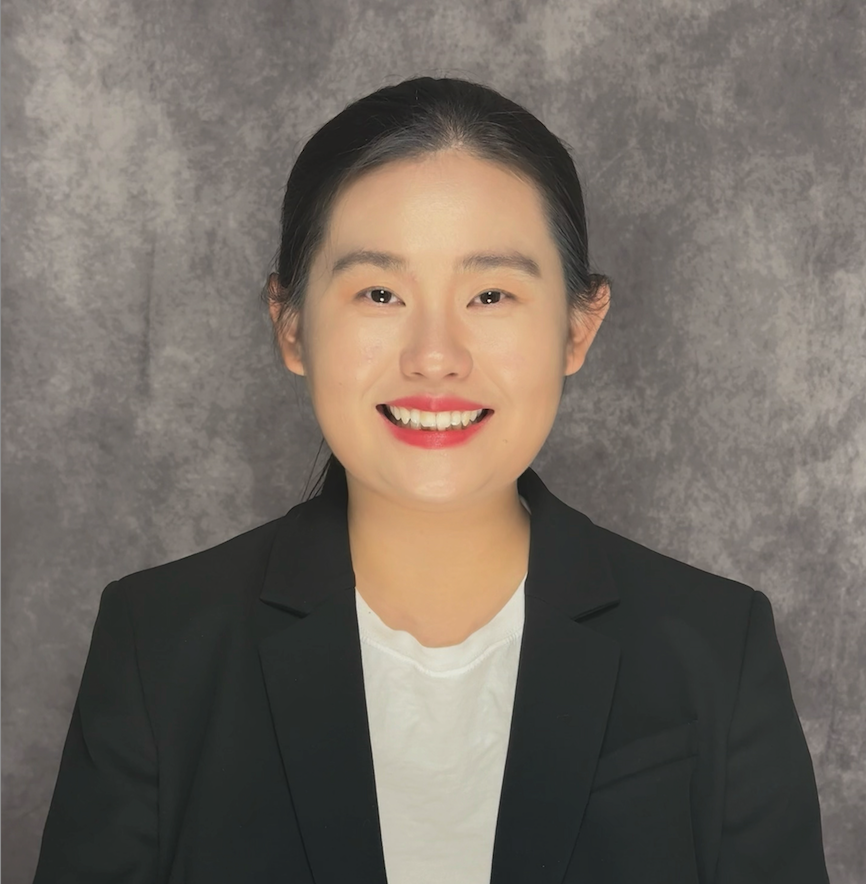
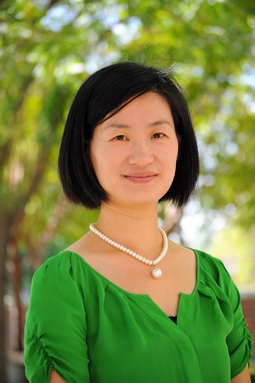
Feiyan Chen serves as Associate Professor in the Literacy, Early, Bilingual and Special Education department at California State University, Fresno's Kremen School of Education and Human Development. She teaches undergraduate and graduate courses for multiple credential programs including CI 162, CI 171, LEE 180T, and MA-level thesis supervision (LEE 298), with research and teaching focused on bridging educational psychology theory with practical classroom applications. Her academic credentials include: Ph.D. in Teacher Education (Early Childhood Education & Developmental Psychology), Monash University (2015) M.Ed. in Early Childhood Education, Monash University (2010) Graduate Diploma of Education, RMIT Australia (2009) B.A. in English Language and Literature, Zhejiang University (2004) Dr. Chen's research program centers on cultural-historical analyses of emotion regulation development in early childhood, with particular emphasis on parent-child interactions during everyday routines and dramatic play. Her work integrates Vygotskian concepts like perezhivanie and experimental-genetic methodology to examine how cultural tools mediate emotional development across Chinese, Australian, and Chinese-American contexts. Over 20 years of practical teaching experience in both China and Australia informs her dual focus on theoretical innovation and real-world educational applications. Publication trends reveal consistent methodological rigor with increasing emphasis on cross-cultural comparisons since 2017. Her work uniquely connects visual methodology with cultural-historical theory to document how toddlers develop emotional regulation through family interactions, particularly highlighting the shift from self-focused to child-focused emotional processing in parent-toddler dyads. Dr. Chen actively mentors MA students in the Early Childhood Education program through thesis supervision (LEE 298) and fieldwork coordination (LEE 241), while supervising credential candidates' field studies across multiple programs. Her professional trajectory demonstrates continuous engagement with both academic research and practical teacher education through courses spanning child development theory, educational psychology, and classroom application.