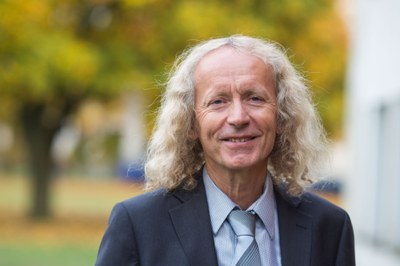
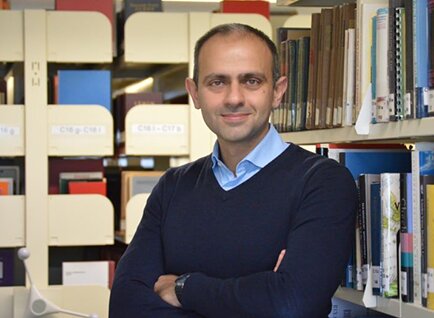
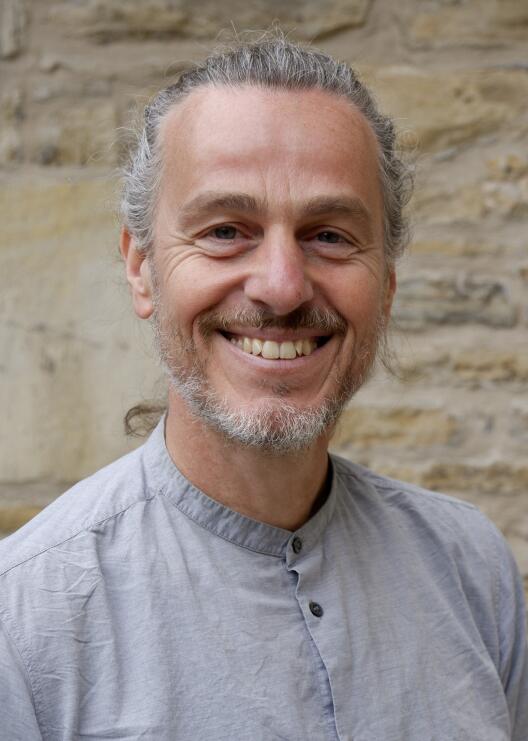
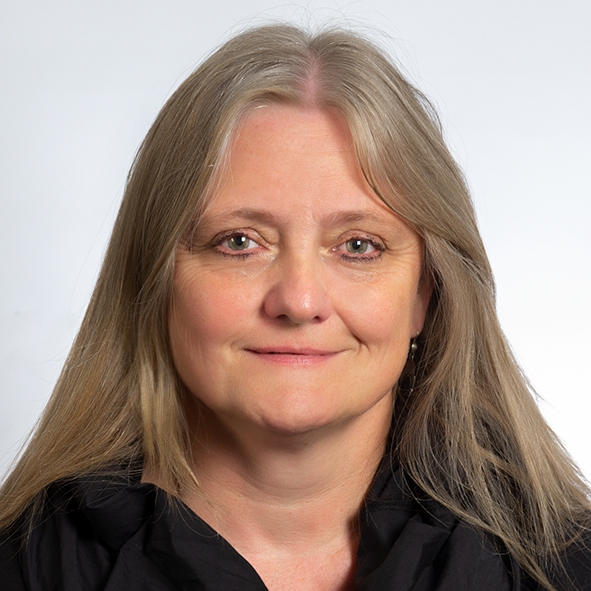
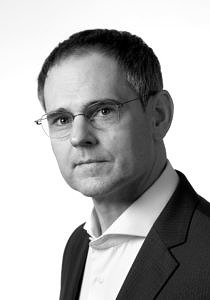
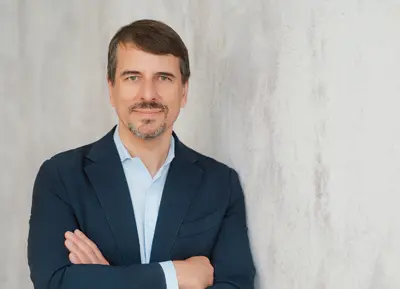
Jan Alber is a Professor of Modern English and American Literature at the Department of English and American Literature and Culture, Justus Liebig University Giessen . He previously held positions at RWTH Aachen, Aarhus University, TU Darmstadt, and the University of Freiburg. His work bridges narrative theory, cognitive studies, and postcolonial literature, with a focus on unnatural narratives and empirical approaches to literary analysis. Fields of Interest: Unnatural Narratology, Cognitive Literary Studies, Climate Fiction, Postcolonial Literature Key Themes: Storyworlds, Ideology, Empirical Methods, Narrative Beginnings Alber's recent publications explore narrative theory's intersections with cognition and ideology, including analyses of digital post-postmodernist novels and climate change narratives. His empirical studies examine how readers process experimental narratives, particularly unnatural narrators and metaleptic structures. He has received prestigious awards such as the Habilitation Prize from the German Association of Anglists (2013) and the FRIAS junior group competition (2008). His research is funded by the AHRC, DFG, and Alexander von Humboldt Foundation, notably supporting interdisciplinary work on post-truth political narratives and Ukrainian scholars. Alber co-founded the Aachen Center for Cognitive and Empirical Literary Studies and serves as President of the International Society for the Study of Narrative. He organizes international workshops on cognitive narratology and teaches courses spanning literary history, theory, and postmodern fiction.
Sebastian Thies is Professor and Chair for Ibero-American Literary and Cultural Studies at the University of Tübingen, where he has been employed since October 2012. He serves as Vice Director of the Interdisciplinary Centre for Global South Studies (ICGSS) and coordinates the BMBF/DAAD thematic network 'Futures under construction in the Global South'. His academic journey began with a PhD in Hispanic Studies from the University of Osnabrück in 2000, followed by positions at the University of Bielefeld where he progressed from Junior Professor for Hispanic Literary and Media Studies to Full Professor for Inter-American Studies. Thies' research focuses on Global South Studies, with particular emphasis on Latin American literature, film, and media. His work explores subjectivity formations, entangled temporalities, and political communication across borders. He has directed significant research initiatives including the doctoral studies program 'Entangled Temporalities in the Global South' and has co-edited major reference works such as The Routledge Handbook for Global South Studies on Subjectivities (2024). His extensive publication record demonstrates a consistent engagement with transnational cultural phenomena, particularly examining how Latin American cultural production intersects with global political and social dynamics. Thies frequently collaborates with international scholars, reflecting his commitment to transdisciplinary and transregional approaches to cultural analysis. Project Leader: Research Training Network 'Entangled Temporalities in the Global South' Vice Project Leader: Thematic network 'Literary Cultures of the Global South' Associated Investigator: BMBF-Area Studies Project 'The Americas as a Space of Entanglement' Project Leader: Research Group 'E Pluribus Unum? Ethnic Identies in Processes of Transnational Integration' Thies actively supervises doctoral students through the Interdisciplinary Centre for Global South Studies and has established collaborative networks across Latin America, particularly with institutions in Mexico and Colombia. His current research agenda focuses on 'Futures under construction in the Global South' and continues to explore the intersections of cultural production, political communication, and subjectivity formation in transnational contexts.
Ansgar Nünning is a Professor of English and American Literature and Cultural Studies at the Justus-Liebig-Universität Gießen since 1996. He is the founding director of the Giessen Graduate School for the Humanities and the International Graduate Centre for the Study of Culture (GCSC), and serves as academic director of the International PhD Program (IPP) 'Literary and Cultural Studies'. Additionally, he is a member of the Collaborative Research Centre 'Memory Cultures' and has driven internationalization efforts in PhD education through partnerships like PhDnet Literary and Cultural Studies. Research Focus: Interdisciplinary cultural studies, narrative theory, cultural memory, and media-specific narratology. Academic Leadership: Founded key graduate institutions, supervised 15+ PhD candidates, and co-developed transdisciplinary teaching frameworks. Notable Contributions: His work spans media-conscious literary analysis, theory of narrative self-making, and cultural transgression studies. He has mentored scholars who now hold academic positions across Europe and beyond. Scientific Award: Honorary doctorate from the University of Stockholm (2017) for contributions to literary/cultural studies and PhD education reform. Current Roles: Oversees research at the GCSC, collaborates on media-specific narratology projects (e.g., Robin Schmieder's vlog analysis), and contributes to transdisciplinary teaching initiatives.
Prof. Dr. Thomas Duve is a Director at the Max Planck Institute for Legal History and Legal Theory and holds the Professorship for Comparative Legal History at Goethe University Frankfurt am Main. His research focuses on global legal history, particularly the interplay between secular and religious knowledge in the Iberian empires of the early modern period, and the method of legal history and comparative law. Director, Max Planck Institute for Legal History and Legal Theory Professor of Comparative Legal History, Goethe University Frankfurt Co-editor of 'The School of Salamanca Working Paper Series' Duve’s research explores normative knowledge production, colonial law, and the glocalization of legal norms. He has led projects such as 'Glocalizing Normativities' and 'Mapping Conflicts in Iberian Worlds', emphasizing cross-cultural legal exchange and historical normativity regimes. His recent publications (2018–2025) address global legal history, transnational legal practices, and the role of canon law in colonial settings. Key themes include legal pluralism, indigenous rights, and the translation of legal norms across cultures, with methodological innovations in comparative and transnational legal studies. Duve collaborates extensively with international scholars and institutions, including the Max Planck Partner Group and the Oxford Handbook of Legal History. His work bridges European and Latin American legal traditions, offering critical insights into legal globalization and postcolonial legal analysis.
Zaur Gasimov is a Lecturer at Johannes Gutenberg University Mainz and currently serves as DAAD Departmental Coordinator and Co-Head at the Faculty of Economics and Administrative Sciences, Turkish-German University. He holds a habilitation in Modern History and Eastern European History, with a focus on Eastern European History, political science, and sociology. Education : B.A. in International Relations from Baku State University; M.A. from Catholic University of Eichstätt-Ingolstadt; Doctorate in Eastern European history Research : Concentrates on Russian-Turkish relations, nationalism in Eastern Europe, cultural transfer processes, and historical narratives. His habilitation thesis analyzed Polish-Turkish anti-Soviet alliances. Publications : Authored monographs on Prometheism, Azerbaijani historiography, and Russification policies. Collaborated on comparative studies of cultural transfer and Ottoman-Russian entanglements.
Hakan Özkan is a Privatdozent and Research Associate at the Institute of Arabic and Islamic Studies, Department of Middle Eastern Studies, University of Münster, where he has been working since 2007 in various capacities. He was awarded his Venia Legendi (Habilitation) in November 2019 for Arabic and Islamic Studies with his thesis 'History of Eastern Zajal – Dialectal Arabic Verse Poetry from the East of the Arab World.' His academic background includes a Franco-German doctorate completed in 2006 from Université de Provence and University of Cologne, supervised by Claude Audebert and Monika Gronke, with external reviewers including Wolfhart P. Heinrichs from Harvard University. His educational background includes: 2019: Venia Legendi for Arabic and Islamic Studies, University of Münster 2002-2006: Franco-German Doctorate in Arabic Studies and Narratology (Université de Provence and University of Cologne) 1995-2000: Master of Arts in Islamic Studies, Oriental Languages and Literatures (University of Cologne) 2000-2001: Course program in Modern Standard Arabic and Syrian-Lebanese dialect at Institut Français d'Etudes Arabes de Damas Özkan's research focuses on premodern Arabic dialect poetry, particularly zajal and muwashshaḥ forms, narratology, prosimeter literature, socio-literary history, and diachronic dialectology. His interdisciplinary approach bridges linguistic analysis with literary criticism, examining how dialectal forms evolved within Arabic literary traditions across different historical periods and geographical regions. He has conducted extensive field research in Arab countries including Syria, Egypt, Lebanon, Tunisia, and Morocco, with particular emphasis on the historical development of poetic forms from the Mamluk through Ottoman periods. His publication history demonstrates consistent scholarly contributions to Arabic literary studies, with his 2020 monograph 'History of Eastern Zajal' representing a landmark study in the field. His recent work has expanded to include analyses of religious poetry praising the Prophet Muhammad in zajal form, wine poetry in Arabic literary traditions, and the integration of dialects into Arabic language teaching methodologies. His scholarly output spans monographs, critical editions, encyclopedia entries, journal articles, and book chapters across multiple languages including German, English, French, and Turkish. Among his academic recognitions: 2018: Second place on shortlist for W2 Professorship for Arabic Language and Translation Science, University of Leipzig 2008: Offered Junior Professorship at American University in Cairo (declined) 2007: Second place on shortlist for maître de conférence position at University of Nancy 2007: Official Qualification from National University Council (CNU) for positions as maître de conférence at French universities Özkan has served on numerous academic committees, including appointment committees for professorships in Sinology and Arabic and Islamic Studies at the University of Münster. He has been a juror for the Sheikh Hamad Award for Translation and International Understanding in Doha and has served on the steering committee for the 'Translation for Dialogue' program of the Anna Lindh Foundation. His editorial work includes reviewing for Mamluk Studies Review, Die Welt des Islams, and Middle Eastern Literatures since 2012. His scholarly activities extend to linguistic fieldwork on Pontic Greek dialects in Turkey and organizing significant academic conferences including 'The Race Course of Literature – An-Nawāǧī and His Contemporaries' in 2018 at the University of Münster. His multilingual capabilities (Arabic, Turkish, German, French, English, Persian, Ottoman Turkish, and knowledge of Modern Greek) enable his comparative work across multiple linguistic and cultural traditions in the Mediterranean region.
Prof. Dr. Ute Fendler holds the Chair of Romance Literature and Comparative Studies with Special Emphasis on Africa at the University of Bayreuth. Her academic journey includes a 2006 Habilitation and 1992 PhD from Saarland University, with research spanning Francophone African literatures , intermedial phenomena , and postcolonial cinematic analysis . She coordinates the Bayreuth Academy of Advanced African Studies as Vice-Director and serves on multiple editorial boards. 2006-Present: Professor at University of Bayreuth 2011-2015: Director of Institute for African Studies 2015-Present: Vice-Director of Bayreuth Academy of Advanced African Studies Her research interrogates urban ecotonal spaces through African music videos, transnational cinematic flows in African and Afro-Asian contexts, and mediated memory practices . Recent publications explore post-apocalyptic storytelling and decolonial aesthetics in music videos and films. Scientific contributions include: 2025: Staging Atmosphere: Urban Ecotonal Spaces in African Music Videos (Brill) 2024: Co-edited Asia-Africa: Multifaceted Engagement (Palgrave Macmillan) 2022: Animating the Future: Superheroes in Africa (Brill) 2020: Ghosts as Mediators: Memory and Hauntology (iwalewabooks) 2019: K-Pop Fandom in Germany (Korea University Press) She received the Faculty Enrichment Award from the Canadian Embassy in 2005 and serves on multiple academic committees including the University Library Commission (2007-2016).
Harald Zapf is a Senior Lecturer in the Department of English and American Studies at Friedrich-Alexander University Erlangen-Nürnberg (FAU), specializing in American literature and cultural studies. Affiliated with the Faculty of Philosophy and Theology, he focuses on postcolonial theory, hybridity, and multiculturalism in the Americas. 2002 Lilli Bechmann Rahn Doctoral Prize 2001 Bavarian American Academy Dissertation Prize His research explores intersections of ethnicity, language, and performance in contemporary American poetry, particularly in multilingual and transnational contexts. He has collaborated extensively with Wolfgang Binder and Klaus Lösch on publications examining cultural encounters and hybrid identities. Zapf’s publications span monographs, edited volumes, and critical articles, with a strong emphasis on authors like Ishmael Reed and theoretical frameworks such as rooted cosmopolitanism and deconstruction. His work bridges literary analysis with sociocultural and philosophical discourses.
Dr. Harry O. Maier is Professor of New Testament and Early Christian Studies at Vancouver School of Theology since 1994, with ongoing fellowships at the Max Weber Center for Advanced Cultural and Social Studies at the University of Erfurt since 2017. His academic career spans over 25 years with significant contributions to understanding early Christianity within the context of the Roman Empire. His educational background includes a D. Phil from Oxford University (1987), Master of Divinity from Lutheran Theological Seminary (1989), and B.A. from Pacific Lutheran University (1981). Maier's research focuses on the intersection of New Testament studies, early Christianity, and spatial theory within the Roman Empire. His work examines how early Christian communities navigated urban spaces, constructed religious identity, and engaged with imperial ideologies. He has pioneered approaches that analyze biblical texts through spatial theory, examining how geography, urban structures, and neighborhood dynamics shaped early Christian thought and practice. His research particularly emphasizes the Book of Revelation, the Shepherd of Hermas, and Pauline literature, with attention to how these texts engaged with Roman imperial culture. His scholarly contributions include significant publications such as New Testament Christianity in the Roman World (Oxford University Press, 2018) and Picturing Paul in Empire (Bloomsbury, 2013), which won recognition for their innovative approaches to understanding early Christian texts within their socio-spatial contexts. Canadian Christian Writers Association Award for Best Book in Philosophy and Christian Leadership (2003) for Apocalypse Recalled: The Book of Revelation after Christendom Canadian Corportation of Religion Award for Best Dissertation in Religion (1990) for The Social Setting of the Ministry as Reflected in the Writings of the Shepherd of Hermas, Clement and Ignatius Maier has organized numerous academic conferences including "The Shepherd of Hermas and Religious Experience" (2018), "Religion of Quarters" (2018), and "Locating Martyrs and Space/Time" (2017). He serves on editorial boards for several prestigious publications including as associate editor for the Bryn Mawr Classical Review since 2016 and co-editor of the Christian Religion and Public Life book series since 2020. His external reviewing work includes major academic presses such as Oxford University Press and Cambridge University Press. As founder and co-organizer of The Greater Vancouver Biblical Colloquium since 2008, Maier has fostered interdisciplinary dialogue among scholars of biblical studies and related fields. His academic leadership extends to professional societies including the Society of Biblical Literature and the North American Patristics Society.
Zhao Baisheng is a Professor and Chair of the Institute of World Literature at Peking University, where he also serves as Secretary General for Cross-Cultural Studies. During Summer Semester 2005, he was a Guest Professor at Johannes Gutenberg University Mainz, affiliated with the Department of English and Linguistics. His research focuses on cross-cultural dynamics, East-West interactions, and global literary frameworks. He led a seminar titled "Cross-culturalism – Toward a World Literature and Culture" , examining themes like immigration, colonization, and globalization through works by Defoe, Eliot, Hu Shi, and others. His lecture series explored topics such as Westernization in 20th-century China, the role of Marxism in Chinese contexts, and representations of China in media. Zhao’s academic contributions include Theory of Auto/Biography (2003), analyzing auto/biographical forms in cultural contexts. His work bridges literary theory with interdisciplinary cross-cultural studies.
Ben Bollig is a Professor of Latin American Literature and Film at the University of Oxford, where he is also a Fellow and Tutor in Spanish at St Catherine's College and Associate Lecturer in Spanish at St John's College. He holds a First Class BA in Hispanic Studies from the University of Nottingham, followed by an MA and PhD from King's College London (2004). Research focuses on contemporary Latin American literature and film, particularly Argentine poetry Editor of the Journal of Latin American Cultural Studies Co-editor of Latin American Cultural Studies: A Reader (Routledge, 2017, pbk 2019) Key Research Themes : Comparative Literature, Film Studies, Translation Studies, Poetics of Resistance, and Postcolonial Studies. His work explores intersections between poetry and cinema, cultural identity, and political dimensions of artistic practice in Latin America. Publications include books on Argentine marginal poetry, cinematic adaptation of verse, and edited volumes of resistance literature. He coordinates the Poetics of Resistance project with Dr. Cornelia Graebner (Lancaster University) and contributes translations to journals like Calque and El extremo sur: Confines.
Prof. Dr. Laura Bieger is a professor of American Studies at Ruhr University Bochum (Germany), specializing in literary theory, critical theory, and cultural history. She holds a Magister from Freie Universität Berlin and a Dr. Phil. from FU Berlin (2006), followed by a Habilitation in 2013. Previously, she held professorships at the Albert-Ludwigs-Universität Freiburg (2014–2017) and the Rijksuniversiteit Groningen (2017–2022). Her research explores the relationship between aesthetics, politics, and social practices in U.S. cultural history, with a focus on public space, literary engagement, and democracy. Education: Magister in American Studies, History, and Philosophy, Freie Universität Berlin Dr. Phil., Freie Universität Berlin (2006) Habilitation (Venia Legendi in Americanistik), Freie Universität Berlin (2013) Positions: Professorin für amerikanische Literatur und Kultur, Albert-Ludwigs-Universität Freiburg (2014–2017) Professorin für American Studies, Political Culture and Theory, Rijksuniversiteit Groningen (2017–2022) Universitätsprofessorin American Studies, Ruhr-Universität Bochum (since 2022) Her work bridges literary analysis with interdisciplinary inquiries into space, democracy, and cultural practices. Key publications include Ästhetik der Immersion (2007), Belonging and Narrative (2018), and the forthcoming Reading for Democracy (2024). She has been a research fellow at Harvard University, NYU, and UC Berkeley. Current projects examine literature’s role in fostering democratic engagement and rethinking humanist concepts in American art. Laura Bieger’s research emphasizes praxeological approaches, treating literature as a social practice shaped by networks of actors and institutions. Her work on public intellectuals, cultural fields, and transnational American Studies highlights intersections between aesthetics, politics, and societal change. Collaborative projects include edited volumes on Richard Wright, spatial narratives, and the humanist imagination in American art.
Corinna May Lhoir is a Lecturer of Yoga History and a doctoral researcher in Indology at the University of Hamburg's Faculty of Humanities, specifically within the Culture and History of India and Tibet department. She is affiliated with the Centre for the Study of Manuscript Cultures (Cluster of Excellence "Understanding Written Artefacts") and serves as Program Coordinator for the Yoga Studies research focus. Her educational background includes an M.A. in Oriental Languages and Cultures: India (Summa Cum Laude) from Ghent University (2023), an M.A. in Traditions of Yoga and Meditation (Distinction) from SOAS, University of London (2020), a B.A. in Languages and Cultures of India and Tibet from Universität Hamburg (2021), and an earlier M.A. in American, English and Slavonic Studies from Ruhr Universität Bochum (1997). Dr. Lhoir's research centers on Jain Yoga, medieval Indian philosophy, and manuscript cultures across multiple linguistic traditions. Her current doctoral project explores the Yogapradīpa, a 15th-century Jain Yoga compendium, analyzing its reception through multilingual manuscript commentaries (ṭabos and bālāvabodhas). She investigates textual transmission, philosophical adaptation, and the vernacularization of Yoga knowledge in Jain traditions through extensive philological work and field experience in India and Europe. Her publication record shows a clear progression from foundational studies on Yoga to increasingly specialized work on Jain Yoga texts. The recent articles (2024-2025) demonstrate deep engagement with specific Jain Yoga texts like the Yogapradīpa, Tattvārthasūtra, and works by Haribhadra and Hemacandra, while her upcoming 2026-2027 publications promise to make significant contributions to understanding Jain concepts of self and philosophical approaches to Yoga. Dr. Lhoir has been actively involved in teaching and knowledge dissemination, designing courses on Introduction to Jain Philosophy and Jain Yoga, Indian Intellectual History, and Origins of Yoga at both undergraduate and continuing education levels. Her teaching often combines hybrid formats with close textual analysis and broader cultural framing. She has taught master classes at Ghent University and SOAS, and developed the blended-learning course "Light on the Dark Age of Jain Yoga" for the Arihanta Institute. She maintains a strong public engagement presence through media interviews, expert commentary in national outlets like Deutschlandfunk, and participation in roundtables on topics including "Alternative Career Paths in Religious Studies" and "Social Responsibility as Yoga Teachers." Her Arihanta Institute blog series has been particularly influential in making academic research on Jain Yoga accessible to broader audiences.
Dr. Stephanie Roberta Graf is a Research Fellow at the Institute for Religious Studies (Department of History and Cultural Studies) at the Free University of Berlin since 2025. She previously worked as a Universitätsassistentin at the University of Innsbruck (2021-2025) and participated in the FWF-funded project 'Membership Metaphors as Doorkeepers'. Her research bridges philosophy, critical theory, and religious studies, with a focus on the Frankfurt School's theology and metaphorology. Diploma in International Development (University of Vienna & UNAM, 2005-2011) Master in Latin American Studies (UNAM, 2013-2015) Doctorate in Political and Moral Philosophy (UAM-I & Hebrew University, 2015-2019) Her research explores the theology and metaphysics of the Frankfurt School , German-Jewish thought, coloniality in diaspora religions, and political theology. She has published on topics ranging from Walter Benjamin's natural history concepts to critical analyses of capitalism as religion and heretical mysticism. Her recent work examines ecological crises, cultural appropriation, and interdisciplinary approaches to social critique. Selected publications reveal trends in Frankfurt School philosophy , Jewish mysticism , coloniality , and Benjaminian metaphorology , with subfields including divine violence, nonidentity theory, diaspora cultures, and interdisciplinary hermeneutics. She has presented at international conferences in Argentina, Chile, Peru, Austria, and Israel. She contributes to the academic community through her involvement in projects like the Metaphorology Lecture Series at the University of Innsbruck and the International Colloquium on Heretic Argumentation in Argentina. Her work intersects philosophy, religious studies, and socio-political critique.
Prof. Dr. Pascal Fischer is a Professor for English and American Cultural Studies at the Faculty of Humanities and Cultural Studies, Otto-Friedrich-University Bamberg. He serves as Head of the Examination Board for the B.A. English and American Studies program and has held various academic roles since 2014, including interim professorships at multiple German universities earlier in his career. Education: PhD (summa cum laude) in English Literature (2003), Habilitation in English Philology (2009), both from University of Würzburg. His research spans interdisciplinary intersections of British Romanticism with medical humanities , urban studies , and Jewish-American literature . Key themes include: Political and religious discourse in historical contexts Urban space as a site of resistance and identity negotiation Cognitive approaches to literature and political thought Language as a marker of cultural identity in diasporic communities Prominent publications include monographs on literary conservatism and Jewish identity , co-edited volumes on poetry pedagogy and urban politics, and articles analyzing: Edmund Burke’s legacy in Brexit discourse Biblical texts in early modern political theory Cognitive contrasts between human and AI: literature as a bridge Scientific contributions: PhD with highest honors (2003) Keynote addresses at conferences (e.g., Anglistentag 2011 ) Teaching initiatives focus on integrating lyrical texts into language education and fostering interdisciplinary seminars for pre-service English teachers.